These ten ideas run from a single strawberry pot on a balcony to a full cottage bed against a fence, and the deciding factor is how much ground you actually have and whether a child will help tend it.
A narrow brick path with dense planting on both sides needs enough width to avoid looking thin; if the bed is narrow, the plants read as a skimpy border instead of an overgrown passage.
1. Peter Rabbit Garden

A Peter Rabbit garden runs on the vegetables that got the original rabbit into trouble: radishes, lettuce, French beans, and cucumbers in neat rows.
I would start with a picket fence and a watering can as props, since the story leans on them so hard.
Peas climb a trellis fast enough that a child sees progress inside a single season, which matters more than harvest size at this age.
The blue jacket detail is easy to add with a painted sign or a coat on a hook.
This one suits parents who want a garden that teaches itself through a story the child already knows; the vegetable focus means more maintenance than flowers, and less color in bloom season.
2. Planting a Rainbow

Planting a rainbow borrows Lois Ehlert’s structure literally: tulips, marigolds, zinnias, daisies, and blue morning glories arranged in color bands.
The book introduces real propagation terms (bulb, corm, tuber, rhizome, seedling) that a child this age can actually use, so I would name them while we work.
Fall bulb planting waits all winter to show color in spring, which teaches patience better than buying a flat of annuals already in bloom. Catalog browsing for colors sharpens recognition of shades, not just base colors.
This is the entry point for parents who want education mixed in: the vocabulary load is higher, the visual impact is lower at first, and the timeline stretches across two seasons.
3. Cottage Garden

A cottage garden mixes flowers and herbs without the rigid spacing of a formal bed: foxgloves, hydrangeas, and climbing roses layered against a wall or fence, with rosemary and thyme at the edges.
The charm comes from density and height variation, not from expensive structure. Birdhouses and rustic fencing complete the look, though I would build the fence from reclaimed pickets rather than buy new; weathered wood reads right immediately.
This style forgives the beginner because excess looks intentional. It demands more water and more cutting back than a sparse design, and the herb component means some plants want sharp drainage while others tolerate clay.
Check your soil before you plant, not after.
4. Fairy Garden

A fairy garden lives in containers or tucked corners, built from miniature plants, figurines, and toadstools at a scale that makes a child feel giant.
A castle-like structure among succulents and daisies works best when the hardscape stays simple and the plants carry the fantasy. Tiny ferns, small-leafed succulents, and moss fill gaps without overgrowing the scene in a month.
Fairy figurines are optional: a door painted on a tree trunk or a pebble path achieves the same effect for less cost and less weather damage.
This is the choice for renters or balcony gardeners; the container base means you move it when you move.
5. Storybook Paths

Storybook paths use curved brick or stone to slow the walker and hide what comes next, which turns a small yard into a longer experience.
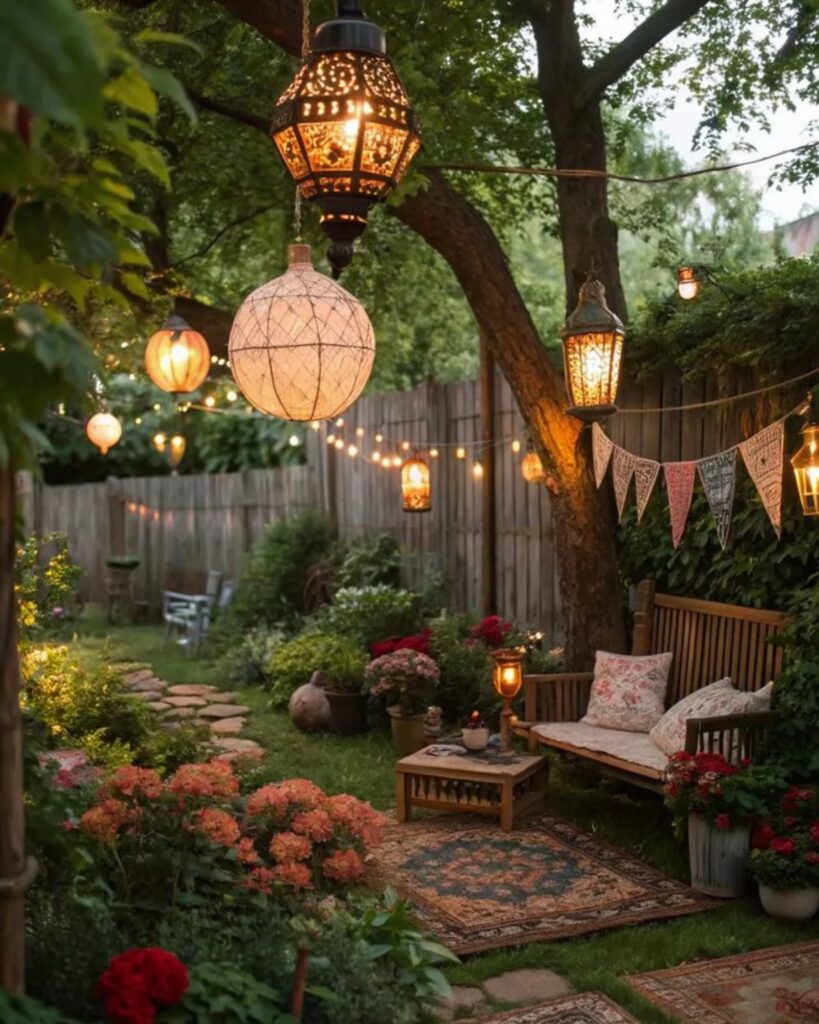
A narrow brick path winding between dense planting with a bench tucked under a pergola puts the pause where the story actually happens; that seating placement matters more than whatever you pave with.
Gentle curves read whimsical where straight lines read practical. I would spend money on the sitting spot before I widened the path: a basic metal bench with a patterned pillow anchors the scene faster than expensive pavers.
This idea scales to any size, though dense planting on both sides needs enough width to avoid looking thin; if the bed is narrow, the plants will read as a skimpy border instead of an overgrown passage.
6. Miniature Garden

A miniature garden shrinks the entire concept down to a container or a glass conservatory, with tiny ferns, small succulents, and a miniature bench as the scene.
An indoor glass house is one option and a shallow outdoor tray is another, since the scale works either way.
Tiny vegetables (baby carrots, cherry tomatoes on a dwarf determinate) give children something to harvest without the space commitment of full beds. Rock formations or a small tree shape the composition the way architecture does in larger gardens.
This suits the parent with no yard at all, or the one who wants a winter project when the outdoor garden sleeps. Small containers dry fast, so this setup asks for daily attention to moisture.
Involving Children in Gardening
Kids handle planting better when the task matches their hands. Radishes and lettuce are good starter crops for kids because the seeds are large enough to pinch between small fingers and the rows don’t need to be ruler-straight.
Peas go in with a finger poke an inch deep; they germinate fast enough that a child checks daily without losing interest. Watering belongs to them if the can is small, maybe 1/2 gallon, so they control the pour.
Letting a child taste straight from the plant builds the habit. Radishes, lettuce, beans, peas, cucumbers, and parsley need only a rinse.
The gooseberry and black currant bushes in a Peter Rabbit setup fruit later, which teaches the wait that gardening requires. I would assign one crop as theirs alone, start to finish, rather than rotate them through every task.
Choosing the Right Plants
Climate comes before theme. A cottage garden wants foxgloves and climbing roses that survive your winter; check the USDA zone before ordering bare-root plants in fall.
Rosemary and thyme need sharp drainage, which means a raised edge or sand worked into clay soil, not just hope.
Tulip bulbs planted in fall sleep through winter and bloom in spring. That wait is the lesson, but it only works where cold hours accumulate; in zone 9 and warmer, pre-chilled bulbs are a one-season substitute.
Zinnias and marigolds from seed cover the gap with summer color.
For the Peter Rabbit vegetable list, lettuce and radishes finish before summer heat in most regions. French beans and cucumbers want warm soil; I would plant those 2–3 weeks after the last frost date, not with the early crops.
Peas straddle both cool seasons, though they fade once summer heat settles in and stays.
Creating a Cozy Atmosphere
A bench under a pergola creates the pause where someone actually sits. The seating placement matters more than the material.
Straight lines read practical; gentle curves read whimsical.
Layer plants in groups, not one-by-one. Weathered wood from reclaimed pickets completes the look immediately, without the 2–3 years new fencing needs to gray.
Using Storybooks for Inspiration
A book gives the garden its structure and the child their vocabulary. Name them while you work, and the child has words for what they handle.
Any book with clear plant references works if it matters to the child. A blue jacket painted on a sign or hung on a hook completes the reference without explanation.
I would pair one long-term project with one quick win per season, so the child learns both rhythms.
Frequently Asked Questions
What is a storybook garden?
A storybook garden is a garden designed around themes from children’s storybooks, with plants and décor that reflect the stories.
Peter Rabbit gardens use the vegetables from the tale, rainbow gardens follow Lois Ehlert’s color-band structure, and fairy gardens shrink the whole concept to a scale that makes a child feel giant.
How do I start a storybook garden?
Pick a favorite storybook and match plants and décor to what happens in it. The story you choose sets the plant list and the mood, so the garden almost designs itself.
What are some ideas for a small fairytale garden?
A fairy garden in a container or tucked corner works at a scale that fits small spaces.
Tiny ferns, small-leafed succulents, and moss fill gaps without overgrowing the scene in a month, and a door painted on a tree trunk or a pebble path gives the fantasy effect for less cost than figurines.
What are some DIY ideas for a children’s garden?
A Peter Rabbit garden teaches through a story the child already knows, with peas climbing a trellis fast enough that a child sees progress inside a single season.
What plants are good for a children’s garden?
Easy-to-grow vegetables and colorful flowers that engage children’s interest work best. Radishes, lettuce, French beans, cucumbers, and peas suit a Peter Rabbit garden and show progress fast.