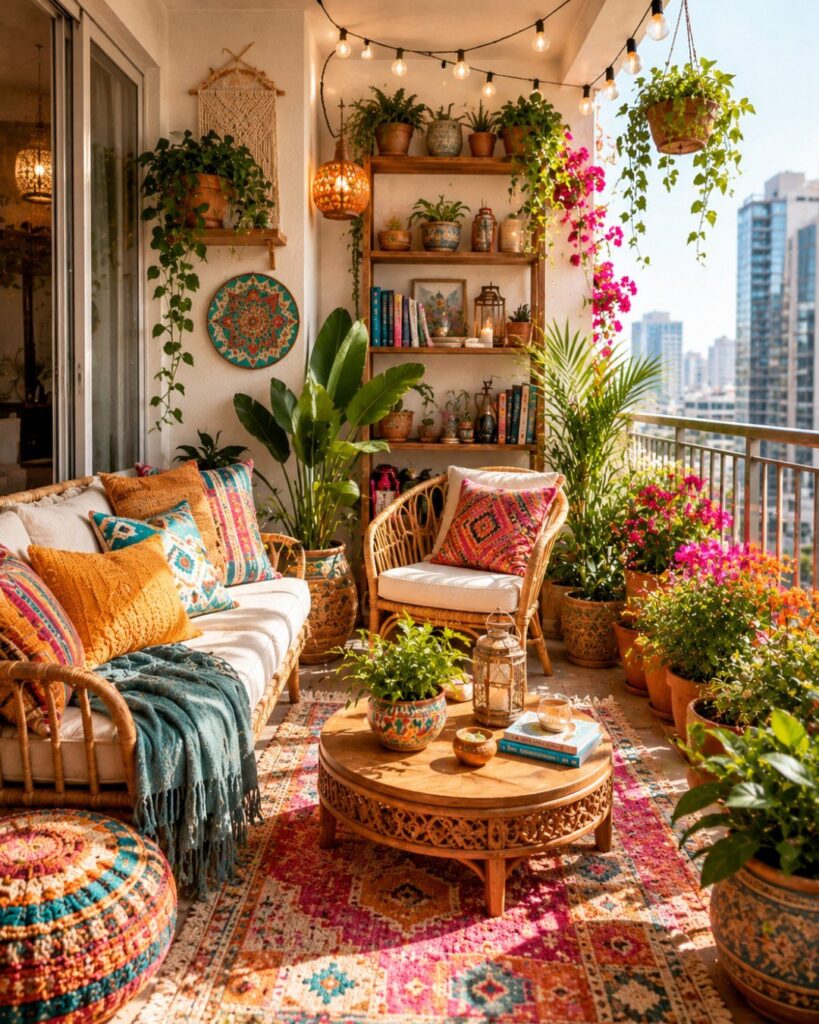
These ideas run from a quick pillow cover swap to a full umbrella that commits the whole patio, and the right pick depends on whether you rent and carry your furniture up stairs or own and can bolt things down.
1. Painted Bistro Set

A small metal bistro set in fire-engine red turns a forgotten corner into somewhere you actually want to sit. I tucked one between my garage and the fence last spring, and it became my morning coffee spot by June.
Painted metal holds up better than wood in damp climates, though the finish will chip if you drag the chairs across concrete. Check that the feet have nylon glides, or add your own.
A round table under 30 inches fits spots where a square one would stick out into the path.
This suits renters best: light enough to carry up stairs, cheap enough to leave behind, and the color does all the decorating work.
2. Pillows

Patterned pillows in fuchsia, lime, and royal blue will wake up a neutral sofa faster than any other single swap.
I buy outdoor pillow covers separately from the inserts, which saves money and storage space; the covers flatten to nothing in a drawer, and the inserts stack.
Size matters more than pattern. A 20-inch square reads standard, but a 24-inch looks intentional on a deep sectional.
Mix one large pattern, one small, and one solid so no single fabric fights another.
The old pillows can move to the guest room or the dog’s bed.
At her Hamptons home, interior designer Muriel Brandolini fashioned a colorful sitting area using a long custom-made teak sofa topped with vibrant accent pillows.
3. Colorful Planters

Crisp blue and white chinoiserie planters give a patio the cheerful energy that rustic pots trade away for something more subdued.
I switched mine out two seasons ago after realizing the weathered terracotta was reading as muddy against my gray deck boards.
Ceramic holds moisture longer than terracotta, which matters for plants that wilt by noon. Check that drainage holes exist, or drill your own with a masonry bit and patience; a cracked planter taught me that one.
These suit a covered porch or a spot with afternoon shade. In full sun, the glaze can craze over winters, and the white starts to look tired rather than crisp.
4. Color-drenched Umbrella

A striped umbrella in red and white turns a plain stone patio into a scene that feels intentional from the second you step outside. Beige turns every lunch into something that feels like a corporate retreat; color fixes that.
The pattern does more than color alone. Stripes move in the breeze and hide the dust that shows on solids within a week of summer.
A 9-foot span covers a 48-inch table with room to pull chairs back; anything smaller leaves shoulders in sun.
This trades away flexibility. A bold umbrella commits the whole space to its palette, so I’d pick this for someone who already owns white or natural furniture and wants direction, not for someone mid-mix with other strong pieces.
5. Outdoor Rug

A blue and white patterned rug underfoot pulls a patio together the way a neutral one never quite manages. Beige felt safe at first, then it just felt boring; color was the fix.
Outdoor polypropylene dries fast and hoses clean, though the cheap stuff goes shiny at the fibers’ tips within a season.
Lift a corner in the store and check the backing; a woven or mesh back lies flatter and lasts longer than sprayed-on latex that cracks.
Measure for at least 18 inches of bare deck beyond the rug on all sides, or the proportions read as a bath mat.
For a 6-by-9-foot space, that means a 5-by-7 rug, not the 8-by-10 that tempts you to fill the whole floor.
6. Bright Serving Trays

Melamine trays in coral, turquoise, and lemon carry drinks and start conversations without the anxiety of real dishes outside. Oval trays with sea life prints hold up fine against concrete drops; that surface has more give than you’d think.
Melamine scratches, so I keep one tray for cutting limes and the rest for presentation only.
These suit the host who serves off the grill and wants the table to look finished fast.
For a quiet family dinner, they can feel loud; on those nights, I flip them to the plain underside and let the food do the talking.
7. Colorful Outdoor Lanterns

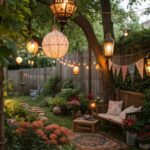
Metal lanterns in coral or turquoise cluster well along a pergola beam or tree branch. Solar LED versions need no wiring; I hung a string over my patio last spring with cup hooks.
Blue, purple and pink glow well in photos, but summery warm shades feel easier to live with night after night.
Battery lanterns flicker more realistically but need tending every few evenings. I’d pick solar for anyone who actually sits out there regularly; the light is softer, but there is no maintenance.
8. Outdoor Throw Blankets

Lightweight throws in melon or coral draped over chair arms soften hard patio edges without the commitment of new upholstery. Quilted cotton rolls with leather straps make one tidy storage option; a lidded bin keeps them dry overnight.
Polyester or acrylic blends dry faster than cotton after dew or a sprinkle, and they go on sale often. Thin ones that bunch in one hand are the ones that actually get used.
Heavy blankets look romantic in photos; thin ones get grabbed and used.
9. Whimsical Wind Chimes

Ceramic or metal wind chimes catch light as they move, not just sound. Blue glass reads almost as garden sculpture against sky, which matters if your patio is more concrete than planting.
Ceramic near a back door where morning sun hits shows color even when the air is still.
Tone matters more than pitch here. Small chimes tinkle, which gets sharp fast.
Larger tubes or solid shapes move slower and sound lower; I’d pick those for any space where people sit and talk. One is plenty.
Three is a wind symphony, and not the relaxing kind.
10. Accent Table in a Pop Color

A side table in a color that fights your seating, not matches it, does more work than one that blends in.
Look at what your existing pieces already do. If your cushions are patterned, pick a table in one solid color from that pattern.
If everything is neutral, almost any bold hue works; if you already have one strong color, go opposite on the wheel or stay in the same family but shift lighter or darker. Check the undertone in daylight before you commit.
A green that reads sage indoors can turn swampy outside.
11. Decorative Garden Stools

Ceramic garden stools beside a seating area give you a place to set a drink and an extra perch when someone pulls up a chair.
White with butterfly patterns is one option, though I’d pick a solid color if I already had print elsewhere; the shape is decorative enough on its own.
Glazed ceramic costs more than resin that only looks like it. Weight matters more than you’d think.
My first resin stool blew into the neighbor’s yard in a thunderstorm. Ceramic stays put, but I carry mine to the garage before frost.
One stool is useful. Two, placed asymmetrically, look designed rather than leftover.
12. Outdoor Poufs or Ottomans

Square poufs in leather-like outdoor fabric give you flexible seating that stacks flat in a garage when the party ends.
The photo shows black, white, red, tan, pink and purple arranged in rows, which reads more showroom than I’d want; I keep mine mismatched, 3 in colors that don’t match anything else I own.
Outdoor-safe fabrics mean solution-dyed acrylic or polyester with a PVC backing, not the indoor stuff that mildews fast. Ones that hold their shape cost more than the floppy kind.
They work best as footrests or kids’ seats; adults sink low and the conversation angle gets awkward fast. I’d pick these for a casual crowd that stands and mingles, not a dinner where everyone needs proper back support.
Choosing the Right Patio Colors
Look at what your house already presents before buying a single colorful piece. A brick wall pulls toward terracotta and rust; pale siding gives you more freedom.
Green trim means blue furniture will read as coastal, while yellow trim wants coral or melon to avoid clashing.
Some pigments fade faster than others. Bright reds and oranges lose saturation quickest in full sun; deeper blues and greens hold longer.
If your patio faces south, I’d pick muted versions of bold colors rather than the brightest shade on the rack. A color that looks slightly dull in the store will read right after 2 summers of UV.
Mixing and Matching Colors
Blues and greens mixed together read as intentional because they already share ground in nature. I’d use a navy cushion with a sage planter, or turquoise pillows against deep green siding.
Two medium tones fight each other; one deep and one light settles better because the values stay far enough apart.
Warm tones need more discipline. Yellow, melon, red, coral, terracotta, and rust all energize a space, but 3 of them together exhaust the eye.
I’d pick one warm color as the lead, add a second as an accent, and leave the rest for another year.
A coral umbrella with rust pillows works; adding terracotta planters and yellow trays turns the patio into a fruit salad.
Durability of Outdoor Colors
UV light breaks down pigment at different rates depending on the material. Solution-dyed acrylic holds color longest because the dye penetrates the fiber before it is woven; printed or surface-coated fabrics fade faster and unevenly.
I’d check the tag for "solution-dyed" or "disperse-dyed" before buying outdoor cushions.
Solid mahogany weathers to silver-gray if left unfinished, which some homeowners prefer. If you want the original warm brown, oil-based finishes need reapplication every 1–2 years; marine-grade varnishes last longer but show every scratch.
Paint gives the most color options and the most maintenance; chips show on high-traffic surfaces like chair arms within a single season.
Creating an Inviting Vibe
Terracotta, brown, and green ground a patio in what already grows around it. These colors don’t ask for attention; they let the space feel settled.
I’d use them for the largest surfaces, the ones you touch and sit on, and save brighter notes for things you can swap when the mood changes.
Yellow or red in small doses does the social work. One yellow tray, a red pillow, a coral lantern: these read as invitation without taking over.
Blue works differently; it recedes visually, which makes a small patio feel deeper than it is.
Blue at the far edge, whether a wall, a cluster of pots, or a single pouf, pushes the boundary back and makes the space feel larger.
Frequently Asked Questions
What are the latest trends for outdoor patio furniture?
Bright, colorful outdoor decor has become the defining trend, with people adding personality through bold cushions, painted furniture, and colorful accents rather than sticking to traditional muted neutrals.
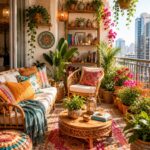
A patio or balcony gives more permission for color than a living room does; the same red or cobalt that would feel loud on an accent wall reads as cheerful against sky and leaves.
What is the most popular color for patio furniture?
Blue, orange, and pink are among the most popular choices right now, showing up in everything from garden sofas to outdoor cushions.
Warm tones like coral, melon, and red add energy, while blues and greens connect the space to the natural world and read as calming rather than cold.
How can I style my outdoor patio to make it look beautiful?
Start with color as your update, then build around a palette that mixes one large pattern, one small pattern, and one solid so nothing fights.
A bold umbrella, patterned rug, or painted accent table gives the whole space direction, and colorful planters or lanterns fill in the gaps without requiring new major furniture.
What colors are good to mix and match for your outdoor space?
Blues and greens work together for a calm, natural feel, while warm tones like yellow, coral, and terracotta add life without overwhelming if you keep them to accents.
Patterned cushions already hand you a palette: pick one color from the print and repeat it on a solid side table or ottoman. If the starting point is all beige or gray, the field is wide open.