These ideas run from a bag of birdseed to a hot tub wired on 240V, and the one that fits depends on whether you rent or own, how much weekend you have, and how often you will actually walk outside in January.
1. Winter Lights

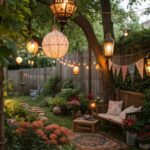
A string of warm lights along a dark path does more than keep you from tripping. It turns the shortest days of the year into something you want to walk through.
Low-voltage path lights need no electrician; most plug into a transformer that stakes into the ground.
Uplighting takes more planning, but a single fixture aimed at a tree trunk or a good evergreen creates a pool of shadow and brightness that flatters anything. Solar fixtures have improved, though in heavy cloud weeks they dim by February.
I’d wire the ones that matter.
A basic string-light kit and an afternoon of placing and adjusting is enough to outline a patio or run up a fence. Start with the walk you use every day; everything else is extra.
2. Consider Adding Evergreens

Evergreens keep a yard from looking abandoned once the perennials collapse, but the common mistake is planting them as isolated green balls. They need company.
Mixing heights is the move that works: a tall conifer at the back, mid-sized holly or boxwood in front, low ground cover at the feet. Your eye travels through the layers instead of stopping at each plant.
The specific plants depend on your zone and how much sun the spot gets in December, when the angle is low. A south wall that bakes in summer can stay workable in winter.
Paperbark maple and red twig dogwood lose their leaves but keep structure; they fill gaps where an all-evergreen scheme would look heavy. I’d place one where I see it from a kitchen window.
3. Plant Winter-Blooming Flowers

Color in January feels like a small miracle, and a few plants deliver it without asking much of you.
Hellebores push up through frozen ground once winter sets in, nodding in shades of cream to plum. Witch hazel blooms on bare wood from late fall into March, those spidery yellow petals catching any light.
Winter jasmine is the easiest of the three, though it wants a milder zone or a protected wall. The choice depends on your lowest typical temperature and whether you need something visible from the house or worth the walk.
I plant these near paths I still use, not buried in the back border where I’d forget to check.
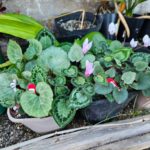
A pot of cyclamen on a patio table extends the same idea to a rental or a balcony with no ground to dig.
4. Use Colorful Containers

The container matters more than the plant in winter. A glazed pot in cobalt or burnt orange glows against gray afternoons in a way that bark and snow do not.
Bright pottery carries the whole display when the plant inside is dormant or slow. I’d pick one large urn over three small pots; the impact holds from farther away, and one good container costs less than several mediocre ones.
For live plants, winter-flowering bulbs in containers work where ground planting isn’t an option. Pansies and small conifers survive cold in pots if the container itself is frost-proof.
Check that before you buy; terracotta cracks, and some glazes do too.
5. Create a Sheltered Space

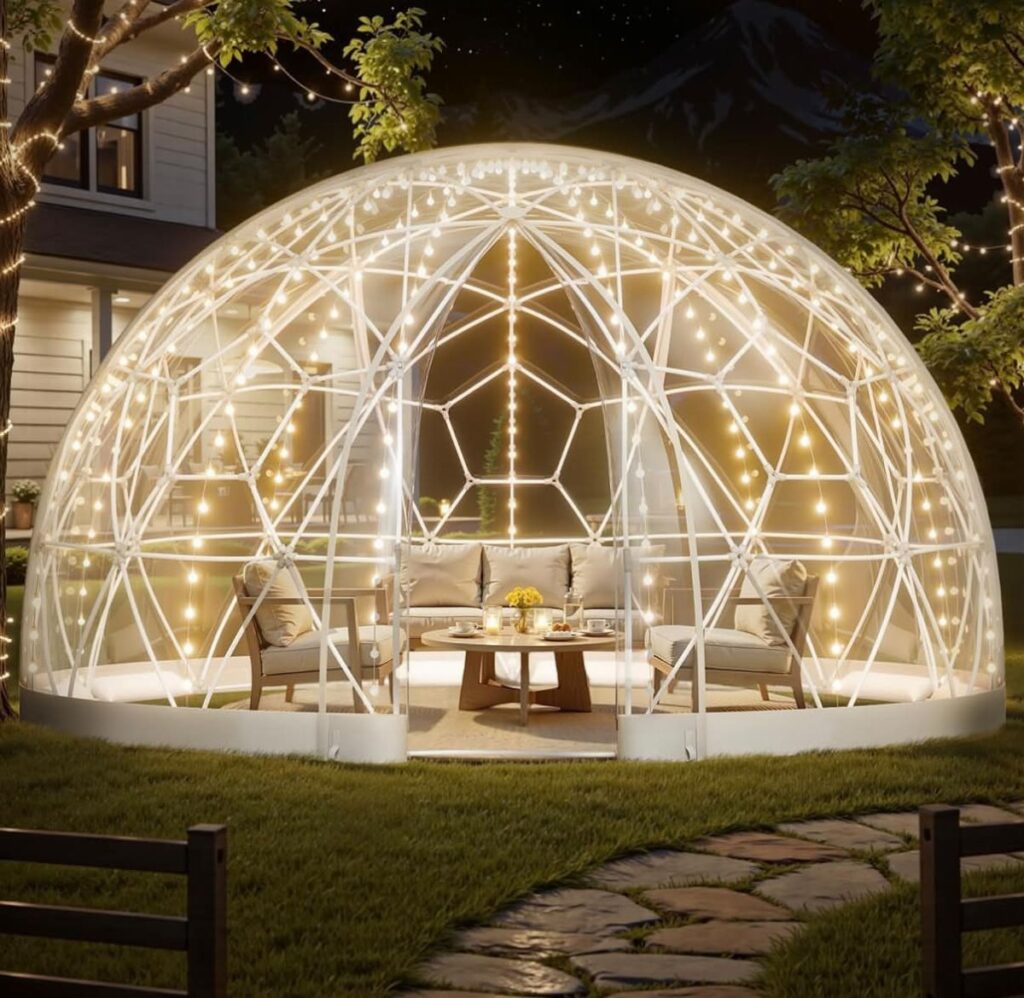
A clear-walled shelter lets you sit outside without pretending you are warm. An igloo-style tent fits a small group and keeps wind and rain off while the view stays open all around.
Glass verandas cost more but attach to the house for a permanent room that reads as outdoor.
For a smaller commitment, a pop-up shelter with a rug and a couple of chairs you already own turns a corner of the yard into a retreat for the price of the tent alone.
I’d add a portable heater before I worried about the furniture; warmth changes whether you stay or retreat inside.
A clear dome built for outdoor use handles cold, wind, and rain without blocking the sightlines. A sheltered spot also protects potted plants that struggle in open exposure.
6. Add Seasonal Decorations

A weathered ladder dressed with garland and wooden stars turns a corner of the yard into something intentional without asking for storage space later.
A ladder leaned against greenery hides its feet and lets the vertical shape read as a tree substitute. String lights, wreaths, and small ornaments do the rest.
I’d keep the palette tight: evergreens, pinecones, and one wood tone. The restraint keeps it from reading as leftover Christmas decorations dragged outside.
Outdoor lanterns and candle holders add light without wiring; battery-operated ones are safer near garland and cost less than a single low-voltage fixture.
The whole arrangement comes down in an hour when the season turns, and the ladder goes back to the garage.
For renters or anyone with a small patio, this scales to a single step stool or a narrow shelf leaned against a wall.
7. Use Hardscape Elements

Stone walls and gravel beds keep their shape when everything else has gone dormant.
I noticed this most after swapping a flower bed for a crushed-stone circle with a steel bowl fire pit at its center; suddenly the yard had a place to look at even in February.
A patio or walkway in brick or stone does the same work without needing any heat source. The material stays visible under light snow, and the edges give you something to clear toward when you’re shoveling.
A fire pit makes sense if you actually sit outside in winter. Otherwise, a simple stone patio with room for a portable propane heater extends your season for less money and no permanent commitment.
Check whether your local codes require a permit for open flames before you dig in.
8. Incorporate Ornamental Grasses

Feather reed grass and switchgrass hold their form through snow and ice, which is more than I can say for most perennials in my yard.
Their seed heads catch late afternoon light and move with any breeze, giving the garden something alive to watch when color has drained out of everything else.
Blue fescue works for smaller spaces; its silvery clumps stay neat and don’t flop.
The taller varieties need cutting back in late winter before new growth starts, so place them where you can reach them with shears without wading through garden beds.
This suits anyone who wants winter texture without planting something new every fall. The grasses I put in now cost me nothing but a March haircut.
9. Add a Fire Pit

A fire pit pulls people outside on nights they’d otherwise spend at the kitchen table. A real flame extends your season farther than you’d guess, even into snow.
Central placement matters more than I expected. Mine started off-center near the fence, and half the seating area ended up awkward and cold.
Moving it to the middle of the patio meant everyone faced the fire and the heat reached every chair. Surround it with gravel or stone, not wood mulch, for obvious reasons.
Dry wood makes the difference between a fire you start and one you fight with. Wet logs smoke and sputter and send people inside; a covered rack near the pit keeps things dry enough to burn clean.
Portable bowls work for renters. A built-in stone pit adds value if you own, but only if you’ll use it more than a handful of times each winter.
10. Install Outdoor Heaters

The tabletop stays usable for a mug or a phone, which a ground-level pit doesn’t manage.
Patio heaters and infrared lamps do the warming without any flame at all. Wall-mounted infrared units suit covered seating areas where a tall heater would block sightlines.
Freestanding mushroom heaters cover broader spaces but need clearance overhead and around them.
Fuel type changes the math. Propane tanks run out mid-party; natural gas lines cost more to install but remove that variable.
Electric infrared costs less to operate if you have the outlet capacity, which most older patios do not.
I’d pick a fire table for a small group that eats outside, infrared for a larger area where people move around.
11. Welcome Wildlife with Bird Feeders

A wooden feeder stocked with black oil sunflower seeds draws cardinals, chickadees, and the occasional woodpecker through January. The color of a bright bird against snow is reason enough to start this.
Placement determines what you see. Near a window beats deep in the yard if you actually want to watch.
Cover overhead helps keep seed dry and slows squirrels, though nothing stops them entirely. Buy seed by the bag; active weather empties a feeder fast, and a flock empties it faster.
Berry shrubs like winterberry holly or beautyberry feed birds naturally and ask less of you. A winterberry near the feeder gives cardinals another stop and keeps them around longer.
This suits anyone who wants movement and sound in a quiet yard. Seed on the ground brings the occasional rodent with it.
12. Grow Cold-Weather Crops

Kale, carrots, and Brussels sprouts handle frost that would kill a tomato in hours. The cold actually improves their flavor; Brussels sprouts sweeten noticeably after a few nights below freezing, and kale loses its summer bitterness.
A greenhouse extends this to lettuce and spinach in climates where open ground won’t work. A lean-to against a south wall does the same job as a larger structure on a smaller scale.
Root crops need loose, deep soil to size up properly. Loose soil matters more than fertilizer; carrots in compacted clay come up pencil-thin.
Raised beds solve it if your ground is heavy.
Brassicas and root vegetables suit anyone with sun and patience. Leafy greens demand more protection and more attention to watering.
Start small: a modest bed of kale and carrots feeds a household through winter with less work than you’d expect.
13. Leave Seed Heads and Dried Flowers

Standing seed heads catch frost better than any store-bought decoration.
I leave yarrow and ornamental grasses like ‘Karl Foerster’ feather reed grass up through January, and the payoff comes after the first real snow, when the stems turn into pale sculptures and the plumes glaze over.
Songbirds pick at the seeds on the coldest mornings, so the garden stays alive even when nothing is growing.
The red twig dogwood behind my grasses carries color too, but the yellow winter blades against those red stems is the combination that actually works in a small yard. Cut back in early spring before new growth starts.
14. Create a Water Feature

A moving water feature runs through winter if you size the pump right and keep it flowing; still water freezes solid and cracks most basins.
Integrated lighting on a stream-and-fountain setup matters more in December than in July, when you would not notice it until after dark.
I would build around a recirculating pump rated for your lowest expected temperature, or plan to pull and store it before the first hard freeze.
Stone and pebble construction handles frost heave better than concrete shells, which tend to crack where the Midwest hits single digits. The sound covers traffic noise year-round, but in winter, with the windows shut, you hear it most from inside.
15. Integrate a Spa or Hot Tub

A hot tub on a deck in snow looks like luxury, but the real question is whether you will walk across a frozen yard to use it.
I would place one close to a door or not bother; my tolerance for cold wet feet is low, and towels freeze stiff if you leave them outside.
All-season models run 240V and hold temperature efficiently enough that daily use does not destroy the electric bill.
The hydrotherapy angle is legitimate for sore backs and hips, though I suspect most owners value the excuse to sit outside in January without being miserable.
A spa needs proper electrical run by a licensed electrician, which adds to the total cost fast, or you could rent a cabin with one twice a year and call it even.
Importance of Evergreens
Evergreens are the structure that keeps a winter garden from looking like a construction site once everything else sleeps. Without them, a yard becomes a collection of bare sticks and flattened perennials.
The mistake is treating evergreens as solo performers. A line of identical arborvitae reads as a fence, not a garden.
Layering heights, mixing needle textures, and leaving space between groupings lets each plant read as itself while the whole holds together. Boxwood and holly keep their shape; pines and spruce add height at the back.
A handful of evergreens, three to five, is enough to give a backyard its bones in winter.
Winter also exposes what summer hides. A plant’s branching structure becomes the whole show once leaves drop.
Winter Maintenance Tips
Mulch compresses and thins over winter, exposing roots to freeze-thaw cycles that heave plants out of ground. Mulch laid down in late fall, before the ground freezes, buys insulation for the months ahead.
I add 2–3 inches where it has worn to less than 1 inch, keeping it clear of trunks and stems to prevent rot.
Water features need checking before temperatures drop to single digits. A pump left in still water will freeze; one kept running through a properly sized recirculating system handles most cold.
Leaks in outdoor plumbing or irrigation lines show up as ice patches or soggy ground where nothing should be wet. Finding them early prevents the excavation that frozen ground would require.
Wildlife Considerations
Birds at a feeder or bath give motion and sound to a yard that would otherwise sit still until spring. Seed on the ground brings the occasional rodent with it.
Planning for Spring
Winter is when I sketch next year’s beds without the pressure of growing season.
The bare ground shows what worked and what failed; gaps where a perennial died, overcrowded corners that need dividing, the sunny spot that opened when a neighbor’s tree came down.
I measure while I can still see the edges, note the varieties that held through cold, and order bare-root stock before nurseries run low on the specific cultivars.
Planning now means digging as soon as soil can be worked, not as soon as I finally decide.
Hardscape changes, too, are easier to price and schedule in off months. Contractors have availability, and frost heave has already shown where drainage needs fixing.
A patio extension or bed reshaping mapped in February gets built in April instead of joining the June backlog.
Frequently Asked Questions
What landscaping can be done in winter?
Winter landscaping works around what stays alive and visible: evergreens for structure, low-voltage lighting along paths, and winter-blooming plants like hellebores and witch hazel. Stone walls, gravel beds, and fire pits keep working once the perennials have died back.
I’d start with the walk you use daily and the view from your kitchen window, since those are the spots you’ll actually see in January.
What plants can survive in extremely cold environments?
Boxwood, blue spruce, and juniper hold up in containers through freezing weather, while hellebores and witch hazel bloom through snow and frozen ground.
Ornamental grasses like feather reed grass and switchgrass keep their form through ice storms; blue fescue suits smaller spaces without flopping.
The specific limit depends on your zone and whether the plant sits in open ground or a pot, since roots freeze harder above soil level.
What month do you start a winter garden?
Brassicas and root vegetables go in early enough to mature before the short days of December, since kale and carrots actually improve after frost hits.
Leafy greens are pickier about cold snaps and dry soil, so I start those inside a greenhouse or cold frame instead of betting on open ground.