
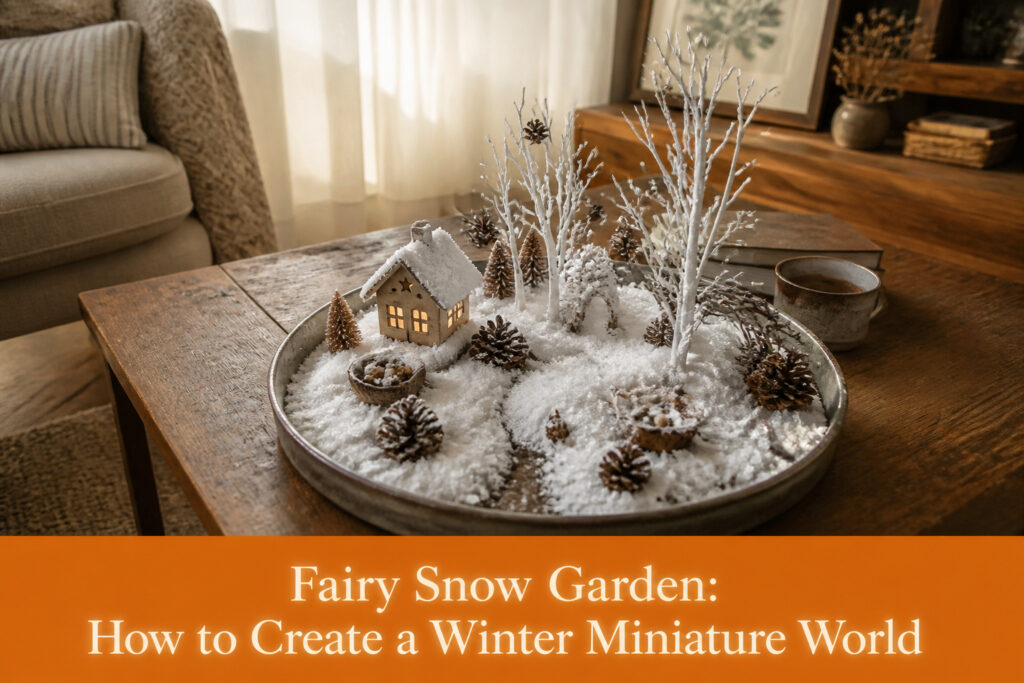
A fairy snow garden is a miniature winter scene built in a shallow tray using artificial snow, tiny accessories, and white-painted natural materials.
Almost every filler option carries a real tradeoff: SnoWonder keeps its shape for days but costs ten to fifteen dollars per bag, while Epsom salts sparkle like frost yet need constant supervision with children under four because of their laxative effect.
I learned the hard way that spray snow dries to a grayish crust that sheds powder across the floor; SnoWonder mixed into small mounds, or bare ground with white-painted twigs for trees, holds the winter illusion without the cleanup.
Artificial Snow Options
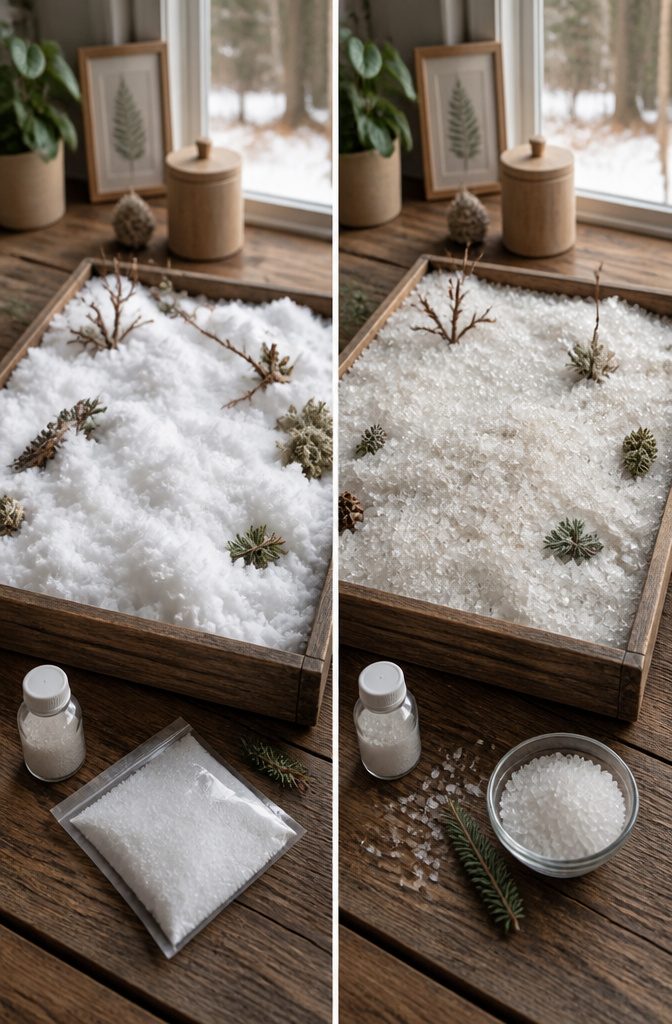
SnoWonder is the one that feels like an actual event in a bag. The powder ships dry, and when you add water it expands into fluffy, cold-free snowflakes that keep their volume for days.
I found it online through gardening retailers; a small pouch runs somewhere in the ten-to-fifteen dollar range and makes enough to blanket a shallow tray several times over.
The Midwest gardeners who first turned me onto it use it for holiday gifts sent south to Arizona relatives, which tells you how little mess it leaves behind.
Epsom salts sit at the opposite end of the sensory map. They crunch under a fingertip, catch light like frost, and cost next to nothing at any pharmacy or grocery store.
Supervision matters: they are not toxic in small amounts, but a toddler mouthing handfuls needs an adult watching.
White play sand splits the difference, sparkling under a lamp and pouring cleanly through fingers, though it scatters worse than either of the others and shows every footprint by day two.
If the garden is for looking at past Sunday, SnoWonder wins. The salts and sand both shift, settle, and end up in the cracks between pavers by midweek.
Miniature Accessories
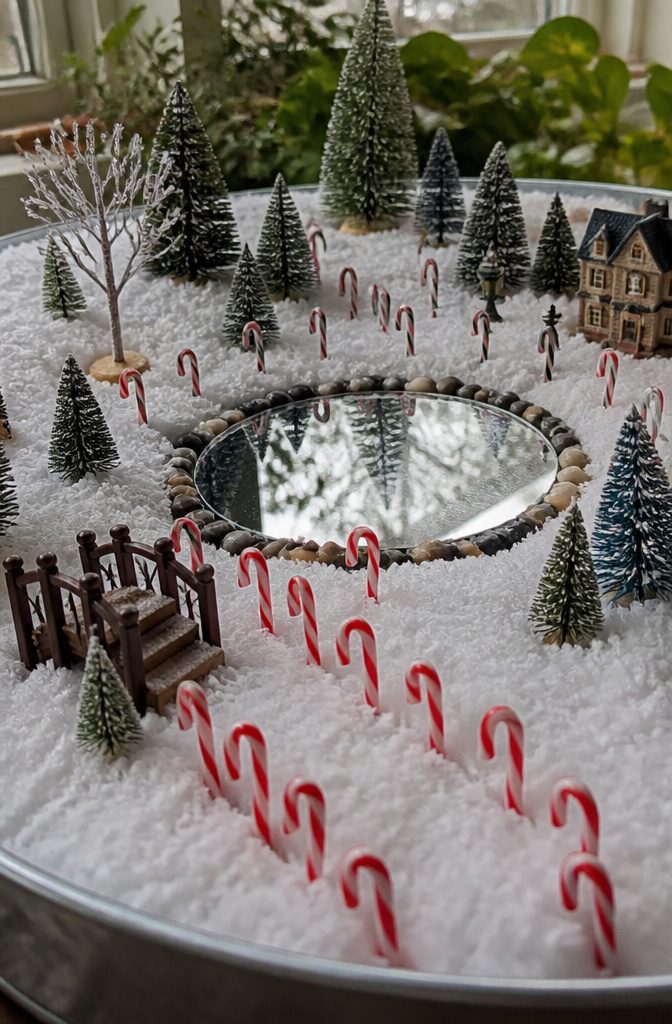
The accessories are where a fairy snow garden earns its name, and the hunt for them is half the work. I wanted tiny candy canes for a lane, but two craft stores had none.
The third had them in the dollhouse miniature section, tucked beside firewood piles and little sleighs. 1:12 scale or smaller fits a shallow tray without the scene looking crowded.
Resin figurines hold up to damp cold, though wind will knock them over. I secure mine to golf tees with fast-acting glue, then push the tee into the base so the fairy stays on her bicycle.
A round mirror, painted white on the frame, becomes a skating pond. Mini craft sticks make decent signposts if you hold each joint till the hot glue sets.
The snowman is just three white pompoms and two googly eyes, which sounds simple until the middle pompom rolls off the table.
Decorative Elements
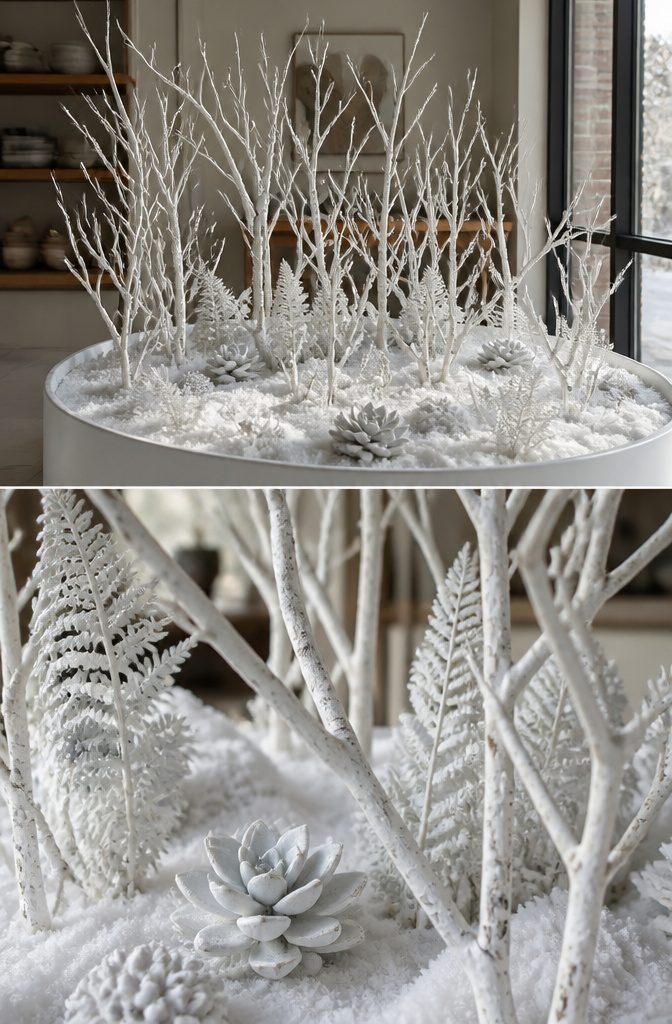
White paint on ordinary twigs turns them into the bones of a winter scene faster than any specialty item.
I started with branches from the yard and a half-empty can of Testors CREATEFX Enamel Textured Spray left over from another project. The enamel held on bark better than acrylic, which peeled in thin flakes after a week indoors.
Ferns and succulents dried stiff and kept their shape; I painted them white and tucked them in as undergrowth that reads as snow-heavy from a few feet back.
Spray snow was the mistake I stopped repeating. The can promised a fluffy drift, but it dried to a grayish crust that shed powder every time someone walked past the table.
One afternoon of cleanup convinced me to mix SnoWonder into small mounds instead, or simply leave the ground bare and let the white foliage carry the whole winter effect.
A pinecone with its tips painted white makes a simpler tree than anything shipped from a miniature village catalog, and the beads and string you already own finish it without another purchase.
Sensory Play Materials
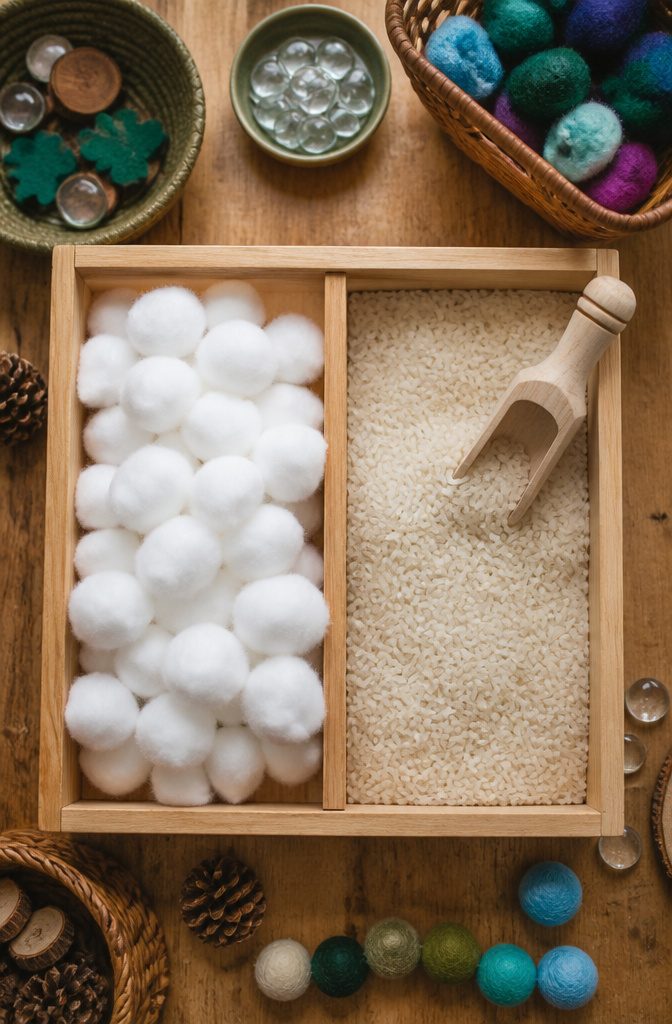
Cotton balls, white rice, and shredded paper each land somewhere different on the mess-to-play ratio, and my niece made that clear fast.
Cotton balls held up best for her at three: they clump like real snow, sweep up in one pass, and cause no panic if a piece ends up in a mouth.
White rice bought me twenty minutes of pouring and scooping before it scattered under the cabinet toe-kicks, where it crunched for a week; I would not bring it out for anyone under five, since uncooked rice is a genuine choking hazard and too tempting to taste.
Shredded paper was the one I regretted. It stuck to her damp hands, trailed through the hallway, and turned to gray pulp when she tried to "make a snowball."
For elementary-aged kids who will not mouth it, torn paper works fine and costs nothing, but supervision still matters with any filler.
Epsom salts photograph beautifully and feel interesting between the fingers, yet the laxative effect if swallowed means I skip them entirely with toddlers, and even preschoolers need someone watching every minute.
Sparkling white play sand is the safer swap if you want that crystal look without the worry, though it still calls for a tray with a lip and a vacuum nearby.
DIY Projects
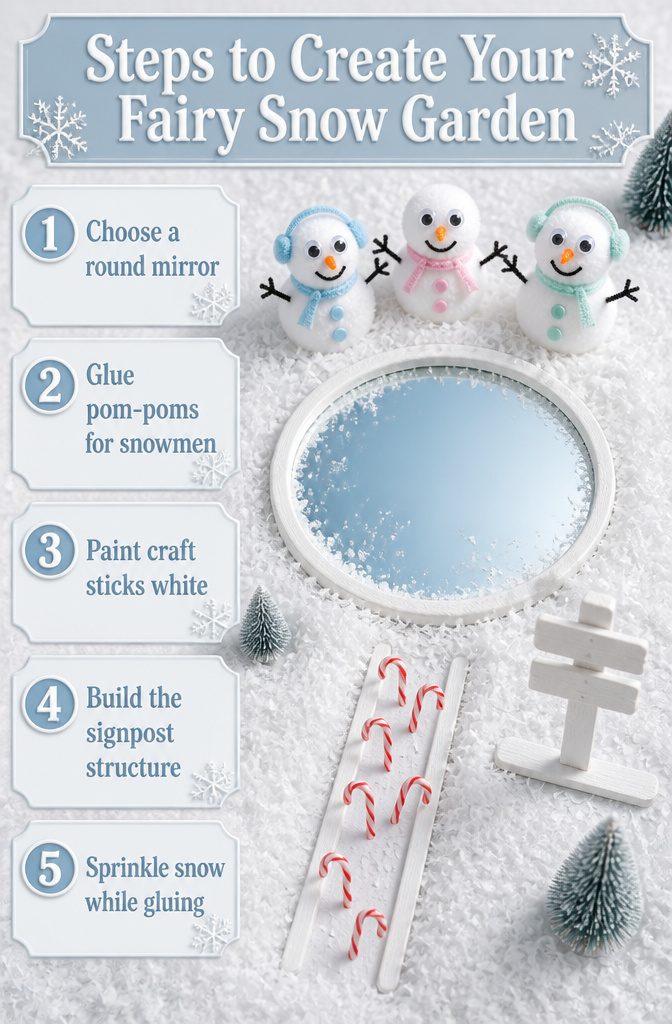
A 6-inch round mirror makes the skating pond, not a larger one that crowds the tray.
Paint the frame white if it comes in pink, nestle it into the shredded snow, and add a light sprinkling around the edge to blend. Rectangular mirrors crack against tray edges; the corners stress and the backing splits fast.
Round or flexible bases last longer.
The pom-pom snowmen are three white pom-poms hot-glued together, with chenille stem features and two small google eyes.
In humid rooms they hold up fine for a season, though the glue softens enough by spring that the middle pom-pom shifts if you store the tray in a basement.
I keep mine in a closet now and they stay intact year to year.
For the candy cane lane, two standard craft sticks painted white carry miniature plastic candy canes down the center. Sweep the snow aside to set them, then sweep it back to cover the wooden base.
The signpost is mini craft sticks glued horizontal across vertical, with the post end secured to another stick laid flat.
Hold each joint until the hot glue sets, and if you sprinkle snow while the glue is still hot, it blends into the scene instead of sitting on top like dust.
Why White Reads as Winter

White carries the winter feel because it reads as snow, and snow is what makes a miniature garden feel cold rather than merely small.
Painted twigs, pearl picks with their luster, and imitation snow mounded over the ground cover do the visual work of temperature. I have seen the same thing in my own builds.
The more white you layer in, the more the scene pulls off the trick of feeling chilled.
Color is where this gets tricky. A single bright element, dropped into all that white, will dominate the entire scene; the eye goes straight to it and the winter mood collapses into generic whimsy.
But zero color is its own problem. Without one non-white focal point, the whole garden washes out into a pale blur, and the miniature world loses its center.
Restraint works better: one deliberate accent, low saturation, placed where the eye lands last rather than first.
A deep evergreen miniature tree, or a fairy door in weathered gray rather than holiday red, holds the scene together without breaking the spell.
What Kids Actually Get From Building One
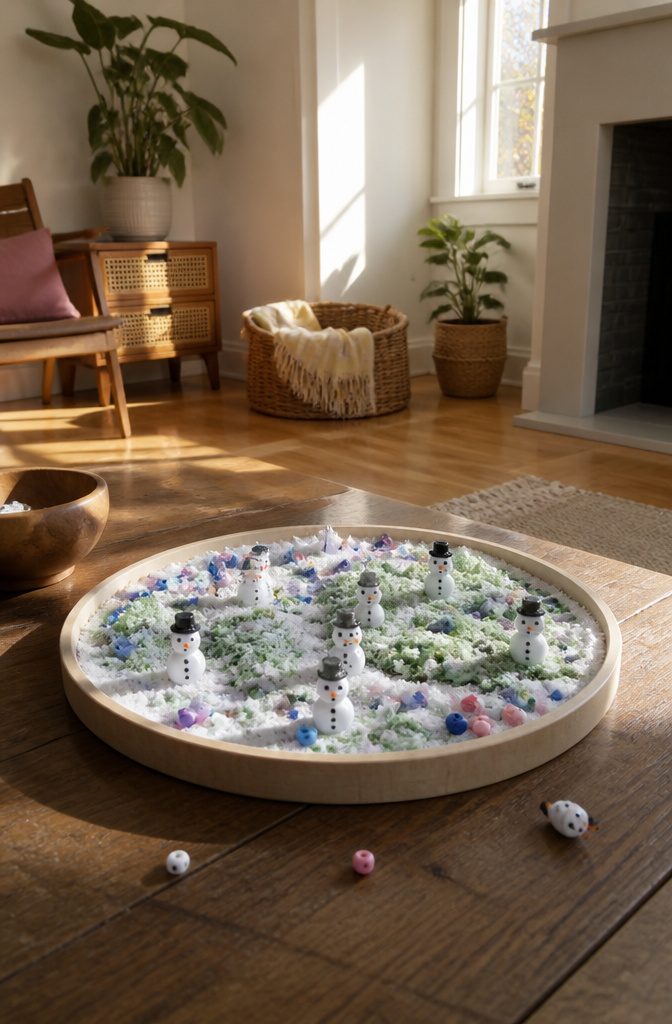
A four-year-old can handle the scooping and moving of tiny pieces that builds strong fingers and steady hands.
Mine spent a solid twenty minutes just transferring Epsom salt "snow" from one corner of the tray to another with a tablespoon, which is about as long as she stays with anything that isn’t a screen.
The placing of pony beads onto winter tree branches was trickier.
She could pick them up fine, but twisting them onto the twigs needed my hands guiding hers, and after three or four she wandered off to see what her brother was breaking.
Kids slow down and invent stories with fairy friends or woodland animals, though this part arrives later and shorter than most parents expect.
She narrated a whole scene for maybe ten minutes, then the tray became a sensory bin where everything got buried and dug up again. Quiet dramatic play is one outcome; a salt-everywhere situation is another.
Both happen, just not in the ratio you might picture.
By the time we were adding clay snowmen and Frozen figurines, the project was mostly mine. She checked in, dropped a figure, left.
The finished garden sat on the kitchen table, the high-traffic spot they recommend, and she did return to it after dinner, but as a digging zone, not a story world.
Safety With Epsom Salts and Small Parts

Epsom salts look clean and food-safe, which is exactly why they need watching. Children under four should not handle them unsupervised, and even older kids need the ground rule that this snow is not a snack.
The magnesium sulfate that gives Epsom salts their sparkle is the same compound used in laxatives, and while a small taste is not toxic, it is not something you want to encourage.
Skin sensitivity is another quiet risk. A patch test on a small area of skin before play starts will catch the rare allergy without turning the afternoon into a doctor visit.
Small parts are the hazard I missed until it happened.
Pony beads for icy branches, miniature figures, even the filler itself, any piece that fits through a toilet paper tube is a choking risk for toddlers and preschoolers who are still mouthing objects.
I set up the scene, stepped back to grab my phone, and turned around to find a two-year-old with a bead between her lips.
After that, the beads stayed in a sealed container until the kids were past the mouthing stage, and the Epsom salts became a hands-on activity only, not a leave-it-out decoration.
Frequently Asked Questions
What materials do I need to create a winter fairy garden?
You need artificial snow, miniature accessories, and decorative elements. SnoWonder, Epsom salts, or white play sand work for snow, while 1:12 scale or smaller figurines, craft sticks, mirrors, and painted twigs fill out the scene.
A shallow, solid tray with a flat base serves as the foundation.
How can I engage children in making a fairy garden?
Let them scoop and move filler with a tablespoon to build finger strength, and help them place pony beads onto twig branches. Kids often turn the tray into a sensory digging zone rather than sustained dramatic play, which is normal.
Finished gardens placed in high-traffic spots draw them back for repeat visits.
What are the rules for a fairy garden?
Keep one deliberate accent in low saturation so the scene does not wash out into all-white blur or collapse into generic whimsy. Place that single color where the eye lands last, not first.
Weathered gray or deep evergreen hold the winter mood better than bright holiday reds.
Does Dollar Tree have fairy garden items?
Craft stores carry dollhouse miniatures in 1:12 scale, including candy canes, sleighs, and firewood piles. Painted twigs, pompoms, and beads you already own finish the scene without extra purchases.
What is the point of a fairy garden?
The white layers trick the eye into feeling cold, turning a small scene into a miniature winter world rather than merely a small garden.
Restraint with color keeps the spell intact, while hands-on building develops fine motor skills and gives children a space for both imaginative and sensory play.





