
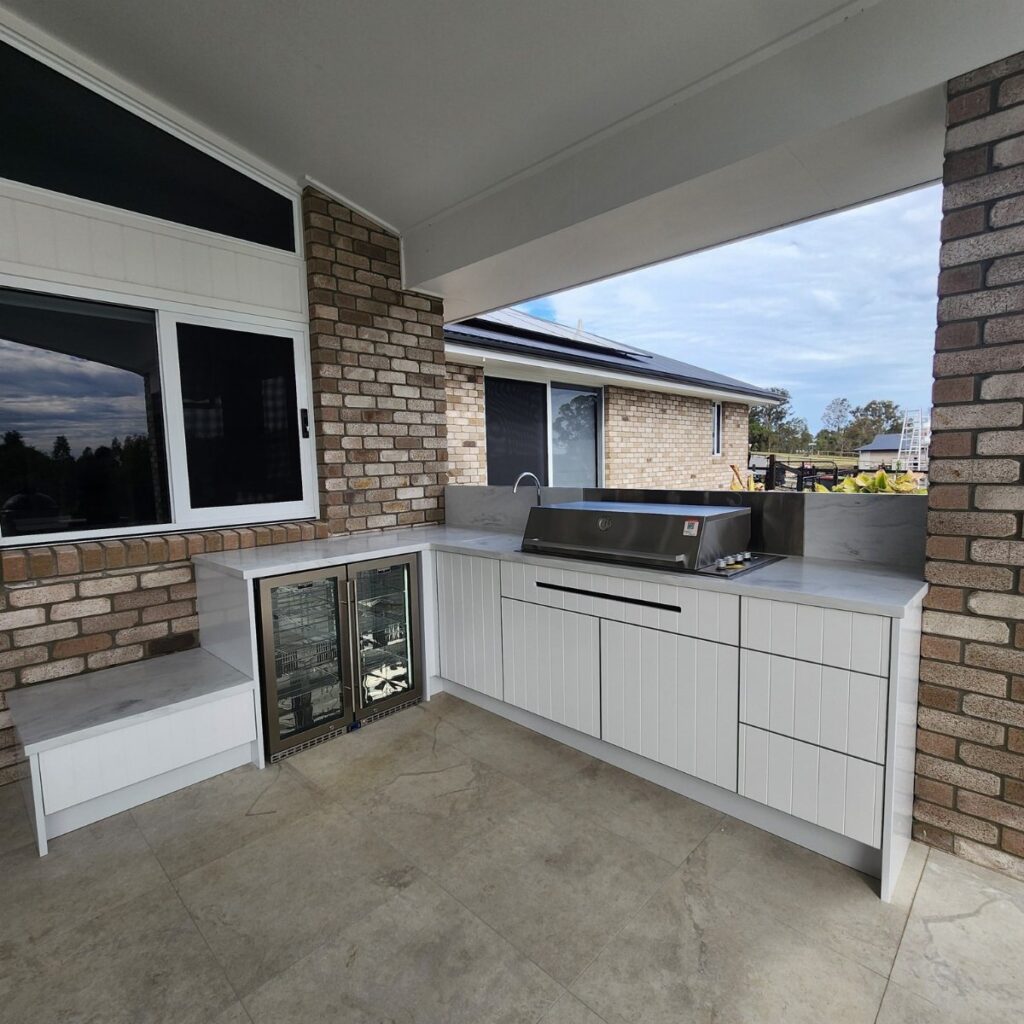
Outdoor kitchen fridges range from a mini fridge you can carry off the deck to a full-size double-door unit that needs its own circuit and a permanent stone pad.
The deciding factor is how you use the space: a mini fridge on wheels suits renters and weekend rearrangers, while a full-size double-door unit makes more sense for a covered kitchen built to stay put.
A Perlick 4.8 cubic foot under-counter model built for outdoor use sits right in the middle of that range, with ventilation clearances you will want to check before the cabinets go in.
1. Mini Fridge
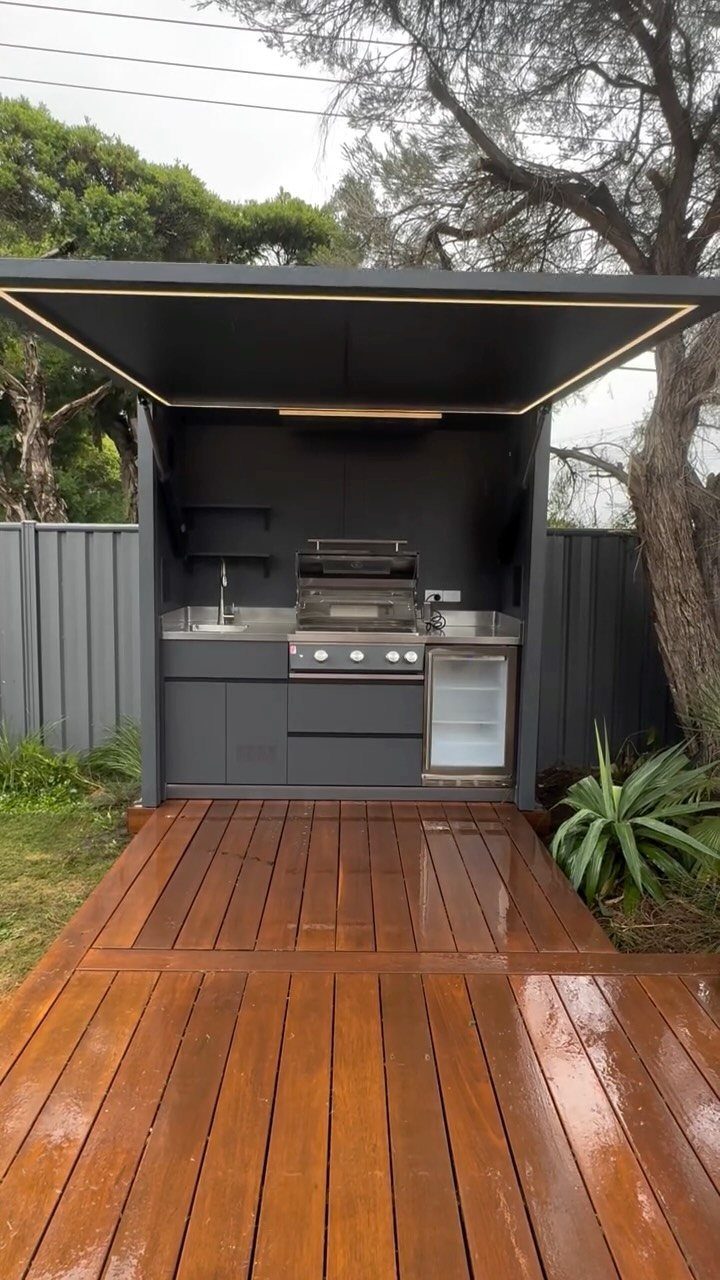
A mini fridge gives you cold storage when your outdoor kitchen is basically a grill, a counter, and whatever wall or fence you are working against.
The ones built into cabinetry sit at counter height, which saves bending down every time you want another drink.
I have seen them tucked under stone counters and slotted into wood frames with glass doors facing outward so guests can spot the seltzer without opening the door and dumping cold air into August humidity.
Standalone units run cheaper and move with you, though they eat floor space and tend to rattle on uneven decking. If you rent or your outdoor setup changes year to year, that portability matters more than built-in looks.
Budget enough for an outdoor-rated mini fridge; the indoor ones rust faster than you would think.
2. Beverage Cooler
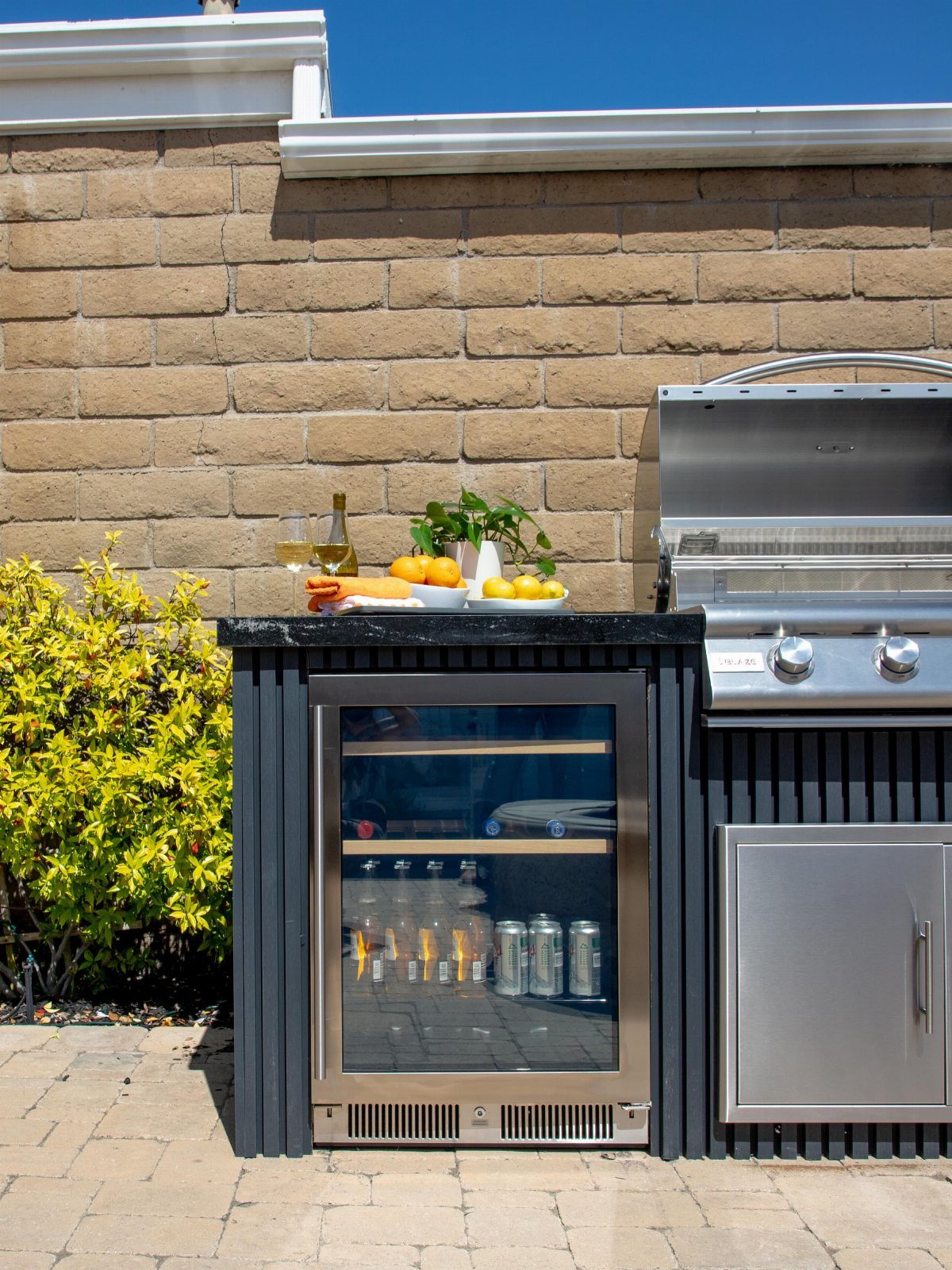
Glass doors on a beverage cooler serve a purpose beyond showing off your IPA collection. Every time someone opens a fridge to hunt for a can, the compressor works harder.
With a glass door, the guest spots what they want first, grabs it, and the interior barely notices.
These units usually run narrower than mini fridges because they are not trying to hold a pizza box or leftover potato salad.
Adjustable wire racks let you switch between wine bottles, cans, and the tall boys that do not fit standard shelving.
I would put one next to the grill but not directly above it; radiant heat from a hot cooktop makes any refrigerator work overtime.
Most run narrow enough to sit flush in standard cabinetry. If your outdoor kitchen island is already framed for appliances, this is often the easiest slot to fill.
3. Under-counter Refrigerator
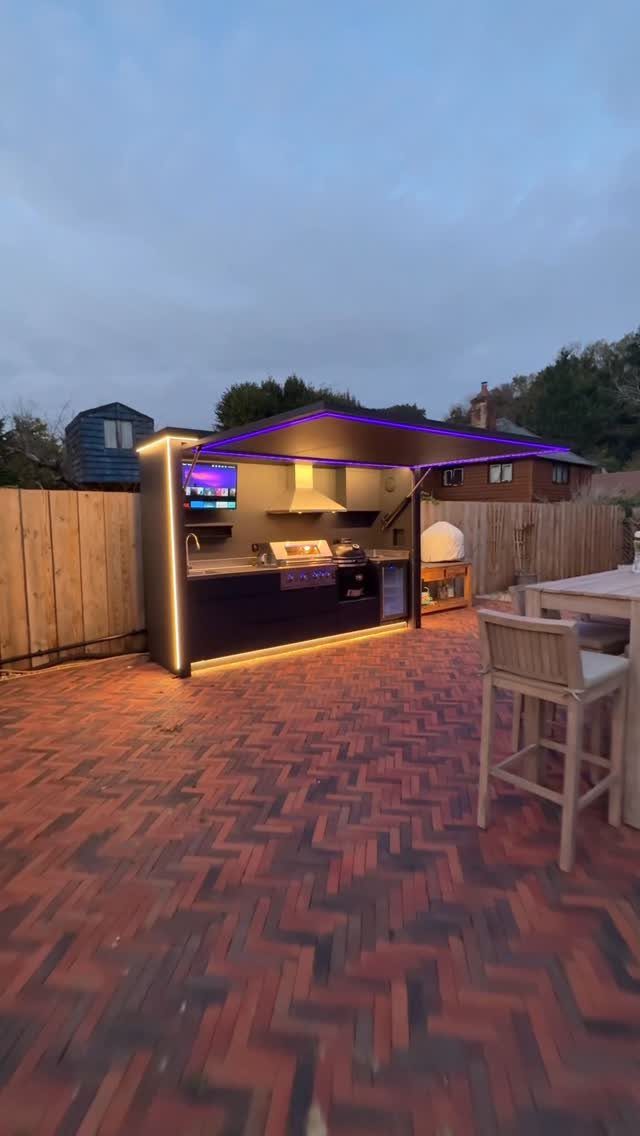
The under-counter refrigerator disappears into the run of cabinets beneath your counter, and that low profile keeps sight lines clean across a small patio.
You lose the grab-and-go convenience of a waist-high unit, but you gain prep space above it and a kitchen that reads as furniture rather than appliance yard.
A rear-venting fridge tucked against a stone wall cooks itself in summer. I would check the clearance specs before finalizing cabinet dimensions; the manual usually wants a little breathing room on the hinge side.
The Perlick 4.8 cubic foot model runs about that size and is built for outdoor use, though you pay for the rating. For a weekend cook who grills regularly, an indoor under-counter unit in a sheltered spot might outlast your lease.
4. Integrated Refrigerator
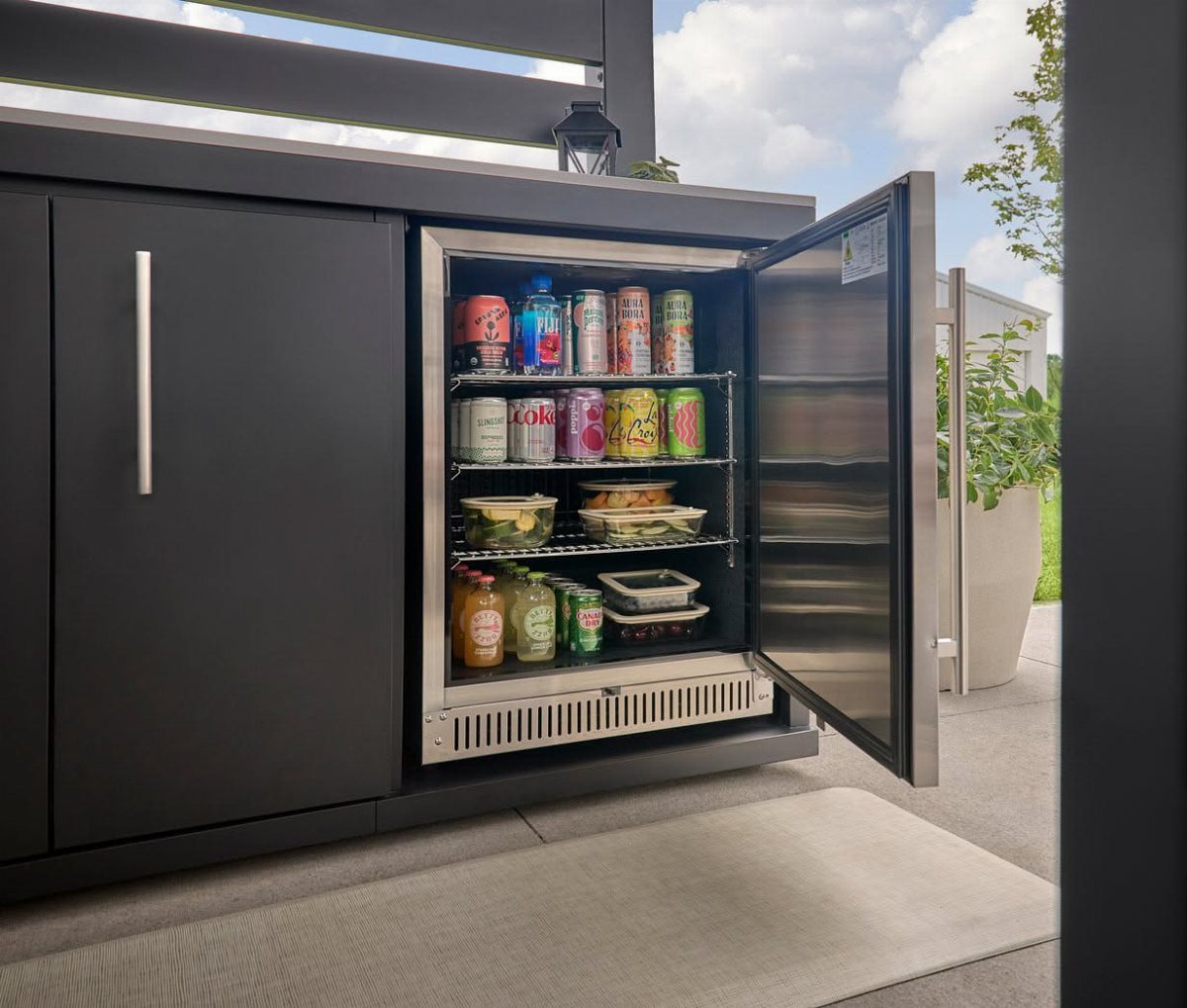
An integrated refrigerator takes the under-counter idea one step further: the cabinetmaker builds a matching face onto the door so the appliance reads as drawer stack or paneled column rather than stainless steel box.
From a few feet away you might not spot the seam.
This works best when your outdoor kitchen already runs to custom cabinetry in a consistent finish.
The Hestan Aspire built-in line is one option if you are ordering appliances and cabinets together; the manufacturer supplies the panel specs and hinge geometry so the wood or composite face aligns with adjacent doors.
Get that wrong by ⅛ inch and the whole run looks off.
The trade is cost and commitment. You are not swapping this unit out without rebuilding the cabinet face.
I would only go integrated on a kitchen I planned to live with for a while.
5. Full-size Double-door Outdoor Refrigerator
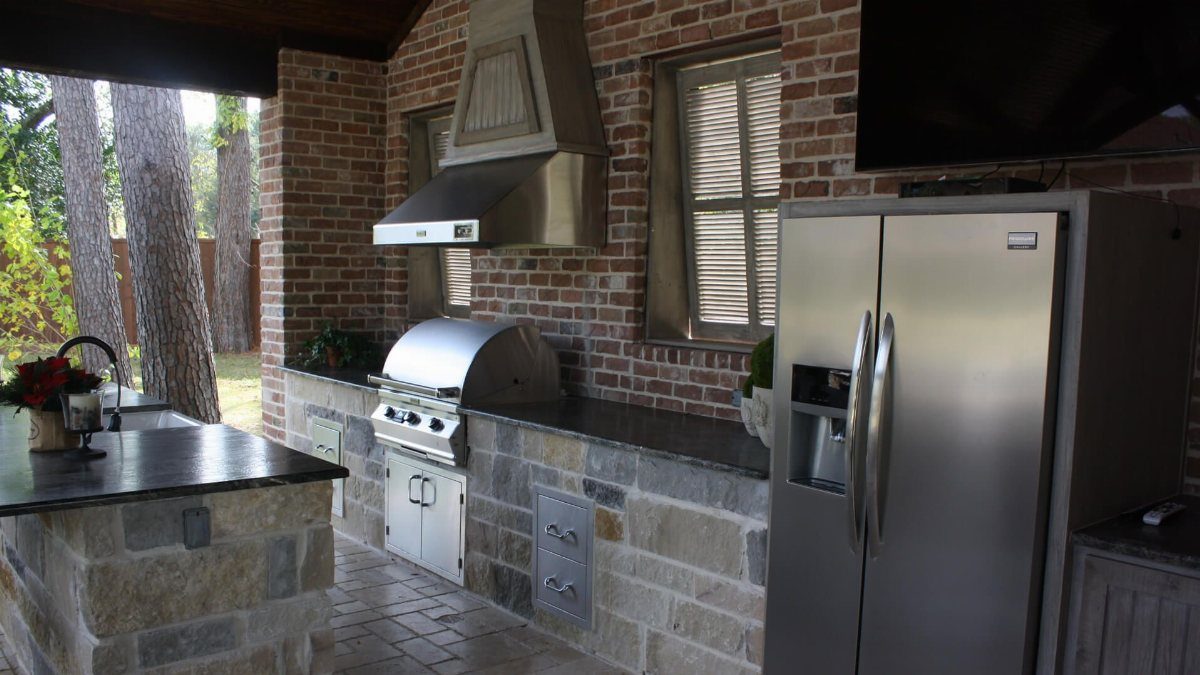
A full-size double-door outdoor refrigerator belongs in a kitchen serious enough to have a range hood, a television, and seating for 8.
The double-door layout gives you one side for raw prep and one for finished plates and drinks, with enough room that you are not running inside for ice mid-party.
These run wide and need dedicated 120V on its own circuit; a shared line with the grill rotisserie and string lights will trip when the compressor kicks in.
I would also check the threshold: a freestanding unit on a stone patio needs to be level, and the adjustable feet on most only handle so much.
If your outdoor kitchen is under cover and you cook out often spring through fall, this is the one that keeps you outside for the whole evening.
For occasional burgers, it is space and money better spent on a better grill.
Durability of Outdoor Fridges
Outdoor-rated refrigerators use 304-grade stainless steel for the exterior because it resists corrosion in humid, salty air better than the 430-grade found on most indoor units.
The door gaskets are also different: outdoor models use heavier magnetic seals and often add a second compression layer to keep rain from seeping into the seal gap.
A fridge rated for outdoor use will list an ambient temperature range, and true outdoor units handle a much wider swing than a kitchen model ever would. Condensation is the other killer.
Outdoor models route drainage to a small evaporator pan or a directed drain line; indoor units pool water in the bottom tray until it rusts through the floor pan.
I would still check the warranty: most void coverage if the serial number shows installation outside a climate-controlled space.
Energy Efficiency
Energy efficiency in outdoor refrigerators is measured the same way as indoor units, by the yellow EnergyGuide label, but the numbers mean less in practice.
A fridge working against hot ambient air will run its compressor longer and draw more kilowatt-hours than the same unit sitting in a climate-controlled kitchen. The federal test assumes indoor conditions, so your actual cost will run higher.
Look for variable-speed compressors if the budget allows. They ramp down instead of cycling on and off, which saves power in mild weather and reduces the startup surge that trips shared circuits.
Thick insulation also matters more outdoors. Units with 2-inch or greater wall foam hold temperature longer between compressor runs, which is where the savings come from.
I would not chase the lowest listed yearly cost on the label. An efficient compressor in a thin-walled cabinet will cost more to run outside than a less efficient one in a heavily insulated box.
Installation Considerations
Outdoor refrigerators need dedicated electrical. The National Electrical Code requires GFCI protection for all outdoor outlets, and refrigerator compressors can nuisance-trip a standard GFCI when they start up.
A 20-amp dedicated circuit with a commercial-grade GFCI, or a non-GFCI breaker feeding an outdoor-rated receptacle inside a weatherproof enclosure, is the setup most installers use for full-size units.
Leveling matters more than indoors. A compressor tilted even a few degrees off vertical can starve itself for oil or hammer against internal mounts.
On a stone patio, I would set the unit on a bed of compacted gravel or a precast concrete pad rather than trying to shim the feet across uneven flagstone.
Ventilation is the other detail the list skips. Rear-venting units need 1–2 inches of clearance to the wall; zero-clearance models vent forward through the toe kick but cost more.
If you are building cabinetry around the fridge, leave an open chase behind it or the heat will recirculate and shorten the compressor life.
Maintenance Tips
Clean the condenser coils often during heavy use season; I check mine whenever I fire up the grill on weekends, which ends up being every few weeks in summer.
Outdoor units collect pollen, grease from the grill, and dust faster than indoor ones, and a coated coil runs the compressor hotter and longer.
A soft brush and a shop vacuum with a crevice tool handle most of it without moving the unit.
Check the door gasket twice a year by closing the door on a dollar bill and pulling. If it slides out easily, the seal is weak and humid air is entering, which means more condensation and more compressor run time.
Replace gaskets as a pair if the door has two; a fresh top seal with a worn bottom one warps the door.
Drain the evaporator pan if your unit has one, or clear the drain line with compressed air. Standing water breeds mold and draws insects.
In fall, I would cover the unit or move a standalone model to a garage. Even outdoor-rated compressors struggle once real cold sets in, and a winter cover keeps debris from packing into the coil fins.
Frequently Asked Questions
What is the best refrigerator for an outdoor kitchen?
The best choice depends on how you cook and how permanent your setup is.
A mini fridge is what I’d grab for a rental setup that breaks down each fall, but if you’re running a covered kitchen with its own 120V circuit and people over every weekend, the full-size double-door units start to make sense.
Outdoor-rated units cost more up front but rust slower than indoor models left outside.
Do you need a special fridge for outside?
Yes. Outdoor fridges use sealed compressors and weatherproofed electronics that handle humidity and temperature swings.
An indoor unit left outside will rust faster than you expect and the compressor will struggle in summer heat.





