These twenty-six planting ideas for a terrace range from a single hanging basket to a built-in brick planter bench with integrated storage, and from a weekend of drilling drainage holes into old crates to a permanent stone water basin that needs a load check against your roof’s limits before it goes in.
Some of these ideas you can pack into a moving truck when the lease ends; others stay with the property, so it pays to know which side of that line each one falls on before you start spending money.
1. Herb Garden

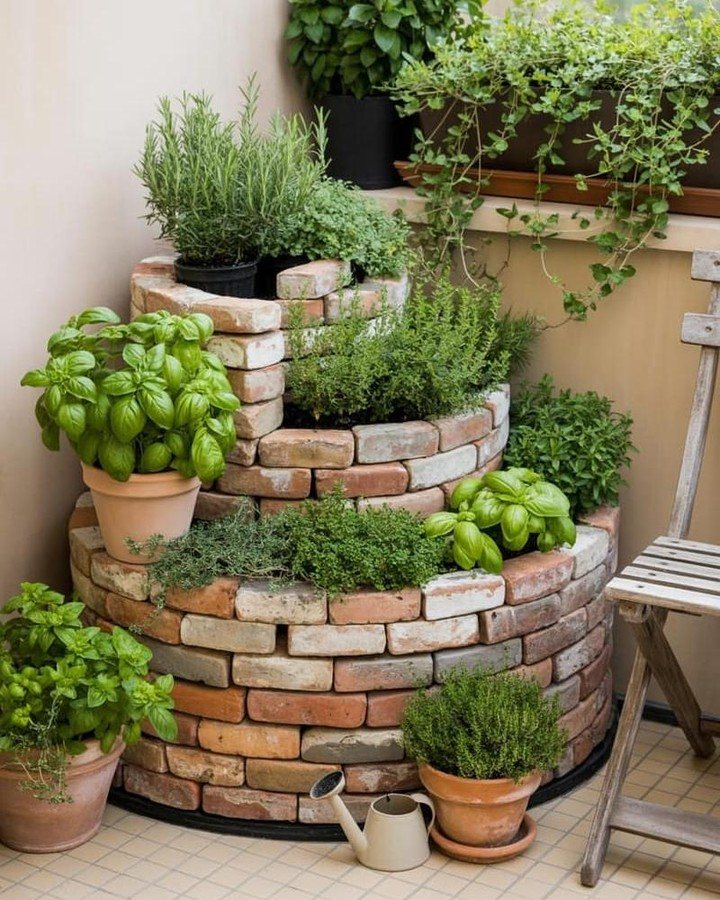
A tiered brick planter turns a corner of terrace into a working kitchen garden you harvest from all season.
Thyme, rosemary, and sage handle the direct sun that most terraces get hammered with; mint and lemongrass need less attention on the watering side if your schedule is uneven.
I arrange herbs in beds with small seating between them, which makes the space usable for morning coffee and keeps the planting neat. The green patches also help keep bugs at bay.
For anyone cooking regularly, this pays back faster than ornamentals; for a terrace that gets partial shade, swap in parsley and spinach instead.
2. Raised Beds

Shallow raised beds give you a full growing area without loading the terrace structure the way deep soil would. I build mine in wood and set them on gravel, which drains and does not hold moisture against the frame.
Every season I refresh the soil with organic compost and potting mix; one gardener I follow uses about 20 bags across a full garden and fruit tree setup, so scale from there.
Tomatoes, chillies, coriander, and spinach all take to this format. Shallow beds filled with wet soil run heavy, so check your load limit before you commit to the footprint.
3. Water Feature

A small self-contained fountain or spout turns a terrace corner into the spot you actually want to sit in. The sound masks neighboring noise and cools the air slightly on hot days.
I would position it as a backdrop you see through the door, not tucked behind seating where the sound gets lost.
For a terrace that hosts evening gatherings, the reflective quality of lit water is worth planning for from the start.
4. Bistro Corner

A bistro table and two chairs, each flanked by one potted plant, with lights overhead: that is a complete terrace dining area in about 2 square meters.
I would pick marble, zinc, or a tiled top for weather resistance, and rattan, powder-coated steel, or solid teak for the chairs if you want to skip winter storage.
For a terrace lined with pots along the edges, this fits where a larger arrangement would not; for morning use, orient it where the light hits first.
5. Trellis for Climbing Plants

I would choose jasmine for evening scent, rose for color against brick or stone. For a terrace that needs immediate privacy, pair the trellis with tall potted arborvitae while the climbers establish.
6. Vertical Herb Wall

Modular wall planters, timber pockets, stacked terracotta, or rail-mounted metal pots turn the walls and fences into your growing surface when floor space is gone.
The systems that work best have individual removable pots so you can rotate spring bulbs to summer herbs to autumn bedding without dismantling the whole wall.
Fix the system directly to the wall; hanging from hooks is unstable in wind and fails once the soil is wet.
I would mount this where morning sun hits, since most herbs want light and a terrace wall can shadow its own planting for half the day.
For a cook, the vertical format keeps basil, mint, and rosemary at hand without crossing the terrace.
7. DIY Planters

Old crates, galvanized buckets, and even worn dresser drawers become planters with a few drainage holes drilled in the bottom.
Weight matters more than looks on a terrace: an empty wooden wine box is light enough to move, yet a full ceramic pot can stress a balcony floor once soil and water add up.
Check your building’s load limits before going big.
Line anything porous with heavy plastic to slow rot, and elevate containers on pot feet so water escapes.
I’d pick metal or fiberglass over terracotta for anything above the first floor; wind catches broad planters, and shattered clay is no fun to sweep off a neighbor’s patio.
8. Colorful Planters

A tiered circle of white and wood planters exploding with saturated color works because the structure stays quiet. The containers do not compete.
This matters on a terrace where every surface already shouts: concrete, brick, railing, sky. Limit yourself to 2 or 3 pot colors total, or the flowers lose their punch against visual noise.
Glossy cobalt, mustard, or coral glazes read as deliberate; a random mix reads as leftover. Group warm colors together or cool ones, not both in the same cluster.
Annuals give you permission to change the whole scheme next year for the cost of a few six-packs.
9. Small Trees for Privacy

A row of small trees along a terrace edge gives privacy without the institutional feel of a fence. Pleached hornbeam or multi-stemmed golden rain tree stay narrow enough for tight spaces while still giving you overhead privacy.
Root restriction matters most: a wide container for any tree, with drainage you check twice a year because blocked holes kill more terrace trees than cold.
Dwarf crape myrtle handles a smaller pot if you accept slower growth. I’d use bonsai only as a table accent; they read as decorative, not screening.
Moveable containers let you shift the layout when you need the space for a gathering, which a planted hedge never will.
10. Seasonal Flowers

Rotating annuals keeps a terrace from looking tired by August. Moss rose laughs off heat and thin soil, blooming through the worst summer days on a watering every few days.
For cutting, sweet peas on a bamboo frame and cosmos in deep pots give you armfuls from July until frost; the more you cut, the more they branch.
Deadheading is not optional with zinnias or dahlias. Skip it and the plant shifts to seed production, blooms shrink, and your terrace looks abandoned.
Pair any heavy-blooming annual with something evergreen in the same container so the pot still reads in November when the flowers are compost.
11. Built-In Planter Bench

A brick planter bench turns a terrace perimeter into seating and growing space in one gesture. The curve matters: a straight run reads as a wall, but an S-bend invites you to settle in.
Build from frost-resistant brick on a concrete footing, or thermal movement will crack the mortar joints within two winters.
Integrated storage beneath the seat saves hauling cushions inside every night. Marine ply or composite decking for the lid, stainless piano hinges, and pressure-treated lining for the box.
I’d keep the planting depth shallow for herbs or succulents, deeper if you want small shrubs. This does not move when your lease ends, so check with the landlord or design it as freestanding modules.
12. Urban Jungle Terrace Garden Design

A terrace that reads as jungle needs layers, not just volume. A pergola overhead, hanging chair at mid-height, ground-level bench, and stone borders defining the floor plane give a small terrace three distinct levels to use.
Without that vertical organization, you get a green lump. Snake plants and ZZ plants handle the dry shade under a seat; pothos climbs the pergola posts with nothing more than occasional guidance.
Self-watering pots or a simple drip line on a timer keep things alive through a vacation week. The look trades crispness for density: edges blur, paths narrow, and you will sweep fallen leaves more often.
I’d choose this for a terrace you view from inside as a living picture, not one you dine on nightly.
13. Container Gardening

Container gardening turns a bare concrete terrace into something you can rearrange on a Saturday afternoon.
I like that a pot wall of tall rectangular troughs blocks sightlines from neighboring buildings without permits or construction; move the containers around until the sightline breaks where you need it.
A half-barrel or galvanized trough can also hold water, a dwarf lily, and floating plants for a tiny pond that needs no pump or outlet, just 4–6 hours of sun.
The whole setup moves with you when you relocate, which matters more than most guides admit.
14. Layered Planting

Staggered pots on risers or stair steps let you walk up to a terrace garden rather than look down on it.
I group plants in odd numbers, mixing a tall grass or small shrub with mid-height herbs and something trailing over the edge; the variation in leaf size does more than flower color to make the layers read as intentional.
Multi-tiered stands against a wall buy depth when floor space is thin. Shift pots around as the season changes and one layer starts shading another too much.
15. Hanging Baskets

A hanging basket earns its spot when floor space is already spoken for by chairs, grills, or the one patch of sun tomatoes demand.
I check whether my terrace railings are wide enough for hook-on planters, or whether I need ceiling hooks rated for wet soil weight; the answer changes the hardware list entirely.
Trailing ivy or cascading succulents in a wire basket soften the vertical plane without the footprint of a trellis. For narrow terraces, a wall-mounted trellis with suspended airplant clusters keeps the ground open for moving through.
16. Mediterranean-Style Terrace Design Design

Terracotta pots in varied heights, sun-baked tile underfoot, and a wrought-iron bistro set you found secondhand set the scene; the plants make it habitable.
Fragrant roses fill the biggest pots, with lavender and rosemary tucked between so the scent shifts from morning to evening. Warm clay holds moisture longer than glazed ceramic in full sun, which matters more than the look when July arrives.
Loose pebbles or cut flagstones keep cooler than a slab of concrete and shed water fast after a storm.
17. Rustic Stone Terrace Garden Design

Natural stone-look tile, reclaimed wood, and terracotta mixed with vintage metal furniture give a terrace the worn-in feeling of a garden that predates you.
I use native plants and wildflowers in large pots rather than fighting established ground; they handle the heat and skip the fertilizer schedule. Wicker with white cushions softens the stone without competing with it.
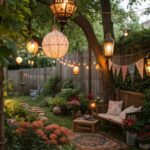
Macramé or a few old lanterns add personality without the cost of built-ins. The look trades polish for character, which suits renters who cannot alter structure.
18. Contemporary Chic Terrace Garden Design

Geometric paving with integrated grass or moss joints, clean-lined furniture, and a black pergola frame a terrace that stays uncluttered. I stick to succulents, ornamental grasses, and shrubs sheared to shape; they hold the lines without constant deadheading.
LED strip lighting along steps or inside planters extends usable hours without visible fixtures. Smart irrigation and solar lighting cut daily maintenance to near zero.
This style needs restraint, and the hard part is leaving things out rather than bringing them in; on a cramped terrace the geometry just collapses on itself.
19. Barbecue & Dining Terrace Garden Design

A terrace built around cooking and eating turns the roof into the room you use most in summer.
A built-in black barbecue station with a small beverage fridge against a white brick wall, plus a six-seat dining table on wood decking, gives you a cooking and eating area that does not need a yard.
That setup works if you host regularly; for a tighter budget, a freestanding grill on a metal cart and a folding table with stackable chairs stores away in winter.
I would add a retractable awning or pergola for shade before anything else. Evening meals need hanging string lights or lanterns, and potted herbs near the grill let you grab fresh flavor without stepping inside.
A pizza oven is a splurge that pays off if you bake weekly; otherwise the standard grill covers most meals.
This idea trades planting space for floor space, so it suits renters who can move furniture but not soil loads.
Designing a terrace is a wonderful opportunity to create a space that’s an extension of your indoor living and/or dining space.
20. Zen Garden

White gravel, dark pebbles, and a stone water basin with a bamboo spout turn a corner of terrace into something that slows your breathing.
Salted concrete grey tiles in a simple grid carry the same mood if your surface is already paved.
A single stone focal point keeps lines clean; low cushions on the tile give you a place to sit without cluttering the view. Sculptural grasses planted nearby move in wind and need less tending than flowers.
The water feature runs small and recirculating, so it does not need a hookup, just a nearby outlet and a check that the weight sits within your roof’s limits.
This is the choice when your terrace is small and your weekends are short. It gives up color and harvest for calm.
21. Color-Themed Planting

One color family across every plant and pot pulls a terrace together faster than any design trick I know. I would stick to two or three tones within the family rather than matching exactly, which looks forced outdoors.
For a warmer terrace, try coral and apricot with terracotta pots; for something quieter, silver and blue with galvanized planters. The unifying element matters more than the specific color; even all-green terraces work if leaf textures vary enough.
This approach costs no more than random planting and saves decision fatigue at the nursery. It trades seasonal variety for year-round coherence.
22. Scented Plants

Fragrance reaches parts of an evening that color and structure never touch. Lavender in windowboxes, jasmine on a trellis, and night-scented stock in pots near where you sit make a warm terrace genuinely extraordinary after dark.
Scented geranium leaves in sandy soil oil your fingers when brushed and survive drier conditions than most herbs.
Rosemary and thyme in raised beds give kitchen value too; sweet peas up a wigwam add height and cut flowers. A scented terrace photographs poorly, which is part of the point; it rewards being there, not posting there.
This idea needs some sun and some still air to work. Windy high floors lose the effect unless you build partial walls or glass screens.
23. Statement Pots

One genuinely oversized pot, 60 cm diameter or more, planted with a single plant, anchors a terrace end like nothing smaller manages.
Small pots clustered around defeat the purpose; the eye reads them as clutter.
This choice needs floor space and a budget for the vessel and the mature plant. It trades variety for impact and asks for a permanent home, so it suits owners more than short-term renters.
24. Creative DIYs

I would drill drainage holes before the cement sets and line the interior with landscape fabric to hold soil without adding weight.
Handmade pieces mix with bought ones if you keep the palette tight: grey cement, terracotta, or black metal repeat without matching exactly.
A crate this size holds a single determinate tomato or a cluster of herbs; scale it to what you actually eat. The personal mark matters more than polish; slightly uneven reads as character, not mistake.
This idea suits anyone who wants the terrace to feel like theirs, not a showroom. It trades speed for individuality and needs a few hours of messy work.
25. Planting Hedges

A low hedge along a terrace edge turns one open slab into two usable rooms without building a wall. Boxwood or yew keeps its shape through heavy clipping and stays green through cold winters.
I lay the plants close enough to knit together, spacing them so a hedge fills in fast if I start with larger pots rather than liners.
Shearing twice a season keeps the face flat and the top level; a battery trimmer handles a short run on one charge, so I plan my timing around the battery I own.
For faster enclosure I would layer the hedge with a temporary trellis of climbers until the shrubs knit.
26. Potted Fruit Garden

Dwarf fruit trees in containers give a terrace the rhythm of an orchard without the acreage.
A fig in a 50-liter pot fruits heavier with restricted roots; a dwarf apple or pear on M26 rootstock bears full-sized apples in the same volume.
I would add a 30-liter lemon against a south wall in zone 8 or warmer, or wheel it indoors to a bright room through winter in colder cities.
Berry bushes fill the gaps. Blueberries want ericaceous compost and a pot to themselves; strawberries stack in a vertical planter; raspberries in a half-barrel fruit from late June until frost.
The harvest stretches across late summer and fall on a terrace that catches good morning sun.
Best Plants for Terrace Gardens
Annuals suit a terrace flower garden better than perennials if you want steady color without the long wait. Hyacinths and tulip bulbs need little once planted; hibiscus or roses in flower boxes demand more water but give longer bloom.
For a terrace that bakes in direct sun, succulents, bougainvillea, and agave handle the heat with minimal watering. Palm trees, frangipani, and yucca stretch upward and take the beating sun without complaint.
Terracotta pots pull heat away from the soil on the hottest afternoons, so the roots underneath stay cooler.
I’d pick drought-tolerant plants over thirsty ones for any terrace without a hose hookup; the garden stays alive through vacation weeks and does not turn brown by late July.
Terrace Garden Maintenance
Nutrient-rich soil is the starting point, not the finish. Every season I refresh with compost and check whether plants are actually growing or just sitting there.
Regular watering matters more than volume; most terrace plants die from erratic soaking, not dryness. Pest control means checking undersides of leaves when you water, not spraying on a calendar schedule.
I’d set a phone reminder for seasonal planting; bulbs ordered in October arrive bare-root and need immediate attention.
Designing for Small Spaces
A 15-inch pot holds a dwarf crape myrtle to screen a neighboring window. Bonsai stays small enough for a coffee table, though I’d use it as an accent, not a privacy solution.
Wall-mounted planters and foldable furniture buy back floor space on a terrace under 50 square feet. Mirrors placed where they catch light, not reflection of your own windows, read as extra depth rather than decoration.
Quarzo Silver tiles on the floor keep the surface light, which matters when every wall is already dark brick or painted concrete.
Multi-functional furniture means storage benches, not chairs that stack; you need somewhere dry for cushions, tools, and the extra pots you will accumulate. I’d mount planters before buying a single chair; vertical space is free, and floor space never is.
Frequently Asked Questions
What are some good plants for a terrace?
Herbs split cleanly into two camps for a terrace that bakes in afternoon sun: the Mediterranean ones that want that heat, and the thirstier ones that forgive a missed watering when work runs late.
For partial shade, parsley and spinach work better.
What are some creative ideas for a small terraced garden?
Vertical planters, modular wall pockets, and rail-mounted pots turn walls and fences into growing surface when floor space runs out.
A small round table and a pair of foldable chairs, with a pot tucked on either side, turns a corner you weren’t using into a place to eat breakfast outside. About six feet across does it.
What is the easiest plant to grow on a balcony?
Basil, mint, and rosemary are hard to kill and give kitchen value too. Most herbs want morning sun, so place them where light hits first.