
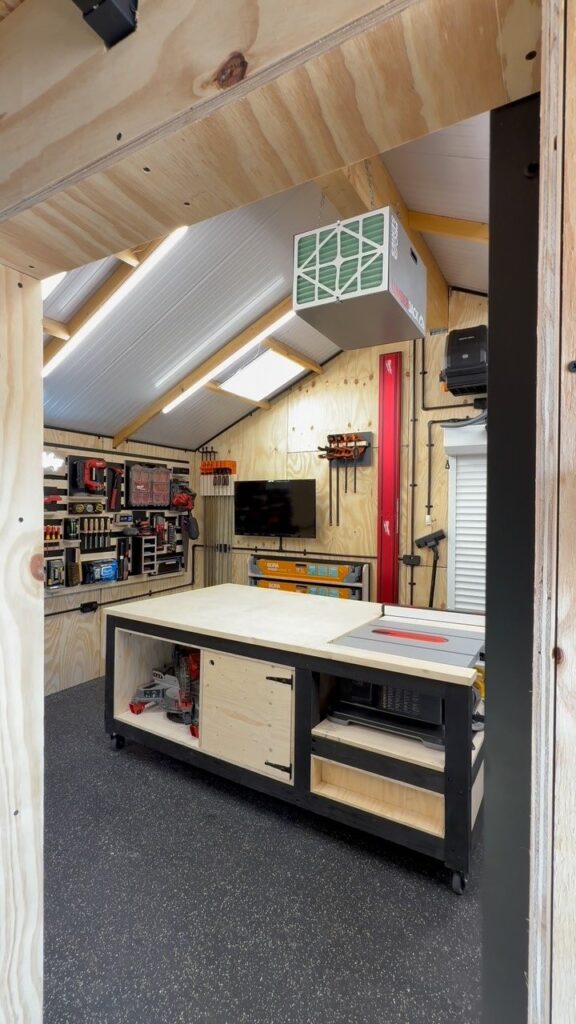
These shed garage ideas run from a workshop setup with pegboard and under-bench storage to a full door install with hardware that needs headroom math.
What separates them is whether you need to roll something through that opening or just walk in with a toolbox.
The post gets into narrow crown staples, ⅛" plywood layers, and the exact moment a sloped ceiling buys you headroom but costs wall space.
1. Workshop Shed
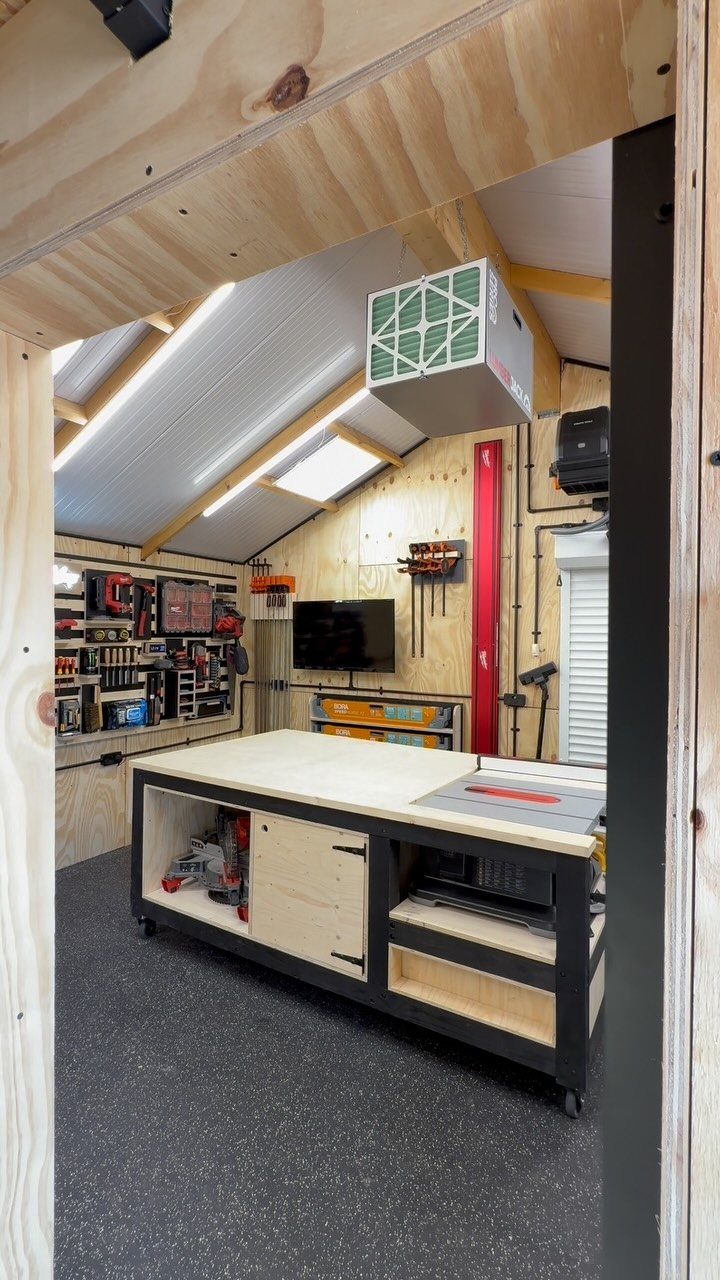
A workshop shed lives or dies by whether you can walk in and start working without spending half your evening digging for the right bit.
Overhead air filtration and plywood wall storage do the heavy lifting: dust settles before it coats your project, and every hand tool has a shadow outline so you know what’s missing.
I would put the table saw on a mobile base even if you bolt the bench down.
The sloped ceiling costs you some wall space but gains headroom where you stand, which matters more if you’re tall enough to bump your head on standard joists.
A roll-up door turns this from a storage closet into something you can wheel a lawn tractor through. Skip the television unless you already finish projects ahead of schedule.
2. Storage Solutions
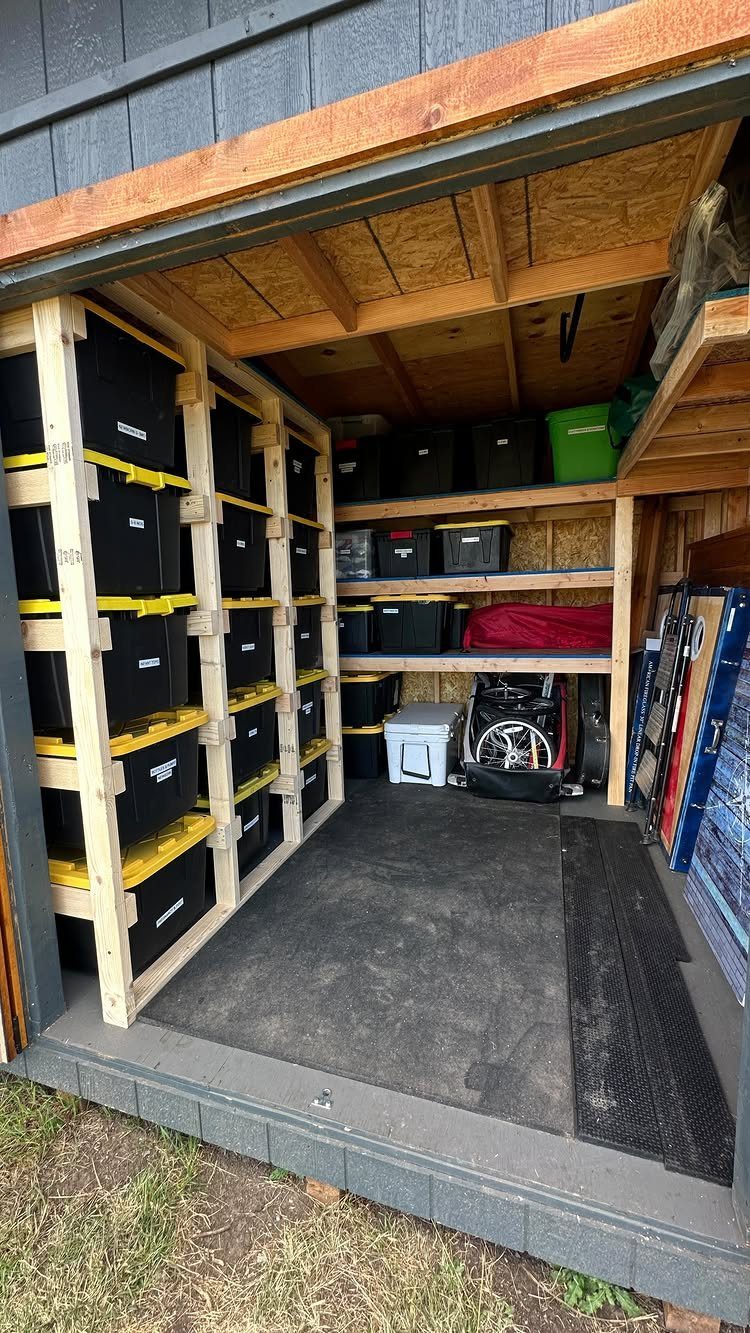
Floor-to-ceiling shelving on a rubber mat floor tells you this owner expects standing water. Black and yellow totes do color-coded duty: one glance and you know which bin holds irrigation parts versus holiday lights.
Pegboard works for hand tools you grab daily; slatwall panels cost more but take heavier loads and let you move hooks without fresh holes.
I would run floating shelves above the door line for the stuff you touch once a year: luggage, the artificial tree, the camping tent you keep meaning to replace.
Ceiling-mounted platforms need joists that can handle the load, so check your span before you buy the hardware.
3. Under-bench Storage
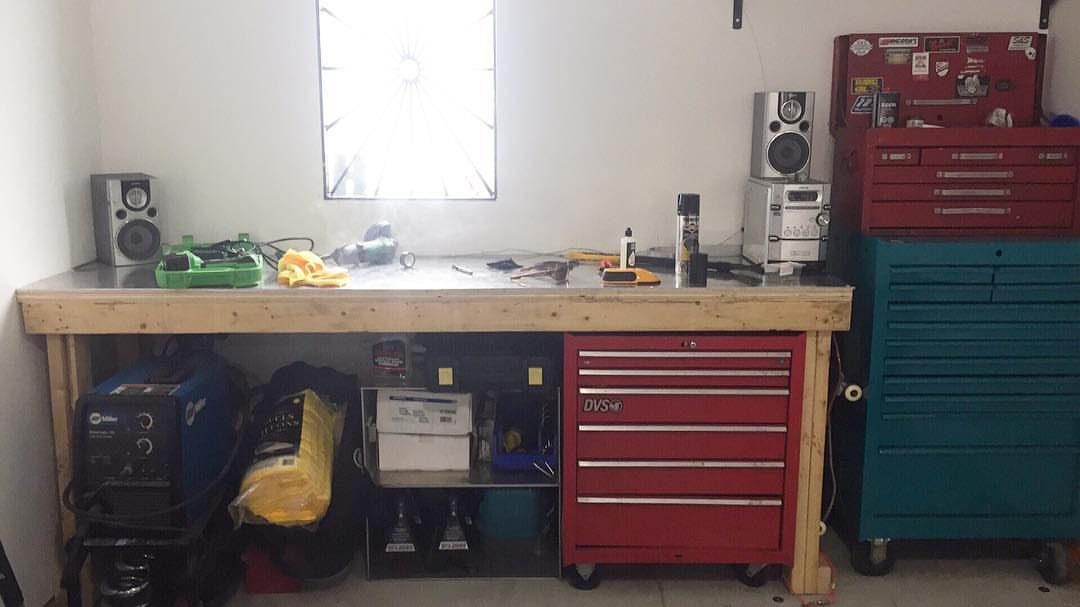
A red tool chest and blue welder parked under the bench use space that otherwise collects coffee cans full of mystery fasteners.
Rolling carts let you pull the whole category out to where you’re working; fixed shelving keeps dust off but traps you at the bench.
A welding machine wants ventilation, so if you’re storing gas gear underneath, leave a gap for air movement. I have seen people build false floors on casters that ride over the existing concrete, gaining hidden depth for rarely used jigs.
A speaker on top means this owner spends long hours here; power strips mounted to the legs keep cords off the floor and out of the welder’s path.
4. Garage Door Installation
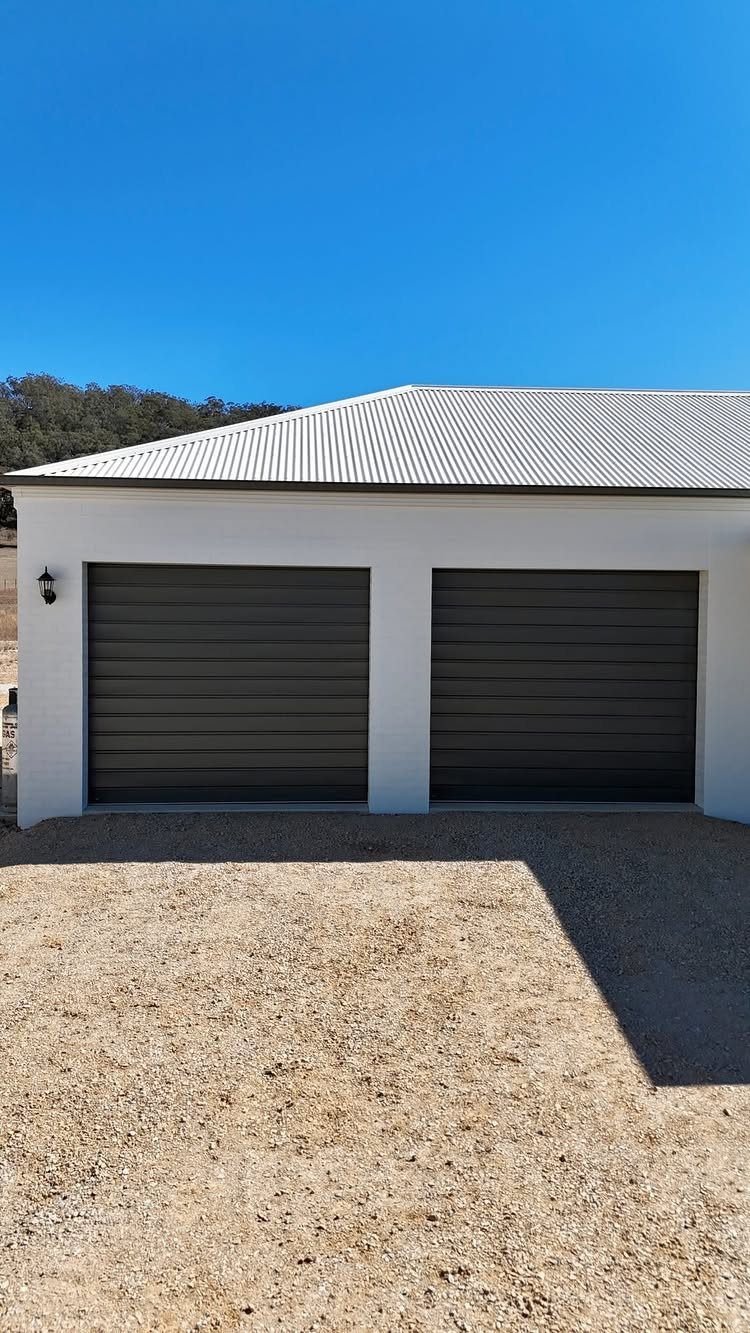
Two dark-grey horizontal-panel doors on a hip roof give this building a garage’s proportions with a shed’s footprint.
The gravel driveway tells you drainage matters where you live; roll-up doors need headroom for the drum, so a low-pitched roof like this one may force you to a sliding door instead.
I would check the wind rating on any roll-up you order: the cheap ones rattle themselves to death in a Midwestern spring. Corrugated metal overhead means no attic storage, which is honest.
You are buying access, not square footage above your head. If you are storing a riding mower, one wide opening beats two narrower doors every time; the center post is just another thing to back into.
5. Organizational Tactics

PVC pipe sliced into holders turns a shovel’s awkward length into wall art that happens to be functional.
The horizontal planks behind it are doing double duty: structure for the holders and a visual rhythm that makes the wall read as finished.
Clear containers matter most for the small stuff: hose fittings, electrical connectors, the fasteners that come in bulk bags when you only needed a handful.
I would label the container and the shelf both; by next season you will remember neither. Zoning by activity saves the most time in a mixed-use shed.
The gardening gear lives closest to the door you haul mulch through; the car tools stay near the bench with the vice. If you only have one door, your zone is whatever arm’s reach you have before you step outside.
Benefits of Building a Garage Shed
A garage shed starts as parking and a workshop, but the framing does not care what you put inside. I have seen these become home offices, music rooms, and guest spaces when the kids leave or the side hustle grows.
The match to your house siding is worth planning from day one; it costs little extra and pays back if you sell.
Snow on the windshield and rain through an open window are problems this solves without mention in the listing. Storage that was spilling from the basement finally has a door you can close.
Cost Considerations
The average shed runs about $2,500; the average garage hits $28,000. Prefabricated metal cuts either cost below custom work, though you lose say over the dimensions.
Doors, windows, and security hardware add to both. Terrain matters: a slope needs grading before the slab or skids go down, and that labor is not in the kit price.
I would price the roof style before I commit; some pitches need more material than the basic gable and the difference shows up late.
A shed you build yourself keeps the labor in your pocket, which is most of the gap between the two averages.
Customization Options
Start with a base module and add as the budget allows; the wall systems clip together later if you leave the rail height right.
A potting bench or a parts station can be built in from the start or added when the hobby shifts. Garage doors drop into some plans and require header sizing you cannot fudge.
I would measure the golf cart, the cart, and the door swing before I pick a footprint; the plans do not know what you own.
Storage Organization Tips
Eye level is for the hand tools you reach for weekly; the ladder and the holiday bins belong above the door line where you need a step stool.
Clear tubs end the duplicate-buying problem, but only if the label faces out. A gardening zone by the mulch door and a wrench zone by the bench sounds obvious until you mix them and lose a Saturday looking.
I would measure the shelf depth against the bin width before I load the cart; a half-inch of lip costs you the closure.
Frequently Asked Questions
Is it cheaper to buy a shed or build your own?
Building your own shed is generally more cost-efficient than buying prefabricated. Sheds run anywhere from $200 up to tens of thousands, with the average landing around $2,500, while garages average about $28,000 nationwide.
Prefabricated metal buildings cost less than custom builds either way, but doing the work yourself skips labor markup and lets you choose where to spend.
What shouldn’t you store in a shed?
Skip anything that can’t handle temperature swings or that puts off fumes in tight quarters. Welding gear fits fine under benches if you leave an air gap for ventilation.
Hazardous materials, unsealed electronics, and anything that melts or cracks in heat or cold should stay in the house.
What is the most inexpensive way to build a garage?
A shed-sized footprint with a garage door is the cheapest path to covered vehicle storage. Corrugated metal overhead sacrifices attic storage but keeps material costs down, and a single wide opening skips the extra framing of two doors.
Can you use a shed as a garage?
Yes, a larger shed with a roll-up door can hold a lawn tractor or even a vehicle.
Add a mobile base for your table saw and you have a space that garages the machine and still lets you work around it.





