
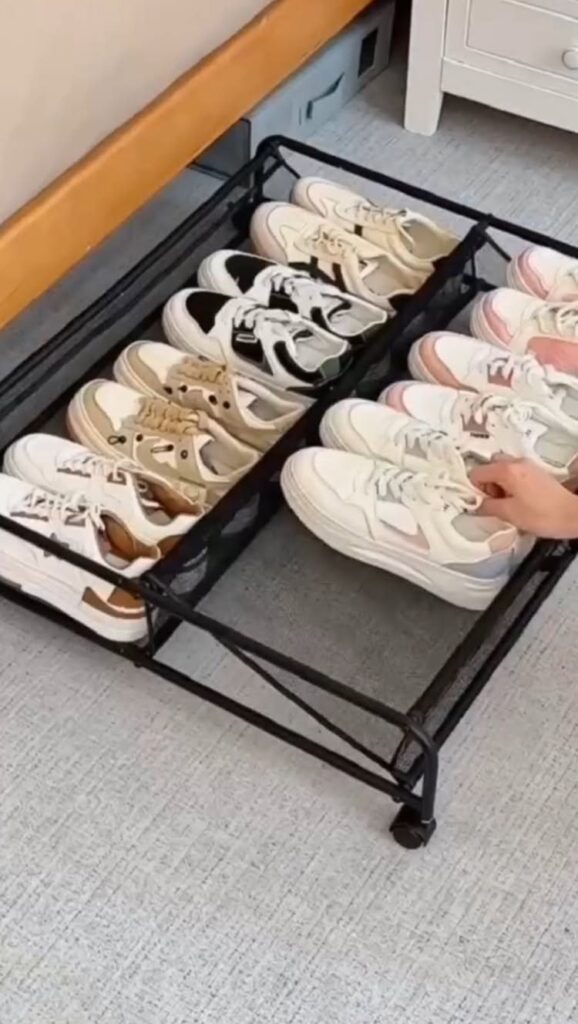
Small sneaker collection closets can start with a basic under-bed bin or go as far as a rotating rack that anchors like furniture.
The right choice depends on whether you want the collection out of sight or built into the room you use every day.
1. Shoe Racks
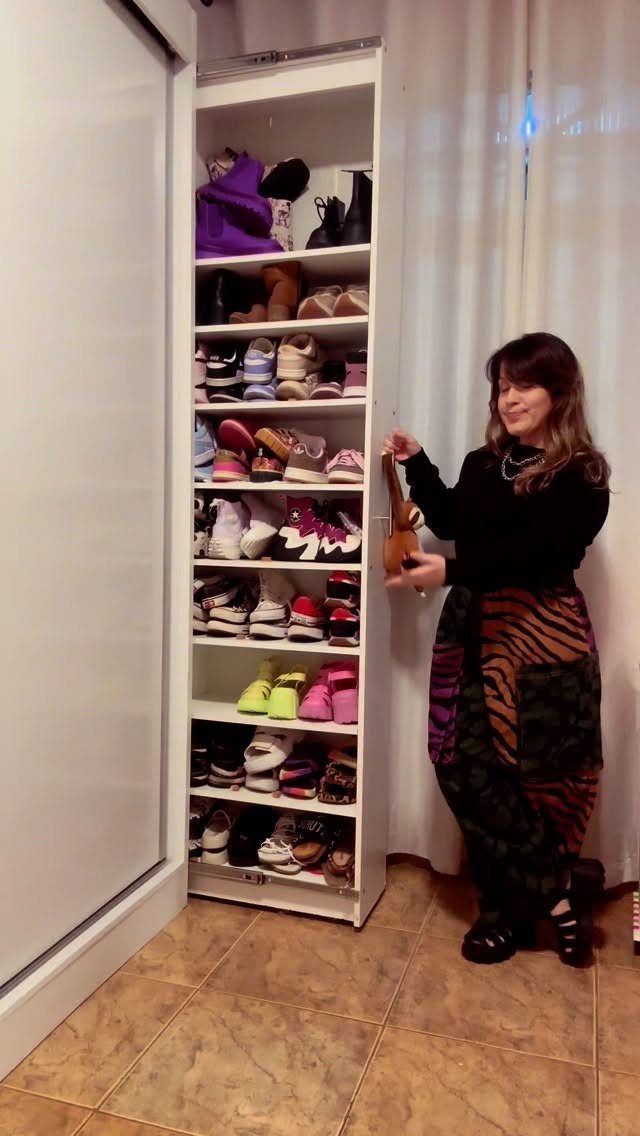
A pull-out shoe organizer turns narrow closet gaps into usable storage without eating floor space. A shoulder-high rack with tilted shelves keeps sneakers, boots, and sandals visible and paired together.
I would look for a unit with fixed dividers rather than open shelves; the slots stop piles from sliding and let you pull one pair without disturbing the rest.
Metal frames with melamine shelves hold up better than wire racks if your boots see winter salt. Most units this size ship flat, so assembly is an evening project with a screwdriver.
This works best when your closet has a dead zone beside the hanging clothes, a shallow gap that nothing else uses. If your closet is already packed front to back, skip this and look at under-bed options instead.
2. Under-Bed Storage
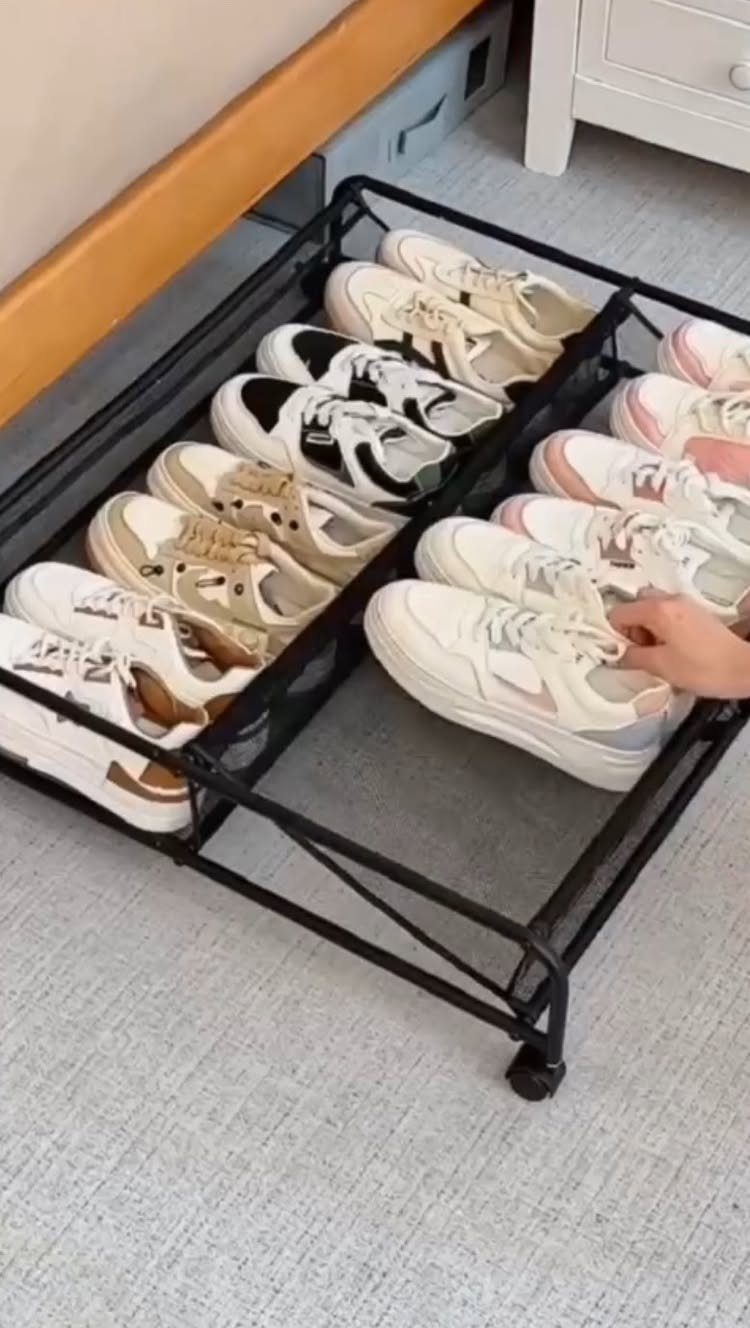
Rolling bins slide out on casters and keep dust off shoes you do not wear weekly. The black metal tray sits low enough to clear a standard bed frame and handles several pairs without stacking.
The wheels matter more than I expected. Fixed trays drag on carpet and jam on uneven floors; casters let one hand do the work.
A lid or cover keeps the dust down if you store seasonal shoes this way for months. Check your bed height first: most frames need some clearance underneath, and platform beds with solid sides often have none.
I would use this for the rotation, not the daily pair. The morning hunt under the bed gets old fast, but it is hard to beat for off-season storage in a studio where closet space is already spoken for.
3. Rotating Shoe Rack
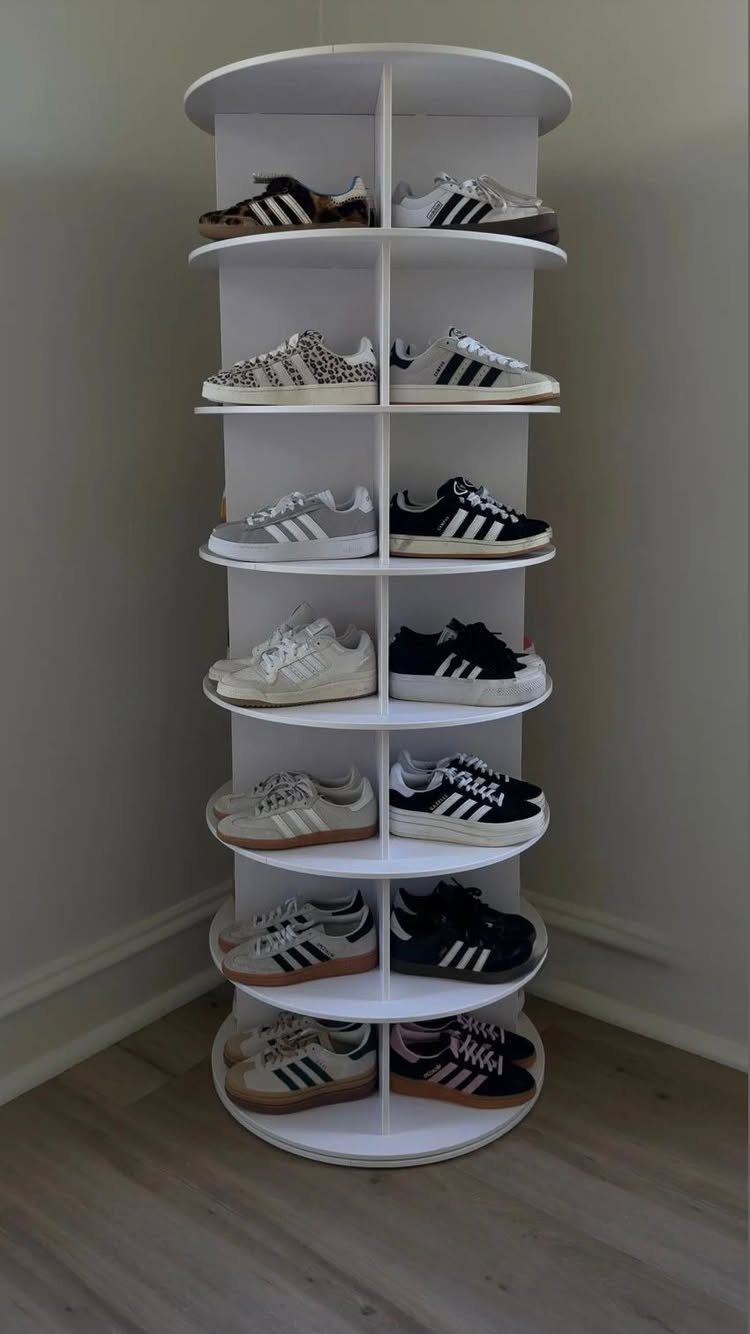
A rotating shoe rack spins full circle and brings the back row to you without digging. The white cylinder holds multiple tiers of sneakers in a footprint about the same as a small trash can.
The department-store feel is real: you see every pair at once, and the vertical arrangement keeps floors clear.
Most units hold a decent number of pairs depending on heel height, and the circular shelves work better for low-tops than bulky boots.
This trades floor space for height, so it suits corners or open bedroom areas more than inside a shallow closet. I would anchor it if you have kids or a dog; a loaded rack tips easier than it looks.
This is the most visible storage here, which is the point if your collection is worth showing.
4. Shoe Wardrobe Closet
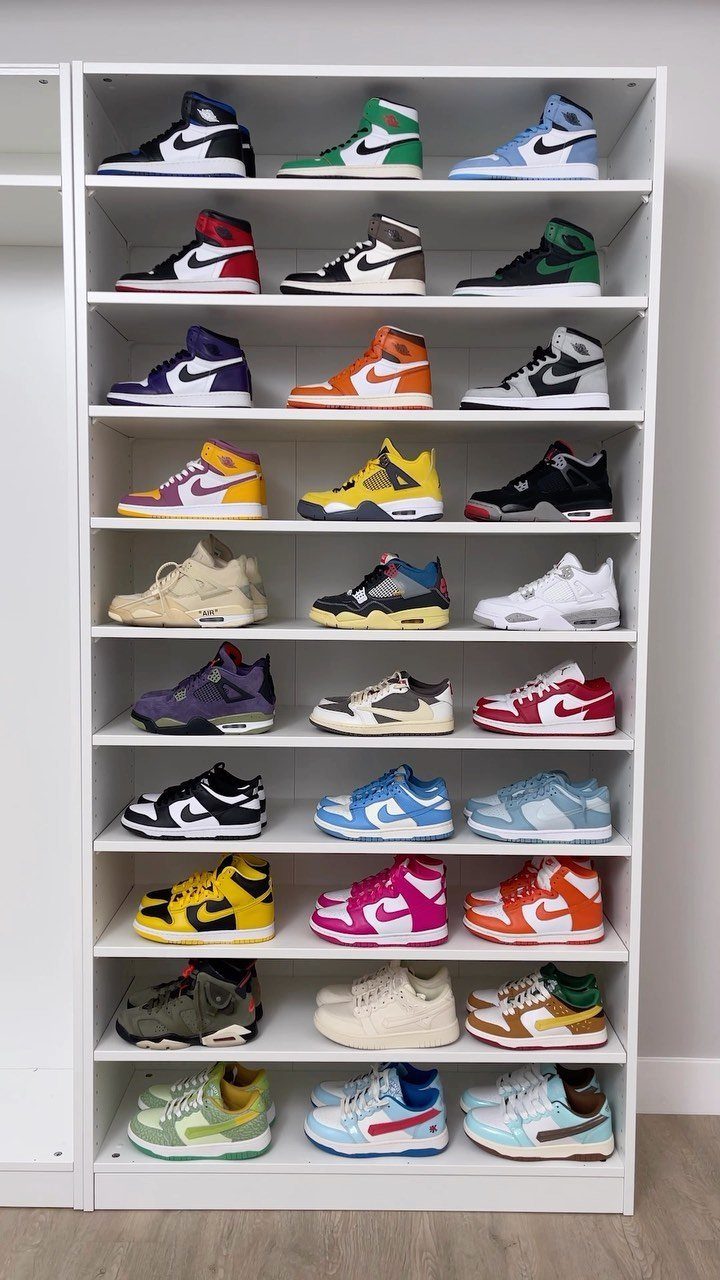
No doors means no swing space to plan around, and the tall, slim profile fits where a dresser would not.
Measure your tallest pair before buying. A unit this size handles a solid number of pairs if you do not double up.
I would put this in a bedroom corner or against an entry wall rather than inside a closet; it is furniture, not hidden storage. The trade is dust, which means occasional wiping.
If you are the type who wants to see the collection, that is a fair exchange.
If space allows, build out your shoe storage with a little bit of breathing room. In House Beautiful’s 2022 Whole Home, this closet by designers Mark Williams and Niki Papadopoulos gives the homeowners more storage with room to add to their collection.
5. Clear Bins and Boxes
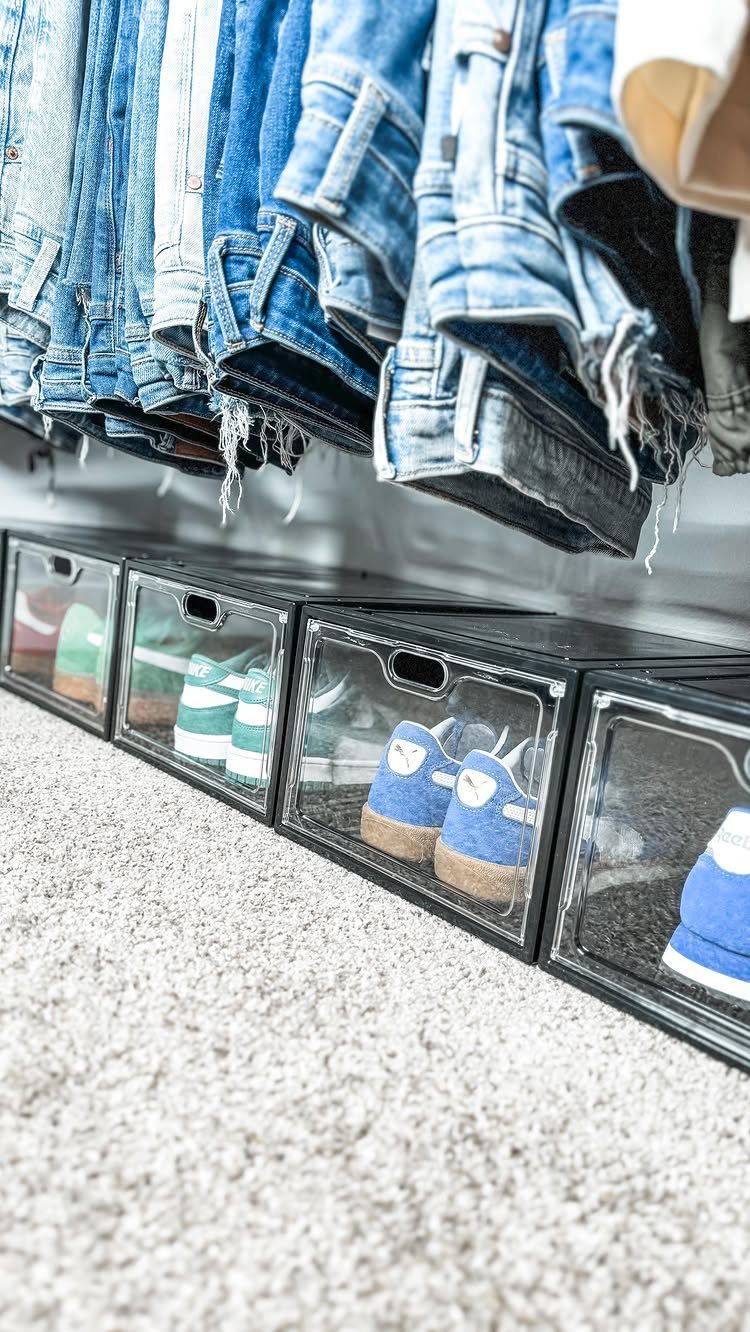
Clear drop-front boxes stack like bricks and let you read labels through the plastic without opening anything.
The drop front is the detail that saves this idea. Pull-down doors beat lift-off lids for daily use; you can grab one pair with one hand and the stack stays put.
Most boxes run a few dollars each, so a full collection means real money, but they travel well if you move and protect resale value for collectors.
I would start with four or five for the rotation and add as the collection grows. The look is tidy but not warm; if your closet is already sterile, this can feel like a storeroom.
Use them for the shoes you care about, not the beaters by the door.
Maintaining Shoe Organization
A shoe closet only stays useful if the system you built stays intact. I put mine back in the same slot after wearing, every time; a little laziness now turns into a lot of hunting later.
Boxes from new purchases go straight to recycling instead of piling up. That stack of empty cardboard claims more space than people realize until it is already in the way.
New pairs waiting for their first wear need a temporary home, not the floor. I keep one shelf open for arrivals so they do not wreck the order of the rest.
A quick pass every couple of weeks catches what drifted and keeps the whole thing from becoming a project again.
Choosing the Right Storage
The right storage matches your actual space, not the closet you wish you had. A narrow gap beside hanging rods fits a pull-out rack; a wide but shallow closet cannot.
Count your pairs honestly, including the ones you forgot about. A system that holds twenty pairs looks silly with four, and one that holds eight fails fast at fifteen.
Budget matters too. Clear drop-front boxes add up quickly; a metal rack with melamine shelves costs less per pair but shows everything.
I would rather have one solid solution than two cheap ones fighting for space. Measure twice before ordering anything that ships flat; returns on furniture-sized boxes are a hassle most people skip and regret.
Creative Display Options
Shoe storage can look intentional instead of apologetic. LED strip lighting along the front edge of a shelf turns a basic rack into something that reads like a display.
The light catches shape and color without the heat of old halogen spots. A small rug beneath a shoe wardrobe or rotating rack marks the zone as chosen, not leftover.
Artwork above a tall unit does the same; it shifts the eye from function to composition. I would keep the lighting low and warm rather than bright white; the boutique feel comes from shadows, not interrogation lamps.
These touches cost little but change whether the collection reads as clutter or curation.
Space-Saving Techniques
Vertical space solves what floor space cannot. A shoulder-high rack uses height that hanging clothes rarely claim fully.
Over-door organizers hang on the back of a closet or bedroom door, holding another six or so pairs in air that was doing nothing. I would sort by how often I wear them before choosing where each pair lives.
Daily pairs stay at eye level or below. Off-season and special occasion shoes can hide higher or farther away without costing morning time.
A small collection works best when you can grab the right pair without thinking, not when you’ve crammed in every pair you own.
Frequently Asked Questions
How to organize lots of shoes in a small closet?
Vertical storage is the move that matters most.
A pull-out shoe organizer with tilted shelves keeps pairs visible and together in narrow gaps beside hanging clothes, while clear drop-front boxes stack upward and let you grab one pair without toppling the rest.
Wall-mounted or over-door racks also free floor space when every inch counts.
The pairs I grab most often live at knee height where I can see them; summer sandals or winter boots go into bins under the bed until their season rolls back around.
What is the best shoe organizer for small spaces?
It depends on what space you actually have. A rotating shoe rack fits corners and open bedroom areas where height beats floor space, while rolling under-bed bins work when closet square footage is already gone.
For inside the closet itself, a shoulder-high pull-out rack with fixed dividers keeps pairs paired without the sliding mess of open wire shelves.
Measure your dead zones first: a rack needs a shallow gap beside hanging rods, and under-bed storage needs clearance your bed frame may not give.





