
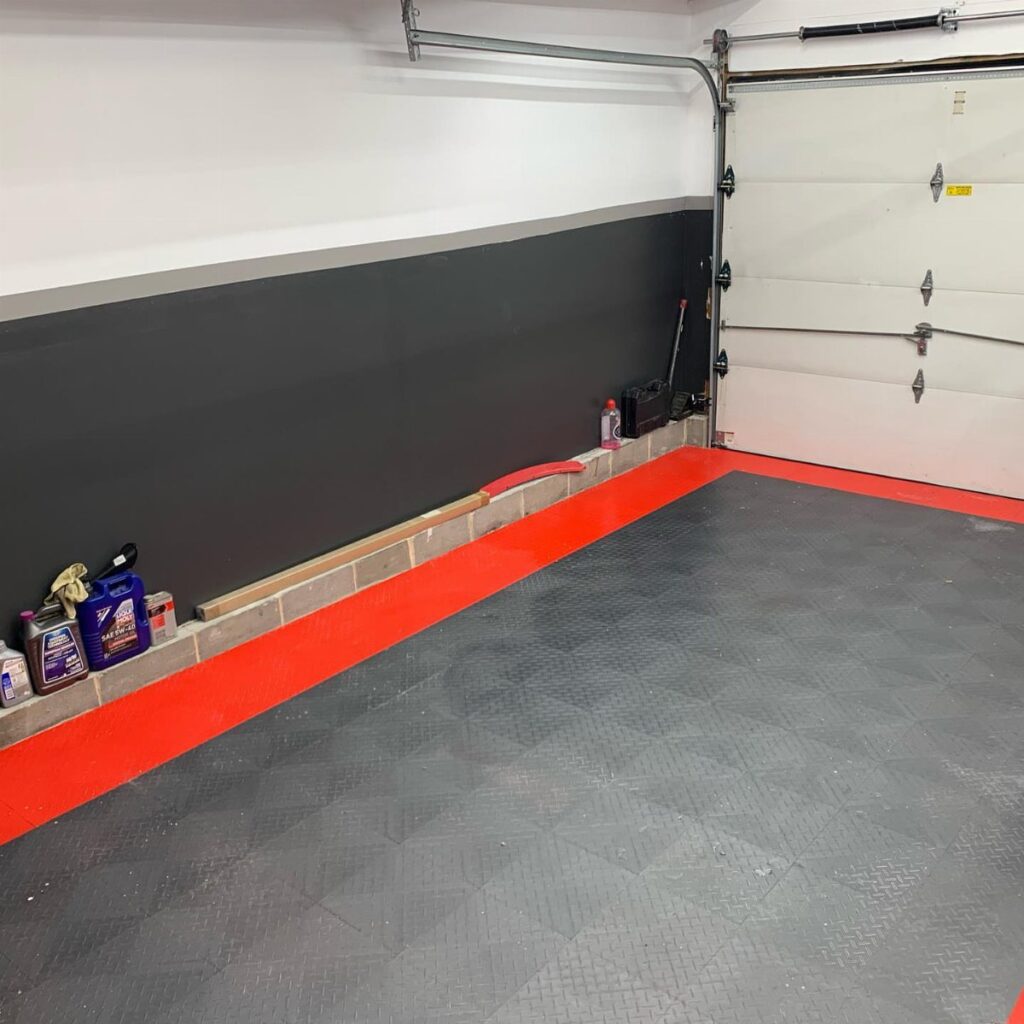
These garage makeovers run from a $100 paint job to a full loft build with its own overhead storage, or from a weekend workshop to a game room that still fits the cars in when it has to.
What decides which idea is yours is whether you own the garage or answer to a landlord, since epoxy floors and slatwall panels stay put while freestanding benches and pegboard move out with you.
Ceiling coverage gets my first dollar, wall accent my second; an even, bright wash does more for me than dramatic dark pockets.
1. Redo Flooring
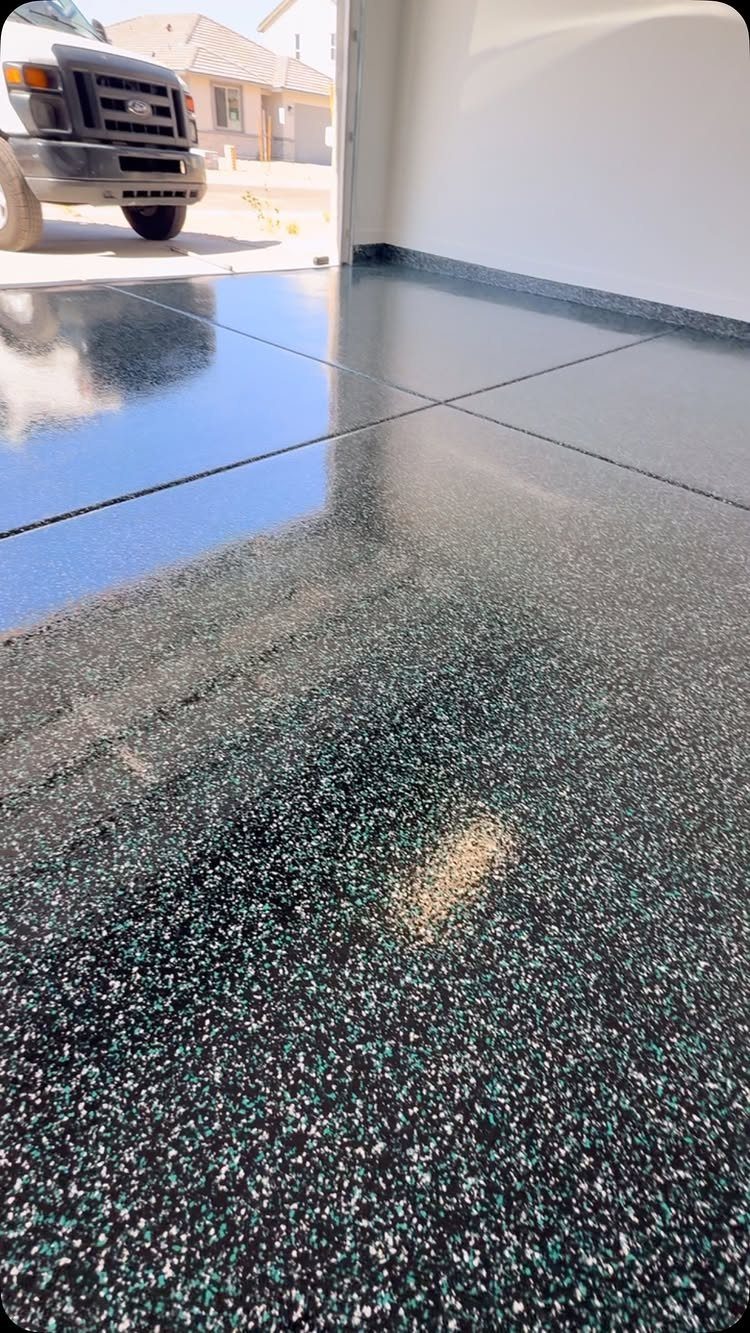
A worn garage floor drags down the whole space, no matter what else you do. Epoxy coating fixes that in a weekend: four or five gallons of the two-part mix, about $35 per gallon, covers a standard two-car bay.
Scuff the concrete with a floor buffer and 60-grit screen first, then degrease every oil spot. Skip either step and the coating lifts within a year.
Polyurea costs more but cures faster; epoxy lets you work at a steadier pace if your weekend is your only window.
This one suits renters less, since it is semi-permanent. For a rental, interlocking floor tiles peel back up when you leave.
2. Upgrade Lighting
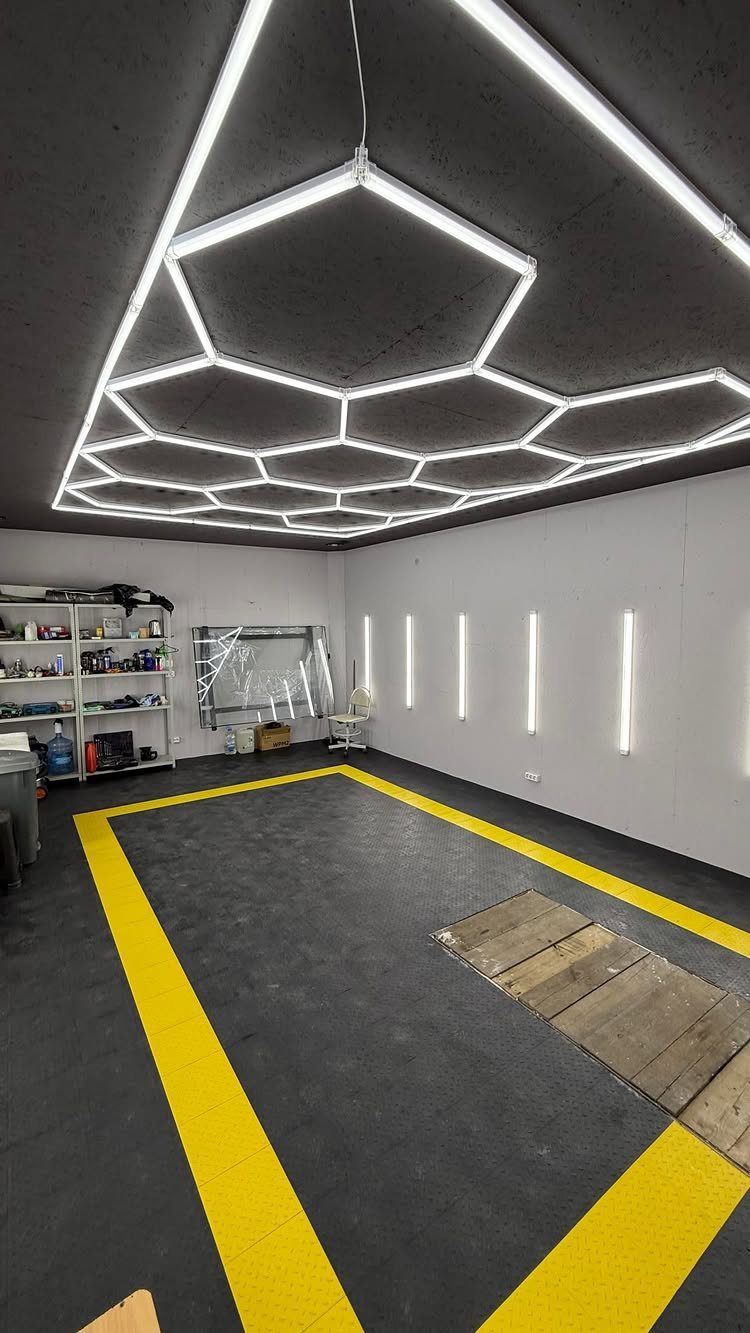
Garages built before LED fixtures often run a single bulb that leaves you squinting at wire colors.
Hexagonal LED panels screw into existing sockets and throw light in every direction, so shadows don’t pool behind equipment the way they did with my old single-bulb setup.
LED shop lights run $50 to $200 depending on how fancy the housing gets. Motion-sensor add-ons cost extra but mean you are not fumbling for a switch with an armload of lumber.
Dedicated wall strips for color-accurate lighting are worth the extra circuit only if you are doing finish work where the stain color has to match exactly.
I would put the money into ceiling coverage first, wall accent second. A bright, even wash beats dramatic pockets of dark.
3. Add Cabinets
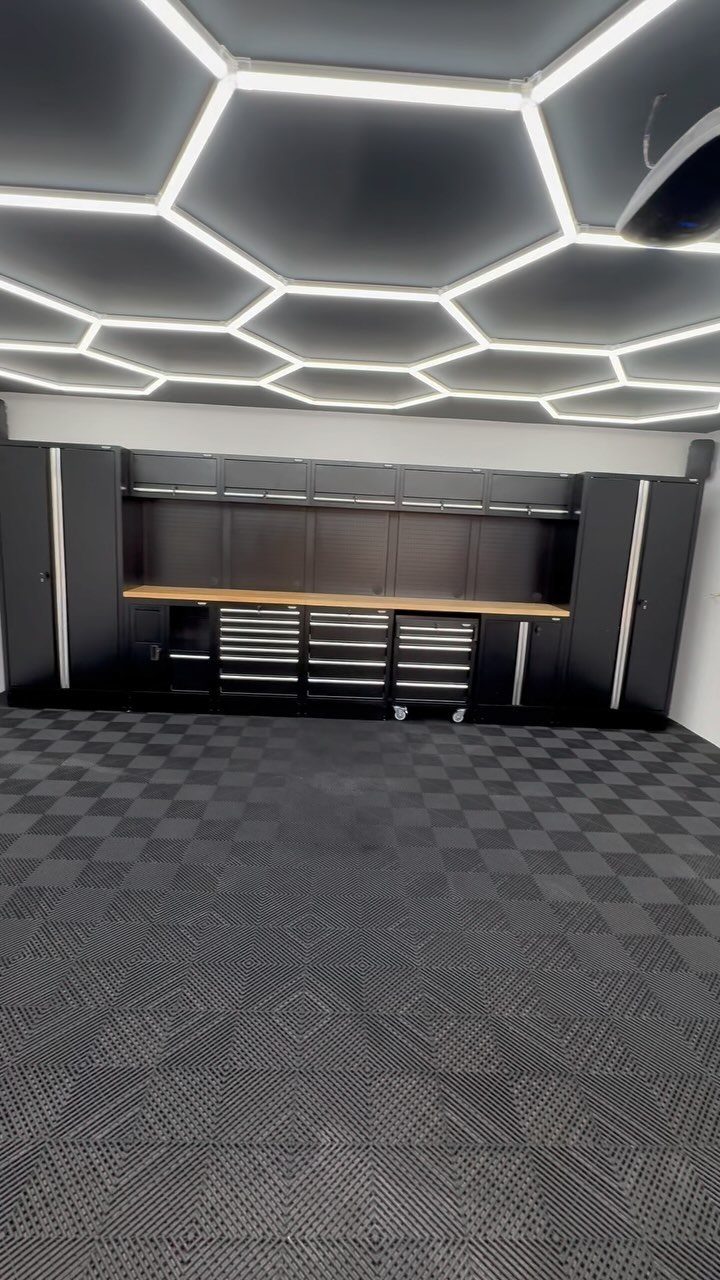
Cabinets turn a garage from open dumping ground into something with a place for everything. A full system runs tall lockers for long items, shallow drawers for hand tools, and a wood-top bench for assembly, all in one footprint.
Steel gauge matters more than brand. 18-gauge boxes hold up to loaded shelves without denting when you bump them with a project piece.
Pre-assembled units skip a day of build time but limit your layout; modular pieces let you shift the bench to the other wall if your workflow changes.
Twelve linear feet of decent steel runs $1,000 to $5,000. Start with the wall you face most often, then add around the corner when the budget loosens.
4. Wall Storage
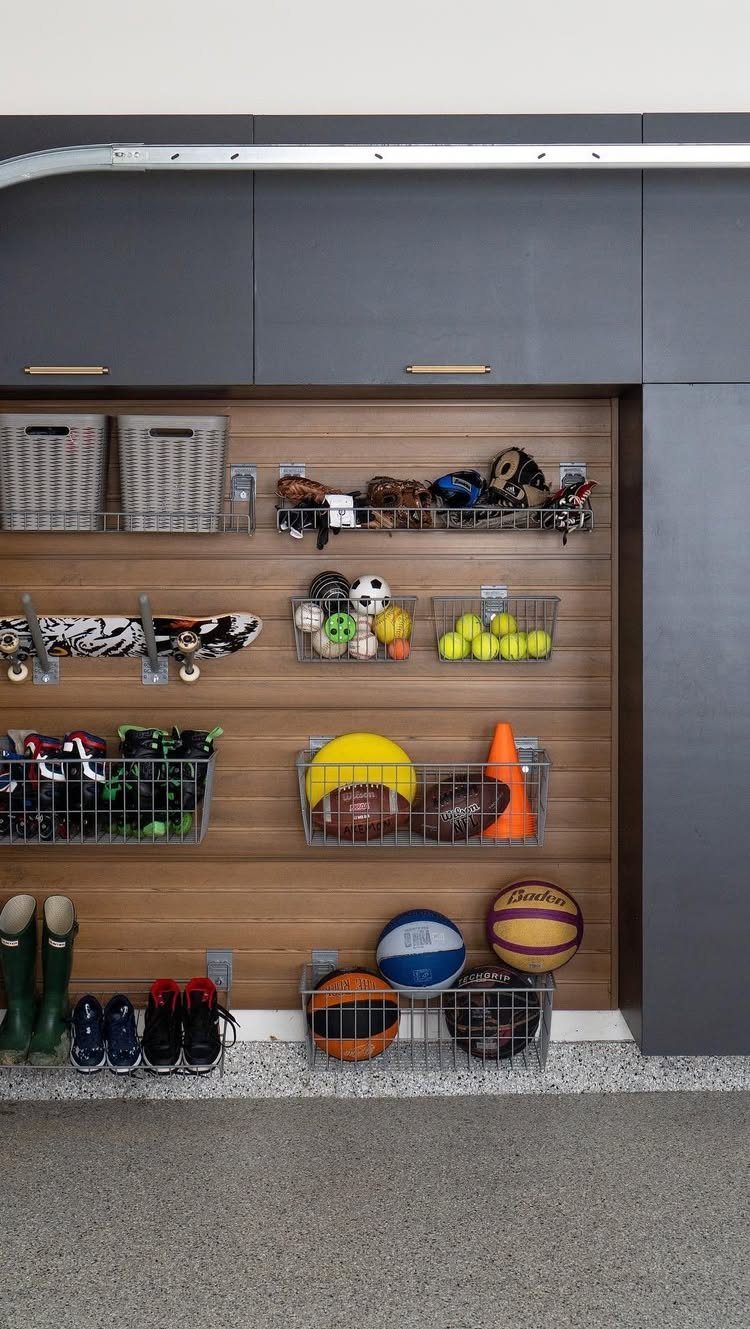
Slatwall panels turn any garage wall into a reconfigurable rack. Horizontal groove panels accept hooks, wire baskets, and shelf brackets that slide wherever you need them this month, no drilling new holes when your project changes.
Basket depth is the detail to check before you buy. Shallow ones let sporting goods tumble; deep ones eat into your car door clearance.
Measure your wall height against the longest item you own, skis or ladder, and leave enough breathing room above so you are not fighting the ceiling to get it in and out.
I like slatwall for households where gear changes season to season. Pegboard costs less but fights you on rearrangement.
If you are renting, the full panel system is overkill; a freestanding slatwall section on casters moves out with you.
5. Paint the Walls
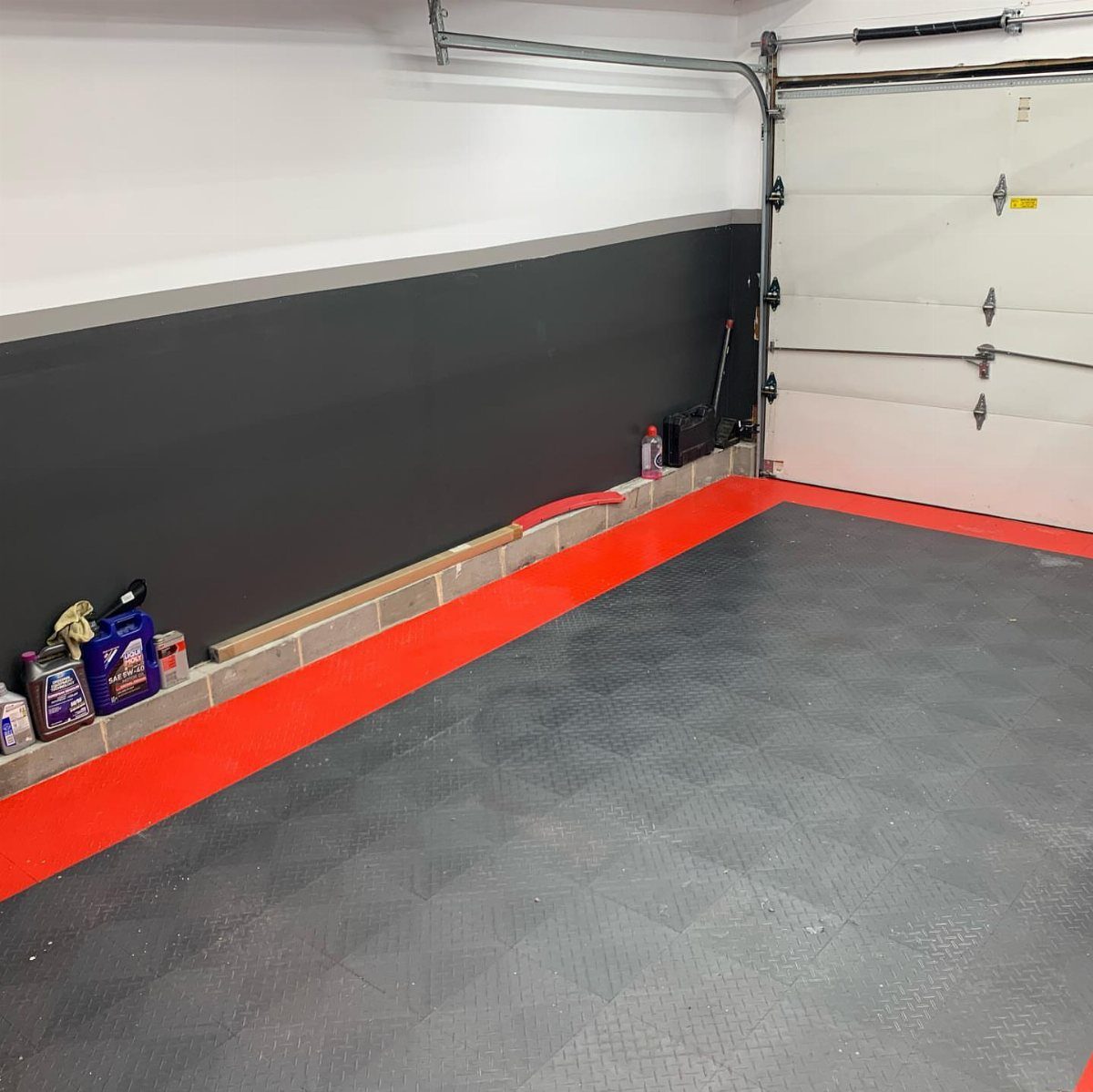
Paint is the cheapest way to make a garage feel finished instead of abandoned. Two gallons covers a two-car space with some left for touch-ups, about $100 to $200 with rollers and tape.
An 18-inch roller saves your neck on the high sections; cut in around the door track with a brush and do not rush it. Paint exposes every bump in old drywall, so sand the worst spots first.
Uninsulated garages stay cooler with lighter colors. If you are heating the space, any shade works.
Either way, the ceiling needs paint too, and it is the worst part of the job.
Based on data from Angi, 23% of homeowners are looking to move or install interior walls or drywall in their garages, with flooring and insulation being the next most common, both at 19%.
— Angi
6. Install Pegboard

Pegboard organizes tools you grab ten times a session without rummaging through a drawer.
Color-coded plastic hooks, orange against black, sized to each tool, spanners in one row, pliers in the next, keep everything visible so nothing gets nested where you cannot find it.
MDF board is cheap and takes paint well; metal lasts longer but costs more and fights you on custom hook placement.
Leave a half-inch gap behind the board, built with wood strips, so the hooks seat fully and do not push the board away from the wall.
This suits hand tools and small hardware. I would put pegboard over the bench where you stand, cabinets below for the weight.
7. Tools Storage
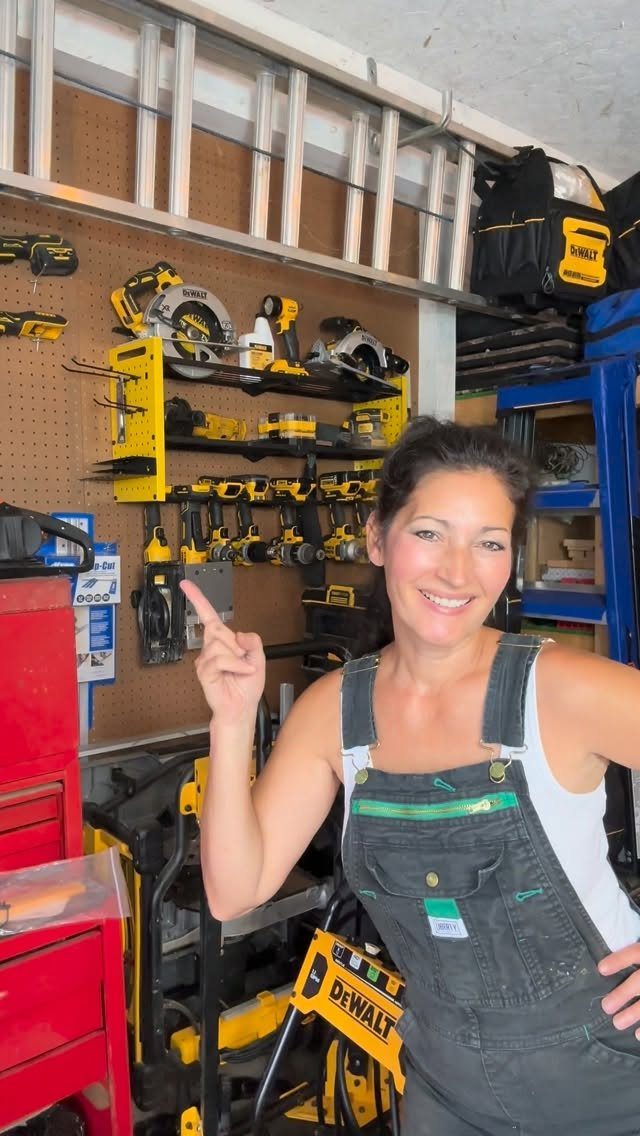
Power tools left on a shelf tend to walk off and hide. A pegboard keeps drills and drivers in sight while a matching shelf above holds chargers and bags so nothing walks off.
A rolling workbench doubled as storage and workspace for my miter saw, though that takes floor space a benchtop box does not.
For shovels and weed whackers, vertical racks with heavy-duty hooks beat pegboard; the hooks take weight the board cannot.
I would start with the board for hand tools and add a cabinet or chest only after the collection outgrows the wall.
8. Create a Workshop
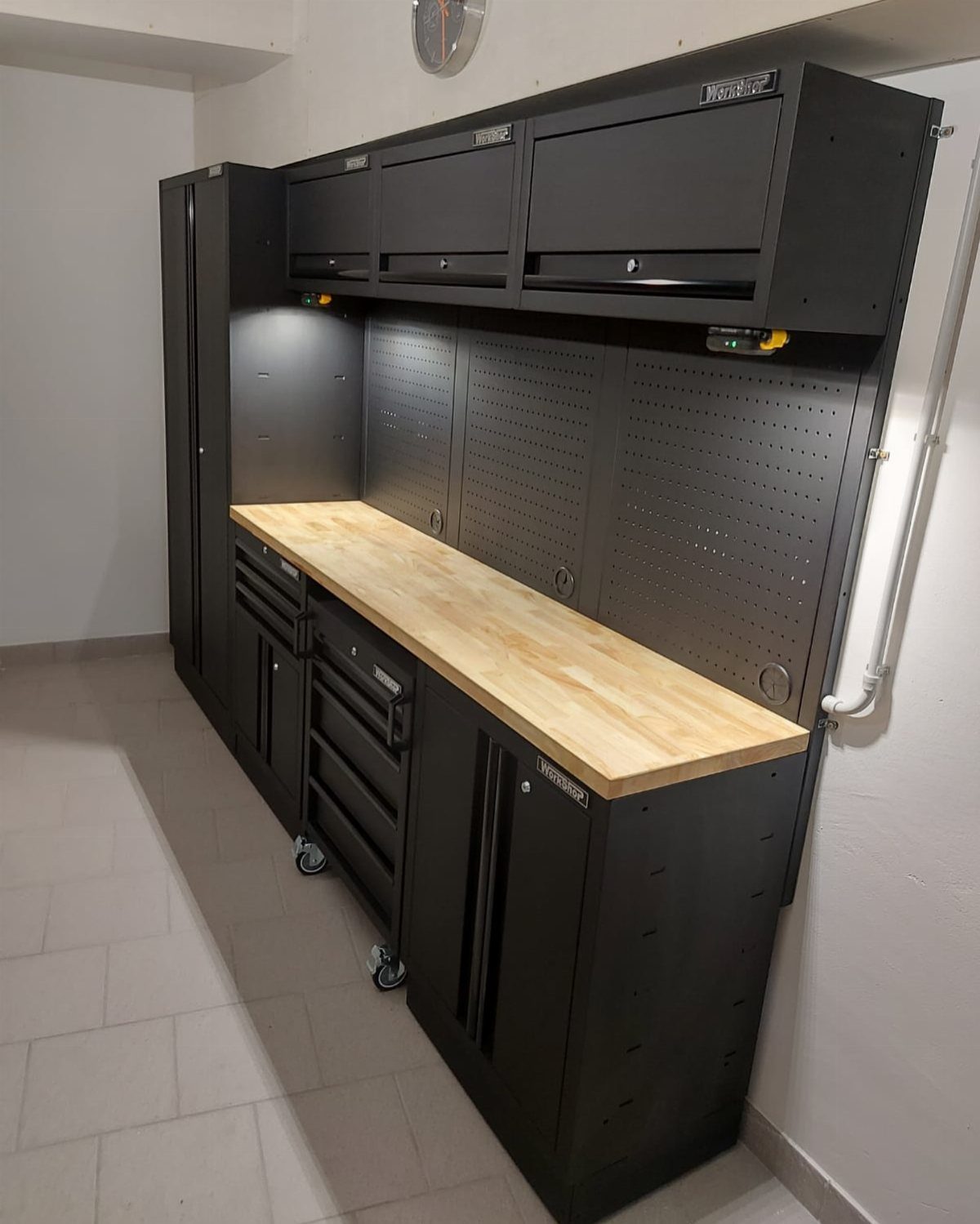
A workshop crammed between the car and the lawn mower dies fast. A black metal unit with a butcher block surface, pegboard for hand tools, and cabinets above and below can claim one wall so the parking bay stays clear.
A fixed bench runs anywhere from a basic plywood top on two-by-four legs to a rolling steel frame with drawers and a maple surface. I would pick mobile for a small garage; lock the casters when you cut.
Light matters as much as storage. Task lighting over the bench and a bright overhead fixture save the eyes and the temper.
If the project needs a permit, the electrical and any dust collection ducting probably do too.
9. Convert to Home Gym
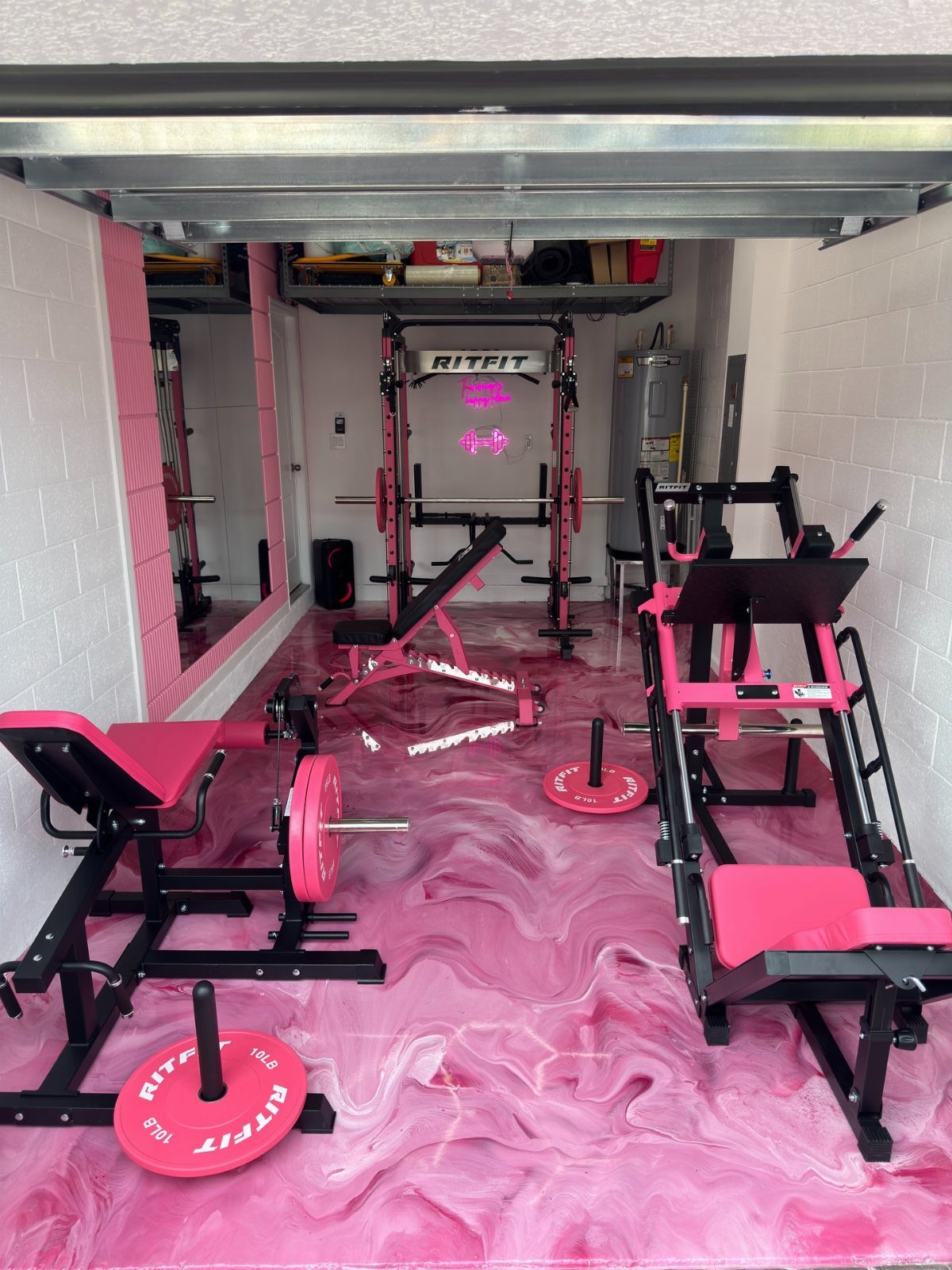
A garage gym saves the commute and the monthly fee. Pink epoxy and power racks turn a parking bay into a space you actually want to enter before coffee.
Rubber flooring or a coating protects the concrete and the plates. Overhead storage keeps the floor clear for squats and burpees.
Soundproofing the door and any shared walls matters more than the gear; dropped deadlifts travel through drywall like it is not there. I would budget for mats and insulation before buying the rack.
This one suits someone with enough ceiling height for a pull-up bar and enough patience to park outside until the habit sticks.
10. Create a Mudroom
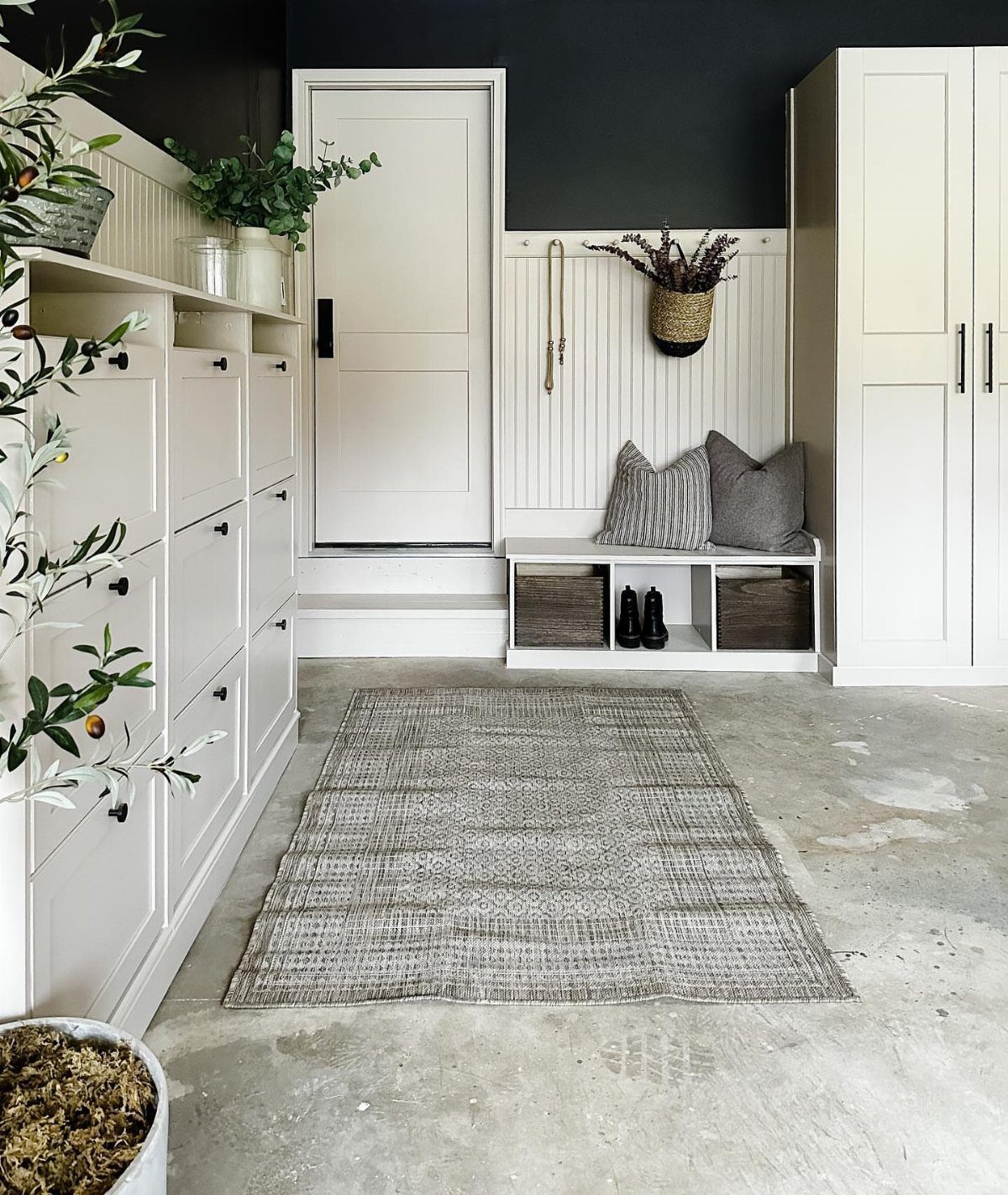
Mud tracked into the house does not stop at the kitchen tile. A built-in bench and shoe cabinets just inside the garage door catch boots before the threshold.
Hooks at standing height for coats, cubbies below for shoes, and a cabinet tower for bags or sports gear make the sequence obvious: gear off, shoes stowed, step inside.
A rug on concrete warms the transition and buys time before you commit to flooring.
I would build this only where the garage door leads directly to the living space; a detached garage or a side entry makes the detour too long. The trade is parking space for manners.
11. Add a Laundry Area
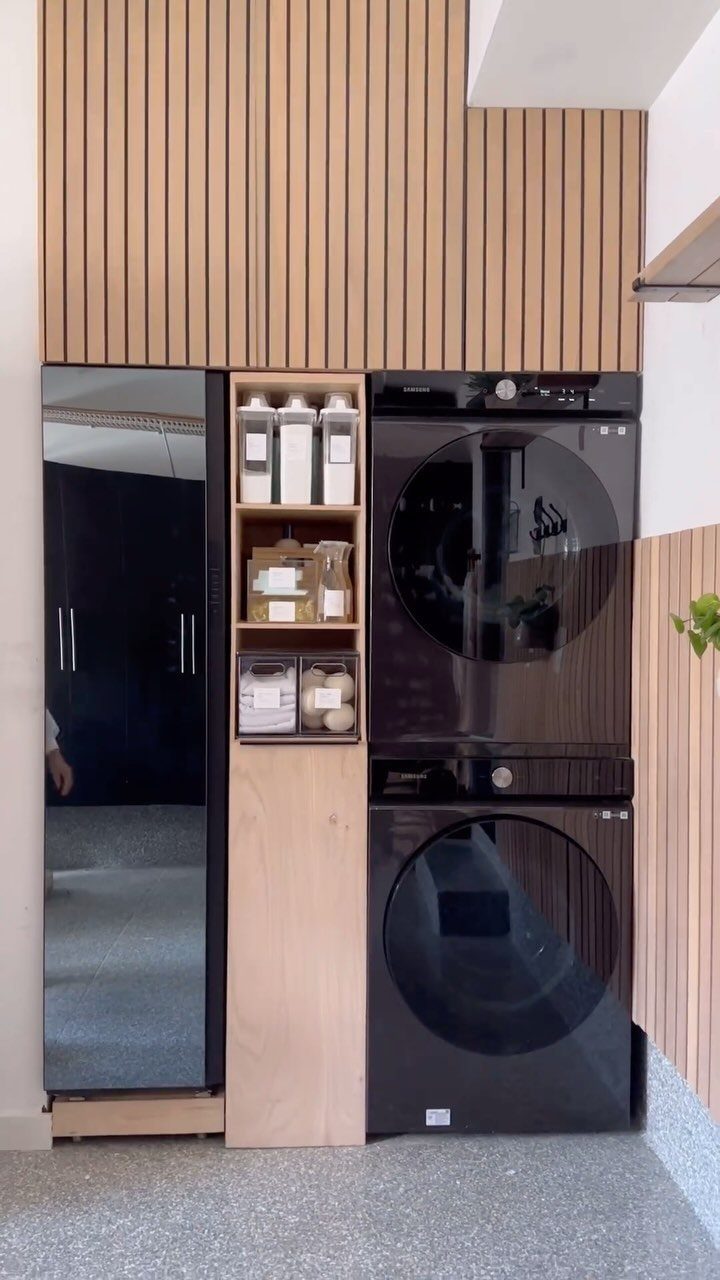
Stacked units with wood shelving keep laundry contained on one wall, with supplies in reach and a mirror for checking yourself before you head back out.
Plumbing and electrical have to meet code, and the floor needs a drain if the washer ever walks or the hose cracks. Modern machines hum more than thump, but the spin cycle still carries.
A folding surface at counter height beats a narrow shelf for sorting; the wider the better. This suits the house where the basement stairs or the second-floor hallway are fighting words.
12. Invest in a Loft

A loft turns vertical space into square footage you did not know you owned. A black steel mezzanine overlooks car lifts and a lounge, though most of us would settle for storage or a desk above the daily driver.
This is not a weekend job. Structural work, stairs or a ladder rated for the purpose, and building code compliance all need a contractor who has done it before.
The budget runs serious because the project is: a guest room or office up top means insulation, possibly HVAC, and a floor that does not flex when someone walks.
I would consider it only for a garage with ceiling height to spare and a permanent need for the room, not a maybe-someday plan. A tall storage rack costs less and moves out if the cars come back.
13. Add Overhead Storage
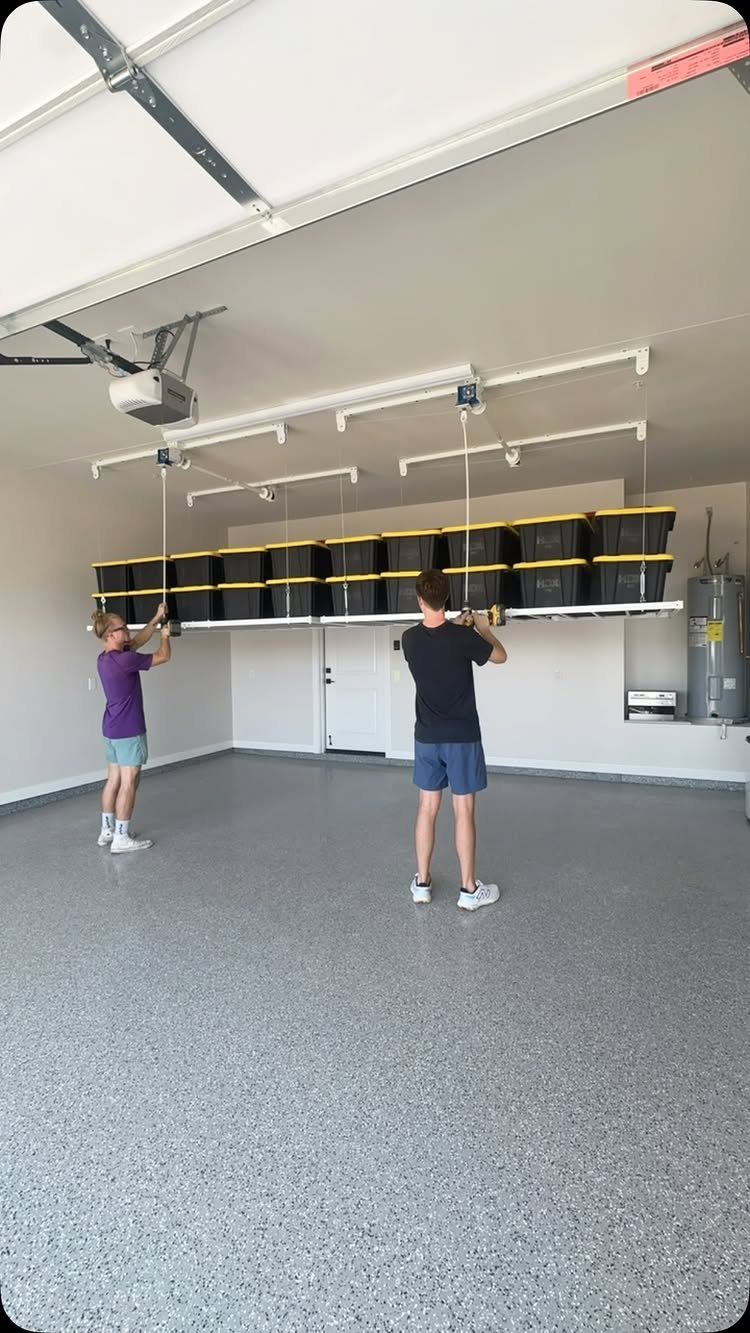
Ceiling racks turn dead air into storage you actually use. A motorized overhead unit drops low enough to load bins without a ladder, then climbs back up out of headroom.
I would go motorized on wider racks; hand-cranked units cost less but wear out your shoulders with a full load.
Seasonal gear, holiday bins, and camping equipment belong up there. Keep the heaviest items toward the walls where joist anchors bite best, and leave the center bay clear for tall projects.
Most racks need a foot or more of vertical drop and a ceiling rated for the load.
This one suits garages with high ceilings. Low ceilings leave too little working height below.
14. Upgrade Garage Door
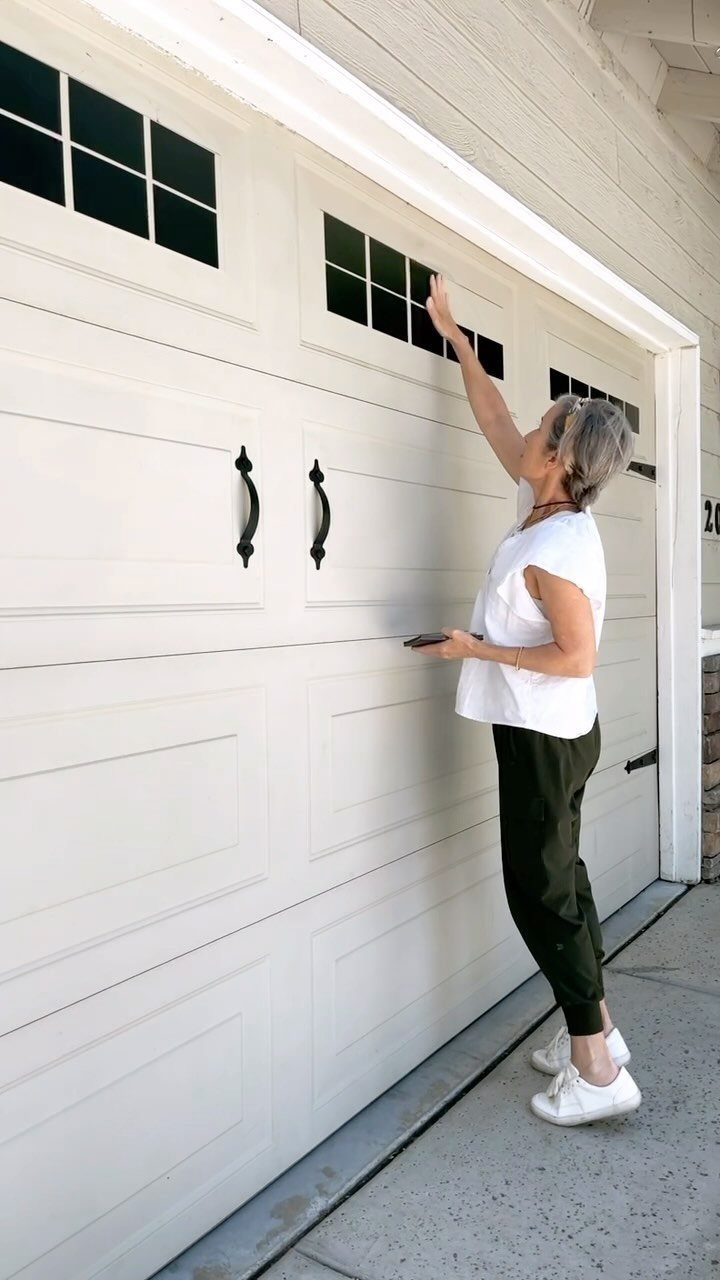
A garage door takes up a huge visual slice of your home’s front, and an outdated one drags down everything else you’ve fixed.
Carriage-style hardware and faux windows cost a fraction of a full replacement; stick-on hinges and handles are cheap, and magnetic window grilles add little more if your panel layout fits them.
For an actual new door, steel with insulation buys quieter operation and some thermal buffer if the garage shares a wall with living space.
Glass panels look sharp on contemporary homes but show every fingerprint and let neighbors see your mess.
I would replace before I would decorate if the door lacks the auto-reverse safety feature; older doors may void your homeowner policy. A replacement runs from basic steel on up to windows and insulation, installed.
15. Create a Game Room
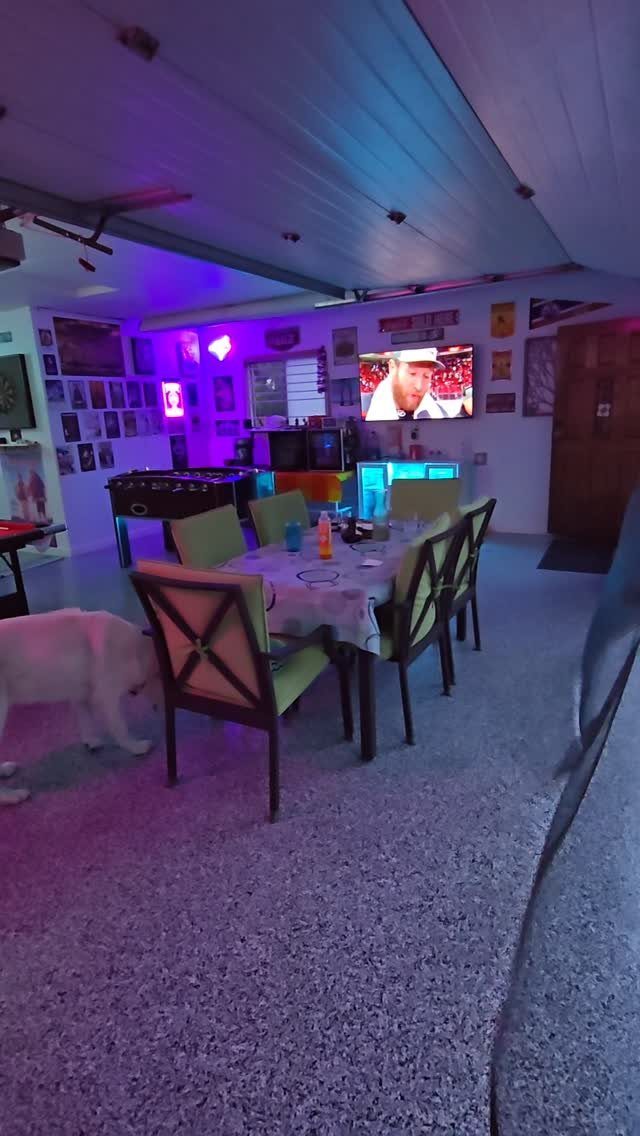
Neon and a pool table turn a garage into the place people drift toward.
The photo’s setup works because the floor coating handles drinks and dog traffic without drama, and the lighting hides that garage-door rails and a low ceiling were never meant for a dining room.
Start with the floor. Epoxy or polyaspartic coating is priced by the square foot if you do the prep yourself, and nothing else reads as finished without it.
After that, power and climate matter more than furniture; extension cords across concrete get old fast, and uninsulated garages stay miserable past October.
A game room trades away vehicle storage completely. If you still need to park there, measure twice: a pool table wants clear cue stroke on every side, and that eats a two-car bay fast.
16. Add a Wet Bar
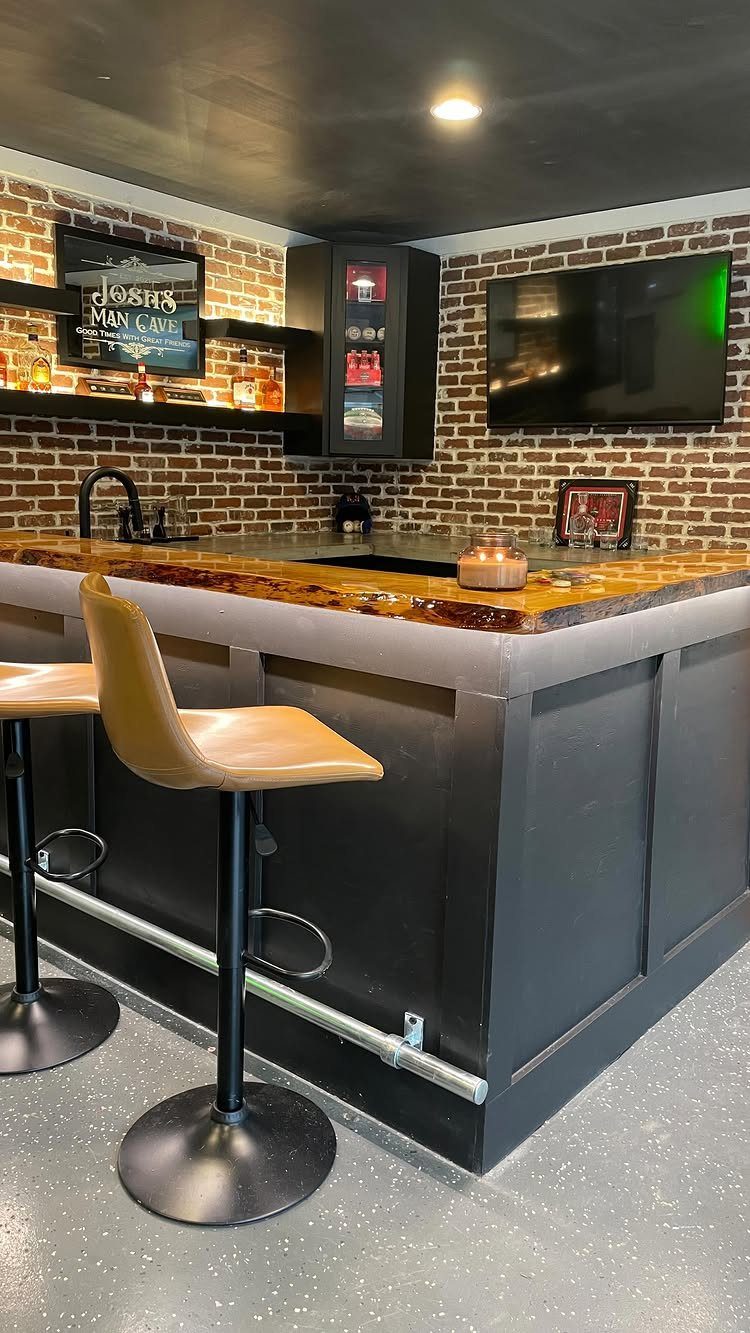
A wet bar in the garage keeps the crowd out of your kitchen and the mess off your good floors.
Tempered glass windows near the bar area dry out the humidity that sinks and kegs generate, and they keep the space from feeling like a cave.
I would add at least one operable window for ventilation even if local code does not require it.
Running new supply and drain lines through an exterior wall is where the money goes. A dry bar, no plumbing, cuts that by more than half and still holds bottles and a mini-fridge.
17. Add a Mural

Leftover paint and a free weekend can cover a garage wall in something that is not beige.
A professional mural looks out of reach, but the method transfers: projector tracing, fill with exterior-grade acrylic, and a clear coat over the top for scrubbability.
A single wall runs one to two gallons of base color plus whatever accent shades you have around.
I would pick the wall facing the door you enter through; you see it every arrival, and it hides the least when the garage door is open.
Geometric patterns or a single oversized image read better from a distance than fine detail.
This one suits renters too; a coat of primer when you leave erases most anything. The whole project stays cheap if you already own brushes and a roller.
Budget-friendly Tips
DIY saves the obvious money, but the real budget move is knowing which project pays back first.
Paint the walls before you buy cabinets; the light color makes the whole space feel handled, and you might find you need less storage than you thought.
Same with flooring: epoxy done yourself runs low in material cost, but only if the concrete prep is yours too. Rent the buffer for a morning instead of paying a crew to scuff it.
Skip the motorized overhead rack and build a simple platform from two-by-fours and plywood if your ceiling joists are accessible. It will not drop at the push of a button, but the bins still leave the floor.
I would spend on lighting before anything that sits on the floor; you cannot work around a dark corner, and one bright ceiling washes over everything you own.
Cost Estimates
A garage redo can run upward of $5,000 once you step past paint and pegboard into electrical, insulation, or structural work.
A trustworthy local professional becomes worth calling for clarity on your specific job; the range is too wide to guess from online figures alone.
At the low end, two gallons of wall paint and a basic LED fixture stay cheap. A full conversion to living space, loft, or wet bar with plumbing and HVAC, runs toward the top of the scale.
I would split the project into what the car needs to park and what you need to work, and price each layer before stacking them.
Importance of Decluttering
You cannot plan storage for a space you cannot see.
Pull everything onto the driveway, sort into three piles, and be harsher than you expect: keep, donate, and the stuff you forgot you owned that does not belong in a garage at all.
Only then do you know whether you need a full slatwall run or a single cabinet would handle what is left.
Zones keep the floor clear once you have it. Sketch where the car doors swing, where the workbench sits, and how wide a path you need to carry lumber through.
The keep pile determines the zones: long items need vertical clearance, small hardware needs shallow drawers, and anything seasonal earns the overhead rack.
I would measure the longest thing you own, skis or ladder, before you mount a single hook; guessing leaves you prying out anchors and starting over.
Hiring Professionals
Some jobs stop being DIY at the permit office. Electrical for dedicated circuits, any gas line to a heater, and insulation that touches shared living-space walls all need a licensed hand where code applies.
A pro also spots what you might miss: whether your panel handles the load of a workshop, or whether the garage attic can take a loft without sistering joists.
I would hire out insulation and any new supply lines before I would pay for storage installation.
The cabinets you can level yourself; the vapor barrier behind them, and the outlet that powers the charger shelf, are where mistakes get expensive.
Get two bids, ask for local references you can drive past, and check that the contractor has done garage work specifically, not just finished basements. The building type matters.
Frequently Asked Questions
How do I make my garage look nice?
Paint the walls and ceiling first; two gallons covers a two-car space for about $100 to $200 and instantly stops the abandoned look.
Good lighting means shop lights or those honeycomb LED panels so nothing pools shadow behind a saw or a bike, and wall storage, slatwall or pegboard, gets the clutter up where you can actually find it.
Epoxy coating finishes the space, though for rentals I’d stick with interlocking tiles that peel back up.
What is the average cost of a garage makeover?
A focused weekend project runs a few hundred to a thousand dollars: epoxy at $35 per gallon, LED shop lights from $50 to $200, and paint with supplies around $100 to $200.
A complete remodel with structural work like a loft or plumbing for a wet bar goes well beyond that.
What are the latest trends in garage design?
Multi-functional spaces dominate: one wall as a workshop with a rolling bench and pegboard, another as a home gym with rubber flooring and overhead storage, or a mudroom bench just inside the door.
Smart touches like motion-sensor lights and motorized overhead racks that drop and climb back up add convenience without requiring a full rewire. Carriage-style hardware and magnetic window grilles on the garage door give curb appeal without the cost of replacement.





