
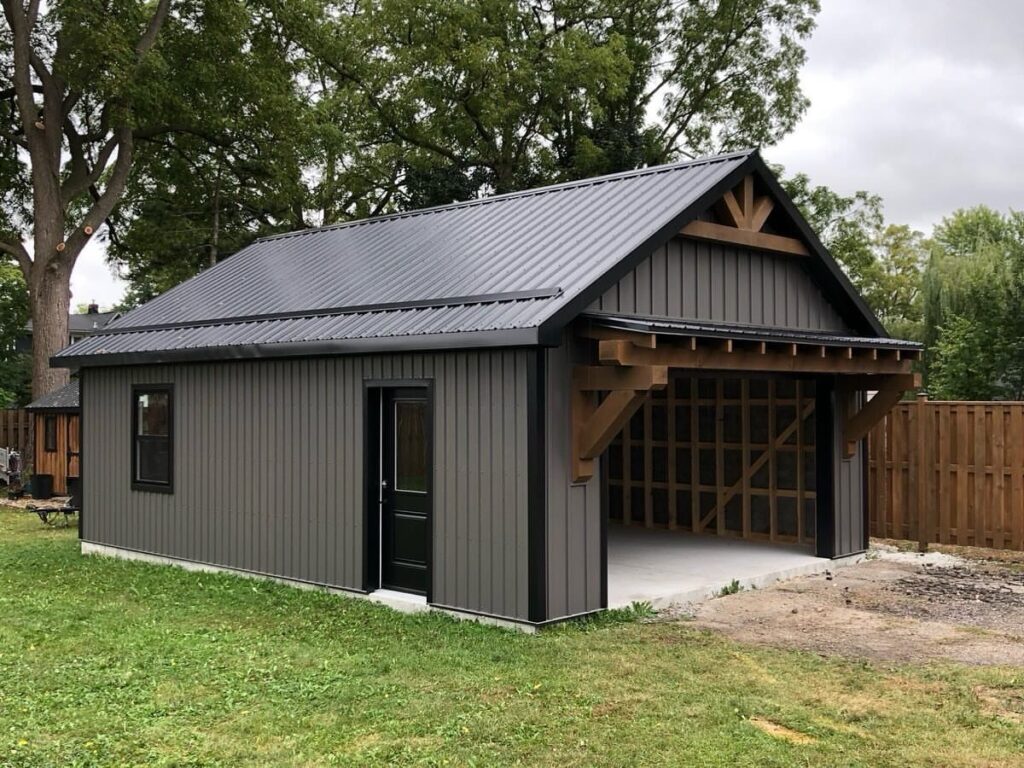
These nine shed exterior ideas run from salvage-yard scavenging to full modern reskins, with most landing in a few hundred dollars and a weekend’s labor.
What separates one choice from another is whether the shed keeps storing tools or starts serving as living space, since that single decision drops the siding and maintenance sections out and leaves the garden, potting, and retreat ideas standing.
Metal siding skips the paint schedule entirely, and 5/8 inch T-1-11 plywood takes a bump but needs a repainting rhythm you will actually follow.
1. Metal Siding
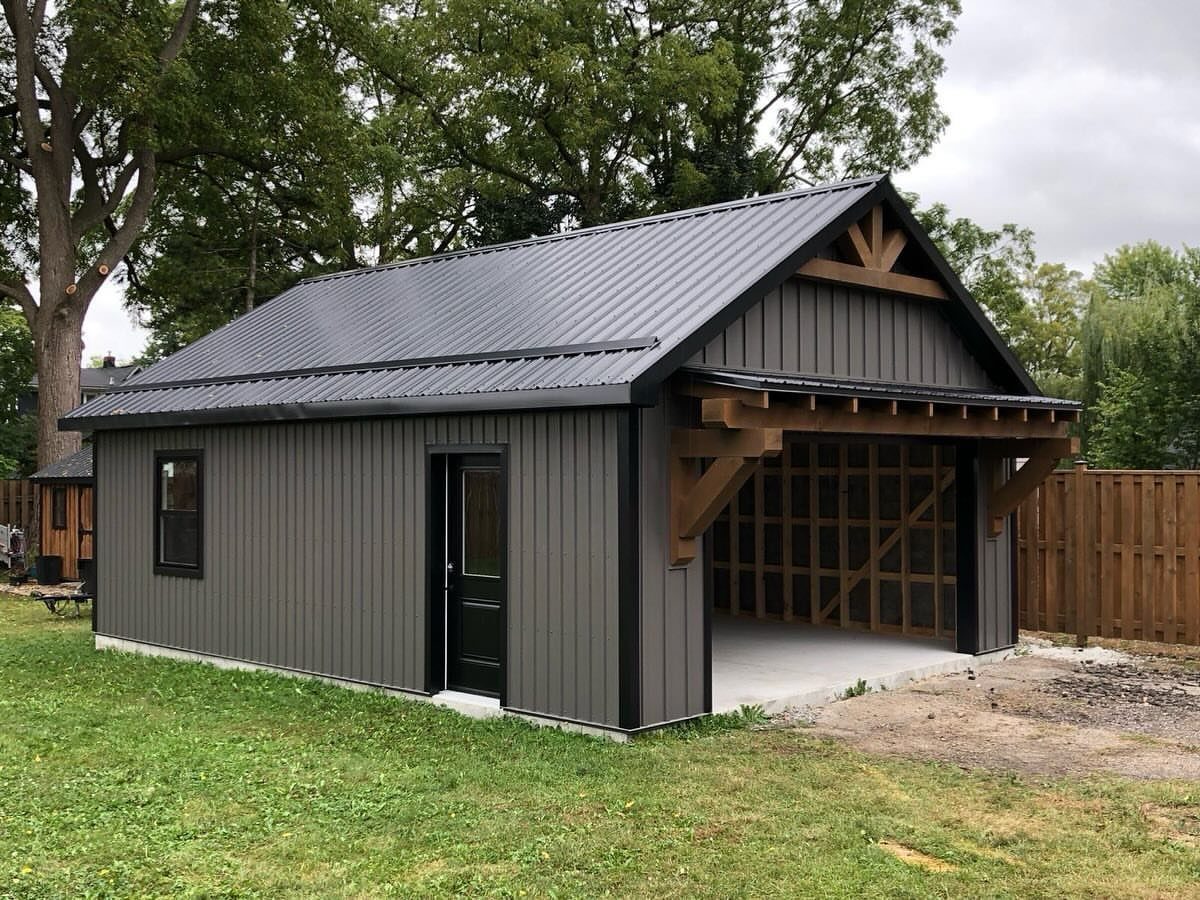
Metal siding turns a shed into something that reads as deliberate architecture instead of leftover building. Vertical panels run from roof to foundation in one clean motion, and the seams become part of the look rather than something to hide.
The material costs four to eight dollars a square foot, which sits mid-range against wood. What that buys is time: a hose-down keeps it presentable, and it does not ask for paint on any schedule.
I would put this on a shed that sits where sun beats hard or where I store anything I cannot afford to get wet, since the seams overlap tight and the whole assembly sheds water without fuss.
The industrial tone can read cold. Timber accents around a door frame or window warm up metal siding enough that the shed does not look dropped from a factory.
Black trim against grey panels is a safe pairing; anything brighter fights the material’s nature.
2. Wood Siding
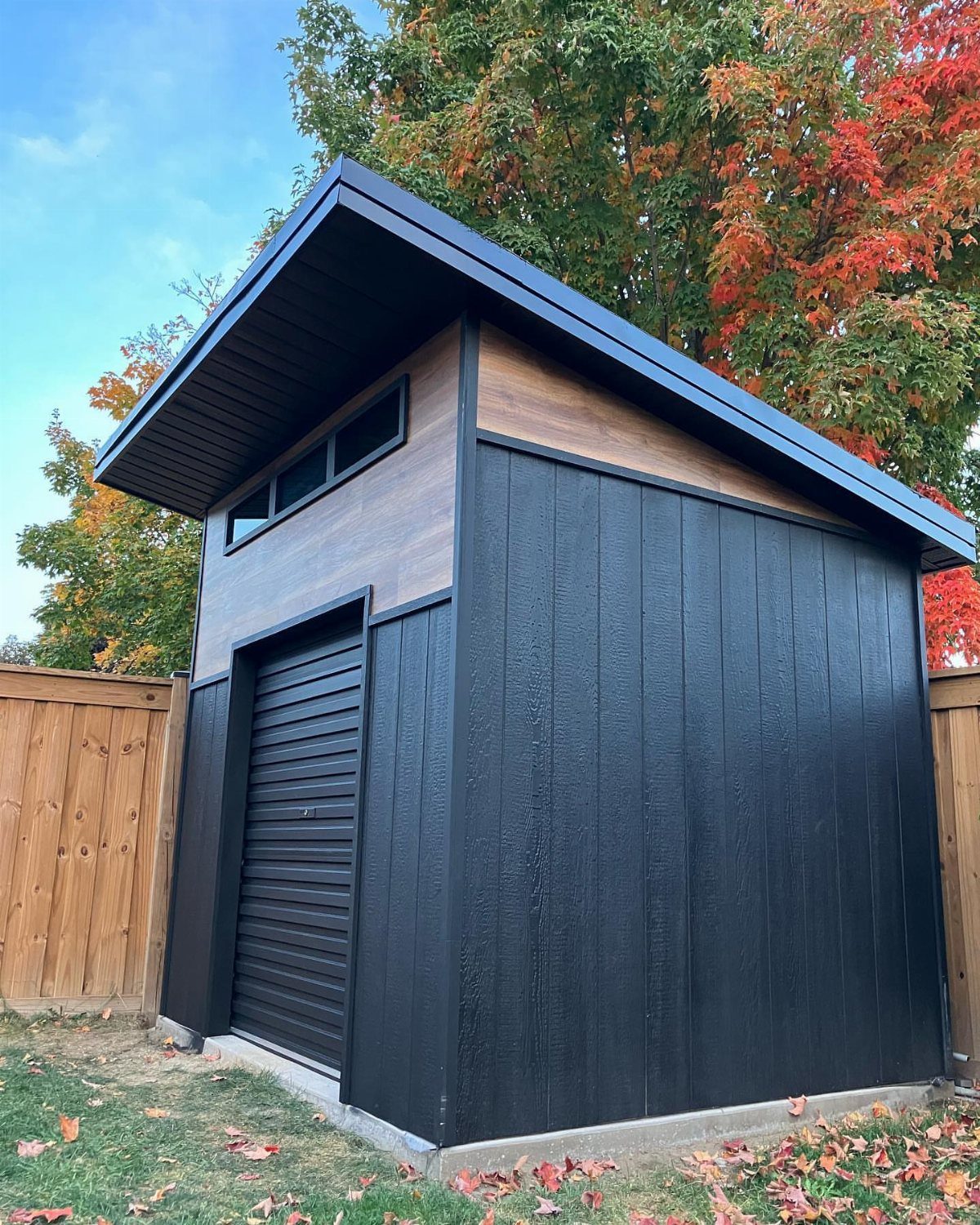
Wood siding is the choice when the shed needs to disappear into a yard that already has fences, decks, or trees.
T-1-11 plywood, the grooved 4×8-foot sheets with their 3/8-inch channels spaced four or eight inches apart, covers wall fast and costs less than most alternatives. At 5/8 inch thick it has enough body to take a bump.
The maintenance is real: repaint on a regular schedule, and expect to patch spots between full coats.
I have seen people swear they will stay on top of it, then let it go until the grain opens and water gets in. If that rhythm does not sound like you, look elsewhere.
For the disciplined, though, nothing else takes stain the same way or lets you match a fence exactly.
Redwood or cedar push the price to seven to twelve dollars a square foot but carry their own weather resistance. Plywood T-1-11 runs cheaper and, painted, looks sharp enough for most backyards.
3. Use Recycled Materials
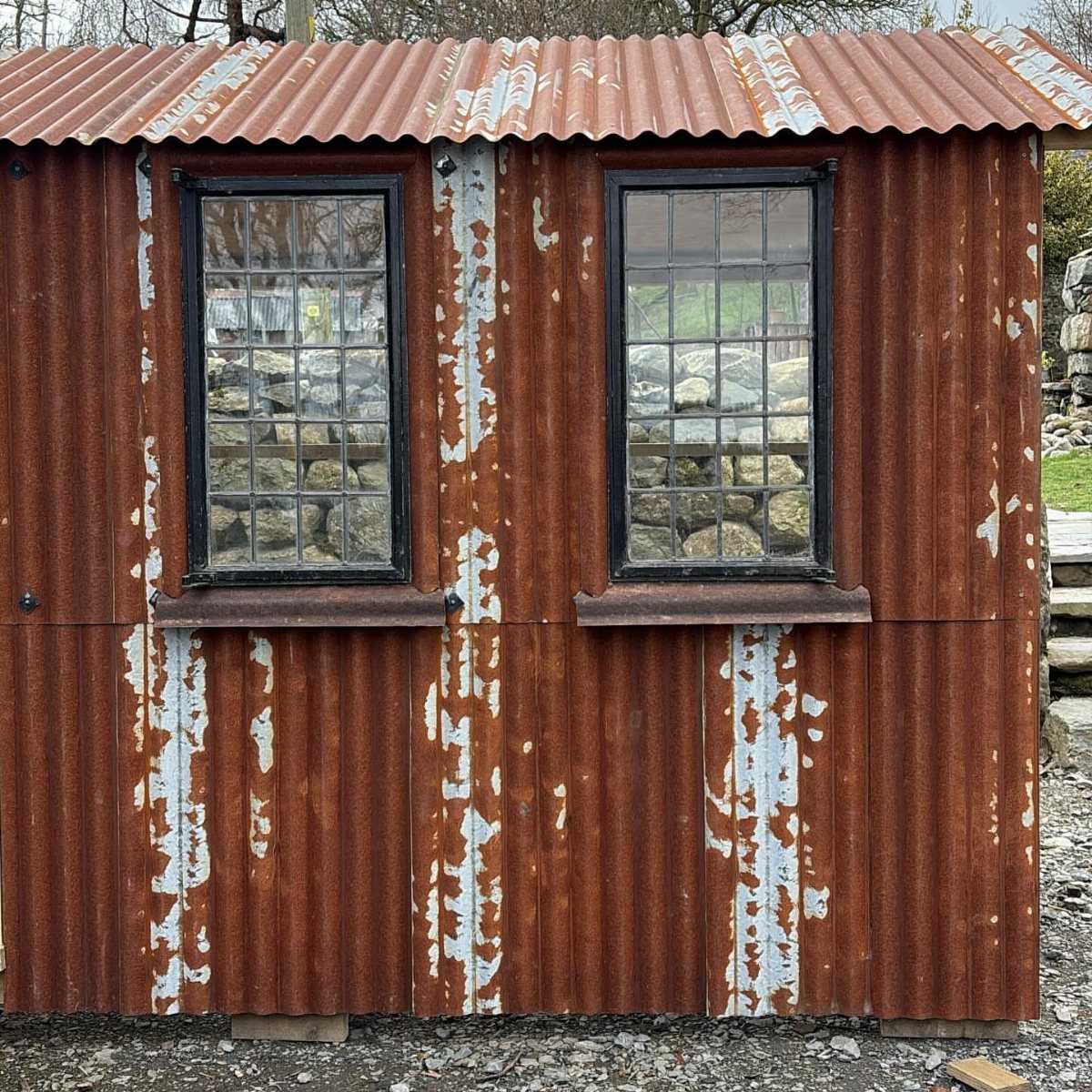
Rusted corrugated panels and old windows with black frames make a shed that looks collected rather than built.
Salvage yards and teardowns are the sources: metal roofing from a barn, windows from a house demolition, pallet wood for trim or shelving inside.
The cost drops to almost nothing if you have time to gather and patience to fit odd sizes. The trade is labor.
An old window is never quite the right dimensions for the opening you planned, so you build around what you found, not the other way around. Corrugated sheet in hand, you cut to fit and accept that the overlaps show.
I would do this for a garden shed that holds tools and pots, not precision equipment, since the charm comes from the gaps and the weathering.
One coat of clear finish on cleaned old wood brings out age without pretending the material is new. That is the balance: protect it enough that it lasts, leave it honest enough that it still reads as reclaimed.
4. Create a Garden Around Shed
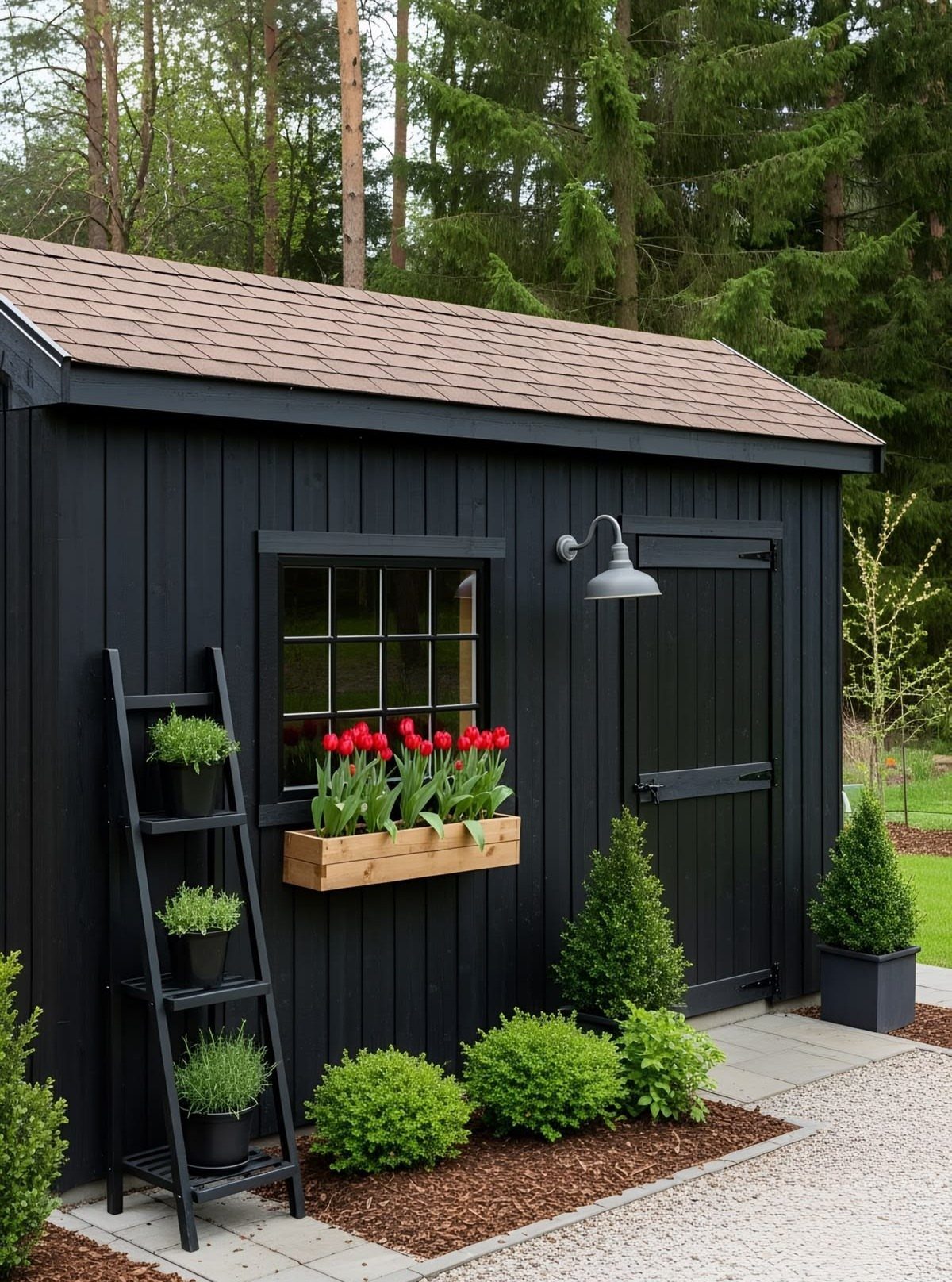
A shed planted into its setting stops being an interruption. Low shrubs at the base, mulch against the foundation, and a window box with seasonal color pull the eye down and across instead of to the box alone.
Hardy perennials are the practical choice. Annuals look tired by August and need replacing; a shed surrounded by lavender or sedum or ornamental grass does not.
The example shows tulips in a box, which is fine for spring, but I would underplant with something that carries the summer.
Climbing hydrangea or clematis on a trellised side turns a blank wall into green faster than you might expect.
The work is mostly upfront: good soil against the foundation, drainage so water does not sit, and a border that keeps lawn from creeping in.
After that, a shed with plantings around it needs less attention than one standing alone on grass, since the mowing pattern simplifies and the weeds have competition.
5. Create a Potting Shed
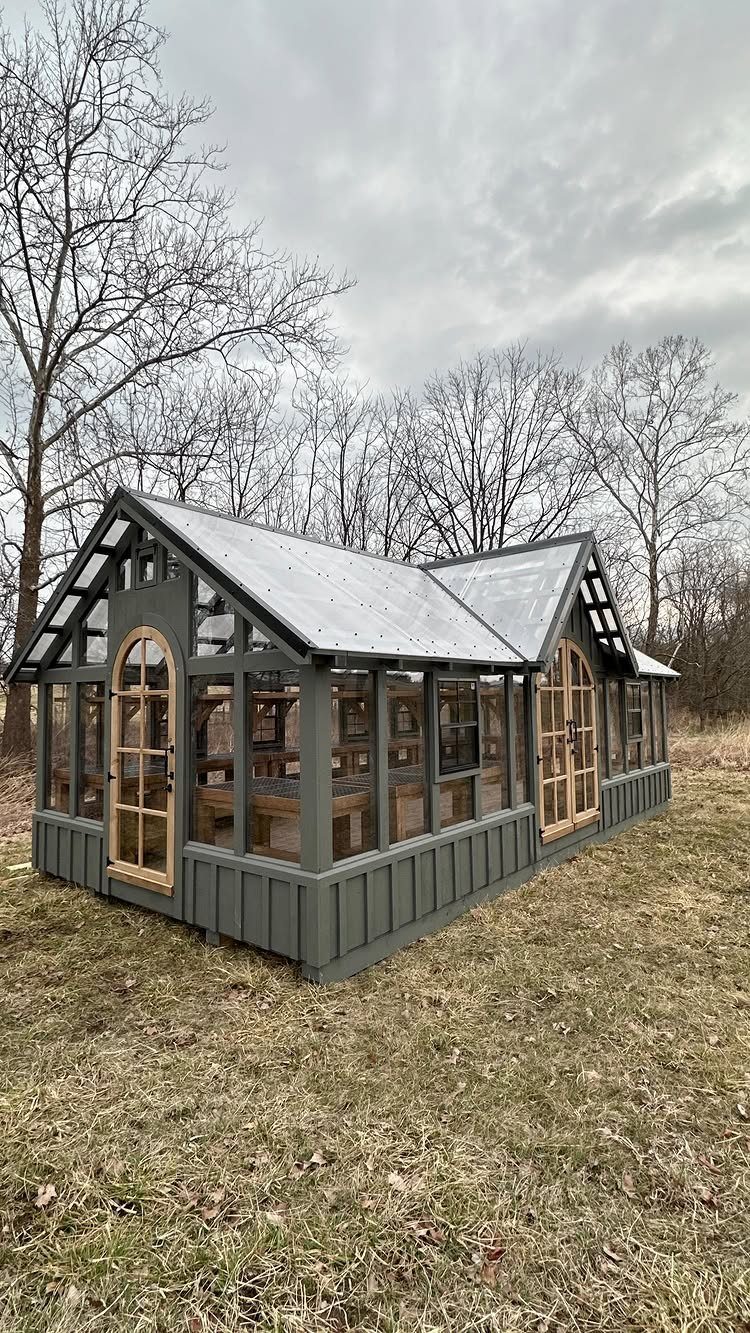
A potting shed is a workshop that happens to have dirt on the floor.
The example shows glass on three sides, a translucent roof, and arched doors, but the essential parts are a work surface at standing height, storage within arm’s reach, and enough light to sort seeds or trim cuttings without guessing at color.
Mobile benches and matching shelved wall space let a potting shed grow and shrink with the season’s workload.
Mobility matters: roll the bench to the door for messy potting, back against the wall when you need floor space for a bag of soil.
A bench at counter height saves the back on a long afternoon of transplanting and dividing.
An old shed converts if it has one window or can take one. A solid structure with a good bench and a rack above it does the same work for a gardener who pots on weekends, not professionally.
The dedicated space is what changes the habit, not the architecture.
6. Modern Makeover
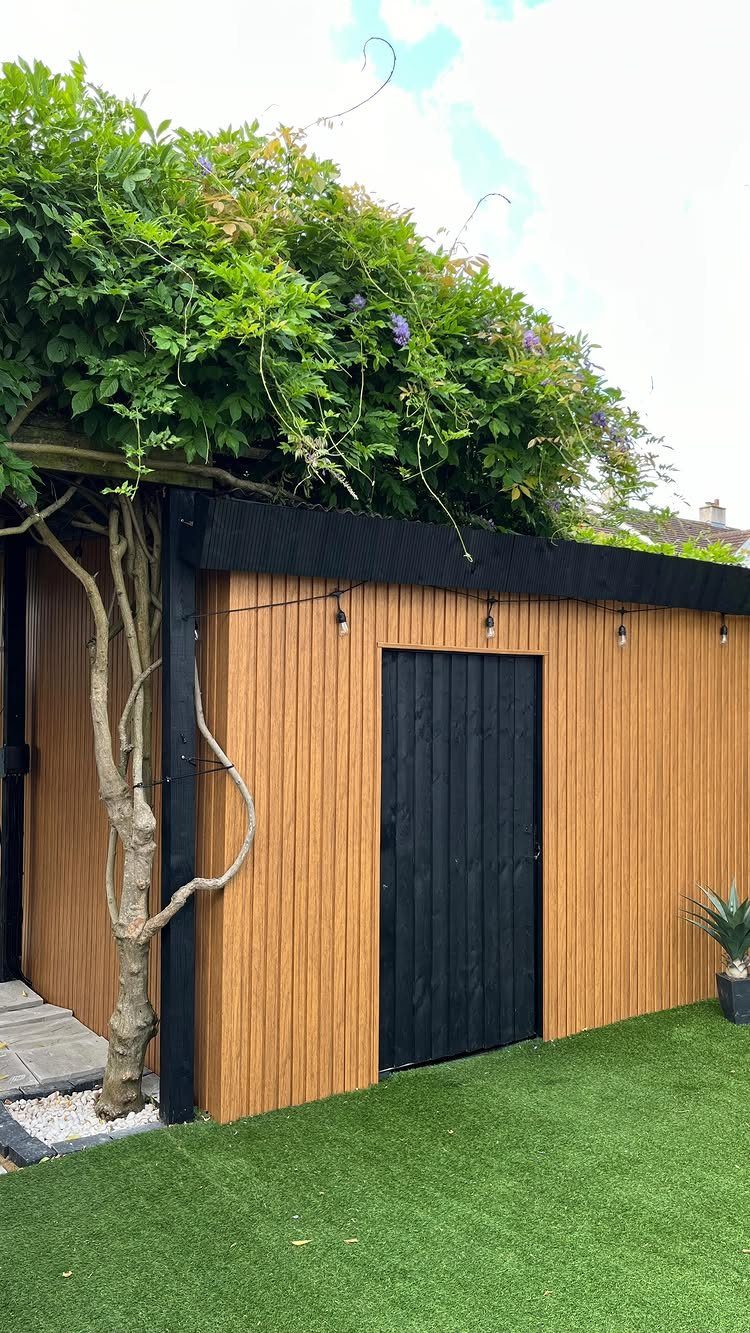
Vertical slats in light wood tone, black door, black fascia, and a roof pergola heavy with vine: this is what happens when you keep the bones and change the skin.
The original shed was run-down; the makeover kept the frame and replaced everything visible.
Board-and-batten trim on the walls, new fascia boards, reshingle the roof, paint the whole thing bold, add a deck or platform at the door.
The sequence matters: roof first so you are not dripping on fresh paint, walls second, details last. String lights on the pergola go up after the vine is established enough to carry some shadow, or the bulbs bake.
I would do this instead of replacing when the structure is sound and the footprint already right. A new shed means permits, leveling, delivery access.
A makeover needs paint, trim lumber, a weekend of demolition of the old skin, and another of putting the new one on.
7. Rustic Garden Shed
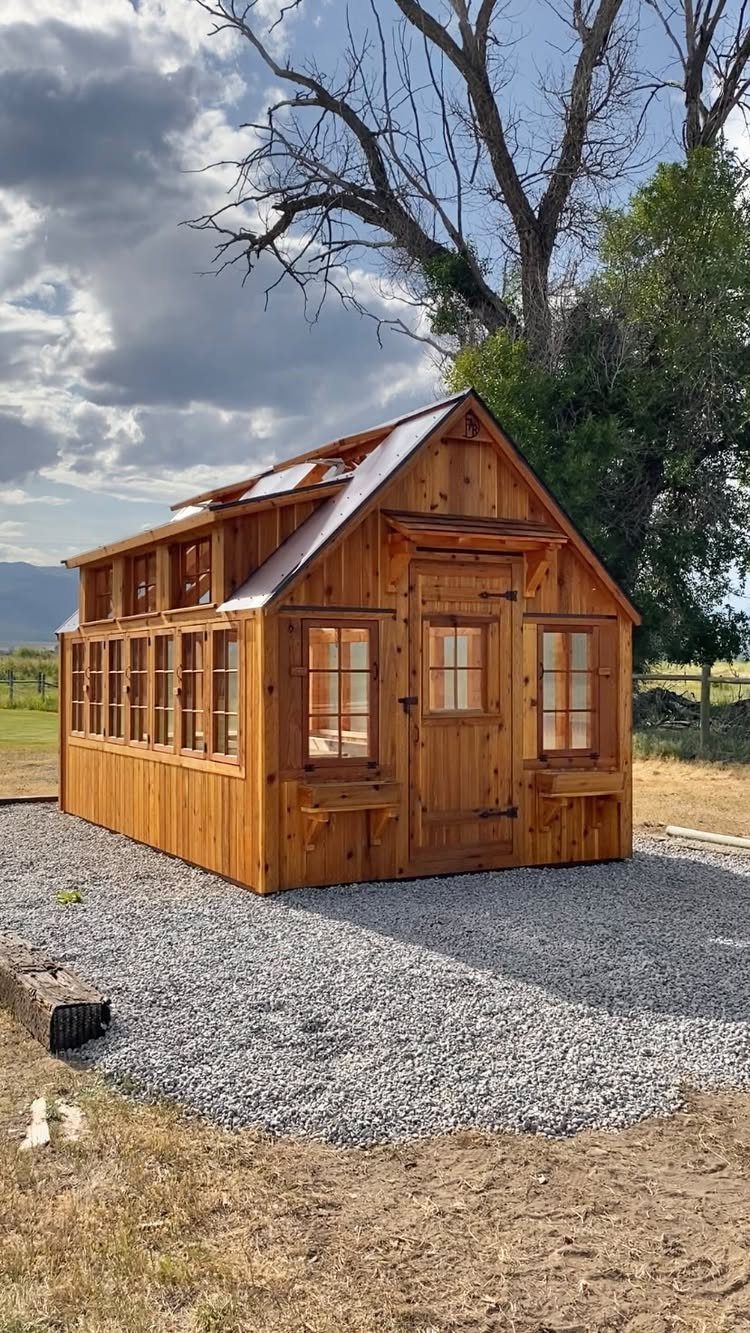
A rustic garden shed works because it already looks settled, like it grew out of the yard rather than arriving on a truck.
Natural wood siding left unpainted or stained in a single color, a gabled roof, and small windows with simple planter boxes underneath keep the look grounded.
Hold back on adding too much and the shed stays quiet against the garden. One color on siding, doors, and trim keeps it from looking busy, and a gravel base instead of poured concrete keeps the footing casual.
Window boxes add planting space without changing the structure.
I’d aim for cedar or a rot-resistant softwood if the budget stretches; pine works too if you seal it. This style suits someone who wants the shed to read as a garden feature, not a storage unit shouting for attention.
It trades the crisp edges of modern build for warmth, and it asks for some maintenance down the line.
For less than $2,000, you’ll get a 6-ft. by 8-ft. shed, providing plenty of storage without taking up too much yard space.
8. Create a Pathway
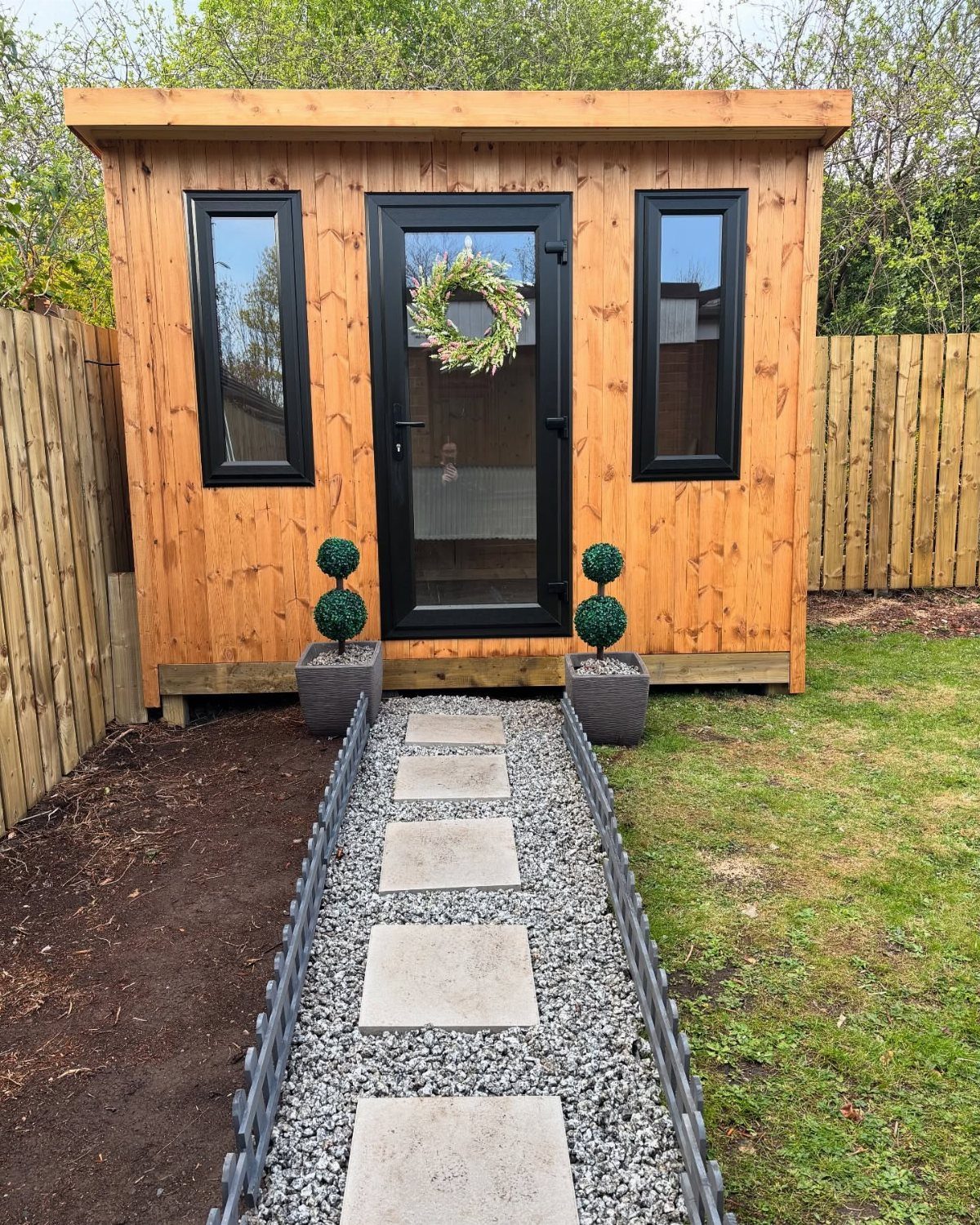
Gravel and square pavers make a path that drains well and costs less than poured concrete.
Grey edging keeps the gravel from wandering into the grass, which matters more than it looks; without a border, you’ll be raking stone back into place after every rain.
I laid something similar once. The digging is shallow and the pavers sit just above the gravel so they stay visible and stable.
Two small potted plants at the entrance, like a simple topiary pair, finish it without calling for flower beds you did not plan.
This suits any shed where the door faces the yard you actually walk across. Weeds are the real catch; landscape fabric underneath slows them but does not stop them.
9. Create a Cozy Retreat
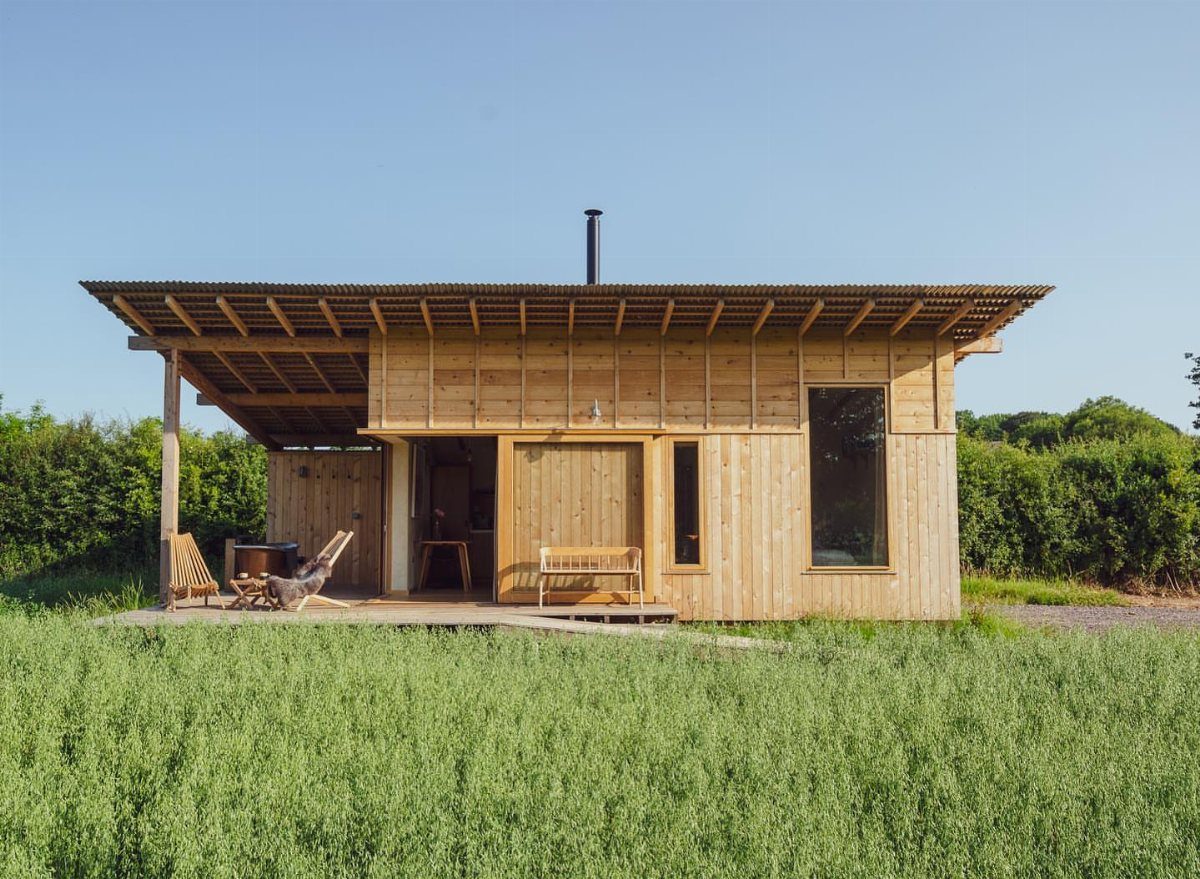
A shed with a covered porch and a couple of lounge chairs stops being storage and starts being a room with missing walls.
A corrugated overhang gives shade and pairs with large windows so the interior still gets light even when the chairs are occupied.
If I were building toward this, I’d extend the roofline well past the front wall and use pressure-treated posts.
The furnishings can come later; a salvaged wooden chair and a small table do the job before you hunt for matching loungers.
What makes it a retreat is placement, facing away from the house and toward whatever your yard offers, grass or trees or open sky.
This idea trades storage square footage for living space, so it works best for a shed that already cleared out its junk or one large enough to divide.
The cost jumps with the roof extension and any electrical you run for a fan or light.
Choosing Shed Siding
Siding sits at the intersection of how long you want the shed to last and how much time you will spend keeping it alive.
Metal asks almost nothing after installation; wood asks for paint on a schedule and a watchful eye for rot starting at the seams.
Metal siding and cedar both cost more than vinyl upfront, and either one means more hours on a ladder with a brush than the low-maintenance option.
A finish rated for UV exposure buys a few extra seasons before the color dulls, and wood in particular needs paint or stain that can handle freeze-thaw cycles without peeling.
Color matters most as a match to what already sits in the yard, not as a statement on its own.
Annual inspection is the habit that catches a seam opening or a gutter spilling before the damage spreads past a quick fix.
Maintenance Tips
A shed renovation is only as good as the maintenance that follows it. Repainting every few years is the big recurring cost on wood siding; metal skips this but still needs a hose-down to keep its finish from dulling.
Small fixes done early, like patching a leak before it rots the wall or clearing gutters before they overflow, keep you from tearing out whole sections later.
Annual inspection is the practical rhythm. Walk the exterior after hard weather, look at the roofline from the ground for lifted edges, and open the door after rain to smell for damp that should not be there.
Catching a gap in flashing or a board starting to cup takes minutes; repairing rot that has spread inside the wall takes a weekend you did not plan.
Budget Considerations
The place where budgets slip is in treating each decision as independent.
Siding, trim boards, paint, and a Saturday tearing off the old stuff add up faster than the list suggests; so does cutting in a window you did not frame for, or running a line for a light you decided you wanted after the walls were closed up.
I would price the whole sequence before buying the first material, and hold some part of the total for the thing I will notice only after the walls are open.
Frequently Asked Questions
How to make a shed look nice outside?
Paint, landscaping, and small details like shutters or flower boxes do the most for the least money.
A fresh coat in a color that talks to your house or garden pulls the shed into the yard instead of leaving it stranded.
Low shrubs at the base and a window box with something that carries through summer, not just spring, finish the job without a big spend.
What is the best material for an outside shed?
Metal, wood, and vinyl each answer a different need. Metal sheds water tight and asks almost nothing after installation, though it can dent and it rings in the rain.
Wood, especially cedar or redwood, takes stain and matches fences but needs paint on a regular schedule to keep rot and bugs out. Vinyl sits in the middle for upkeep and cost, and cleans with a hose.
Is it cheaper to buy or build an outdoor shed?
Building can cost less if you already own the tools and the time, but a ready-made shed like a 6-foot by 8-foot kit lands under $2,000 and skips the permits, leveling, and delivery headaches.
The real comparison is labor against convenience: a weekend of your own work versus hauling boxes and following instructions.





