
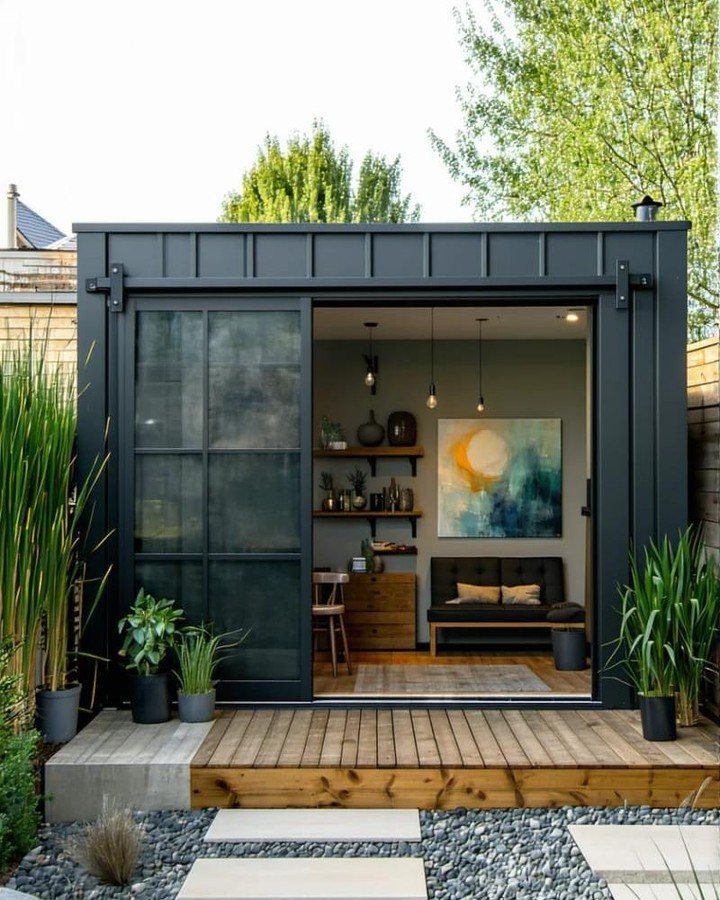
These ideas run from a weekend setup on skids to a permitted foundation build with a deck, and the deciding factor is what the structure needs to do for you.
A shed that only stores a mower wants a roll-up door and durable siding; one you plan to work inside for an hour after work needs a mini-split and glass doors that open the whole wall.
A flat roof and black cladding turn the thing into garden furniture instead of an outbuilding, which is how sheds started reading differently in backyards.
1. Small Modern Shed Ideas for Compact Yards
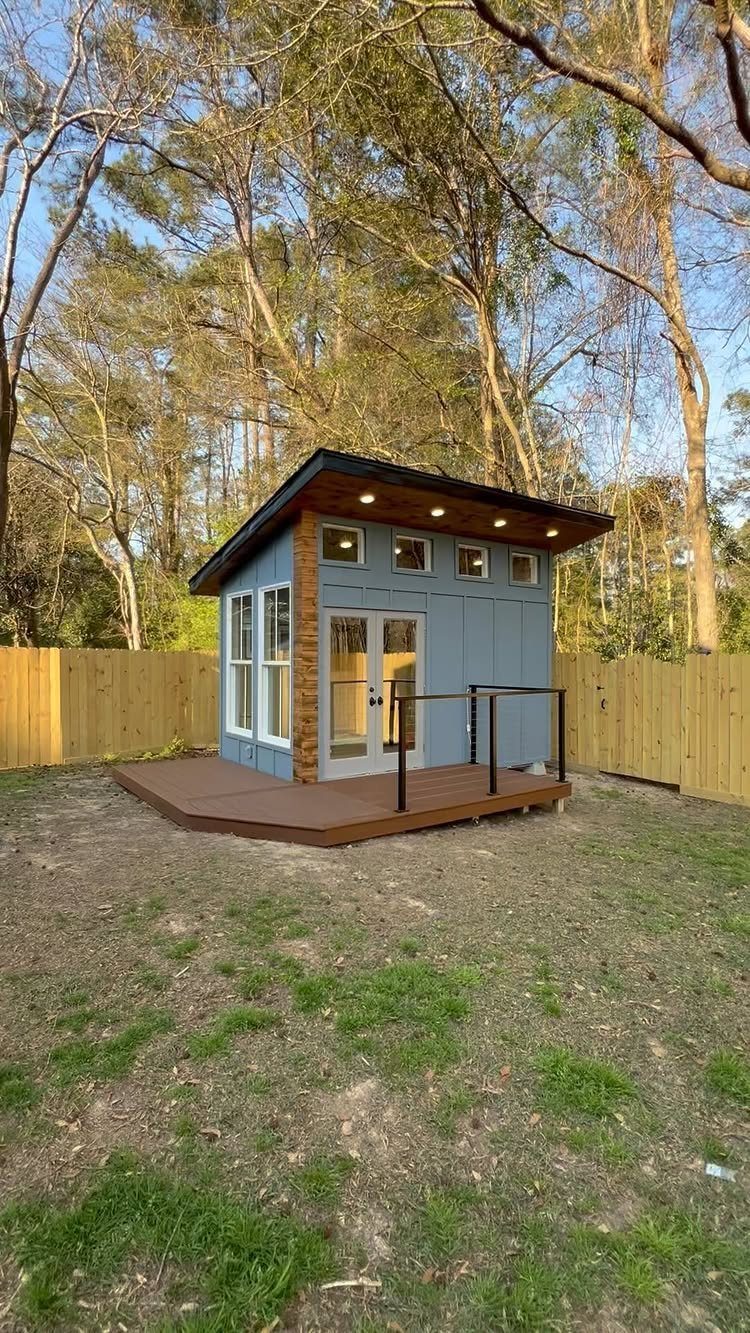
A slanted roof and clerestory windows buy you headroom without eating yard space.
I like this setup for lots where every foot matters; the vertical storage inside keeps tools off the floor and the sliding door never swings into a path you need clear.
Pale siding and a shed roof with clean edges keep a small footprint from looking busy. They keep a small structure from feeling like it landed on top of the garden.
If your fence line is tight, check whether the door track needs more clearance than you have; a bifold or sliding option changes the math.
This suits renters who want a studio or bike storage they can take with them later, or first-home owners whose yards back onto alleys where nothing else fits.
2. Multi-Purpose Backyard Studios
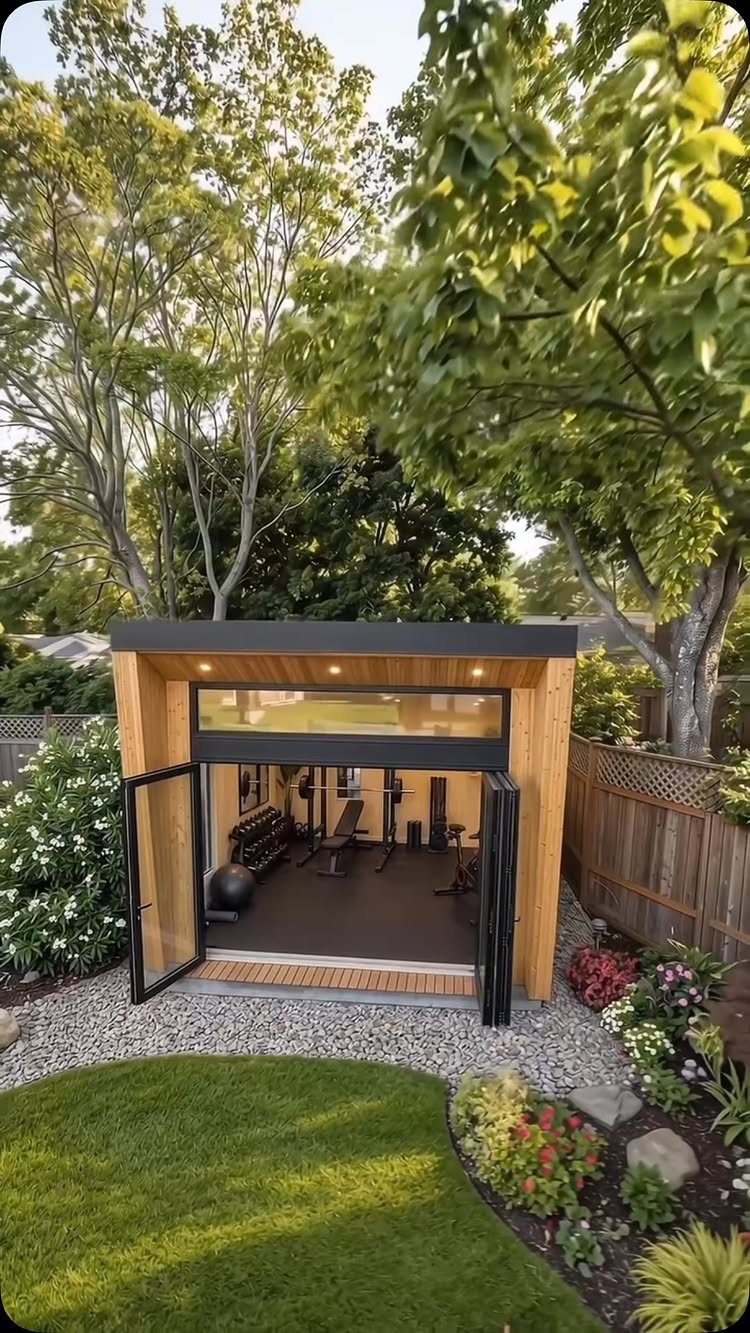
Bi-fold glass doors open the whole wall; a wooden frame studio stops feeling like a box the minute air moves through it.
The wall of glass matters more than the square footage; you need the light if you are spending an hour inside after work.
Insulation and wiring are where the budget goes, not the cladding. I would spend on a mini-split before finish flooring; a shed that cooks inside all summer gets used exactly never.
Layout the interior for your bulkiest item first, usually a bench or desk, and build storage around it.
The flexibility is the point. A space that works for weights this year can shift to pottery or a remote office next year without new construction.
That is worth the up-front cost over a single-use build.
3. Urban Style Sheds
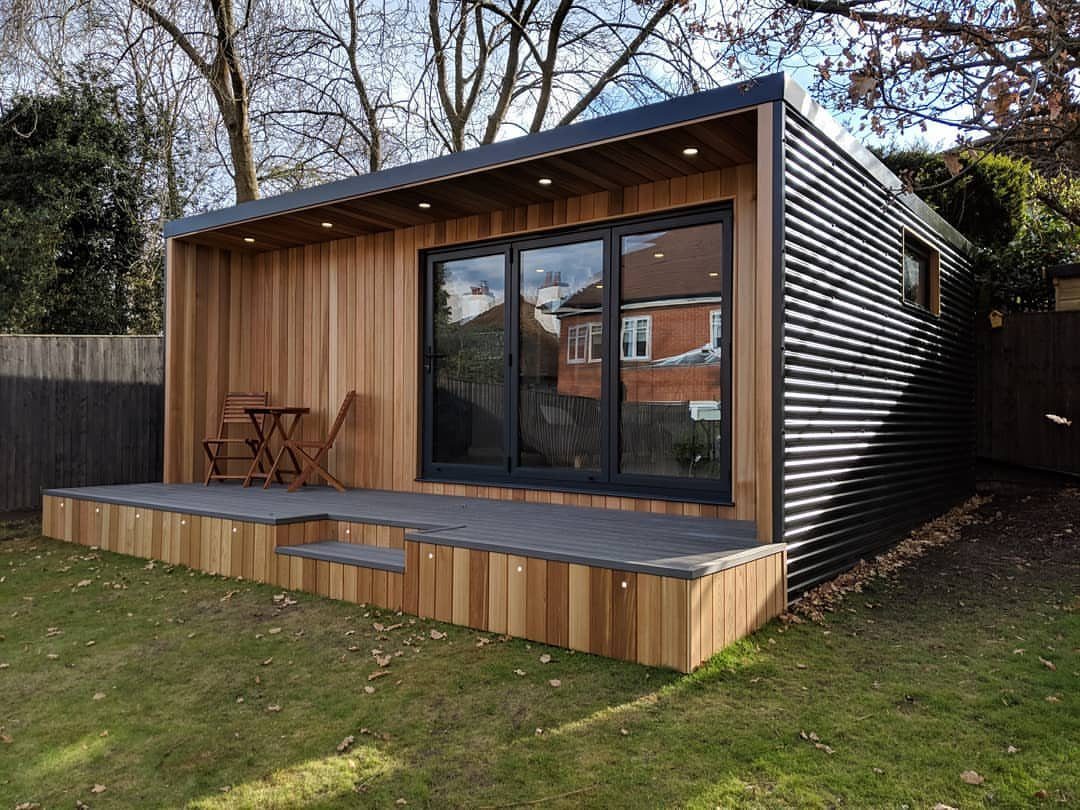
The sliding glass doors and recessed lighting are choices that cost more than basic but signal intention; this is not a leftover structure tucked behind the garage.
Materials matter more here than in other styles because the look depends on contrast and precision. Metal siding shows every fastening mistake; wood trim swells if the seal is wrong.
I would hire out the shell and handle the deck myself, since the elevated platform is forgiving and the sight lines are what sell the design.
Check your setbacks before falling for this style. The clean box shape needs breathing room on all sides to read properly; crammed against a fence it looks like a shipping container.
4. Garage or Equipment Shed
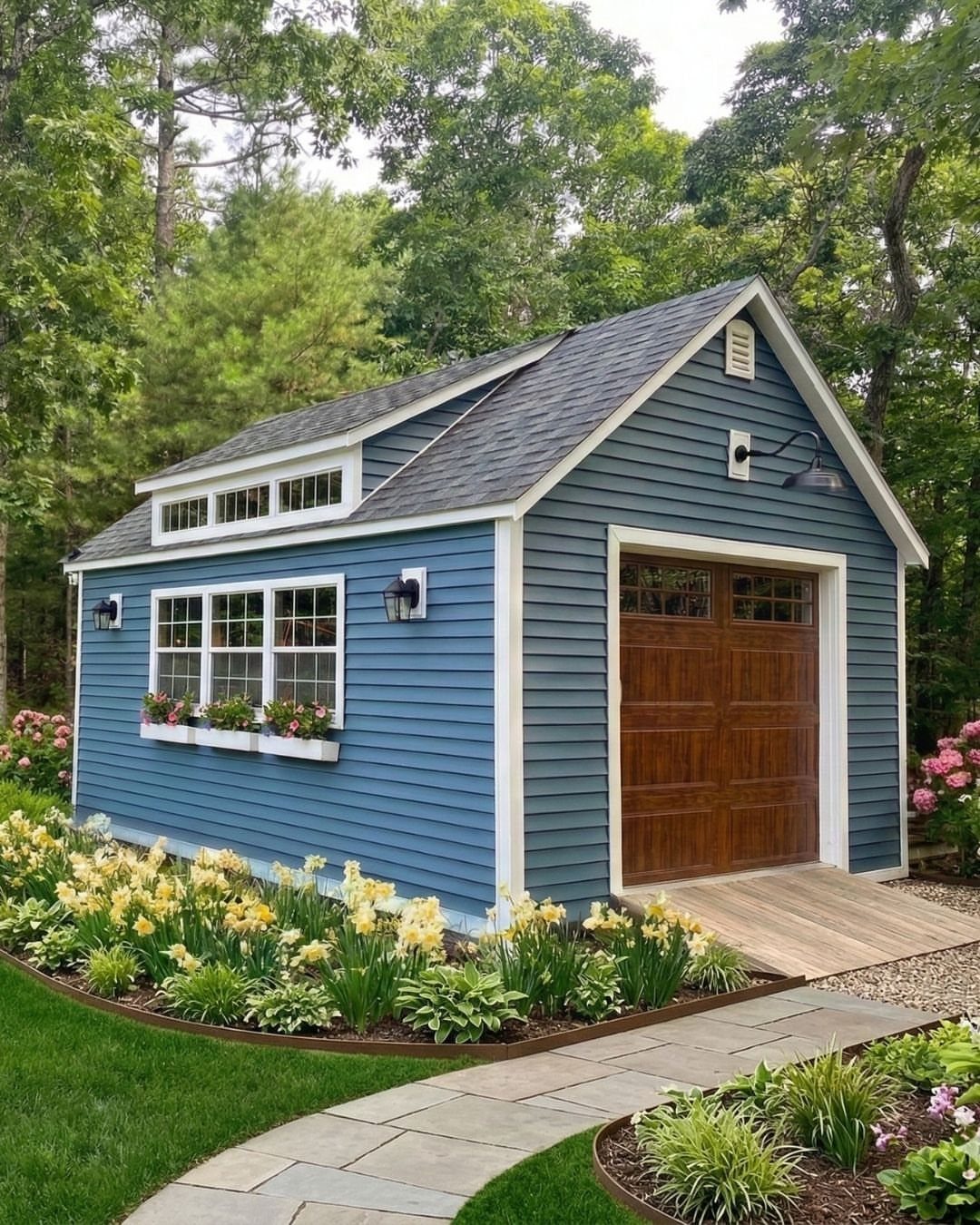
A roll-up door changes what you can store. Bikes, a mower, even a small ATV roll in without the dance of angling through a swing door.
The ramp is not decorative; without it you are lifting or you are limited to what you can carry.
Durable framing and weather-resistant siding are the specs to verify, since this shed works harder than most. I would look at the door hardware first; a cheap roll-up binds in winter and rusts before you have gotten your money back.
Dormer windows add light but they are also leak points, so check the flashing if you are buying prefab.
This is for the homeowner with equipment worth protecting, not just storing. If you are still borrowing your neighbor’s pressure washer, a standard shed door is probably enough.
5. Pod Space Prefab Garden Sheds
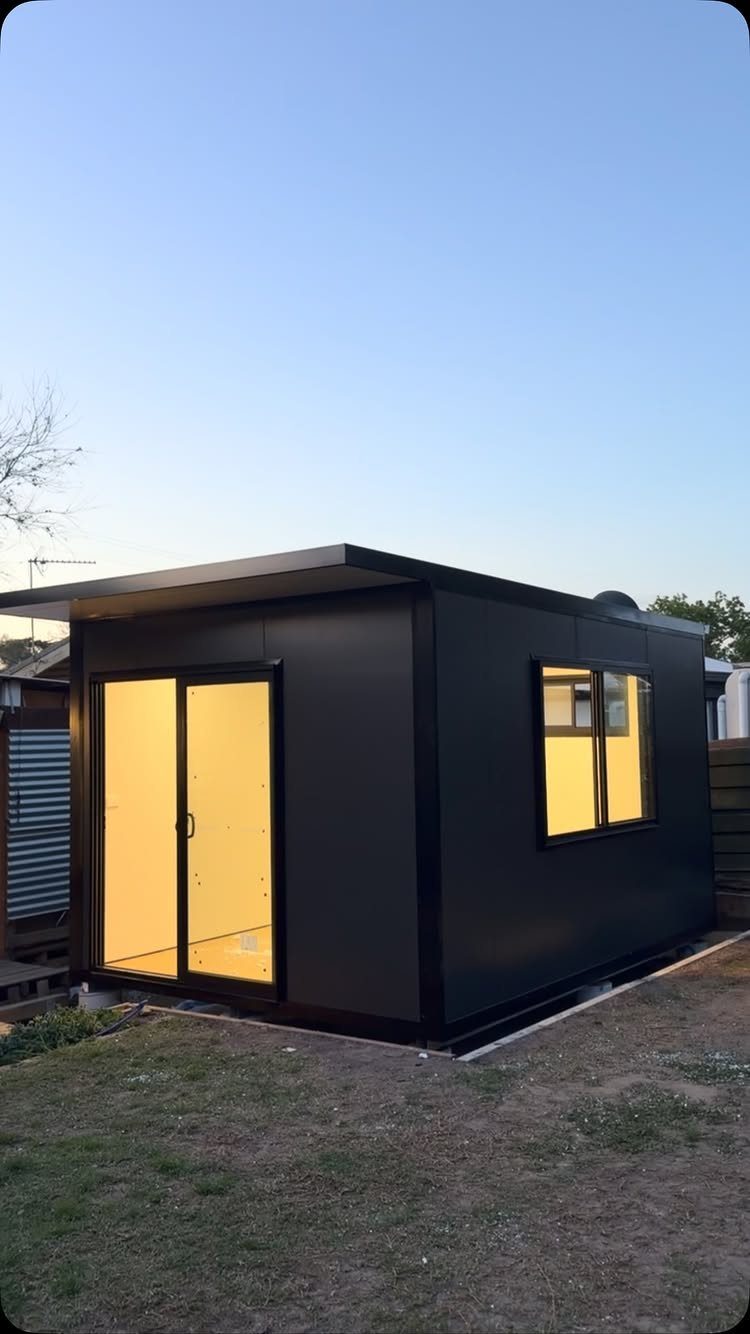
The flat roof and black cladding make this pod read as furniture, not outbuilding. That is the shift in how sheds sit in a yard now: placed deliberately, lit at dusk, treated as part of the landscape design.
Prefab gets you the shell fast, usually a weekend to set and level. What you add after, wiring, flooring, built-ins, determines whether it becomes an office or stays storage.
I would plan the interior use before ordering; door placement and window count change the module you need, and retrofits are harder than they look.
This suits the reader who wants the structure to earn its keep visually. If your yard is already crowded, the clean box form is easier to place than something with overhangs or multiple rooflines.
6. Minimalist Sheds with Clean Lines
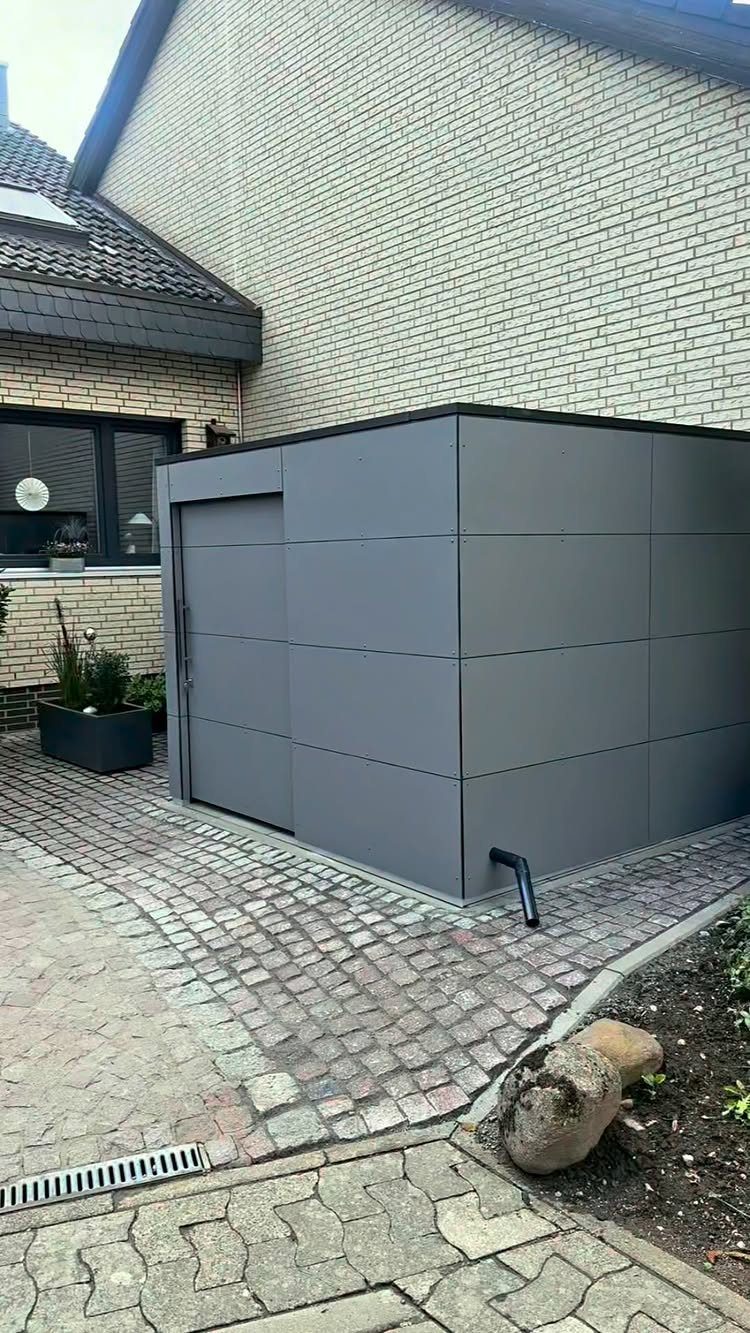
Flat panels and a flat roof disappear against a brick house in a way gables never do. The neutral color is doing the work of fitting in; the shed does not compete with the garden or the architecture.
Minimalist here means no trim to catch leaves, no valleys to trap water. I would still check the roof pitch for your snow load; flat reads sleek but engineering matters.
The paneled siding is straightforward to clean and resists the dings that textured materials show.
This is the choice for a small yard where visual balance matters more than charm. The simplicity also keeps costs predictable; there are fewer custom cuts and no decorative pieces to source.
If you want the shed to read as an extension of the patio rather than a separate thing, this is the direction.
7. Integrated Outdoor Living Features
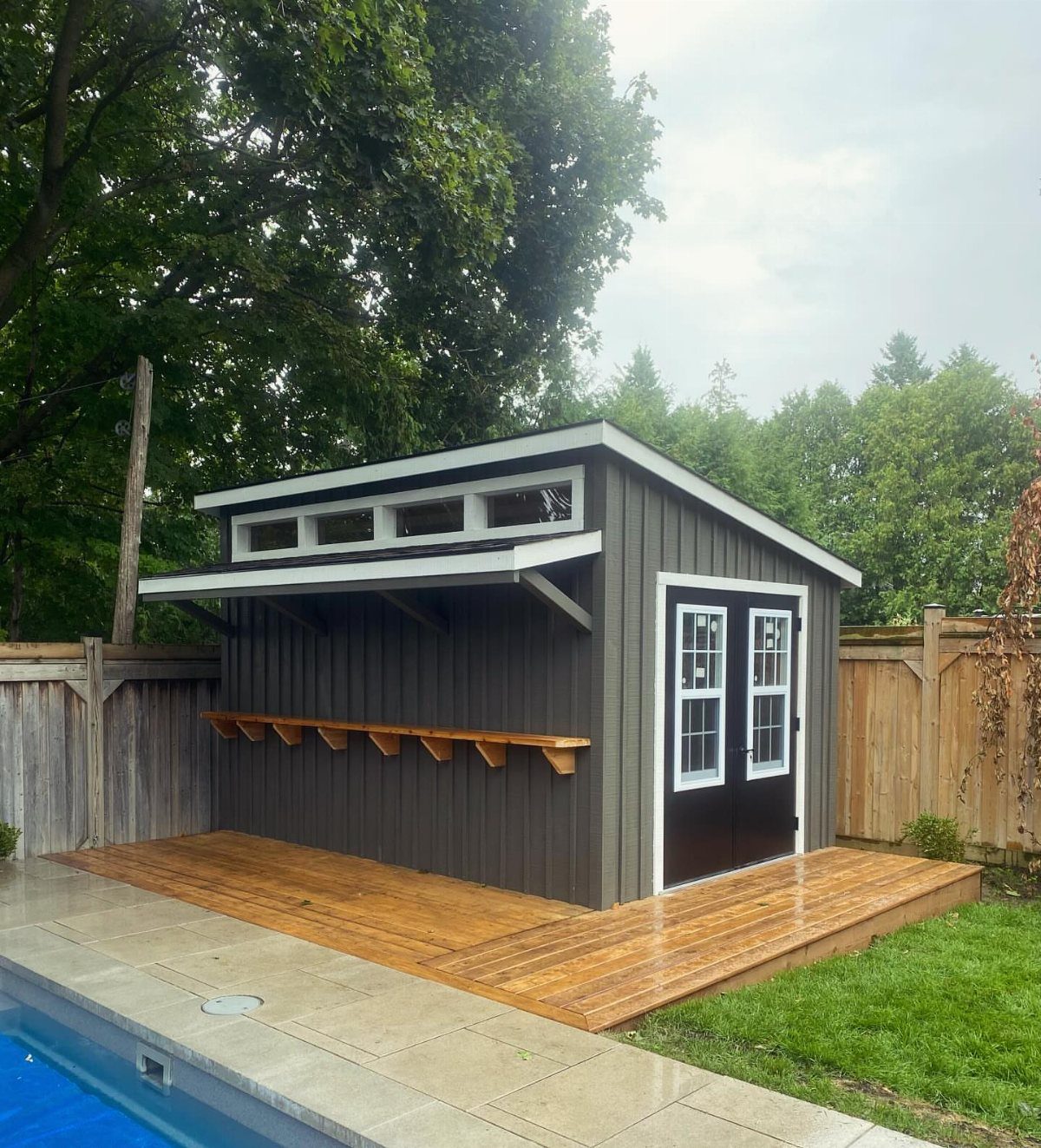
A shed with a deck and an awning stops being storage and starts being a place you actually use.
A wooden bar shelf along one wall under a small overhang gives you a place to set down a drink or a laptop without building a full outdoor kitchen.
The overhang is the part that matters most. Without it, the bar is just a shelf that gets rained on; with it, you have a workspace that stays dry enough for most of the year.
Pergolas work too, though they shade rather than cover, so I’d only go that route if you need light more than shelter.
If your shed sits near a pool or a patio, this is the idea that pays off fastest. You are already out there; the shed just gives you a reason to stay.
Foundation work is the catch: anything with a deck needs level ground and usually a permit check, where a standalone shed on skids might not.
For a small yard, a narrow deck keeps more grass intact while still giving you that outdoor room feel.
Customization Options
Matching the shed to your house color and roofline keeps the yard from looking like two properties collided.
I would pull a paint chip from the main siding and take it with me when choosing cladding; the match does not need to be exact, but it should read as intentional when viewed from the street.
Most modern shed plans let you move the door to any wall. I would decide that location before ordering, since a door facing the wrong corner turns every trip to the shed into a zigzag around the garden.
Interior finishing is where the cost splits: drywall, insulation, and flooring turn the shell into office space, but an unfinished interior is still useful storage if the exterior reads clean.
Uses for Modern Sheds
A modern shed works as office, studio, workshop, or storage depending on what you finish inside. The same shell handles pottery wheels, squat racks, or a desk; insulation and a mini-split are what make any of those tolerable past May.
I would plan for the bulkiest use first, since a bench that fits a table saw may not leave room for the yoga mat.
Pool houses and outdoor kitchens need plumbing runs that standard sheds skip, so check the foundation specs before falling for the idea. Guest bedrooms are possible but require egress windows in most codes; a writing studio needs less.
The flexibility is worth designing in up front. A space wired for 20 amps and fitted with decent light can shift purposes without new construction when your interests change next year.
Cost Considerations for Sheds
Prefab modern sheds run from $2,500 for small units up to $18,000 for larger models, with delivery usually included inside a radius.
I would compare that total against a site-built shell: materials run roughly half the prefab price, and your labor covers the rest if you have the weekends.
Some homeowners frame and sheath the structure, then hire out electrical and insulation. That split keeps the savings where your skills match and outsources the permitting headaches.
A home office shed pays back through commute elimination and focus, though I would not count those savings until the space is actually usable year-round.
Durability and Warranties
Structural warranties on modern sheds run to 30 years on some lines, which matters more than the siding color when you are comparing two models.
I would verify what the warranty covers: framing, siding, and roof are standard exclusions or inclusions to check.
Sustainability features have shifted from selling point to baseline.
Energy-efficient windows, reflective roofing, and responsibly sourced lumber are now standard specs on mid-grade and above; they cut maintenance and improve interior comfort enough to matter if you are sitting inside in August.
50-year siding exists on higher-end builds. That lifespan only holds if the flashing and door seals are installed right, so a warranty backed by onsite certified build crews beats a longer paper promise from a kit you assemble alone.
Frequently Asked Questions
Is it cheaper to build a shed or buy one premade?
Building your own shed usually cuts the cost in half, since labor runs about half the total on most construction jobs. You can build what you know how to build and pay someone for the parts you don’t.
Prefab kits save time but you still pay for the assembly labor built into the price.
How much does a modern shed cost?
Prefab modern sheds run from $2,500 for smaller models up to $18,000 for larger ones. That is the shell delivered; foundation, roofing top layer and stain sit outside those numbers.
Building from plans yourself shifts more of that budget to materials and away from labor.
What are the trendy shed colors for 2026?
Pale siding and neutral colors are what I would pick for a modern shed right now. A single color keeps a small building from fighting with the yard around it.
Black cladding is another direction, especially on flat-roof pods that read as yard furniture rather than outbuildings.





