
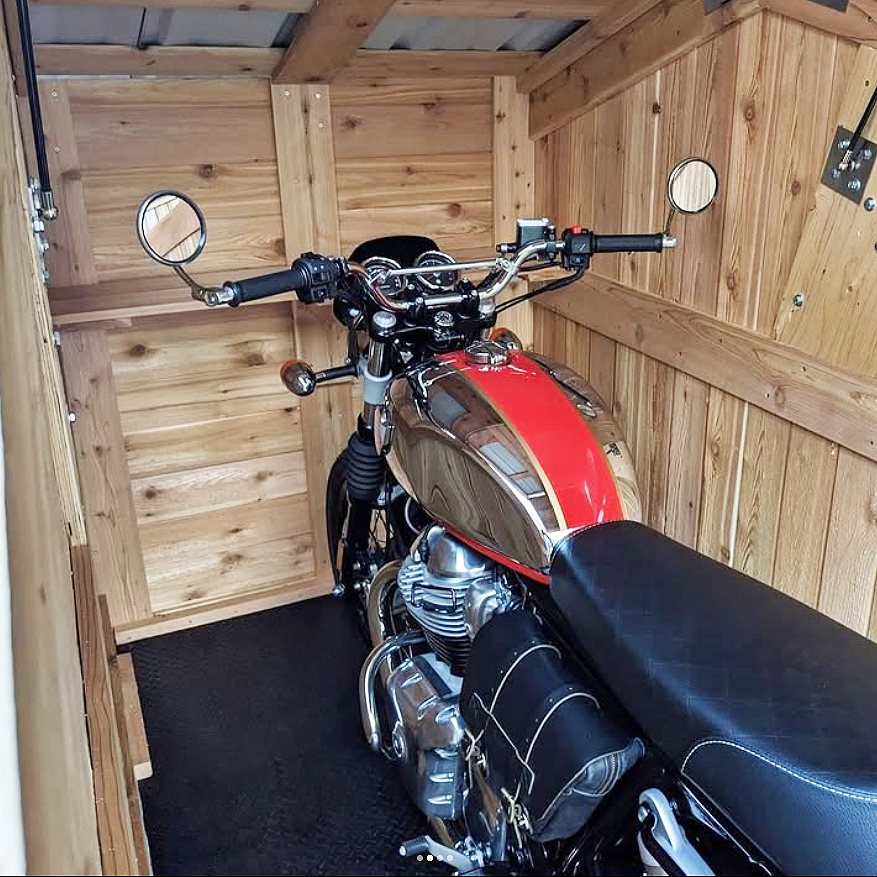
The ideas below run from a few dollars in hardware to a monthly storage bill, and the right choice depends on whether you rent or own, how many bikes live with you, and whether you are willing to drill a hole.
A 5×5 unit across town stores air at the same rate as a loaded shelf, while a wall hook and a stud finder can hold your bike for the cost of a coffee.
1. Wall Hooks
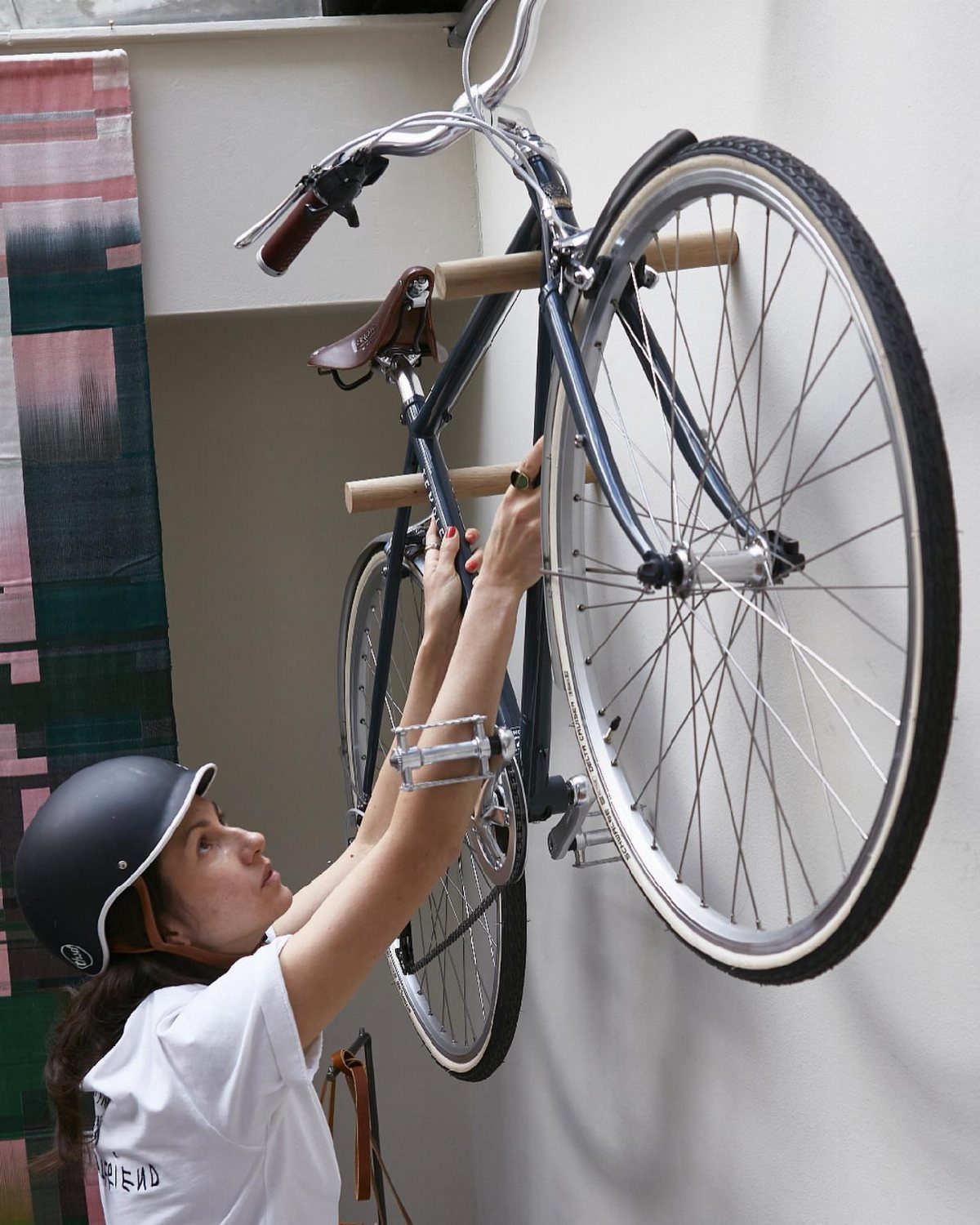
Wall hooks are the storage I grew up seeing in my uncle’s workshop: two pegs, bike hung horizontal, front wheel against the wall.
The rubber coating matters more than the hook shape; bare metal will chew through frame paint in a season of taking the bike on and off.
This suits renters who can’t drill much or want holes they can spackle later.
Check your wall type before buying: drywall anchors rated for a light road bike will fail under a steel-frame commuter, which needs a stud or a toggle bolt.
Wood hooks look warmer than metal utility hardware, though wood without that rubber sleeve is rougher on the frame than it appears.
I’d pick this for one bike in a hallway or bedroom corner where it becomes part of the room rather than hidden away. Lifting a bike to shoulder height every time you ride gets old fast if you commute daily.
2. Freestanding Bike Racks
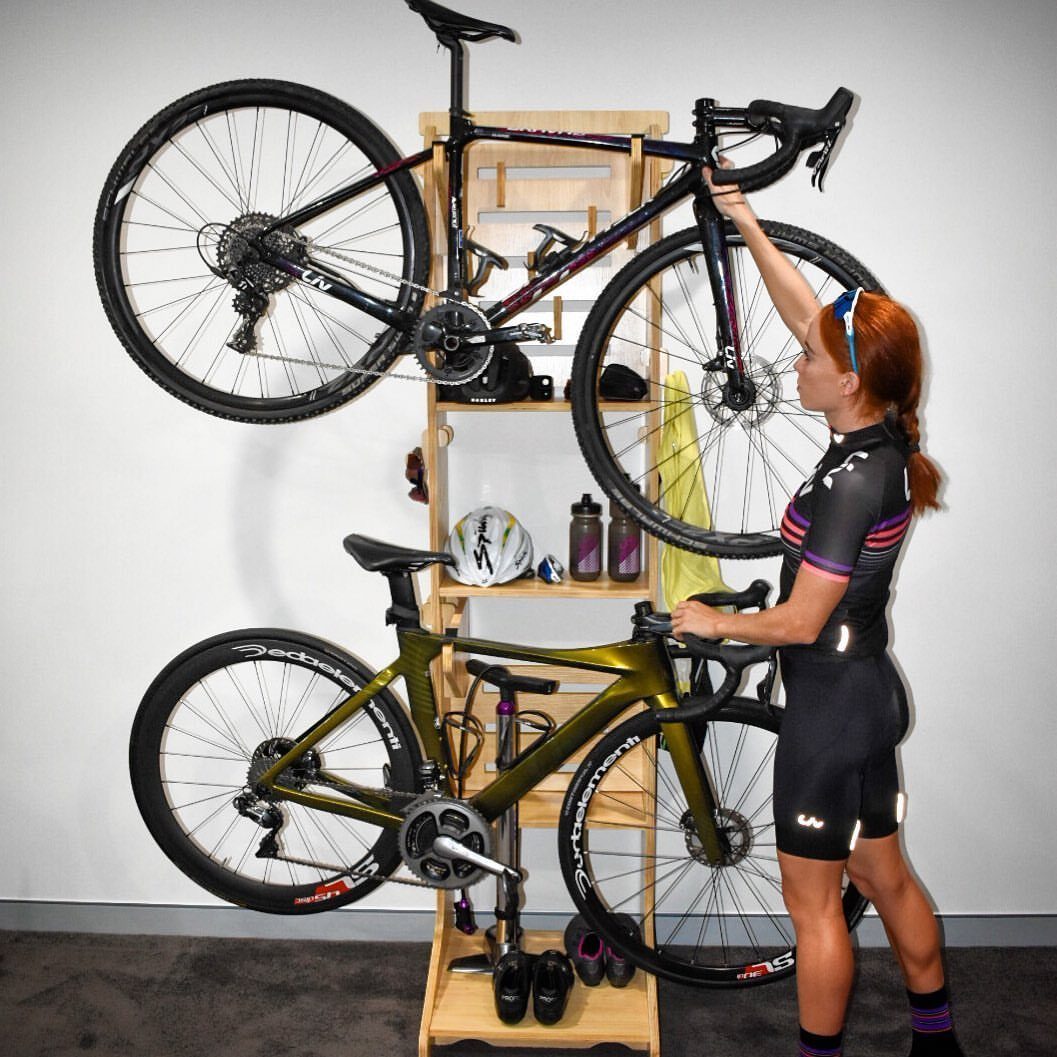
A freestanding rack keeps your walls clean and your security deposit safer. Holding two bikes vertically, wheels down, eats less floor width than hanging them flat; you need enough ceiling height to roll a bike in upright.
These units come in metal or wood, and the wood version looks less like gym equipment in a living space.
The base needs weight or a wall strap if you have kids or a dog that bumps things; a narrow footprint with a tall load is basically a lever waiting for a push.
I like this option for households with multiple bikes and a corner to spare, or for anyone whose landlord counts holes in plaster as damage. Assembly is quick with an Allen key and usually just a few bolts.
Check whether the wheel trays fit your tire width: a rack built for narrow road tires will groan under a wide mountain bike.
3. DIY Bike Stands
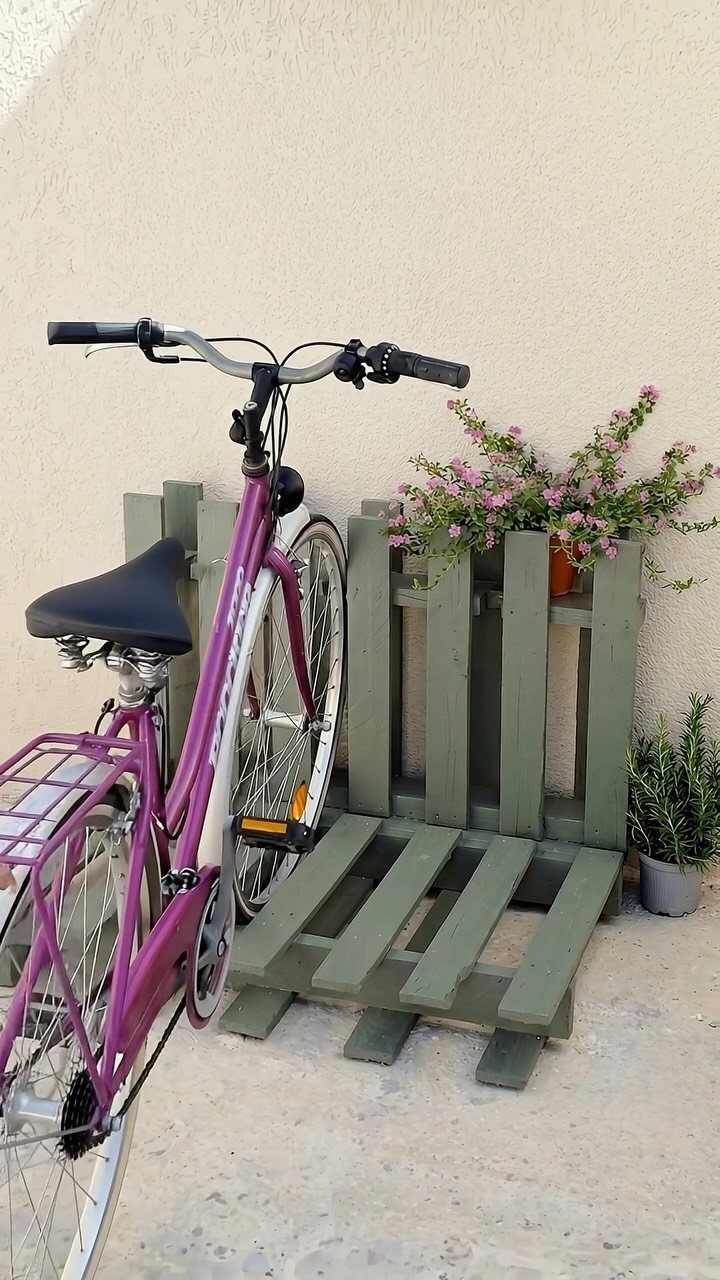
A wooden pallet, some green paint, and a few screws turned into a stand. The maker called it a DIY bicycle stand made from a wooden pallet, which is exactly what it is: no hidden joinery, no special order.
Pallets are free behind most grocery stores, though the good ones, marked HT for heat-treated rather than MB for methyl bromide, are the ones you want near your living space.
Knock them apart carefully; the slats split if you pry against the grain.
Keeping the pallet whole and adding a shelf for the front wheel is smarter than it looks: the bike stays upright without leaning on anything, and the shelf catches water and road grit before it hits your floor.
This is weekend work with a saw, drill, and sandpaper. It will not win design awards.
It will hold your bike for the cost of paint and a box of screws, and if you move, you leave it on the curb without the guilt of abandoning something expensive.
4. Ceiling-mounted Bike Lifts
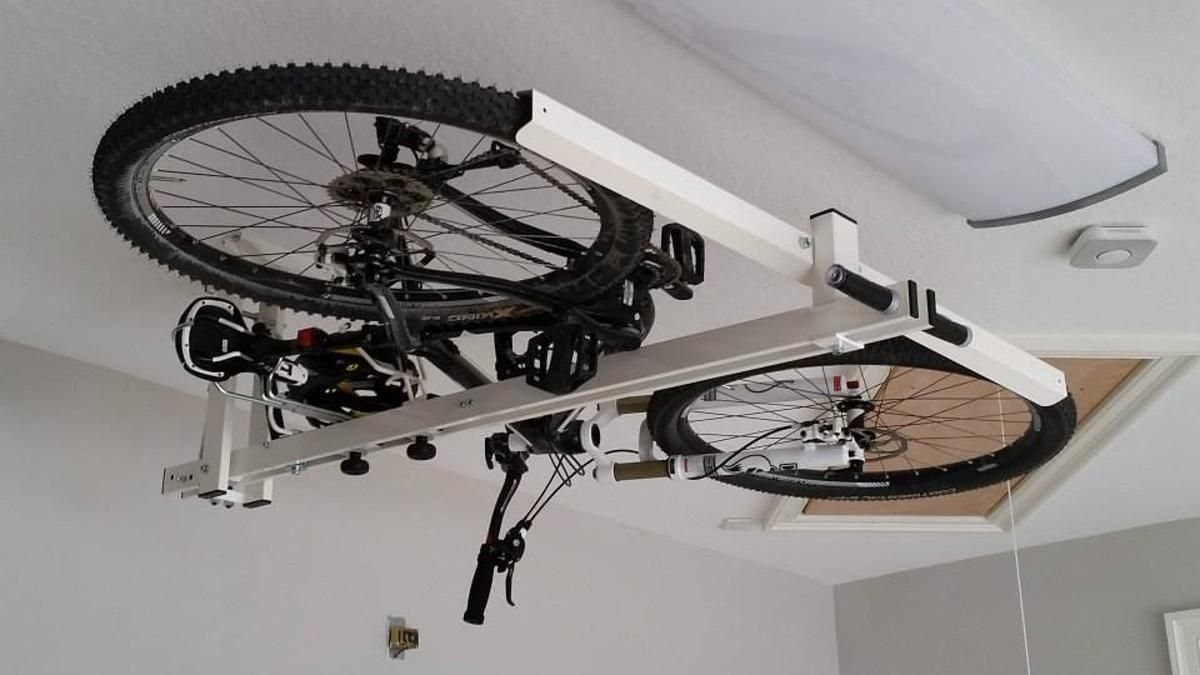
Ceiling-mounted bike lifts use pulleys or ratchet systems to haul a bike overhead, which is the only direction left when floor and wall space are gone.
The mechanical lift holds two bikes flat against the ceiling, clearing the room below entirely.
High ceilings are non-negotiable here: you need enough vertical space to lift the bike, plus headroom to walk underneath once it is up.
The lifting itself is awkward solo; the bike wobbles, the rope tangles, and a heavy e-bike will test your shoulder on the way up.
A bike falling is real if the mounting hardware loosens or the rope frays where you cannot see it.
I would use this for a second or third bike that comes out on weekends, not a daily rider.
Check the weight rating against your bike: a cheap lift will fail slowly and then all at once under a mountain bike plus gear.
5. Balcony Storage
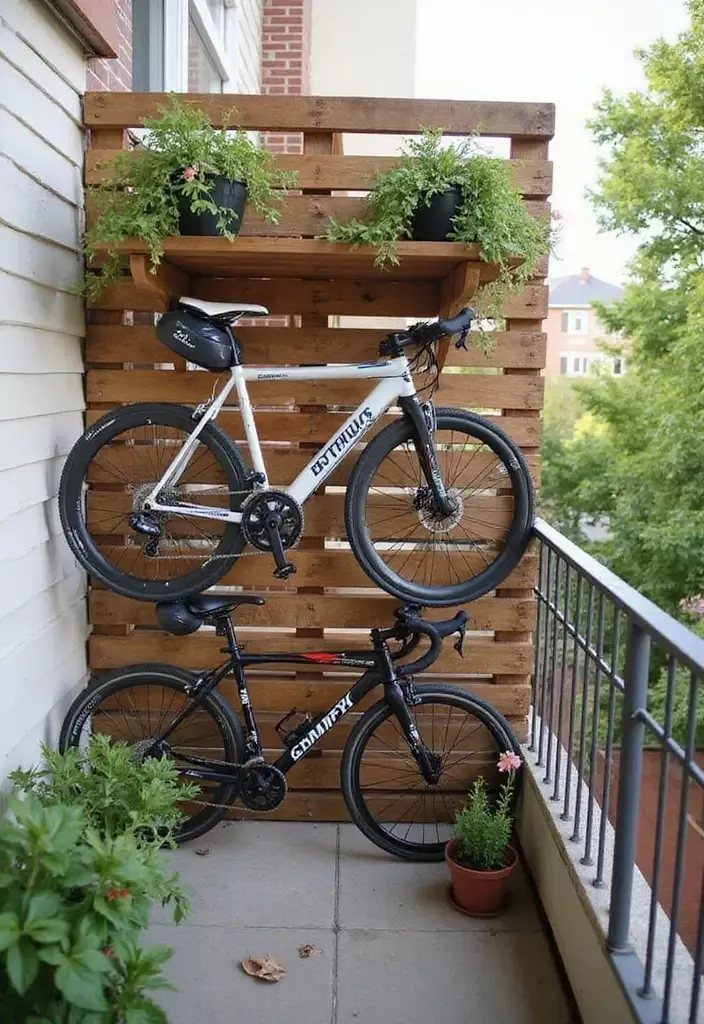
Balcony storage puts your bike outside your living space but still within reach, which sounds ideal until you count the problems.
Theft is the larger issue. A balcony on the second floor feels secure; a determined thief with a ladder or a ground-floor unit with a sliding door does not.
Insurance often excludes bikes stored outdoors, and even a locked bike on a balcony is outdoors. The elements alone will cost you: cables rust, brake pads harden, and that gritty sound in your headset becomes permanent.
I have done this in a pinch, and I regretted it by month three. If your only outdoor space is a balcony, a weatherproof cover helps, but it is a bandage, not a solution.
This option suits someone with a beater bike and no alternative, or a temporary stay before a better arrangement.
6. Traditional Self-storage
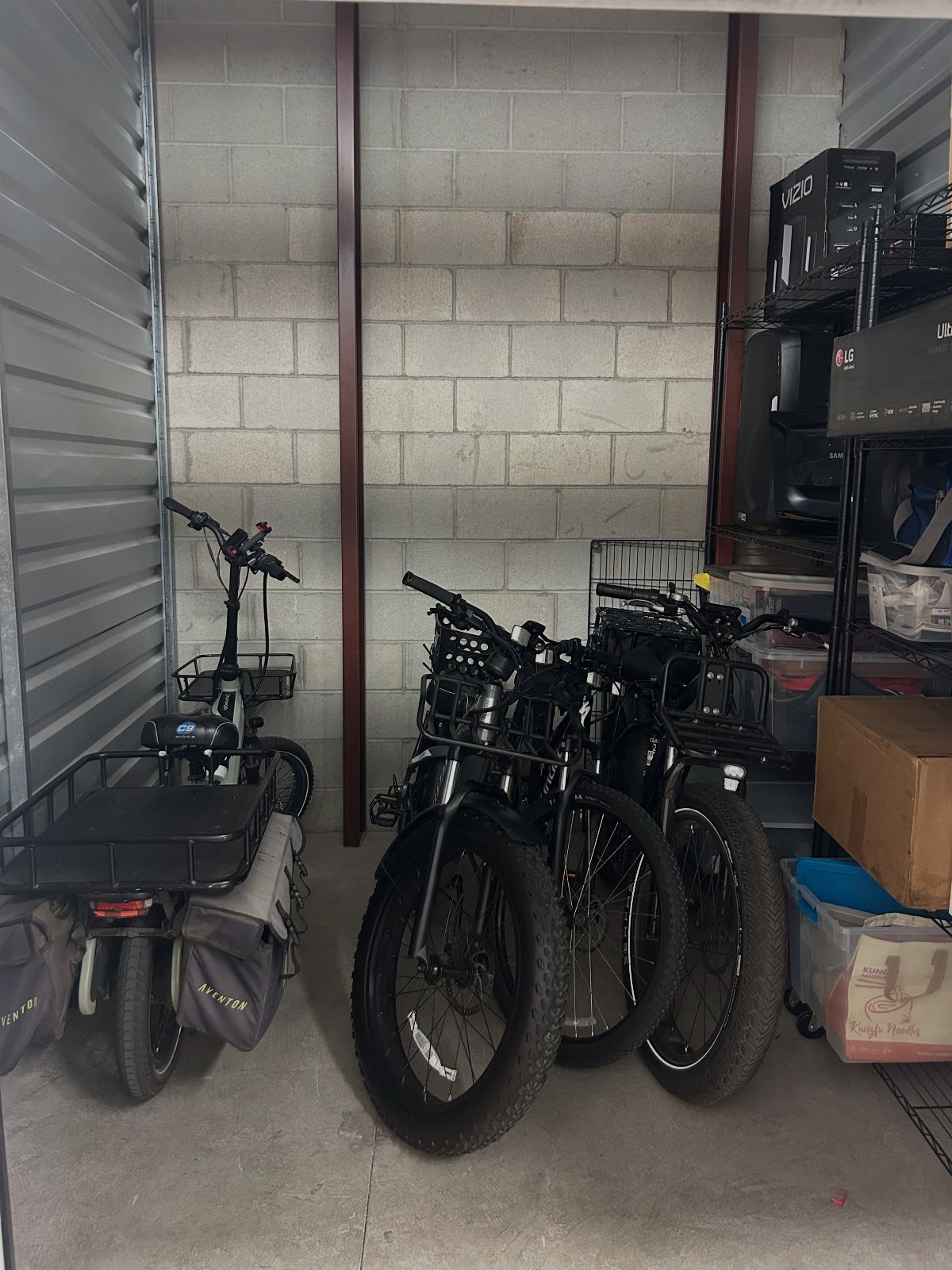
The problem is you are paying for all that extra volume.
Traditional self-storage rents by the unit size, and a bike needs only a sliver of wall; the smallest available unit is usually 5×5 or 5×10, which means you are storing air at the same monthly rate.
Access adds friction. The unit is across town, not down the hall, so a spontaneous ride requires planning, driving, and remembering your key code.
The cost stacks up month after month, which buys a very nice rack for your apartment in under half a year.
I would consider this only for multiple bikes in a household with no other option, or for a collector keeping machines off-site. For one daily rider, the math does not work.
Peer-to-peer garage rentals, where someone nearby rents out a corner of their actual garage, cut the distance and the price, though that market varies by city and trust level.
7. Shared Building Storage
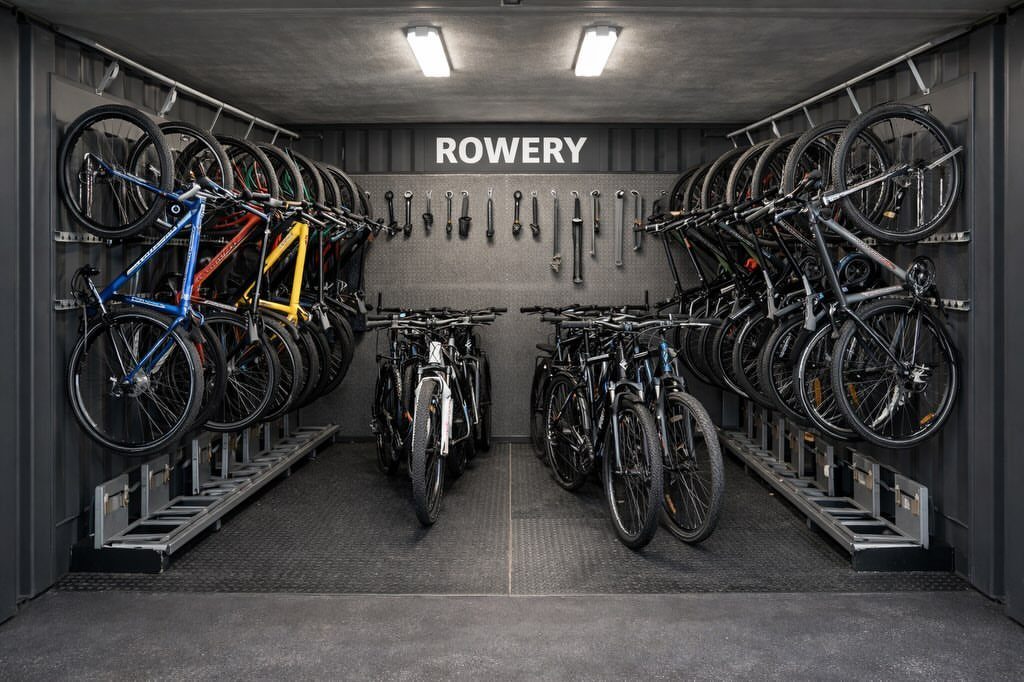
Most shared bike rooms look more like a pile of metal in a corner of the parking garage.
Cages in low-traffic corners give a thief time to work, and a cheap cage door is only slightly harder to cut than no cage at all.
Overcrowding means your handlebars get twisted by someone else’s pedal, and grease ends up on your jacket.
What changes the answer is what your building actually offers. Ask whether the room locks, who has keys, and whether there is a waitlist.
Walk the space at night and see how the lighting feels. If the room is full, your spot on the list matters more than any rack type.
I’d pick this for someone with a beater bike and a well-run building. For anything you would miss, a wall hook inside your unit trades square footage for control.
Security Concerns
A thief with time and a bolt cutter beats most shared storage. Steel mesh cage frames flex at the joints where the lock goes, so the lock alone won’t stop someone with time and a pry bar.
I have seen cages where the door gap was wide enough to slip a tire through, never mind a pry bar.
Wall hooks inside your unit put the lock on your apartment door, which is a harder target than a parking garage corner. For balcony storage, the lock matters less than whether a thief can see the bike from the street.
A cover helps, but a cover over a bike-shaped lump is still a bike-shaped lump.
Ask whether the garage has its own entry or opens through a house you do not control.
Space Limitations
A bike on the floor eats about 6 square feet; hung on a wall, the same bike uses vertical space you were not walking through anyway. The real limit is what your walls can hold.
I would not trust a toggle bolt I did not install myself.
Ceiling height sets whether a freestanding rack works at all.
Cost-effective Solutions
Basic metal wall hooks cost pocket change; the ones worth buying have rubber coating that won’t chew through rim tape or frame paint.
A freestanding rack for two bikes runs from budget metal to pricier wood that looks less like gym equipment in a living room.
A few months of rental fees buys hardware you own outright, mounted exactly where you want it.
I would spend the rack money first and consider off-site storage only for bikes I ride seasonally or not at all.
Accessibility
I have skipped rides for less friction than that. The best storage is the one you pass on the way out the door.
Wall hooks in a hallway keep the bike in sight and in reach, though lifting to shoulder height every morning wears on a daily commuter.
A freestanding rack lets you roll the bike out with handlebars already straight; the seconds matter more than they sound like they would.
Ceiling lifts are the worst for daily use. The wobble, the rope, the reach overhead: it is fine for a weekend bike, but I would not do it before coffee.
For spontaneous rides, the bike needs to be as easy to get out as a coat from a hook.
Frequently Asked Questions
What can I use instead of a garage?
Wall hooks, freestanding racks, or a DIY pallet stand work inside an apartment. For off-site storage, peer-to-peer garage rentals from someone nearby cost less and sit closer than a traditional self-storage unit across town.
A rented garage slot somewhere nearby hands you the same lockable, dry storage you’d get with a house, just without the mortgage.
How can I store my bikes in a small space?
Wall hooks eat almost no floor space and suit a single bike in a hallway corner. A two-bike vertical stand parks in a corner and only asks for enough headroom to wheel the bike in standing up.





