
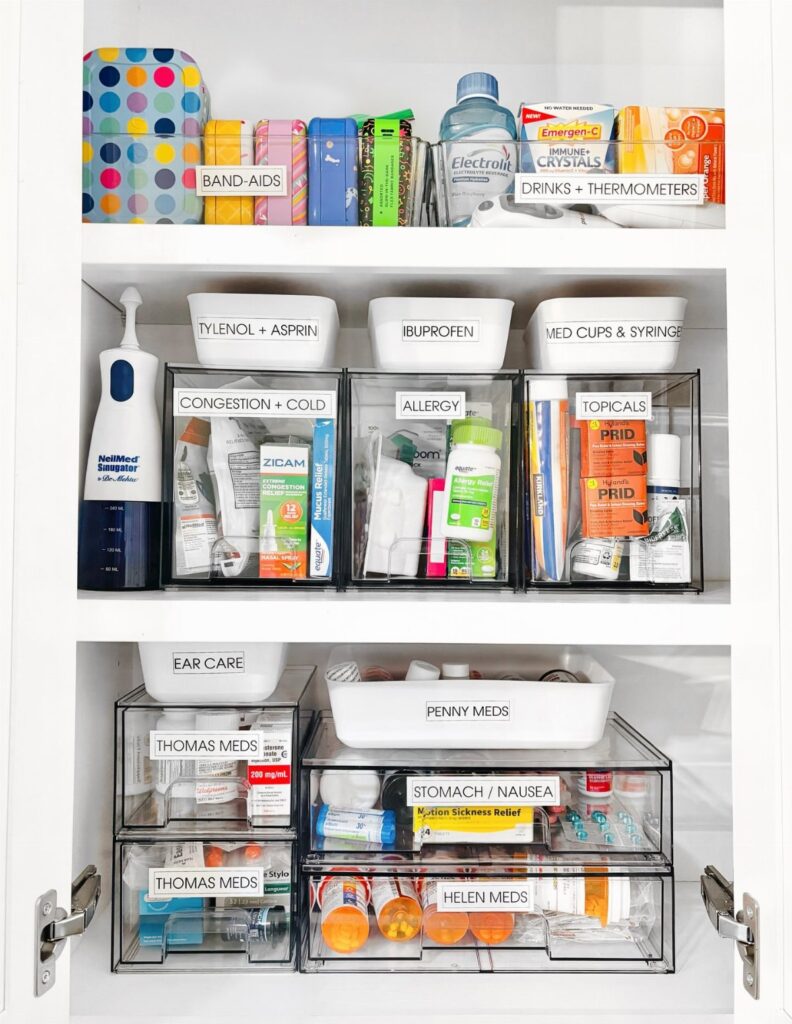
These ideas run from a ten-minute label job to a wall-mounted lock box, and the right one depends on whether you are organizing for speed of access or for who else opens that door.
The silicone feet on stackable drawers, for instance, grip the shelf hard enough that nothing slides when you reach half-awake for allergy meds.
1. Clear Acrylic Stackable Containers and Bins
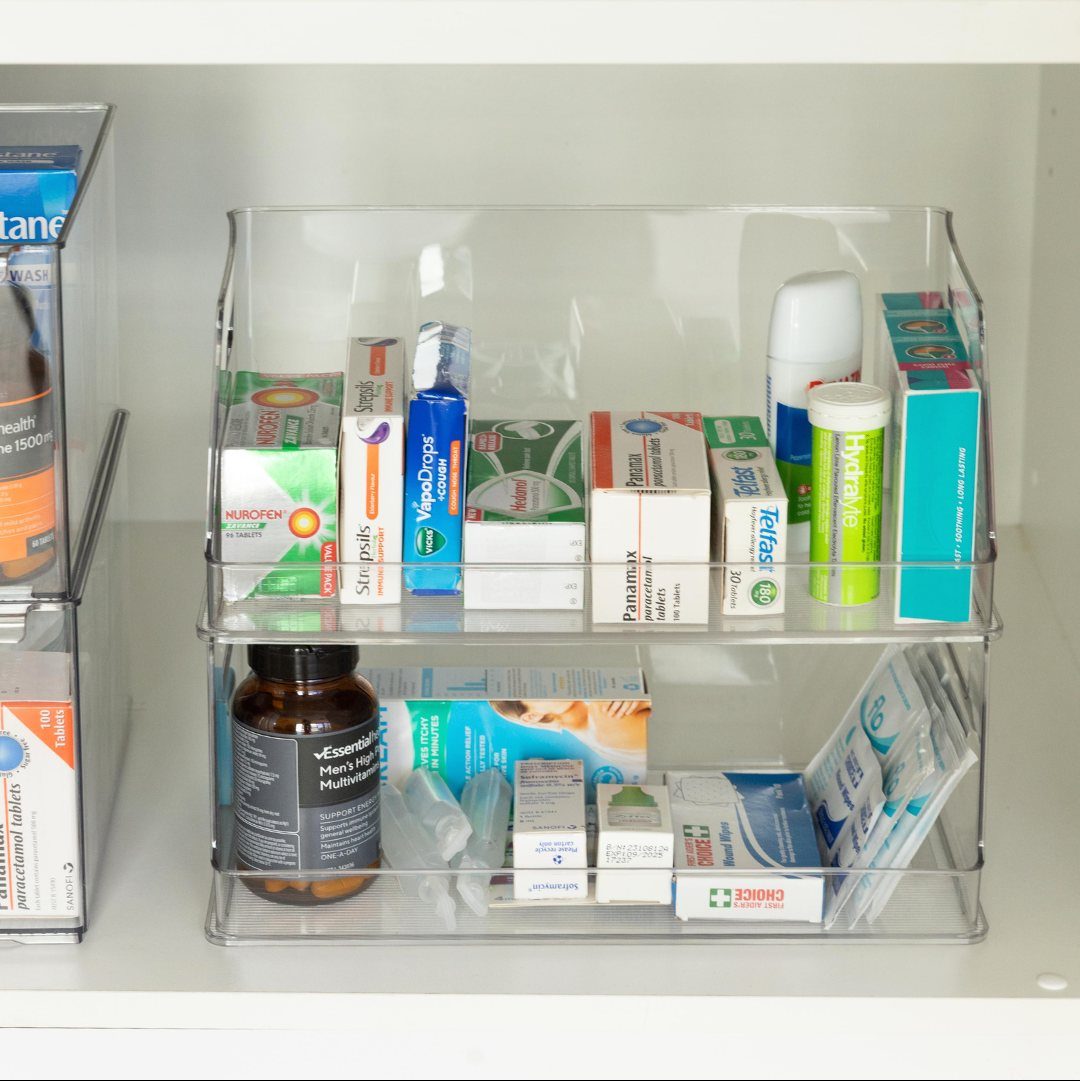
Clear acrylic bins turn a shelf of loose bottles into sections that stay put even when humidity softens cardboard boxes or someone bumps the door shut too hard.
Each bin gets one job: first aid in one, dental in another, daily vitamins in a third. Shallow sides keep labels readable without digging.
I like the cutout-handle versions for cough syrups and supplement bottles that need to stay in original packaging. Higher shelves work fine because the handle lets you pull the whole category down at once.
This setup suits anyone sharing a bathroom who is tired of knocking over someone else’s stuff to find their own. Bins need shelf depth, so narrow cabinets may need the drawer route instead.
2. Stackable Storage Drawers
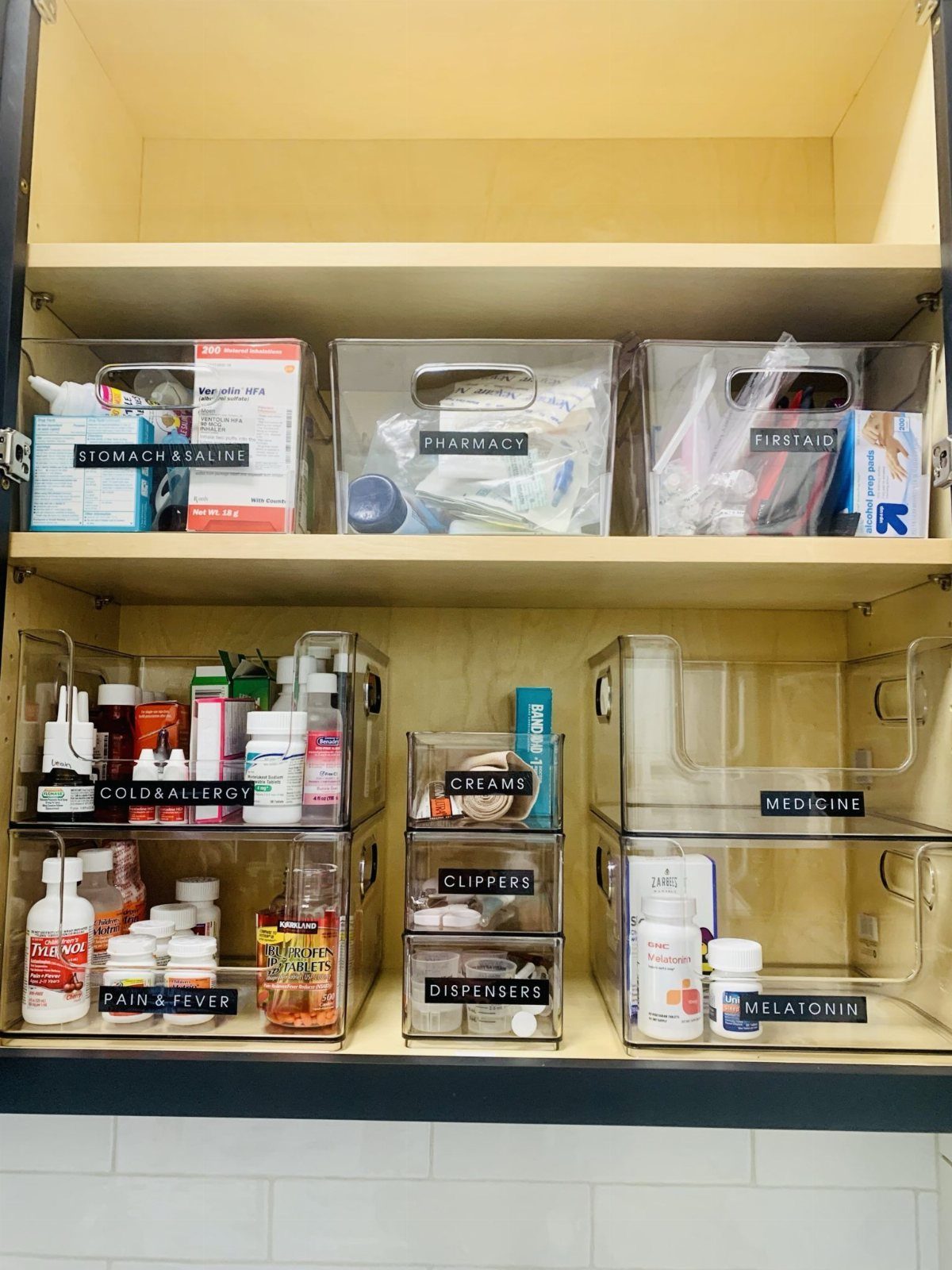
Stackable drawers earn their keep when shelf height allows two tiers, or when backstock lives in the same cabinet as daily use.
The ones with silicone feet grip the shelf instead of sliding, which matters more than I expected when I reached for allergy meds before the sun was up.
I used mine for Ricola bags and a "Backstock" layer to refill the daily bin later. Without enough vertical clearance to stack, they behave like any other bin, so measure your shelf spacing before buying.
Small items that disappear in open containers, thermometer probe covers and blister packs and the like, stay findable here. For tight medicine cabinets with shallow shelves, skip the stacking feature and save the money.
3. Labels for Medicine Cabinet Organization
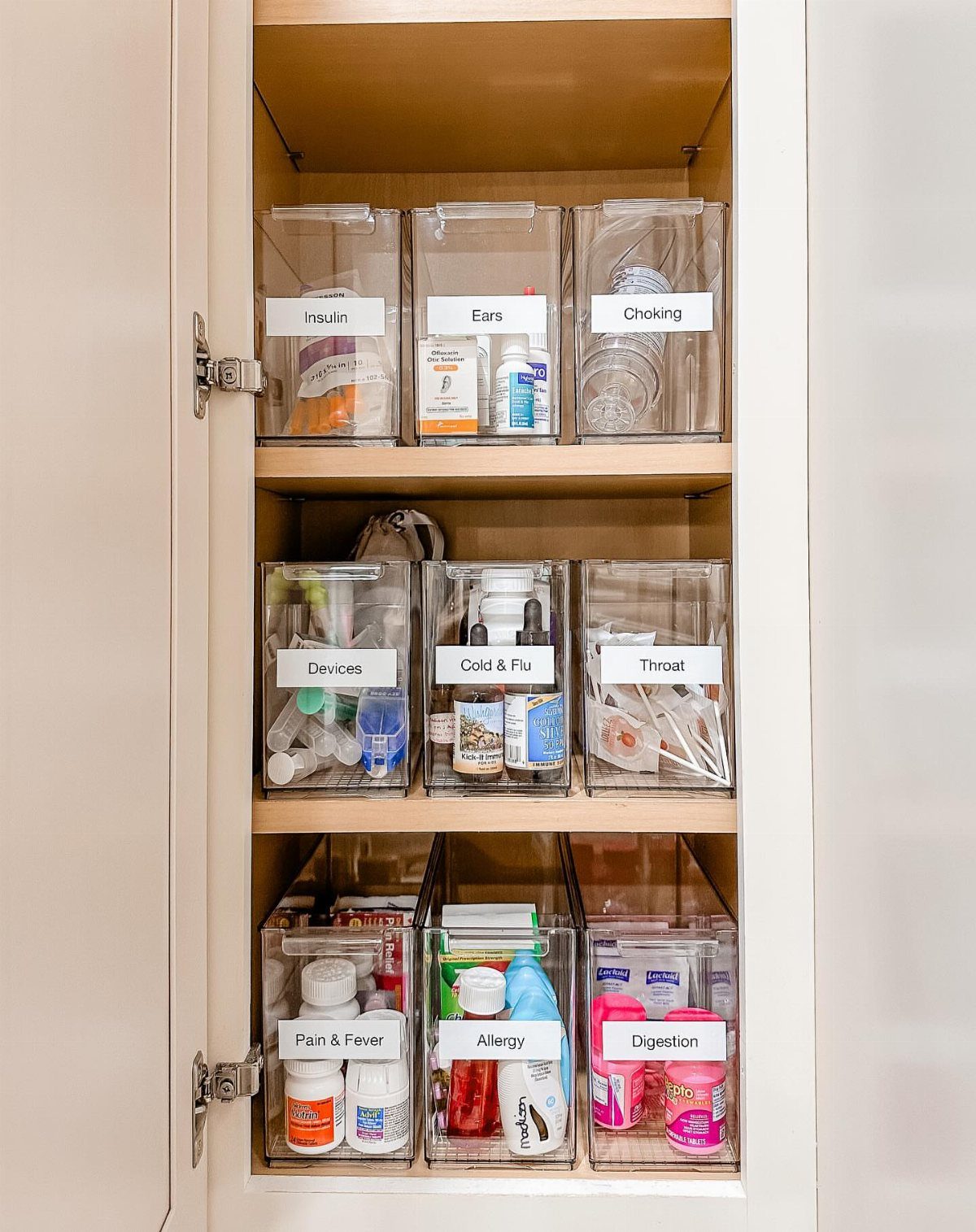
Labels turn a neat cabinet into one that stays neat, because anyone putting things away knows where the thing goes.
Simple text on white vinyl works; cardstock clipped to basket tops with small icons drawn in Canva and laminated at home does too.
A small cutting machine with writable vinyl handles the job if you own one. Otherwise, a printer, self-laminating film, and a binder clip get you the same result in about ten minutes.
This step matters most in households where more than one person restocks, or where a caregiver needs to find something fast. The only wrong choice is skipping it because it feels fussy; the ten minutes pay back inside a week.
4. Lazy Susan and Rotating Corner Organizers
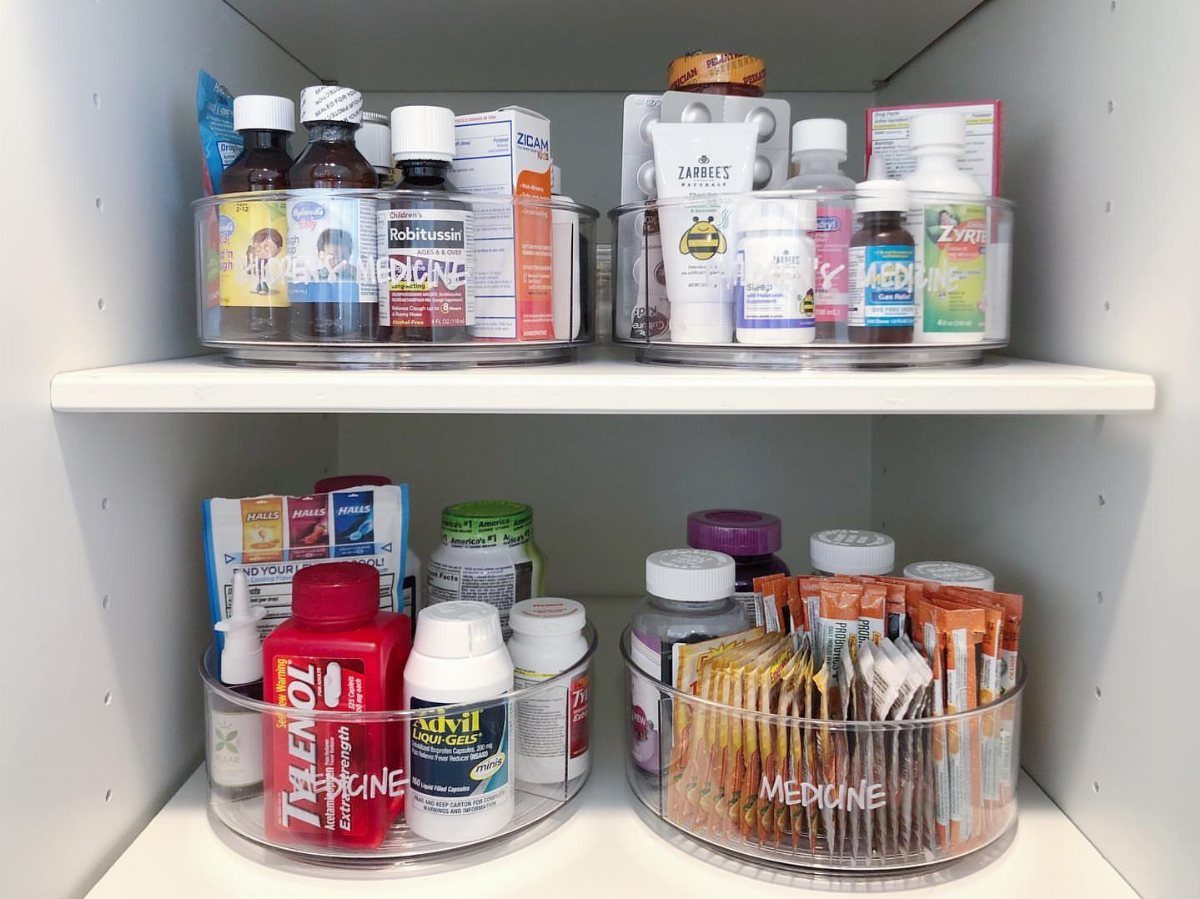
A rotating tray makes sense in a lower vanity or deep side cabinet where bottles collect in corners you cannot reach without crawling.
Group things of similar height on one tray. A tall bottle and a flat tin on the same level means the short one disappears on the backswing every time.
I would put this in a linen closet or under-sink cabinet before a wall-mounted medicine cabinet. The exception is a deep cabinet with a door that opens flat, where the spin saves more space than it costs.
5. Medication Lock Box and Secure Storage Systems
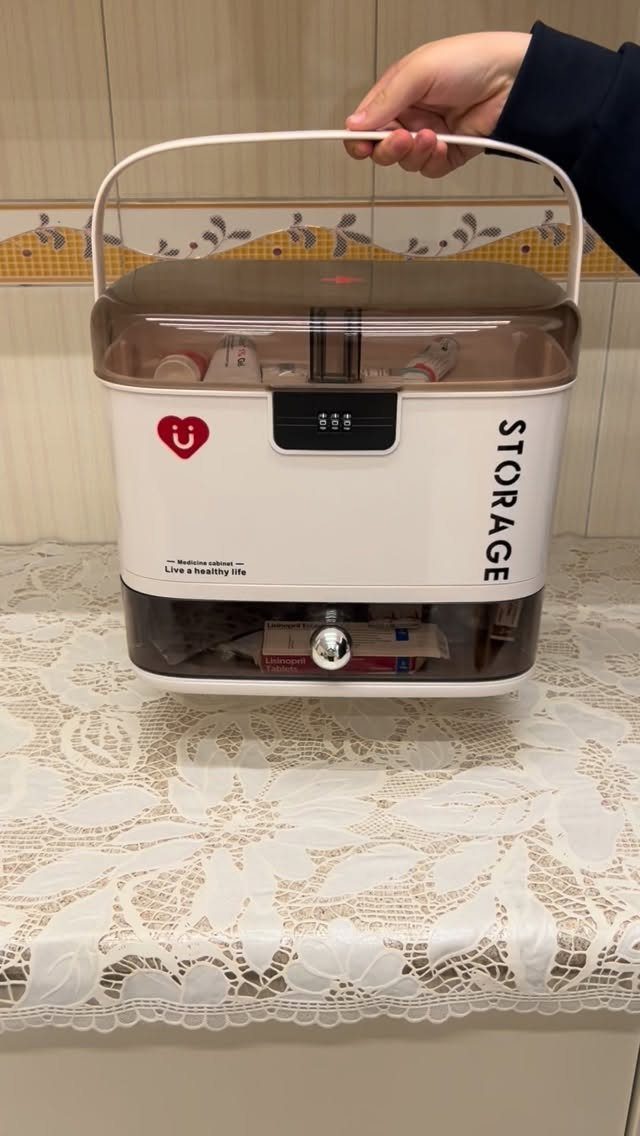
A lock box gives controlled substances and daily prescriptions a fixed address outside the open cabinet, which matters if children visit, if teenagers search, or if an aging parent’s pills must not mix with the household supply.
Portable versions use a combination; wall-mounted or integrated options exist for permanent setups.
A cool, dry closet beats the bathroom for storage, since heat and humidity degrade medication faster than most people realize. The handle means it travels to the kitchen table for sorting or to a relative’s house for the weekend.
This is not paranoia; it is the part of organization that keeps the organized stuff from causing harm.
Access speed matters, so routine daily vitamins probably live better in the open bin, with the lock box reserved for what needs locking.
Decluttering Process
The first thing to do is pull everything out and set it on a counter where you can see it.
Expired bottles go straight in the trash; the dates are printed on the crimp or the label, and anything past it loses potency or breaks down into something you do not want to take by accident.
Extra packaging, empty boxes, and the odd snack bag that wandered in from the kitchen go too.
Sort what remains into piles by use: first aid, cold and flu, dental, daily prescriptions, and so on. Mixed bins turn into junk drawers fast, so keep the categories tight.
Recessed cabinets that sit shallow on the wall call for low-profile bins you can scan at eye level; deeper vanity cabinets give you room for stackable ones if the lid lifts off without a fight.
Maintaining Organization
A system only works if you still use it when the newness wears off. I check expiration dates when I restock, not when I am already sick and digging for relief.
The second Sunday of a slow month works for me; tie it to something you already do, like swapping the furnace filter or paying a quarterly bill.
Restock before the bin empties. An empty spot is where clutter starts, because the thing that belongs there lands on a shelf edge and stays there.
If the cabinet lives in a kitchen, snacks and non-medicine items will try to colonize it again. That is normal.
Catching it early beats redoing the whole sort.
Safety Precautions
The bathroom cabinet works for daily use; the backup supply lives better elsewhere.
Children change the math entirely. If they visit, if they live there, or if teenagers might search, a lock box moves from optional to necessary.
Access time matters in a crisis, but so does keeping the wrong hands away from the wrong pills.
Frequently Asked Questions
What should be stored in a medicine cabinet?
Daily medicines, vitamins, first aid supplies, and skincare items fit well in a medicine cabinet, though humidity shortens shelf life. A kitchen cabinet works better for long-term storage since bathrooms run hot and damp.
Families with refrigerated medications like insulin often keep related supplies in the kitchen too.
What are common categories for organizing medicine?
Cold and cough medicine, allergy medicine, pain and fever relief, first aid, tummy and digestive aids, and vitamins or supplements cover most households. Add personal categories like daily prescriptions, backstock, or condition-specific supplies such as diabetes materials.
Label each bin so anyone restocking knows where things go.





