
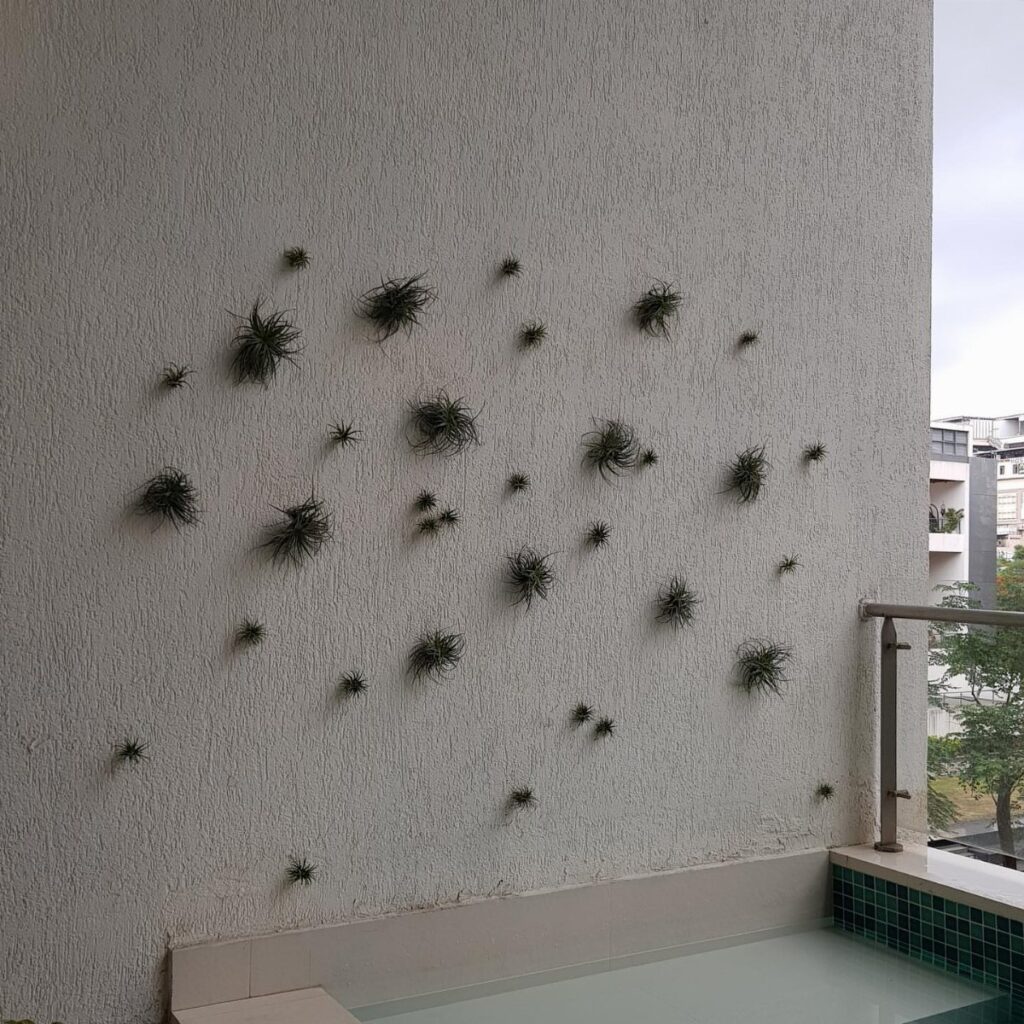
These ideas run from a free pallet and a staple gun to living wall kits with built-in irrigation, and the deciding factor is how long you plan to stay put.
A renter who needs to strip the wall in an hour reaches for Wallygrow planters at $26 each and two screws, while someone facing a bare south-facing facade for years might wire up espalier and wait for fruit.
1. Wall Planters
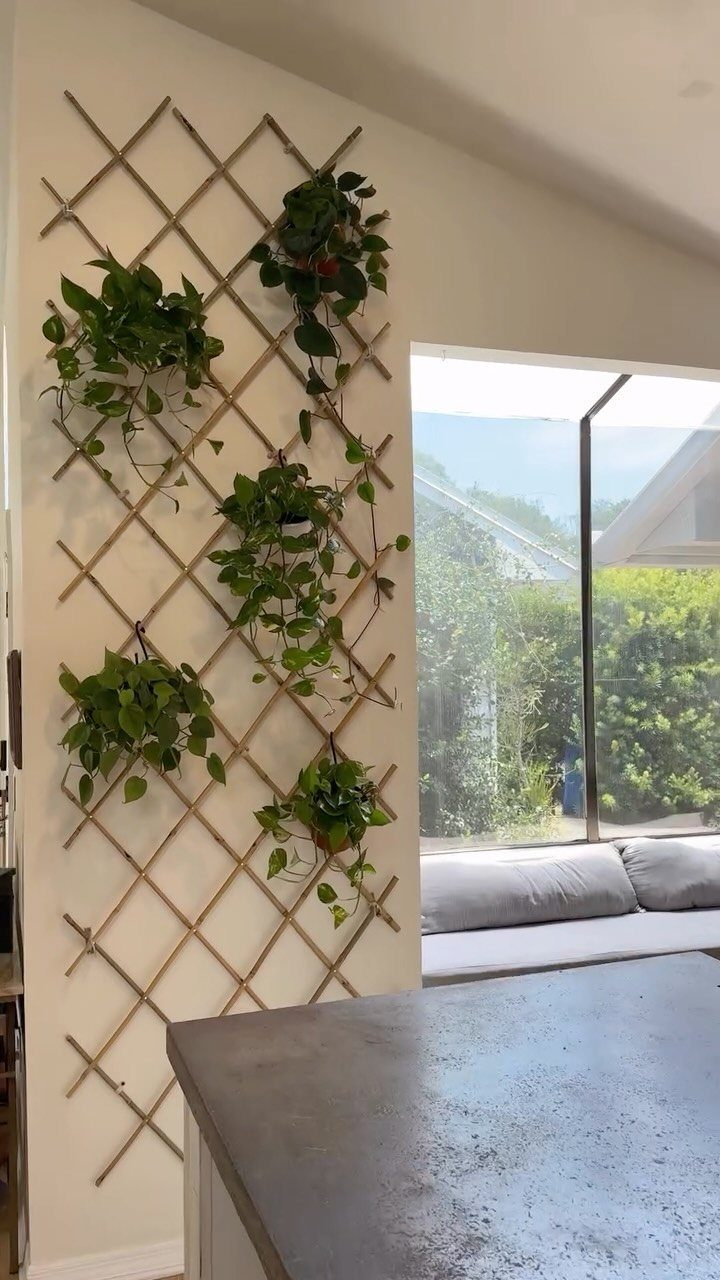
Wallygrow planters mount with two screws and slip right on, which is about as simple as a plant wall gets.
Six of them turned a bathroom wall into something lush for me, though the count depends on the wall size and the look. They lift off for watering if needed, but mine stayed put and the plants did fine.
At $26 each, this is a weekend project that survives a tight budget and leaves no gap between the plant and the wall. I’d aim these at renters who want something they can take down fast when the lease ends.
2. Shelves
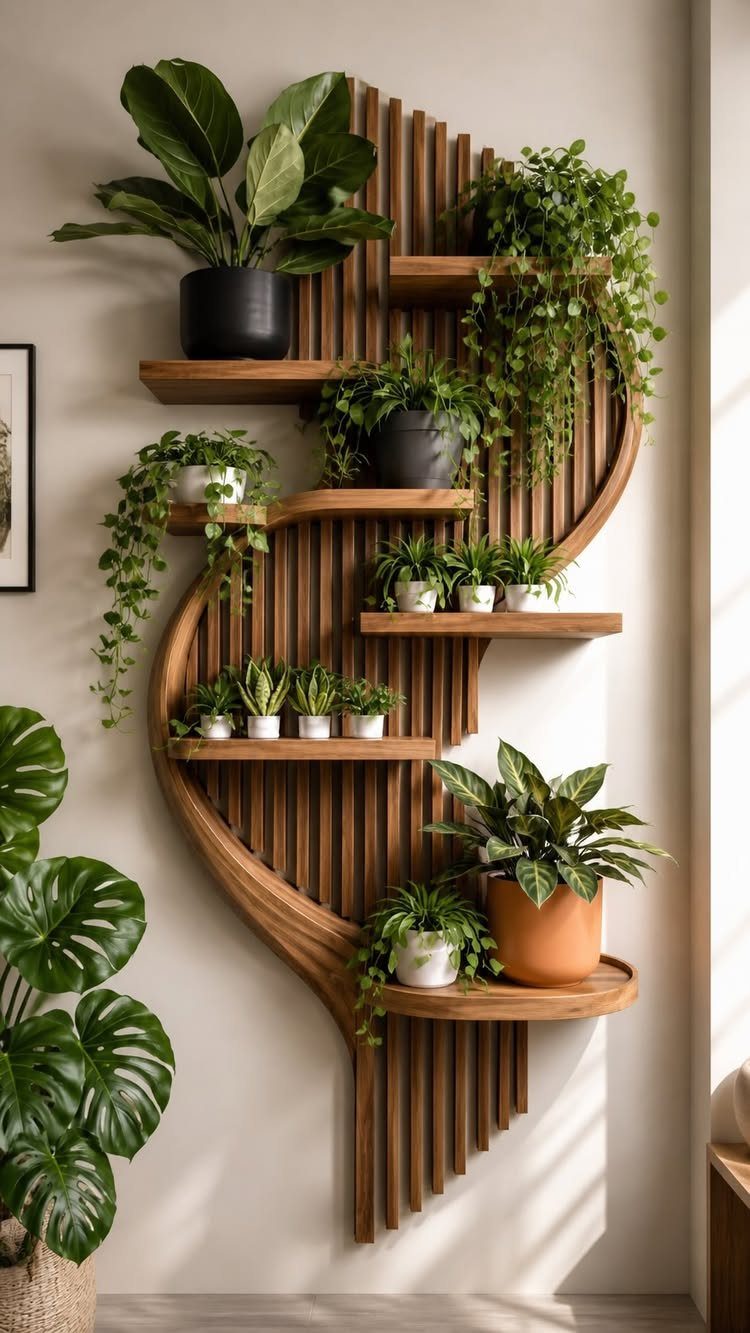
Curved shelves against a slat wall let plants drape and climb at the same time, which is why this approach wins for anyone who owns a drill and a free afternoon.
Oak floating shelves packed with pothos and calathea in seagrass baskets read lived-in rather than staged, especially once the vines start their slow descent toward the floor.
Build them yourself or buy them ready; either way, light is the part you cannot skip. I hung mine high and let gravity do the styling.
3. Indoor Trellis
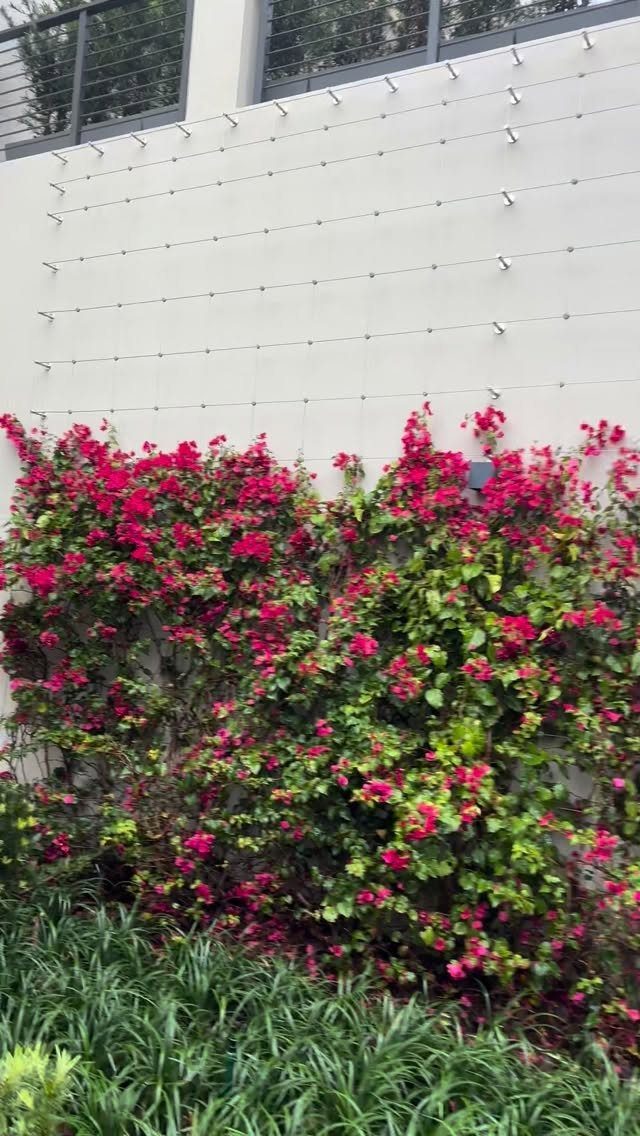
A tall wire trellis turns a single vining plant into architecture. My Rhaphidophora tetrasperma climbed one I built in a couple of hours, and the wall became the room’s main event.
Metal clips hold the vines in place as they find their way up. This is for someone with patience and a plant that wants to climb; the structure does nothing until the growth catches up, which takes months.
A mustard-painted wall behind a chain-link trellis reads almost like jewelry before the beans even arrive.
4. Living Wall Kits
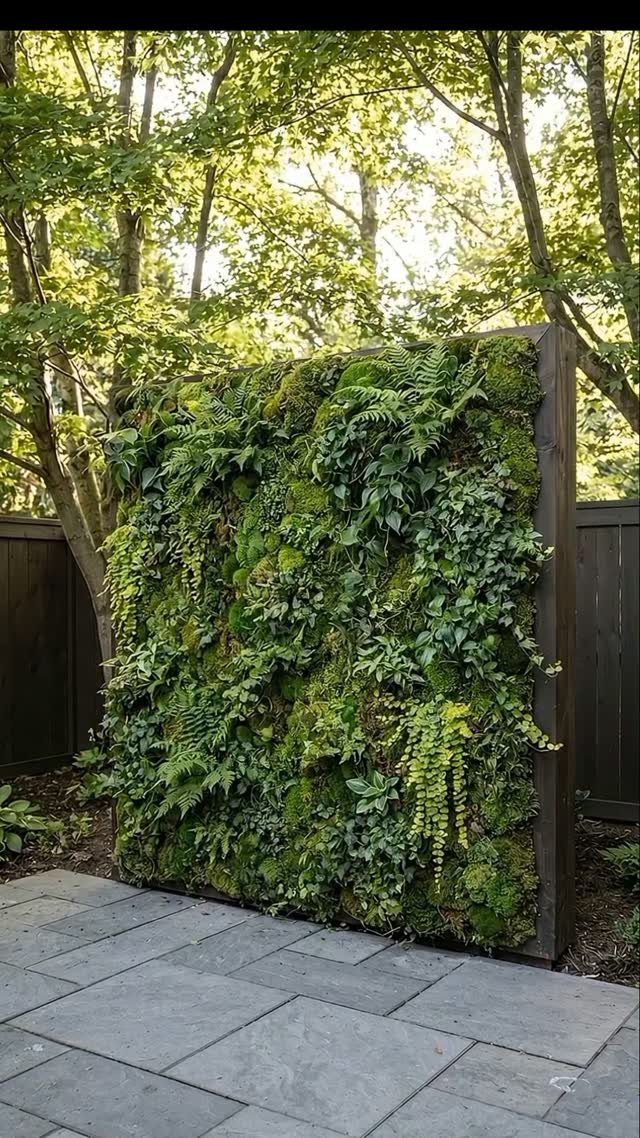
Living wall kits come as flat panels that lock together to whatever width you need, which solves the gap problem that plagues pieced-together walls.
PlantBox kits run with integrated irrigation, and trough systems ship ready for decent-sized plants so the wall looks established from day one.
The tradeoff is depth: these panels sit close to the wall, which suits tight spaces but rules out anything with serious root mass.
Dense ferns and trailing vines stacked together read tropical and intentional; mixing leaf shapes keeps it from flattening into green wallpaper.
5. Vertical Garden Grid
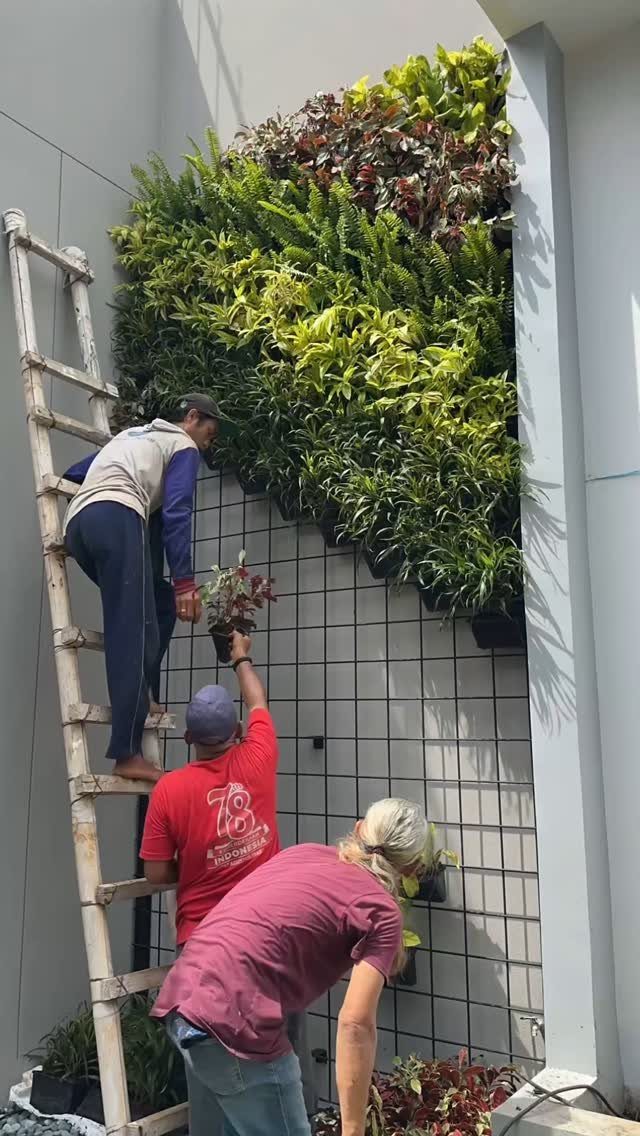
A black wire grid against a gray wall turns plant arrangement into something you can revise forever. Three people and a ladder suggest the scale, though one person handles a smaller grid fine.
The structure itself keeps order while the plants do whatever they want, which is the appeal: rows of mounted planters in varying widths create vertical stripes that feel alive without tipping into chaos.
This suits the reader who rearranges furniture on a whim and wants a wall that keeps up.
6. Modular Wall Planters
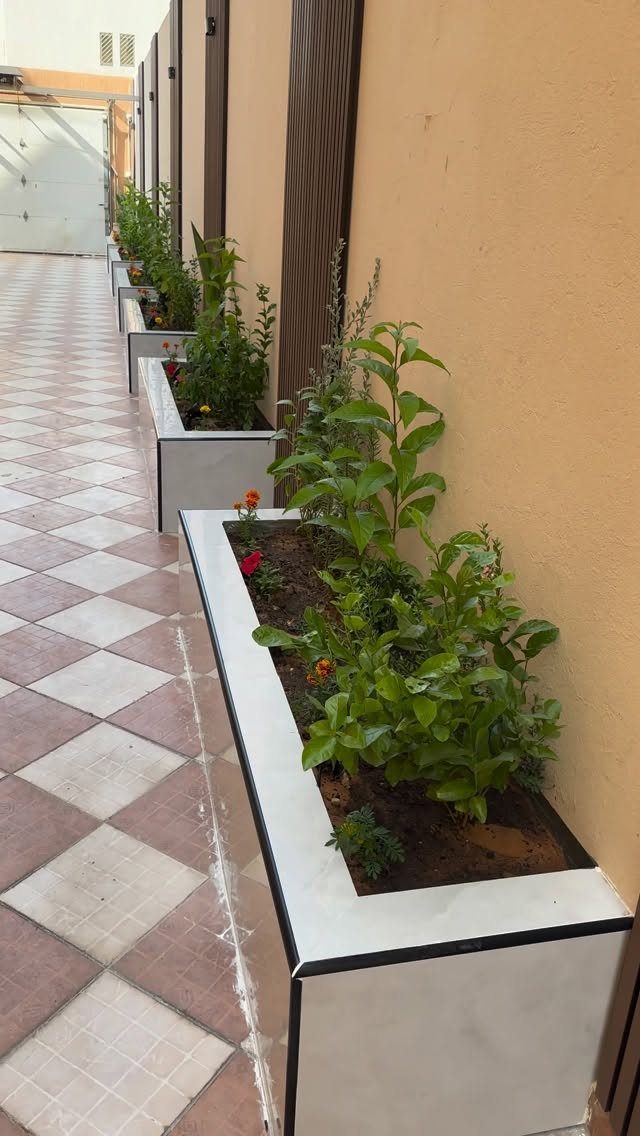
Modular systems snap apart for swaps, which matters when frost kills half your choices or you tire of the same blooms.
The checkered tile underneath suggests a patio or balcony setting, and the scale stays manageable: a handful of units covers a standard wall without engineering.
I’d point this at the reader who treats gardening as rotation rather than commitment, and who wants summer color without permanent installation.
7. Living Wall Mural
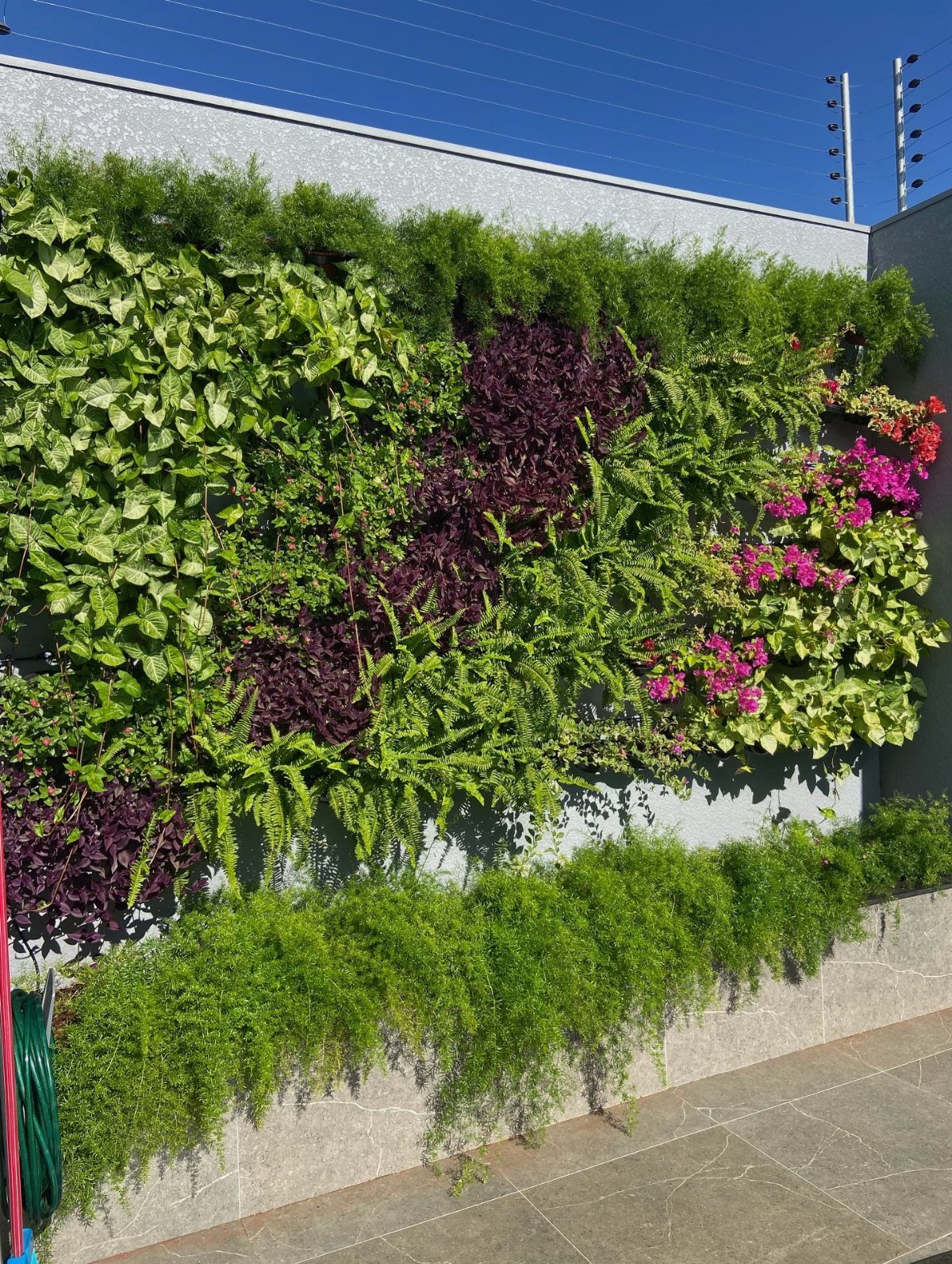
A living wall mural treats plants as pigment and texture rather than coverage. Leaving negative space matters: a white brick wall with a flowing, map-like arrangement of greens and deep plum reads as composition, not clutter.
Accent lighting matters here, same as you’d use for a print. This suits someone who wants art that happens to grow, and who has a plain wall that needs depth more than it needs greenery everywhere.
8. Mixed Texture Garden Wall
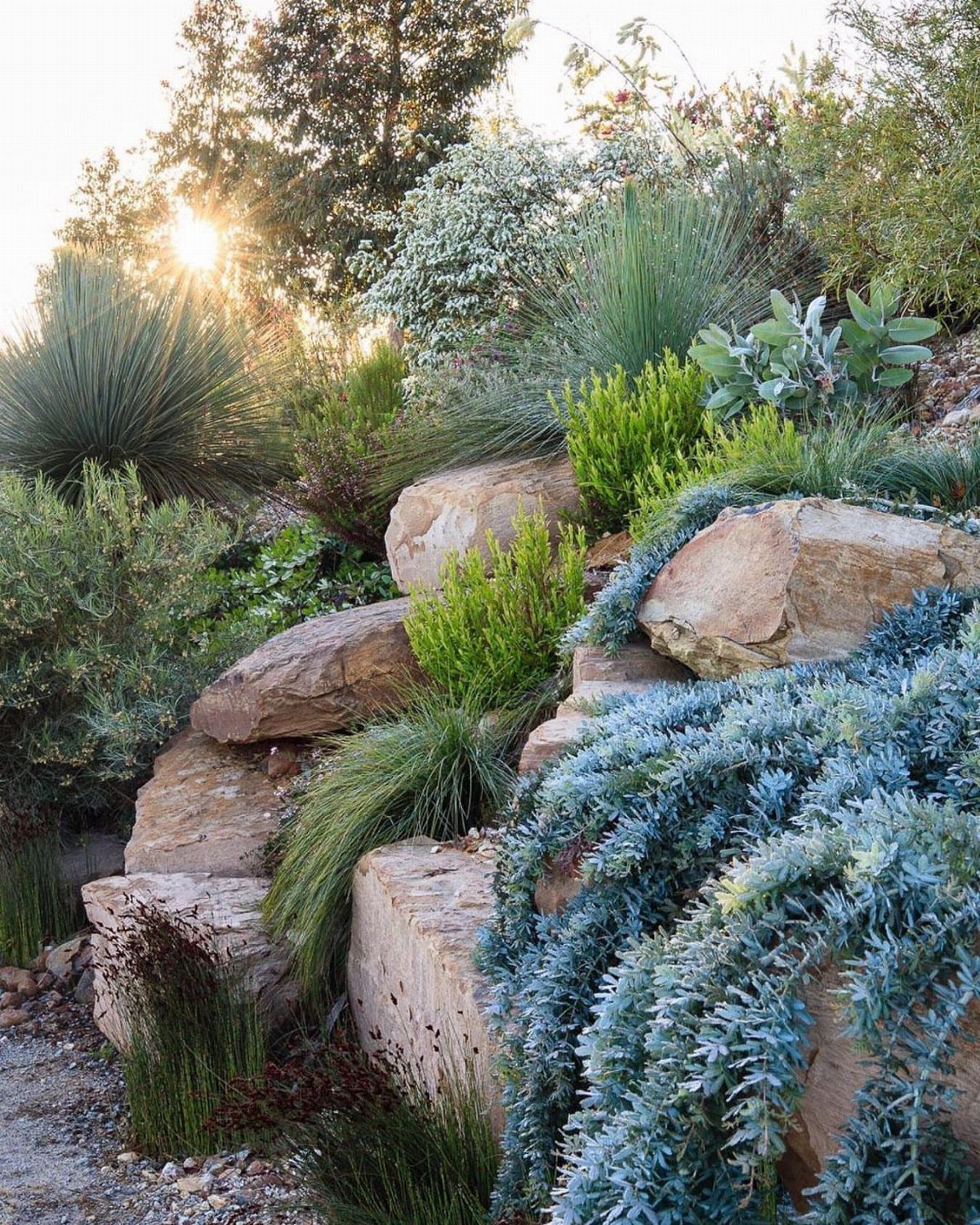
Soft greens against deeper tones, delicate leaves beside fuller shapes: a mixed texture wall builds depth rather than just filling space. Large tan rocks set among silvery succulents, spiky grasses, and green shrubs let each layer do different visual work.
Cluster trailing varieties low and upright ones high so the wall reads as landscape, not inventory. This approach trades the instant uniformity of a kit for richness that develops as plants mature and fill their roles.
It suits a patient gardener with some ground space at the base for soil and root room, and a wall that gets mixed light so no single species has to carry the whole show.
9. Ornamental Flower Topiary
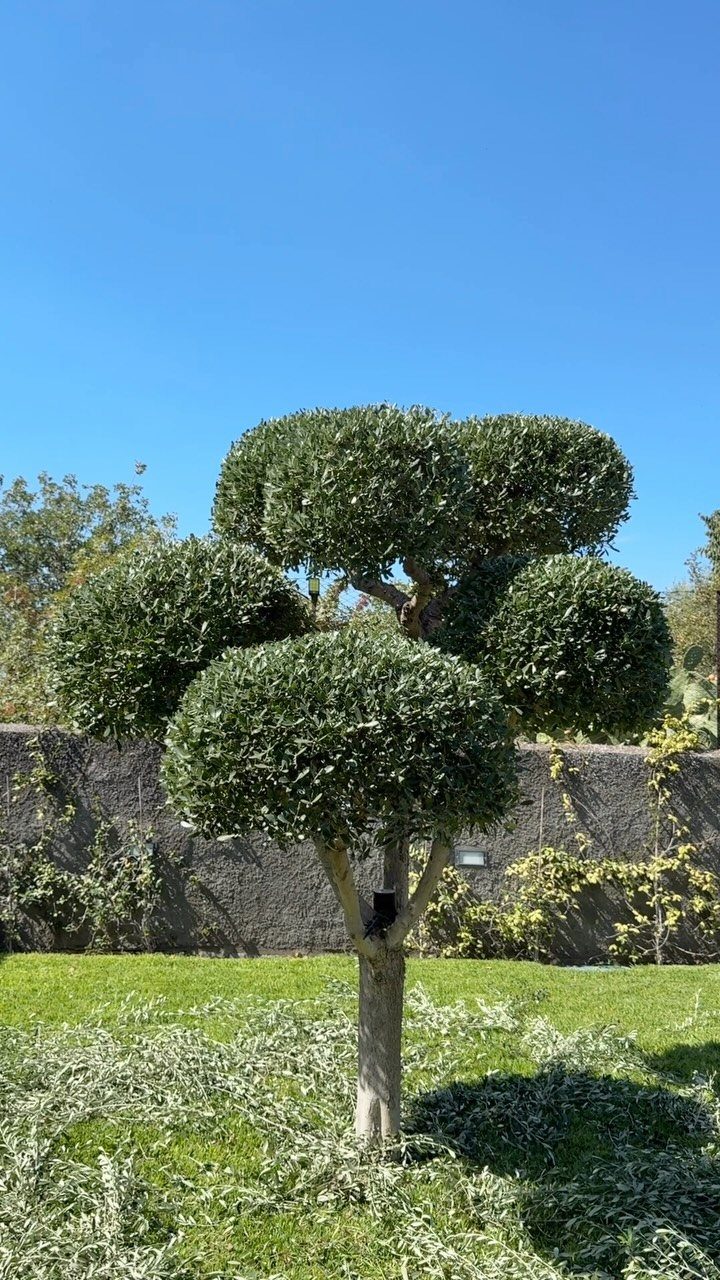
The steel guide does the structural work; letting foliage fill out around it keeps the shape from feeling fussy. This takes years, not weekends: woody stems need time to set into the form, and annual pruning maintains the silhouette.
I’d point this toward someone with a permanent wall and the patience for topiary, or toward a renter willing to invest in a potted specimen they can take along.
The coral or dark stone backdrop in the examples makes the green and white read crisp.
10. Blue Pot Wall Garden
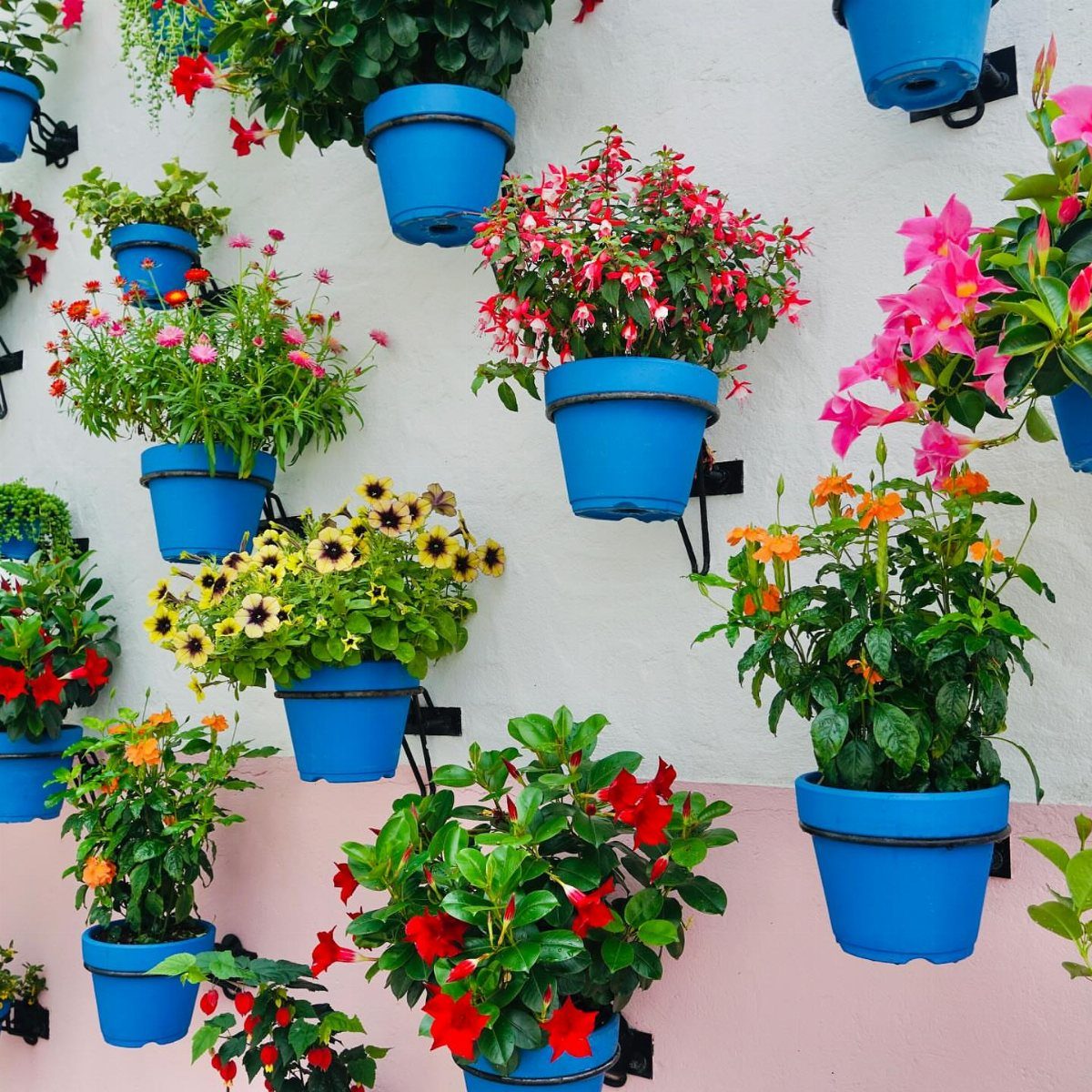
Terra cotta or standard plastic pots work if the lip fits the hanger; the color is what carries the idea.
This is the entry point for someone who wants a plant wall without the engineering of a living wall kit, and who can handle the weight on their wall themselves.
Change out the plants seasonally, or keep ferns year-round if the spot stays shaded.
11. Plant Clips
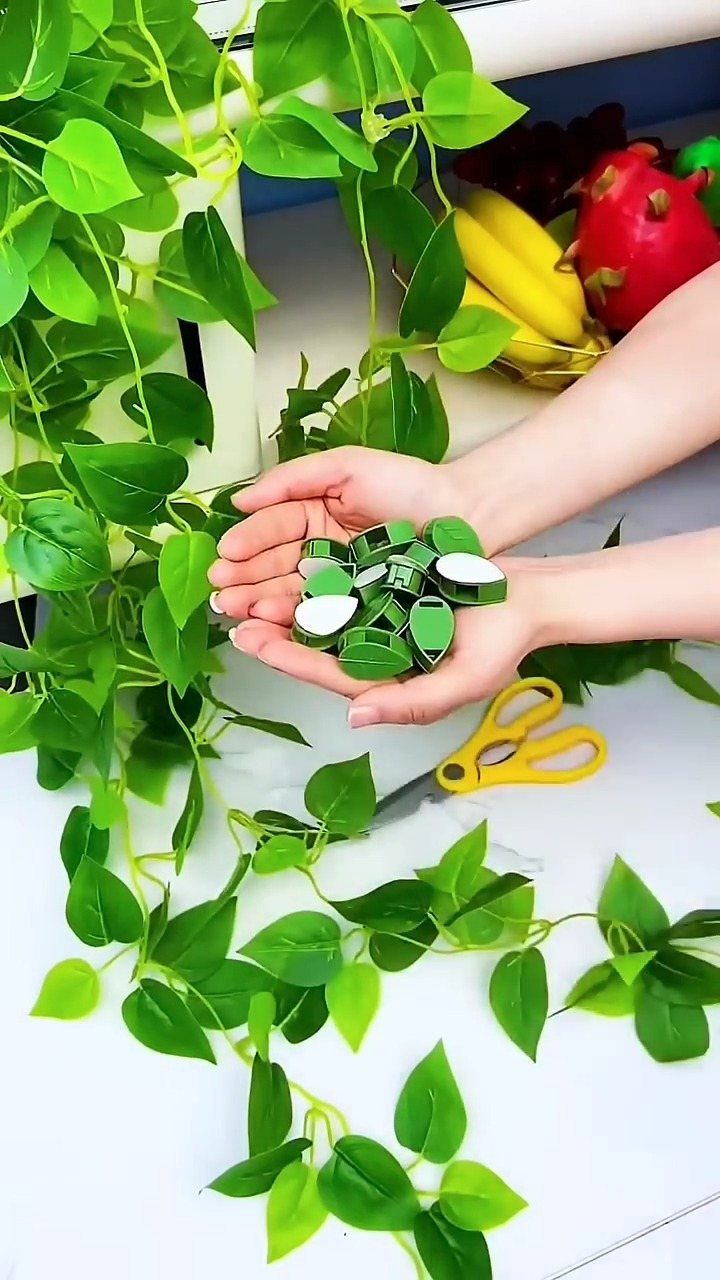
Small metal clips hook onto the lip of terra cotta planters and hang them flat against the wall, no shelf or pocket needed.
These read just as well indoors against shiplap, brick veneer, or a wood feature wall as they do outside. The minimal hardware disappears; the pot and plant do the visual work.
Any planter with a matching lip works, so you’re not locked into a proprietary system. This suits someone who wants to rearrange often, or who already owns a collection of pots and just needs the mounting piece.
A dozen clips and a drill puts up a whole wall in an afternoon.
12. Propagation Tubes
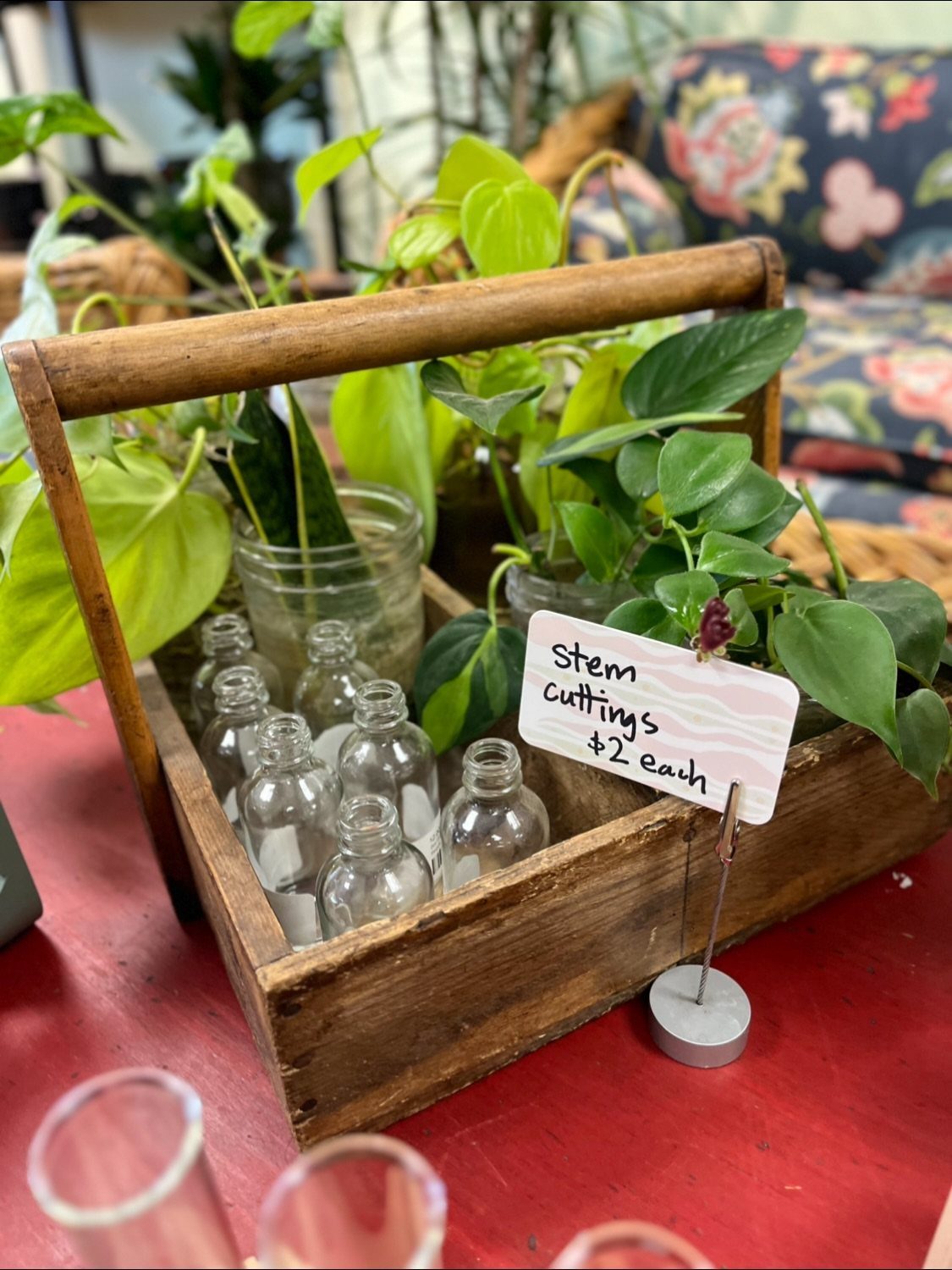
Small glass tubes or bottles, each holding a cutting in water, line a wooden carrier or mount directly to a bright wall.
The roots become part of the display, and the wall becomes a working propagation station rather than decoration alone. A spot with great light is non-negotiable: cuttings need it, and the glass will amplify whatever arrives.
This fits the reader who already propagates to gift or swap, or who wants a low-cost entry into plant walls. The tubes need regular water changes and eventually the rooted cuttings want soil, so build in some turnover.
A wooden crate or simple wall bracket keeps the look rustic and lets you lift the whole set down for maintenance.
13. Espalier Plants
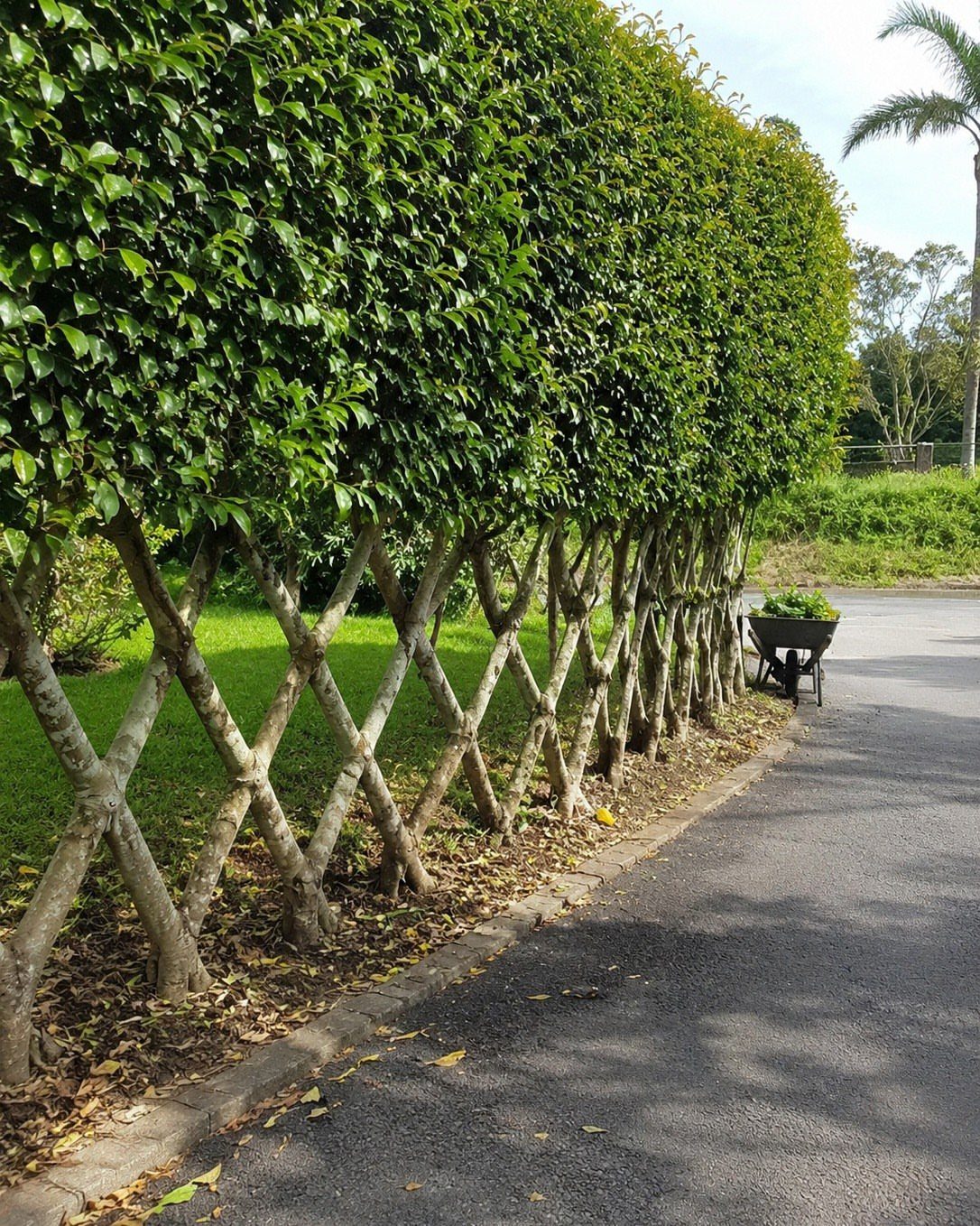
Espalier turns a shrub into two-dimensional architecture against a flat surface. A diamond lattice fills in over time, but a simple horizontal cordon trains onto wires in one season if you start with a young pyracantha or apple whip.
South-facing stone or brick holds heat that ripens fruit and draws out berry color. Set your support wires well off the wall so air still moves; copper or galvanized wire lasts, twine does not.
Tie new growth in while it is still soft, cut back anything that refuses the plane.
This is slow gardening, not a weekend project. A wall trained this way reads as living ornament rather than mere coverage.
I’d aim this at anyone with patience and a bare facade that gets good sun.
14. Rustic Pallet Garden
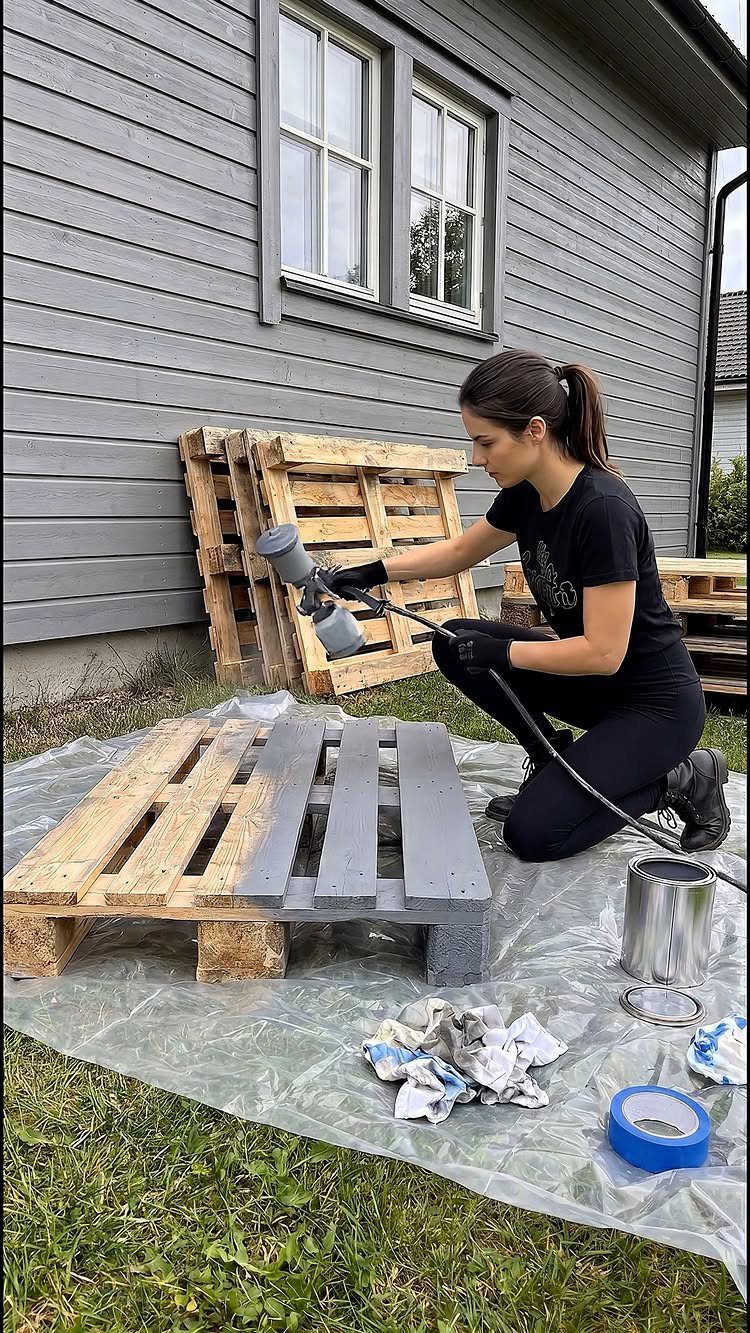
A pallet vertical garden starts with heat-treated wood marked "HT," not the chemically treated stuff freight lines use. The slats already hold soil pockets if you back the pallet with landscape fabric and staple it tight.
Fill each row with potting mix, not garden soil; it dries fast up there and needs the water retention. Herbs handle the root restriction better than most vegetables, and annual flowers fill gaps while perennials establish.
Exterior latex sprayed before planting keeps overspray off the leaves.
This suits renters who cannot build permanent structure and gardeners who want to swap plants with the season. It will not last; the wood rots, the fabric tears, and that is the trade for starting at zero cost.
Best Plants for Outdoor Walls
Euonymus, Heuchera, and Sedum top my list for anyone building their first outdoor wall. These three handle uneven watering and the temperature swings that come with vertical placement.
Euonymus stays compact and fills space without constant pruning. Heuchera brings color through its leaves rather than relying on blooms that might not show.
Sedum shrugs off drought once established, which matters when the top row dries out faster than the bottom.
Ferns and foliage plants keep a wall green through winter if your climate allows, though they need more consistent moisture. Succulents trade that year-round look for survival; skip them only if you know you’ll water regularly.
Festuca and Hakonechloa add texture without height that outgrows the frame. I would not mix thirsty plants with desert ones on the same wall; the irrigation never suits both.
Creating a DIY Outdoor Plant Wall
A DIY outdoor plant wall lives or dies on two questions: will the material survive rain, and can the wall hold what you hang. Pressure-treated lumber, cedar, or metal brackets last; standard pine swells and splits.
Any backing that touches soil needs to be exterior-grade plywood or better, not particle board that turns to mush.
Weight adds up fast. Wet soil in a pocket or trough gets heavy fast before the plant even arrives, so the wall needs to be built for real weight and the backing needs to keep water from rotting through.
Check what your wall is built for; a fence panel might carry herbs but not a saturated living wall kit. I would mount heavy systems into studs or masonry anchors, never drywall or siding alone.
Waterproof membrane behind the mounting points keeps the house dry when irrigation misses or drains back.
Caring for Plant Walls
Watering a plant wall means checking the top and bottom separately. Gravity pulls moisture down, so the lowest row often sits wet while the upper ones dry out.
Drip irrigation with individual emitters solves this if you run it; hand-watering works only if you move the hose methodically.
Trimming keeps growth from shading its own lower leaves or tangling into neighboring plants. I cut back anything that crosses its assigned pocket or starts pulling the mount loose.
Pest checks matter more on a wall than in open ground because insects move vertically fast and confined roots weaken a plant’s recovery. Look under leaves and at the soil line monthly.
Replace a plant that fails rather than nursing it; a wall reads as one piece, and one brown patch drags the whole look down.
Environmental Benefits of Plant Walls
A planted wall does work beyond the visual. Leaves and growing medium catch particulates that would otherwise stay airborne.
The layer also blocks high-frequency noise, which helps if your outdoor space faces a street. Birds and pollinators find food and shelter in vertical plantings that rigid siding denies them.
Thermal insulation is real but modest; a green wall will not replace wall insulation, though it does cut summer heat gain through exterior surfaces.
The biodiversity benefit depends on plant choice: single-species walls feed fewer insects than mixed plantings with staggered bloom times.
I would not sell a wall as pure environmental virtue, but the gains are there and they accumulate if the wall lasts.
Noise reduction and air quality improvement matter most in tight urban sites where those problems are acute and ground space is gone.
Gardening expert and presenter Micheal Perry, aka Mr Plant Geek, says the benefits of a plant wall include being able to, "plant in a smaller space and keep plants safely away from pets."
Frequently Asked Questions
How can I create a DIY outdoor plant wall?
Start with heat-treated pallets backed with landscape fabric, or mount terra cotta pots with small metal clips that hook onto the lip.
Waterproofing matters less for a pallet garden than for a living wall kit, but any wall-mounted system needs to handle the weight of damp soil and mature plants.
A drill and a free afternoon gets most of these up; the pallet route costs next to nothing if you source the wood yourself, while plant clips and standard pots keep the rest of the build cheap.
What are some good plants for a plant wall?
Pothos and calathea in seagrass baskets drape well from shelves, while a Rhaphidophora tetrasperma climbs a wire trellis over months to become architecture.
For propagation tubes, any cutting that roots in water starts the display, though the rooted plants eventually want soil.
The plant choice depends on whether the wall offers bright light, shade, or the mixed light that lets you stack ferns, succulents, and grasses together without one species carrying the whole show.





