
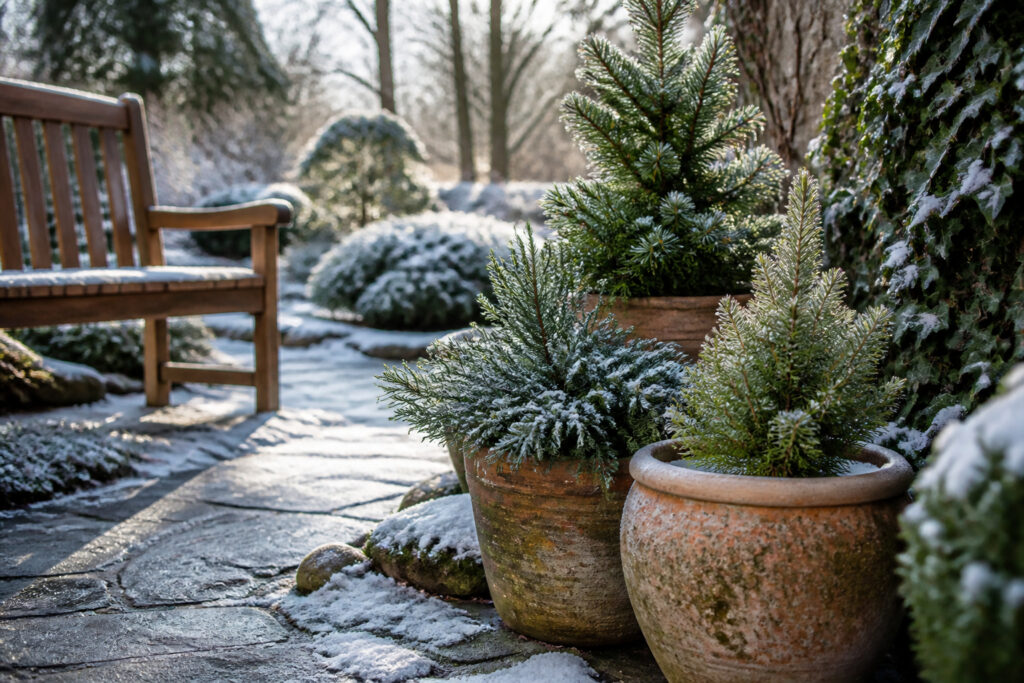
Winter container gardening with evergreens is the practice of filling outdoor pots with plants that keep their color through freezing months.
Container roots freeze from all sides at once, so a plant rated for your hardiness zone may still die in a pot.
I learned this after a hellebore in a glazed bowl rotted at the crown while its twin in porous terracotta thrived through the same freeze.
Hellebores
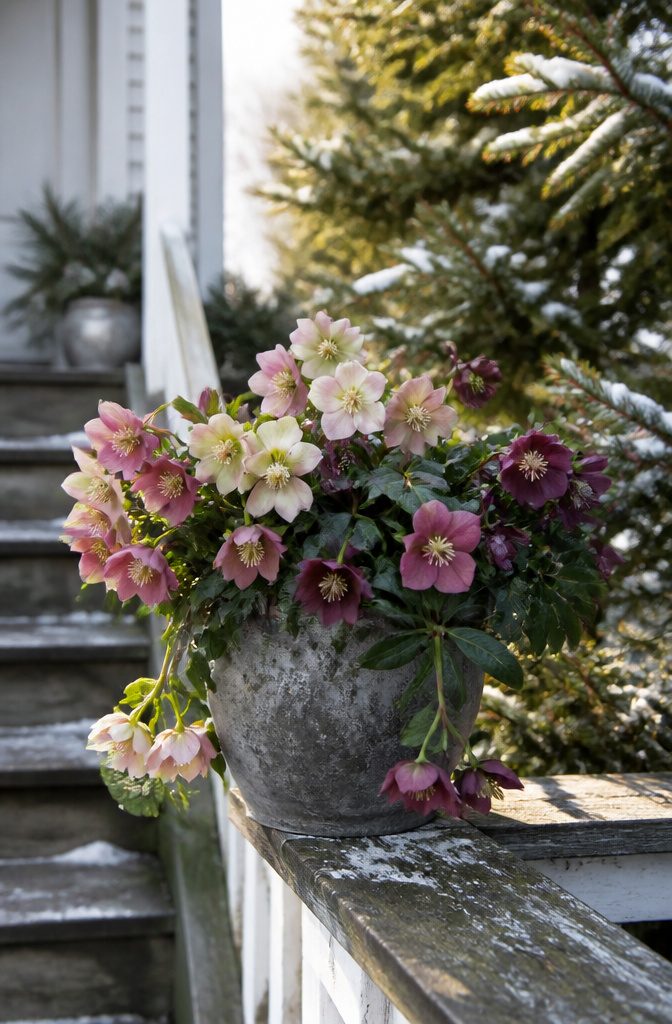
Hellebores carry blooms from November straight through March, which is longer than most gardeners expect from anything labeled winter container gardening evergreen.
The flowers hang downward in soft clusters, so you want the pot somewhere you look into rather than down on, like a porch rail at chest height or atop a wide planter wall.
In my own pots they have survived hard freeze after hard freeze without the wilting collapse that kills off pansies.
The leaves stay leathery and dark, and the buds keep forming under snow. Start with a variety bred for cold performance rather than the tender garden hybrids that sulk in pots.
The Christmas Rose and its near relatives open earliest and handle container life far better than the flashy doubles sold for spring borders.
Drainage is the limit. A hellebore in a waterlogged freeze rots at the crown faster than almost anything else I have tried.
I keep mine on the dry side through January, watering only when the pot lifts light in my hands, and that restraint has made the difference between a plant that limps through and one that comes back full in April.
Evergreen Ferns
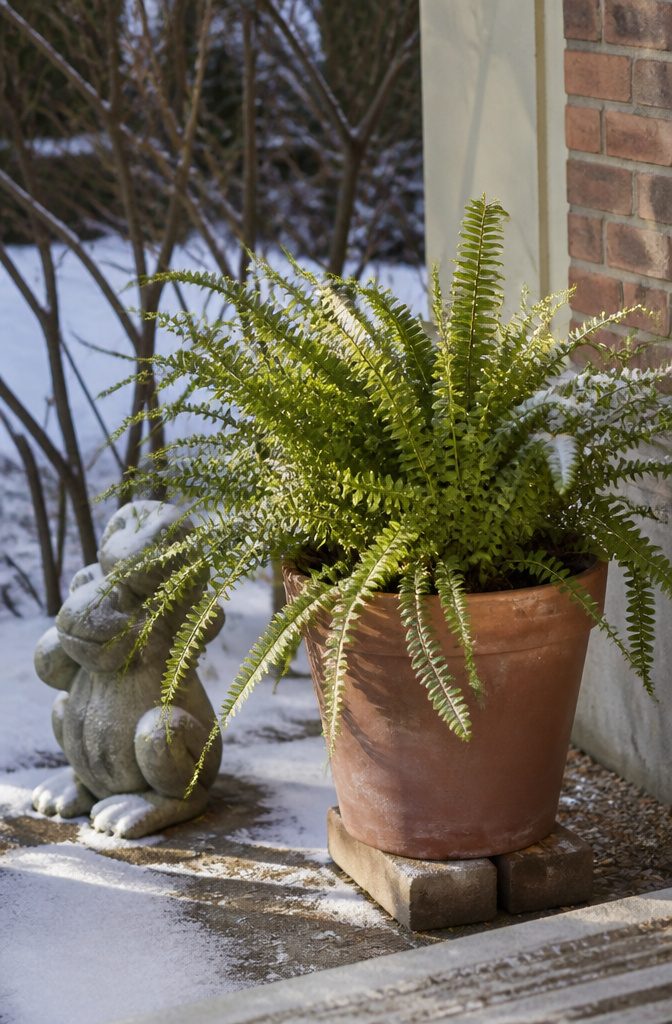
Ferns in winter containers sound wrong until you see one that works. Native sword ferns hold their fronds through hard freezes; Japanese tassel ferns tend to turn to mush in the same conditions.
The difference was drainage, not hardiness. My sword fern sat in a terracotta pot with grit mixed into standard potting soil; the tassel fern was in a glazed ceramic bowl that held water like a cup.
In the ground, both ferns tolerate wet feet. In pots, standing water rots the crown before you notice the fronds drooping.
I now drill extra holes in any container I use for ferns, even ones marketed as having drainage, and I set the pot on a couple of bricks rather than saucers.
The tassel fern might have survived if I had treated it with the same suspicion.
Size matters for survival too.
A twelve-inch pot gave my sword fern enough soil mass that temperature swings stayed moderate. A smaller nursery pot I left out as an experiment froze solid and did not recover.
For renters, this is worth weighing: a big fern in a big pot is heavy to move if your lease ends in December or your landlord suddenly decides to paint the railing.
Evergreen Grasses
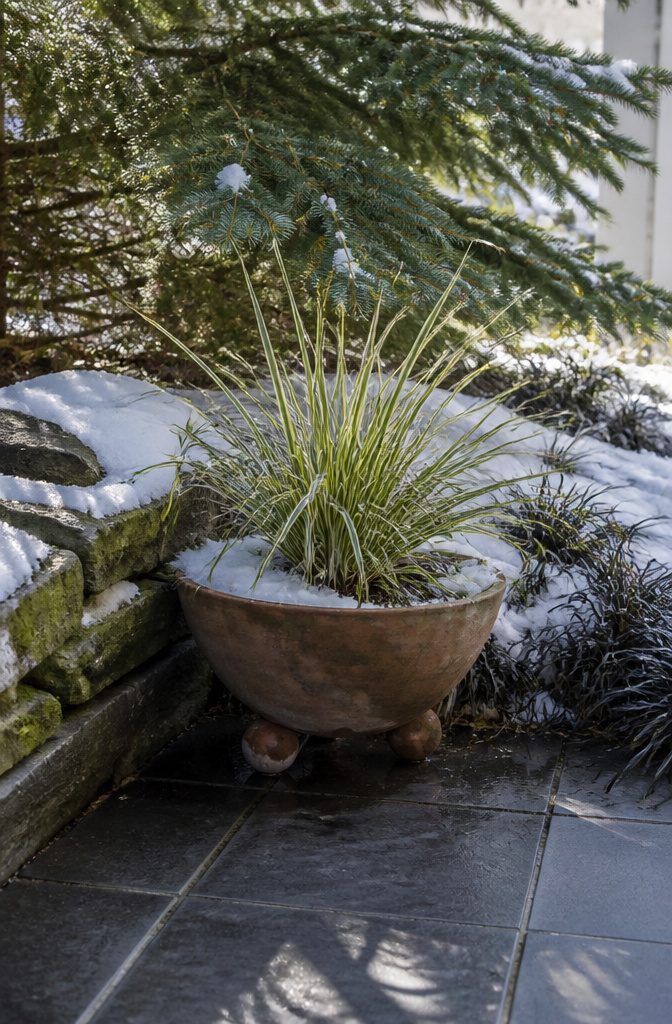
Grasses do more in winter containers than fill gaps. They give the whole pot a backbone when flowering plants have quit, and the right ones stay upright through ice and the slow thaw that follows.
I have watched Carex ‘Evergold’ keep its stripe through multiple freeze-thaw cycles that turned other plants to mush. The cream-and-green blades stay narrow enough to read as texture, not competition, against broader leaves like boxwood or holly.
It wants moisture, which makes it forgiving in the wet-heavy soil of a winter pot that does not drain fast in cold air.
Black Mondo grass, Ophiopogon planiscapus ‘Nigrescens’, does the opposite job.
Its near-black strap leaves sink backward visually, so whatever you plant in front of it jumps forward. The color is theatrical, but the plant itself is workmanlike.
I have had it survive in unglazed ceramic through a zone 6 winter where the pot froze solid for two weeks. It came back from the roots in spring, slower than the Carex, which kept its foliage intact.
The risk with any grass in a container is the crown rotting where water sits and freezes. I plant them slightly high, with the top of the root ball a half-inch above the soil line, and I skip the saucer.
Heucheras
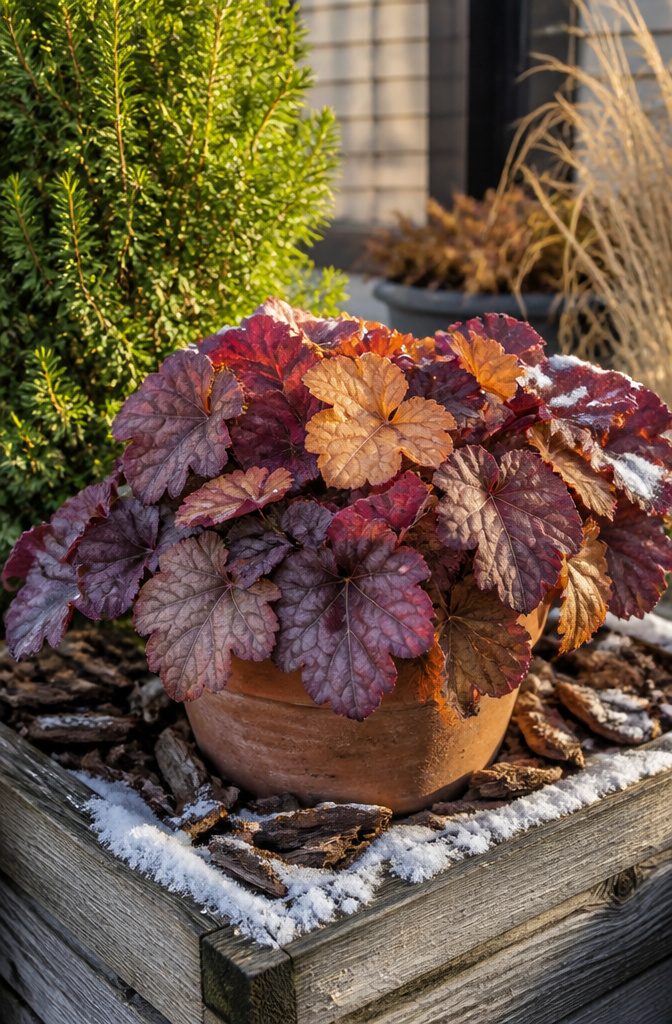
Heucheras earn their spot in winter containers because the foliage keeps working when flowers are long gone. The leaf color ranges from near-black plum through amber, lime, and silver, and that palette reads as intentional against bark mulch or snow.
In my own pots, the amber varieties hold their saturation longest through cold snaps; the deep purples tend to bronze out by late January, which is not failure exactly but a shift worth planning around.
What surprised me was which ones rotted. A ‘Caramel’ heuchera in a glazed ceramic pot turned to mush after a freeze-thaw cycle that two neighboring plants in porous terra cotta survived.
The container mattered more than the variety. Porous pots let the crown dry between wet spells; glazed or plastic holds the damp that kills heucheras in winter.
I now plant them in unglazed clay or hypertufa and set those inside prettier outer containers if the look matters. Leaf texture also varies more than the tags suggest.
The heavily ruffled types catch ice and can split, while smoother, smaller leaves stay intact through rough weather. For a renter who might move the pot once, heucheras are light enough to lift and forgiving enough to transplant come spring.
Euphorbias
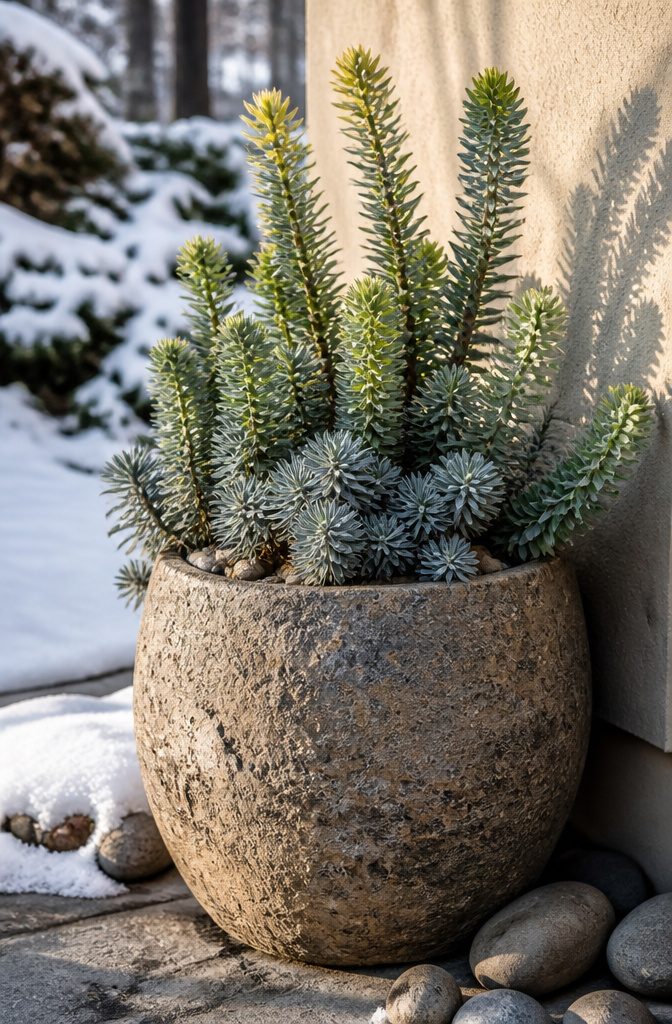
Euphorbias carry their color through winter on stiff, upright stems that do not flinch at a hard freeze.
Ascot Rainbow and Glacier Blue both ask for almost nothing in the way of water once their roots settle in, which matters more than you might think when cold rain is the only moisture your pots see for weeks and you would rather not trudge out with a watering can.
Timing makes or breaks this plant.
These varieties flower in spring, not midwinter, and they need that cold season to set up the bloom. A container that stays too wet or swings between freeze and thaw can rot the crown before March ever arrives.
I learned to let the soil dry hard between waterings in late fall, then move the pot against a wall or under an eave where ice melt from the roof will not drown it.
Ascot Rainbow leans chartreuse and rose; Glacier Blue reads more silver-gray.
Either one gives you structure when the rest of the pot has gone dormant. By February you will notice the bracts thickening at the tips, and if the winter was dry enough, the show starts as early as March.
Bergenia
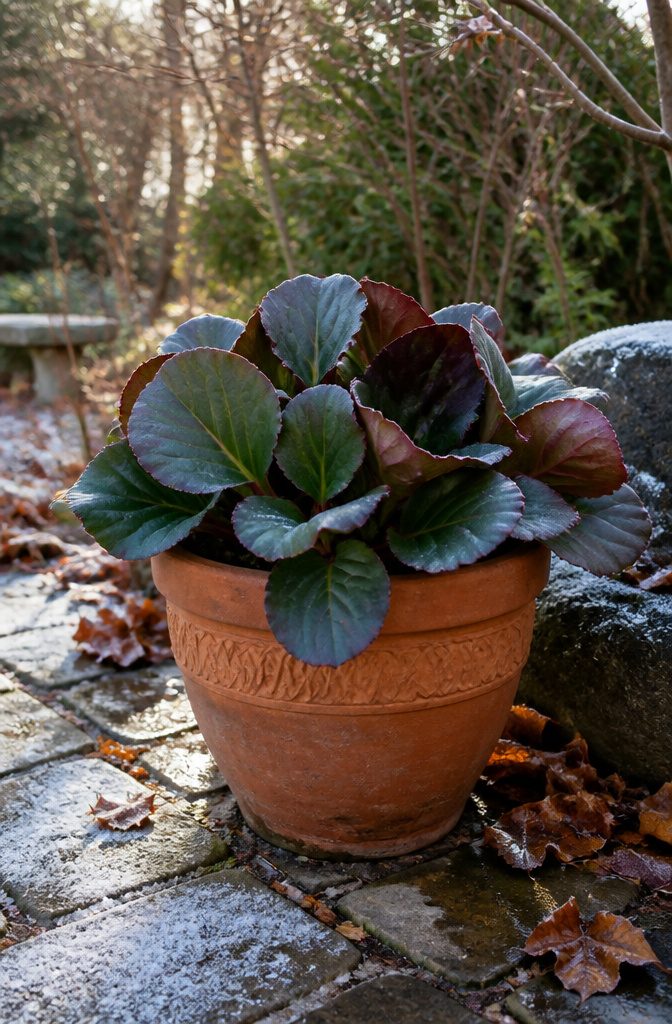
Bergenia carries some of the heaviest foliage in a winter container. The leaves are thick, almost waxy, and large enough to fill space that would otherwise take three or four smaller plants.
Two varieties worth tracking down are Bressingham Ruby and Winter Glow, both bred for color that deepens as temperatures drop.
Bressingham Ruby shifts toward burgundy early; Winter Glow tends to hold green longer before turning toward that same ruby range by mid-winter.
In a container, the cold performance changes from what you’d see in ground plantings.
The roots sit above the frost line, so the leaves can look rough after a hard freeze, maybe even curl or take on a purplish cast that isn’t the advertised color.
Mine have frozen solid in a terracotta pot and thawed limp, though they firmed back up within a day.
The real risk is the combination of wet soil and a long freeze, which rots the crown where the leaves meet the root.
I now set bergenia pots where they’ll get brief winter sun and absolutely no lingering water in the saucer.
Wintergreen
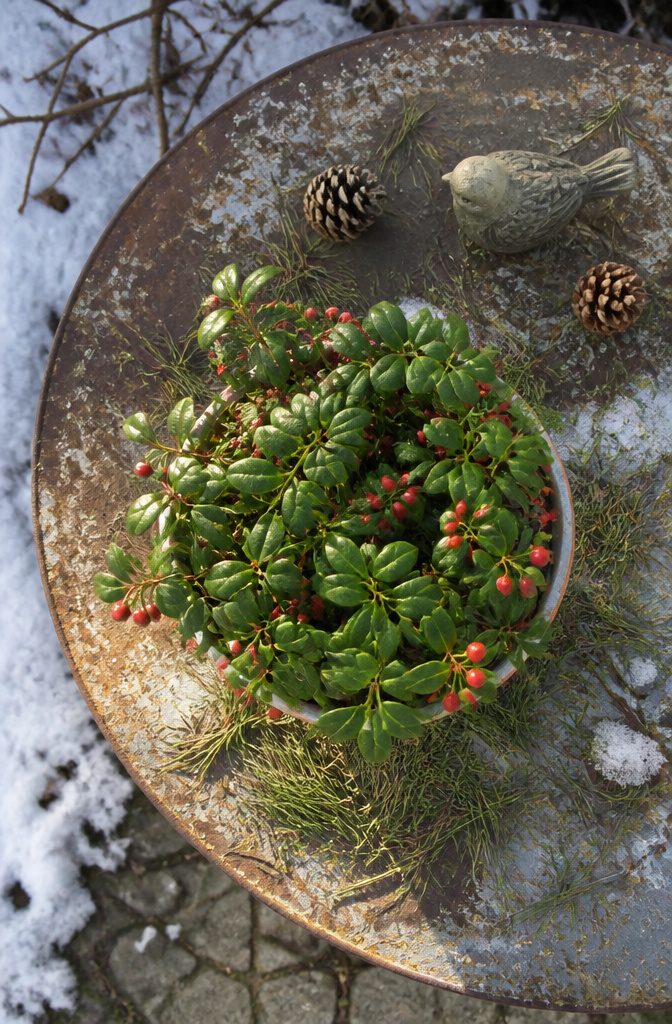
Wintergreen hugs the rim of a pot like it was made for it, the stems creeping outward just far enough to soften the edge without spilling over.
The dark leaves hang on through hard frost, and when the berries turn red they read as decoration from across a patio, not groundcover trying to be something else.
Soil is where most people go wrong with this one. Wintergreen wants acidic mix, roughly what you’d use for blueberries, and in a container that means starting fresh rather than trusting whatever bagged soil is closest.
I learned this after a batch sat pale and angry through two months before I bothered testing. Peat-based mix with a little pine-needle duff on top kept the next round green and fruiting.
Water sits in the leaves if you hit them from above, so a can with a narrow spout aimed at soil level saves you gray mold later.
The berries hold until late winter if the local birds are choosier than mine were.
Cyclamen
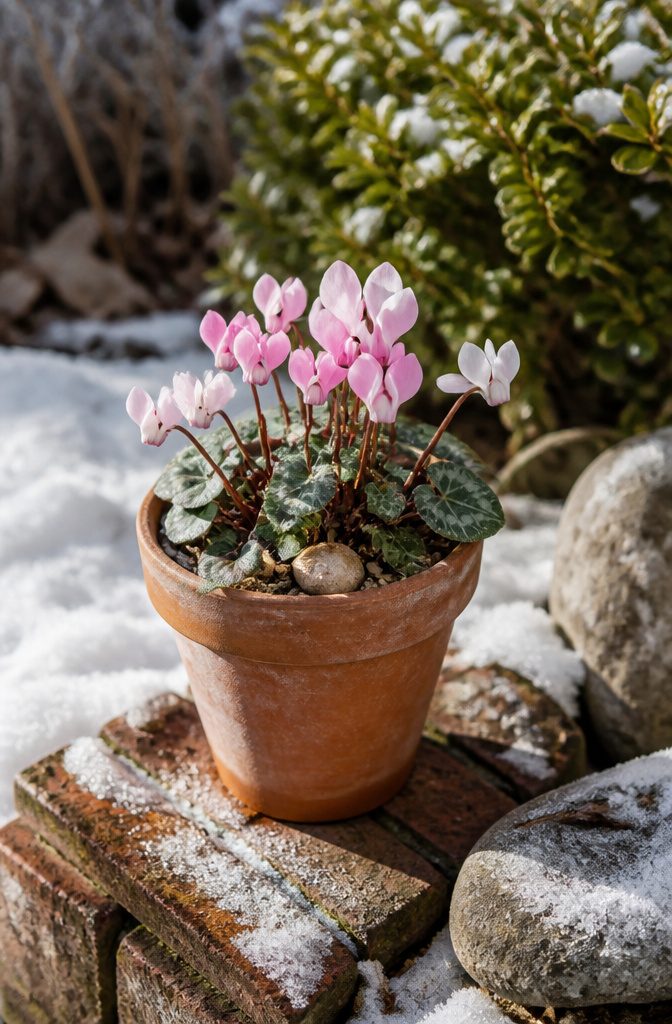
Hardy cyclamen varieties like Cyclamen coum and Cyclamen hederifolium handle actual winter container life better than the florist types sold in grocery stores.
In my zone 7a pots, coum survived uncovered where hederifolium turned to mush, so the hardiness rating on the tag is only half the story when soil freezes solid in a container.
The florist cyclamen, Cyclamen persicum, is listed around zone 9 and dies below 40°F no matter what you do; I learned that on a covered porch where the thermometer read 38°F one morning.
Shade is where cyclamen earn their keep in winter containers. The tubers naturalize slowly under deciduous trees, and that same tolerance for dry shade keeps them alive when cold air sits in a pot all January.
I plant them near the edge where I can see the backswept petals without bending, since the flowers face downward by habit.
A clay pot that breathes helps more than plastic in wet winters; the tubers rot fast in stagnant cold soil.
Pansies and Primroses
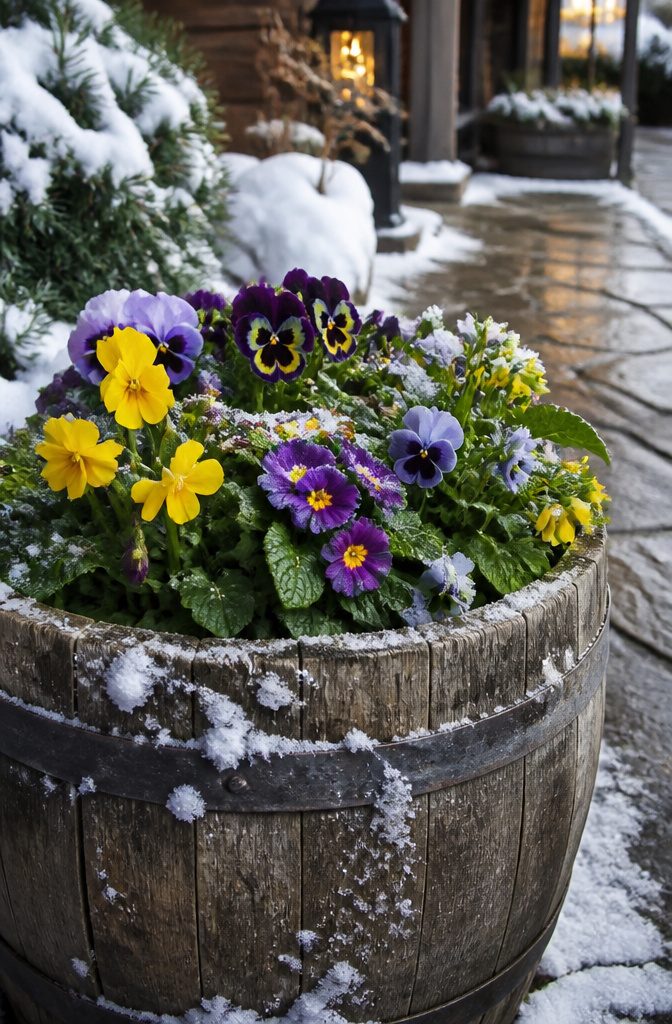
Pansies and primroses carry a container through the gray months when little else bothers to open.
Pansies planted in late September root deeply enough that repeated hard frosts barely slow them; the same flat of plants often keeps sending new buds from late fall straight into March.
Primroses behave differently, preferring to sit tight through true cold and then flare up during the mild spells between.
A reader walking past their own pots on a January afternoon will notice the primrose flowers first, because that sudden yellow or coral against the browns reads like a mistake, a thing that should not be possible.
October planting is the move that buys you those months. Anything set out after the first freeze spends winter establishing nothing and rots where it sits.
Variety matters more than the tag admits. The old clear-faced pansies outlasted the ruffled novelty types in my own containers by a noticeable margin, though the ruffled ones photograph better for the first two weeks.
Primrose selection is simpler: the common polyanthus strains survive what the fancy auriculas surrender to.
Bloom duration is not a promise the plant makes; it is a bet you place on drainage, on timing, on whether the pot itself cracks in the thaw.
What Evergreens Give a Winter Container
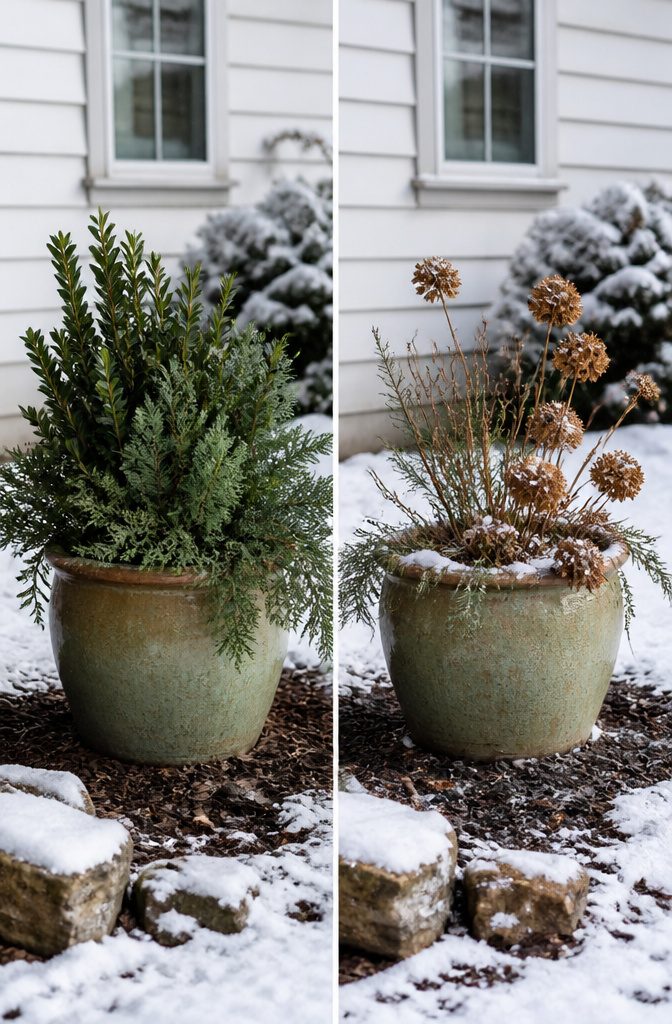
Year-round greenery matters most when everything else has dropped its leaves.
Evergreens keep a container from reading as an empty pot of dirt through January and February, and the structure they hold gives winter arrangements a backbone that twiggy deciduous plants simply cannot provide.
The visual weight stays balanced even under snow.
You notice the real benefit when you are actually planting.
Cooler temperatures and steady soil moisture let roots settle in without the stress of summer heat pushing leaf growth. Water demand drops, and the plant puts energy into establishment rather than fighting to keep foliage alive.
Late winter planting lets evergreens focus on root development before spring, which sets up stronger growth once the season turns. That early investment means the container looks intentional now and fills out faster when warm weather returns.
How I Plant for Winter Survival
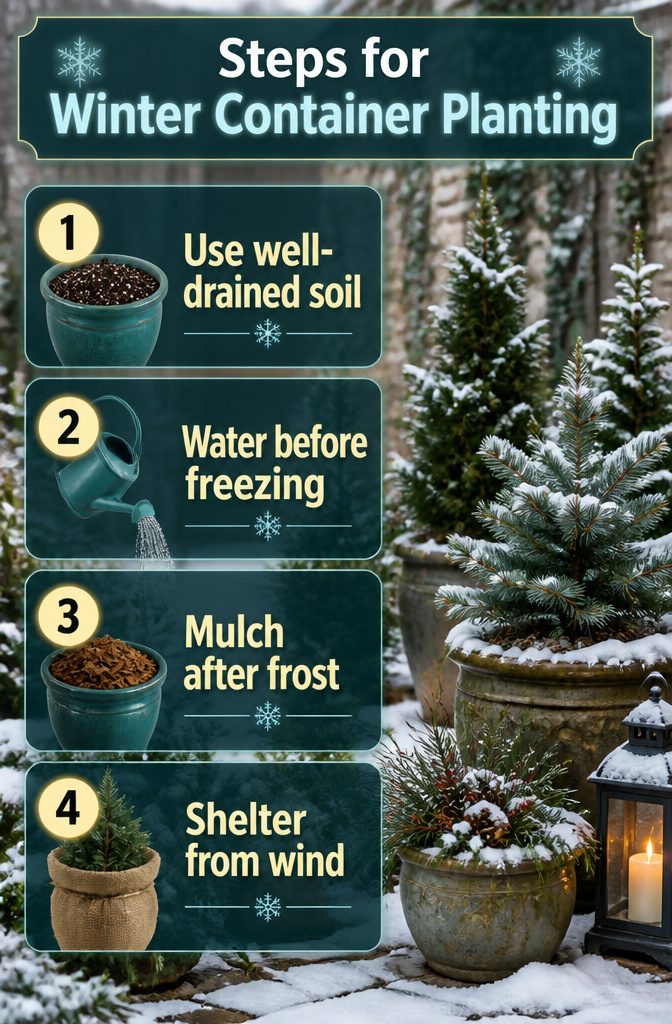
- Well-drained soil matters most. I start every winter container with a mix that lets water escape fast enough that roots never sit cold and wet. A standard bagged potting mix cut with about thirty percent perlite or coarse sand has worked for me; straight potting mix held too much water and froze solid in a hard week.
- Water before the freeze arrives, not during it. A thoroughly soaked container in late autumn carries the plant through early cold, but adding water once temperatures drop just creates ice around the roots. The soil should feel damp like a wrung sponge, not muddy.
- Mulch the surface after the first hard frost. Two to three inches of shredded bark or straw over the soil insulates the root ball against rapid temperature swings. I leave a small gap around the stem so moisture does not collect and rot the crown.
- Wind dries evergreen foliage fast. A sheltered spot against a wall or fence cuts desiccation more than any wrapping; if the only site is exposed, burlap loosely staked around the pot blocks the worst of it without trapping moisture against the leaves.
Mistakes I Made With Winter Containers
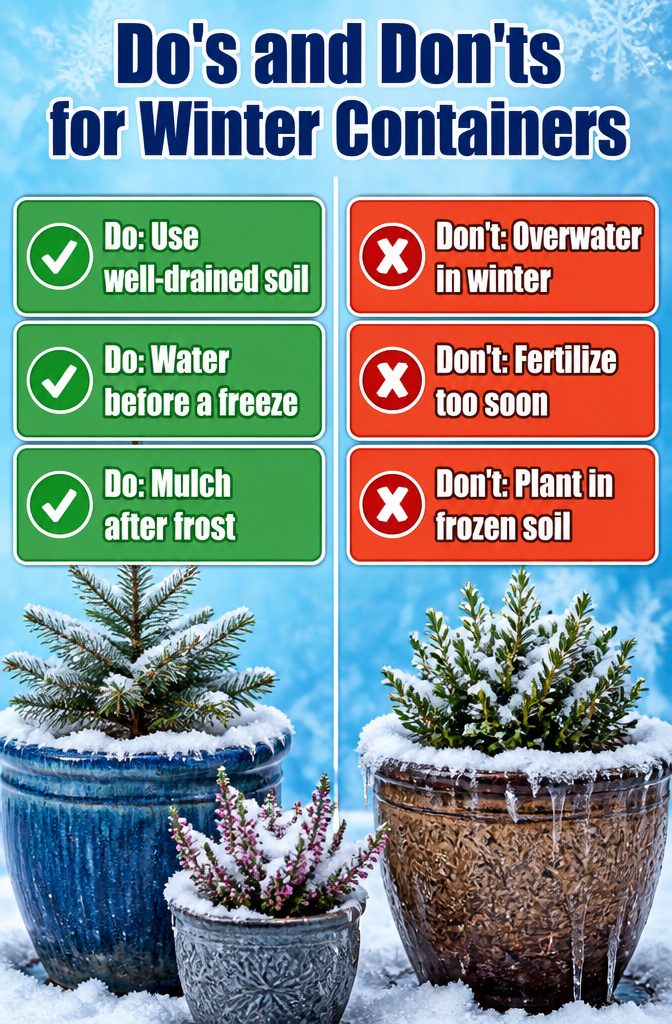
Frozen soil will wreck a winter container before you finish watering it in. Glazed pots that have sat through a hard freeze will crack a small spruce’s roots; let the pot thaw first or switch to something else.
The root ball sat on top of the soil like a rock, air gaps opened around the edges, and by February the needles were bronze and dropping.
Planting in frozen or waterlogged soil kills roots through the same mechanism: water the plant cannot absorb sits against tissue that cannot breathe.
Overwatering during cold temperatures finished a heather I had nursed through fall. The soil surface looked dry, so I gave it a cup every few days.
The roots rotted in soil that was not evaporating. Now I lift the pot to feel weight, or stick a finger past the second knuckle, before any water leaves the can.
Fertilize immediately after planting and you will push soft growth straight into frost. A boxwood I fed with liquid feed in early December flushed tender shoots that browned by New Year’s.
Evergreens in winter containers need nothing until the soil warms in March. Let them sit hungry; they will not starve, but they will die from kindness.
Moving Containers Into Winter
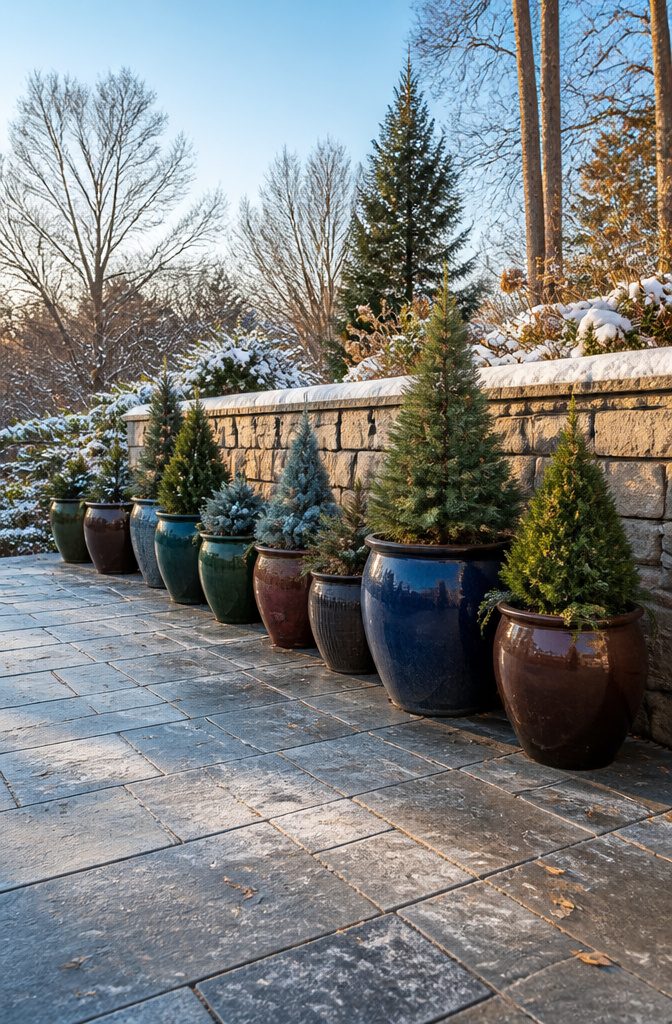
The hardiness zone printed on the tag is only half the story for container plants.
Roots in a pot freeze from all sides at once, while in-ground roots have soil for insulation, so a plant rated for your zone may still struggle when the thermometer drops.
Larger pots minimize the damage because added soil volume buffers temperature swings, though you will still need to check water more often than you would for plants in the ground.
I refresh containers with new soil each fall, especially if the mix has been in place for a couple of years.
Old soil depletes nutrients, and depleted roots enter winter already stressed. Conifers get the gentlest treatment: minimal root disturbance, a light trim of any tissue damaged by summer heat, and placement where wind will not desiccate the needles.
Fully winter-hardy plants stay outdoors, period. Moving them into a garage or mudroom for even a night costs them cold tolerance and disrupts the chilling period they need for normal growth the following spring.
Tender perennials sit in the gray area. Lavender and rosemary sometimes survive outside with protection, sometimes not, depending on the variety and the severity of the season.
My call is to shift marginal plants to a cool, sheltered spot like an unheated porch and let them stay fairly dormant without taking the full force of ice and wind.
Ceramic and terra-cotta containers come off the patio before the first hard freeze.
The temperature fluctuations crack them open, so I move mine to the garage or at least the lee of the house. Metal and stone can stay put if they are too heavy to bother with.
Keeping Perennials Alive Through Freeze
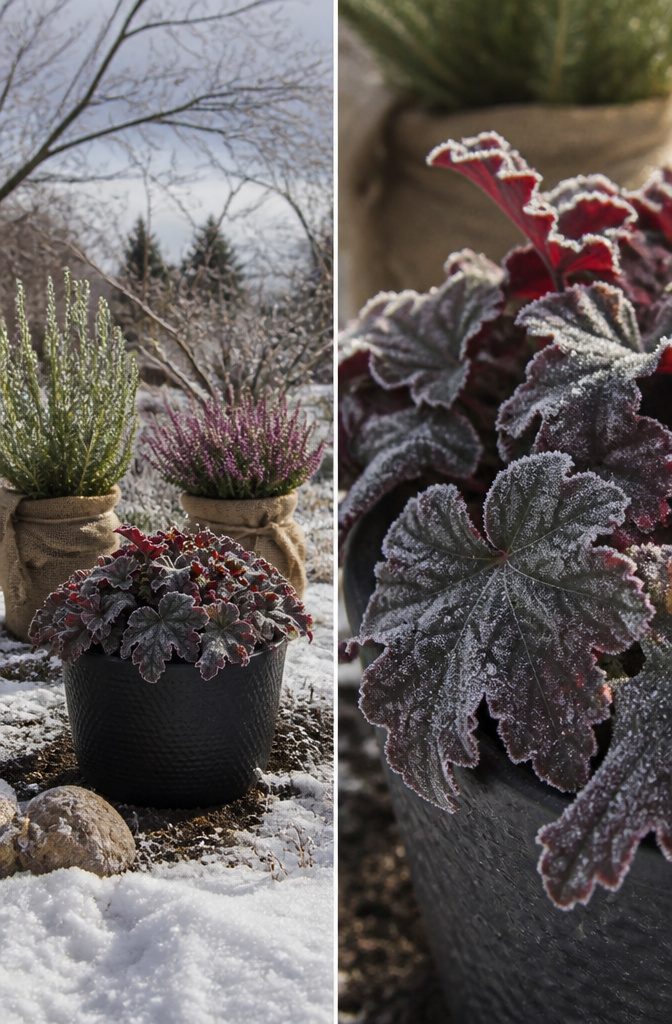
Hardy perennials need their winter dormancy outside. Moving them indoors, even overnight, costs them cold tolerance and throws off the growth cycle they need to flower normally come spring.
Heuchera stays in its pot; the soil volume insulates roots better than an exposed root ball, though a garden bed still beats a container since soil freezes from the top down in ground but from all sides in a pot.
Marginally hardy plants are the judgment call. Lavender sits right on that line where I live, while rosemary leans tender enough that I bring it to a cool windowsill and let it stay nearly dormant.
For the ones I keep outside, I heel the pot into garden soil up to its rim before the first hard freeze. The surrounding earth buffers the temperature swings that kill roots more often than steady cold does.
Potted plants also dry out faster than anything in ground, so the ones left outside need a water check even when it feels wrong to be watering in January. I have killed more things from desiccation than from freezing.
Frequently Asked Questions
What are the best evergreen plants for winter containers?
Hellebores, evergreen ferns, Carex grasses, heucheras, euphorbias, bergenia, wintergreen, and hardy cyclamen all handle container life through cold months.
Pansies and primroses add reliable color when little else is blooming. Pair the right plant with the right pot; porous terra cotta or unglazed ceramic prevents the crown rot that kills off glazed-container plantings.
How do I winter over perennials in pots?
Keep hardy perennials outside where they stay dormant; moving them indoors even briefly costs cold tolerance and disrupts spring growth.
For marginally hardy plants like lavender or rosemary, shift them to an unheated porch or heel the pot into garden soil up to its rim before hard freeze.
Larger pots help because added soil volume buffers temperature swings that freeze roots from all sides at once.
What are common mistakes when planting evergreens in winter?
Planting in frozen or waterlogged soil kills roots by trapping water against tissue that cannot breathe. Overwatering during cold weather rots roots in soil that never dries; lift the pot to check weight before adding any water.
Fertilizing after planting pushes soft growth straight into frost, and ignoring wind exposure desiccates evergreen foliage faster than cold alone.





