
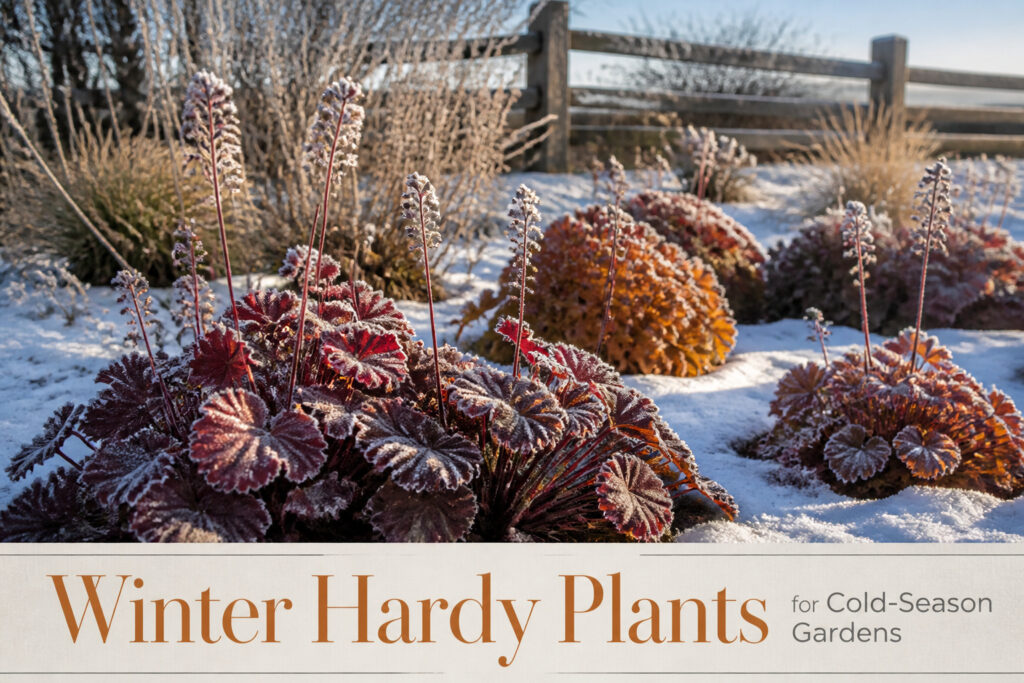
The right winter hardy plant for your garden depends on one thing: whether you need it to survive in the ground or can give it shelter before the first hard freeze.
Pigsqueak handles Zone 3 cold without complaint, while mirror bush becomes a houseplant anywhere colder than Zone 9.
That same split runs through the full list, from switch grasses that ask only for drainage to coral bells that die faster from wet roots than from frost.
1. Pigsqueak
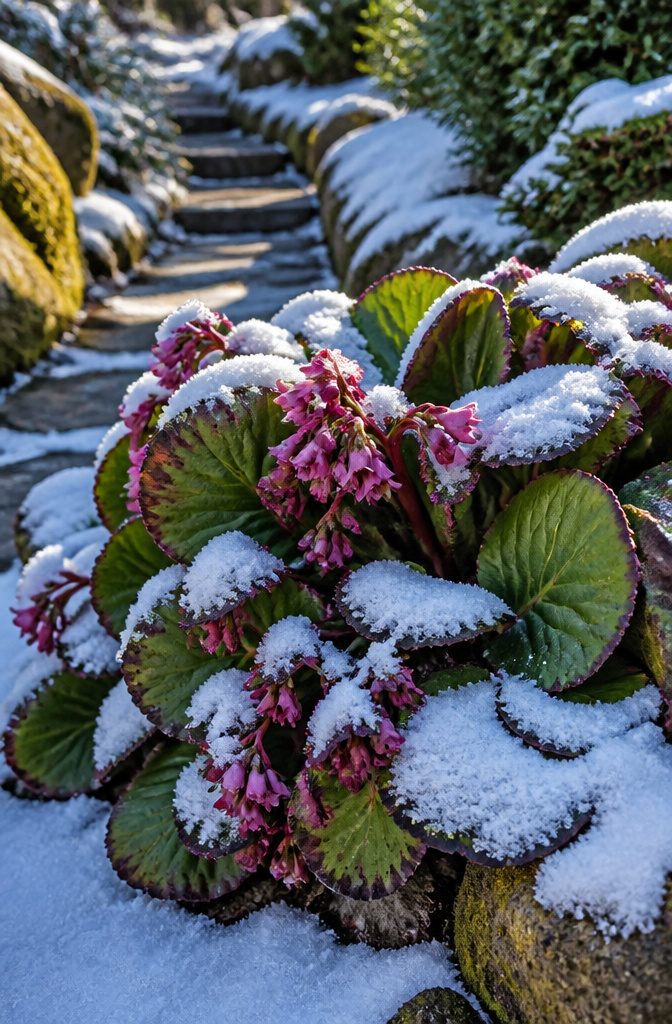
The thick, cabbage-like leaves of pigsqueak stay green through most winters, and some varieties turn a rich red or burgundy as the cold sets in.
Late winter brings bell-shaped pink or magenta blossoms on sturdy upright stems, which is a welcome jolt of color when the garden still looks half-asleep.
At one to two feet tall and wide, it spreads into a dense mound that works well as groundcover or tucked along a shady pathway edge where little else wants to bloom.
I have used it in a north-facing bed that gets almost no direct sun, and it performed without complaint.
The common name comes from the sound the leaves make when you rub them between your fingers, a squeaky resistance that surprises anyone the first time.
For renters or anyone planting on a weekend budget, this is a low-stakes perennial: it tolerates shade, handles cold down to Zone 3, and asks for little once established.
The variety ‘Miss Piggy’ from Proven Winners is worth tracking down if you want the brightest pink flowers.
2. Coral Bells
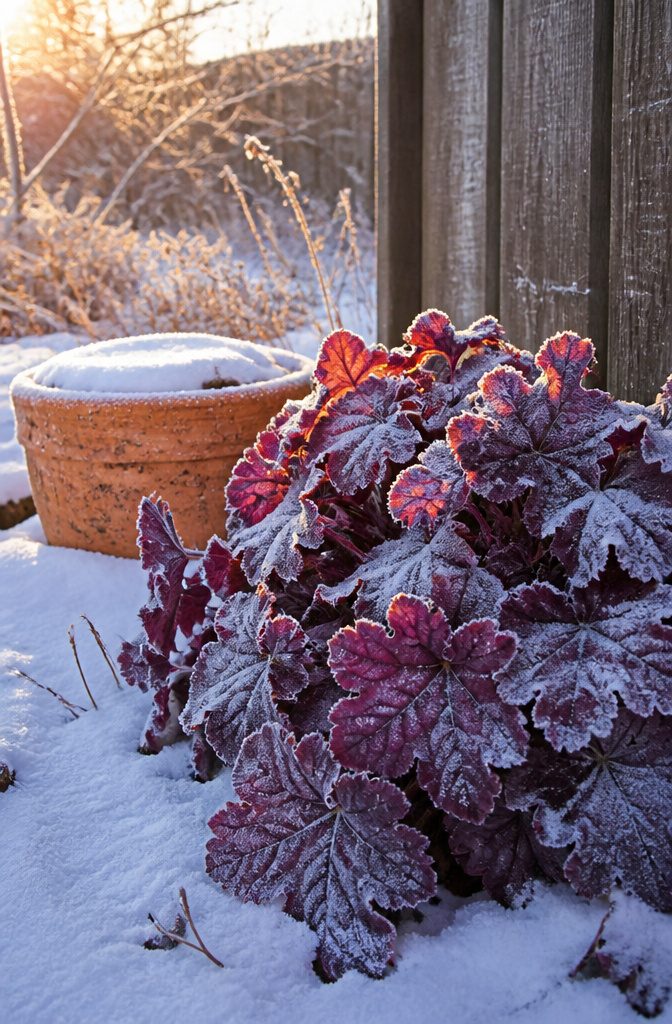
Heuchera carries color through winter in a way most perennials don’t even attempt.
The foliage runs from lime green and caramel to deep purple, near-black, and silver-frosted varieties, so you can pair a purple-leaf selection like Dolce ‘Wildberry’ against blue-needled evergreens or let a silvered form catch low winter light.
Hardy in zones 3–9, coral bells will stay evergreen in milder winters and at least hold enough leaf to matter in colder ones, though you may see some dieback once temperatures drop hard.
The ruffled, textured leaves keep a container interesting even when nothing is blooming.
Proven Winners markets both the Dolce and Primo lines specifically for this kind of winter use, and in my reading they perform about as well in ground as in pots.
The one limit is drainage: wet, frozen roots finish them off faster than cold air alone.
If you’re growing in a container, move them to the ground before the first hard frost, or at minimum shelter the pot where water won’t sit.
3. Switch Grass
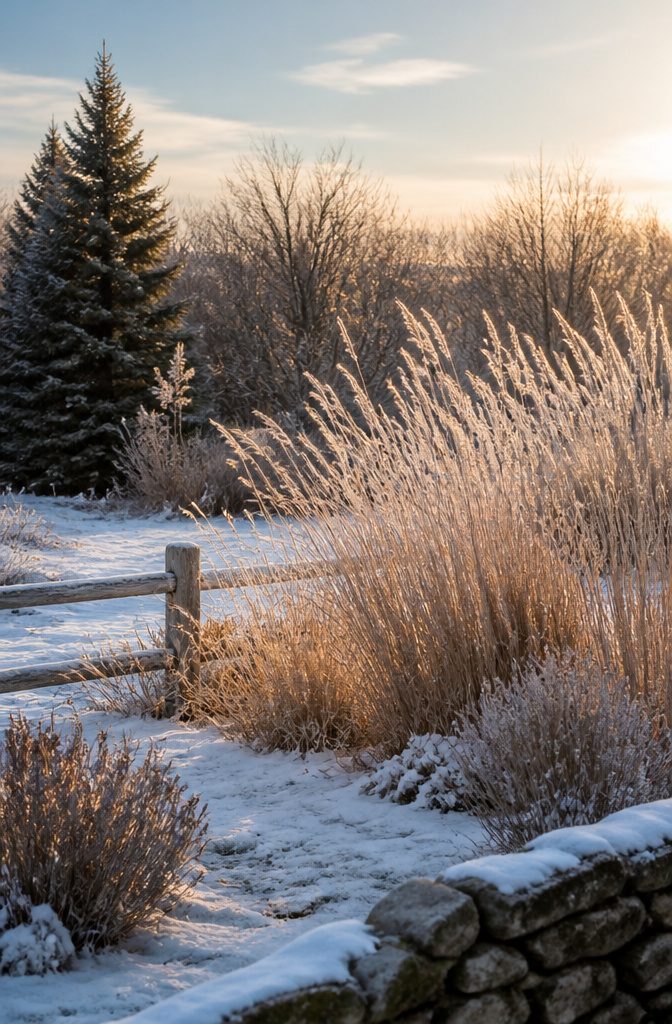
Panicum, the switch grasses, bring motion to a winter garden in a way few other plants manage.
The seed heads and stems catch frost or light snow and hold it like a thin layer of sugar, catching morning light and keeping the bed alive when most color has gone.
Prairie Winds ‘Totem Pole’ is one of the sturdier upright varieties, hardy in zones 4 through 9, and it keeps its vertical line through weather that flattens lesser grasses.
I have seen switch grass used as a single accent against a low wall or massed where the repetition turns the whole planting into something that moves as one.
The stems stay rigid enough to keep that architecture through freeze and thaw, and the sound they make in a dry winter wind is part of the point.
Full sun is what they ask for, and drainage that does not stay wet. Give them that and they are one of the lower-effort winter interests you can plant.
4. Boxwood
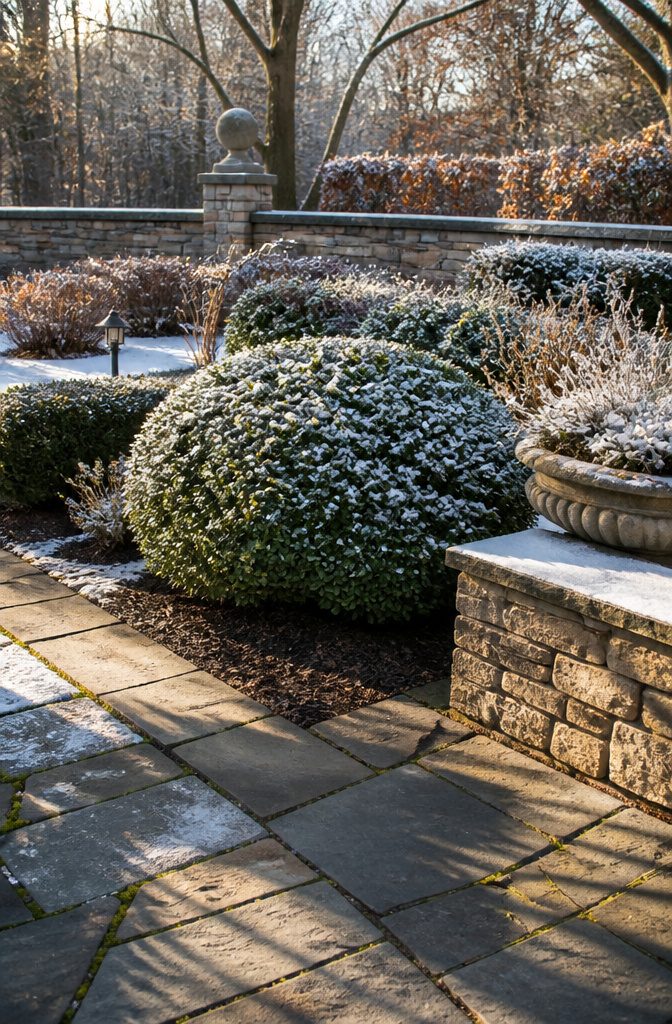
Wintergreen boxwood holds green through snow and stays hardy down to zone 4, which covers most of the country outside the coldest pockets.
Its shallow roots need a thick mulch layer once the ground freezes, something I learned to do in late fall after losing a hedge to heave one year.
The plant shapes easily into hedges or formal borders, and the Wintergreen variety carries better resistance to common boxwood pests than older types.
That said, boxwood blight has made this shrub a riskier bet than it used to be. The disease spreads fast and kills stands outright.
For gardeners who want the same structured look without the worry, inkberry holly varieties like Strongbox offer a native alternative: faster growth, natural mounding, and solid resistance to disease, pests, and winter burn.
I still keep boxwood in my own plan, but only where I can watch it closely and replace it fast if spots show up.
5. False Cypress
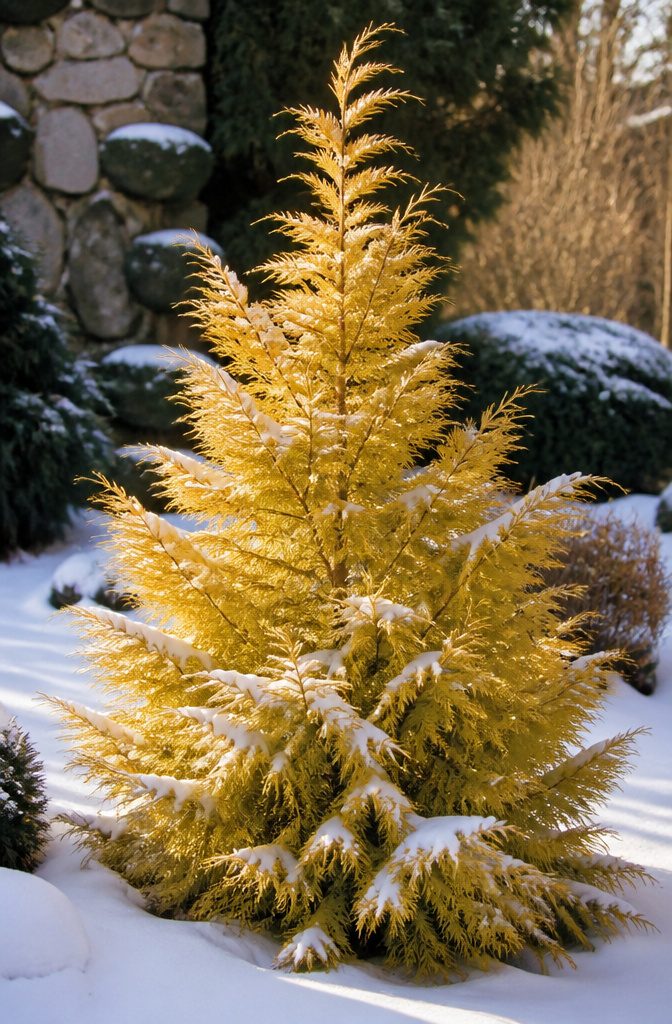
Soft Serve Gold false cypress fills a gap that stumped me for two winters running.
Most conifers read as dark green lumps against snow, but this one carries a feathery texture that catches light differently, and the foliage shifts toward bronze and gold as the cold sets in.
Hardy in zones 4 through 8, it keeps that color without turning the muddy orange some gold evergreens fade to by February.
The pyramidal shape tops out around 6 to 10 feet, which means it works as a single structural accent without swallowing a small yard.
I would not try to keep it smaller with shears; the soft, almost thread-like needles look wrong when blunt-cut. Plant it where it gets full sun to partial shade and let it find its own outline.
Proven Winners pairs it with red twig dogwood and witch hazel in their photos, and that combination makes sense: the vertical gold against horizontal red stems and early yellow blooms gives you something to look at from December through March.
After a snowfall the branches hold white in a way that stiff-needled pines never manage.
6. Mirror Bush
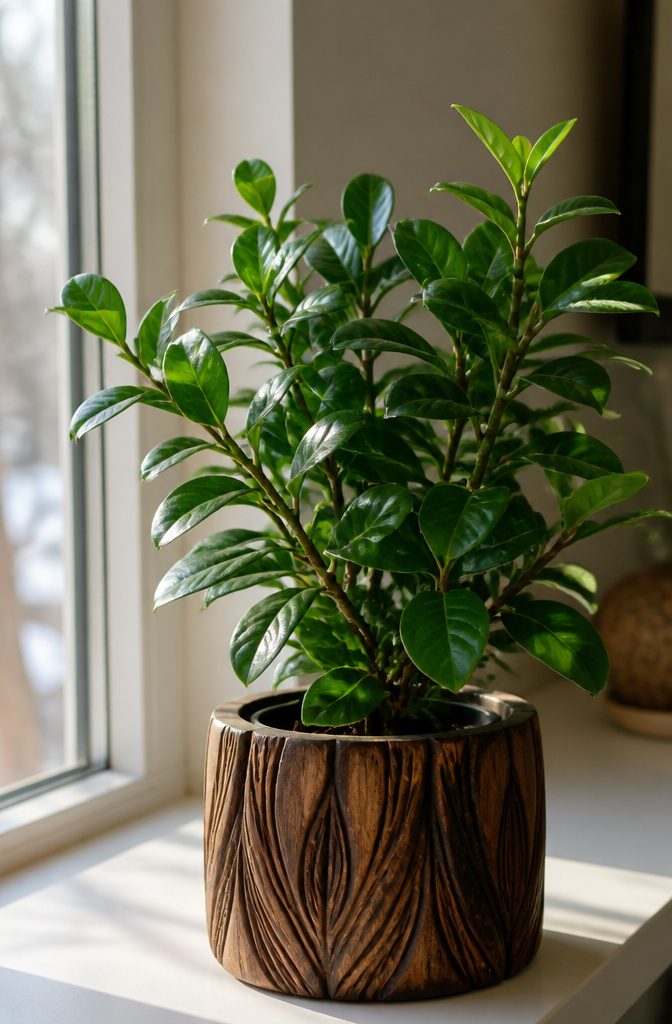
Glossy foliage on a shrub reads expensive in a way matte leaves never quite manage, and the mirror bush banks on that sheen year-round. In USDA zone 9 and warmer, it stays outside through winter without complaint.
For everyone else, the practical move is a shift to container culture before the first hard freeze, then bringing it indoors to a bright window where it functions as a houseplant through the cold months.
The same vivid color that sold the plant in the nursery aisle keeps working in a corner of the living room, no grow lights required if the spot gets decent sun.
I have killed more than one marginally hardy shrub by convincing myself a heavy mulch blanket would be enough; a pot you can lift beats a prayer wrapped in straw every time.
7. Red Twig Dogwood
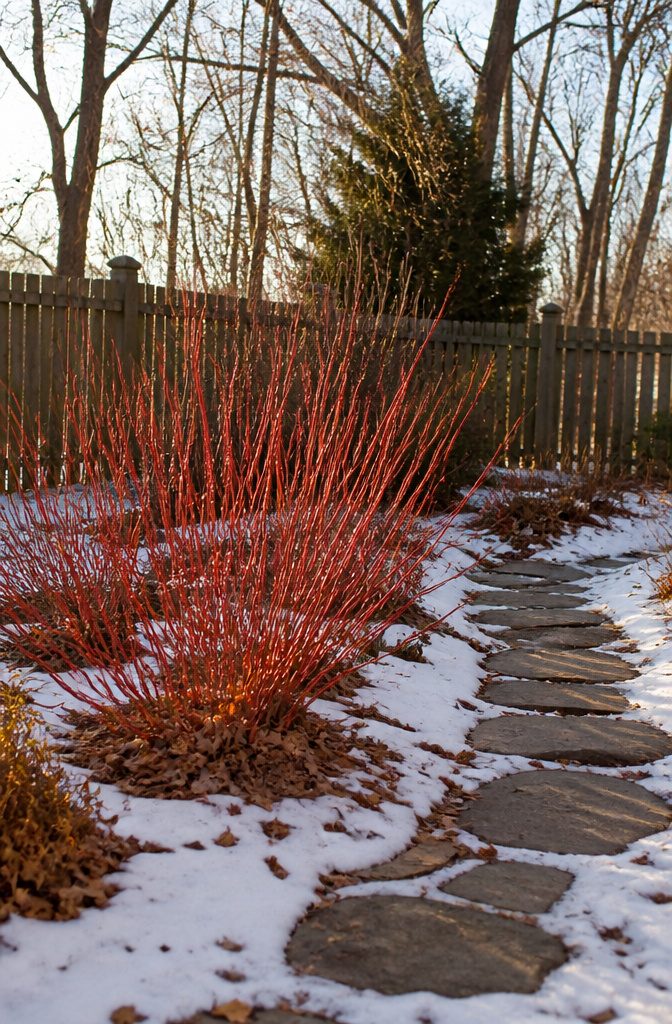
The brightest color in a winter garden often comes from something that has dropped every leaf.
Red twig dogwood keeps its stems in shades of red, orange, coral, or yellow from the first hard frost straight through to spring bud break, and the show only gets sharper after the foliage falls away.
Gardeners in USDA zones 2–7 can grow this without fuss. The compact Arctic Fire® variety tops out around 3 to 5 feet, which fits most rental yards or a first homeowner’s foundation bed without swallowing the house.
Full sun to partial sun keeps the color strongest; too much shade and the stems go dull on you.
Cut them back and you finally see why people grow these shrubs. I bring in armfuls of the red stems for holiday arrangements, and the plant responds by pushing brighter new growth the following spring.
A harder flush of pruning in late winter, down to about six inches from the ground, forces exactly that kind of vigorous regrowth.
Some varieties carry yellow bark instead of red, Cornus sericea ‘Flamiramea’ being the one most people reach for, so you are not locked into a single look if the house trim runs warmer.
8. Seven Son Flower
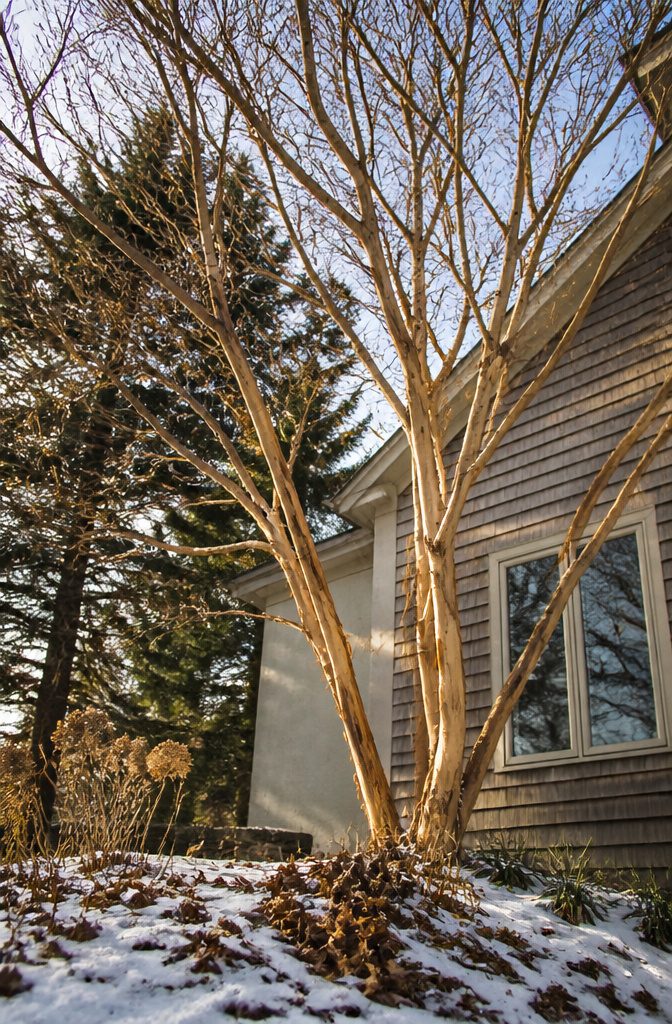
The seven son flower earns its place among winter hardy plants less for what it does in bloom than for what it reveals once the leaves drop.
After the first hard freeze strips the foliage, the shrub stands in an elegant upright frame, its mature structure branching in clean lines that read as architecture against snow or a gray sky.
The real draw is the bark itself, which peels in thin, papery sheets of light tan, catching low winter light the way birch does but with a softer, more layered texture.
Each season of exfoliation leaves a slightly mottled surface, older inner bark showing through in warm tones beneath the newer curling strips.
For a small yard or a renter planning around a landlord’s overgrown corner, this is visual interest that asks nothing of mulch or annuals.
The peeling habit means you will want to place it where afternoon sun hits the trunk, or where a path lamp grazes it, so the texture does not go to waste in shadow.
9. Panicle Hydrangea
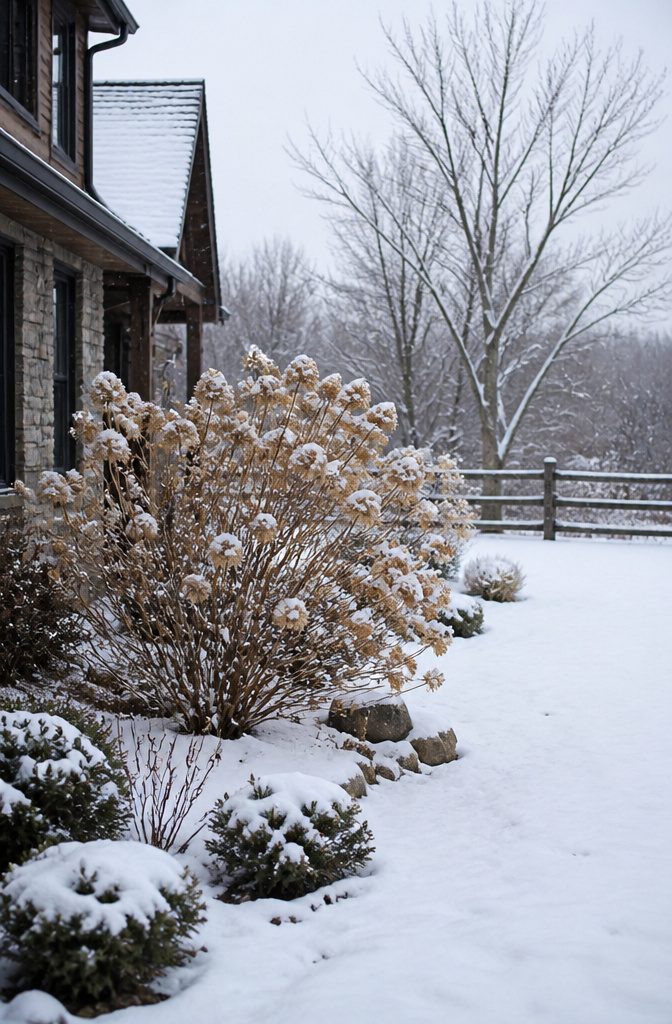
The spent blooms of panicle hydrangea stay put on stiff stems long after the color drains, and that persistence is what earns them a spot in a winter garden.
Frost catches in the papery flower heads, snow piles on top, and the whole plant turns into something structural against the gray months.
You do not have to cut them back in fall. Let the dried flowers stand through winter and they keep working while other plants have dropped to nothing.
Fire Light is the variety to look for if you are in a colder spot; it flowers reliably down to zone 3 and the stems stay strong enough to carry the snow load without splaying.
Other panicle types will give you the same dried-flower effect, but weaker stems flop under weight and the whole thing ends up looking like a mess by February.
Pick one bred for sturdy wood, leave the pruning for spring, and you get three or four months of interest from a plant that barely asks for anything.
10. Inkberry Holly
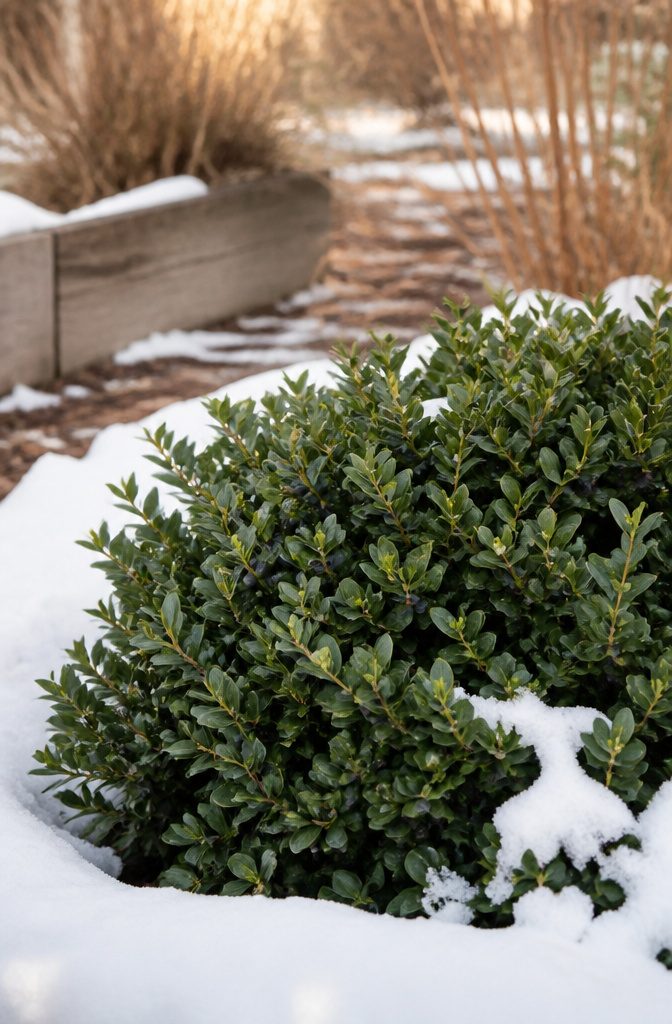
Inkberry holly fills the same visual slot as boxwood, but without the boxwood blight that has become a genuine headache in most growing regions.
The leaves stay small and oval, the habit stays low and mounded, and the whole shrub carries that same neat, formal weight through the cold months.
Female plants set small black berries that read as texture more than color against the dark foliage, though you need a male nearby for the fruit to form.
Proven Winners markets a cultivar called Strongbox that mounds naturally at about two to three feet tall and wide, roughly the scale of a compact boxwood hedge.
It grows faster than boxwood, too, which matters when you are trying to close a gap before the ground freezes.
The species handles full sun down to partial shade, and the broadleaf foliage resists the winter burn that can turn other evergreen hedges bronze or straw-colored by March.
For edging a path or a low hedge in zones 5 through 9, this is the swap I would make.
11. Blue Holly
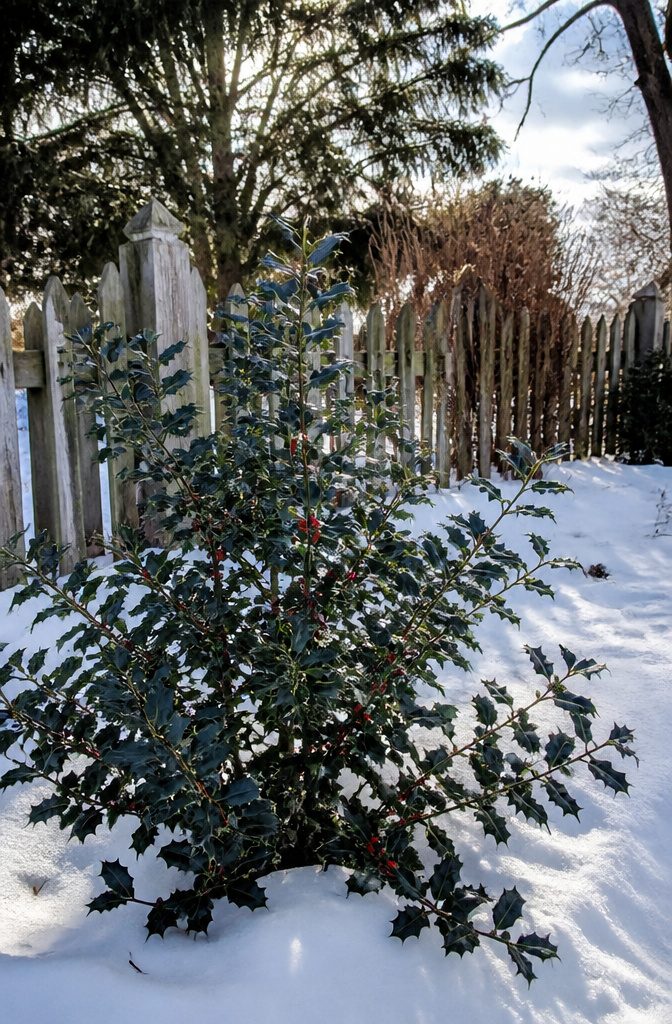
Blue holly carries the deep green, spiny evergreen foliage that reads as classic winter garden architecture even from the street.
The leaves have that slightly bluish cast that gives the group its common name, and in cold months the structure alone justifies the space.
A male pollinator has to sit within roughly fifty feet of a female plant for the red berry display to set; without that pairing you get the foliage frame but no fruit.
Castle Spire, one of the meserveae hybrids, tops out with an upright habit and works as a solo specimen or at the back of a border where you need height that does not disappear in December.
The berries, when they do come, hold for weeks and draw birds once the weather turns harsh. Zones 5–7 covers most of the lower forty-eight outside the deep South and the coldest northern pockets, so check your map before you commit.
12. Winterberry Holly
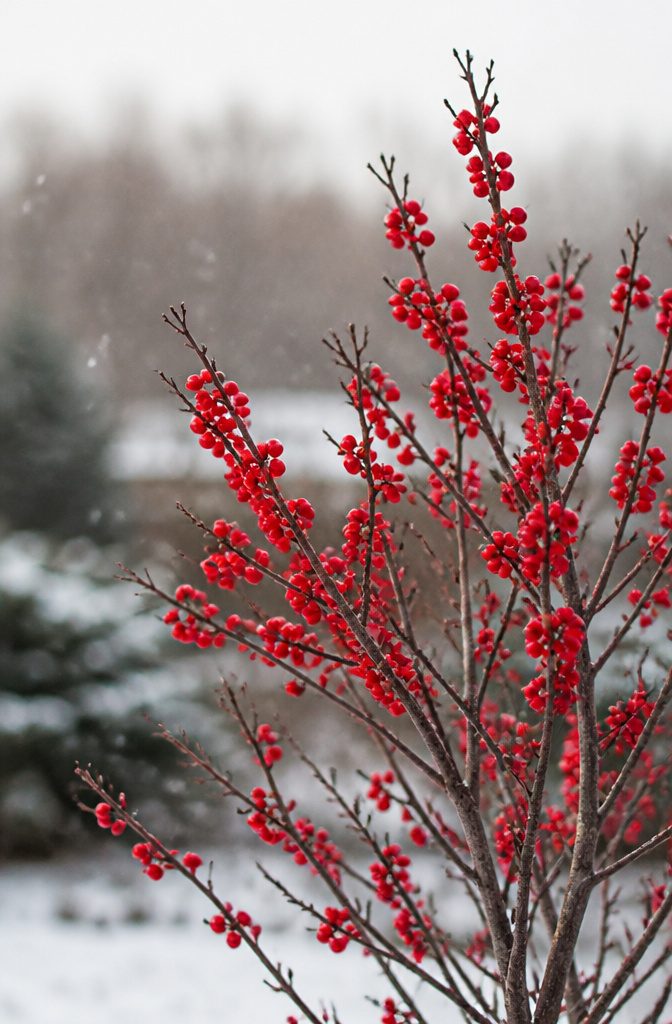
Winterberry holly sold me the moment I understood the deciduous part. Most hollies keep their leaves year-round, which sounds like a win until you realize the berries hide behind a wall of dark green.
This one drops every leaf in autumn, and the bare branches carry so much bright red fruit it looks almost artificial against snow.
The dwarf variety called Berry Poppins® stays around 3 to 4 feet tall and wide, which matters when your garden is a rental’s side yard or the planting bed a previous owner squeezed between driveway and foundation.
It is hardy in zones 3–9, so the cold is not the problem. Pollination is the hitch: female plants need a male pollinator nearby, Mr. Poppins® being the matched variety, or you get branches and no berries.
One male can service several females within pollination range, so the math works if you have the space for two shrubs or a neighbor who already solved it.
Plant it where winter light falls through, not tucked under eaves in deep shadow.
The berries persist for months, softening only after birds finish the less convenient options, and the cut branches hold up indoors longer than you’d expect from something that looks this delicate.
13. Juniper
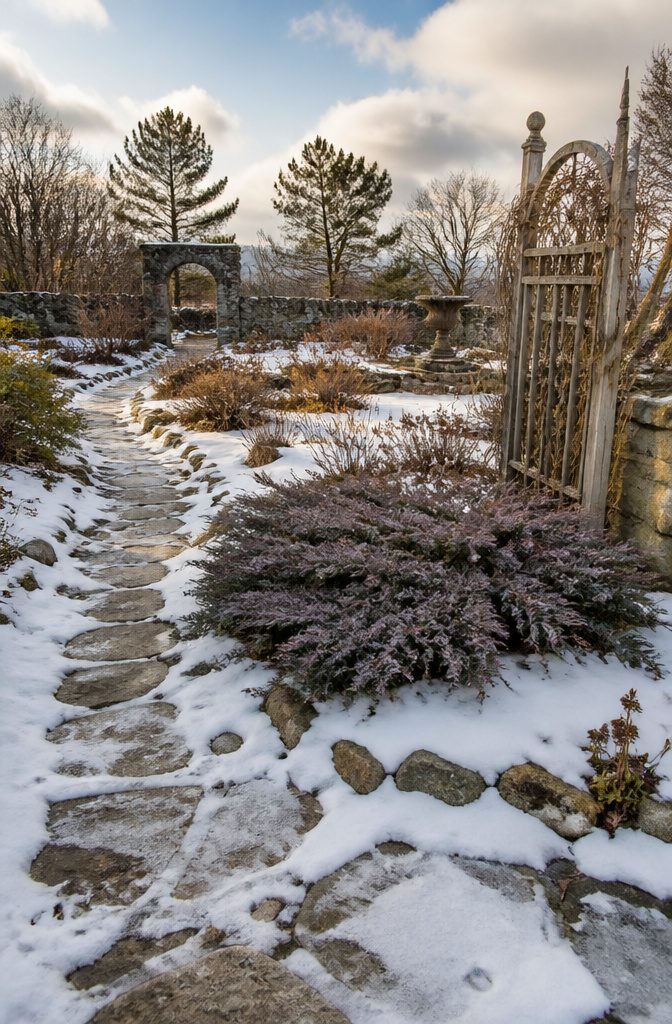
Blue-green berries on a juniper look almost lit from within on a gray January afternoon, which is reason enough to keep one around.
The evergreen foliage shifts in winter, deepening from that summer sage toward something closer to slate or plum depending on the species and how cold your nights get.
Spreading forms stay under two feet and carpet ground that would otherwise turn to mud, while upright varieties read as green architecture against snow without the formal stiffness of a clipped hedge.
I planted a low horizontal type along a walkway where nothing else would take the salt splash, and the color change surprised me that first February; the needles I had catalogued as blue-green in October turned almost bronze-purple after a week of teens.
Both habits handle the same range of hardiness zones, so the choice is really whether you need a ground layer or vertical punctuation.
Give them drainage heavier than the soil you think they want; wet roots over winter kill more junipers than cold ever does.
14. Siberian Cypress
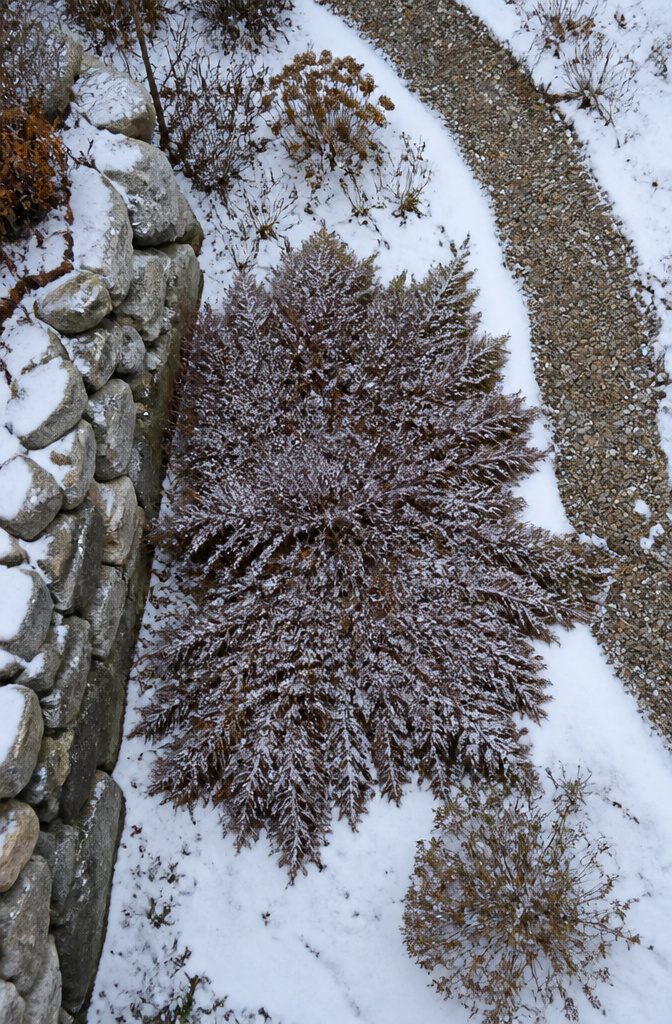
Siberian Cypress fills a spot most groundcovers fail, which is why it ended up in my own list after I kept seeing it rated for zones 3–7.
The plant stays low, spreading outward in a dense mat rather than climbing upward, and that matters when you need something to handle a bank or the awkward strip along a driveway where nothing else wants to root.
Once the cold sets in, the plant finally shows what it can do.
Summer foliage is a standard green, nothing dramatic, but winter shifts it to a russet-purple tone that reads as color in a season when most beds have gone to brown.
It handles light shade and dry soil, and deer leave it alone, which in my experience saves a winter garden from becoming a buffet.
For a renter or first-home owner working a weekend and a few hundred dollars, this is the kind of plant that covers ground, survives neglect, and still gives you something to notice from the kitchen window in February.
15. Lily of the Valley Shrub
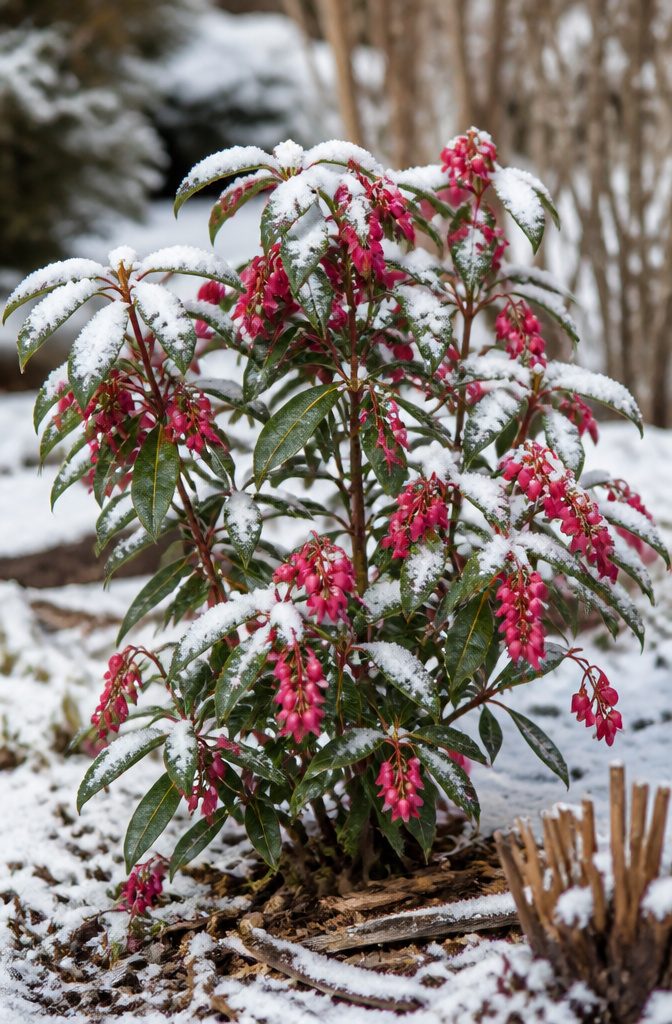
Ruby-red flowers on a broadleaf evergreen in late February still feel like a small miracle the first time you spot them.
The so-called lily of the valley shrub is actually a Pieris, not a true lily, and the name confuses plenty of gardeners at the nursery.
Flower clusters open in late winter to early spring, hanging in cascades that can last for months if the weather cooperates.
Wind is the real enemy here. In the colder end of its hardiness range, a shrub left exposed to winter gales will brown at the edges and hold fewer buds come spring.
A 2–3 inch layer of mulch buys the root zone some insurance against freeze-thaw cycles, and siting it where a fence or larger planting breaks the worst gusts makes more difference than any amount of fertilizer.
16. Yew
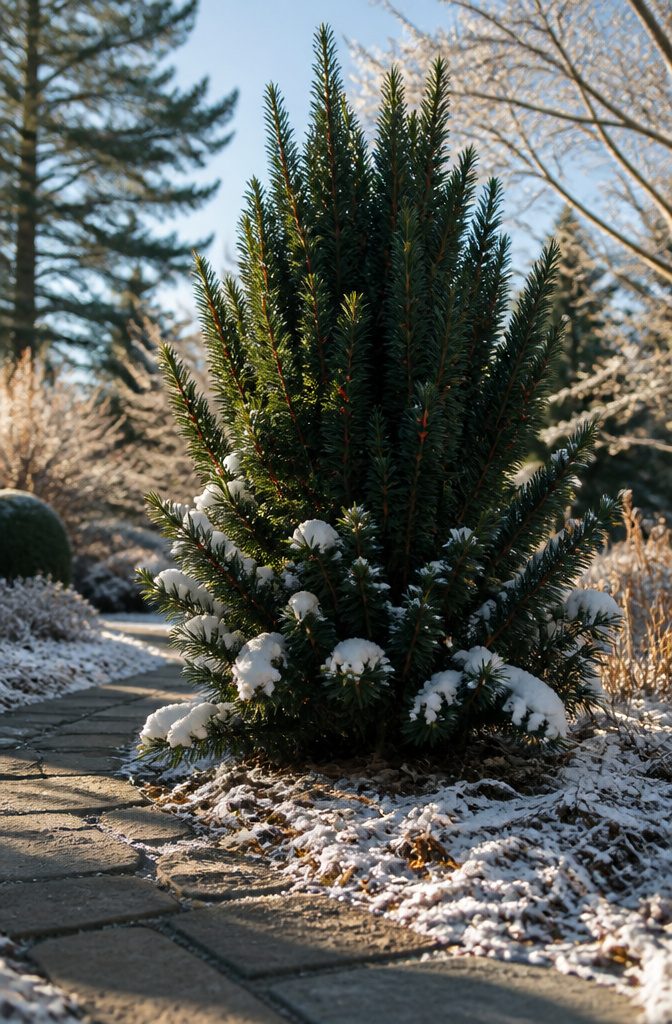
Yew carries itself like a shrub that has seen every garden mistake and decided to survive anyway. Taxus baccata tops out around 40 feet in the ground, though that number means almost nothing in practice.
Decades pass before it gets there, and a container or a hard pruning keeps it at whatever scale the space demands. Two flanking a front door in matching pots give a formal line without the formality of a foundation planting.
The needles stay dark green through winter, and the red arils show up late in the season when most color has gone elsewhere.
Shade does not bother it, which matters for renters working with the light they inherited, not the light they would have designed.
What makes yew genuinely useful across those conditions is the range of forms breeders have pushed into it: groundcover mats, mid-height mounds, narrow upright columns like the Stonehenge type.
Heavy pruning takes; hedges, topiary, or a single specimen kept tight all work.
Slow growth in a pot means years before it needs repotting or replacing, which fits a weekend timeline and a real budget better than something that wants constant attention.
17. Arborvitae
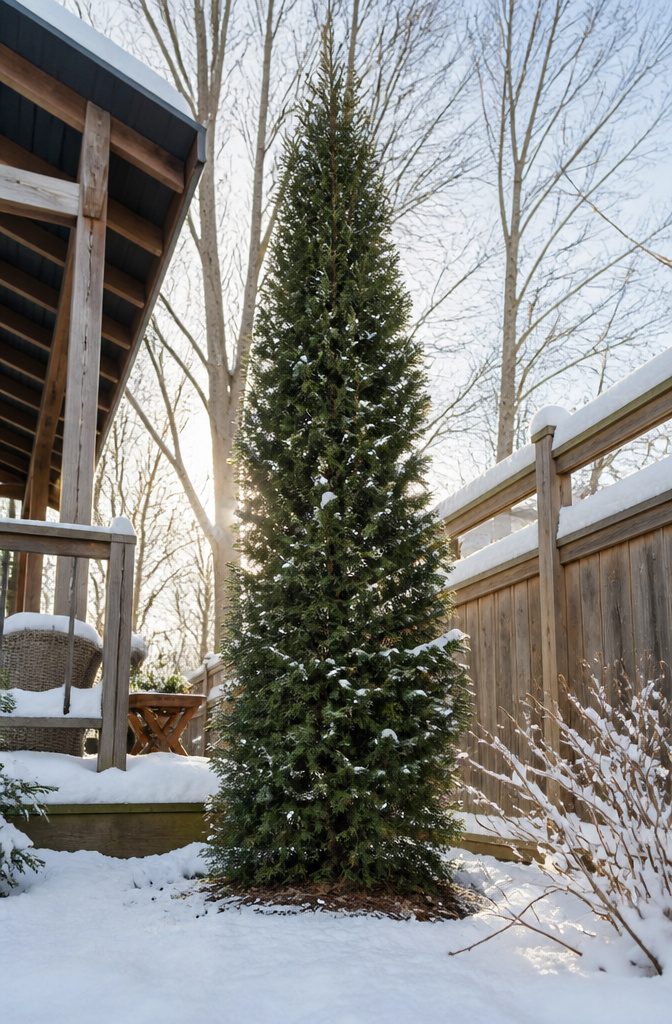
The North Pole variety of arborvitae grows 10 to 15 feet tall and only 3 to 5 feet wide, a proportion that turns awkward side yards into usable green walls.
I have watched too many renters plant spreading shrubs against a property line, then spend three years pruning them away from the neighbor’s driveway. A columnar habit skips that whole cycle.
Hardy in zones 3 through 8, this evergreen keeps its dark green color through the coldest months and resists winter burn better than most Thuja occidentalis.
The texture is softer than the old-school varieties, which matters when you brush past it carrying groceries or letting the dog out at night.
Full sun to partial shade both work, so the north side of a fence line is not off limits.
Plant in a row for screening, or use a single specimen to divide one part of a small yard from another without building anything permanent.
For renters, that is the appeal: structure you can take with you when you leave, or at least leave behind without a permit fight.
18. Pyracomeles
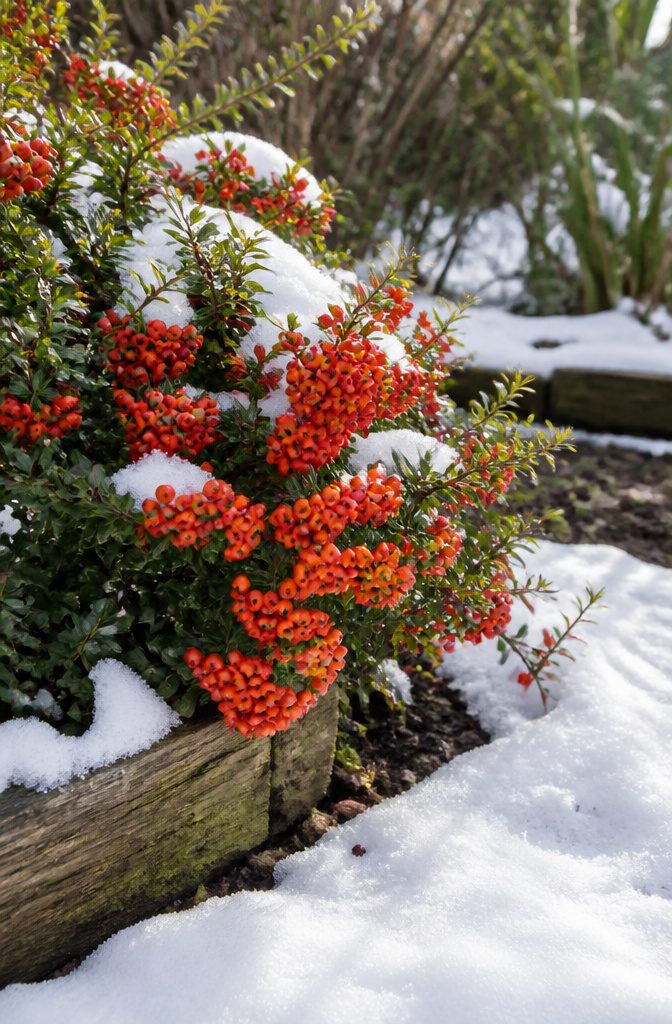
The fine-textured evergreen foliage on Pyracomeles stays presentable through the cold months, but the real draw is the berry sequence.
Clusters start orange in late fall and shift to red as winter settles in, which gives the plant two distinct looks across one season. The berries hold rather than drop quickly, so the display lasts.
Proven Winners markets Berry Box™ for this trait, and the habit is compact enough for a rental patio or a first homeowner’s narrow bed.
It wants part sun to sun and is rated for Zones 7-9, so northern readers will need to look elsewhere.
In warmer zones, it fills the gap between the last of the fall color and the earliest spring bulbs without asking for much attention.
USDA Hardiness Zones
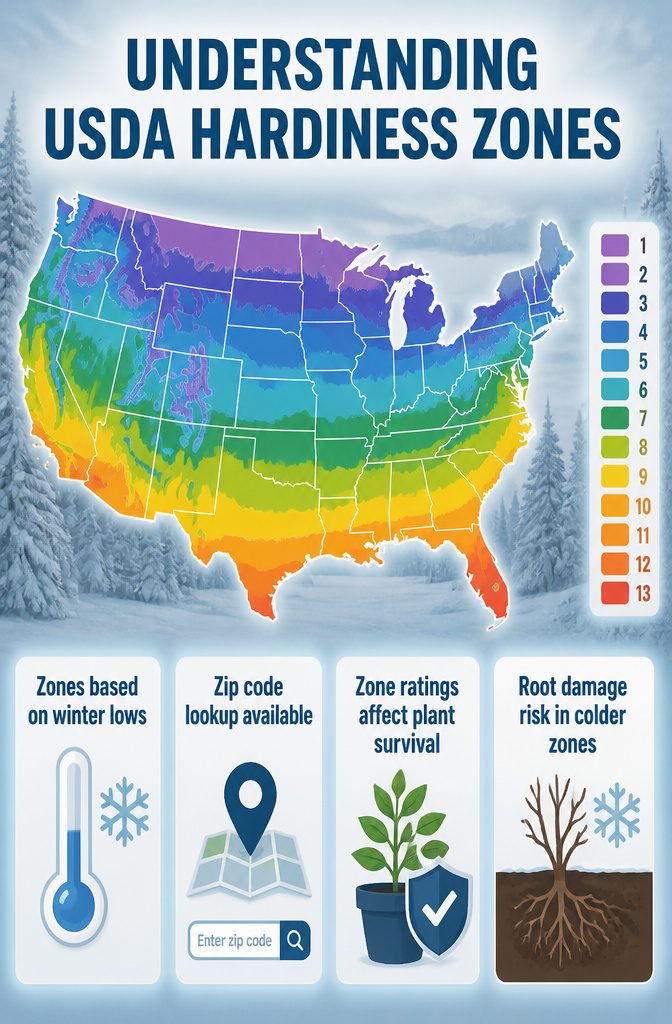
The USDA Plant Hardiness Zone Map splits the country into numbered bands based on the average lowest winter temperature each region can expect.
Find your zone by entering your zip code on the USDA’s online map, or by matching your location to the color-coded bands.
The zone number tells you which plants will survive your winter and which will die back to the roots or disappear entirely.
A plant rated for zones 5–9, like the Solar Flare azalea or Baby Gem boxwood, will handle winters through most of the mid-Atlantic and Pacific Northwest.
Drop that same plant in zone 4, and you are gambling with root damage every January. Winterberries push the boundary further north, hardy to zone 2, which covers parts of Minnesota and North Dakota where little else survives above ground.
On the other end, mirror bush only makes it to zone 9 before it gives up; below that, it becomes a houseplant or nothing.
The zone rating is not about comfort or growth speed.
It is about whether the plant wakes up in spring at all. I check it before I buy anything that claims to be winter hardy, because a dead plant in March is the most expensive kind.
Winter Care Tips
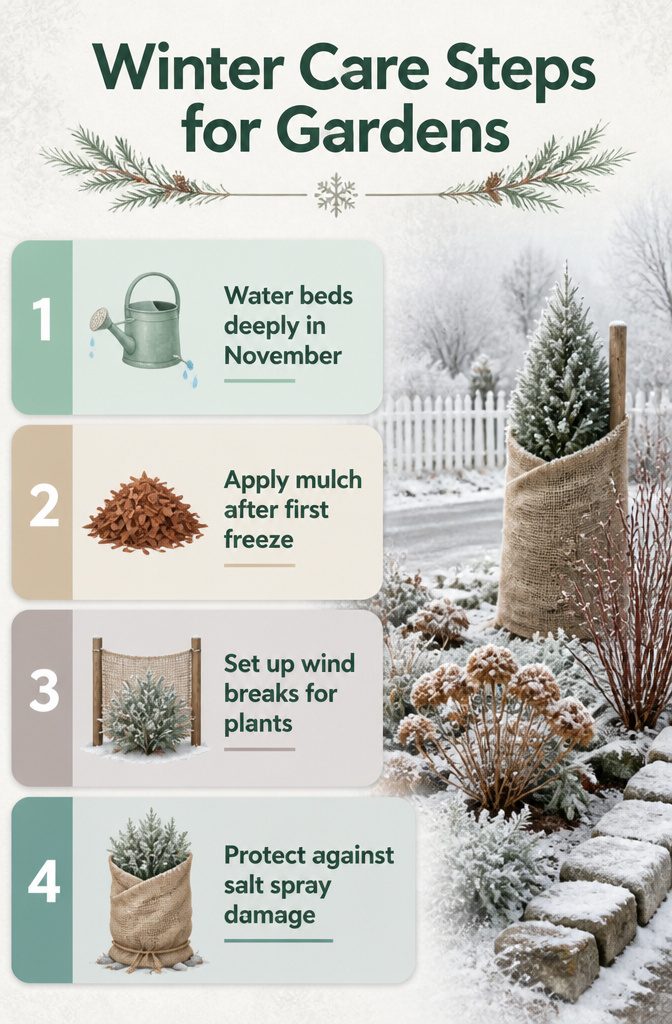
The ground needs to be damp before it locks up solid.
I water my beds deeply in late November, once the plants have gone dormant but before the hard freeze arrives. That stored moisture carries roots through months when they cannot drink at all.
- Mulch after the first hard freeze, not before. A 2–3 inch layer applied too early invites rodents to nest; applied too late, the soil has already lost its warmth. Shredded leaves work fine and cost nothing if you raked them yourself. Straw is another cheap option, though it sometimes carries enough seed to sprout in spring.
- Wind breaks matter more than temperature for marginally hardy plants. A burlap screen on the windward side, staked a foot or two away from the shrub, cuts desiccation without trapping moisture against the stems. I have used old fence posts and scavenged pallets for the frame.
- Salt spray from road plowing is the silent killer. Plants within ten feet of a salted street or driveway need physical cover, not just mulch. The same burlap wrap works; so does relocating sensitive perennials to the backyard if you are still planning the bed.
Frequently Asked Questions
What are the best winter hardy plants for cold-season gardens?
The best winter hardy plants include pigsqueak, coral bells, switch grass, boxwood, false cypress, red twig dogwood, seven son flower, panicle hydrangea, inkberry holly, blue holly, winterberry holly, juniper, Siberian cypress, lily of the valley shrub, yew, arborvitae, and pyracomeles.
Each brings a different kind of winter interest, from evergreen foliage and colored bark to dried flower heads and persistent berries.
How do I care for winter hardy plants?
Water beds deeply in late November before the ground freezes solid. Mulch with 2–3 inches of shredded leaves or straw after the first hard freeze, not before.
Shield marginally hardy plants from wind with burlap screens staked a foot or two away. Cover plants within ten feet of salted roads or driveways to protect against salt spray damage.
What does winter hardy mean?
Winter hardy means a plant can survive the average lowest winter temperature in your USDA Plant Hardiness Zone and wake up again in spring.
The zone rating is not about growth speed or comfort; it is about survival. A plant rated for zones 5–9 will die back or die entirely in zone 4.
What is the most cold hardy plant?
Red twig dogwood and winterberry holly both handle zone 2, covering parts of Minnesota and North Dakota where little else survives above ground. Pigsqueak, coral bells, and panicle hydrangea varieties like Fire Light also push far north, rated hardy to zone 3.
What is the best plant to grow in winter?
The best plant depends on what you need. For stem color in snow, red twig dogwood carries bright red, orange, or yellow bark from first frost to spring.
For evergreen structure in small spaces, North Pole arborvitae grows 10–15 feet tall and only 3–5 feet wide. For berries that persist for months, winterberry holly drops its leaves to expose branches loaded with red fruit.
What are some good cold-tolerant outdoor plants?
Good cold-tolerant outdoor plants include switch grass for motion and vertical structure, Siberian cypress for low spreading groundcover that turns russet-purple in winter, and yew for dark green needles and red arils in shade.
Coral bells hold colored foliage through mild winters and enough leaf to matter in colder ones.





