
These ideas run from a dollar-store weekend build to living plants that need real upkeep, and the right one depends on whether your porch is covered, exposed, or just a step you pass on the way in.
Battery-powered fairy lights, faux snow spray, and AAs with timers show up more than once because they solve the same cold-weather problems across different styles.
1. Frosted Greens and Lights
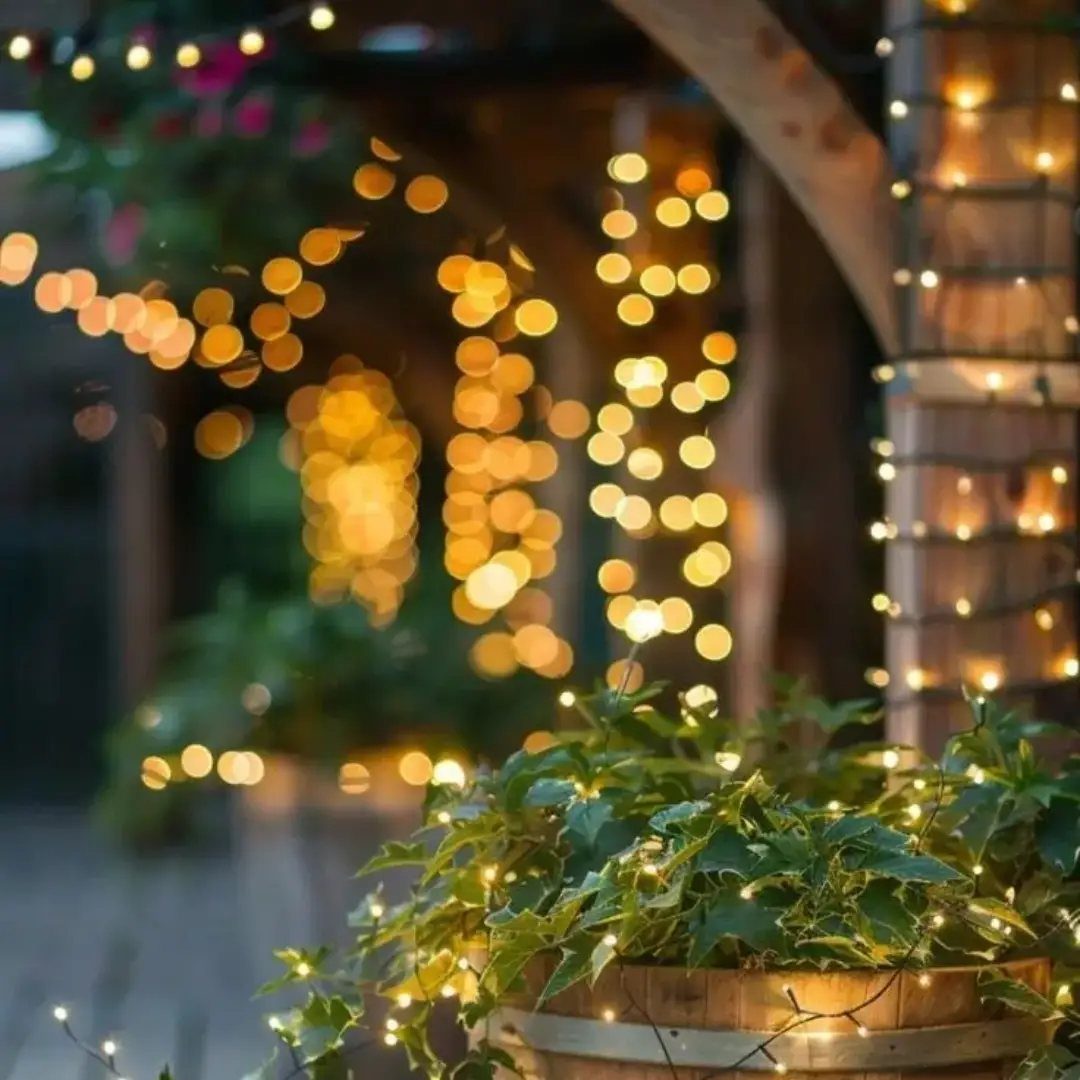
A strand of warm white fairy lights does more than dress up evergreen branches; it stretches their useful hours into early winter evenings when the porch goes dark by five.
The same move works with whatever clipped greens you have: pine, cedar, boxwood. Battery-powered wire is thin enough to weave through stems without breaking the shape, and the warm tone keeps the display from looking like a leftover Christmas decoration.
I would skip the artificial snow spray unless you already own it; the lights carry the whole effect on their own. If your planter sits near a window, the reflection doubles what you bought.
2. Winter Woodland Scene
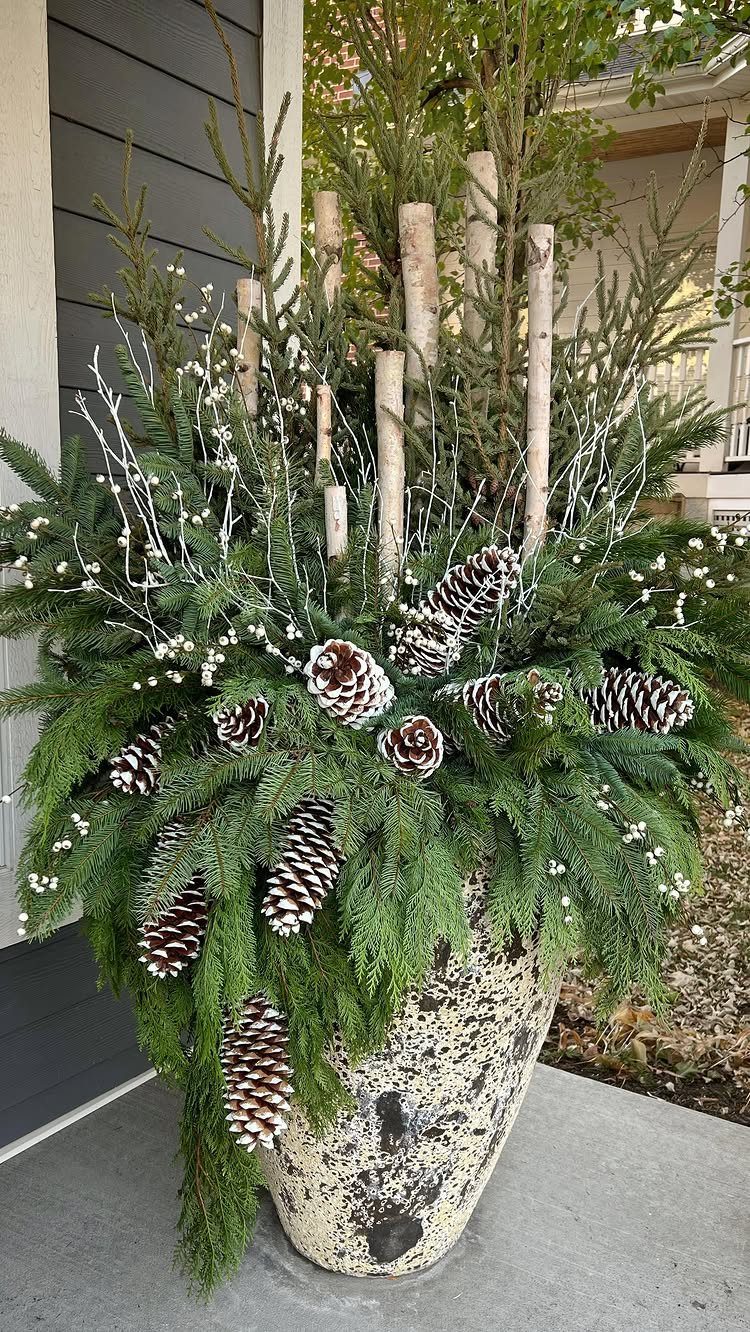
Stone planters already look like something found in the woods, so pushing that direction costs almost nothing. Birch sticks give vertical height without blocking the door; pinecones and white-tipped twigs fill the middle ground without any soil to manage.
Moss, small cones, and a few faux mushrooms turn the base into forest floor. Tiny figurines of deer or birds go in if you have them from another project, but the arrangement holds its own without.
I would spend the money on one good birch bundle rather than scatter the budget across too many small props.
This one suits renters who cannot plant in the ground and anyone who wants a winter display that does not turn brown.
3. Snow-Dusted Succulents
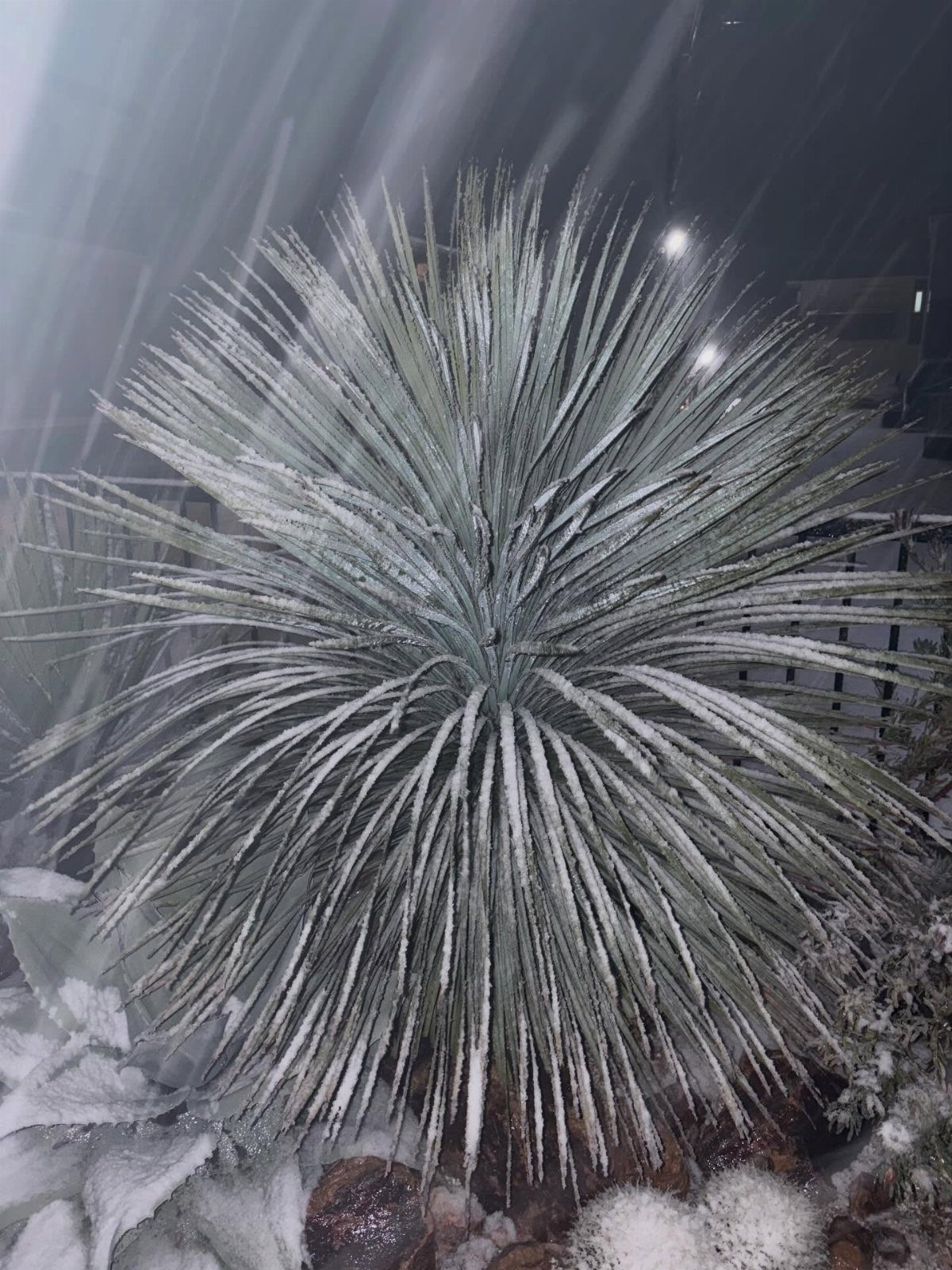
Hardy succulents survive what kills most container plants, and a dusting of faux snow turns that toughness into a deliberate look.
The photo catches a yucca under real snowfall, but the same shape works with sedums, hens-and-chicks, or any thick-leaved plant that holds its structure when cold.
Faux snow spray is cheap enough, and one can covers several pots. I would hit the leaf edges and let the centers stay dark for contrast.
The winter desert vibe needs almost no watering, which matters when the hose is frozen and dragging water from the kitchen sink gets old fast.
This is the entry for anyone who has killed winter arrangements before.
4. Cranberry Delight
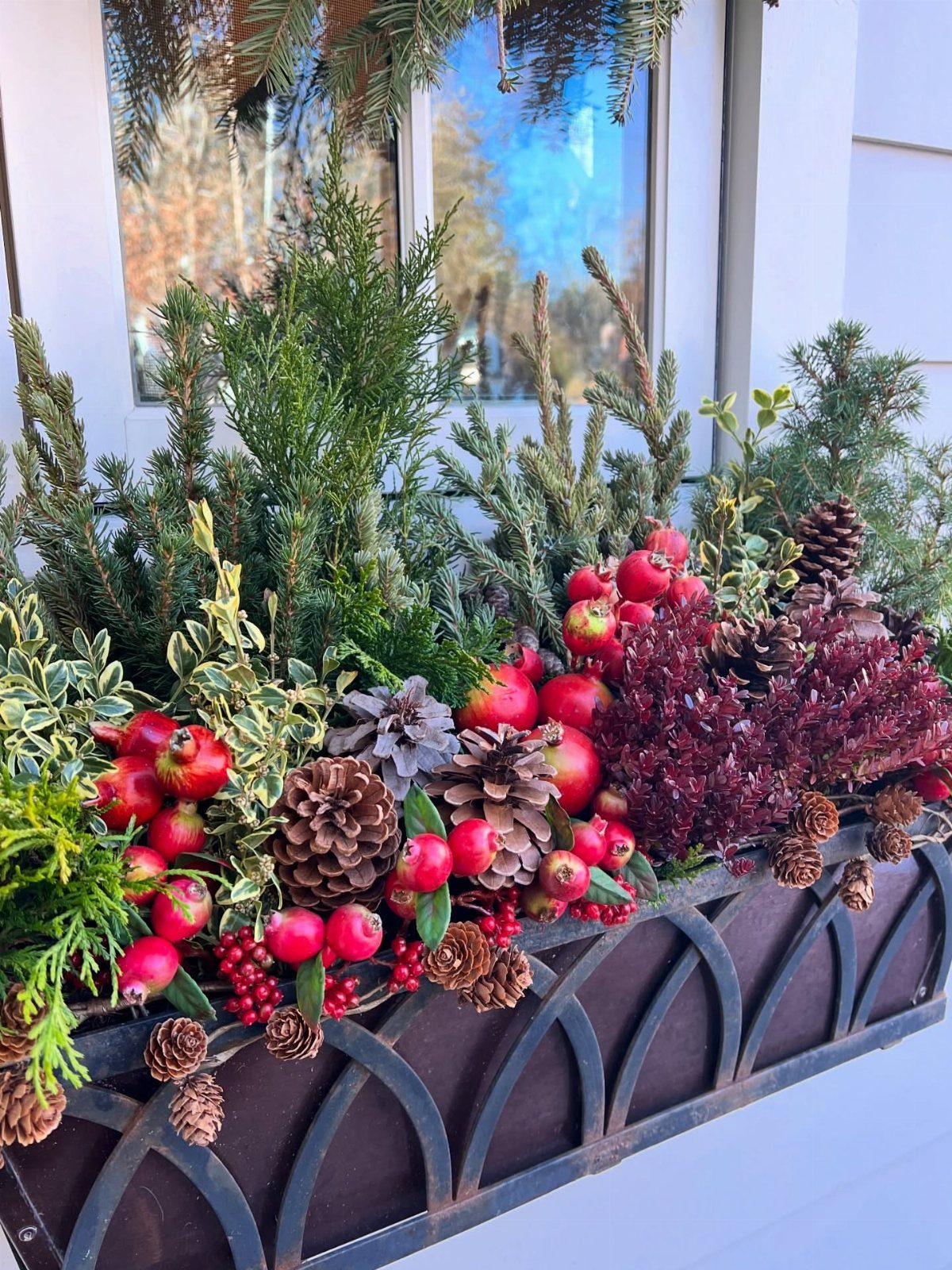
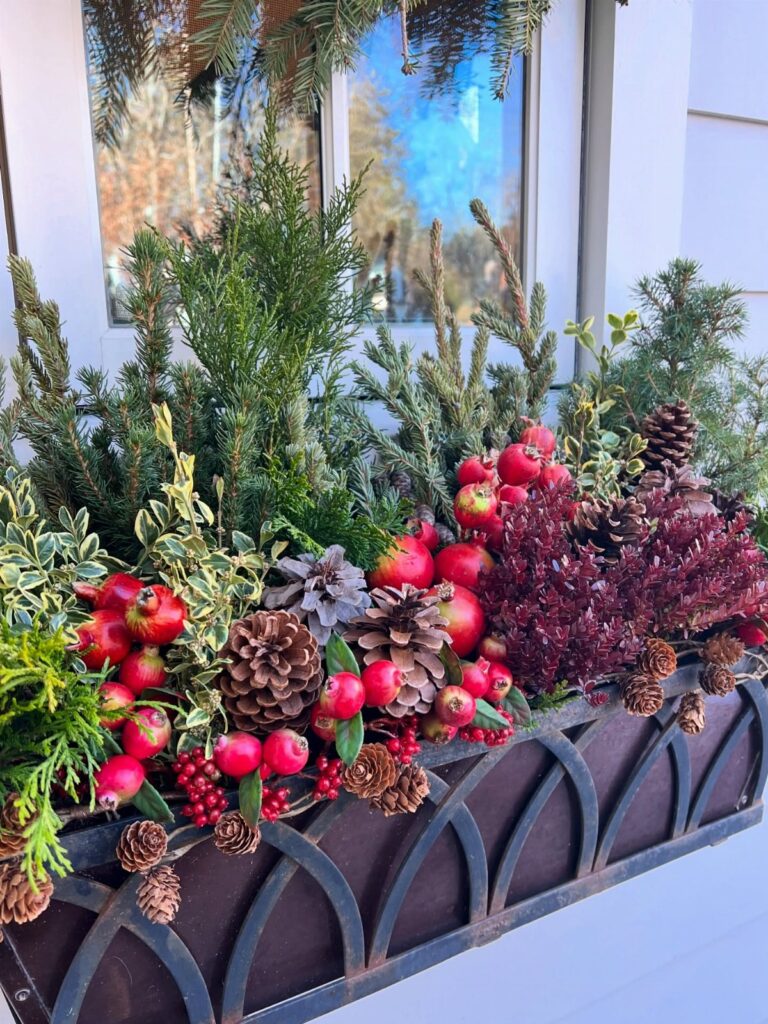
Red against green reads as festive without trying too hard, and cranberry branches keep that color through weeks of cold that turn holly berries brown.
Evergreen branches, pinecones, and bright red fruit mix together easily; frosted twigs at the edges hold the shape and catch porch light after dark.
Fresh cranberry branches last longer than cut holly and often cost less at a farmers market in late November. I would buy them the week you assemble the box, since they dry out rather than rot.
If the red fades, a quick mist of water revives it for a day or two.
This one wins for narrow spaces where the arrangement has to read from the sidewalk.
5. Rustic Lantern Centerpiece
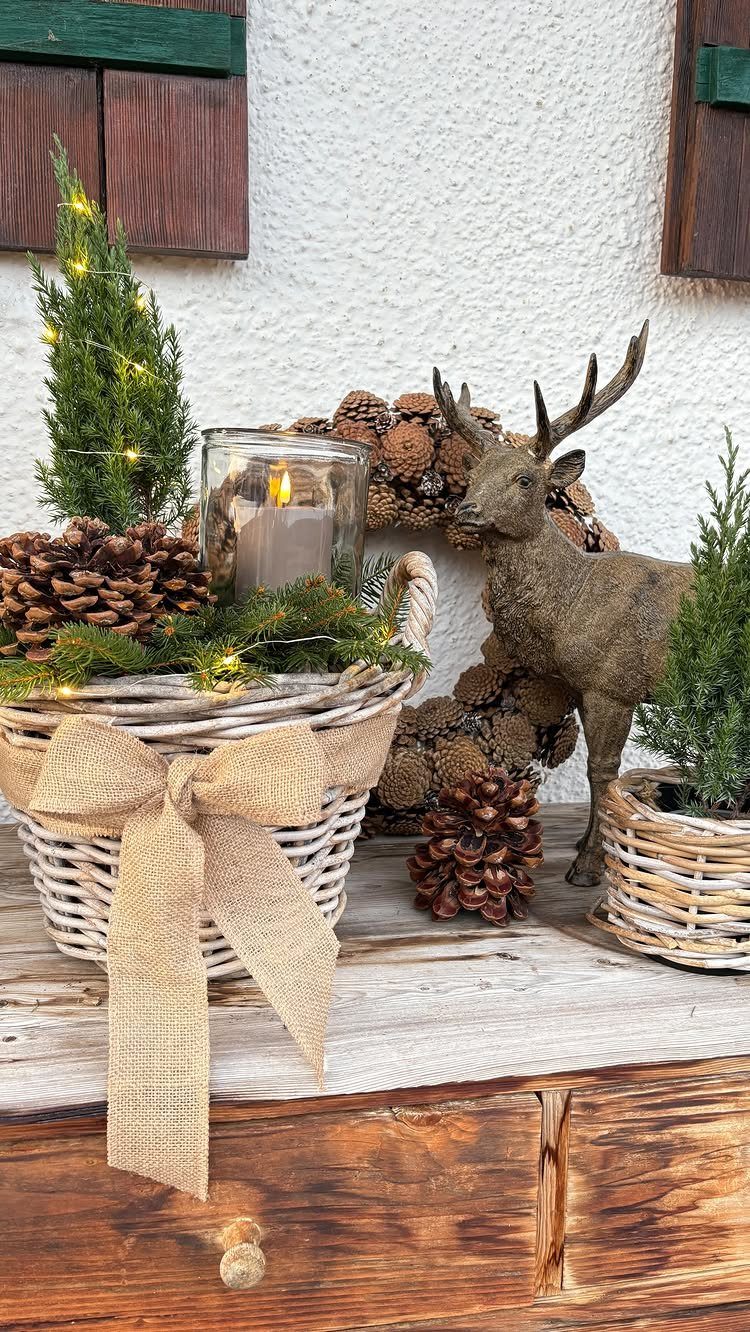
A lantern in the center of a planter turns the whole thing into a source of light rather than just a decoration.
A wicker basket holds a glass candle holder with a real flame, but I would switch to battery-powered candles for any outdoor display; wind, rain, and forgetting to blow it out before bed make open flame more trouble than warmth.
Evergreens and pinecones packed around the base hide the lantern’s bottom half and keep the focus on the glow. The deer figurine nearby is optional; the light alone carries the scene.
Battery candles with timers run for weeks on one set of AAs and you can set them to turn on before you get home.
This suits covered porches where the lantern stays dry and the glow reaches through a window into the house.
6. Grapevine and Holly Mix
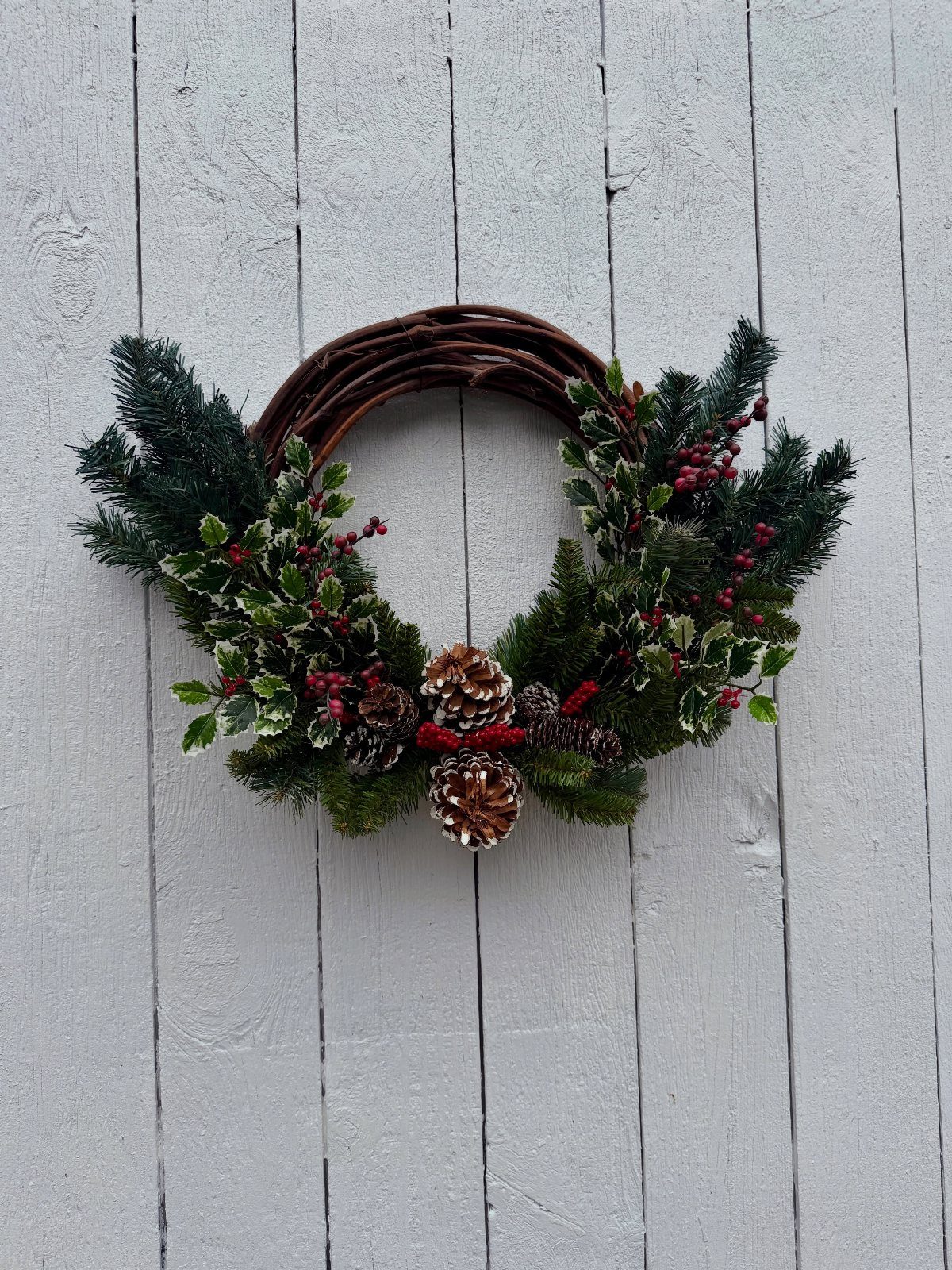
Grapevine brings a rough texture that makes surrounding greens look softer and more lush by comparison. The same materials drop into a planter: grapevine balls wrapped with lights, tucked among evergreen branches and holly with its red berries.
Mixing textures matters more than piling one kind of green. Spiky spruce or fir against wispy pine, broad holly leaves against feathery cypress; the grapevine adds a third layer that is not plant at all.
Stick clippings straight into damp soil if the planter holds it, or bundle and lay them over the surface if it does not.
I would add rose hips or winterberry only if the holly berries are sparse; too much red competes with itself.
7. Mini Snow-Covered Log Cabin

A miniature cabin turns a planter into something closer to a diorama than a floral arrangement. The same log cabin idea works on a porch step with less drama, no night sky needed.
Popsicle sticks and straw form the interior, with baking soda and snow spray for the surface texture.
That is a weekend project with dollar-store materials, and the cabin itself can be a small birdhouse from a craft store if you do not want to build one.
I would keep the surrounding plants simple: a few spruce tips and some bare twigs sprayed white, nothing that competes with the house.
This one rewards patience and a steady hand with glue, and it is best for someone who already enjoys miniature work.
8. Festive Evergreen & Berry Planter
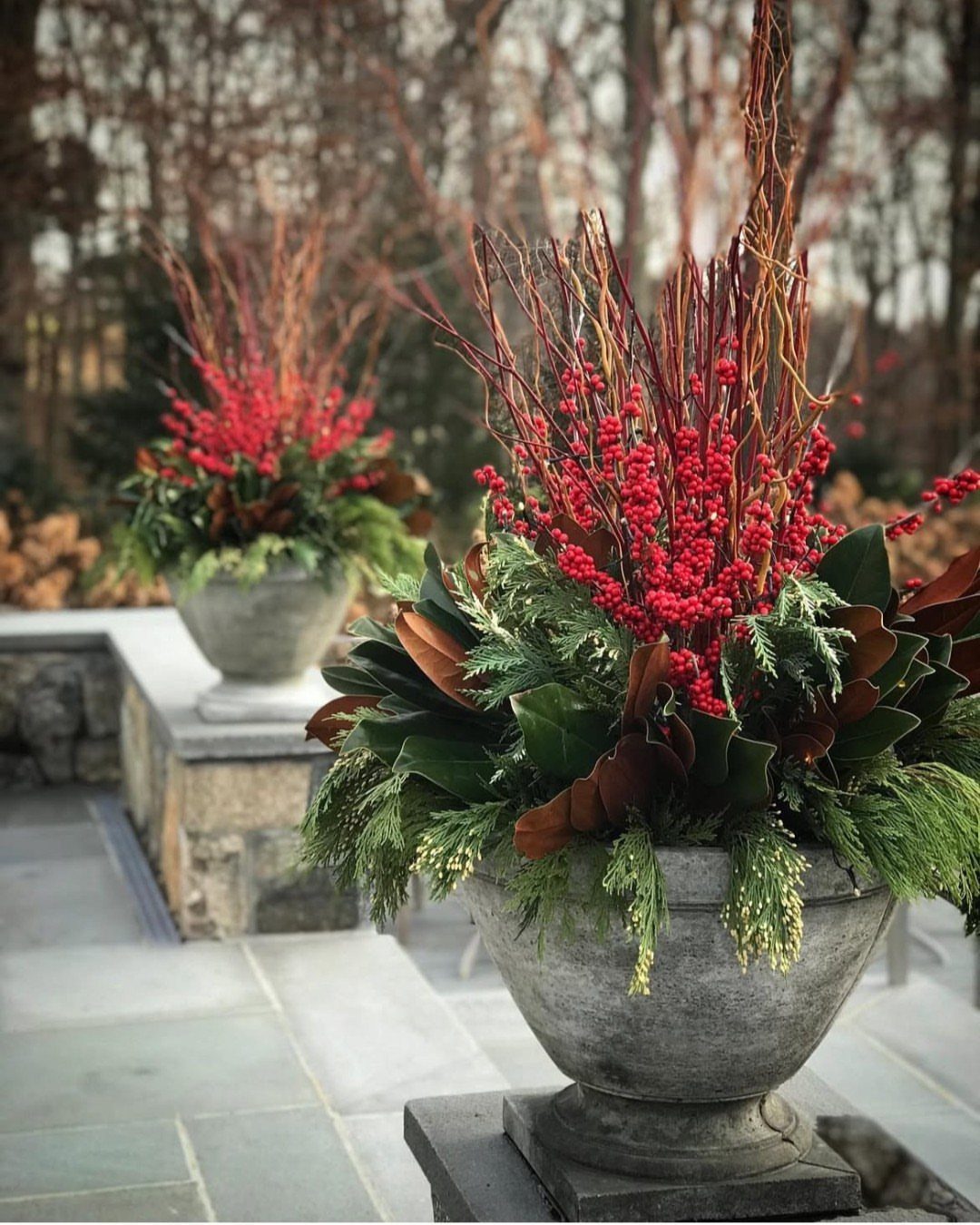
Red berries against dark green reads as holiday decor without any need for ribbons or ornaments. Magnolia leaves give you glossy brown-backed foliage, red dogwood twigs add height, and cranberries handle the color.
Wintergreen, dwarf spruce, and dusty miller are the living plants that carry this through the season; the twigs and berries fill gaps and draw the eye.
This is the most traditional entry in the list, which makes it the safest choice if you are dressing a house for sale or hosting relatives who prefer classic decor.
It also takes the most maintenance of the eight: living plants in winter planters need water when the soil is not frozen, and the berries will need replacing if birds find them.
Maintaining Winter Planters
Cut evergreens in a planter still draw water until the soil freezes solid, so a weekly watering keeps needles from browning at the tips. After that point the pot is on its own until spring thaw.
Holiday ribbons, ornaments, and anything that reads Christmas should come out by early January.
The greens themselves stay useful through February if they were fresh to start, but mixed in decorations make the whole box look forgotten once the season passes.
Using Existing Plants
Dormant ornamental grasses left in their pots add height and straw-colored texture that reads as intentional against winter gray. The same clumps that looked messy in November turn sculptural after frost.
Evergreen plants already on hand, dusty miller or dwarf spruce, carry living structure through cold months without demanding the care of summer annuals.
Blue spruce and silver foliage pick up low winter light in a way dark greens do not, especially near a window or door where that reflection matters.
I would work with what survived in the container rather than clear the whole pot for cut materials. A base of living plants holds moisture and gives stems something to push against.
Creating Texture in Arrangements
Spiky spruce or fir clippings stand up straight and catch snow; softer pine and feathery cypress fill between them and keep the shape from reading as stiff.
Broad leaves like boxwood or holly add a third layer, more wall than filler.
Rose hips, barberry, or winterberry bring red in scattered spots, not evenly distributed. Pinecones work as single chunky pieces rather than scattered handfuls.
Clippings stay put in damp soil if the planter has enough depth; in shallow ones, I lay them in loose bundles and let them rest on top.
Contrast matters more than throwing in every texture you can find. Two textures that fight each other a little make both more interesting than three that blend.
Using Ornaments and Lights
Small ornaments pushed into greens catch window light and porch light after dark, and the hard shine makes surrounding needles look softer by comparison.
Second-hand glass works as well as new; the arrangement does not last long enough for finish to matter.
Battery-powered fairy lights with thin wire shape around stems without breaking the form. I would set the timer to switch on before I get home, not run all night.
Garden spotlights already in place can angle toward the pot instead of adding new hardware.
I would skip the toadstool ornaments and hollow-log bases; they read fairy-tale in a way that competes with the plants themselves. A few plain balls or simple shapes do the same work of contrast without the narrative.
Frequently Asked Questions
What type of planters can stay out in winter?
Stone planters and sturdy containers that can handle freeze-thaw cycles work best. Arrangements using evergreen branches, birch sticks, and hardy succulents matter more than the planter material itself; what counts is choosing contents that survive cold without daily care.
Battery-powered lights and timers help since winter darkness falls early and checking outdoor wiring gets unpleasant in freezing weather.
What flowers can I grow in outdoor pots during winter?
Hardy succulents like sedums and hens-and-chicks hold their structure through cold that kills most container plants, and winter heather can support pollinators if you want living material.
Winter displays here rely on evergreen branches, berries, and twigs for color since blooms are scarce and fragile in freezing temperatures. Pansies appear in some winter guides but need more protection than these low-maintenance arrangements.





