
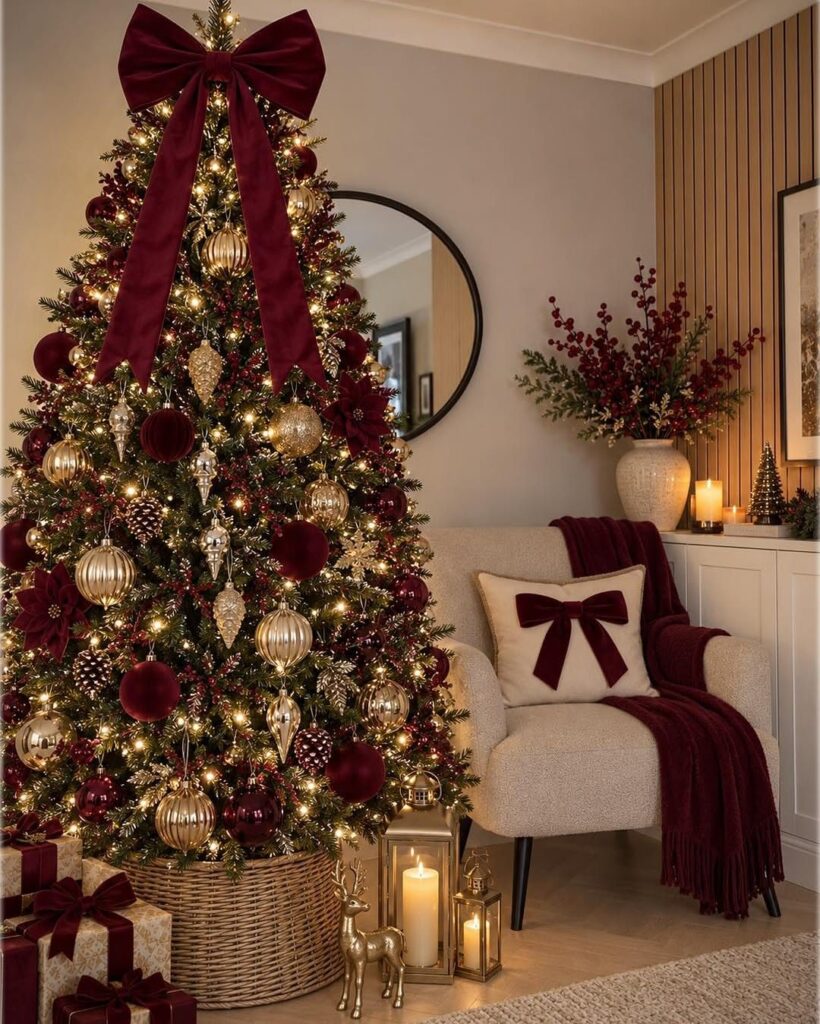
The ideas below run from cranberry details to velvet ornaments and wired floral stems, and the one that belongs in your house depends on whether your tree is the whole room or just part of it.
A thumb-width spacing on burgundy velvet ribbon costs almost nothing; an oversized bow at the crown needs enough height to keep the proportion from going wrong.
1. Burgundy and Gold
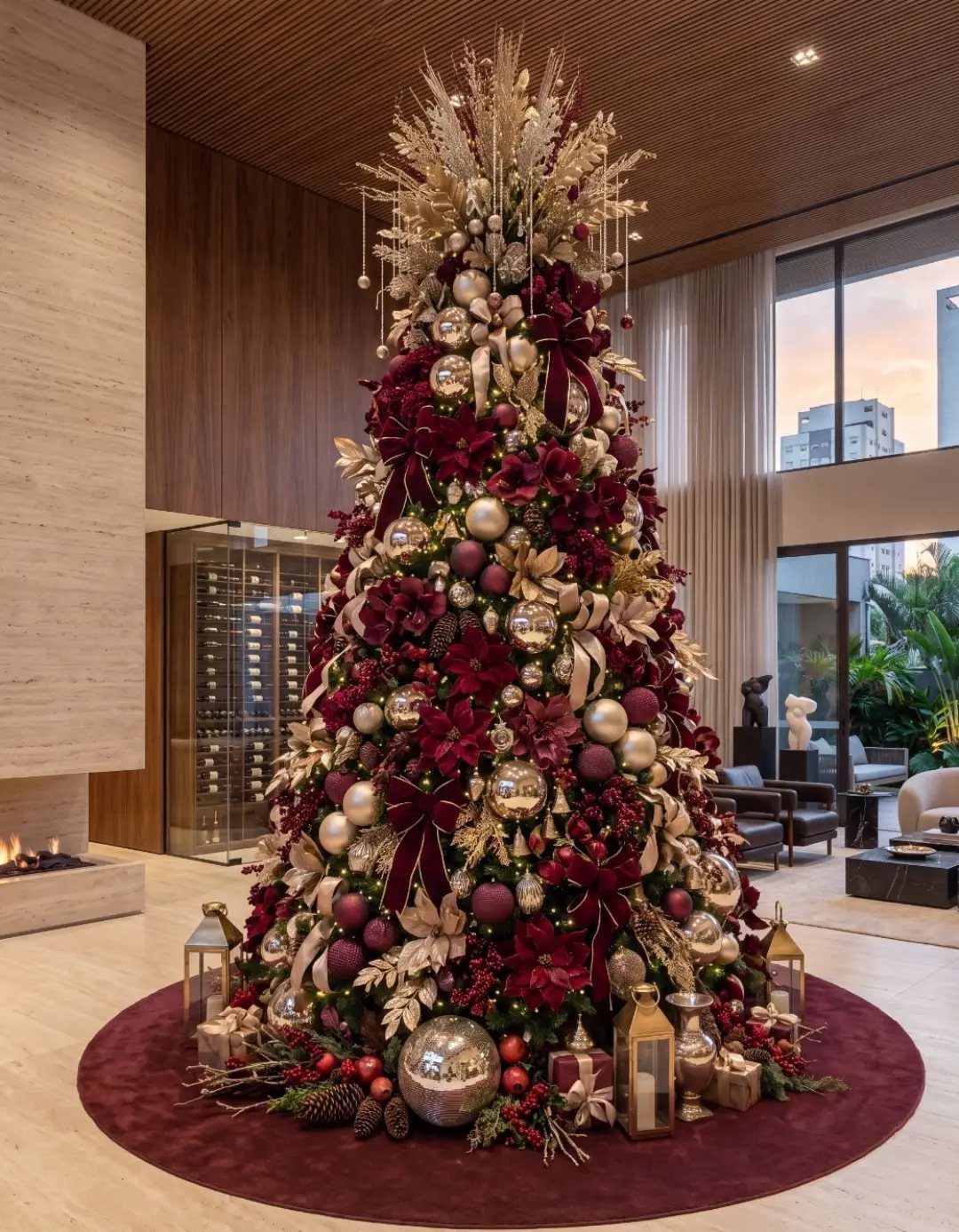
Burgundy and gold is the pairing that reads as money without needing much of it.
Velvet ornaments in deep wine against brushed gold catches the light at every angle, and the warm glow from your strands does the rest of the work.
I’d pick this one for anyone whose living room already has some weight to it: leather, brass, dark wood. It can go formal fast.
If your house runs more casual, keep the gold matte rather than shiny and skip anything that looks like a palace prop.
2. Layer in Texture
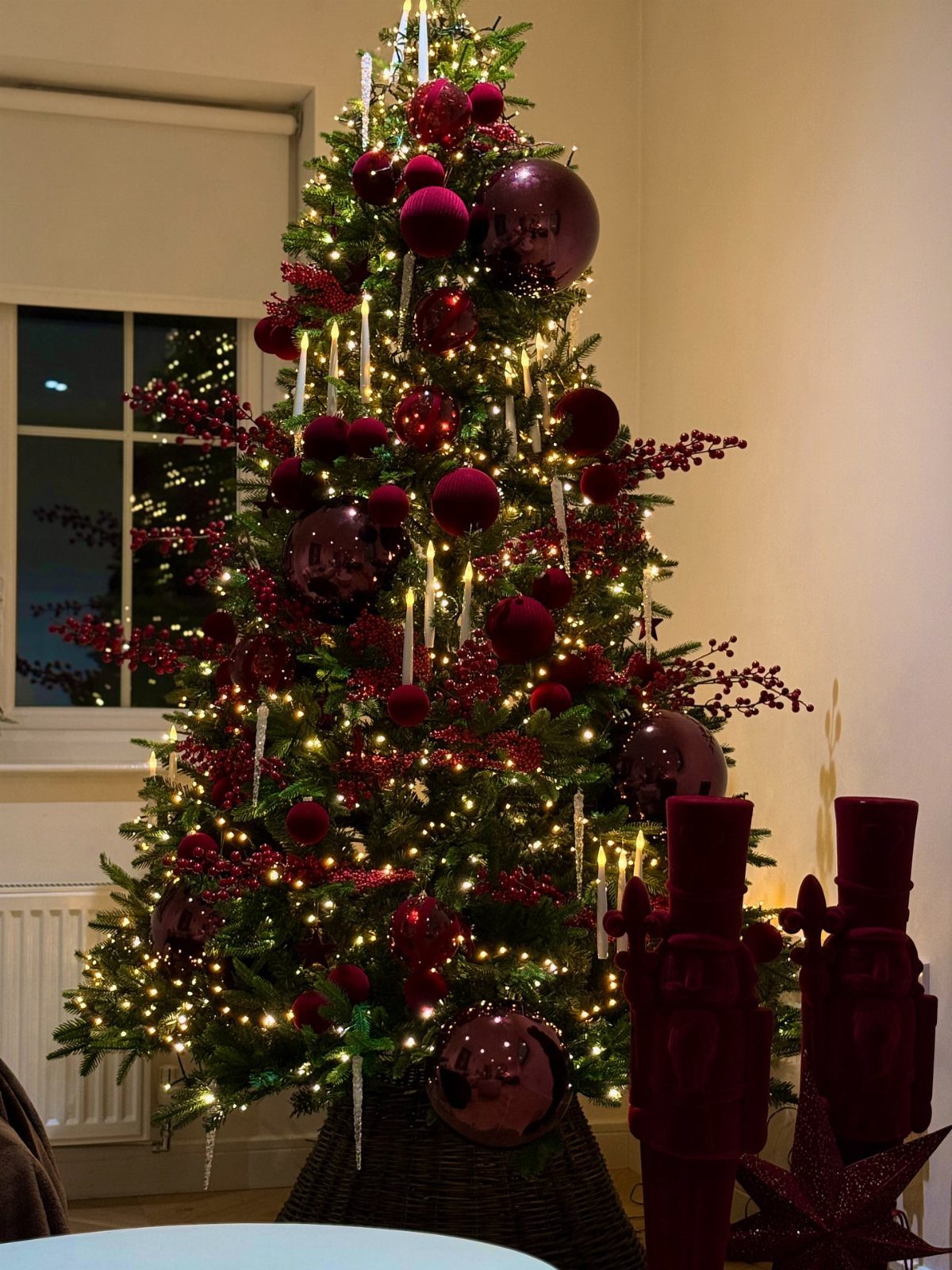
A tree built on texture survives cheap ornaments because the eye reads depth before it reads price. Velvet ribbon, satin balls, mercury glass, and matte finishes all catch light differently; the mix is what sells it.
Start with what you have, then add one new texture a year until the tree stops looking flat. The risk is overthinking the balance.
One texture should dominate, usually velvet or matte, with the others as accents. If every branch competes, the whole thing turns to noise.
3. Velvet Ornaments
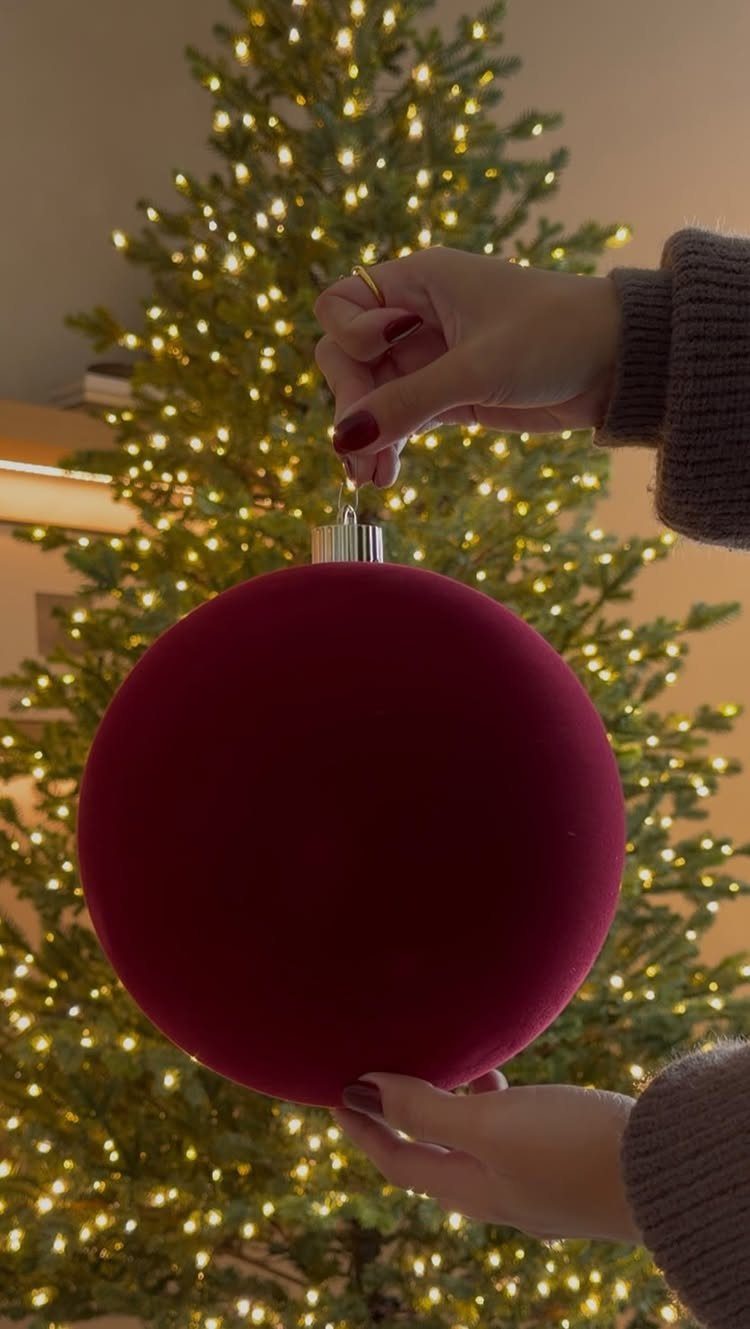
Velvet ornaments are the single fastest way to make a tree feel intentional. A cluster of plush burgundy balls where the branches thin toward the trunk draws the eye inward and makes the whole silhouette look fuller.
For a monochromatic tree, larger balls hold their own against the needles; small ones tend to sink in and vanish.
4. Burgundy Velvet Ribbons
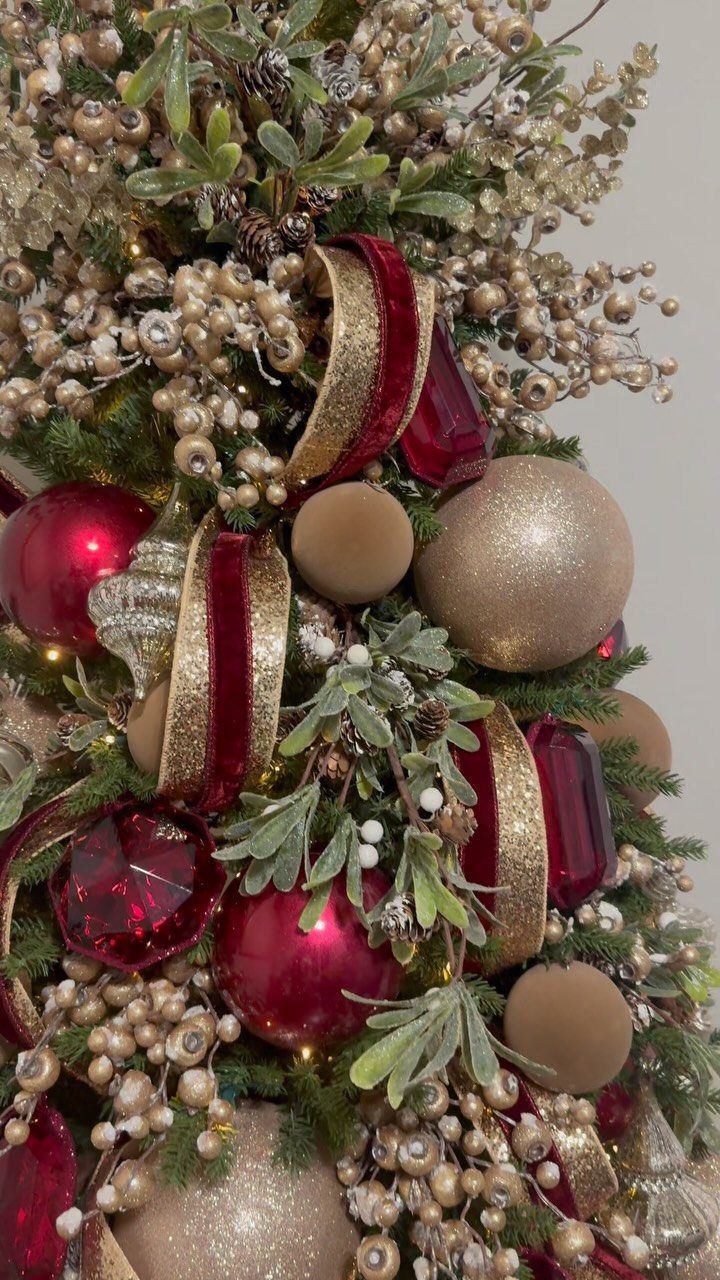
Wide velvet ribbon with a thin gold edge does two jobs at once: it carries the color story and breaks up the green without needing dozens of ornaments.
Weave it from the top down in loose spirals, tucking it deep enough that it catches light from inside the branches rather than sitting on top like a garland.
The cascading version takes a lot of ribbon for a standard tree. Less than that and the gaps show; more and the tree starts to look wrapped, not decorated.
5. Burgundy Bows
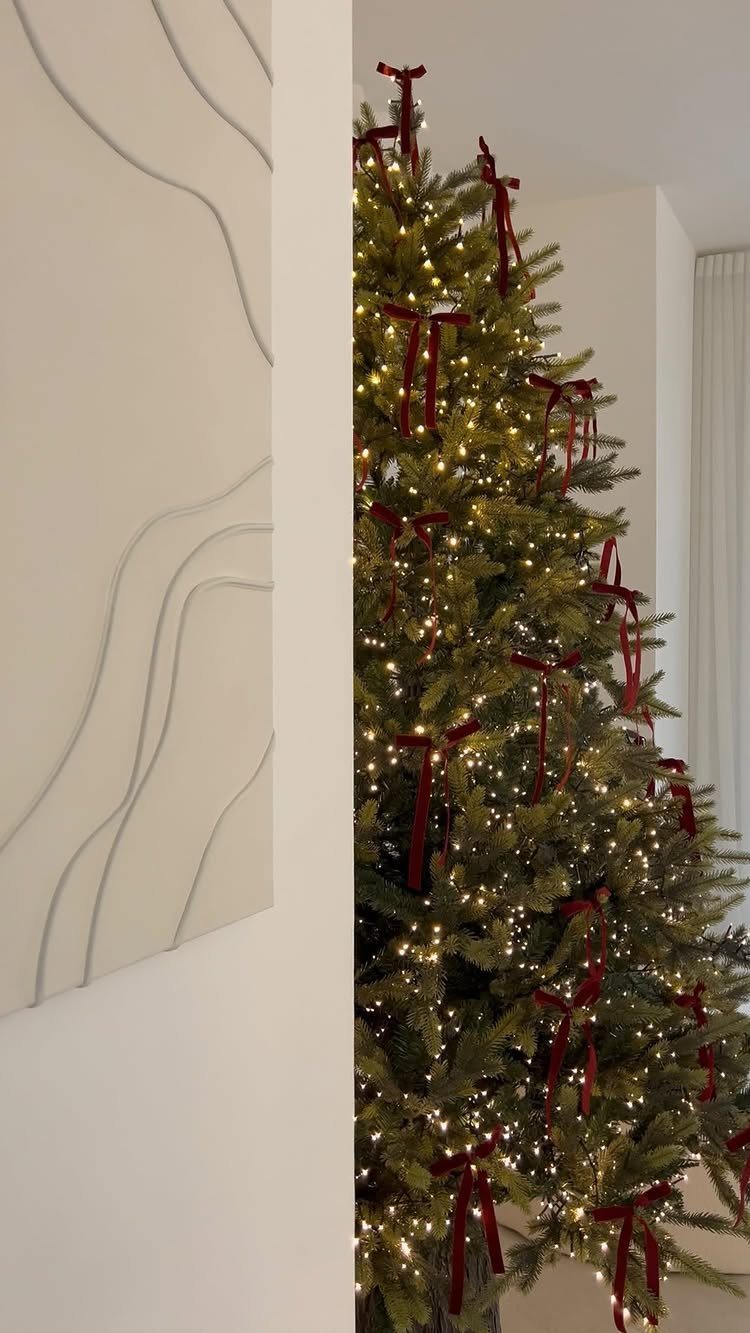
Bows read as effort because they are effort, but the right kind. Small velvet bows wired to branches at intervals give rhythm without demanding center stage.
One oversized bow at the crown, with ribbon tails running down through the branches, is the statement version; it needs a tree with some height or the proportion goes wrong.
I’d use the scattered small bows in a room with other things going on, the big crown bow only where the tree is the whole show.
The maker of the featured tree tied everything together with one dramatic oversized piece at the top.
6. Burgundy Candles
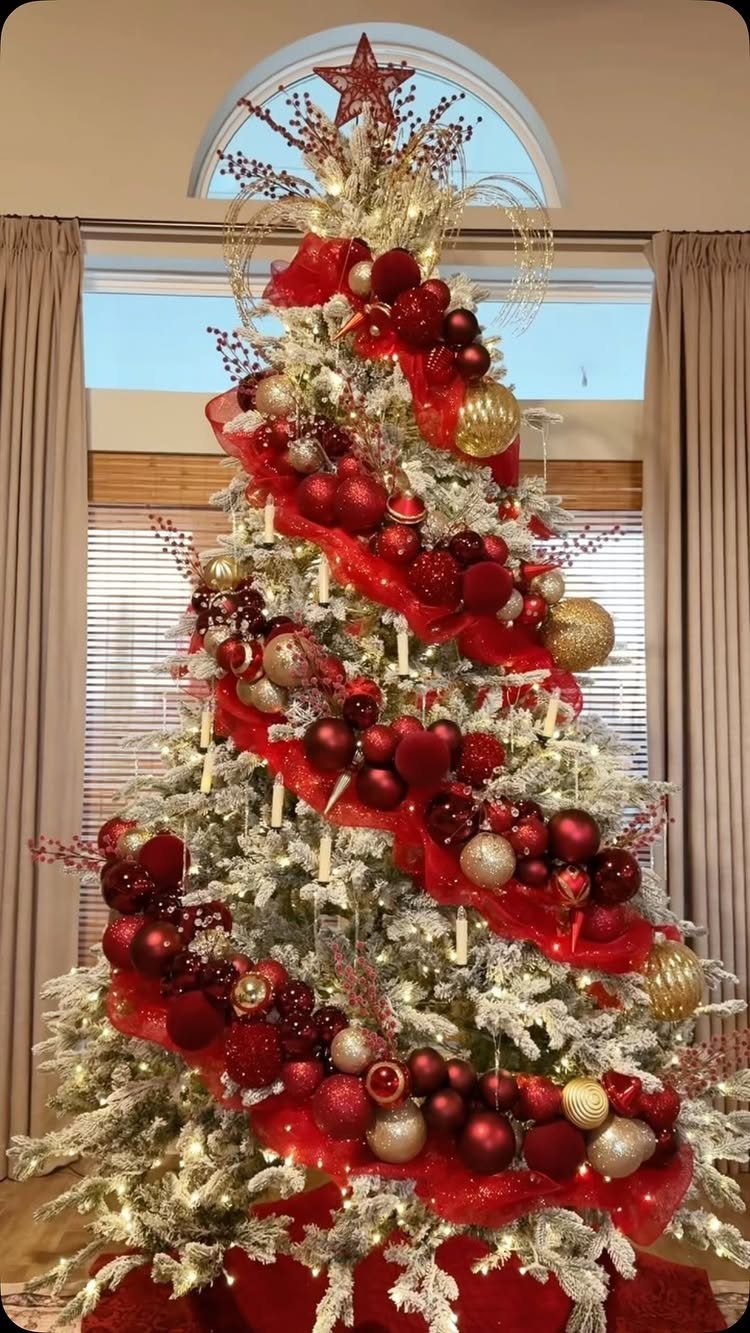
Real candles on a tree are a fire marshal’s headache, but the look is worth chasing with flameless tapers.
Cream candles sit against burgundy mesh and gold without competing; burgundy pillars at the base carry the color down to the floor.
The mottled wax texture on pillar candles catches light like the real thing, and the battery versions run on timers now. Set them on a timer and forget them.
I’d keep the tree candles white or cream and put the burgundy in the surrounding room: mantel, table, window ledge. That way the tree glows and the color walks through the space.
7. Mix with Green Foliage
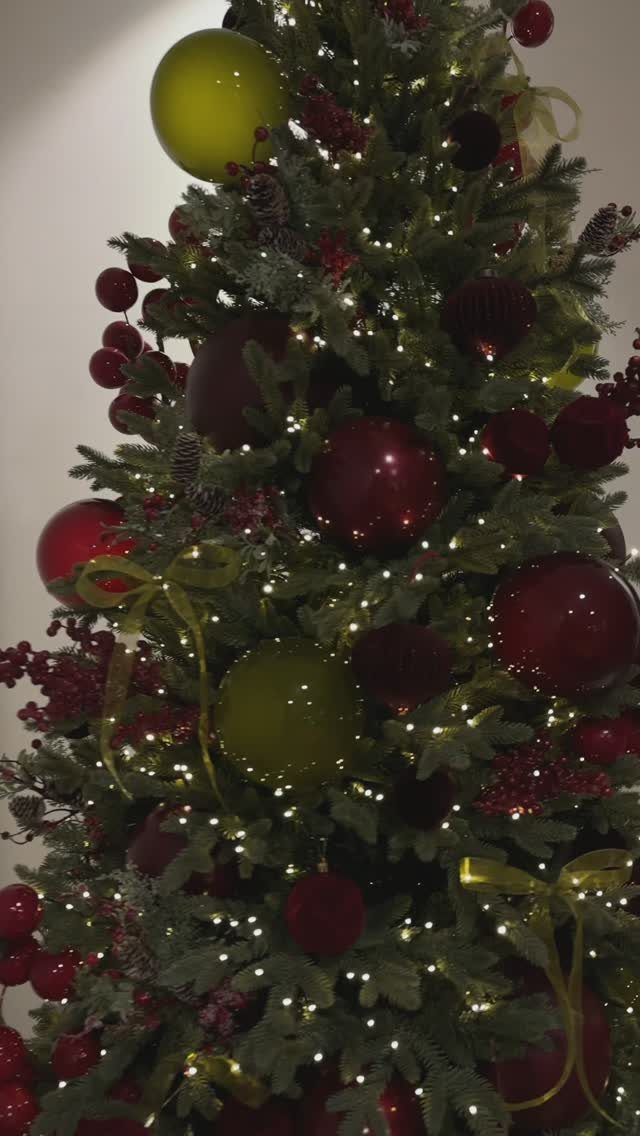
Green foliage turns burgundy from a flat color choice into something alive against the needles already on your tree.
Olive and deep burgundy ornaments sized large enough to read from across a room work best, with small red berries filling the gaps where branches still look thin.
Fresh cuttings from a florist or your own yard do not last the full holiday season indoors. Tuck them deep enough that the stems sit in water picks or damp floral foam hidden behind the trunk.
Fresh greenery needs water; skip it if you travel during the holidays. For a set-and-forget version, good faux garlands look close enough once the lights are on.
8. Burgundy Flower Accents

Burgundy flowers do what ornaments cannot: they catch light on velvet surfaces and cast soft shadows into the branches.
Deep burgundy blooms paired with silver ornaments and white tapers work best when the flowers sit low, at table height, where someone seated for dinner actually sees them.
Magnolia stems hold up best indoors, their waxy leaves outlasting roses by weeks. A single stem at most grocers in December is cheap enough to buy three for a fuller cluster.
Tuck them between branches with green floral wire, not hooks, since the weight sits wrong for standard ornament hardware.
The flower-shaped ornaments mentioned in passing elsewhere work the same visual trick higher up, but real blooms win for anyone hosting Christmas Eve dinner.
"Introduce burgundy through small, considered details," suggests Emma Price, founder of Fable & Willow. "A burgundy velvet ribbon tied around a gift, a few burgundy baubles on your Christmas tree, or a burgundy table runner all add a touch of festive flair."
9. Cranberry Details
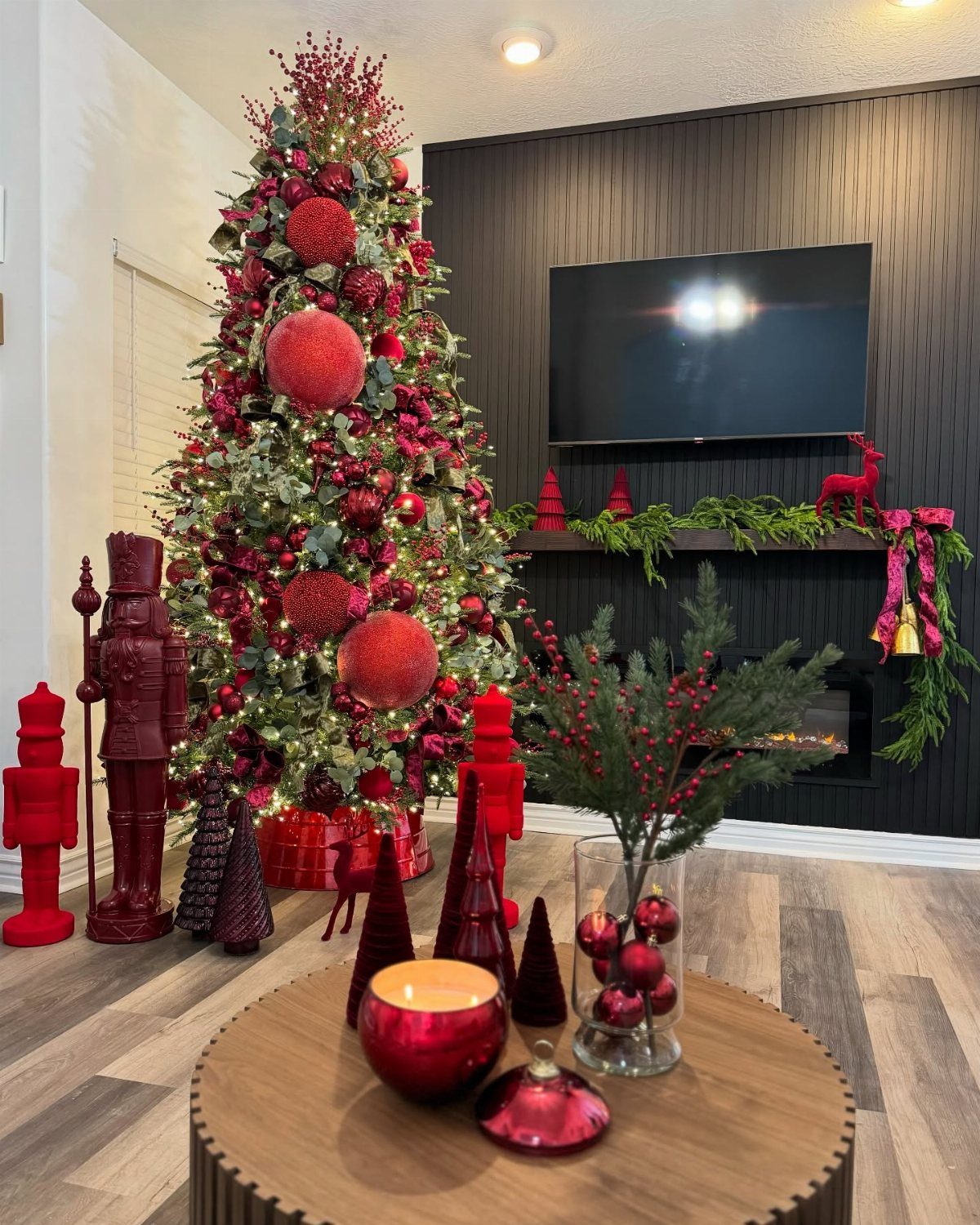
Cranberries read as burgundy from a distance and cost next to nothing. Loose in a vase on the coffee table or strung through the tree itself, either takes no skill.
For a garland, thread them onto heavy fishing line with a darning needle, spacing them thumb-width apart. One standard grocery bag covers a surprising stretch of mantel or railing.
They do not last the full month, so I time this for the week before Christmas, not Thanksgiving.
If you want the effect without the rot, faux cranberries in matte finish sell for roughly the same price and reuse next year.
Burgundy Color Combinations
Burgundy sits well against cream, gold, forest green, or peach without needing every shade at once.
For a classic feel, gold and deep green carry most of the weight; champagne works in place of gold if the metal feels too bright.
Blush or mauve softens the whole thing for a bedroom or a smaller tree where the darker shades would close in the space.
Black, cream, or a touch of navy turns the same burgundy toward something editorial and modern, though I’d keep that mix to one room rather than running it through the whole house.
The pairing that wins depends on what is already in the room: leather furniture wants gold, painted walls want cream, bare wood wants forest green.
Timelessness of Burgundy
Burgundy has stayed in holiday use long enough that it reads as intentional rather than dated. The shade carries warmth that bright red loses by January, and it dims well under evening light.
A tree dressed in burgundy ornaments year after year does not look like the same tree unless the ornaments themselves are tired. I’d swap the accents around it, the ribbon or the candles, and leave the core color alone.
The sophistication is in the restraint, not in chasing each year’s new palette.
Investing in Quality Decor
Cheap ornaments show their age in the second season: paint flakes, hooks bend, seams split where the two halves meet.
A velvet ball that costs more up front lasts longer if it sits in tissue through the off-season rather than rattling loose in a bin.
I’d spend the difference on the pieces that carry the tree, the larger ornaments and the ribbon that wraps it, and buy plain filler where the eye does not rest.
The same budget spread thinner buys a tree that looks thin by year three.
Frequently Asked Questions
What colors match well with burgundy Christmas decorations?
Cream, gold, and forest green pair best with burgundy. Gold gives the look weight and warmth; matte gold keeps it casual if your house runs more informal.
Forest green foliage against burgundy ornaments reads as alive rather than flat color matching.
What is the Christmas tree trend for 2026?
Burgundy and deep wine tones with gold or champagne accents are showing up heavily in current holiday styling. Velvet textures, mercury glass, and layered ribbon in these colors are the specific directions.
The look reads as luxury without the price tag of actual luxury goods.
What is the color of the year 2026 Christmas tree?
Burgundy is the dominant color being used for statement trees right now, paired with champagne or brushed gold. The combination shows up in velvet ornaments, wide ribbon with thin metallic edges, and mottled wax flameless candles.
It is not a single declared color of the year but a clear movement in holiday decor.





