
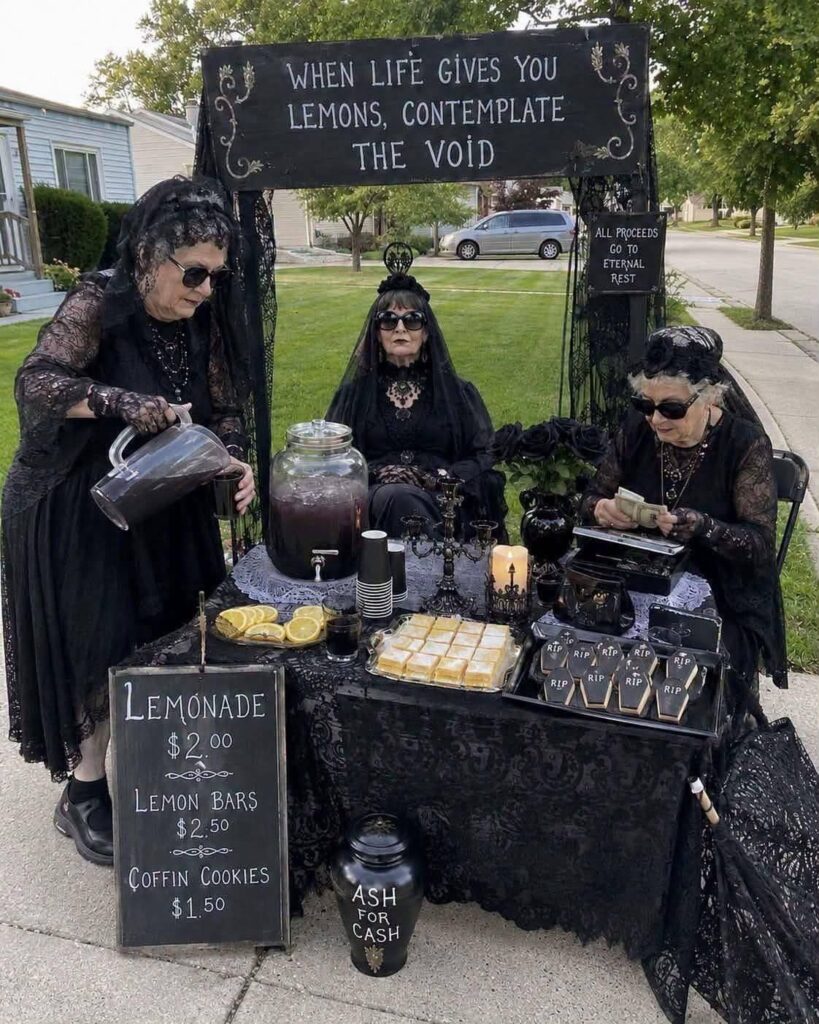
Goth Halloween decor runs from a cheap plastic spider to a shelf unit you keep year-round, and the deciding factor is whether you need the piece to work after October ends.
A porch scene with tombstones and crows packs down in a closet corner, while a coffin-shaped shelf with red velvet lining stays useful for displaying oddities in January.
1. Gothic Haunted House Props
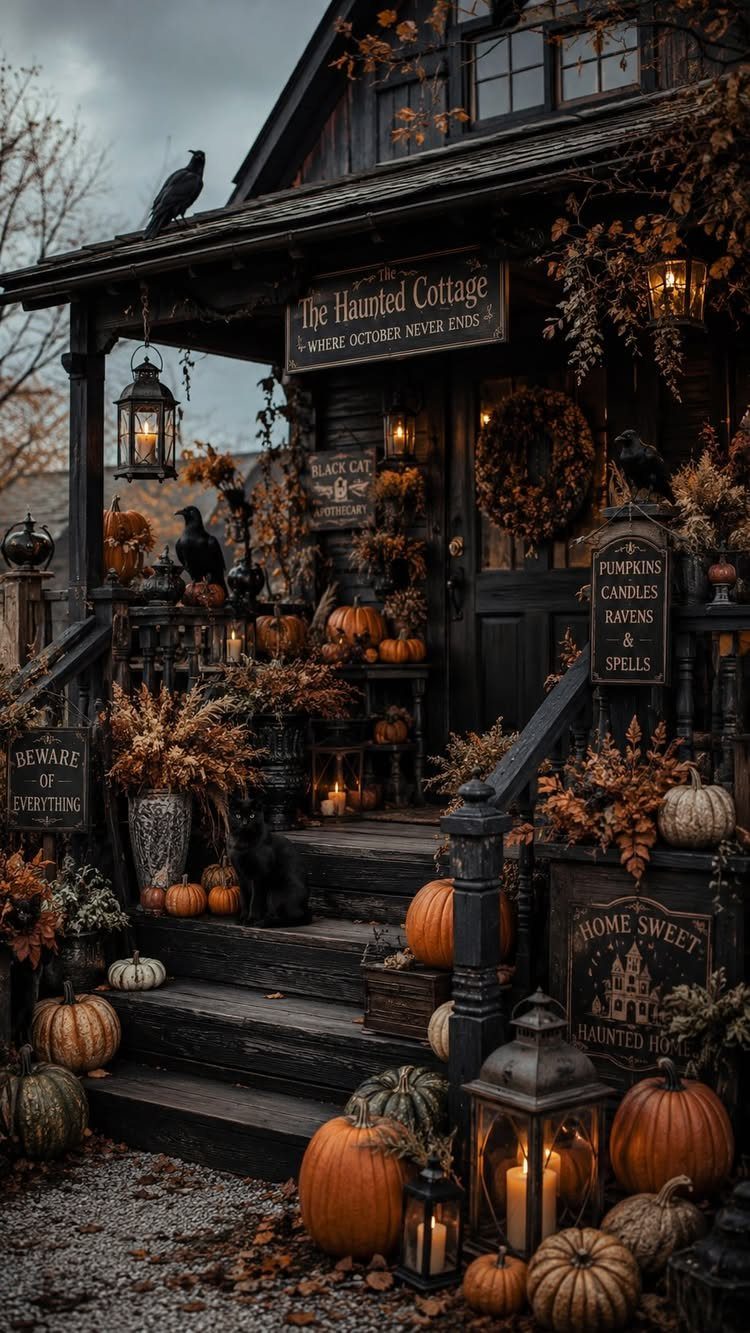
A porch full of tombstones, crows, and hand-lettered signs turns a basic entryway into something that feels lived-in and actually haunted.
Layering makes the difference: start with a few weathered wood signs, add lanterns or real candles in jars, then scatter pumpkins at different heights so nothing looks staged.
Animatronics can work if you have an outlet and the patience to test them before the night of, but a static scene with good lighting often reads better and costs far less.
I would skip the jumping spider if kids are coming through; the slow creep of a motionless black cat in shadow does more for a gothic mood anyway.
Check your porch outlets and plan for rain before you buy anything electric.
2. Light-Up Decorations
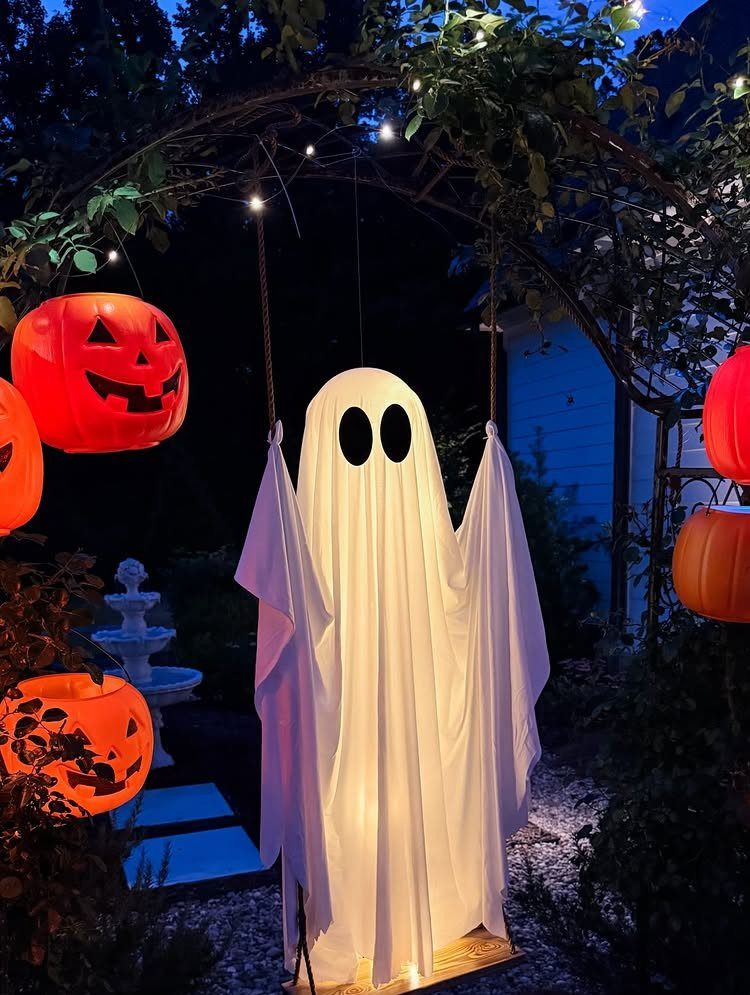
Light-up pieces do the heavy lifting after dark, when most Halloween parties actually happen.
A ghost figure hung in a tree or against a dark trellis reads as floating if you light it from below with a single spot; the jack-o’-lanterns around it ground the scene so it does not just look like a loose prop.
Battery-operated candles in plastic candelabras are safer than real flame for porches and walkways, and the flicker settings on the better ones have gotten convincing. Solar path lights in orange or purple are cheap backup for areas without outlets.
The main limit is your timer setup: walking out to flip switches every evening gets old fast, so test your whole sequence one night in October before you need it.
3. Posable Skeletons
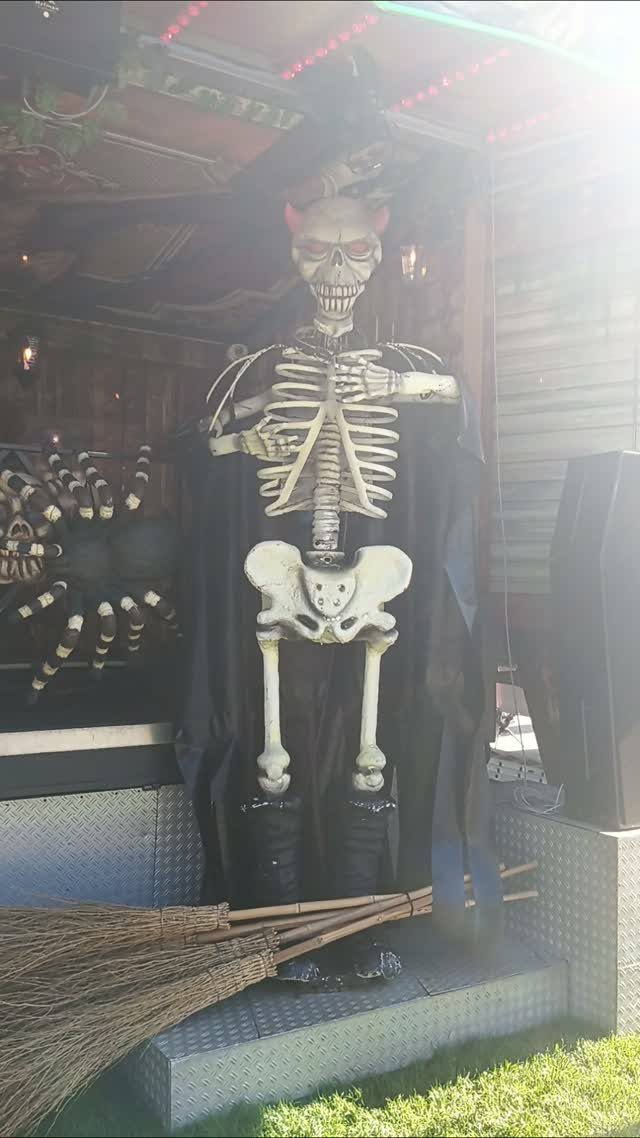
A posable skeleton with jointed limbs can sit, stand, or lounge in a chair, which means one purchase becomes several different scenes across the month.
The black finish on the posable ones looks more finished than the classic bone-white plastic, and it hides the seams where the joints meet.
I would put mine in a cape and horns for a porch sentinel, then strip it down to lean against the bar inside at a party.
The wire armature inside the limbs bends but does not lock, so a broom or wall behind the figure keeps it from folding at the knees in wind.
For five feet of prop, storage is the real cost: figure a closet corner or under a bed with a sheet over it.
4. Coffin-shaped Decorations
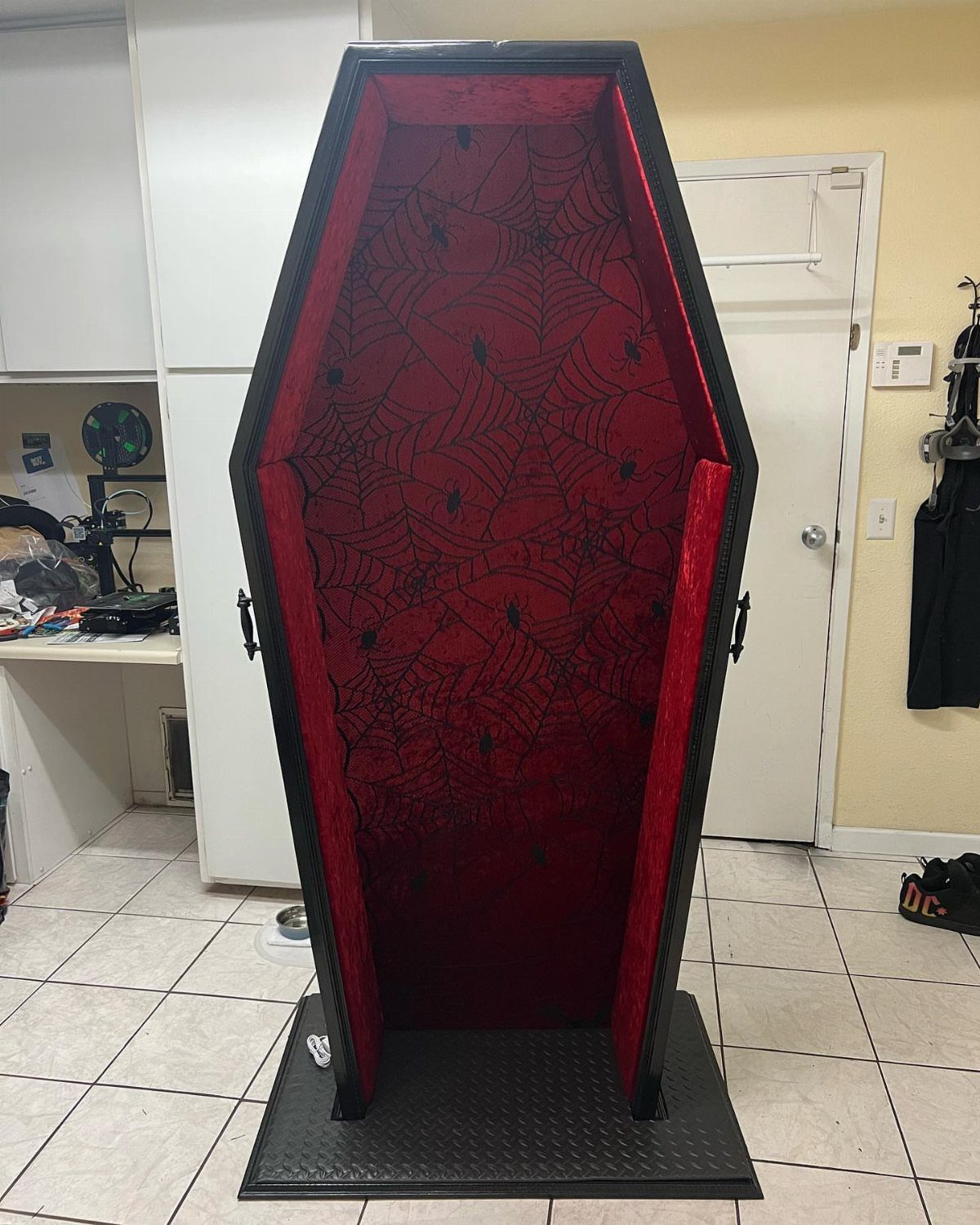
A coffin-shaped shelf unit with a red velvet interior and spiderweb lining is the kind of piece that works for Halloween and then stays useful for displaying oddities year-round.
The two-shelf layout fits bottles, small skulls, or a stack of horror paperbacks without looking cluttered.
I would set it upright against a wall rather than tilted open; the silhouette reads faster from across a room, and you are not fighting gravity to keep items in place.
The black exterior and red lining are specific to this version, but any deep finish with a contrasting interior would carry the same gothic weight.
If you need storage more than display, a hinged lid on a flat coffin box hides clutter better but reads as more prop than furniture.
5. Spider Decorations
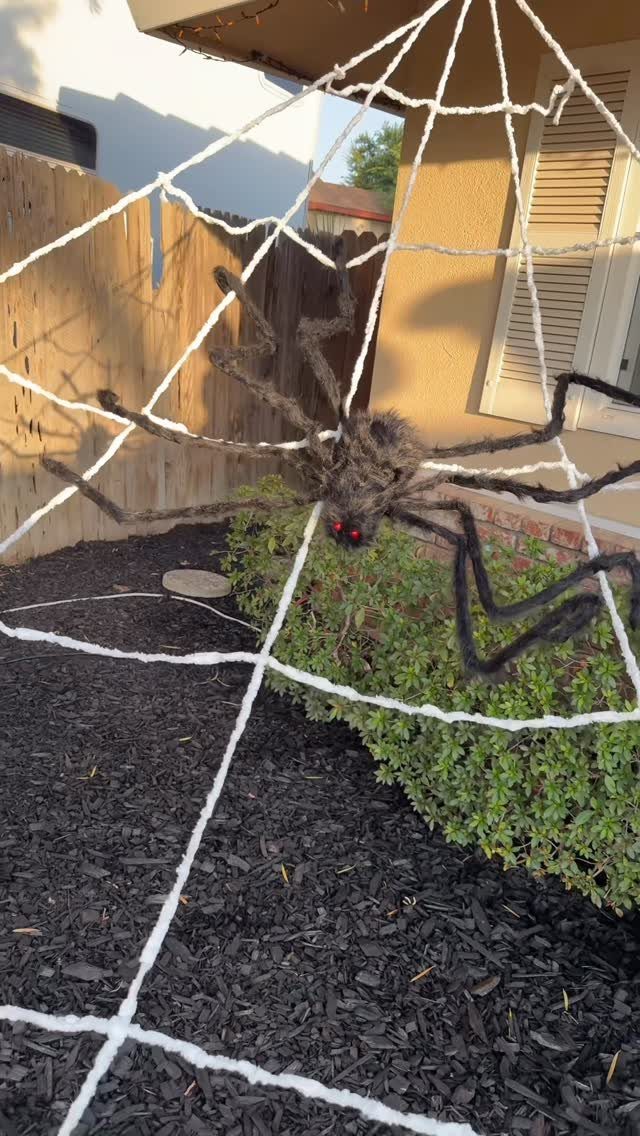
A single large spider in a rope web can carry a whole corner of yard or porch if the web is stretched wide enough to catch light.
The fuzzy black body and red eyes on the posable versions photograph well at night with a phone flash, which matters more than it should.
Light-up spiders exist if you want the eyes to glow on their own, but I would test the battery life first; most run a short evening and die right when trick-or-treaters arrive.
Hair texture on the big ones sheds in rain, so an overhang or a take-it-in policy helps.
For a smaller space, one spider beats a cluster of tiny ones: the scale reads as genuinely creepy where a swarm just reads as decoration.
Creating a Gothic Ambiance
Victorian elegance and macabre horror mix best when you pick one to lead and let the other echo. A dark wood mantel clock with a skull motif carries the weight of both without cluttering a shelf.
The high-quality pieces that last are usually resin or carved wood with a dark stain rather than paint; paint chips, stain wears in.
For a room that reads gothic rather than costume-shop, limit yourself to two finishes. A brass candelabra and a black picture frame share metal and darkness without competing.
Three finishes and the eye starts sorting props from furniture.
The weatherproofing that matters for outdoor props is less critical indoors, but the construction does not change. A piece solid enough to survive October rain is solid enough to survive a basement storage bin.
I would spend the difference on one heavy item over three light ones; the silhouette from across a room is what sells the mood.
Frequently Asked Questions
Why did Hobby Lobby stop selling Halloween decor?
Hobby Lobby’s seasonal buying decisions aren’t something I have insight into. The piece focuses on what to buy and how to set it up rather than retail decisions by specific chains.
What are the Halloween trends for 2026?
I don’t have a window into what 2026 will bring for Halloween trends.
It sticks to current goth Halloween decor that works on a real budget and a weekend timeline: layered porch scenes with weathered wood and lanterns, spot-lit ghost figures, posable skeletons in black finish, and single large spiders in rope webs rather than clusters of small ones.
What is the scariest Halloween decoration ever made?
Naming one single scariest piece isn’t something I’d try to do.





