
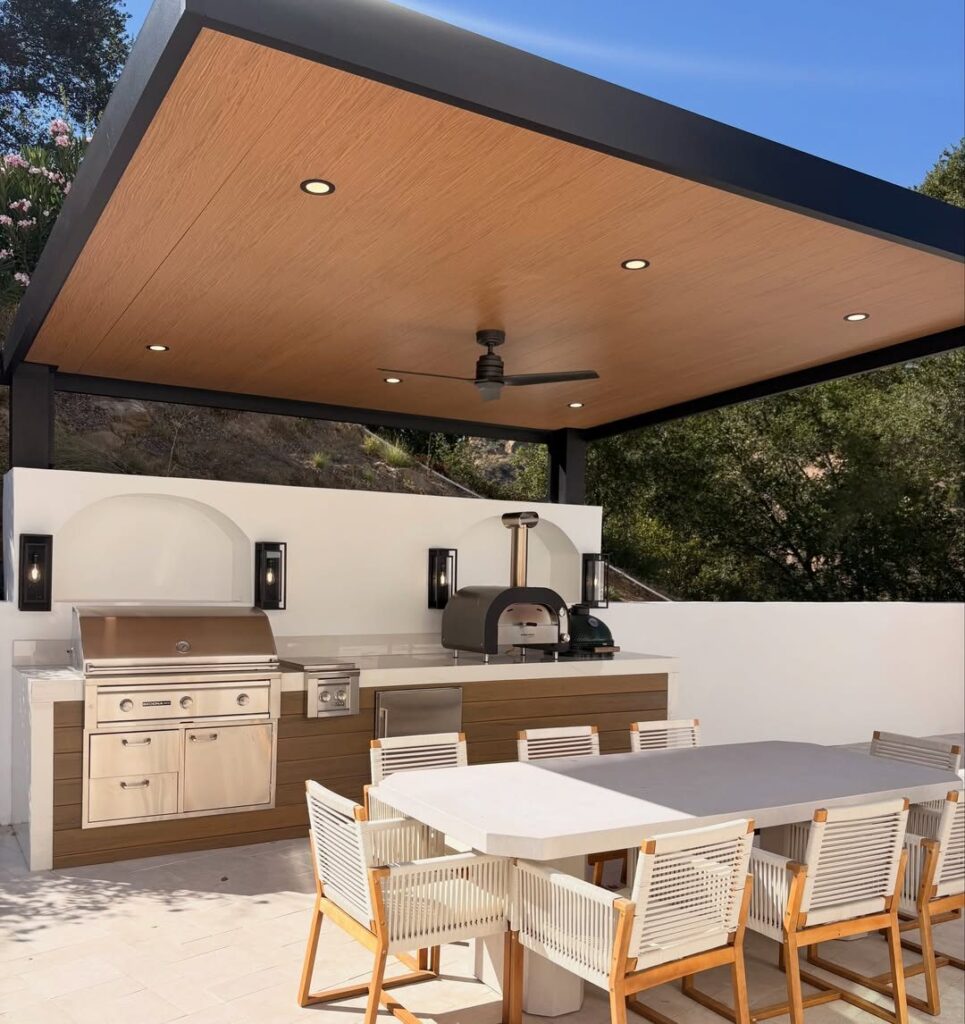
These ideas run from a scrap-lumber shelter that costs a Saturday to a full outdoor kitchen you build in stages. The one that fits depends on whether you already have a roof overhead or are starting from bare yard.
A 7.5-foot pergola clears most heads, though you will want to test whether your tallest friend can still flip burgers without scraping knuckles before you lock in post height.
1. Covered Patio Outdoor Kitchen
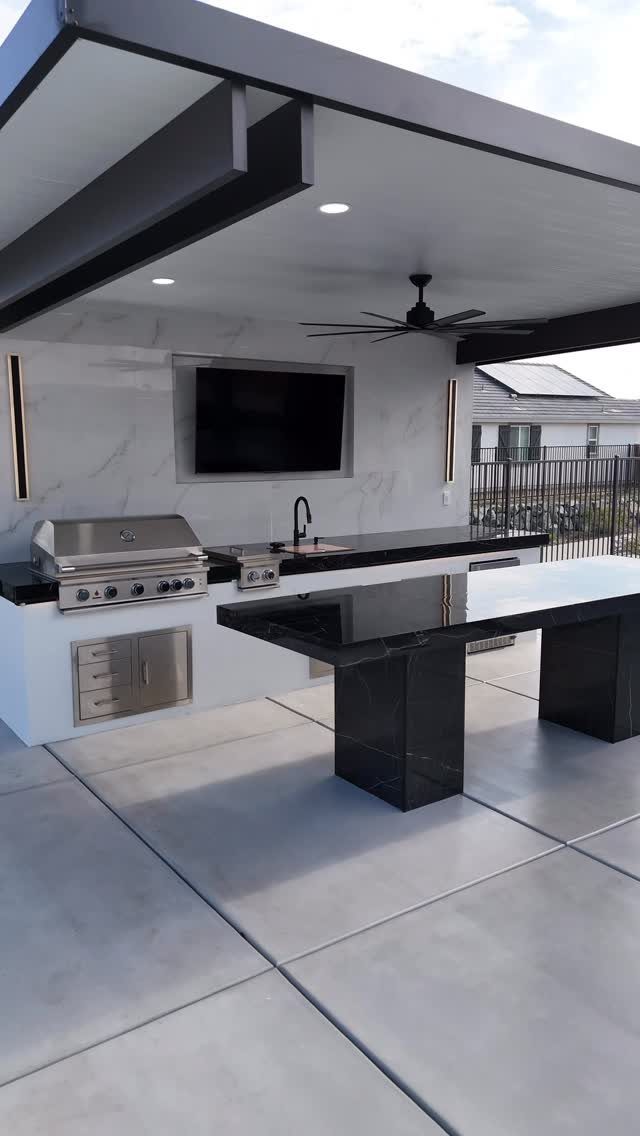
A full outdoor kitchen under a permanent roof keeps the rain off your back and the smoke out of your eyes while you work.
This reader usually has a few hundred to a thousand dollars and a weekend, so the full built-in with stone backsplash and vent hood is a later-phase project.
Start with a grill cabinet and countertop under an existing patio cover, then add the sink and fridge when the budget loosens. The roof buys you time; you can cook in drizzle while friends huddle inside.
I’d point the layout so the cook faces the crowd, not the wall. A TV mounted where you glance up is a nice touch for slow-smoking days.
2. Elevated Deck with Sitting Area
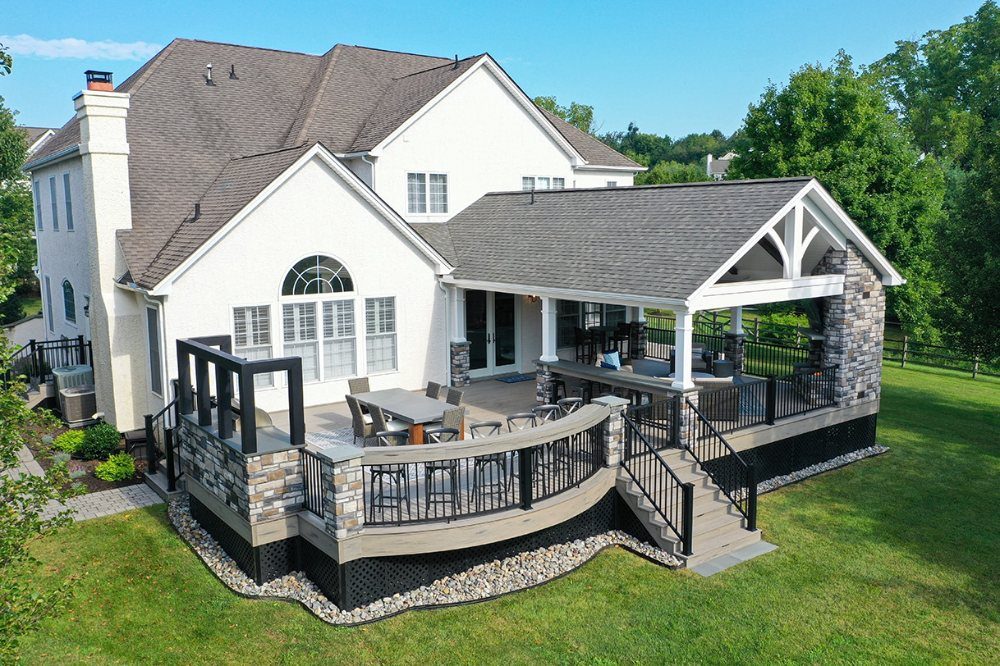
An elevated deck forces the party upward and away from the yard’s daily traffic, which matters when your ground level is mud half the year or you want to catch a view.
The height changes how people linger; railings become elbows, stairs become theater seating for kids. Build with cedar if your budget allows, or pressure-treated lumber stained dark to hide the grain you do not love.
A retractable canopy over part of it lets you chase shade without committing to full cover. Check your local code before the posts go in; the footing depth and railing height change with elevation, and inspectors notice stairs first.
3. Chic Poolside Grill
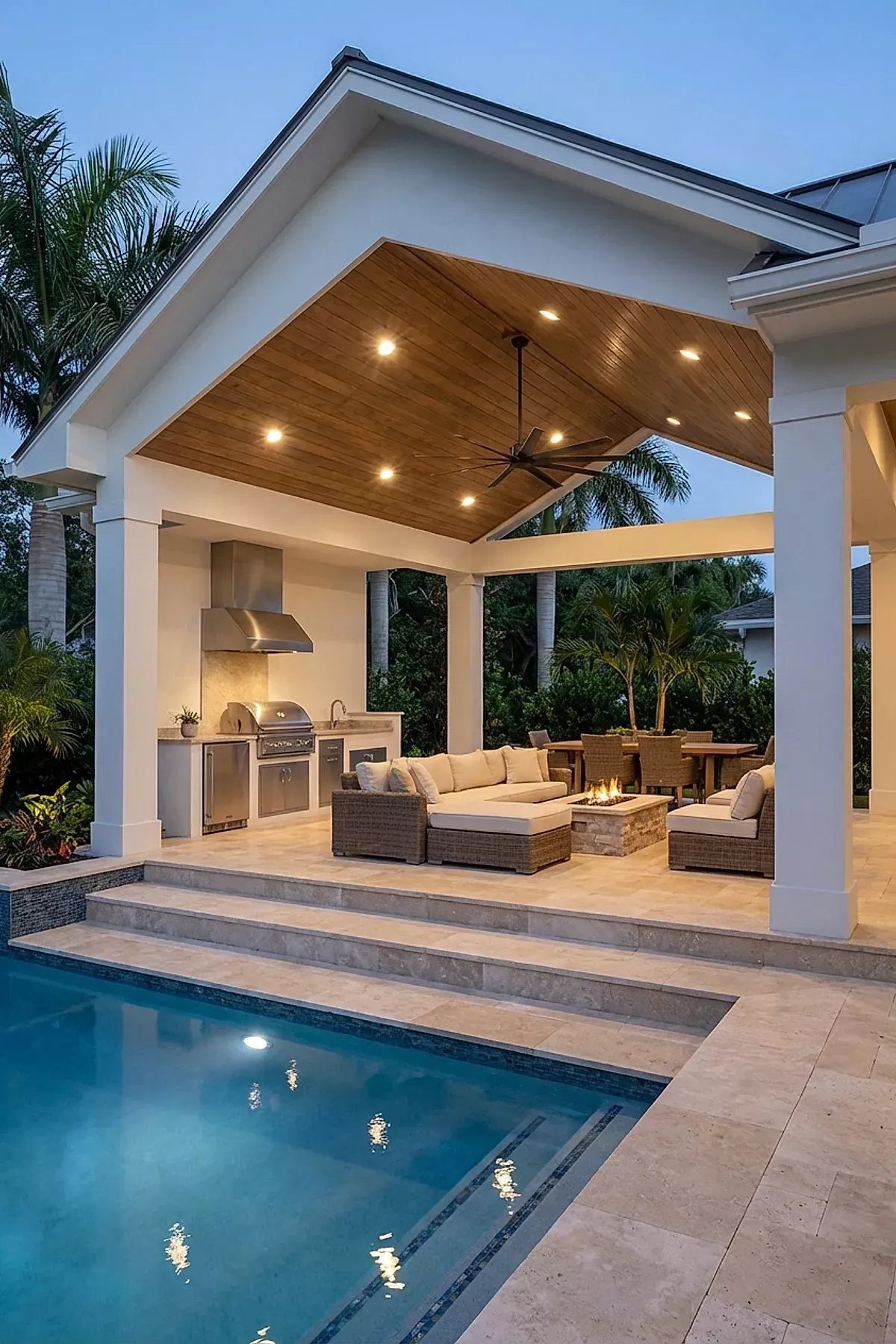
A poolside grill lives in two time zones: the casual Tuesday when you flip burgers between swims, and the Saturday when twenty people orbit the water for six hours.
The stainless island handles both because it cleans fast and reads as finished even when cluttered. Place it where splashing kids do not arc into the grates, and where the cook stays in conversation with the loungers.
A fridge and sink nearby mean fewer dripping trips through the house. I would not bother with a full bar unless you host monthly; a counter overhang for three stools covers most nights.
4. Pergola Shaded Grilling Station
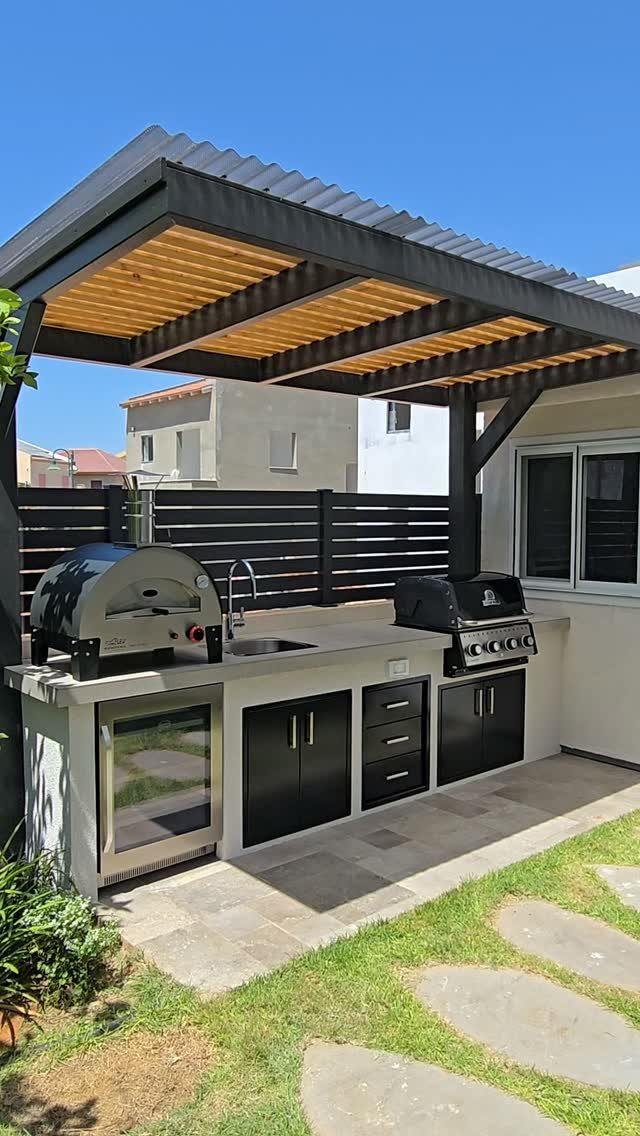
A pergola gives you dappled shade and some dignity without the permit fight of a full roof. Western red cedar weathers to silver-gray in two seasons if you leave it bare, or hold the honey color with an annual oiling.
The slatted top cuts midday sun by half but lets heat rise, so you stand under it longer in August than under solid cover.
For winter, a custom tarp or corrugated panel set between the rafters turns it into a rain shelter; store the hardware with the cover so you are not hunting brackets in November.
The 7.5-foot height clears most heads but check your tallest friend’s reach with a spatula.
5. Built-In Grill with Seating
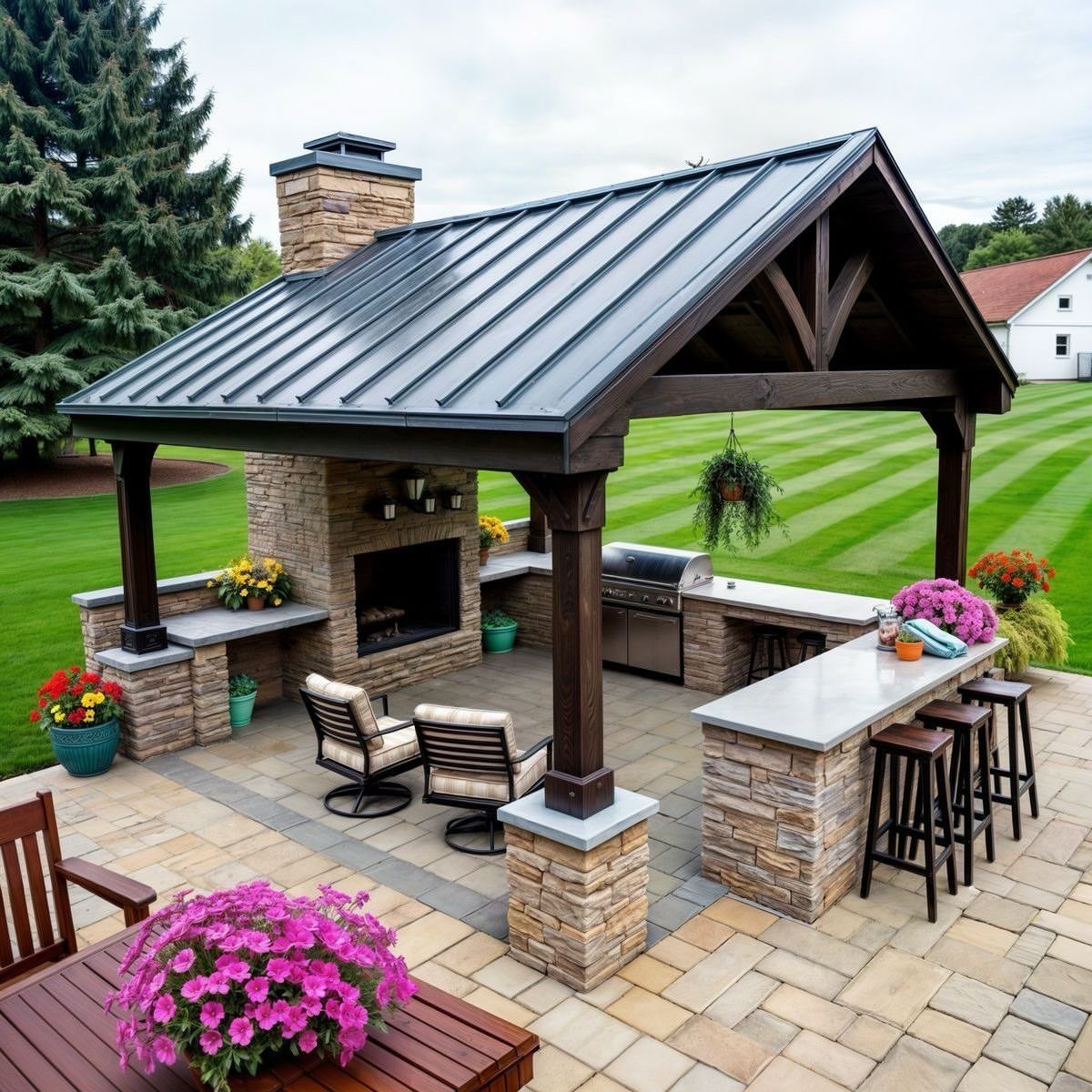
A built-in grill with seating at the same counter turns the cook into host instead of exile.
The stone fireplace in this setup anchors one end and extends the season into October; the barstools along the counter let early guests perch and snack without crowding the grates.
Start with the grill cabinet and a run of counter deep enough for plates and elbows, the standard depth you will find at any kitchen supplier.
Bench seating against the house wall packs more people than individual chairs when the party grows. Granite or soapstone counters survive the heat and the red wine; tile grout does not.
6. BBQ Grill Shelter
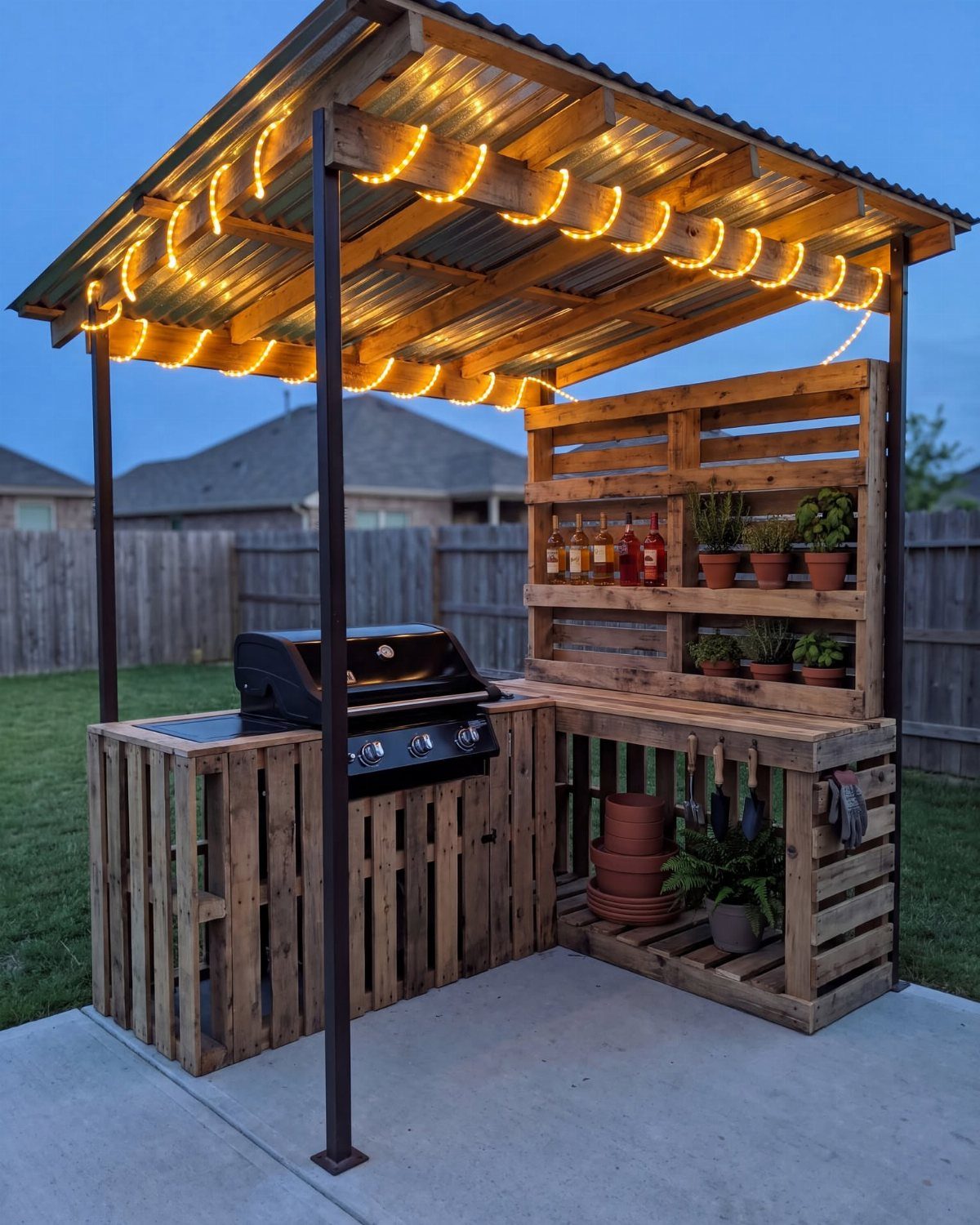
A shelter built just for the grill protects your investment without eating the patio. This pallet-and-corrugated-metal version costs a Saturday and lumberyard scraps; the string lights make it intentional rather than apologetic.
Powder-coated steel or treated wood lasts longer than raw pine, and side shelves for tools and sauce keep you from squatting to the ground mid-flip.
The compact footprint suits renters who cannot build permanent and homeowners whose patio is already crowded. Add a hook rail for tongs and a small shelf for a thermometer; the rest is overthinking.
Choosing the Right Location for Your Grill
Smoke rises, and it will find your back door if you let it. I place the grill where the prevailing wind carries exhaust away from the house, not toward it, and I keep generous clearance from anything that burns.
That open space also gives you room to stage plates and move around the cook without bumping elbows.
Placing the grill near the indoor kitchen makes sense on paper, but I would trade that convenience every time for the right wind direction. A short walk with a tray beats a house that smells like last night’s burgers.
Prep space matters more than most people plan for. You need working room on each side of the grill for raw and for done, plus a spot for the drink you will set down and forget.
If your patio cover is already built, work with its footprint rather than against it.
Best Grill Patio Cover Options
A pergola reads as finished structure while leaving the sky visible, which is why I would choose it over a solid roof for most first projects. Store the cover hardware with the cover; November you will thank June you.
Retractable awnings suit renters and anyone whose patio faces west. You extend it for dinner, roll it back for stars, and the mounting brackets come with you when you leave.
Powder-coated steel or western red cedar outlasts raw pine by years; the extra cost shows up in season three when your neighbor is rebuilding.
Gazebos with integrated roof panels handle snow load and heavy rain without the modifications a pergola needs.
They also eat more of your patio footprint, so measure twice and picture where people walk when the grill is hot and the crowd is thick.
Enhancing the Grill Area with Seating and Lighting
Bar-height seating keeps guests at the cook’s eye level, which changes the dynamic from servant and audience to host and company.
I would leave 48 inches between grill cabinetry and any island or counter with stools; less than that and people squeeze past the hot side to refill drinks.
String lights on the pergola rafters or looped under a gazebo eave cost little and do more than lanterns because they fill the space rather than pool light in one spot.
Solar-powered fixtures work where you lack an outlet, but test their brightness before you commit; many read romantic in the store and merely visible at home.
Wall-mounted fixtures on the house wall behind the cook reduce the shadow you cast across the grates when you lean in to flip.
Selecting the Right BBQ Grill
Gas grills fire fast and control clean, which covers Tuesday night when you are home at six and hungry by six-thirty.
Charcoal takes patience to ready ash and leaves a mess, but the flavor justifies the wait when you have the evening free.
I would not buy built-in until I had cooked two full seasons on a portable cart; you learn what you actually use and what sits in the cabinet.
Size the grill to the patio, not to the once-a-year party. A four-burner gas unit handles twenty burgers and still fits under a standard pergola without crowding your prep space.
Compact charcoal kettles suit small shelters and renters who store the rig in the garage between weekends.
Until then, a side table and a cooler cover most nights without the plumbing cost.
Frequently Asked Questions
What is a good covered area for grilling?
A roof over the grill keeps the cook dry and moves smoke up before it reaches eye level. The cook should face the gathering, not a wall, with counter depth for plates and working room.
Good ventilation matters; smoke needs somewhere to go besides collecting under the cover.
Can I have a grill on a covered patio?
Yes, but only with open sides or another way for smoke to escape instead of pooling overhead. Keep the grill far enough from the house that smoke does not drift back through doors or windows.
What are some ideas for covering my outdoor grill?
Pergolas, gazebos, dedicated grill shelters, and retractable canopies all work, depending on how permanent you want to get.
Slatted cedar on a pergola blocks enough midday sun to stand under; screw a corrugated panel or heavy tarp across the rafters when winter rain starts.
A freestanding shelter in treated lumber or powder-coated steel bolts together without touching the house, then comes apart when the lease ends.





