
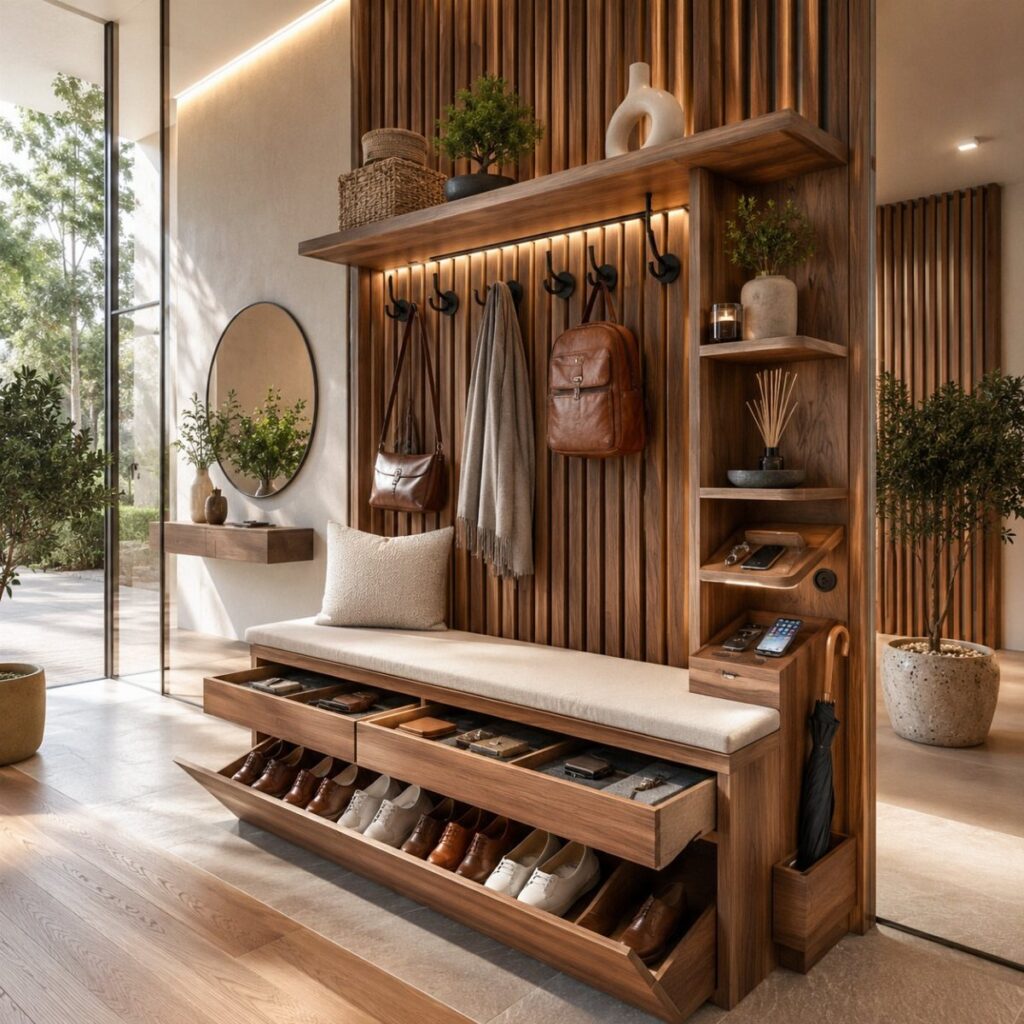
A full-height shoe rack with seating can run from a freestanding bench with laminate top to a custom built-in that stays with the wall, and the deciding factor is whether you own the wall or just pay rent.
The slatted wood backing on the floor-to-ceiling entry unit needs that spare width to keep proportions right, and damp shoes in wet climates need those open lower shelves for airflow.
1. Shoe Rack with Seat
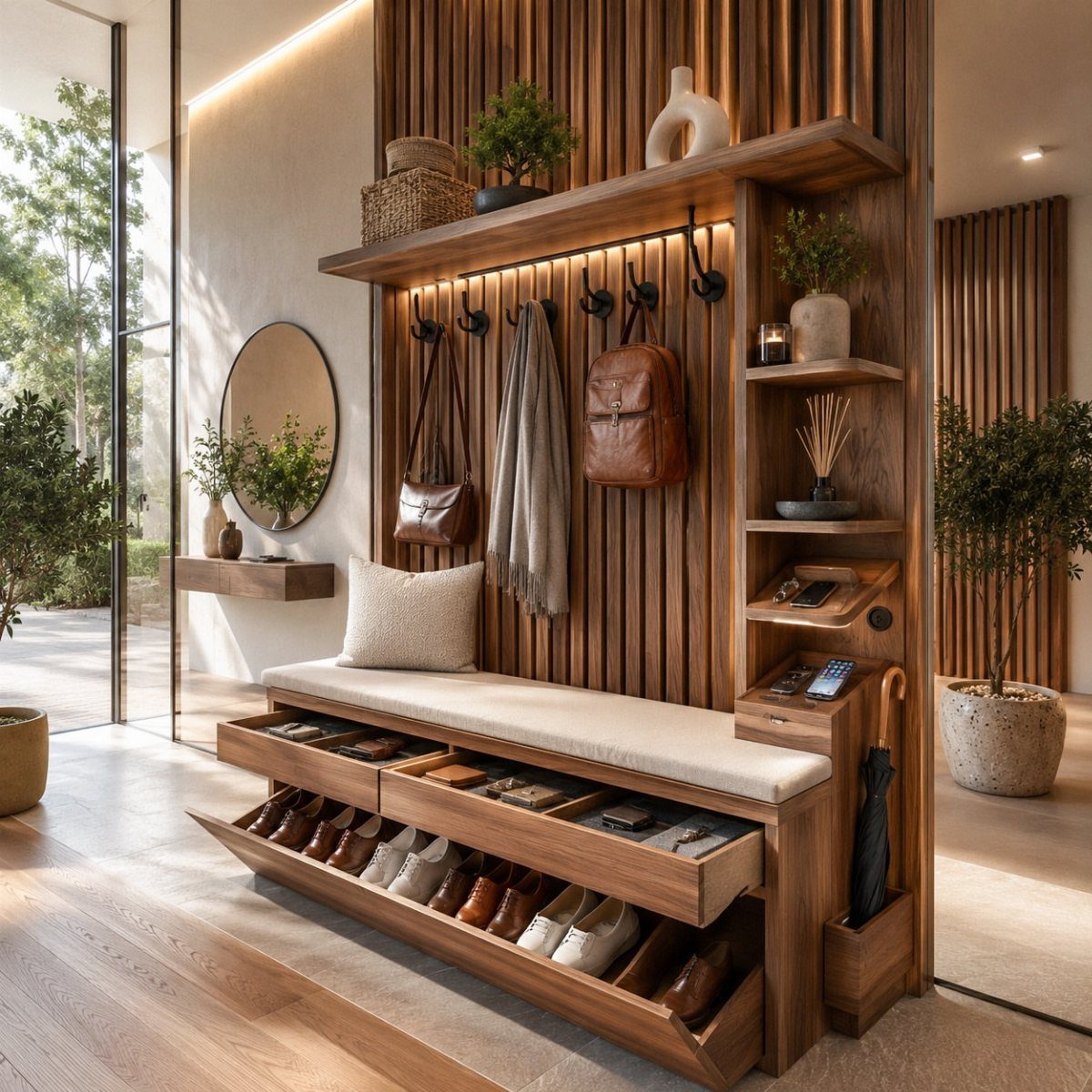
A bench with shoe storage underneath gives you somewhere to sit while you lace up, and the rack itself stays out of the way.
A pull-out drawer that locks flush saves space in a tight foyer and slides out only when guests arrive. Solid wood holds up to daily sitting, but particleboard with a laminate top works if you are keeping costs down.
Check the clearance underneath; some benches sit too low for boots.
2. Narrow Shoe Rack with Seat
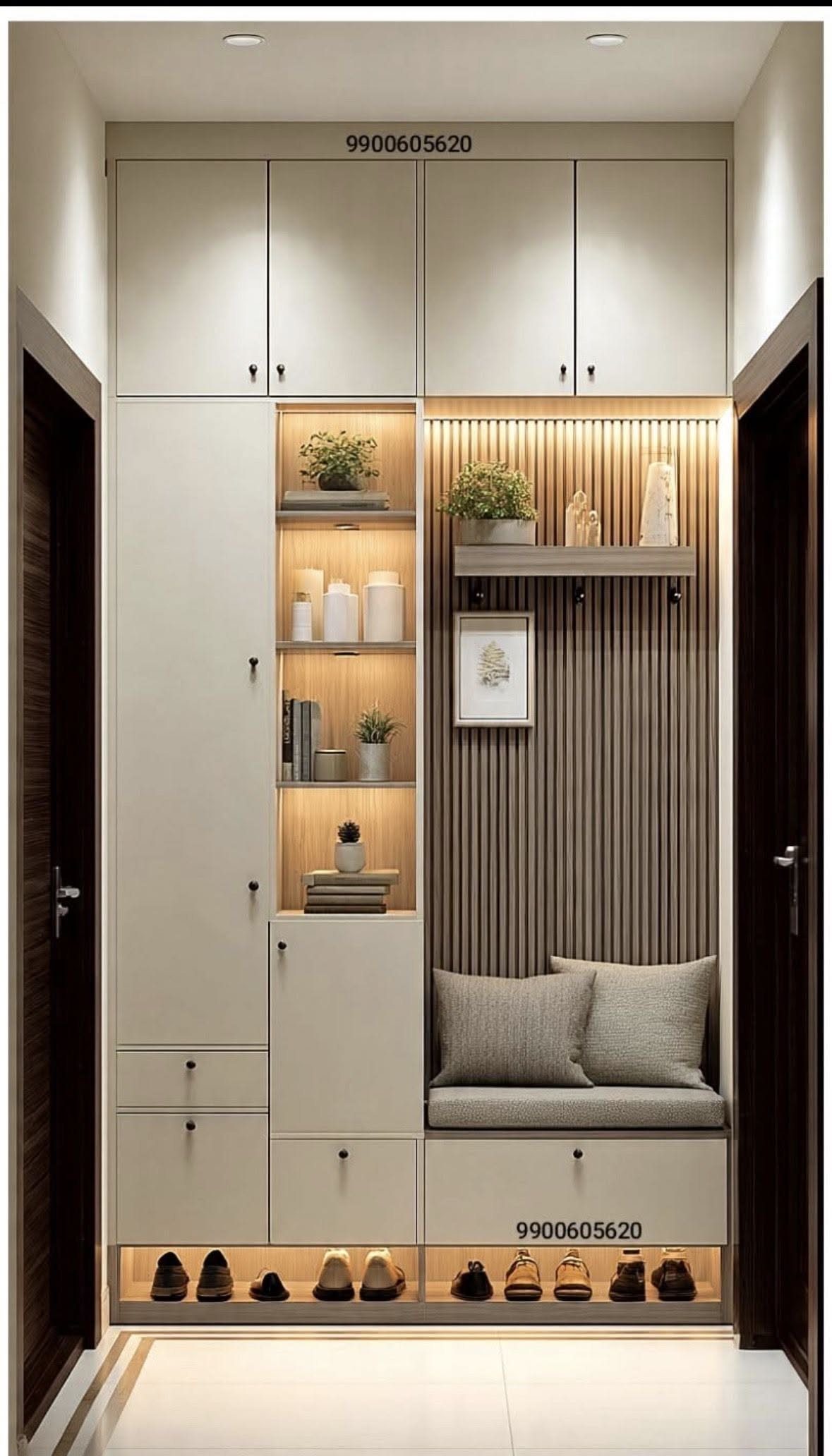
Built-in tall cabinets flanking a bench squeeze full-height storage into a hallway that would not fit a freestanding piece. The narrow format runs drawers and display shelves upward instead of outward, so you keep walking space.
I would put the open shoe shelf at the bottom where it is easy to reach, and save the upper cabinets for off-season items.
Fluted paneling adds cost; painted MDF gets the same built-in look for less if you are hiring a carpenter. This suits renters only if they are willing to leave it behind, since it is fixed to the wall.
3. Shoe Rack with Drawers
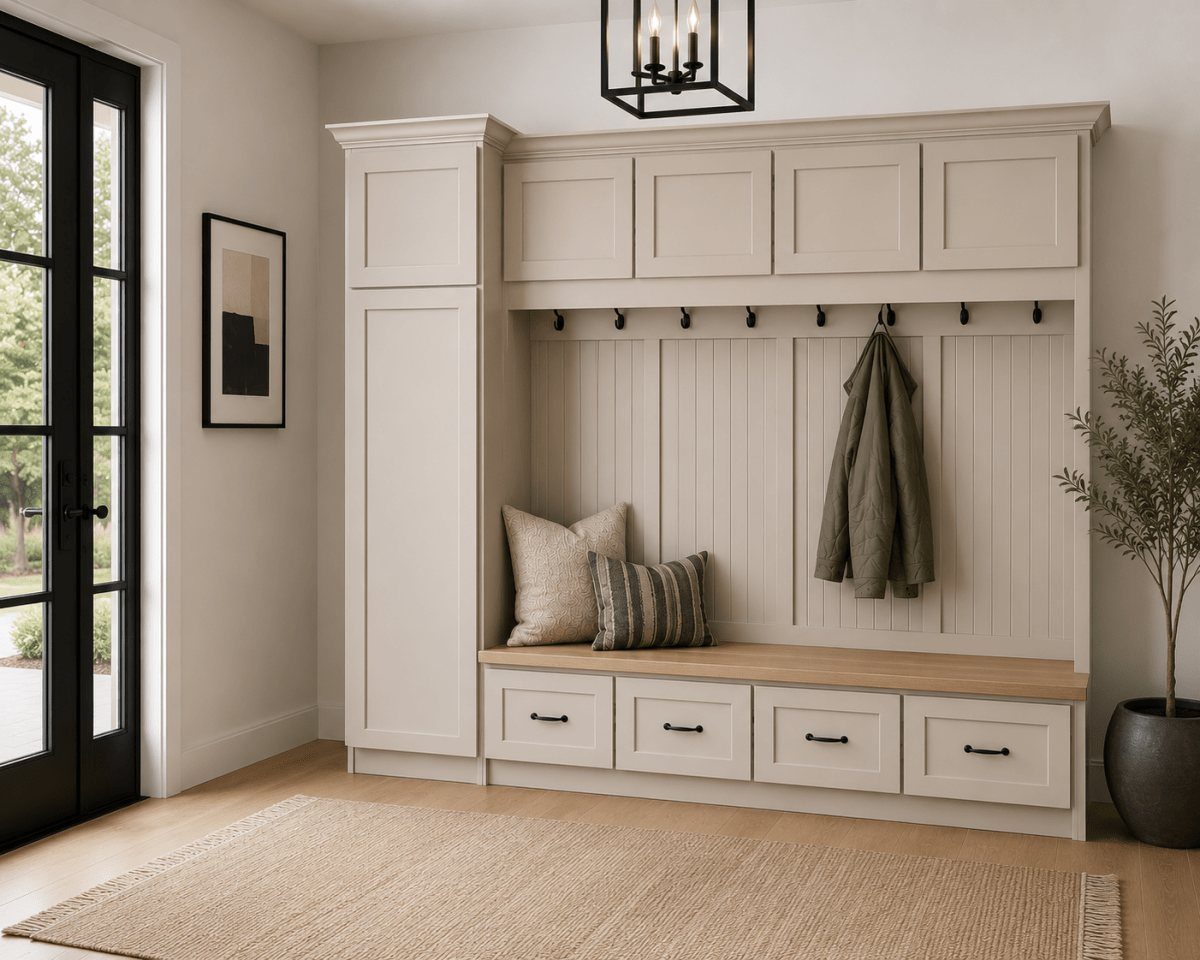
Drawers under the bench hide shoes that otherwise clutter the entryway, and you pull them out only when you need a pair. A four-drawer layout keeps each family member’s stuff separate, or you can sort by season.
I have found that full-extension drawer slides matter more than the wood species; cheap slides bind when loaded with boots, and you end up yanking.
Expect to pay more for soft-close hardware, but it is worth it in a house with early-morning departures. This design eats more depth than open shelving, so measure your hallway before you commit.
4. Shoe Rack with Cushion
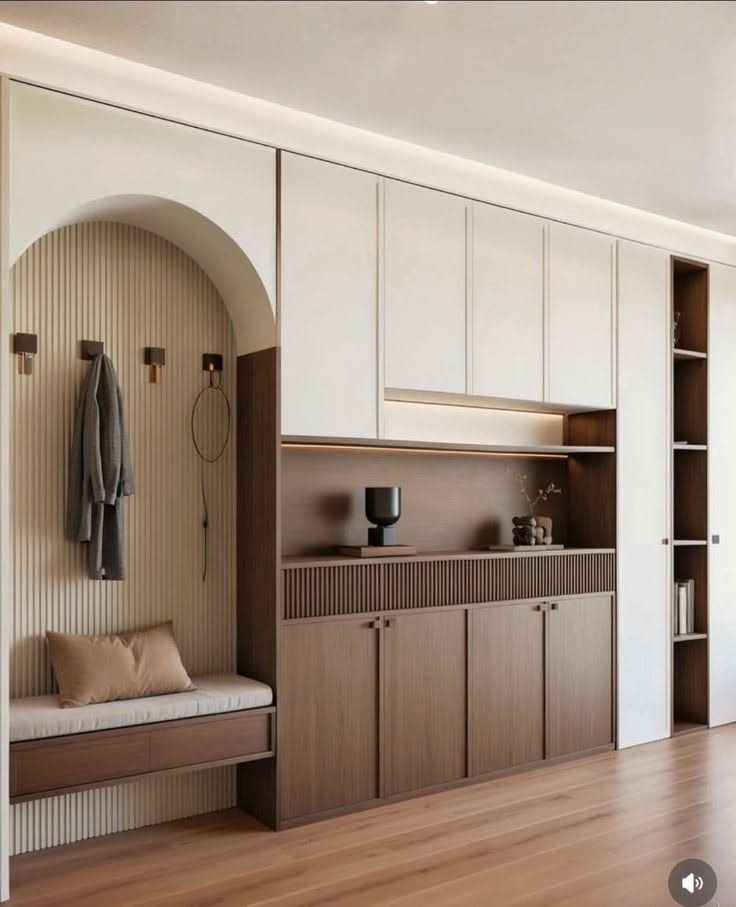
A thick cushion on a built-in bench turns a quick shoe change into something you actually want to sit for.
An arched niche frames the seat like a small room, which works in a larger foyer but can feel bulky in an apartment.
I would keep the cushion low for kids, as they climb on easier, and use a wipeable fabric since mudroom seats collect more dirt than living room sofas. Cubbies above or beside the bench let each person claim a zone.
This trades some storage volume for comfort; pair it with a tall cabinet nearby if you have a lot of shoes to store.
5. Built-In Cabinet with Window Bench
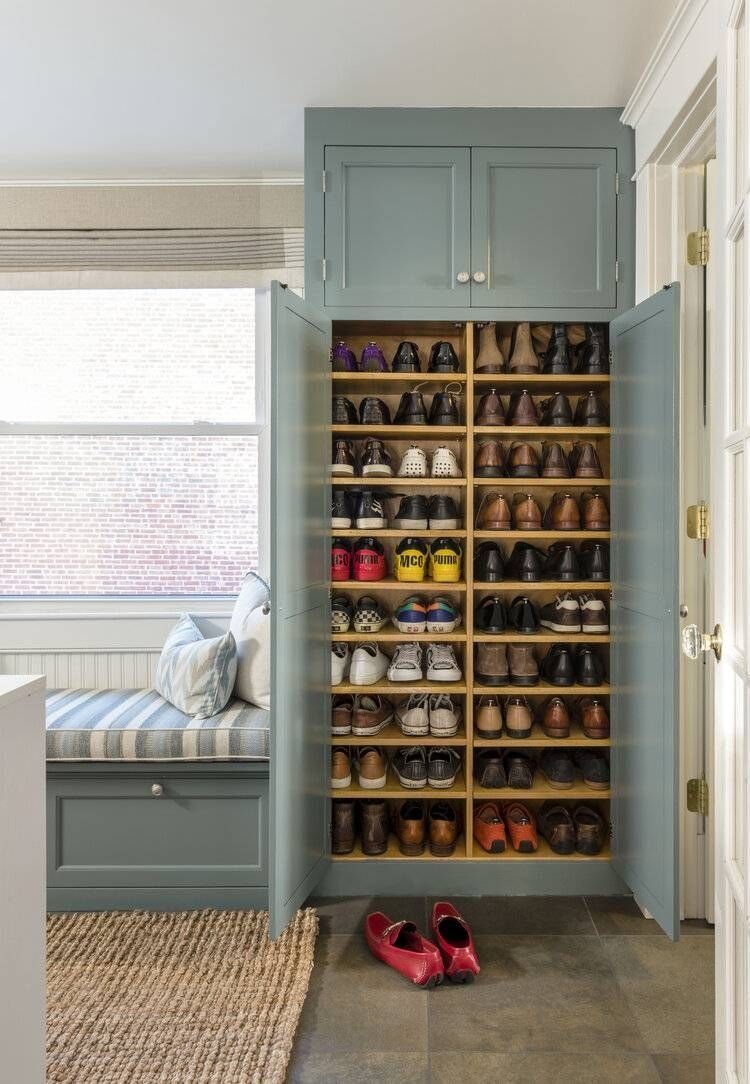
A floor-to-ceiling cabinet beside a window bench gives you two separate zones: concealed storage for shoes you wear daily, and a place to sit with natural light.
The window determines everything; you cannot move it, so the cabinet depth and bench length have to work with what is there.
I would check whether afternoon sun hits the cushion directly, since UV fades fabric fast in a south-facing entry. Open shelves with wood interiors look sharp but require tidiness; add doors if you tend toward piles.
This is the most site-specific idea on the list, and the most rewarding when the window is already right.
6. Floor-to-Ceiling Entryway Unit with Bench
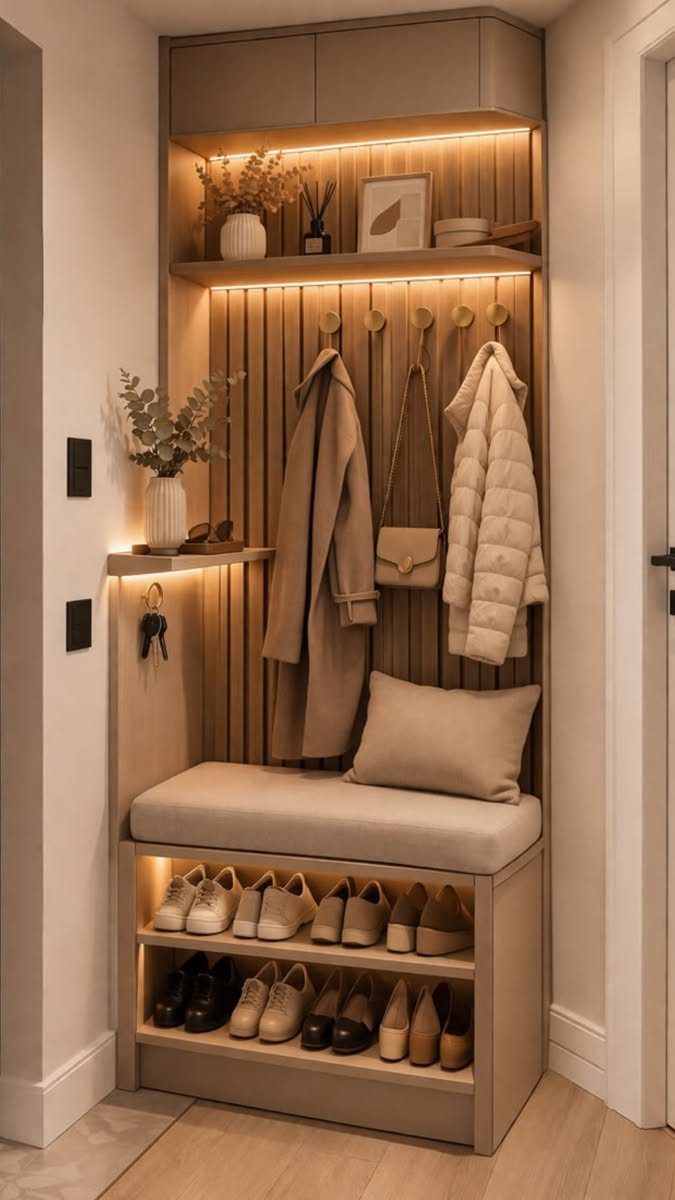
Slatted wood backing with coat hooks, upper cabinets, and open shoe shelves under one bench turns a whole wall into an entry station.
LED lighting is a nice touch but not essential; a stick-on strip from any hardware store does the same job if you want to add it after.
I would build this only in a space with some width to spare, or the proportions feel cramped. The open lower shelves keep airflow around damp shoes, which matters in wet climates.
For a rental, a freestanding version against the wall mimics the look without the construction dust.
Materials for Shoe Racks
Solid wood, metal, and bamboo are the materials you will see most often. Wood stays the most popular because it takes paint or stain without fuss and fits into almost any interior style.
Metal frames with mesh shelves work well in a garage entry or anywhere damp shoes land regularly. Bamboo looks warm and resists humidity better than most woods, though it dents more easily under a heavy boot.
I would put the money into the seat structure instead; that is where the load concentrates.
Space Optimization
In a tight foyer, that combination matters more than any single feature.
Renters face a choice between fixed installation and the flexibility to take something with them when they leave. A freestanding bench with shoe storage underneath moves with you; a floor-to-ceiling unit does not.
I would weigh the cost of leaving a built-in behind against how long I plan to stay before deciding.
Design Considerations
Modular components let you resize or reconfigure the unit as your storage needs change. That adaptability matters if you are furnishing a first home and expect your household to grow.
Size and capacity come first. Measure your hallway, then subtract space for comfortable passage; what remains is your maximum depth.
Count your household’s pairs and leave room for guests or growth.
Ventilation cut-outs or slatted doors prevent the trapped-air smell that closed cabinets develop. A detachable cushioned seat lets you clean or replace the fabric without rebuilding the frame.
Functionality of Shoe Racks
The seat height determines whether the unit actually gets used. Too low, and adults struggle to stand from it; too high, and feet dangle instead of reaching the floor for leverage while lacing.
Some units add tapered legs or lightweight frames so you can reposition them. That mobility suits renters or anyone who rearranges seasonally.
Frequently Asked Questions
What’s the best height for a shoe rack?
For a full-height unit, I would put the open shoe shelf at the bottom where it is easy to reach, and save the upper cabinets for off-season items.
Tall built-in cabinets on either side of a bench keep walking space open while giving you storage a freestanding piece could not match.
What is the best shoe rack for storing a lot of shoes?
A floor-to-ceiling entryway unit with bench, coat hooks, and upper cabinets turns a whole wall into storage. I would build this only in a space with some width to spare, or the proportions feel cramped.
What to use instead of a shoe rack?
A built-in bench with cabinets or drawers underneath hides shoes behind closed storage rather than leaving them on open shelves.
Cabinet-styled shoe racks keep shoes in a hidden arrangement, which works well if your family has multiple members and you want different zones assigned to each person.
This trades the grab-and-go speed of open shelving for a neater look in living areas.
What is the best type of shoe storage for an entryway?
Cabinet-style shoe racks keep living areas neat by hiding clutter behind doors rather than leaving shoes in view. I would check whether afternoon sun hits a cushion directly, since UV fades fabric fast in a south-facing entry.
What materials are commonly used in shoe rack designs with seats?
Wood, metal, plastic, and bamboo are common choices. Sheesham or mango wood will take years of sitting and leaning without complaint if you want the piece to last decades.





