
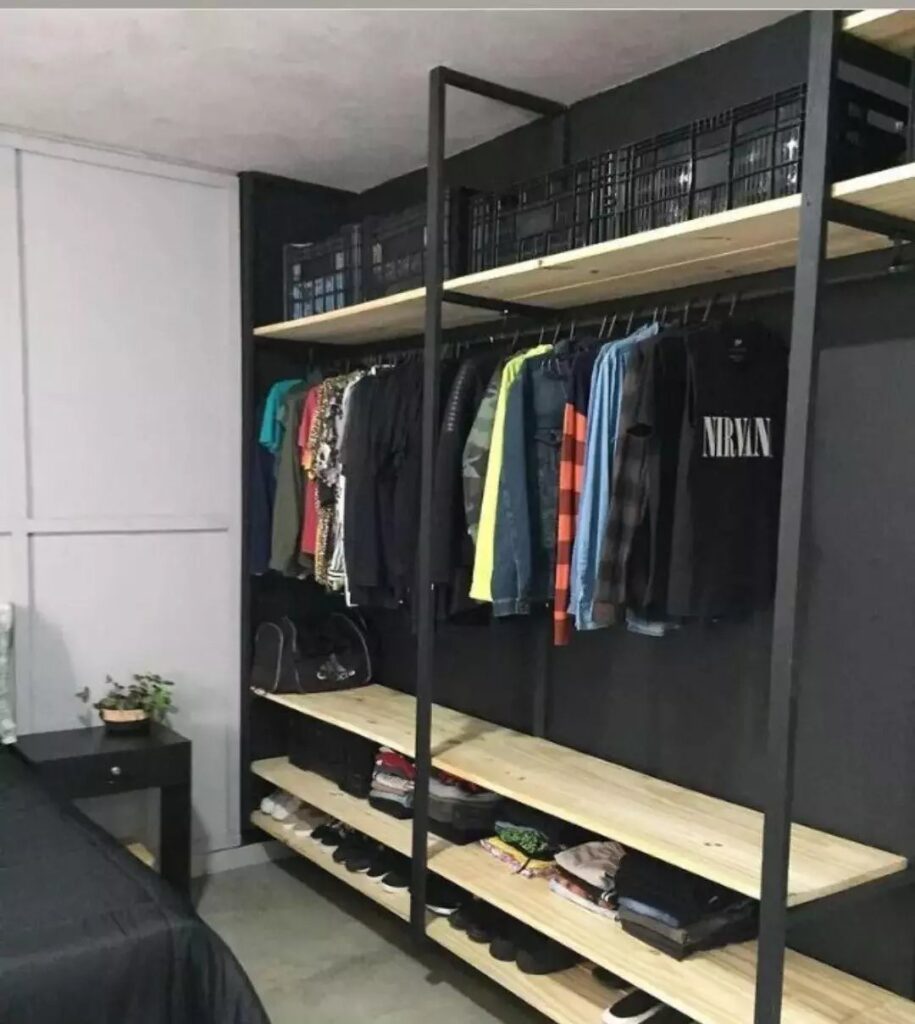
The ideas below run from a Saturday afternoon with a drill to a full cleat-and-stud installation that eats a weekend plus ordering time.
What picks one over another is whether you own the wall or just the right to patch it later, and how much floor you can give up.
1. Wall-Mounted Hooks and Pegboards
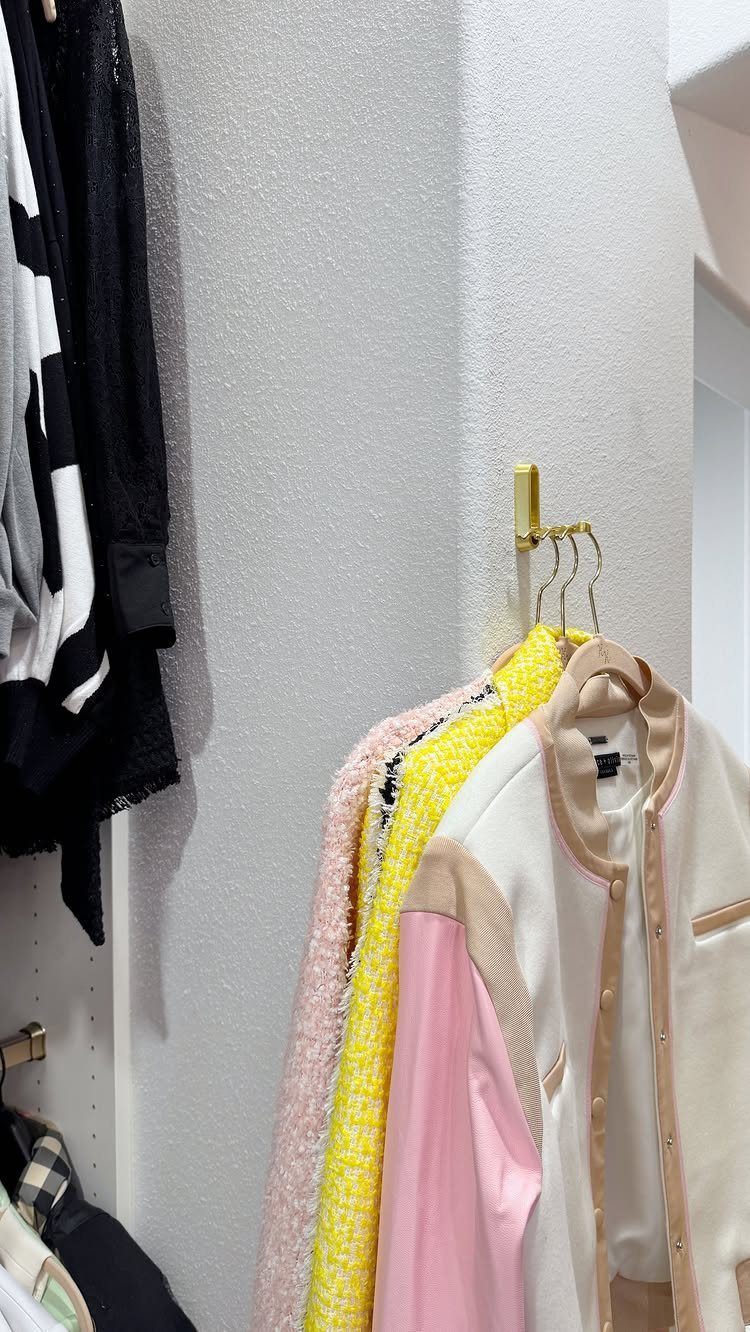
A folding valet hook mounted at eye level gives you a spot for tomorrow’s outfit, while a pegboard lower down takes scarves, bags, or a row of hangers.
I like mixing the two because it breaks up the wall and lets you sort by frequency.
Gold-toned metal against white reads as intentional, not temporary; plastic hooks from the hardware store work fine for a year, but the heads shear off eventually.
Mount at staggered heights so a long coat on the bottom hook doesn’t swamp a shirt above it. This one suits renters who can patch two screw holes later, not people with plaster walls that crumble.
2. Open Shelving Units
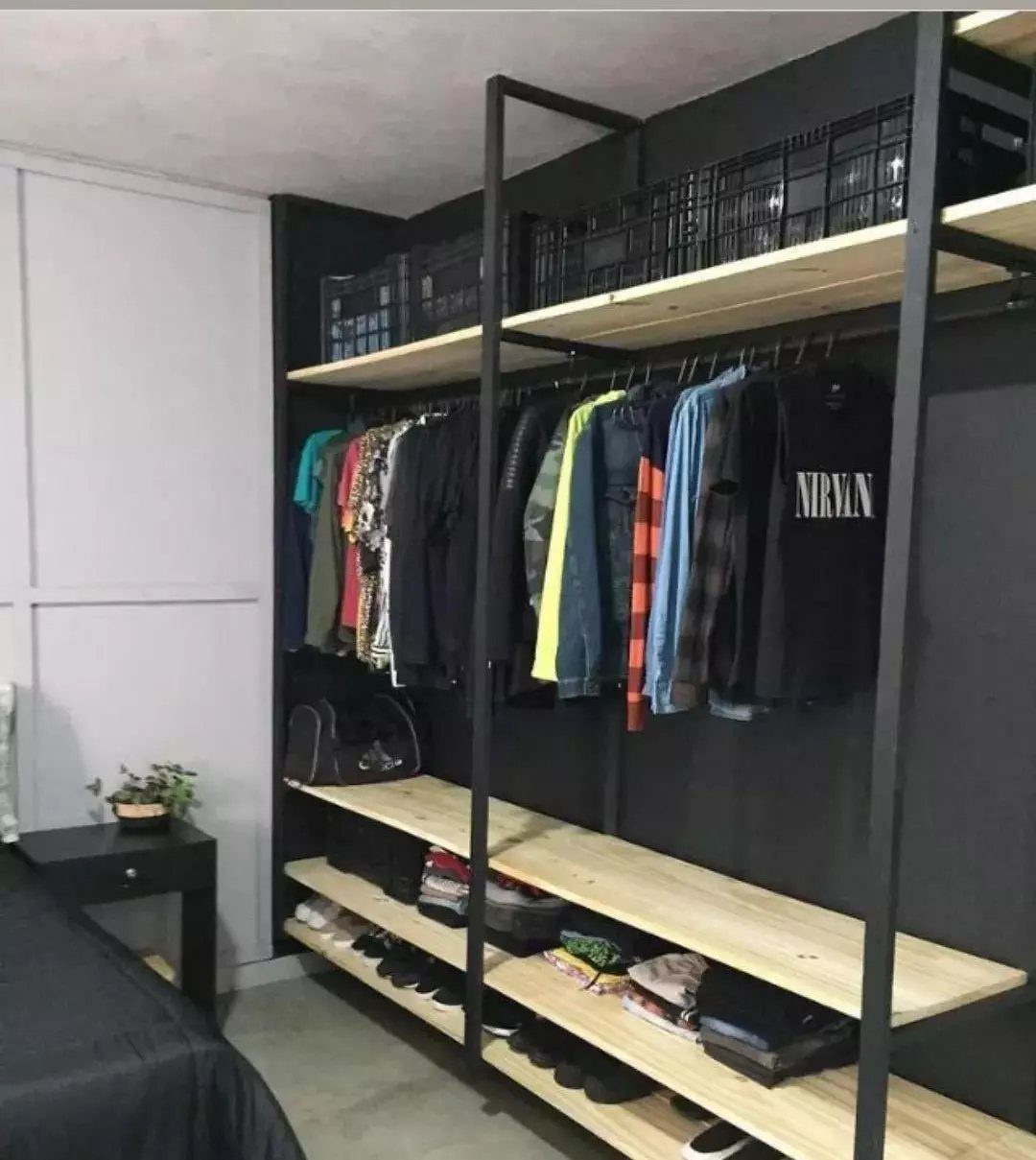
Black metal framing with light wood shelves turns storage into something you do not mind looking at. Baskets on the top shelf hide what you rarely reach for; folded sweaters and shoes sit open below where you need them daily.
I would put this above a dresser or low bureau so the rod height feels natural, not circus-act. Floor-to-ceiling is possible if you own the place, but a single unit against one wall covers most wardrobes without dominating the room.
Match the shelf tone to your floor or go deliberately darker; mixed woods read as accident.
3. Clothes Racks
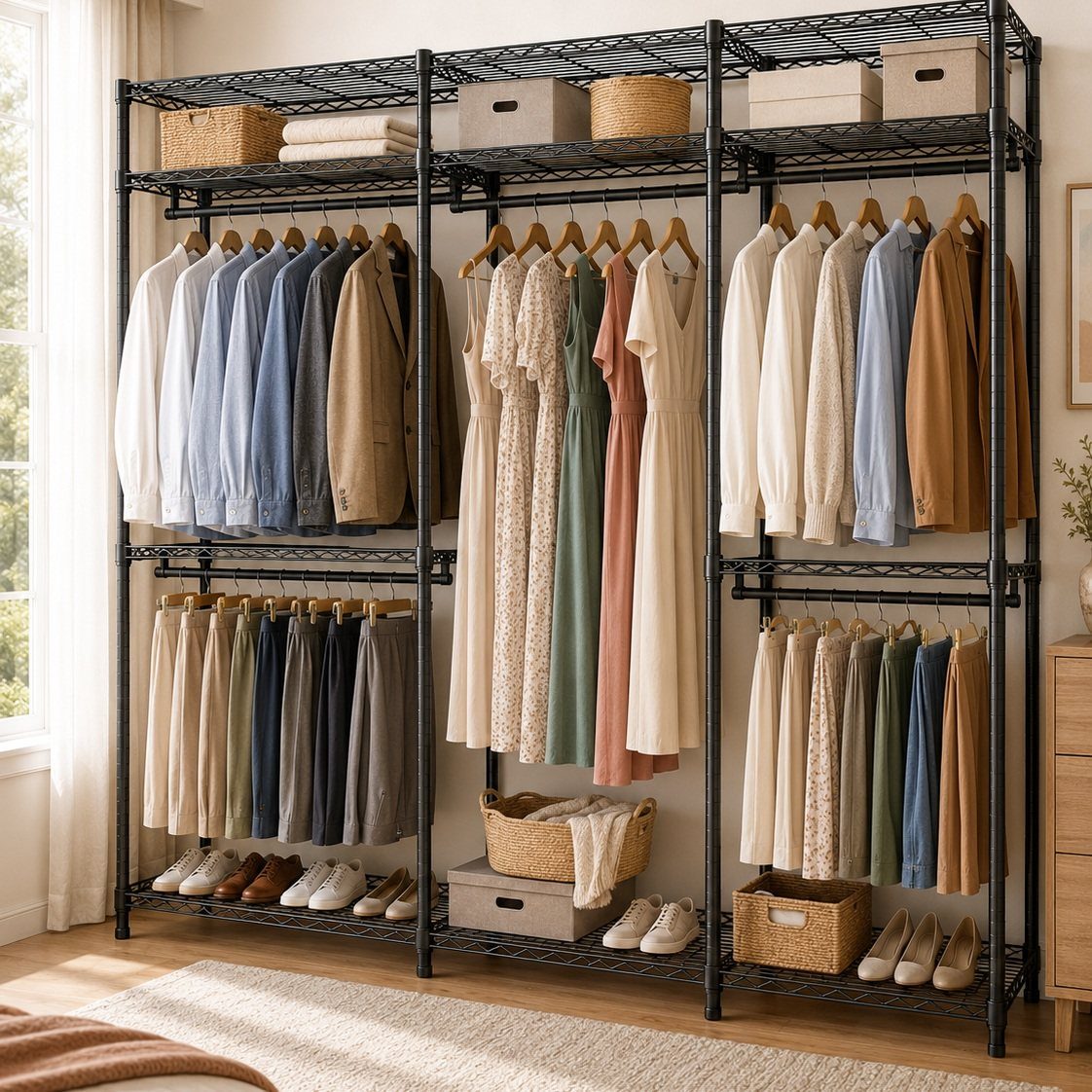
A wire rack on casters rolls into a corner when guests come, then back to the light for morning dressing.
The bottom shelf takes shoes or out-of-season bins, the top rod holds plenty of hangers if you do not crowd them.
I keep one of these in a spare room for overflow; color-coding helps the exposed rack look chosen, not chaotic. Wheeled versions are cheap and assemble with a rubber mallet in no time.
If the sight of open clothing bothers you, this is not your fix. Otherwise it is the fastest way to gain serious hanging space without touching a wall.
4. Curtain Call
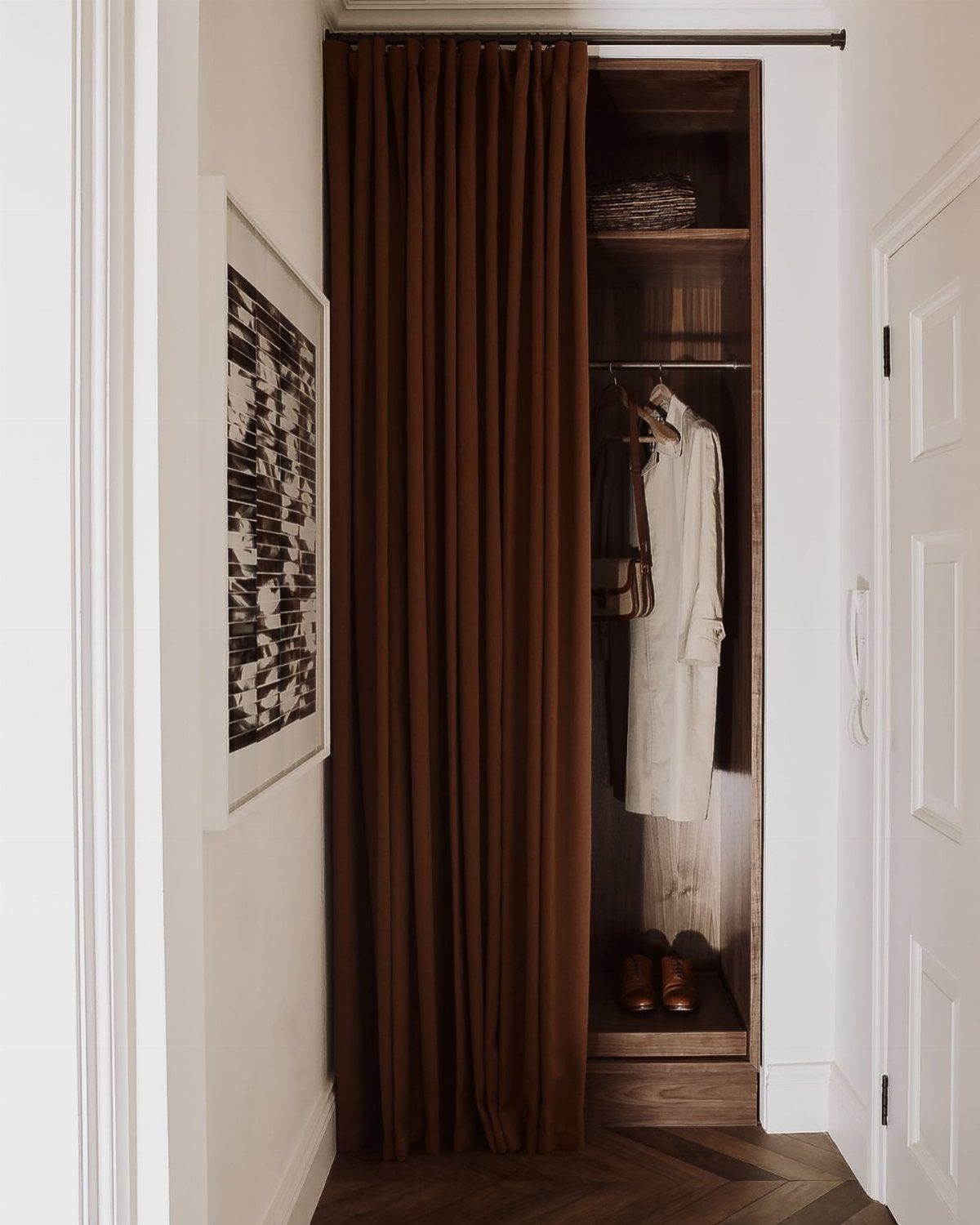
A heavy curtain across an alcove turns open shelving into something that sleeps. Rust-brown against herringbone floors reads warm, not apologetic; the weight matters more than the color.
Thin sheers billow and snag, but velvet or lined cotton hangs straight and blocks dust. Mount the rod a few inches wider than the opening so the fabric stacks clear of the contents when open.
This works where you already have the recess, a hallway niche or the space beside a chimney breast.
The trade is daily access: pulling fabric aside is slower than swinging a door, and the rod needs wall support at both ends.
5. DIY Closet Installation
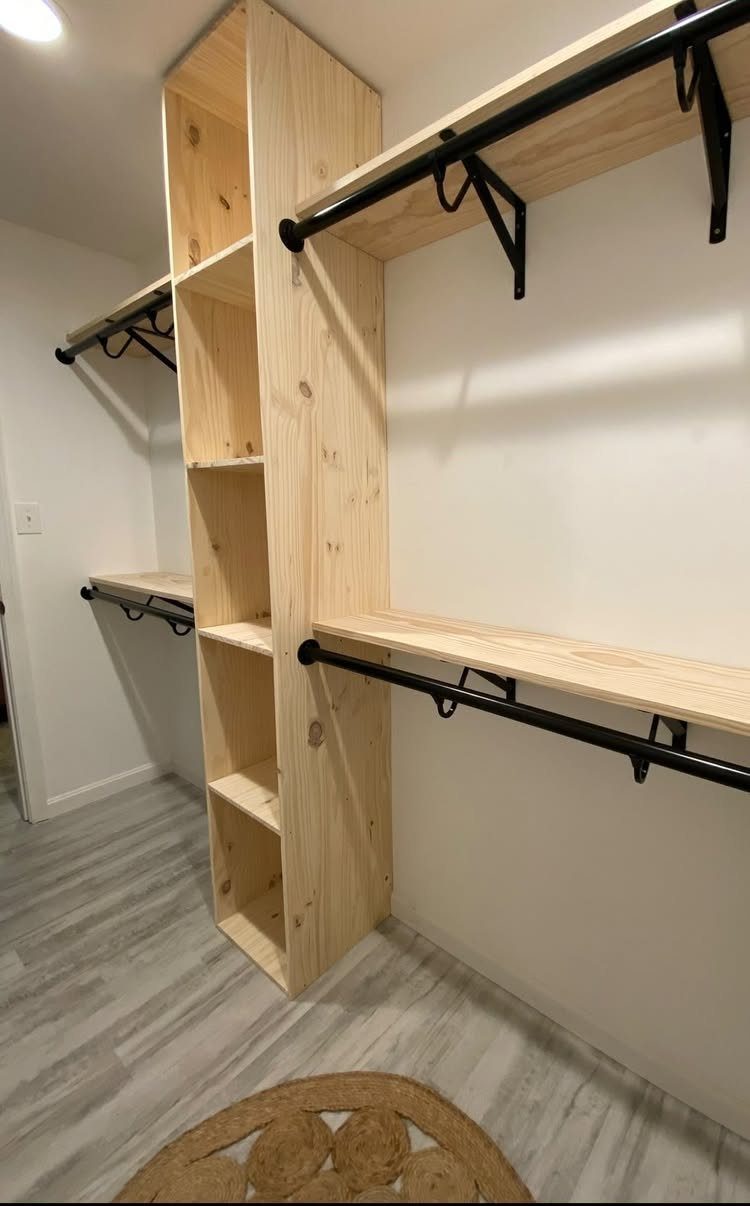
Pipe-style rods and a central tower of shelves let you build exactly to your wall, not to a manufacturer’s standard assumption.
I have put these in a former closet alcove and in a bare bedroom corner; the modules hang from a cleat anchored to studs, so the weight is vertical, not cantilevered.
Oil-rubbed bronze hardware against pale wood gives the utility some character. Pre-built drawers with dovetail joints save a weekend of routing, though you pay for it.
Check your stud spacing before ordering; narrow centers are standard, but old houses run wider and the cleat needs two solid points.
6. Create a Makeshift Closet
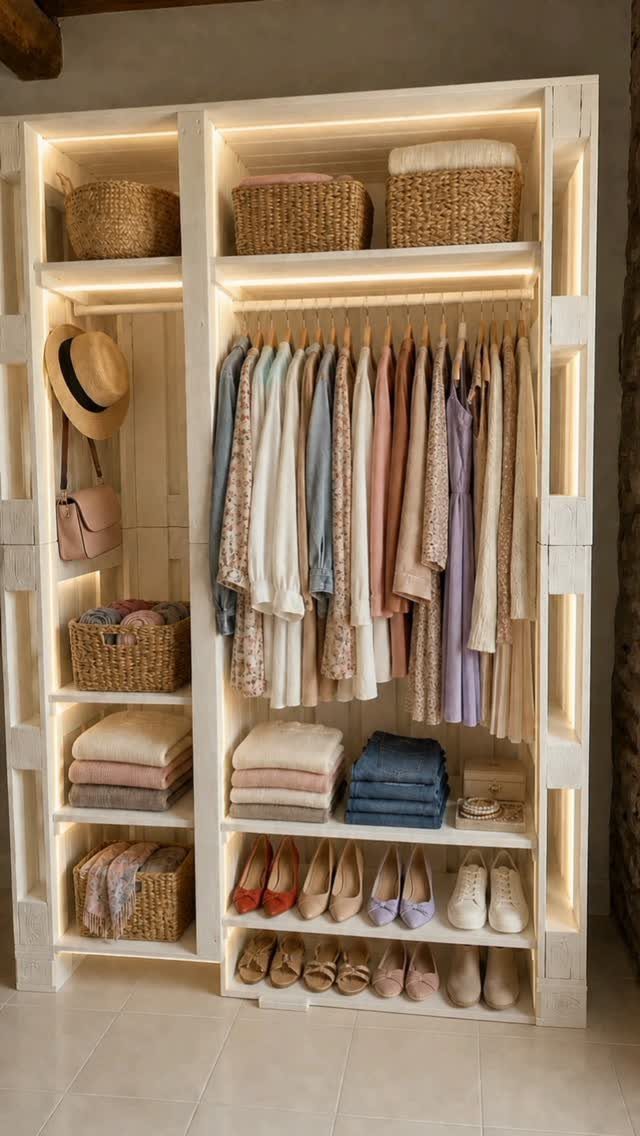
White wooden crates stacked and faced with a rod become a closet that looks like furniture, not a storage solution.
LED strip lighting along the top rail means you can actually see the back row of shirts, though battery strips dim after a few months and wired ones need an outlet plan.
I would anchor this to the wall at the top even if it feels stable; a full rack of wet coats weighs more than you think.
The pallet style suits someone with a drill and a free Saturday, not a person measuring in hours.
Suspend a rod from the ceiling instead if floor space is truly gone, but ask your landlord first and use toggle bolts rated for the load.
7. Under-Bed Storage
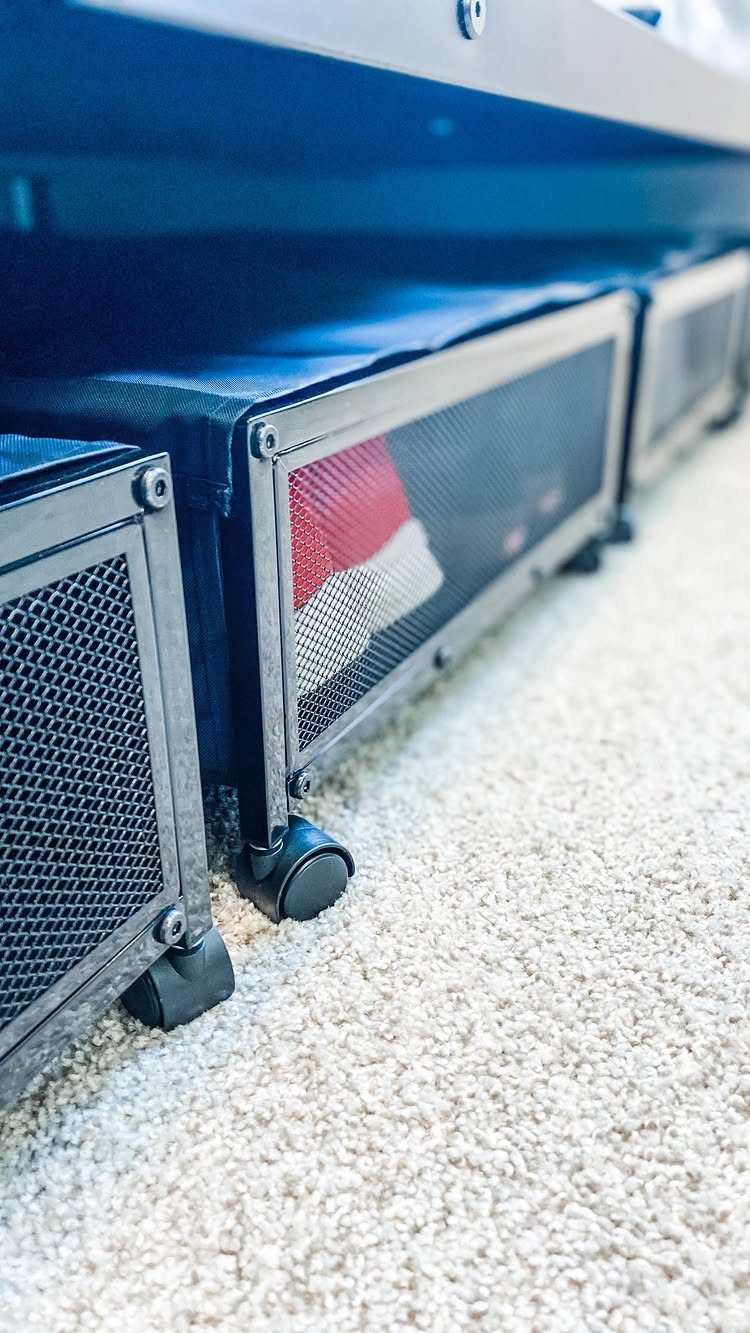
The space under a bed frame sits empty in most bedrooms, and that gap is the only closet some rooms will ever get.
Flat storage containers with wheels roll out easier than the rigid bins I used in my first apartment, where pulling one out meant dragging the carpet with it.
Fabric liners keep metal mesh from snagging sweater knits or leaving rust marks on white soles. Seasonal clothes go here first: the puffy coat in July, the linen shirts in January.
A bed skirt tailored to the frame height hides the whole operation from the doorway, though a too-short skirt reads as a mistake rather than a choice.
Vacuum-sealed bags work for bulk items but need a smooth floor to slide; on carpet, the wheels matter more than the compression.
If you don’t have a closet but you do have a clothing collection, stay organized and polished with custom built-ins that hold everything behind closed doors. In this bedroom by Corinne Mathern, the built-ins provide extensive storage and accommodate the irregular ceiling.
8. Over-the-Door Storage
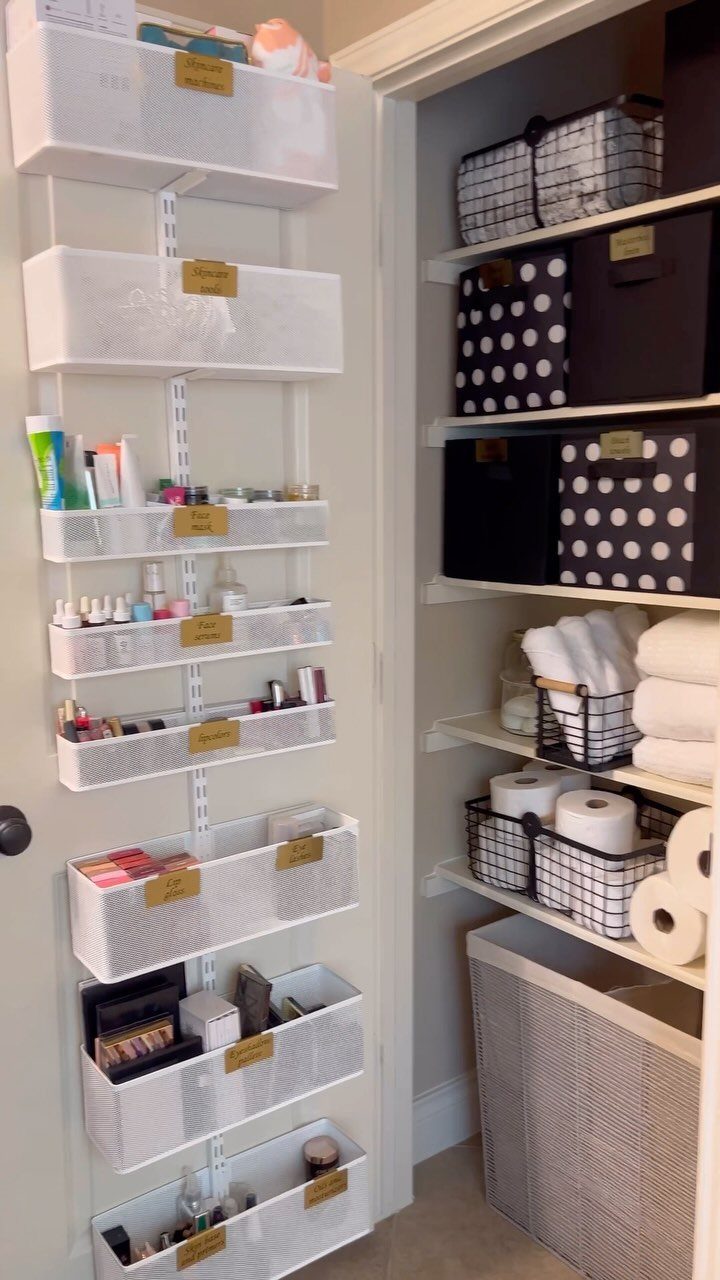
The back of a door is wall space that costs nothing to claim and gives up nothing to traffic patterns.
Wire mesh baskets with labels turn that surface into a sorting station for accessories, toiletries, or the odds and ends that migrate to every flat surface.
Lightweight organizers sag or pull free if the hook design does not match the door thickness, so the hanging hardware matters more than the basket style.
Pockets sewn to fabric backing distribute weight better than individual baskets for scarves or soft goods that tangle on wire grids.
A shelf mounted above the door frame, reachable by stepladder, suits the occasional items: spare bedding, the suit worn twice a year, the boots that only see snow days.
9. Create Privacy with Barn Doors
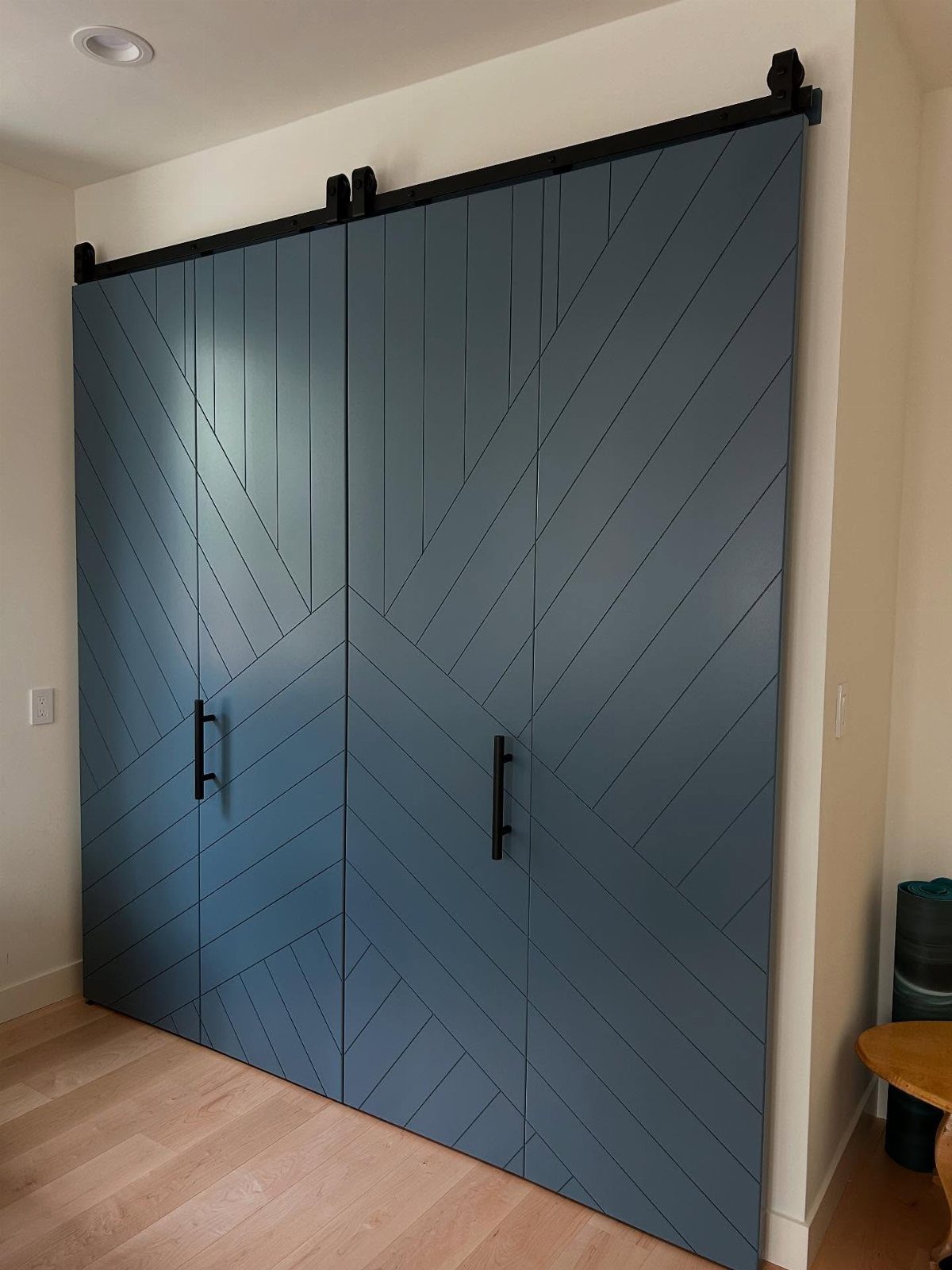
Barn doors slide rather than swing, which means they can seal a wardrobe recess where a standard door would knock against the bed frame or block the hall.
The blue-gray chevron panels read as furniture, not afterthought, because the track hardware is mounted to the wall rather than the door itself, so the black metal becomes part of the design instead of hidden infrastructure.
Recessed pockets need depth; a flat wall with clothing storage behind it requires a header board to carry the track load, especially in older studs that run inconsistent spacing.
The long vertical handles give leverage for closing from the side, where a center-mounted pull would force the user to reach past the door edge.
This trades the tight seal of a swinging door for floor space, and the gap at the track top lets sound and some light through.
For a room that needs darkness, a blackout curtain behind the sliding panels adds the missing layer without changing the look from the hallway.
10. Portable Closets
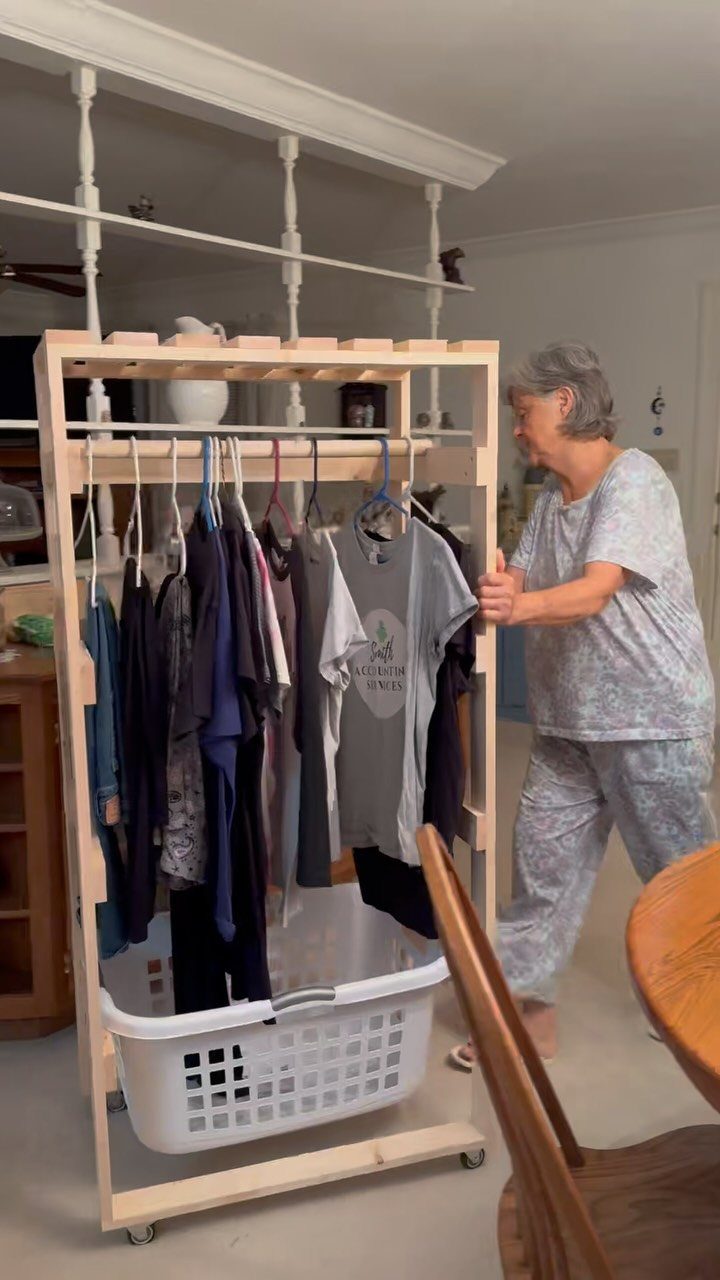
A clothing rack on casters moves where the closet is not, then moves again when the lease ends or the guest room becomes a nursery.
A wooden frame carries hung shirts on standard hangers and a laundry basket below, which is more load than most wire garment racks will handle without swaying.
Homeworkers who change rooms by season, or renters facing a closet smaller than their coat count, get the most from this setup.
Assembly takes an afternoon and common tools; disassembly goes fast enough that the pieces store flat without much hassle.
A fabric wardrobe cover turns the same frame into something that reads as furniture rather than storage, though the cover traps humidity in damp climates and needs removal for air circulation.
Maximize Existing Space
Vertical space above cabinets and bookcases sits empty in most rooms. A storage basket up there takes summer sweaters or spare linens without costing floor space you do not have.
Under-bed clearance works the same way, and the hollow beneath a couch frame can hold bins if yours lifts high enough.
Dual-purpose furniture changes the math entirely. An ottoman with a hinged lid stores bedding and serves as seating; a side table with a drawer hides accessories that would otherwise colonize every surface.
I would look for frames that lift rather than pieces with tiny doors you fight every time. The storage has to be easier than leaving the item out, or you will not use it.
Under-stair nooks, where stairs turn or rise, can take shallow shelving or a narrow cabinet. Measure the angled ceiling height before buying; a standard tall bookcase will not fit where the treads descend.
Declutter Regularly
A room with no closet has no room for dead inventory. The one-year rule works because seasons are predictable: if you did not reach for it through a full cycle, you will not reach for it next year either.
I bag the castoffs immediately; hesitation lets the maybe pile swallow the whole afternoon.
Under-bed bins and seasonal rotation only help if the habit sticks; the routine matters more than the hardware. Vacuum bags and wheeled containers only help if you decide what goes into them.
I do the sort before I buy a single new bin, otherwise the bins become part of the clutter.
Donation pickup scheduling is the trick that keeps the purge honest. I book the pickup for the same afternoon, or the clothes migrate back to the chair.
Use Decorative Storage
Stackable bins with lids turn the top of an armoire or the upper shelf of a bookcase into usable depth. Magnetic closures that stay open while you stack keep the operation one-handed.
The 19.7 x 13.8 x 9.8 inch size fits most standard cubbies without overhang; measure yours before ordering a set.
Fabric boxes in beige or ivory read as intentional against pale walls, not as leftover moving supplies. The double-open lid with a divider board lets you sort gloves from hats in one container without digging.
Label each with specifics, "winter sweaters," not "cold weather," or you will open three to find the one you need.
On carpet, the bin itself does the work; compression becomes secondary.
Consider Custom Solutions
A professional installation makes sense when the wall framing is irregular or the space is angled in ways a standard module will not tolerate.
The wall-mounted option leaves floor space clear underneath, which matters in a small room where every square foot counts.
Custom modules let you mix open shelving with drawers in the same run.
I would put drawers at waist height for daily items, open shelves above for display, and a clothing rod at the end if the room still needs guest storage.
The PDF preview before ordering lets you catch a measurement error without the hassle of returns.
The cost runs higher than pipe-and-cleat DIY by a significant margin. Custom built-ins make sense for a space you plan to keep for several years, or when the stud spacing in an old house defeats standard hardware.
Frequently Asked Questions
What to put in a room with no closet?
A rolling clothes rack, wall-mounted hooks, open shelving, or a freestanding wardrobe unit covers most needs. I like the rack-and-shelf combo because it gives you hanging space and folded storage in one footprint.
Under-bed bins handle out-of-season items, and over-the-door organizers claim space that costs nothing to add.
How to make a freestanding closet?
Start with a clothing rack or wooden frame on casters, add a lower shelf for shoes or bins, and hang a fabric cover if you want it to look like furniture rather than storage.
A pipe-style rod and central tower of shelves bolted to a wall cleat is sturdier and carries more weight, though it needs two solid stud points.
Stud spacing varies, especially in older houses, so check the wall before you plan your build around standard centers.
How to turn a room into a closet for cheap?
Line one wall with a modular wire track or freestanding shelf system, add a second rod level for shorter items, and put a dresser or chest in the middle as an island.
Freestanding closet kits run affordable and install without carpentry. A spare room gives you space to line up hanging bars, shoe racks, and cube storage without squeezing around a bed or dresser.





