These front raised flower bed ideas run from free repurposed materials to cedar planters that cost more up front but spare you a rebuild in four years.
Most annuals and perennials do fine in a foot of soil, and a 4-foot span lets you reach the middle without compacting the bed you just built.
1. Mailbox Garden Flower Bed

A mailbox bed turns the first thing anyone sees into something intentional. The post gives you a natural center, so you work outward: upright blooms like black-eyed Susans behind it, something low and spreading at the base.
I like portulaca or sweet alyssum for that bottom layer; they fill in fast and don’t ask for much.
Stick to annuals if you want color that lasts the whole season without replanning. Water deep when you do water, and the roots will go down after it instead of waiting at the surface.
This one suits renters especially. The bed is small enough to dig out in an afternoon if you need your deposit back.
2. Raised Wooden Planter Bed

Cedar or redwood buys you time. The boards cost more than pine up front, but rot-resistant wood means you are not rebuilding in 4 years.
I have seen cheap planters turn to mush at the corners where the soil stays damp longest.
A 12-inch depth handles most flowers and gives you the drainage that flat ground denies. Fill with a mix of topsoil, compost, and perlite; the perlite keeps it from compacting into concrete after a few rains.
Keep the width at 4 feet or less. Anything wider and you are stepping into the bed to reach the middle, which defeats the point of raising it.
3. Under-Tree Ring Flower Bed
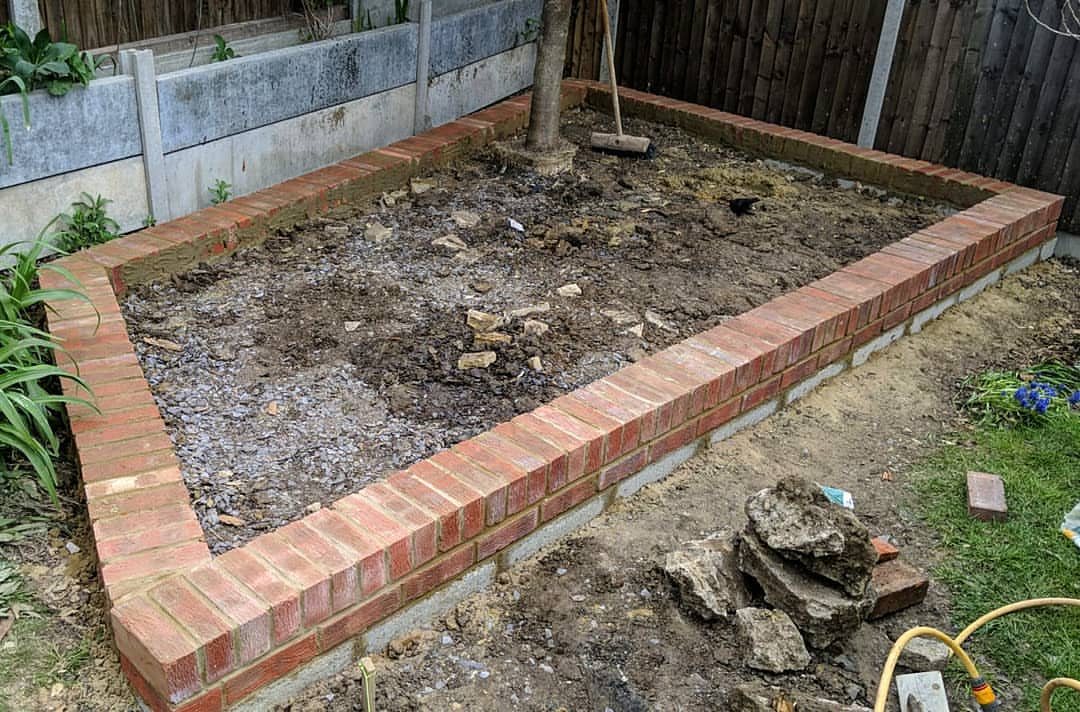
Grass fails under trees for reasons you cannot fix, so stop fighting it. A ring bed works with the shade instead of against it.
Hostas and astilbe handle the light, and they give the trunk a finished look that mulch alone never achieves.
The critical move is keeping soil and mulch back from the bark. Pile it against the trunk and you trap moisture where rot starts.
I leave a gap of a few inches, like a doughnut hole, and fill that space with something inorganic if I want it neat.
This is slow money and a single afternoon’s digging. The tree does the hard part.
4. Build in Steps

Steps compress the space where people actually pause, so plant for that scale. Compact shrubs like knockout roses or dwarf spirea give structure without blocking the door; annuals fill the gaps they leave.
The mix matters more than any single plant.
Symmetry reads as intentional even when the planting is loose, so I mirror the basic shapes left and right and let the flowers disagree.
Solar stake lights tucked low in the beds turn the entry into something else after dark, and they cost little enough to replace when they die.
Check your step width before you buy. A narrow landing wants smaller shrubs than a wide span.
5. Pollinator Flower Bed

Native wildflowers run on autopilot once they are established. Milkweed, goldenrod, bergamot, echinacea: these are not decorative choices so much as regional equipment, already tuned to your rainfall and your soil.
The pollinators show up because the flowers speak their language.
Cornflower brings butterflies; salvia pulls hummingbirds. I would check my state’s native plant society list before buying anything labeled "butterfly mix" at a big box store.
Those mixes often include annuals that read well on the packet and die without returning.
No supplemental watering once the roots find their depth. The pollinators show up for real once the plants have settled in and started spreading.
6. Galvanized Planters

Galvanized steel outlasts wood by decades; 20 years is a conservative figure if you are not denting it with a mower. The metal warms early in spring and holds heat into fall, which extends your season both ways.
Drainage is the thing to get right. Some troughs come solid-bottomed, and standing water will kill anything you plant.
I drill holes if they are not there, or I skip the bottom entirely for the larger stock tanks and let them sit on gravel.
The industrial look is not for every house. I would use these where the architecture already has some straight lines and hard materials; they fight a cottage facade.
7. Vertical Flower Bed

A vertical flower bed buys you planting space you do not have on the ground. Tiered wooden boxes like these let you grow herbs, greens, or flowers in a footprint no wider than a garden chair.
Stack the boxes so each tier gets sun and water drains down, not pools. I would line the interiors with landscape fabric to keep soil from washing through the gaps.
For a wall or fence version, mount planters on sturdy brackets rated for wet soil weight; a full planter is heavier than it looks.
This suits renters or anyone with a small patio who still wants to garden with their hands. You will water more often, since stacked boxes dry out faster than a single ground bed.
Raised beds offer improved drainage, airflow, and soil-quality customization," says Kat Aul Cervoni, a landscape designer and founder of the firm Staghorn NYC.
8. Edging Flower Beds

Metal edging strips give a flower bed the clean line that separates a weekend project from something that looks accidental.
Aluminum or steel strips sit nearly flush with the lawn, holding back white pebbles and dark river stone without stealing attention from the plants.
Install them by scoring the turf edge, driving the strip into soil with a rubber mallet, and staking where the ground is soft.
I prefer metal over plastic for longevity; it costs more upfront but does not heave in frost or go brittle in sun.
For something more personal, upturned wine bottles or antique brick can edge a bed with character. Seal porous materials first so they do not absorb water and crumble.
9. Walkway-Lined Flower Bed

Lining a front walkway with matching beds turns the path itself into a gesture of welcome.
Stone, hostas, hydrangeas, and purple blooms layered in a bed that runs the full length make the walk read as a corridor rather than a strip of pavement.
Low growers matter here. Plants that spill onto stone force guests to brush past or step around, which defeats the purpose.
Lavender, catmint, or dwarf marigolds stay tidy and release scent when a sleeve brushes them. Repeating the same variety on both sides gives the clean look that makes this work; mixing freely reads as cluttered from the street.
A path with beds on each side still needs to accommodate a stroller or a snow shovel come winter.
10. Cottage Garden Flower Bed

A cottage garden bed looks thrown together and is not. Roses, tall spires, and low mounds arranged in layers that seem accidental rely on careful height planning.
Roses, foxgloves, and lavender are the classic trio, though I would add clematis if there is a wall or obelisk to climb. Plant in clusters of 3 or 5; even numbers read as formal and break the illusion of effortless abundance.
Hollyhocks belong at the back where their height does not block what is in front.
This style suits older homes with some architectural detail to match. A plain ranch or a new build with clean lines can look dressed in someone else’s clothes.
The maintenance is real, too: dense planting means weeds hide until they are established, and air circulation suffers without room to breathe.
11. Cinder Block Raised Flower Bed

Cinder blocks are cheap, heavy, and not glamorous, which makes them honest material for a raised bed that spends its money on plants instead of construction.
Grey blocks form a rectangle against a white wall, with tomatoes, greens, and marigolds filling the interior and the top row’s hollow cells planted too.
Stack in a running bond, half-block offset, so the wall stays stable without mortar. New concrete blocks are food-safe; older ones may have been made with ash or other materials you do not want near edibles.
The thick profile eats space, so this works better in a side yard than a narrow strip by a walkway.
A coat of exterior masonry paint in a color that picks up your trim turns the utilitarian look into something intentional. I have seen terracotta, charcoal, and sage green all work.
12. Foundation Flower Bed

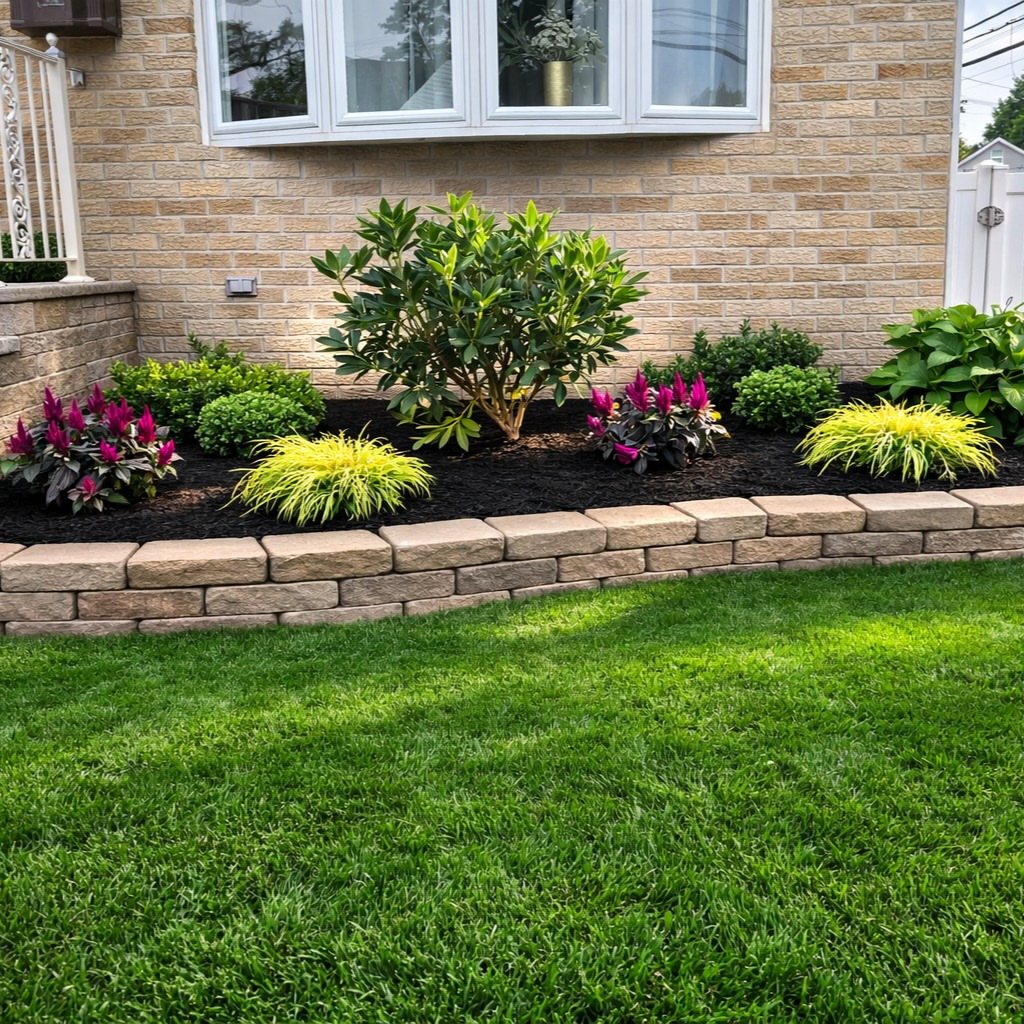
A foundation bed does the single most useful thing a front-yard project can manage: it hides the awkward line where house meets ground.
Leave space between the foundation and your first plant so air circulates and you can work back there. Air needs to move there, and you need access for painting, pest inspection, or gutter repair.
Choose plants that mature to a height below your windowsills; a shrub that blocks the living room undoes everything the bed achieved in year one.
This is the first project I would point a new homeowner toward for visible change on a weekend budget and a single trip to the nursery.
13. Driveway Border Flower Bed

A driveway border turns the dullest stretch of your property into something you actually look at twice. The long, narrow strip means repetition beats variety: pick 2 or 3 plants and run them the full length.
Ornamental grasses give you movement when cars pass, and coneflowers or daylilies keep color going from June into fall.
Skip anything that drops heavy berries or seedpods. You will be sweeping asphalt otherwise.
This suits anyone whose driveway faces the street head-on and who wants curb appeal without a full front-yard overhaul. The bed itself can go in over a Saturday; filling it takes longer, but that part spreads across several weekends.
14. Corner Accent Flower Bed

Lawn corners tend to collect nothing but weeds and the occasional soccer ball. A corner bed claims that space back and gives the eye somewhere to rest when you look across the yard.
A corner bed softens the join between two walls if you let the edge curve instead of forcing a right angle.
Lay a garden hose on the ground and walk around it before you dig; if the shape feels wrong from the street or the deck, move it.
Taller plants belong in back: ornamental grasses, rudbeckia, or shrub roses anchor the corner without crowding the rest of the lawn.
This works best on corners that catch full sun for at least half the day, since most of those tall perennials want light.
15. Modern Minimalist Flower Bed

One plant, one foliage type, dark mulch, metal edging: that is the whole recipe. The restraint reads as intentional rather than sparse, which is harder to pull off than it sounds.
Agapanthus or Karl Foerster grass against fresh black mulch gives you structure without clutter. Limit yourself to one flower color against one leaf color and the contrast carries the whole bed.
This is for the reader who likes a clean porch and a clear calendar. It asks more discipline than effort, and it trades away the cottage-garden look completely.
If you want bees everywhere and something new blooming each week, look at the pollinator bed or the cottage entry instead.
16. Layered Flower Bed

Rows create depth where a flat planting would read as a single blur. Set tall plants in back, medium in middle, short up front, and the bed gains a back wall it does not actually have.
Contrasting colors give you bold; shades of one color give you calm. Either works, but mixing both tends to cancel both out.
A circular bed takes more planning than a straight line, since the rows curve and the sightlines change from every angle. Budget an extra hour for layout, and measure from the center point rather than eyeballing.
This is the entry for someone who arranges their books by color and enjoys the process.
17. Unique Shaped Flower Beds

Square beds match square yards, but most lots are neither square nor flat. A curved or rounded bed follows the actual ground and reads softer against a fence line or a lawn edge.
Small vertical logs of varying height give you texture without a trip to the big-box store. The irregular height catches light differently through the day, which matters more than you would think in a small space.
No edging at all is another option, though you will spend more time keeping the lawn out.
This suits the reader who wants the garden to feel discovered rather than installed, and who does not mind a little extra maintenance for that effect.
18. Repurposed Materials

Clear plastic bottles stacked into a ring make a raised bed for roughly the cost of the soil that fills it.
The look is not for everyone, but the technique transfers: bricks, old bathtubs, wooden pallets, or terracotta roof tiles all do the same job with different character.
Porous materials need an outdoor sealant or they will absorb moisture, crumble, and fade within a couple of seasons. That step costs extra time and a little money, but skipping it means rebuilding.
This is the entry for the reader who already has the thing and hates throwing it away. If you are starting from nothing, cinder blocks or a kit run faster and look more conventional.
The frame costs nothing if the material was headed for the bin anyway, and you end up with a story behind the bed.
Preparing the Ground
Level ground beneath the bed before you set the box down, or you will be shimming with bricks later while the structure warps.
I dig out high spots or spread paver sand to raise low ones until the base is flat.
If the ground slopes even a little, the soil inside settles heavier on one side and the water runs that way too; over a season or two the whole frame starts to tilt, then buckle.
Starting level means the soil stays the same depth corner to corner, so roots find water and nutrients evenly and nothing collects in a soggy spot at the low end.
Map the layout first. I sketch where beds sit relative to the walk and the door, then check the plan from the street before I commit.
Once the shape is marked, clear sod and weeds, loosen what is underneath, and amend with compost before edging goes in.
Choosing Plants
Match the plant to the light the spot actually gets, not the light you wish it got. A bed under a porch roof or a north-facing wall needs shade-tolerant varieties; full-sun plants in those spots stretch and sulk.
Soil conditions matter as much as sunlight. The mix in a raised bed drains faster than ground soil, which suits Mediterranean herbs and succulents but means moisture-lovers need more frequent water or a heavier compost ratio.
Early bulbs, mid-summer perennials, and late asters or ornamental grasses keep the bed from looking tired by August. I group plants by water need so I am not drowning the lavender to keep the hydrangea happy.
Maintenance Tips
Weeding is easier weekly than monthly. Young weeds pull out with fingers; established ones need tools and break soil structure.
Mulch 2–3 inches deep, kept back from plant stems. A two-inch layer of shredded bark or straw blocks light from weed seeds, cuts down how fast the surface dries, and by fall it has rotted into something the worms can use.
I refresh mine once in late spring and again in fall if the bed looks thin.
Water deep and less often rather than shallow and daily. This trains roots downward and makes plants more resilient.
Native beds, once established, often need no supplemental water at all.
Check the bed after heavy rain. Erosion, mulch washout, or a leaning stake are cheaper to fix the day after than the month after.
Design Considerations
Height is the first thing to get right. A plant that matures above the windowsill blocks light and the view from inside; one that stays too low reads as ground cover rather than structure.
I check mature heights before I buy, not first-year growth.
Color works best with restraint. Two or three colors in clear relation beat a scattering of every shade.
Cool colors recede and make a small bed feel deeper; warm colors advance and energize a long border.
The bed should answer to the house, not compete with it. A modern facade wants clean lines and limited plant types; a craftsman bungalow can handle more variety and softer edges.
Industrial materials like galvanized steel or metal edging suit straight architecture; upturned bottles or antique brick fit something more personal.
Dark mulch against pale flowers gives contrast; pale gravel against dark foliage does the same job. I decide the effect before I pick the plants.
Frequently Asked Questions
What are some ideas for a raised bed in my front garden?
Wood, galvanized steel, and repurposed materials all work for front raised beds. Cedar or redwood planters last longer than pine, while galvanized troughs outlast wood by decades and extend your growing season with stored heat.
Cinder blocks, old bathtubs, or even stacked plastic bottles frame beds cheaply if you already have the material on hand.
What not to plant in a raised bed?
Mint, bamboo, and wisteria all belong in containers, not raised beds; their roots will heave the boards apart in a season or two.
Tomatoes and berry bushes are fine, but plant them where the fruit falls on soil, not on concrete you will have to power wash.
Also skip plants that need soil conditions far from what your bed holds; mixing acid-loving shrubs with lime-loving perennials in the same box means neither thrives.
What is the rule of 3 in landscaping?
Plant in odd numbers, usually clusters of 3 or 5, so the grouping reads as natural rather than formal. I use this most deliberately in beds where I want a loose, accidental look rather than a planned one.
How to make a raised flower bed in front of a house?
A garden hose laid on the grass lets you test the curve from the sidewalk and from your front door before you commit to cutting sod.
Twelve inches of soil drains fast enough for most flowers, and a four-foot span means you can weed the center from either side without compacting the bed.
I use roughly two parts topsoil, one part compost, and a handful of perlite per cubic foot so the mix stays loose after wet weeks.
Leave a six-inch gap between the bed and your siding so you have room to paint, wash windows, or replace a downspout without crushing roots.