These ideas run from a flat of annuals you swap out each season to a weekend of hauling stone for a dry creek bed, and the right one depends on whether you own the soil beneath it or answer to a landlord.
1. Annual Flowers

Annuals are the fastest way to get a front bed that actually reads as a garden this season, not next. You buy them as blooming plants in May, set them in, and have color through frost.
The trade is the work: pulling spent plants in fall, buying new ones each spring. For a bed under a front window, I’d start with 6-packs of marigolds, zinnias, and something white like alyssum to break up the heat.
Mulch between them with shredded bark to keep the weeding down.
A gardener building toward a cottage look might use annuals as placeholders while shrubs and perennials fill in.
One of them noted it took a year or two for the permanent plants to reach their full size, but the annuals carried the bed in the meantime.
2. Perennials

Perennials cost more up front and ask for patience, but they settle in and return each spring without another trip to the nursery.
Hydrangeas give you shrub structure and summer flowers both, and something like coneflowers or columbines fills the gaps with less maintenance than a bed of annuals.
Timing matters more than most people think. A perennial bed looks thin its first year, and some plants need 2–3 seasons to hit their stride.
Check your hardiness zone before you buy; a plant rated for a warmer zone will sulk or die once the ground freezes.
North-facing beds stay cooler and damper, which suits columbines fine but can rot the roots of plants that want dry feet.
3. Thrillers, Fillers, and Spillers

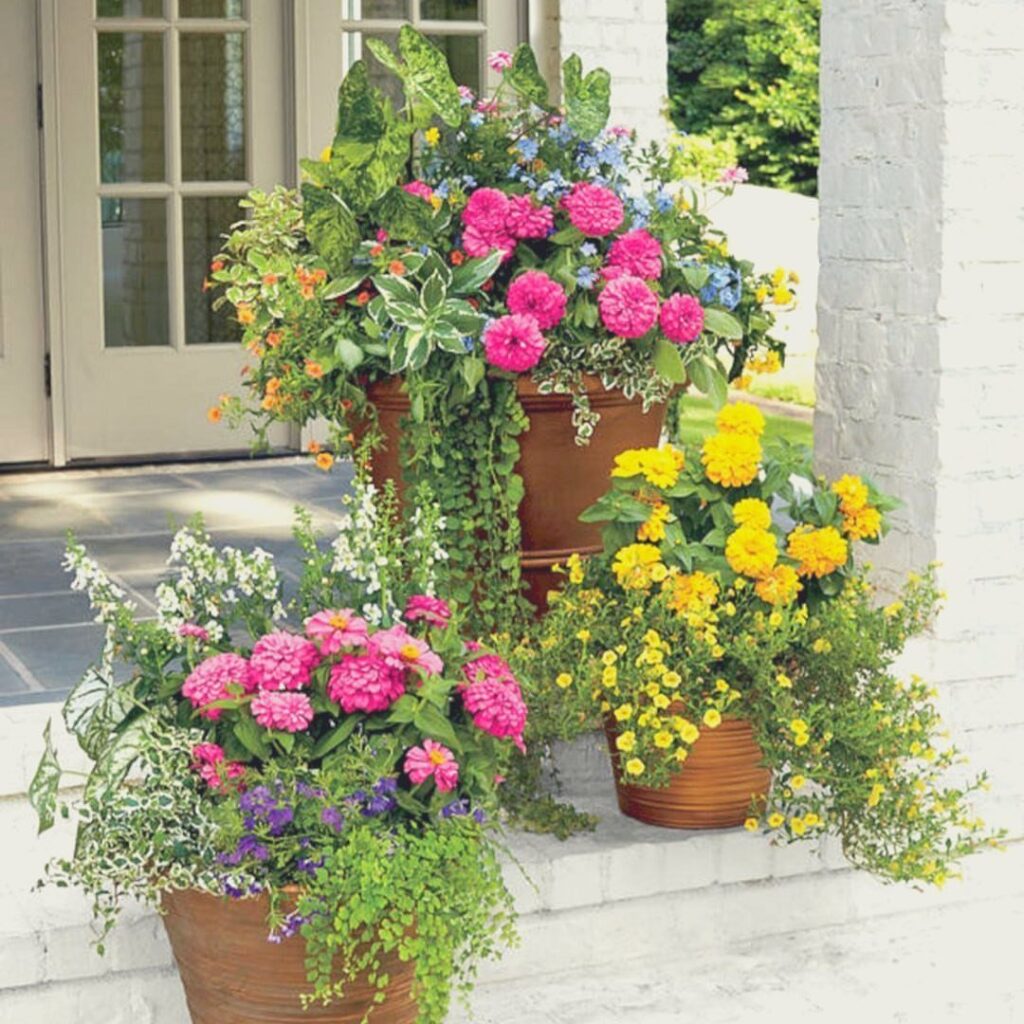
The thriller-filler-spiller rule works in pots because you see them from all sides, but it translates to front beds if you think about sight lines from the sidewalk.
Tall zinnias or a grass clump at the back of a bed against the house give the vertical element. Medium-height plants like marigolds carry the middle.
A trailing vine such as sweet potato or bacopa softens the front edge and hides the mulch line.
This approach matters most in small beds where every plant needs to earn its keep. In a wide bed against a porch, I’d skip the rigid formula and mass one plant for impact instead.
4. Dry Creek Bed

A dry creek bed turns a drainage headache into the organizing feature of the whole front bed.
If your downspout dumps against the foundation or you have a low spot that puddles, a winding channel of cobbles and pebbles gives the water somewhere to go while it soaks in.
You dig a shallow trench, line it with landscape fabric, and set stones from fist-size down to pea gravel so it looks like a natural draw.
The work is a weekend of digging and hauling rock.
Check where your water actually flows during a hard rain before you plan the route; a creek bed that misses the real path just becomes a decorative ditch that still leaves you with a wet basement.
5. Colorful Bulbs

Bulbs are the cheapest color you can buy for spring, and they ask almost nothing after planting. Crocuses come up through mulch in March when nothing else is green, daffodils follow, and tulips finish the show.
The whole sequence costs less than a flat of annuals and repeats for years if the squirrels leave them alone.
The real task is remembering where you put them. I mark bulb locations with flat stones or short stakes before the foliage disappears, so I don’t slice them with a spade later.
Plant in fall before the ground freezes; the bulbs need winter cold to trigger bloom. A south-facing bed warms early and can push tulips up too soon, so a spot with afternoon shade extends the show.
6. Container Gardening

Containers skip the digging entirely, which matters if your front yard is concrete, rental turf, or soil that fights back.
A pair of hanging baskets at the porch or coir-lined wire planters against a fence give color at eye level, and you swap the plants when they tire or the season turns.
Start with annuals in potting mix, not garden soil; the lighter mix drains better and weighs less on a bracket.
The limit is water: containers dry out faster than ground beds, and a hot week can crisp them if you travel.
For a low-effort version, I’d pick drought-tolerant lantana or portulaca over thirsty petunias, or set pots where the sprinkler reaches them.
Plant Selection Tips
Start with your hardiness zone, not a plant that looked good in a catalog. A shrub rated for zone 8 will struggle through a zone 5 winter no matter how much mulch you pile on.
Color works better when you limit the palette. Two or three colors repeated through the bed read as intentional; a dozen colors scattered reads as leftover.
I pick one main color, one contrast, and white or silver to cool it down.
Watering and Irrigation
New plants need water at the root, not sprayed overhead where half evaporates. For the first 2 weeks, I soak the soil directly at the base every other day if it hasn’t rained.
After that, taper to twice a week, then let the plants tell you: drooping leaves in cool morning air mean real thirst, not heat stress.
Drip line or soaker hose under mulch cuts water use by about a third compared to sprinklers. The tubing runs ½ inch from the stem, not against it, and I leave the ends accessible for flushing out sediment once a season.
Design Considerations
Watch where the sun actually falls, not where you think it should. Under a porch roof, a south-facing bed can sit in shade until noon, then fry all afternoon.
Map light at 9 AM, noon, and 4 PM before you buy anything.
Drainage tests are worth the hour. Dig a hole, fill it with water, and see how long it takes to drain.
If it still holds water after 4 hours, you are building a bog garden whether you meant to or not. Slope the soil or add a dry creek bed before you plant.
In an island bed seen from all sides, the tall center drops down to the edges like a bowl.
Maintenance Advice
Weeds steal water and light the same day they sprout. I pull them when the soil is damp and they come out with the root intact; dry soil snaps the stem and the weed returns in a week.
A 2-inch mulch layer buys time between checks, but it does not replace checking.
Pest damage that shows up on one plant and skips its neighbor is usually a specific insect. Damage on everything at once points to environment: too wet, too dry, or fertilizer burn.
I watch for a pattern before I treat, since spraying the wrong problem wastes money and kills the good bugs too.
If a plant dies twice in the same spot, the spot is the problem, not the plant. Switch to something that tolerates what that location actually offers: dry shade, wet clay, reflected heat off concrete.
Frequently Asked Questions
What are some good plants for a front yard garden bed?
Marigolds, zinnias, and alyssum are reliable annuals that give color from May through frost.
A hydrangea rated for zone 8 will not survive a Minnesota winter; the tag on the pot tells you where a plant can live, not where it merely looks good in summer.
What is the rule of 3 in landscaping?
The thriller-filler-spiller rule gives a front bed three working layers: tall plants like zinnias or a grass clump at the back for height, medium plants like marigolds in the middle, and trailing vines such as sweet potato or bacopa at the front edge to soften the mulch line.
What are some ideas for a raised bed in my front garden?
Containers skip the digging if your front yard is concrete, rental turf, or poor soil.
How to design a flower bed?
Start with sight lines from the sidewalk and layer by height: tall plants at the back against the house, medium plants in the middle, and trailing plants at the front edge.
For a bed under a front window, I’d begin with 6-packs of blooming annuals for instant color while slower perennials or shrubs fill in behind them. Shredded bark between plants buys you weekends back by cutting weeding in half.