
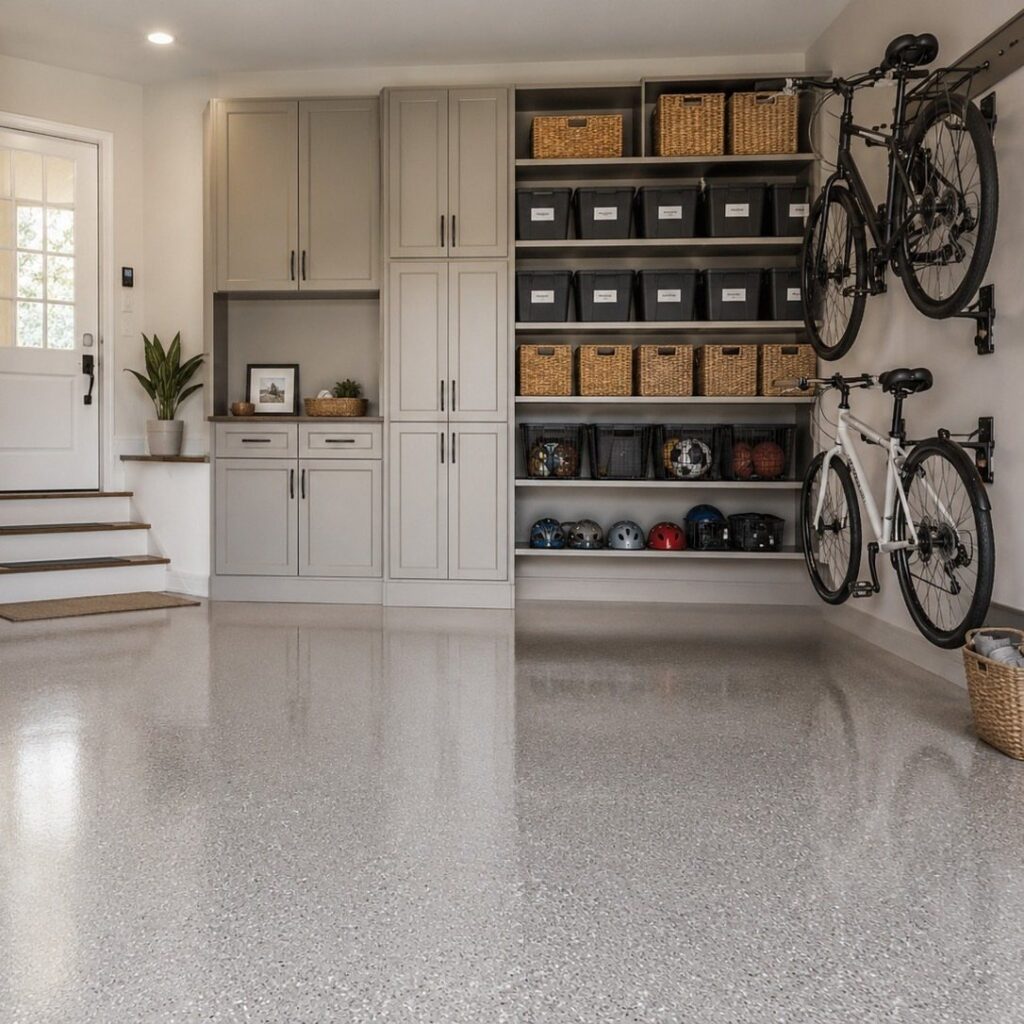
Ten garage entryway ideas run from a thirty-dollar rug to a full built-in mudroom that eats a weekend and then some.
The one that fits depends on whether you own the wall you are screwing into and how many people’s gear has to pass through it.
A prefab cabinet with half the room runs about the same price, so adjustable storage pays off when soccer gear shifts to skis by January.
1. Install Hooks for Coats
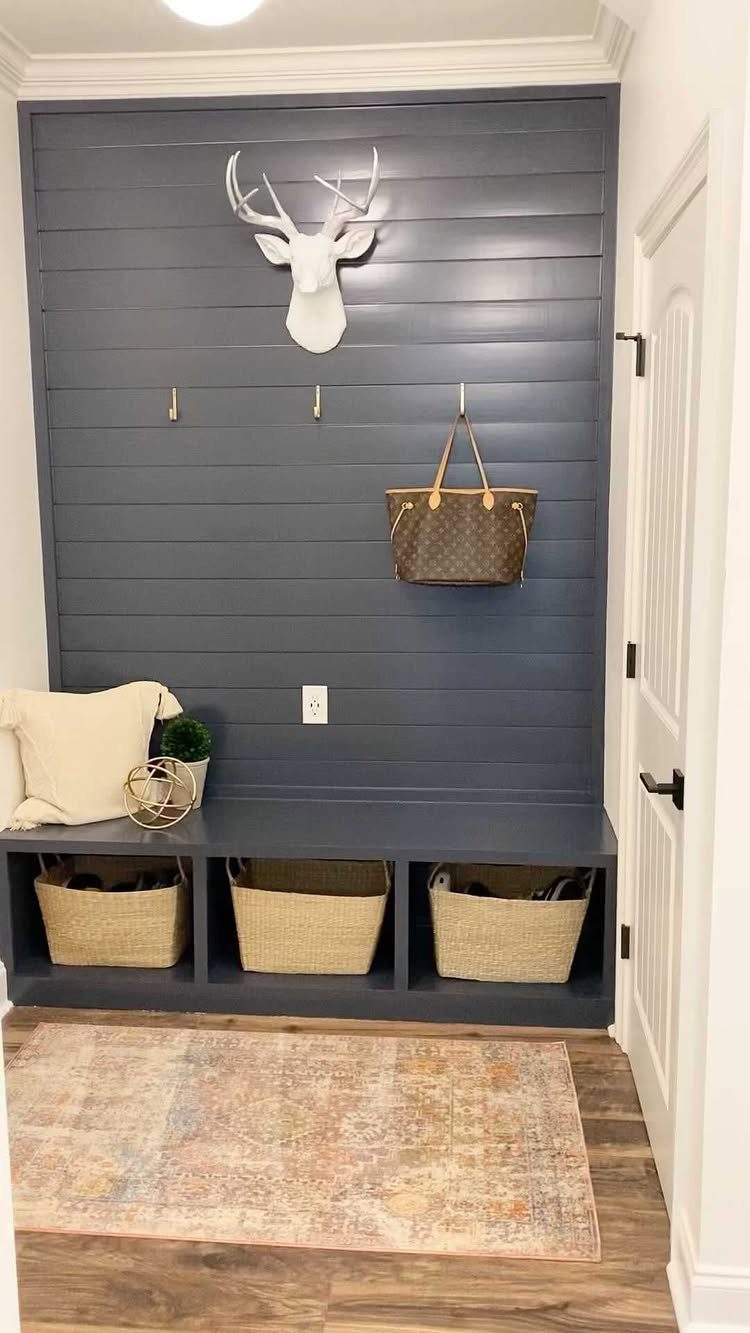
Three hooks at staggered heights let a family unload without collision. Kids hang low, adults reach high, and the middle row takes bags before they hit the bench below.
A garage wall takes screws straight into studs; drywall anchors sag under winter coats. Space hooks far enough apart that shoulders clear each other and nothing clusters like a coat rack.
Brass, black, or brushed nickel finishes are cheap enough at hardware stores that a stud finder pays for itself in avoided patch jobs.
This suits anyone whose family coats end up on the doorknob by Wednesday. Visible clutter is the downside; cabinet doors hide more but cost more and eat floor space.
2. Add a Bench
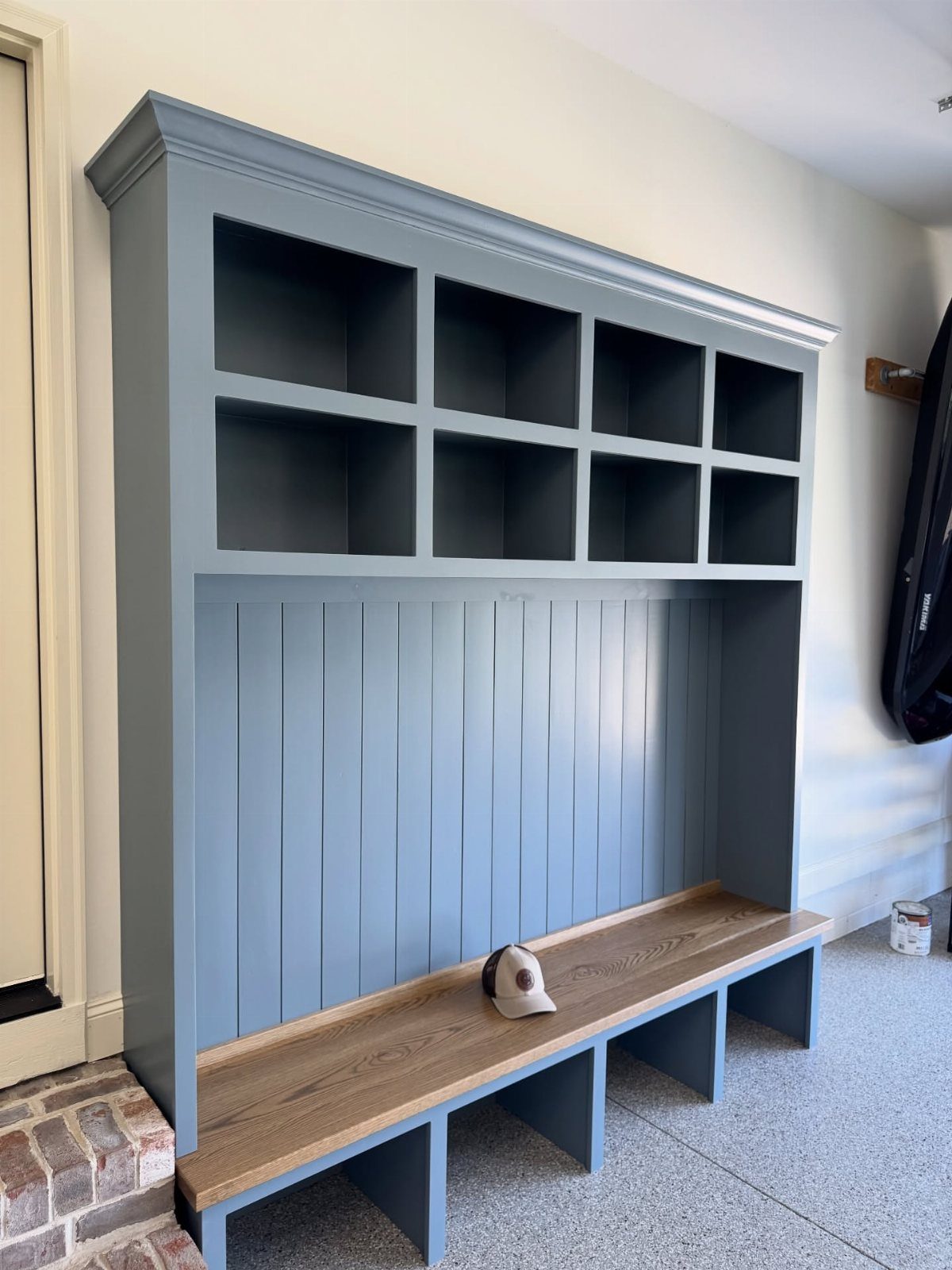
A bench turns the garage from a pass-through into a room you actually use.
Painted plywood cubbies with a wood top hit the practical middle path. Solid hardwood benches eat your whole materials budget; birch plywood with a hardwood veneer holds up to heel scuffs better than soft pine for a lot less.
I built one with a lift-top seat once and the hinges rusted in a humid garage; drawers or open cubbies breathe easier and cost nothing extra in hardware.
Leave clear leg room underneath for boots. A cushion helps for long lace sessions, but removable fabric is non-negotiable near road salt and dog feet.
Best for anyone who has sat on a tire trying to unlace snow boots.
3. Create a Functional Drop Zone
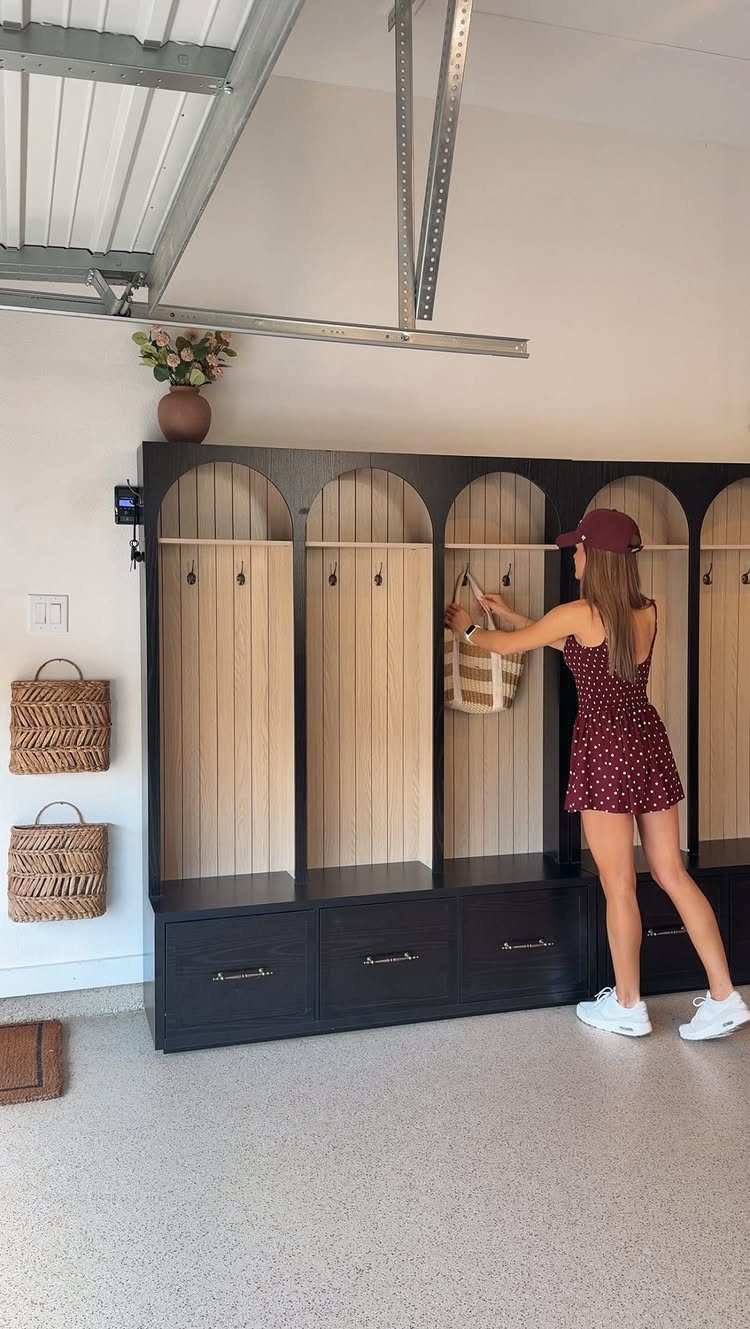
The arched locker idea needs nothing more than a bench, hooks, and a floor mat to function.
A drop zone works because it accepts chaos on purpose. Shoes go in a basket or low shelf, bags hang at hand height, and the bench catches whatever else.
I think of it as a customs checkpoint between outside and inside: if everything pauses here, it never reaches the kitchen table.
Beadboard backing and triple hooks match a farmhouse house, but painted plywood and simple hooks work the same for less. Depth is the critical dimension; plan for boots at minimum, more if you want drawers in the base.
This idea suits the household where everyone currently dumps through the same short stretch of wall.
4. Use Area Rugs
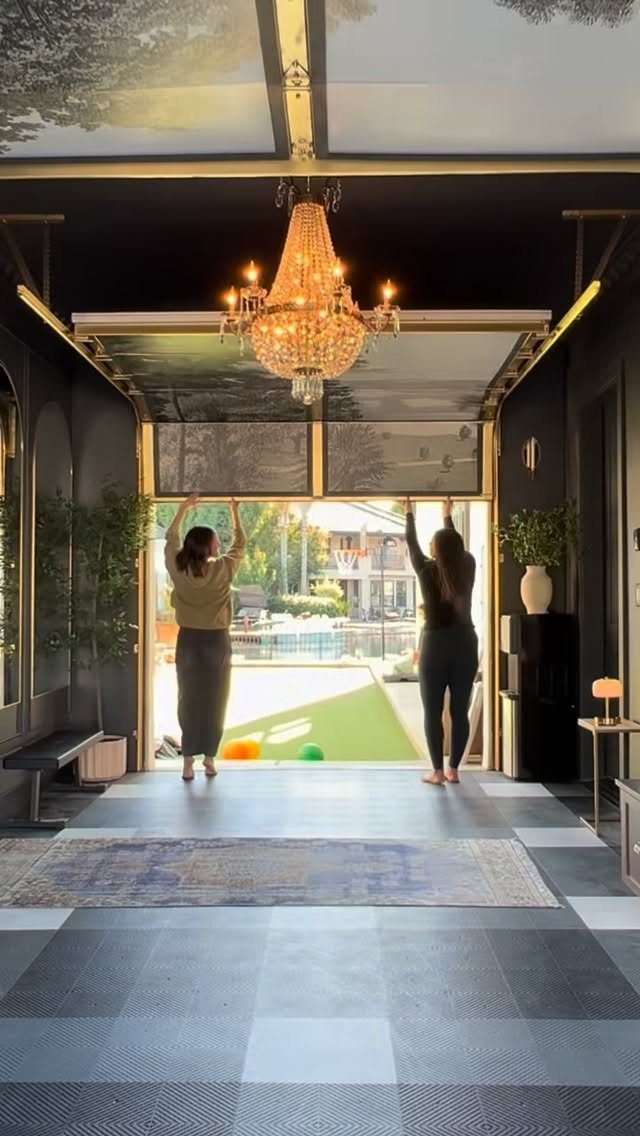
Concrete garage floors read cold even when the heat is on. A rug fixes that fast and defines the entry as its own space.
Geometric patterns hide the dirt that plain colors show by midweek. Indoor-outdoor polypropylene rugs hose off in summer and survive salt better than wool.
I keep a basket for the most-worn pair of shoes right on the rug edge, which saves the drawer dive on busy mornings.
No pad underneath; it slides and holds moisture. Rubber backing grips the concrete directly.
Skip this if your garage floods in spring thaw. Otherwise, it is the cheapest warmth you can buy.
5. Incorporate a Mirror
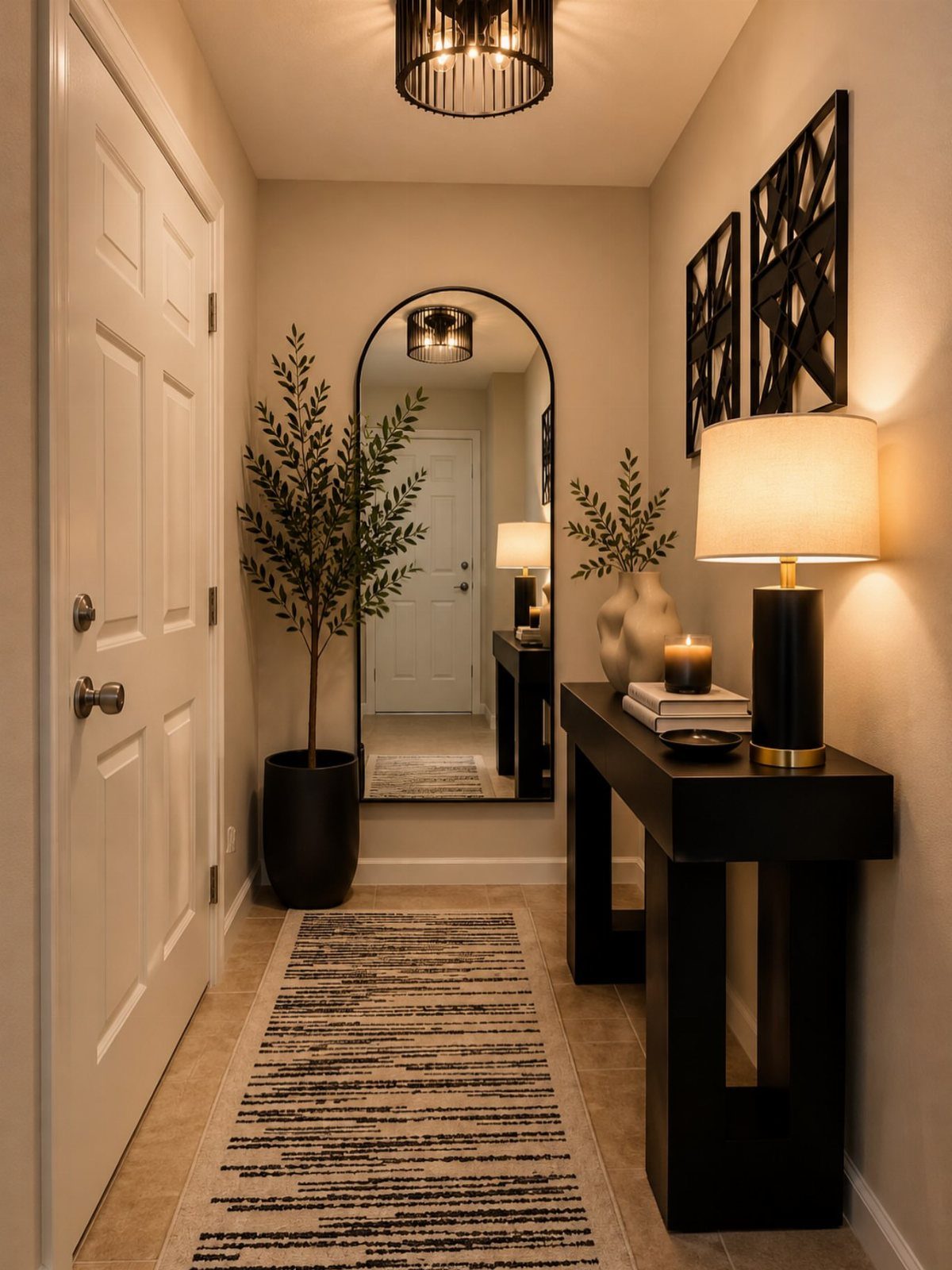
A mirror by the door serves one purpose: catching the thing you forgot before you are gone.
Size depends on what you check. A small mirror at hook height shows faces for lipstick or collar straightening.
A full-length leaning mirror lets you judge an outfit or spot the tag still on your coat.
I would pick small and high for a garage that only sees outerwear; the full-length belongs where you are dressing, not where you are leaving.
Frame weight matters on garage drywall. A leaner needs floor contact or a tether to the wall stud; a hanger takes a proper anchor, not a picture hook.
Suits anyone who has driven back for a belt or a kid’s missing hair ribbon.
6. Use Slatwall for Storage
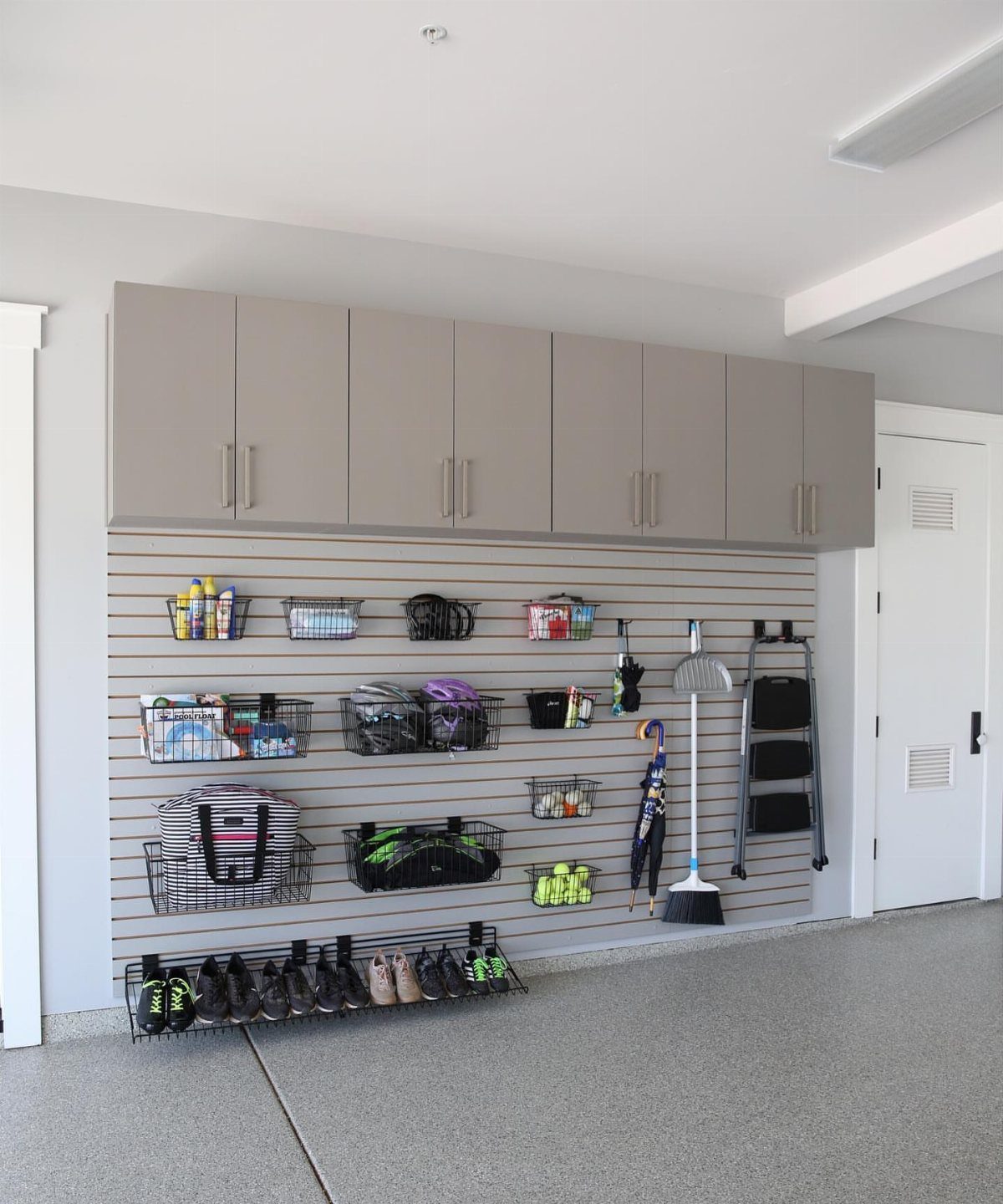
Slatwall turns any garage wall into adjustable storage without the commitment of fixed shelves.
Gray slatwall panels lock together, with baskets, hooks, and shoe shelves that snap into the grooves and move as needs change.
I have seen slatwall hold serious weight when anchored to studs; hitting the studs matters, not just drywall, especially for bikes or heavy gear.
Wire baskets and specialty hooks run cheap enough that the system beats prefab cabinets on price. A full panel covers a lot of territory and costs about the same as a prefab cabinet of half the capacity.
This wins for households whose storage needs shift seasonally: soccer in fall, skis in January, garden tools by April. Fixed shelves cannot pivot that fast.
7. Create a Mudroom Area
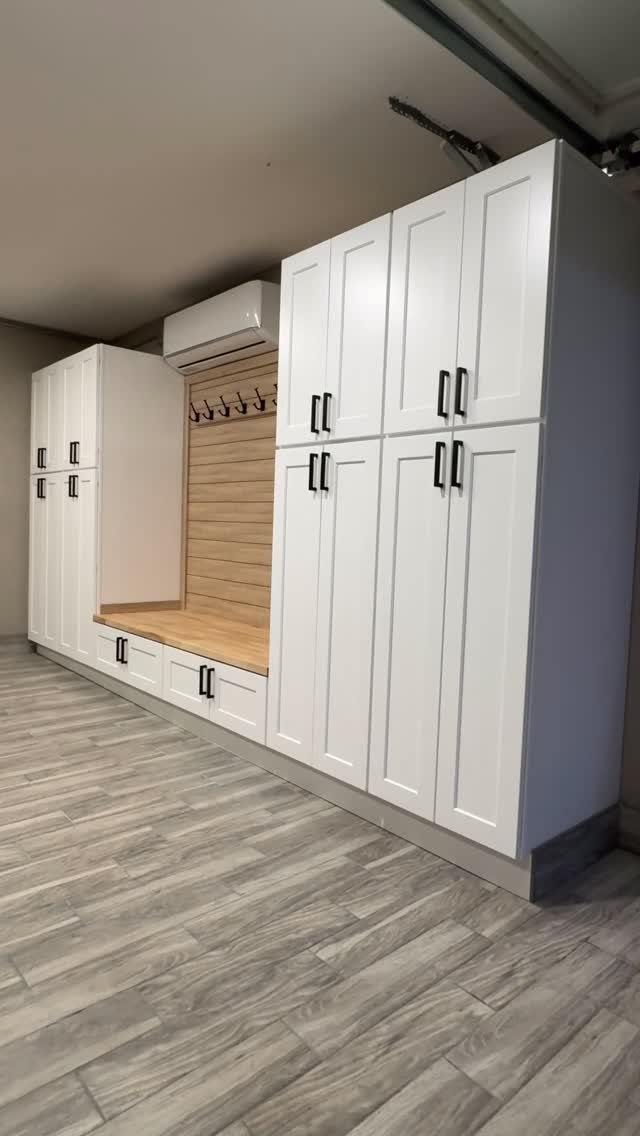
A proper mudroom area turns the garage entryway into the last stop before the house, not the first pile of clutter you trip over.
Tall cabinets on both sides of a bench with drawers underneath give coats and shoes their own territory instead of competing for the same hook.
The bench top here is butcher block, a surface that handles wet bags and snowy boots without the fuss of painted wood.
I would build the cabinet boxes first, then fit the bench between them so the dimensions stay honest. Drawers underneath beat open cubbies for anything that smells like soccer practice.
This much built-in work runs past a single weekend and takes a bigger materials budget than a quick project, but it pays back in hours saved hunting for gloves.
Skip this if you rent or park two cars tight; a freestanding hall tree with cubbies and baskets handles the same job for less cash and moves out when you do.
Importance of Functionality
A garage entryway earns its keep by moving traffic through fast. Staggered hooks and a bench turn collision into sequence when everyone arrives at once.
The real test is Tuesday evening, not the reveal photo. A system that looks tidy on Sunday falls apart by Thursday if it fights habit instead of guiding it.
I would rather see shoes in a basket than a perfect row nobody maintains.
Depth matters more than width. A deep enough drop zone handles boots and a bag together; shallow shelving leaves the bag on the floor.
Plan for what people carry, not what they should carry.
Function first means you can add style later. A painted plywood bench with proper spacing beats a butcher-block showpiece that crowds the door.
In addition to not being the most aesthetically appealing design, the makeshift coat rack and chairs were no match for the mountain of footwear, outerwear, and school books that quickly covered and overwhelmed them.
— Bob Vila
DIY Tips
Most of these projects need a drill, a stud finder, and a level. A miter saw helps for bench tops but a circular saw with a straightedge works; I have cut plywood on sawhorses with a guide clamped down.
Paint matched to the house walls carries the same color through to the garage. One gallon usually covers a bench and backing panel.
Matching the interior trim color makes the entry feel intentional instead of afterthought.
Pocket screws and wood glue hold cabinet boxes without a nail gun. A face frame hides the joint if the plywood edge shows.
I would not buy specialty hardware until the basic layout proves itself. A basic hook anchored to a stud carries a winter coat; a fancy hook through drywall still rips out.
Benefits of a Mudroom
Snow melts on the mat, not the kitchen floor; road salt dries in the basket, not the hall carpet.
The garage location is the practical choice for this. Front entries look nice for guests but most families live through the door by the cars.
Routing daily traffic through the formal door just to preserve a mudroom illusion wastes steps and fails by Wednesday.
I would put the mudroom where the mud actually arrives. Boots worn through puddles in the garage need a landing zone before the house proper.
Reduced cleaning time matters more than appearance in a mudroom. A household that sheds layers in one spot saves the vacuum passes that scattered entryways demand.
One contained mess beats three spreading ones.
Aesthetic Considerations
Garage entries deserve the same attention as interior spaces because people actually use them more. A pendant light over the bench costs less than most fixture upgrades inside and gets seen every day.
Painted steps matching the floor coating pull the space together without extra material. I would skip the curtain on the garage door; it collects dust and blocks light you need.
Bench pillows add comfort but need removable covers near wet coats.
The vaulted ceiling in some garage entries takes a statement light well. A simple flush mount saves headroom where the door swing comes close.
I think of garage aesthetics as hospitality to yourself. You are the one who sees it daily at 7 AM and 7 PM.
Frequently Asked Questions
What are some good ideas for the entry from my garage to my house?
A bench with hooks above it and a rug on the floor hits the practical middle for most households.
Staggered hook heights let kids and adults unload without collision, and a rug defines the space as its own room rather than a pass-through.
Open cubbies or drawers handle garage humidity better than lift-top seats with hinges that can seize up.
What are some creative ideas for an entryway?
A catch-all shelf at hand height gives mail and school notes a designated spot before they hit the kitchen table.
Greenery and personal decor finish the space, but the function comes first: if the entry accepts chaos on purpose, it never reaches the rest of the house.





