
Backyard landscaping designs run from a weekend with a wheelbarrow and a bag of Quikrete to a full season of terracing and wall-building.
The deciding factor is usually how much you want to spend and how long you have before the next barbecue.
A pergola built from two-by-sixes and hardware-store brackets can go up in a single Saturday, while a retaining wall project starts with checking local code before you rent the excavator.
1. Outdoor Living
A backyard earns its keep when you actually step into it. French doors and matching interior-to-exterior flooring do more than look good; they erase the threshold that keeps a space small.
I saw this work on a rental where the landlord let us run the same luxury vinyl plank through a sliding door onto a covered concrete patio.
A small patio lives larger when the edges stay open to grass instead of crowding in furniture.
For a weekend project, container plants flanking the doorway plus a rug that picks up an indoor color does most of the same work with a tight budget.
Upkeep is the cost of keeping that look. Outdoor rugs rot, and plants need water.
Skip this if your door faces west and bakes everything in July.
2. Landscape Lighting
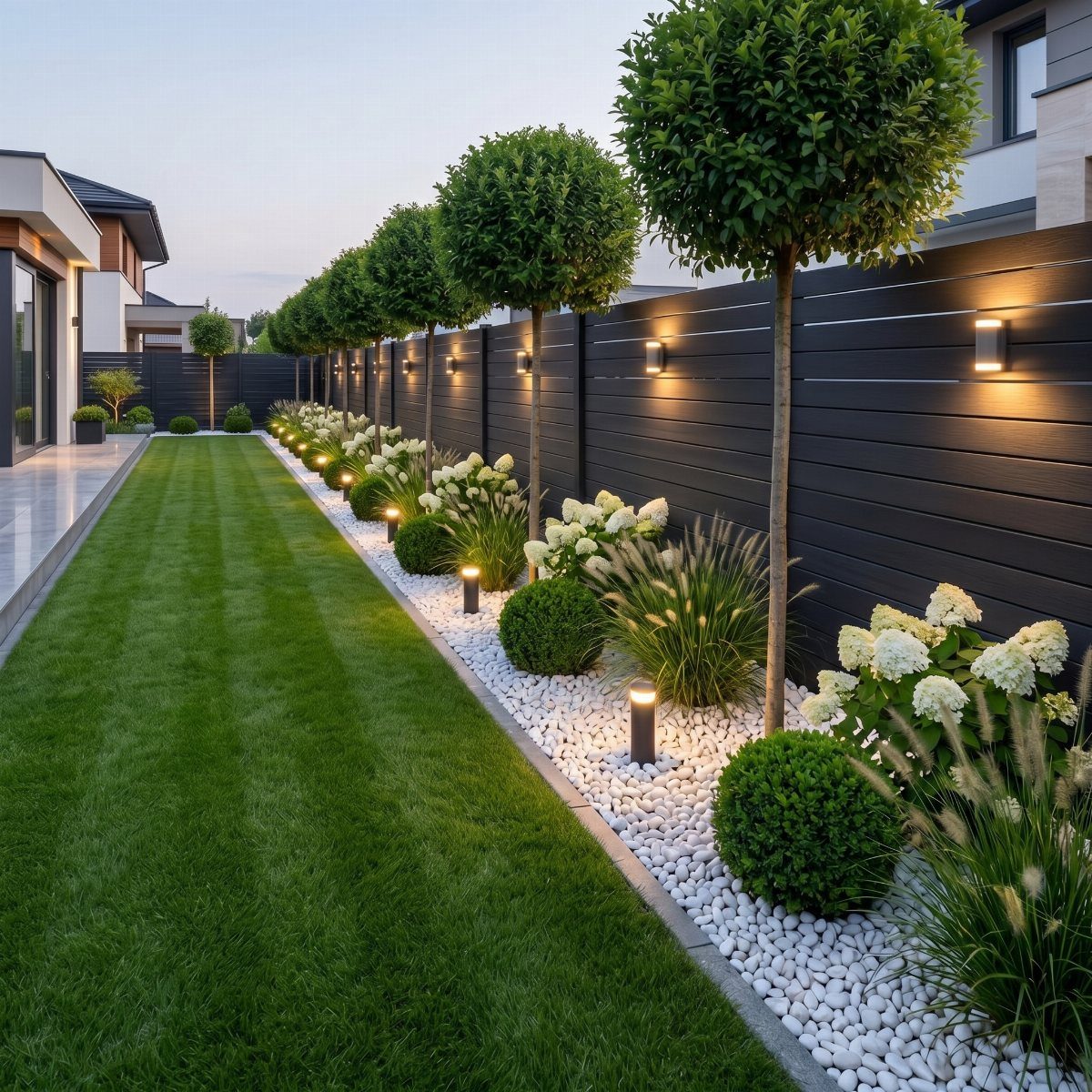
Winter darkness arrives early, and a lit yard doubles your usable hours. Wall sconces on a fence line plus low bollards along a path give enough glow to move by without stadium glare.
Start with the 120V fixtures if you have outdoor outlets; otherwise solar bollards have come far enough to matter, though they dim by January.
I ran a line of battery-powered sconces on a rental fence using Command strips rated for exterior use, which the landlord never noticed and I took with me.
The hydrangea in one of these shots grows tall enough to catch uplighting; you get a pink-shifted ghost in fall. Solar path lights cost pocket change, while a wired zone runs into the hundreds.
3. Try a Pergola
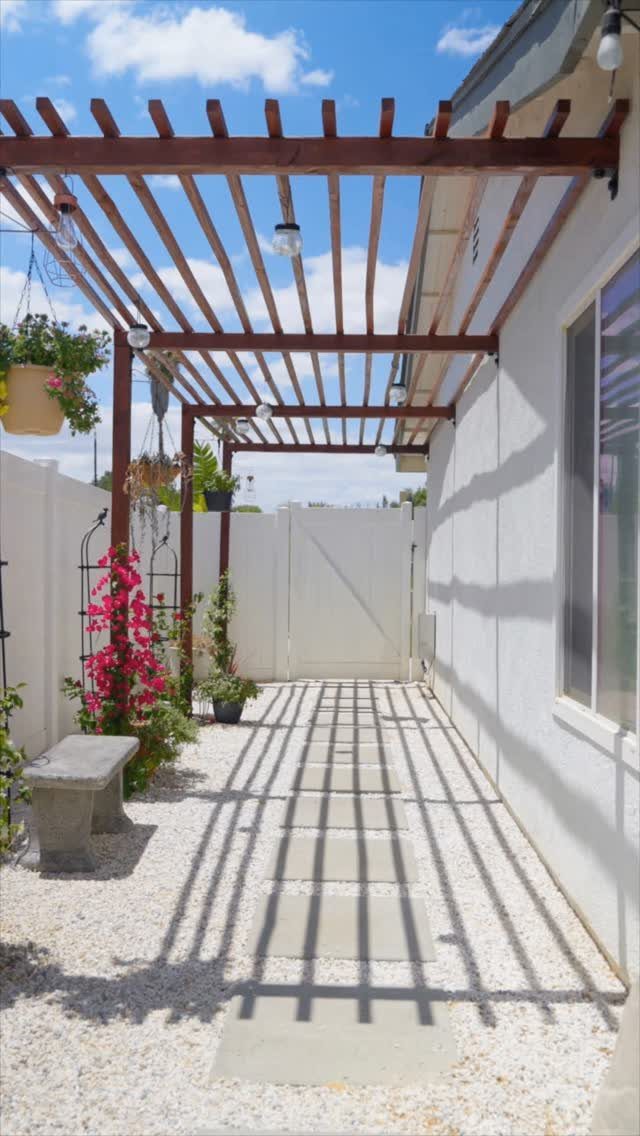
A pergola turns a side yard from passageway to place. A wall-mounted beam avoids posts that eat the walking width, which matters in a narrow gap.
I built a lean-to version against my garage with two-by-sixes and hardware-store brackets, then strung Edison bulbs for the same effect as hanging lights. Total spend was low enough to cover in cash, and the work fit one Saturday.
Vines need time to fill in; plan for the structure to look good bare for the first couple years.
Closer slat spacing throws a denser shadow pattern underneath. Wider gaps, more sun; tighter, more shade.
Pick based on whether you need coverage or just definition.
4. Brighten with Color
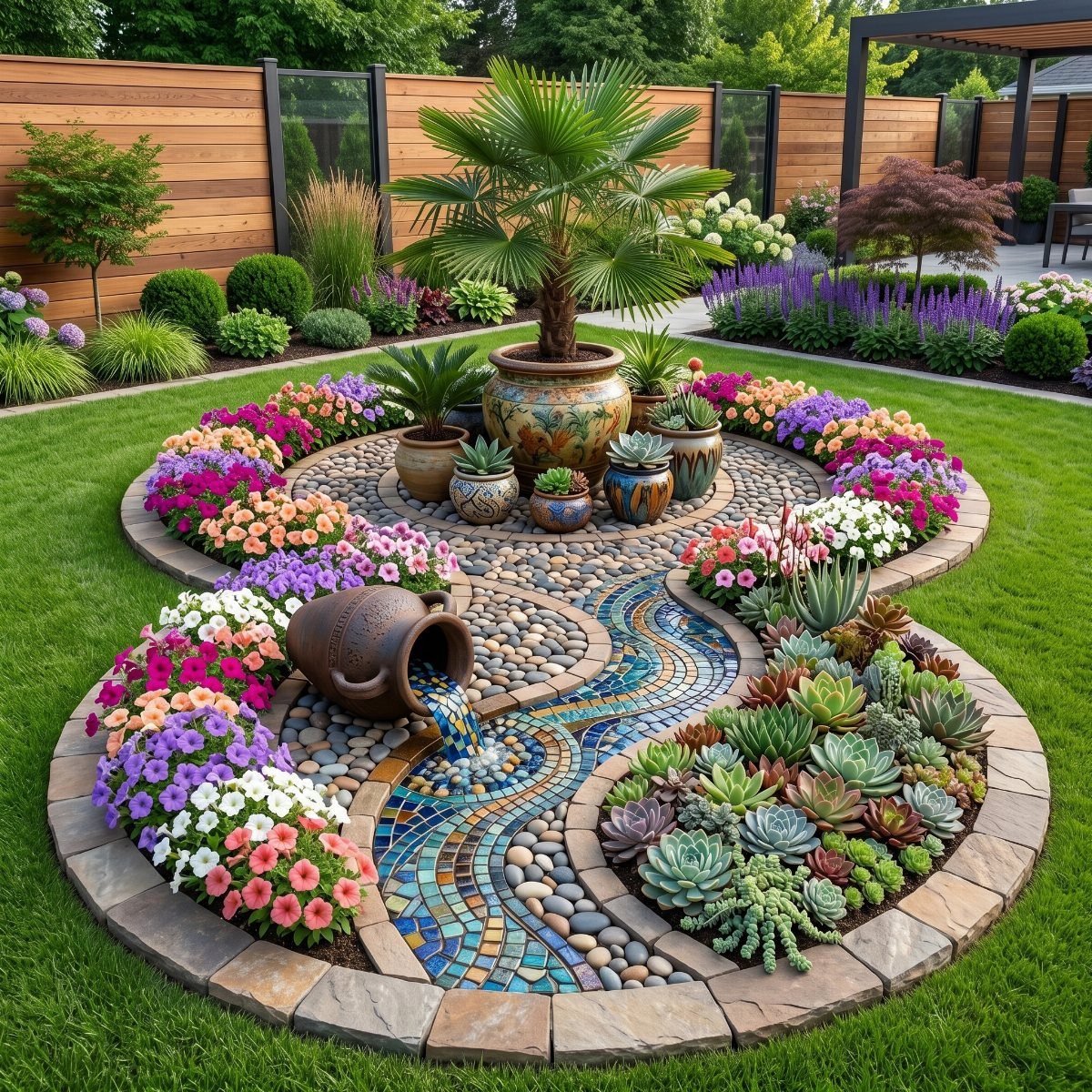
Color costs less than structure and reads faster.
Cheap outdoor rugs fade fast in Texas sun; buy the inexpensive one and replace it rather than mourning the pricey one. Planters move, cushions store, murals stay; choose your commitment level.
A figure-eight shape gives a flat yard a destination to walk toward. Two focal points, one loop of walking, and your eye has work to do.
This suits renters who cannot dig deep beds but can build a raised frame.
5. Switch Up the Hardscape
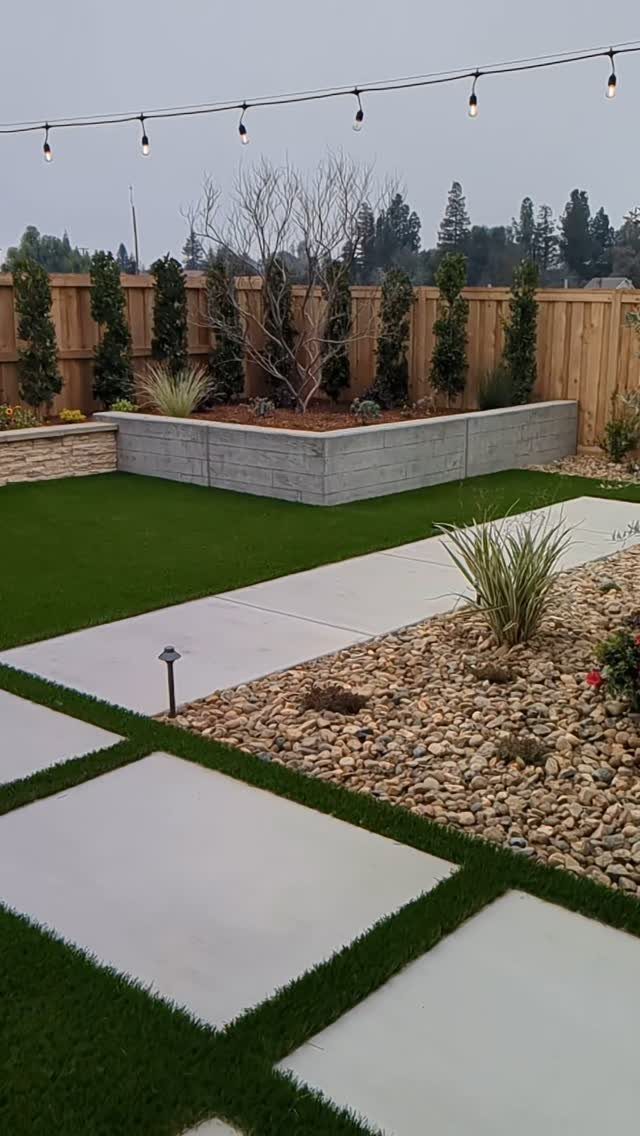
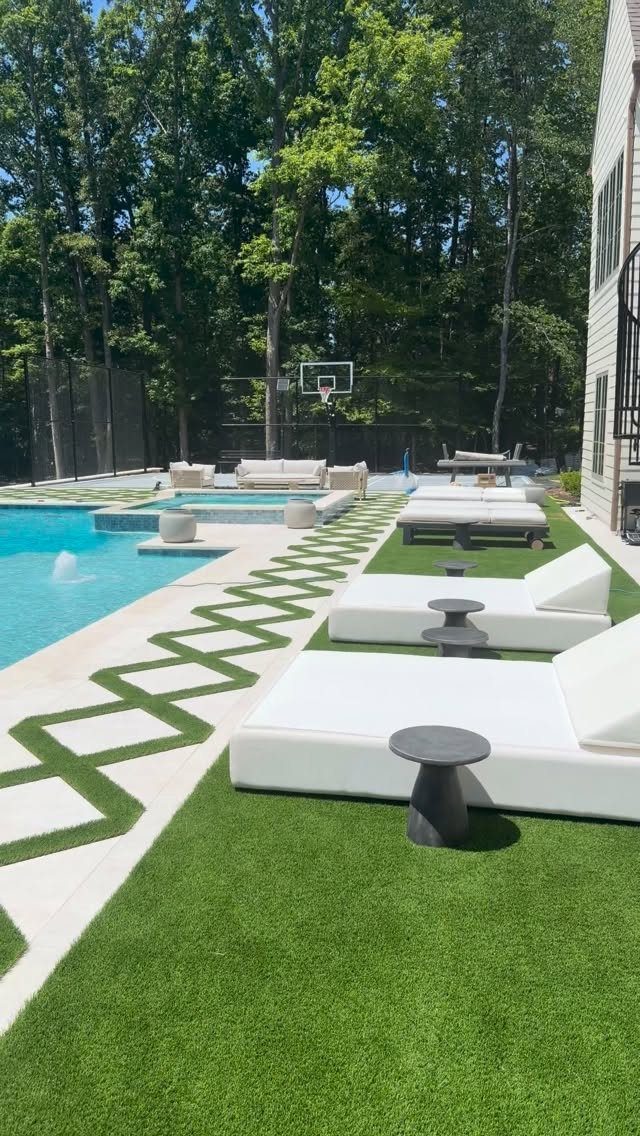
Concrete pavers set into turf read modern because the grid fights the organic. Large squares mean fewer cuts and less leveling than small ones.
Pea gravel fills the joints in some versions; here it is artificial turf, which I would not choose again after seeing it melt against a grill in a friend’s yard.
Decomposed granite holds better and costs about the same per bag, though it tracks indoors.
Mixing materials works when one carries the load and the other fills around it. Stone retains, concrete walks, gravel drains.
A weekend project might extend an existing concrete pad with a gravel fringe and a few poured stepping stones using Quikrete molds, especially if you already own a wheelbarrow.
6. Create Walkways
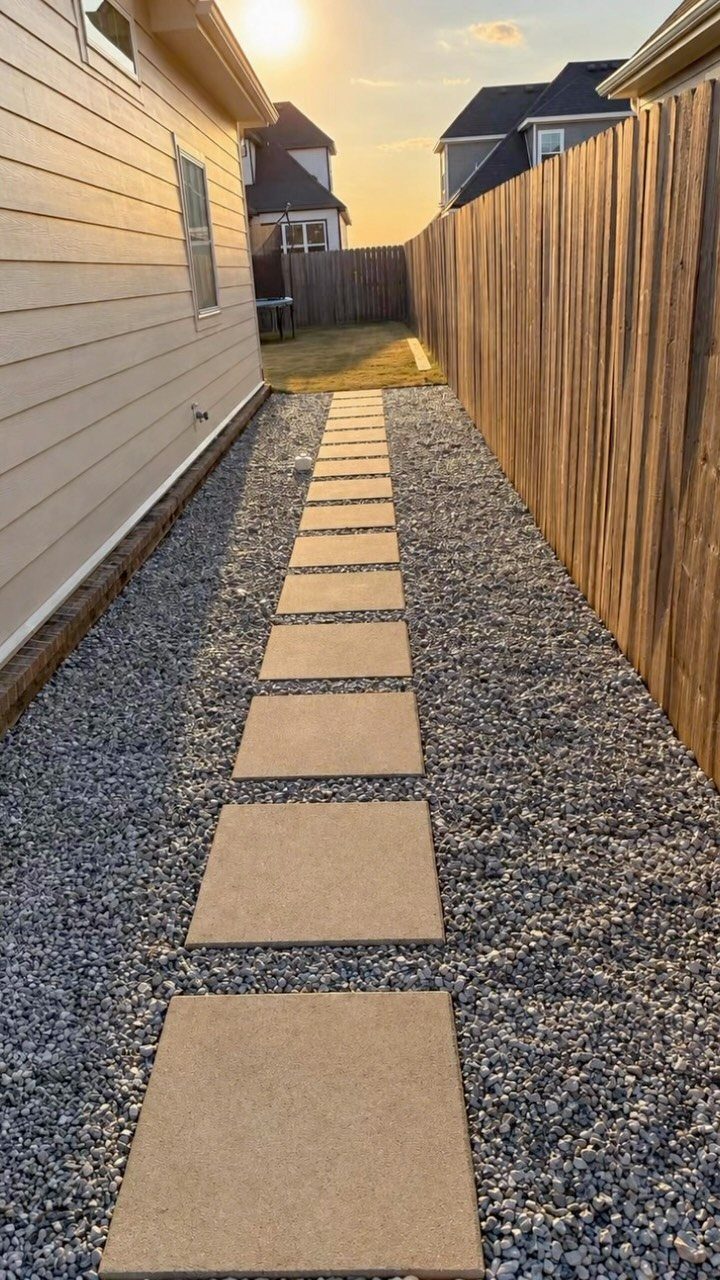
A path tells feet where to go so the rest of the yard stays intact. Square pavers in gravel drain and stay level better than pavers in sand.
I laid a similar run in my first house, spacing the stones at my natural stride length plus two inches. Too close and you shuffle; too far and you hop.
Measure your own stride in the driveway with chalk before buying.
Gravel type matters for noise. Pea gravel rolls and twists ankles.
Cost per square foot depends mostly on whether you need delivery.
7. Built-In Seating Area
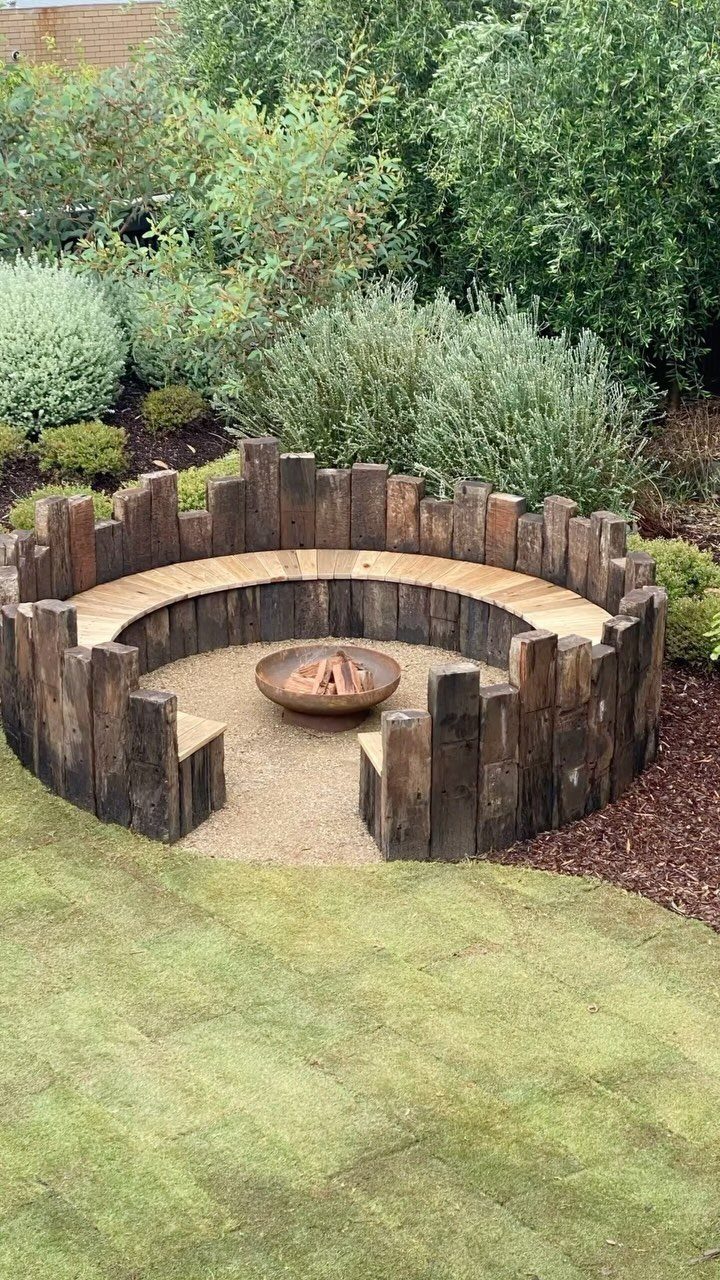
A built-in bench around a fire pit turns the seating itself into the landscape. Gravel under the upright timbers drains water and keeps the wood from rotting where it meets the ground.
Bench height is a balancing act; too low and older guests struggle to stand, too high and it stops feeling like furniture.
Built-in seating fits more people into a small yard than loose chairs ever could. You tuck the perimeter tight to the edge and gain back the walking space that individual seats eat up.
If your yard is flat, a seating wall works instead of wood. Stack stone or concrete block to a comfortable sitting height, cap it with a smooth ledge, and you have a place to sit that never needs staining.
The trade is hardness; bring cushions or expect a numb tailbone after an hour.
8. Use Retaining Walls
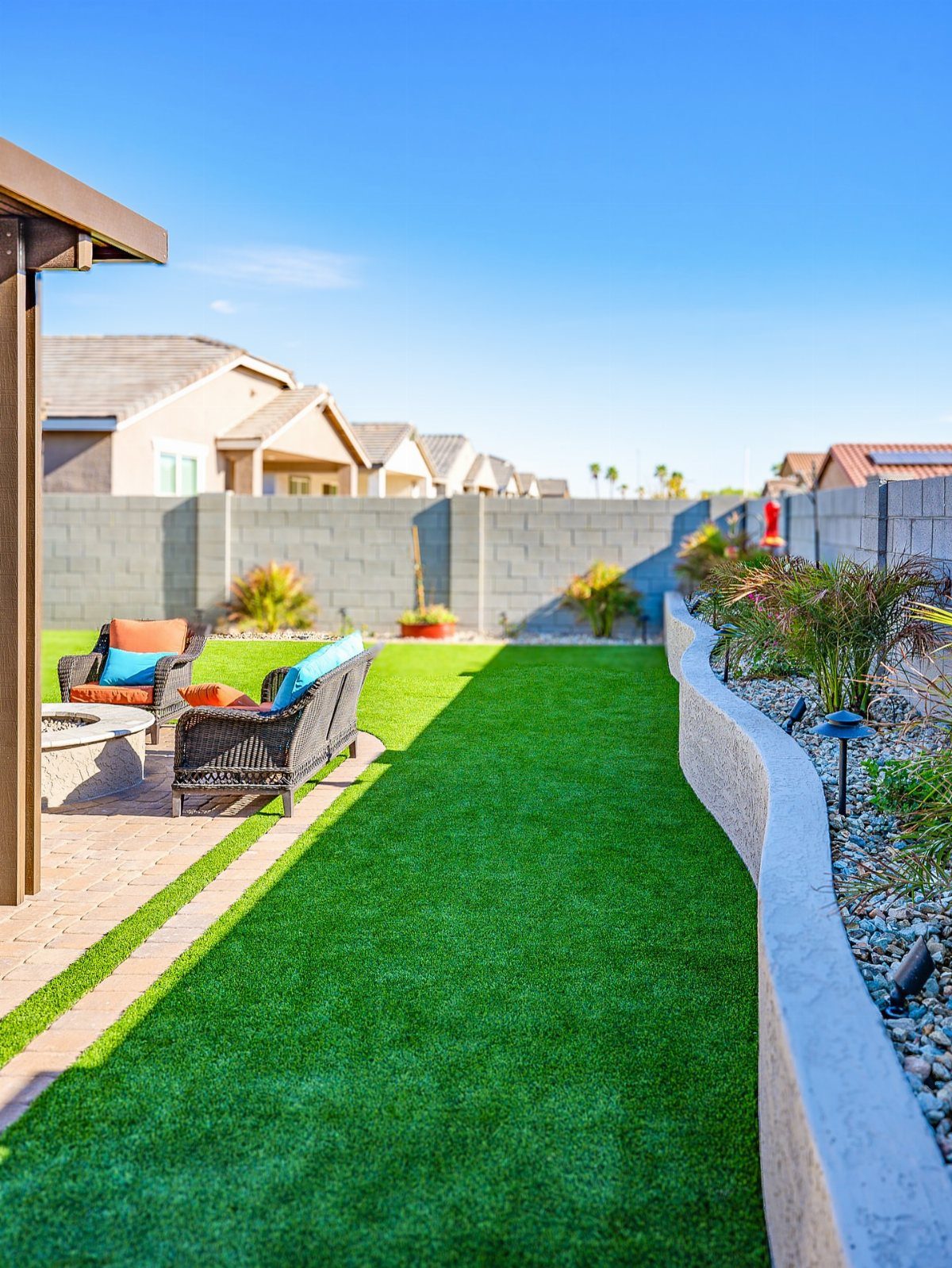
Retaining walls turn a slope from a mowing headache into usable terraces. A curved concrete wall separating lawn from gravel bed makes both zones feel larger than they are.
Your eye reads two distinct rooms instead of one awkward grade.
Slopes are easier to work with than against; terracing turns a problem into usable space.
Cut into it, build the wall, backfill with drainage stone, and suddenly you have a level patio where you used to have a hill that eroded every spring.
Low walls often skip the permit, but check your local code before you rent the excavator.
Concrete, stone, and timber all work; timber rots fastest and concrete lasts longest. Poured concrete faced with stone is the expensive route.
For a tighter budget, segmental block walls lock together without mortar and run half the labor.
9. Simple Landscaping Ideas
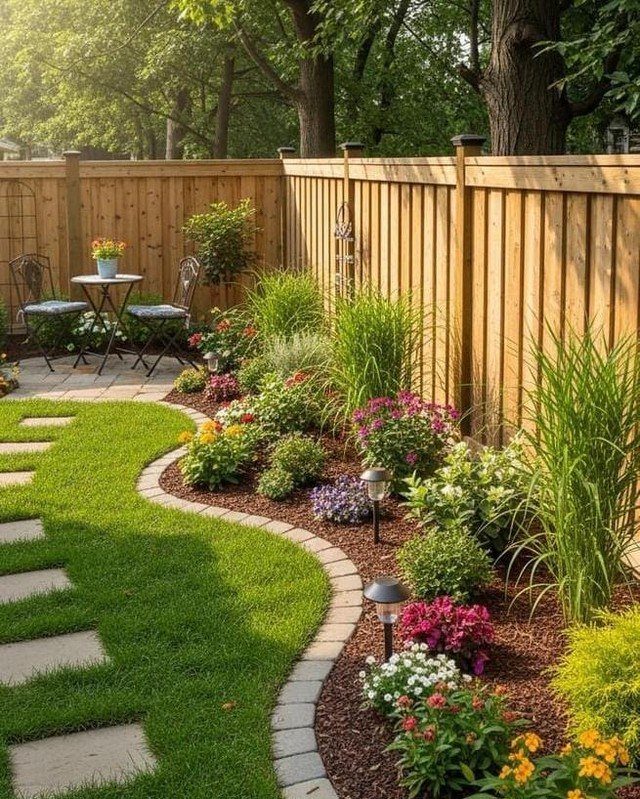
Native plants and a simple layout keep a backyard from becoming a second job.
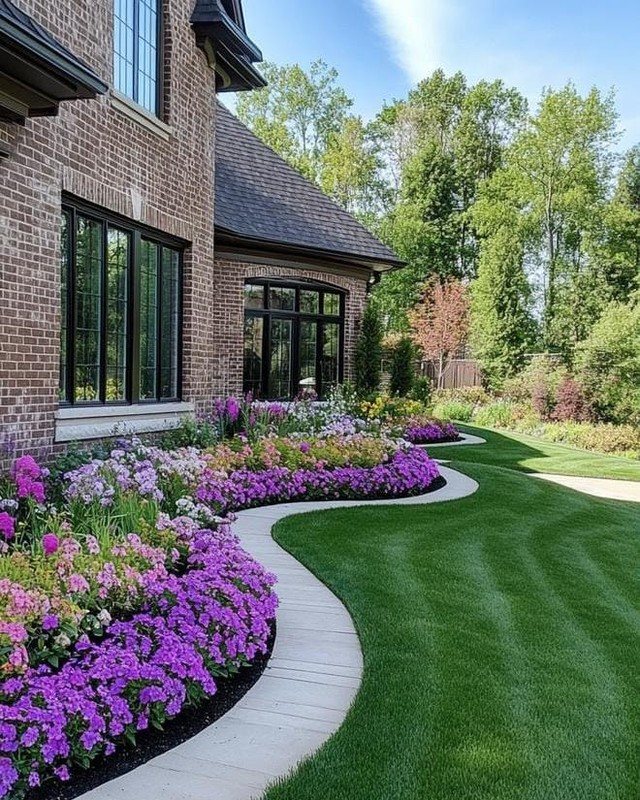
A curved bed edged with pavers and filled with mulch is the kind of design you can refresh in a Saturday morning rather than surrendering every weekend to maintenance.
Plants that already want to grow in your yard need less water, less fertilizer, and less replacement. Ask your county extension office for a list; they keep one.
Low-maintenance means honest tradeoffs. You lose the tropical look, you gain not standing in the July heat with a hose.
Mulch suppresses weeds at first; after that, the weeds come anyway, but the mulch makes them easier to pull.
10. Landscape Border Ideas
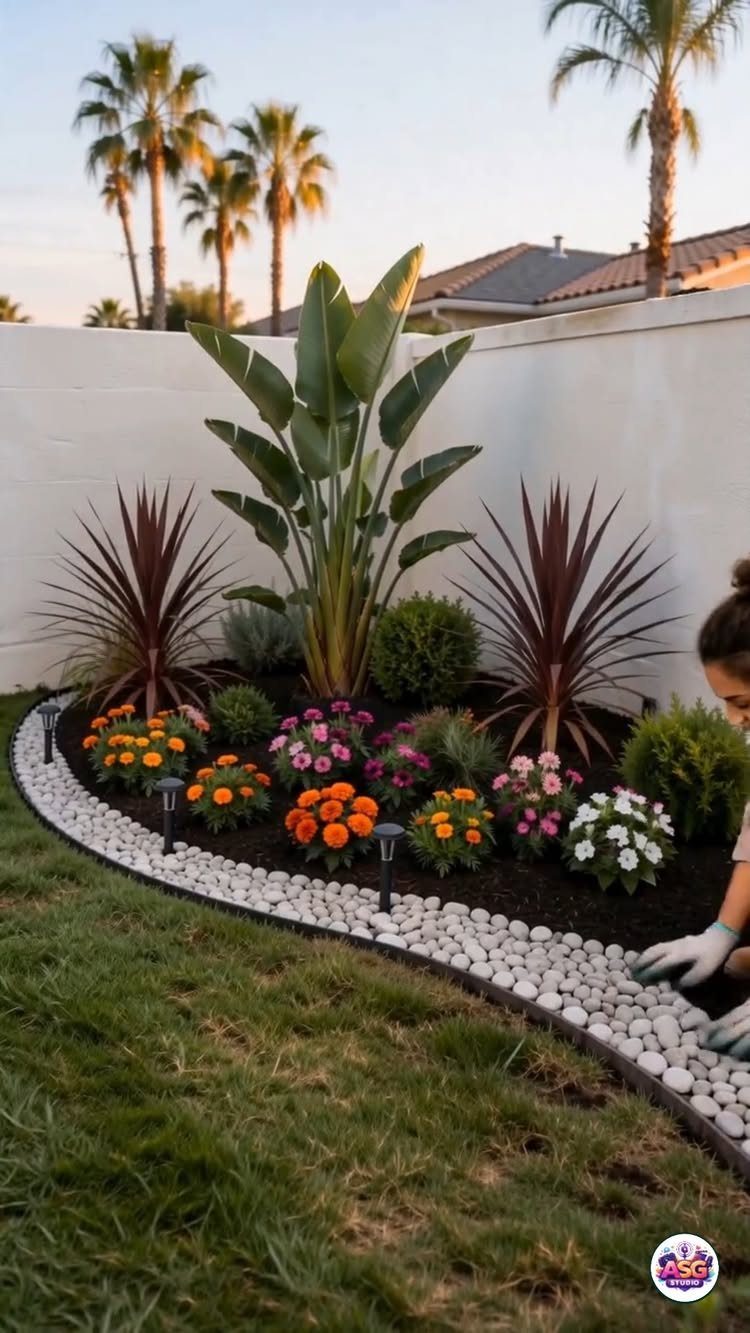
Curved borders soften a yard where straight lines would look like a parking lot. White pebbles following a free-form edge between lawn and bed draw the eye along rather than stopping it at a corner.
I draw the shape with a garden hose first. Lay out the border, walk around it, sleep on it, adjust it before you cut anything.
A border that looks right on paper often feels wrong when you stand in it. Depth matters; enough rock or mulch keeps grass from creeping in, but too shallow and you will be edging all season.
Straight borders suit formal houses and modern lines. Curves fit everything else.
The choice depends on your house style, not your mood that morning; a cottage garden with ruler-straight edges looks like a mistake, and a colonial with wobbly curves looks like neglect.
11. Ground Cover Options
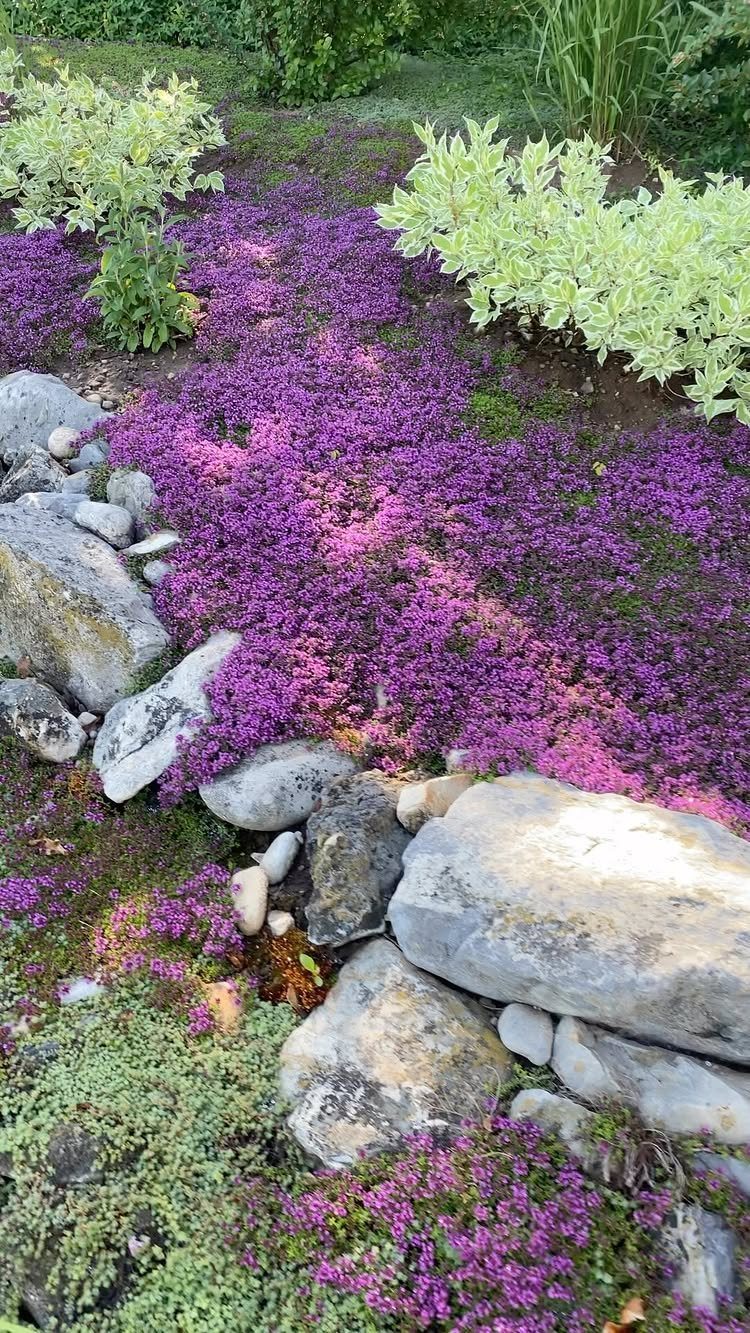
Ground cover is the layer you stop noticing and start appreciating when the weeds stay gone. Creeping thyme spreads between rocks, stays low, and handles foot traffic better than most flowers.
Plant it in spring after the last frost and let it fill in for two seasons before you expect the full mat.
For larger areas, river rock or mulch are the practical choices. I switched to rock after years of bark blowing across the lawn every March; the rock stays put, costs more upfront, and never needs replacing.
Mulch is cheaper to install and better at holding moisture, which matters in dry summers, but plan to refresh it every other year.
Small bark mulch around trees and shrubs, rock in open beds, and living ground cover where you want color but not height.
Creeping thyme would fry in full afternoon sun on a south-facing slope; there, sedum or woolly thyme handles the heat better.
12. Incorporate Water Features
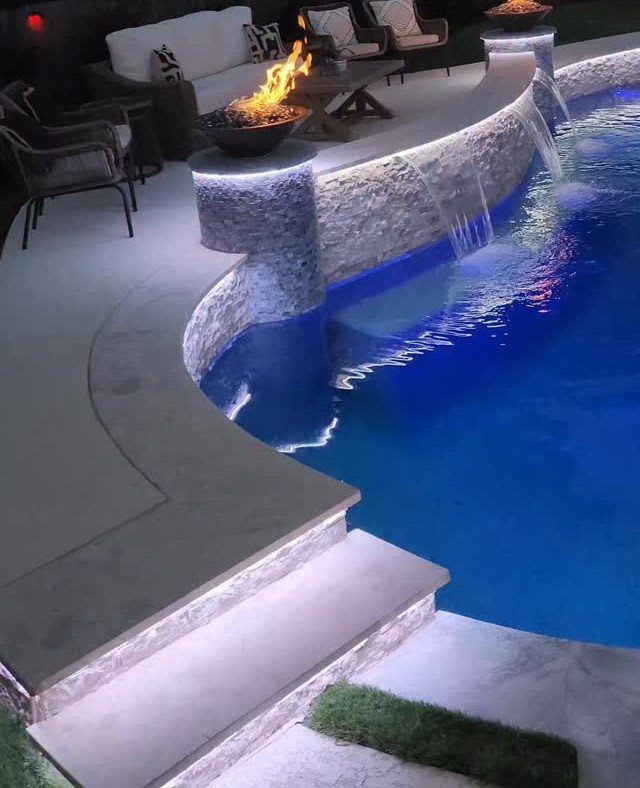
A water feature gives a backyard the one thing plants and patios cannot: sound. A waterfall spilling from a stone wall into a pool covers the neighbor’s conversation and the street two lots over.
A small recirculating fountain on a patio does half the work for a fraction of the cost of a pool.
The fire bowl is the companion piece, not the main event. Water and fire together work because they pull opposite ways; the water relaxes, the fire gathers.
If you have room for only one, water suits hot climates where you want to cool the feeling of the space, and fire fits anywhere people sit after dark.
A recirculating pump costs pocket change to run for a year in electricity. The real cost is leveling the basin so the water actually recirculates instead of draining into your lawn.
I would budget a full weekend for that part alone; rushing it means a feature that runs dry every third day.
13. Create a Vegetable Garden
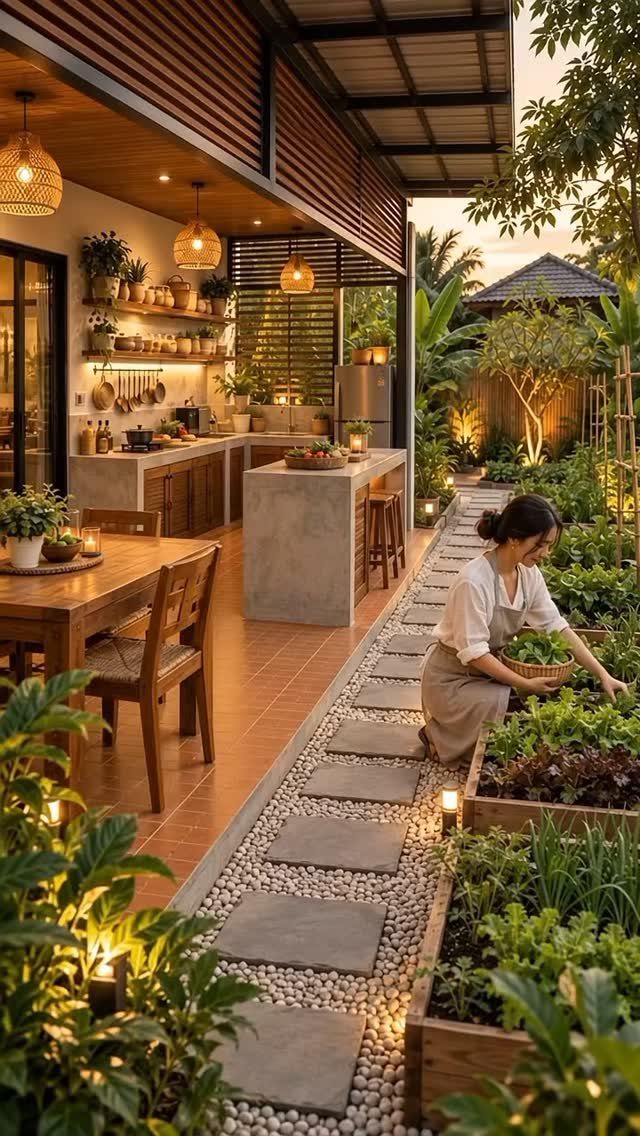
A vegetable garden turns part of your yard into working ground that feeds you back. Raised beds keep soil contained, warm up faster in spring, and let you skip the work of improving what you’ve got.
A bed you can reach across from both sides is a manageable starter size; line the bottom with hardware cloth if gophers visit your neighborhood.
Vertical growing buys more harvest from the same footprint. Tomatoes on a trellis or herbs in wall pots keep the ground free for lower crops.
South-facing walls and stone paths that hold heat will push peppers and tomatoes further than flat ground ever could.
This suits anyone who cooks regularly and can check in a few times a week through the growing season. Weather, bugs, and a weekend away at the wrong moment can wipe out a crop.
Start with greens and herbs; they forgive.
Designing for Small Spaces
A small yard works harder when one spot carries two jobs.
A seating wall along the property line stores tools inside and gives you a place to sit; the same structure does both, so you spend once and gain back the floor space a shed would eat.
Vertical gardening buys planting room the ground does not have. Wall pots, trellises, and espaliered fruit trees against a fence line keep the center open for moving around.
I would put the vertical elements on the north side so they do not shade the rest of the yard.
Multi-use means planning for the switch. A dining table that stores as a bench, a fire pit cover that becomes a table surface.
The pieces cost more than single-purpose versions, but in a small yard the square footage they save is worth more than the cash.
Budget-Friendly Landscaping
Spirea runs cheap, handles drought once established, and blooms reliably; salvia costs little, blooms several times a summer, and smells like sage when you brush it.
A neighbor’s water feature you can hear beats one you maintain yourself. Position seating where the sound carries, and you get the effect without the pump, the basin leveling, or the winterizing.
Rocks in sizes from pebbles to boulders fill space that would otherwise need more plants. Mix large and small; all one size looks delivered, not placed.
The rocks cost once, never need water, and survive the season that kills the annuals.
Frequently Asked Questions
What is the rule of 3 in landscaping?
Plant in odd-numbered groups, with three being the most common starting point. Three of the same plant read as a single mass to the eye rather than scattered individuals, which makes a bed look planned instead of accidental.
Five or seven work the same way for larger spaces; odd numbers are what matter, not the specific count.
How do I design a landscape plan for my back yard?
Start by deciding what you actually need the space to do: sit, grow food, walk the dog, entertain. Draw the permanent stuff first, fences and utilities and the big tree you cannot move, then fit the uses around those constraints.
A weekend project mindset helps; plan in phases you can finish and use rather than one grand design that stalls out at the grading stage.
What are the current backyard design trends?
Sustainable practice, multi-use spaces, and erasing the line between indoor and outdoor living are the ones that have lasted.
Lawn-free yards with native plants, stone and gravel replacing thirsty turf, and the same flooring running from kitchen to patio all show up in recent work.
The through-line is function first: spaces that earn their keep rather than photograph well once and then sit unused.





