
The ideas below run from a shadow box on magnets to a framed pantry door with a picture light, and the one that fits you depends on whether you rent or own and how deep your walls are.
1. DIY Hidden Picture Frame Storage
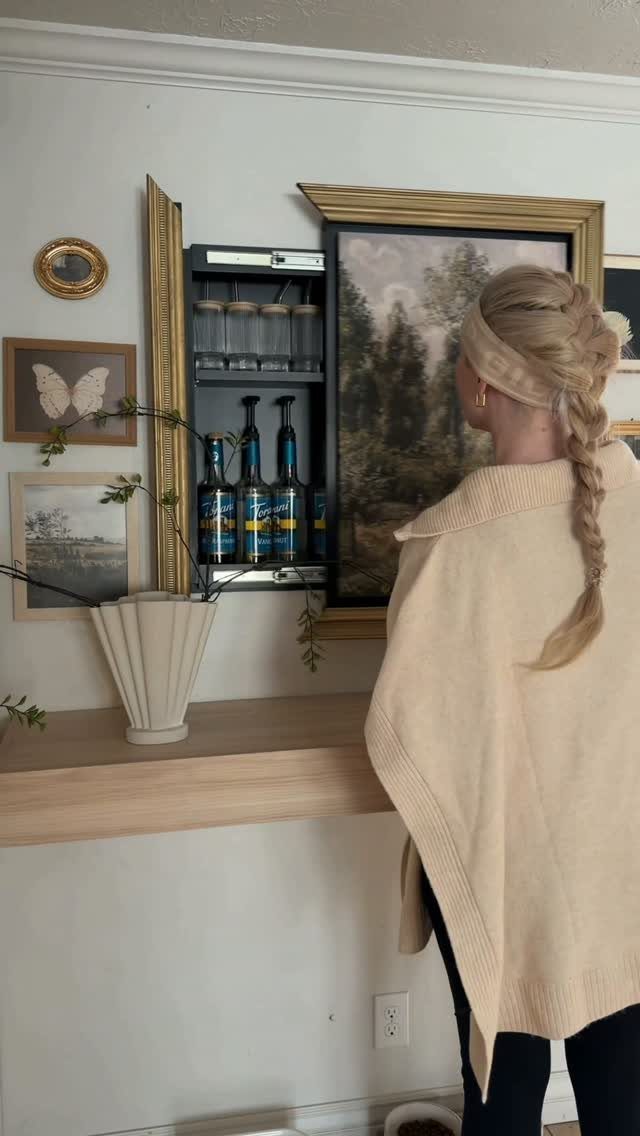
A shallow picture frame mounted on drawer slides turns a blank wall into a cabinet for glasses, bottles, or bathroom supplies.
The shelf box needs to stay shallow so the frame sits nearly flush; anything much deeper than the molding starts to look like a box stuck on the wall.
Hinge the frame to the box, not the wall, so the whole unit pulls out together.
Mini hinge screws strip easily in soft wood. A hand screwdriver gives you the feel to stop before they snap; a drill does not.
I have broken one and learned the hard way.
This one suits renters who can patch a few screw holes later but need storage now without losing their security deposit.
2. DIY Shadow Box Storage
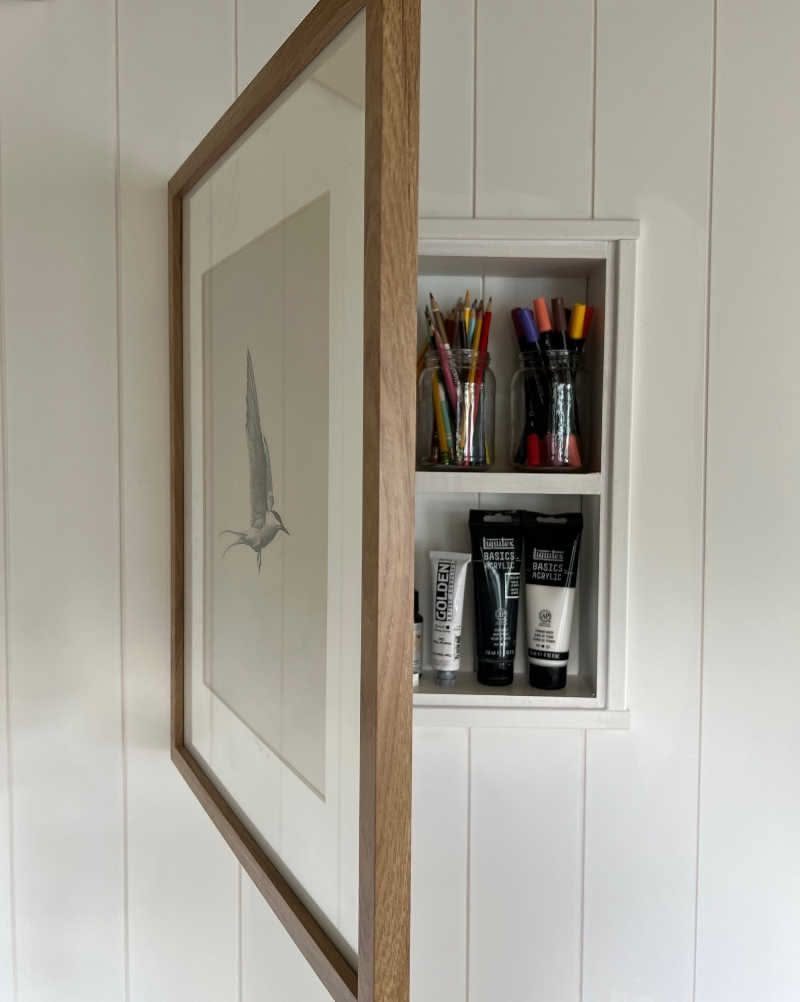
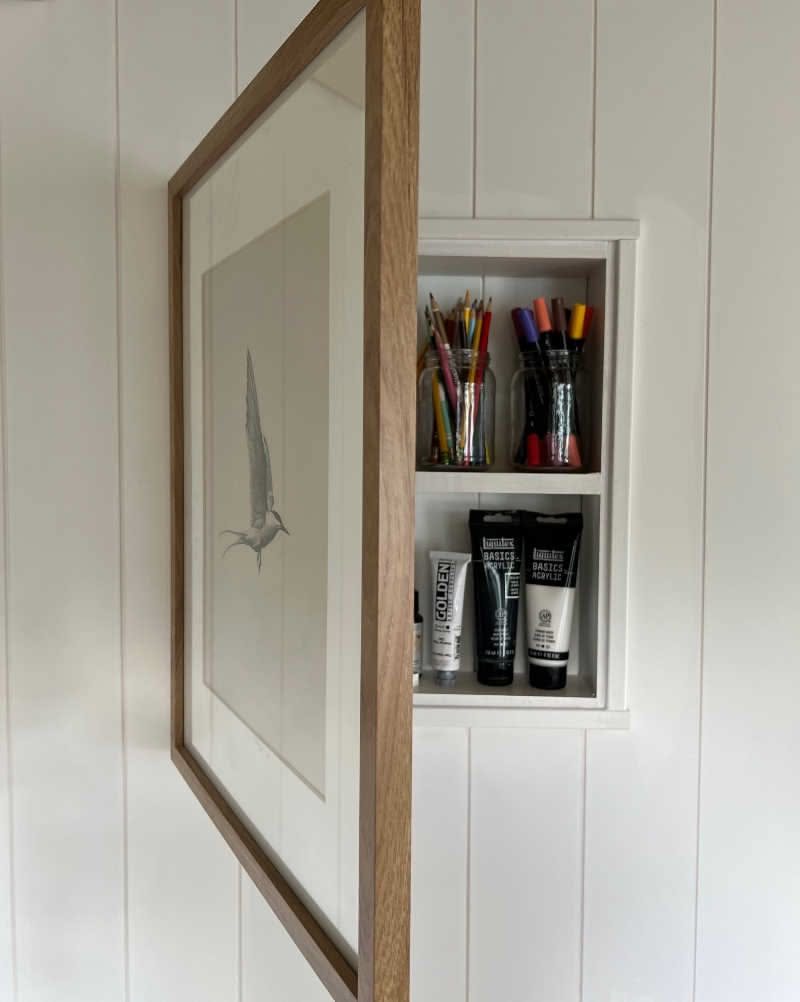
A shadow box frame hinged like a door turns any wall stud bay into a niche for pencils, paint tubes, or jewelry.
The box itself is just a shallow wooden rectangle sized to slip between studs; the frame covers the rough edges and latches with small magnets so it sits flat against the wall.
What depth you get depends on your wall. A standard interior wall with 2 x 4 studs gives you about 3.5 inches before you hit drywall on the other side; an exterior wall or one with plumbing steals most of that.
Check with a stud finder and a long finish nail pushed gently through to feel what is back there.
I would use this for light, flat items. A shadow box is not a safe; it is a hiding spot from casual eyes, not from someone who knows to look.
3. Picture Frame Pantry Door
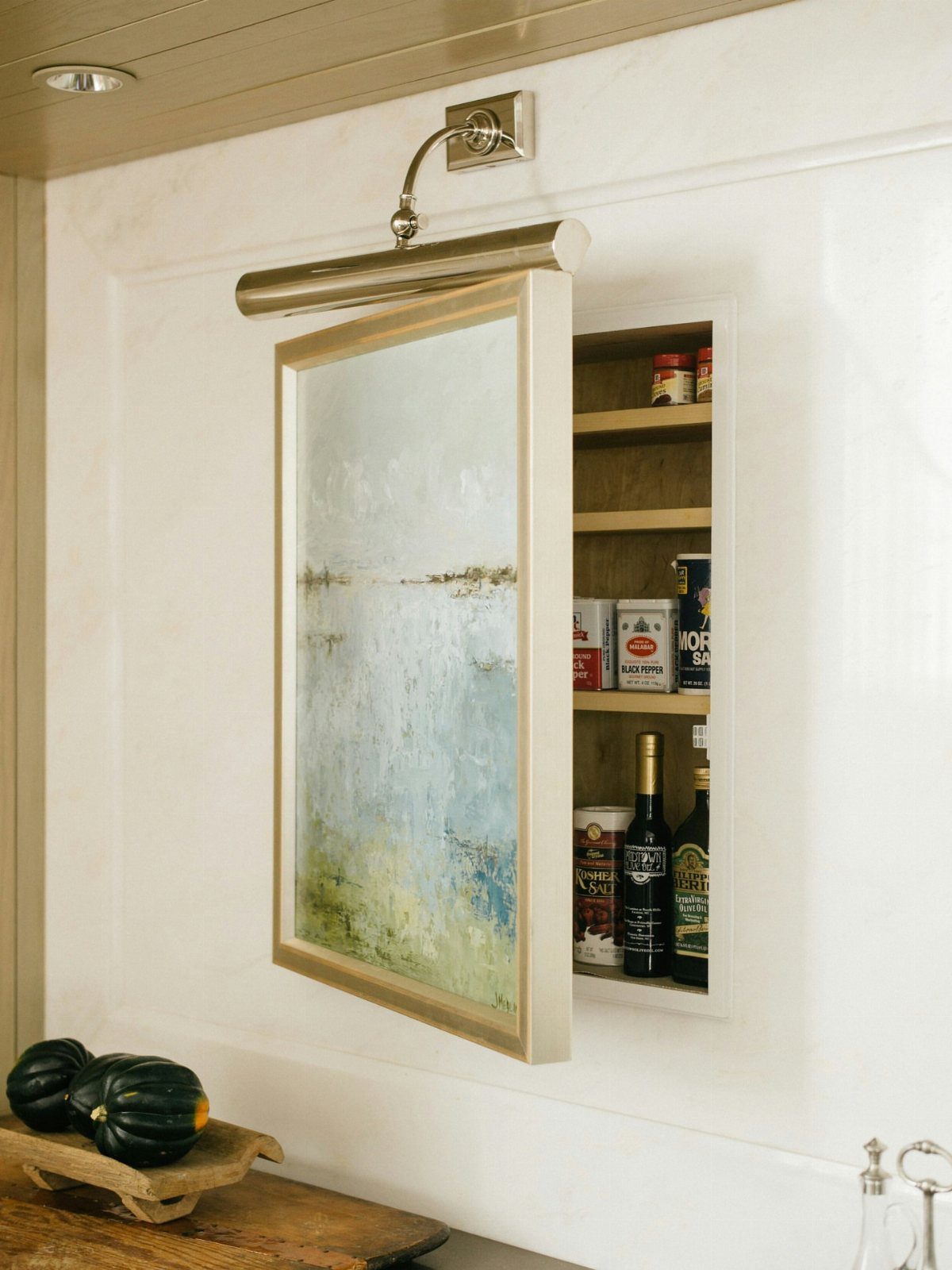
A framed landscape painting hung on a piano hinge becomes a pantry door for a recessed shelf between studs, the kind of space that usually goes unused behind a hallway or kitchen wall.
A picture light mounted above the frame finishes the illusion, the same way galleries light real art.
The frame needs to be light enough that the hinge does not sag over time. A thin wood frame with a printed canvas or lightweight board backing works better than a heavy frame with glass.
I would skip glass entirely; you are touching this often, and the rattle gives it away.
This trades easy access for stealth. If you cook daily, a regular door is faster.
If your kitchen is small and you want olive oil and spices out of sight, the extra second to swing the painting open pays off.
4. Hinged Picture Frame Wall Safe
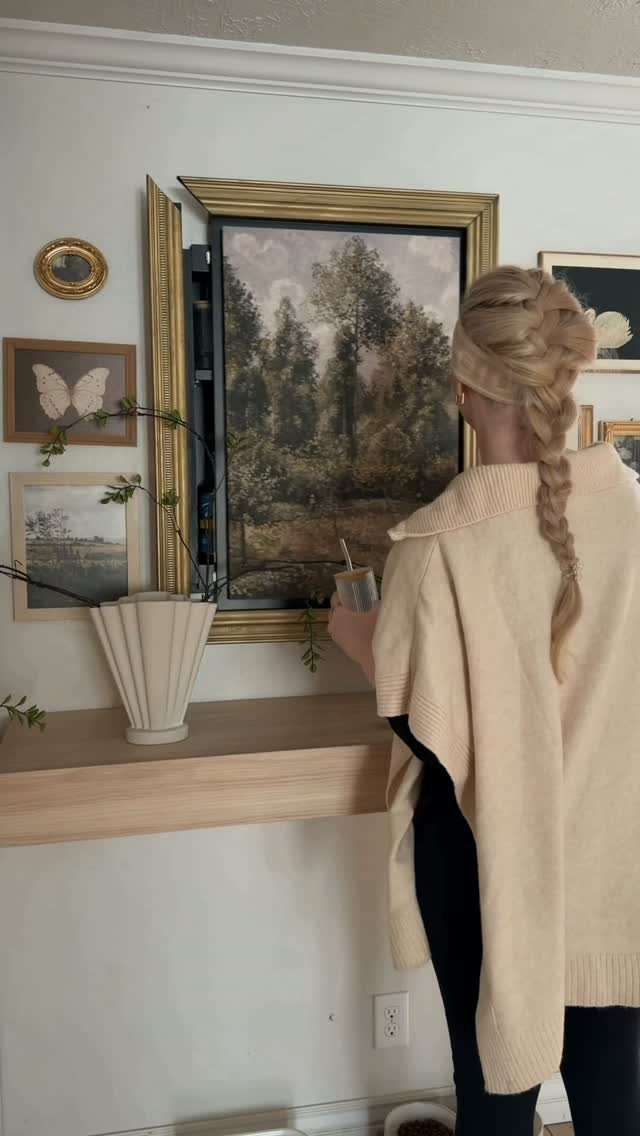
A large landscape frame on a hidden hinge covers a wall safe or any recessed compartment you already have. The frame does not need to be deep; it only needs to clear the door swing and look like ordinary decor.
The frame needs to be tall enough to cover the opening and light enough to open one-handed.
Picture hanging strips can hold the unit to the wall if you are not opening it daily.
For something you reach into often, I would anchor to a stud or use a proper cleat; the pull of opening wears adhesive over time.
Magnetic catches would keep the frame tight, but they also require stronger wall attachment to resist the tug.
This one is for hiding something you rarely need, not for daily use. A real safe behind it is better; the frame just buys you time if someone is looking.
5. Hidden Picture Frame Medicine Cabinet
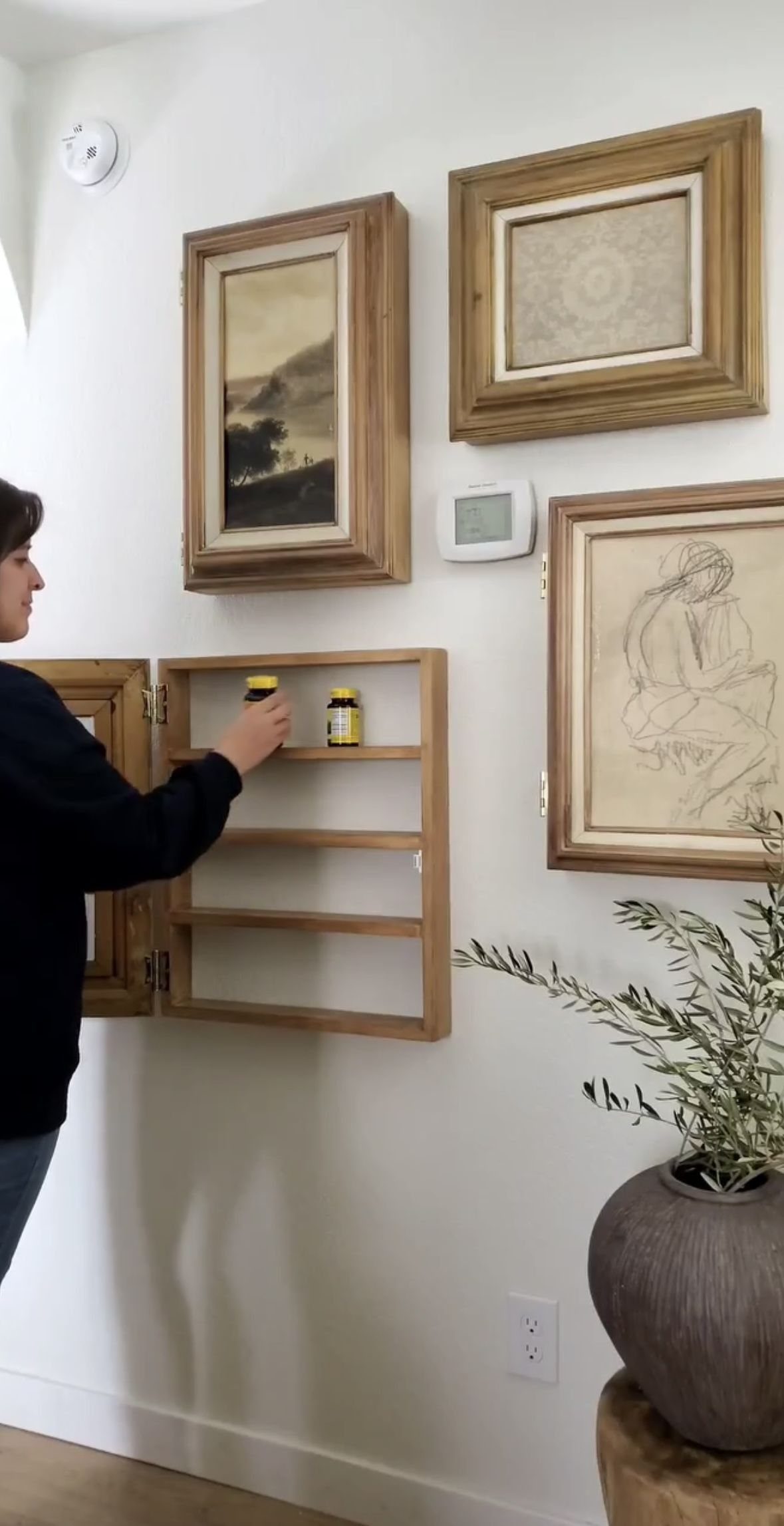
A wooden picture frame on a simple hinge covers a shallow shelf for pill bottles, turning a medicine cabinet into something that does not read as one.
The gallery wall around it helps; several frames together make any single frame less suspicious.
Depth is the limit here. Pill bottles fit in about 2 inches; anything deeper and the frame bows or the hinge strains.
I would measure my tallest bottle, add half an inch for the frame back, and build to that. A magnetic catch keeps it closed without a visible latch.
This suits a bathroom where you want supplies accessible but not obvious to guests. It is not security; it is tidiness.
For actual medication safety, a locked box inside still makes sense if children visit.
Cost-effective Materials
A thrifted frame from an estate sale or flea market costs less than a blank canvas at the craft store, and it already has the hardware for hanging.
Pine 1 x 4s for the box behind it are cheap at any home center, and one board yields enough for a shallow cabinet.
I would not buy a frame with glass already in it; the glass adds weight and you will remove it anyway.
Pre-drilling hinge holes matters more with soft pine than with hardwood. The wood splits without it, and a split corner ruins the clean edge that makes the frame look like ordinary decor.
A hand screwdriver for the final turns of those small screws saves the stripped heads I mentioned earlier.
The whole frame-and-box assembly stays cheap if you scavenge the hinges from an old cabinet door. Only the drawer slides, if you use them, push the cost up enough to notice.
With homeowners looking for new ways of adding storage to create more space, or of upcycling items they have lying around, it’s no surprise that the home improvement market is ever growing. In 2022, the sector was worth $558 million.
— Newsweek
Simple DIY Process
Most of these builds need a saw, a drill, and a stud finder. The saw can be a handsaw; the cuts are short and square.
A miter box helps but I would not delay the project to buy one.
Pre-drilling takes longer than driving screws straight, but it saves the hour of gluing and clamping a split frame.
Painting or staining adds a day for drying, not for labor. The actual cutting and assembly fit in a Saturday morning if you have the frame and wood on hand.
I would build the box first, check its fit against the frame, then attach the hinges last when everything lines up.
Aesthetic Appeal
One storage frame among 4 or 5 ordinary ones disappears; the eye reads the group, not each piece. I would mix sizes and hang them at uneven spacing, the way people actually arrange pictures, not in a grid that invites closer inspection.
The frame itself should look like something you bought for the image inside it. I would avoid ornate molding; it draws attention and adds weight.
Picture lights help sell the illusion but battery-powered ones avoid the wiring. A stick-on light above the frame, warm white not daylight, mimics gallery lighting without the electrician.
Encouragement for DIY
A first project should be small: a shadow box for pencils or jewelry, not a pantry door.
The mistakes cost less in a small frame than in a poster-sized one, and you learn the same lessons about hinge placement and gap tolerance.
I would not aim for invisible on the first try. Flush and quiet matters more than perfect concealment; a frame that sits slightly crooked still works if it opens smoothly and latches tight.
Fix the function, then refine the look on the next build.
The skills transfer. Hinges, magnets, and shallow boxes appear in bathroom cabinets, kitchen spice racks, and hallway key hooks.
One finished picture frame project teaches enough to hide storage behind a mirror or under a window seat.





