
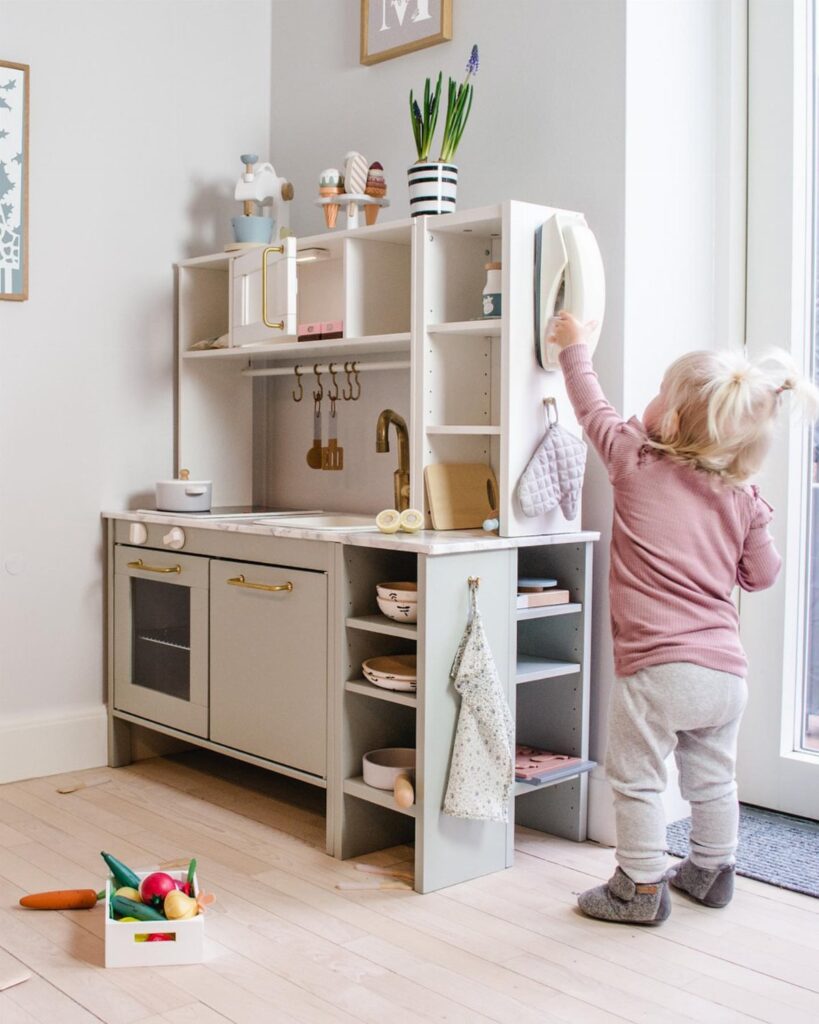
These six project ideas run from a crate on legs to a full kitchen overhaul, with most landing in a single afternoon and under the cost of a basic dresser.
What picks one for you is how much built-in storage the space already holds and whether the child is old enough to slide bins or still needs everything at floor level.
TROFAST units sit shallow enough to fit where deeper shelving won’t, which is the same reason they work under windows and in closet nooks the rest of the list doesn’t touch.
1. TROFAST Storage Solutions
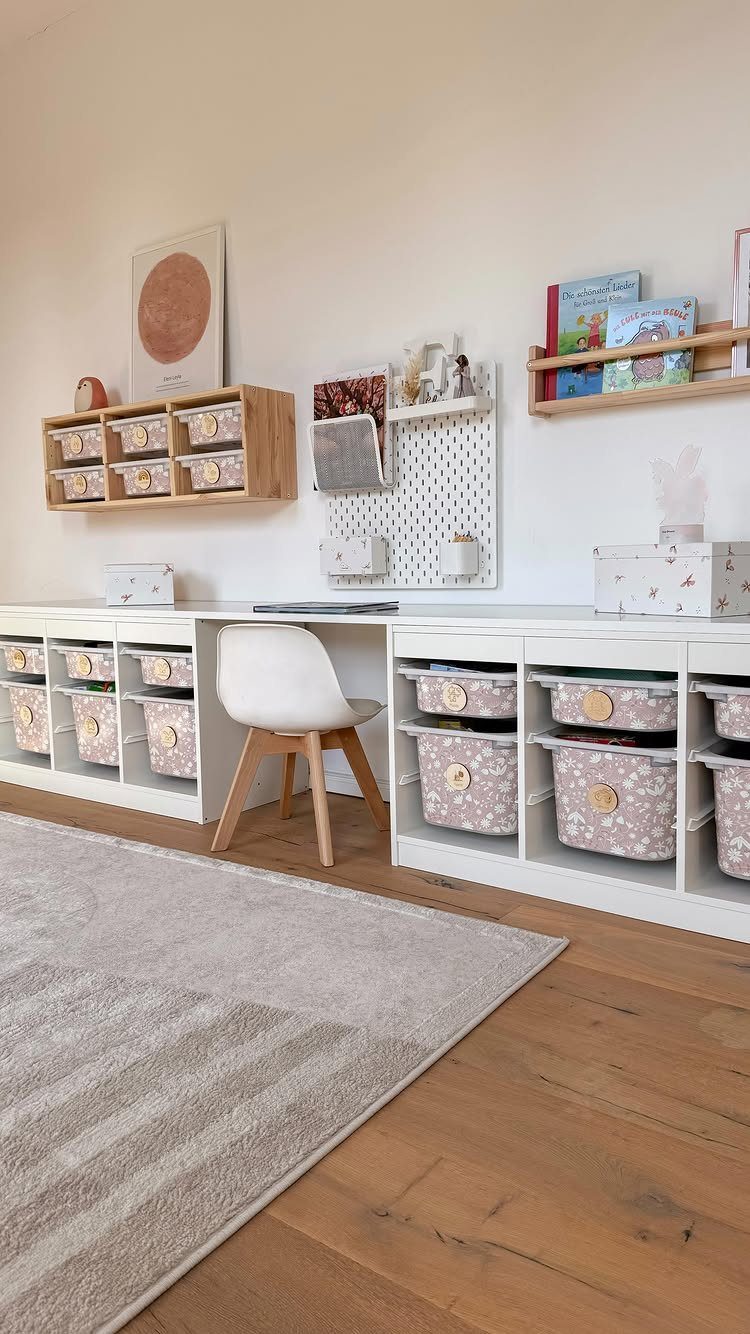
The TROFAST system works because the bins slide out. A kid can dump one box of blocks, slide it back, and pull the next.
Independence is what you are after here.
I built a run of three units into a desk surface by laying a painted plywood top across the frames. A cushion on the end turned the last unit into a reading seat my daughter actually uses.
Shallow depth is the reason this fits where deeper shelving won’t.
2. KURA Bed Hack
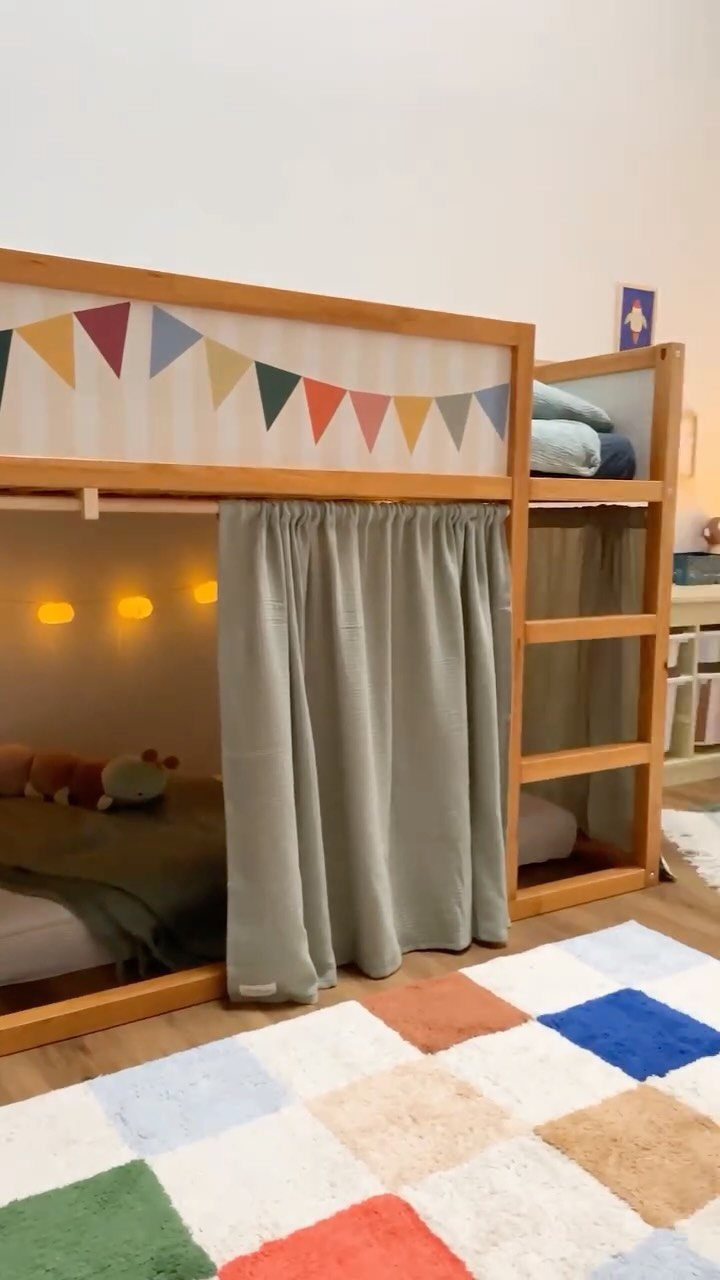
The KURA’s reversible frame lets you flip it low for a toddler, then high later. The hack is what you hang off that frame.
I added curtain panels on tension rods threaded through the lower rails, which turned the bottom bunk into a den my son called his "office." Peels clean when tastes change.
Headroom is the cost. The lower space runs finished floor to slat, fine for sitting play, cramped for standing.
I’d skip the curtain idea if you run the bed high; the top bunk already sits close.
3. Duktig Play Kitchen Upgrade
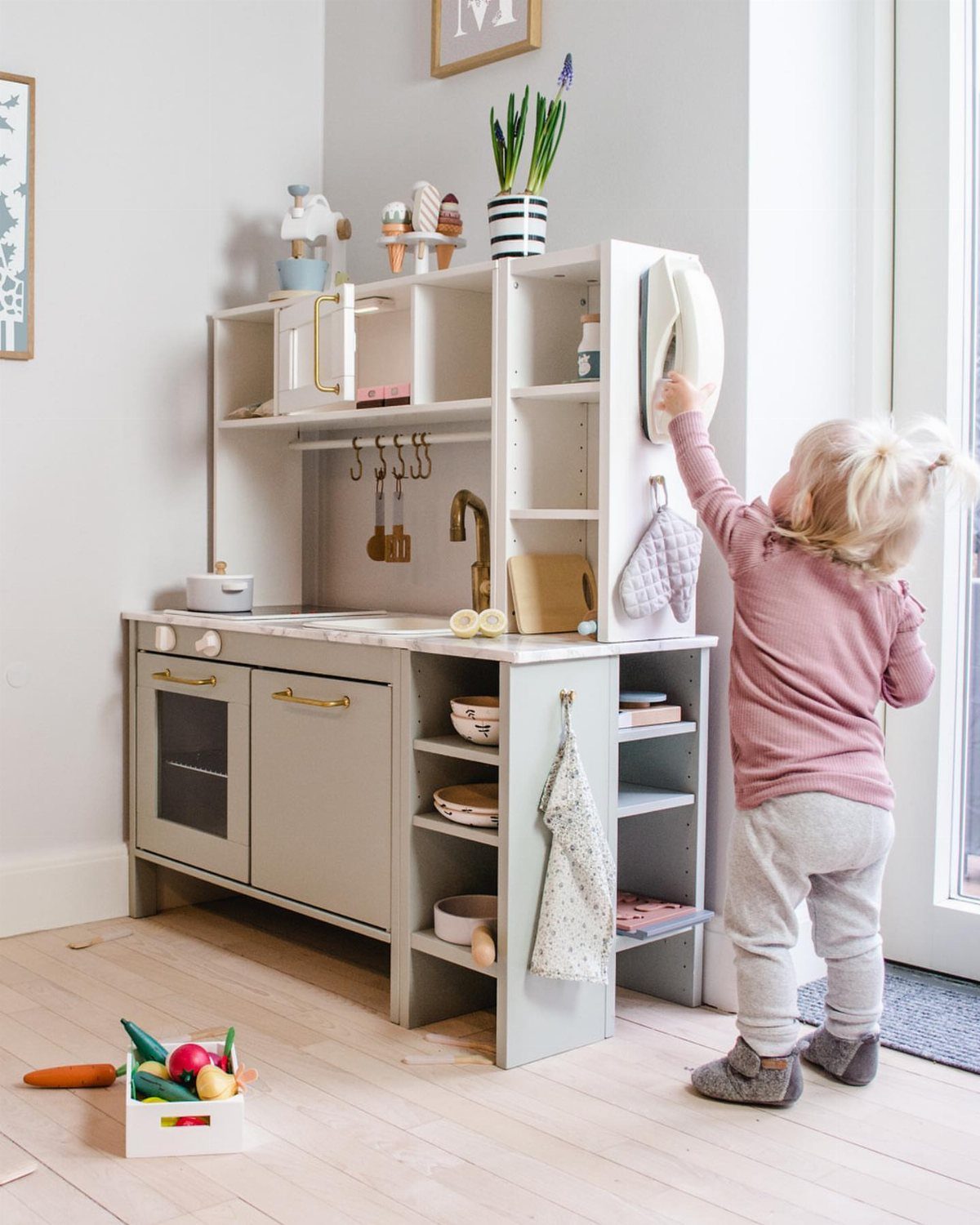
The DUKTIG comes in bare pine with red knobs that read preschool loud. A paint job and hardware swap fix that in an afternoon.
Sage cabinet paint and brass pulls from the hardware store bin dress this up fast. Open shelves added above the back rail hold play dishes at eye level for toddlers.
What changes the look most is the hardware spacing. The DUKTIG’s predrilled holes are close together, which limits your pull options.
Filling the old holes with dowel and drilling fresh ones opens up the hardware choices. Check your knob or pull spacing against the factory spread before you buy.
4. LEGO Table
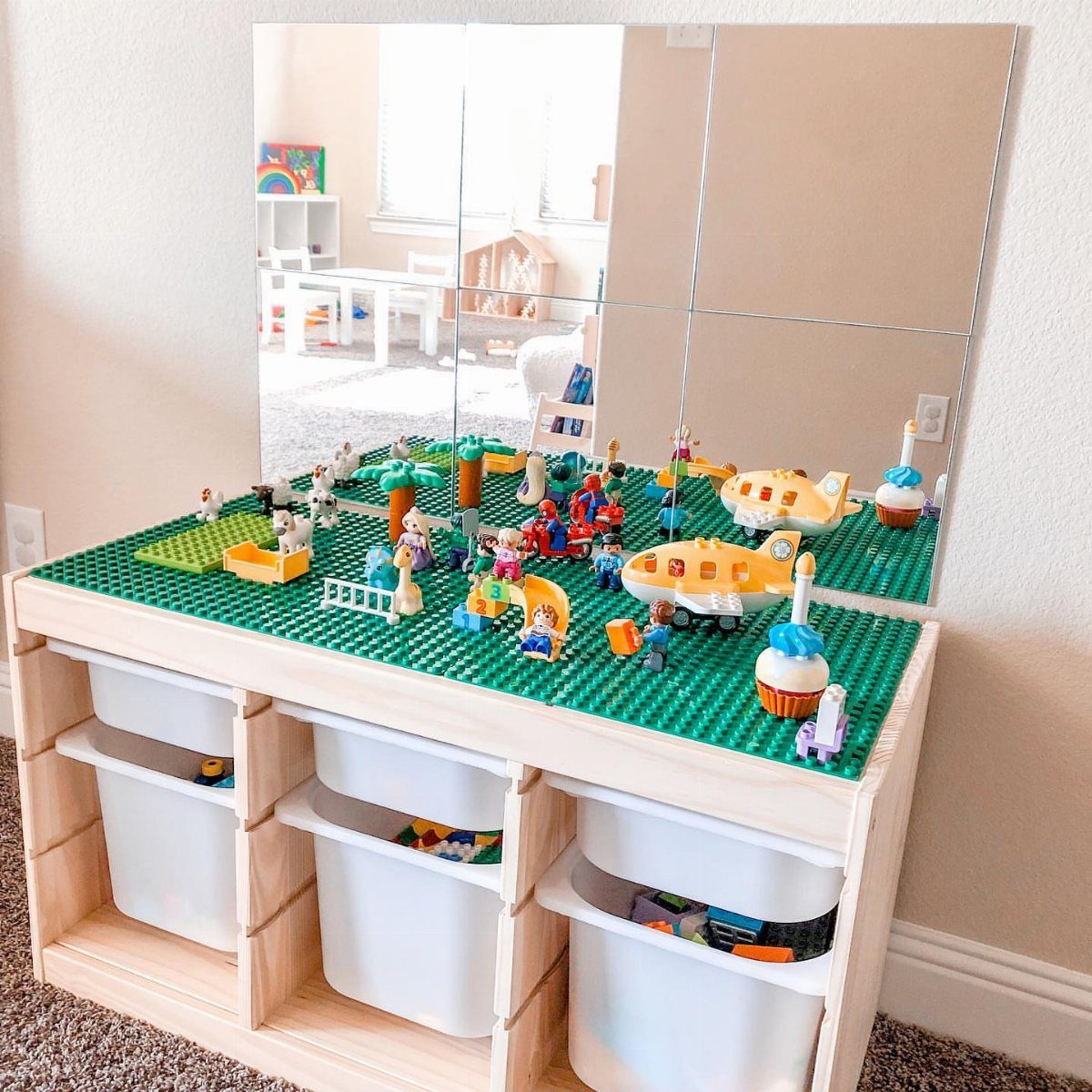
A TROFAST frame topped with baseplates gives you build surface plus sortable storage below. Construction adhesive and weight overnight is the method that held.
The sheet lifts off if you ever want the unit back plain.
The bins underneath are the shallow TROFAST boxes, not the deep ones. Shallow forces sort-by-color, which kids resist at first, then adopt.
Deep bins swallow everything and nothing gets found.
A single unit is narrow enough to line up several or tuck into a corner. For two kids building simultaneously, I’d rather two single units side by side than one wide one; they fight less over territory.
5. DIY Dollhouse from KALLAX
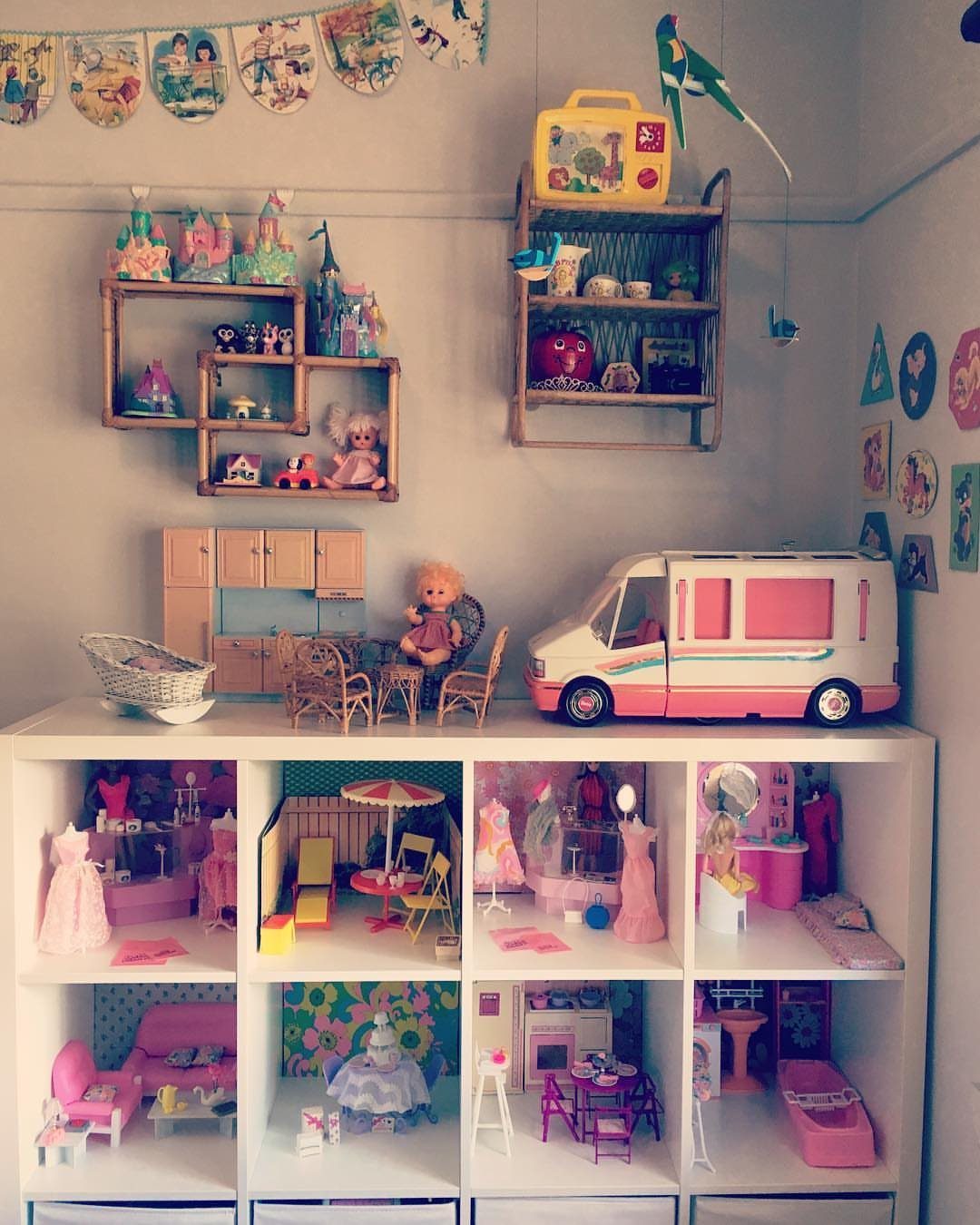
A KALLAX 2×2 or 2×4 on its back becomes dollhouse rooms without cutting anything. The cubbies are square enough to fit 1:12 scale furniture with room to spare.
Wallpapering the back panels with scrapbook paper and Mod Podge before assembling the unit is easier than working inside finished boxes.
The photo shows a 2×4 standing vertical for two stories; I added small shelves angled between cubbies to make stair landings, cut from plywood with a handsaw. A camper van sits on top as attic play.
The FLISAT house shelf is smaller and cheaper if your child is under four. The KALLAX wins for durability and the ability to hold actual storage bins in unused cubbies as interests shift.
6. Instant Book Box
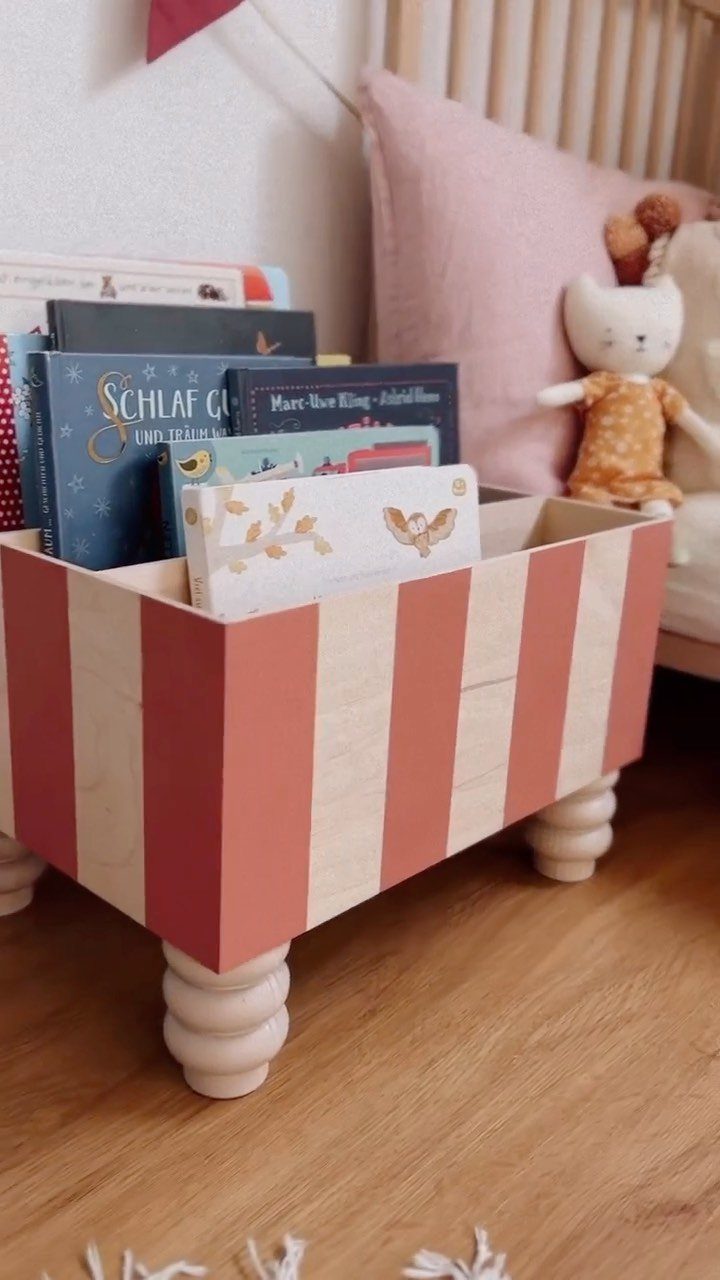
The KNAGGLIG is a pine crate with cutout handles, sized for books and small toys. Add legs and it becomes floor-level book storage a toddler can reach into from any side.
Furniture legs with a straight bolt that threads through a washer screw to the base. The crate bottom is thin; a plywood square inside spreads the load, or the legs pull through with time.
This suits picture books, not chapter books. The depth and height limit you to about two rows standing upright, with a third stacked flat.
For a growing collection, I’d size up to the larger KNAGGLIG or accept that this is a rotation box, not a library.
Benefits of IKEA Hacks
IKEA hacks stretch furniture life by turning a piece into something else before it gets outgrown. A TROFAST frame becomes a LEGO table; a KURA bed becomes a den.
The bin or frame underneath stays useful even when the child moves on.
This is upcycling in practice. The original piece gets reused instead of replaced, which cuts waste and saves the cost of buying new.
What makes this possible is the flat-pack design. Replacement parts are cheap and standardized, so a mistake with a drill or a saw does not ruin the whole unit.
A new side panel costs less than a hardware store run for most projects.
Safety of IKEA Hacks
Reversible changes are the safest starting point for renters or anyone nervous about altering furniture. Adhesive films, fabric panels, and tension-rod curtains all peel off or lift away without touching screws or paint.
Permanent changes need more care. Any hack that involves drilling, cutting, or added weight should be checked against the original assembly instructions to see where the frame bears load.
Materials matter too. Paints and finishes in a child’s room should be labeled non-toxic and fully cured before contact.
Hardware store bin pulls work on the DUKTIG, but check that the finish is not chipping or sharp at the edges.
Don’t try the swing hack, it’s very dangerous. If you want a swing, buy a real one.
— BuzzFeed
Customization Options
Paint, fabric, and hardware are the three levers for making an IKEA piece look like it was bought for the room, not parked in it.
Paint is the fastest change. Other pieces with laminate surfaces need a bonding primer first or the finish chips within a year.
Hardware spacing is the detail that trips people up.
Fabric and film work on surfaces paint cannot reach cleanly. Adhesive films cover the flat faces of KALLAX units or TROFAST frames without brush marks.
Reversibility of Hacks
The best hacks for renters and growing families are the ones that reverse. Peel-and-stick vinyl and fabric additions lift off clean when the phase passes or the furniture moves to another room.
The KURA tension-rod curtains pull out; the TROFAST baseplates lift if the adhesive was applied as a sheet, not squeezed in beads.
This matters because kids change faster than furniture wears out. A LEGO table becomes a homework desk; a dollhouse cubby holds board games.
Reversible hacks let the piece follow the child instead of forcing a new purchase each time.
Even permanent-looking changes often leave an escape route. The painted DUKTIG can be sanded and re-knbed; the KALLAX dollhouse shelves angle in with screws that patch clean.
For rented flats, stick to surface changes. Landlords notice holes in walls, not peelable film on furniture that leaves with you.





