
Prices on these run from a compact open-shelf unit to a full lift-top bench with hinge hardware, and the deciding factor is how often you need what you are storing.
Daily shoes want open cubbies or drawers; spare pillows you touch twice a year suit a lid that stands upright while you dig.
The brass finger pulls on the sliding-door model save six inches of swing space, which is the difference between a bench that sits against the wall and one that blocks your hallway.
1. Wood Bench with Cane Doors
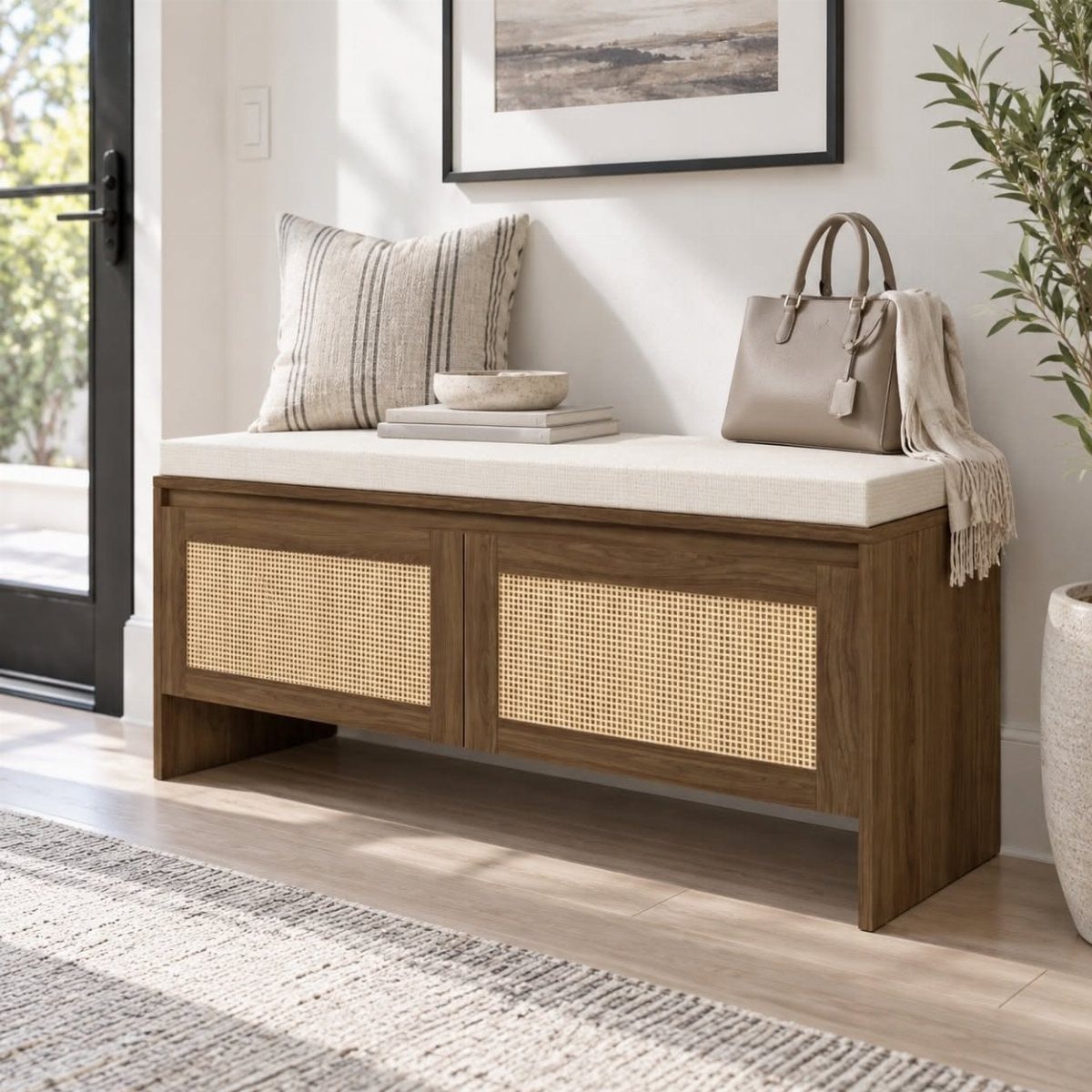
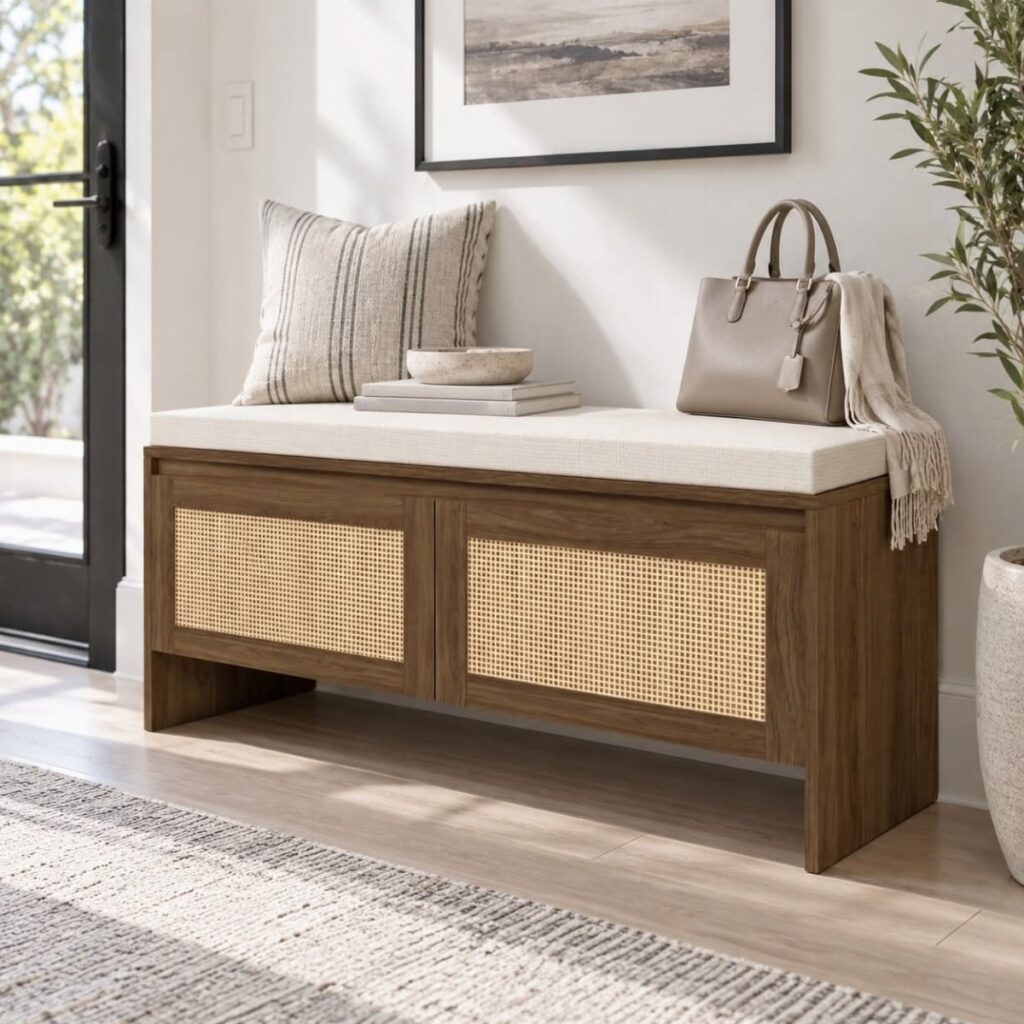
Cane webbing on cabinet doors gives this bench its warmth without the visual weight of solid wood.
The cream cushion and open shelf underneath keep the look light, which matters when an entryway is really a hallway that has to stay walkable.
The cane panels work best in a spot that gets some natural light; shadows flatten the texture and it starts to read as just mesh.
If the bench faces a window or a glass door, the weave throws small patterns on the floor in late afternoon.
I’d put this one in a rental where built-in storage is scarce. The cushion lifts off, the doors swing open, and the whole thing moves with you.
2. Storage Bench with Cushion
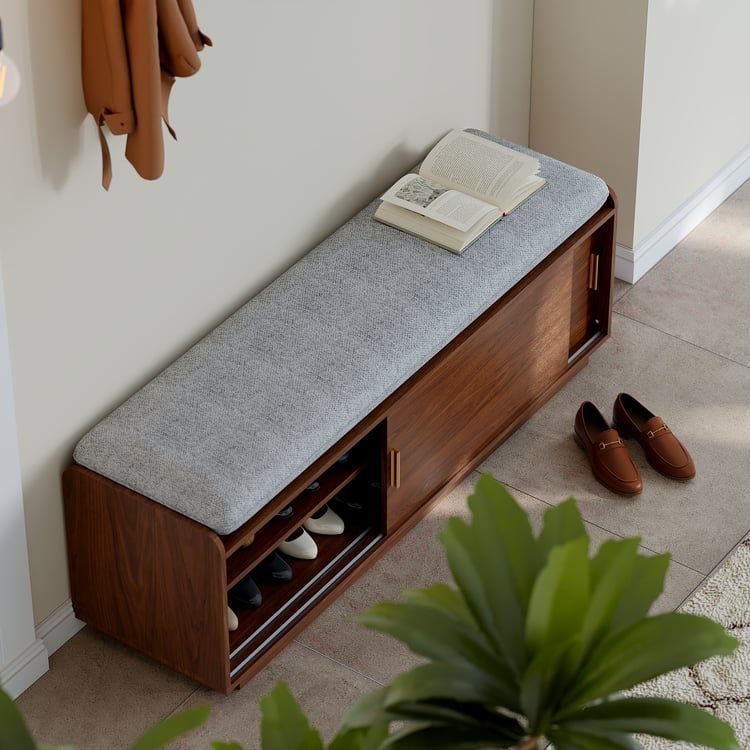
A grey fabric cushion on top of a two-door cabinet turns shoe storage into actual seating, which is what an entryway bench is for.
The open cubby underneath means you can kick off wet boots without touching a door, and the closed cabinet hides the pairs you keep presentable.
The cushion will compress where you sit most often. Rotating it every few months, the way you would a mattress, keeps the wear even.
Most bench cushions are just foam; a replacement is cheap enough that I would not bother trying to salvage one that has gone flat.
This shape suits the person who wants the bench to read as furniture first, storage second. The mid-century lines do that work.
3. Sliding Door Storage Bench
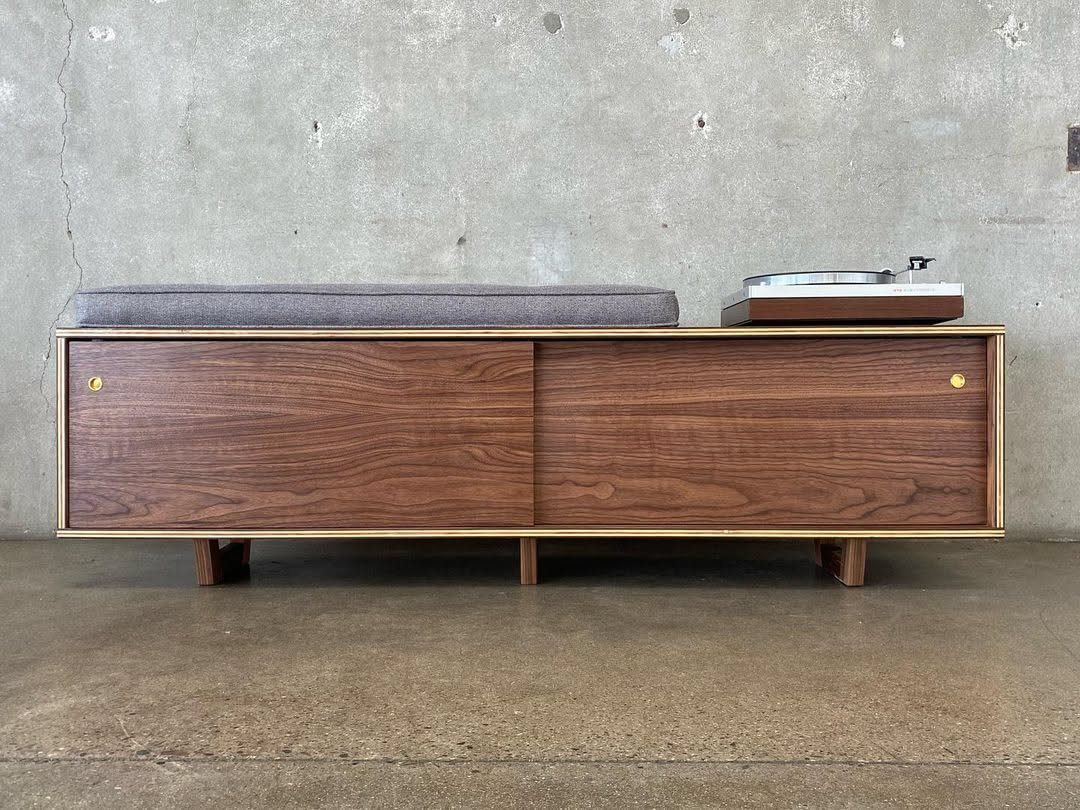
Sliding doors with brass finger pulls save the swing space that hinged doors eat in a narrow entry.
The walnut frame and grey cushion carry the mid-century look, but the bypass hardware is what lets this bench sit 6 inches closer to a wall than a standard cabinet.
The doors overlap by half their width, so each compartment is only accessible from one side at a time.
I learned that the hard way with a similar credenza: you cannot reach both cubbies at once, which matters if you store shoes for a couple and both leave at the same hour.
Tapered legs lift the body off the floor, which helps if you ever need to vacuum underneath or rescue a dropped key.
4. Compact Shoe Storage Bench
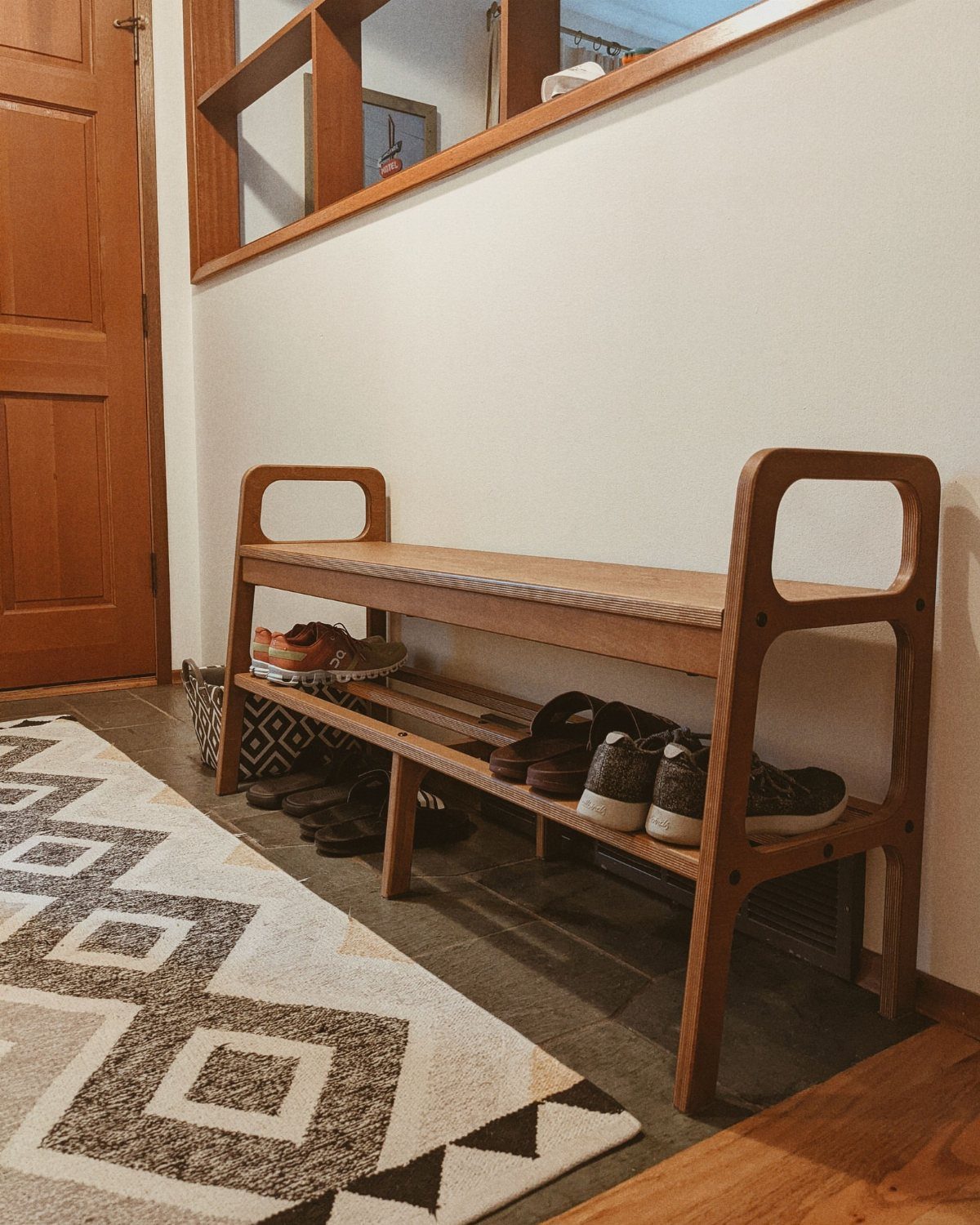
A bench with open shoe shelves and no doors at all keeps the footprint small because nothing projects outward.
The rattan-style panels add texture without the thickness of cane webbing in a frame, and the natural wood finish stays neutral against white walls or patterned rugs.
Open shelves let dust in. I vacuum mine when I do the floors, which adds maybe 2 minutes to the routine.
Check your door swing before buying. A bench like this needs clearance on the hinge side, or it becomes an obstacle you walk around every time you come home.
5. Fluted Storage Bench
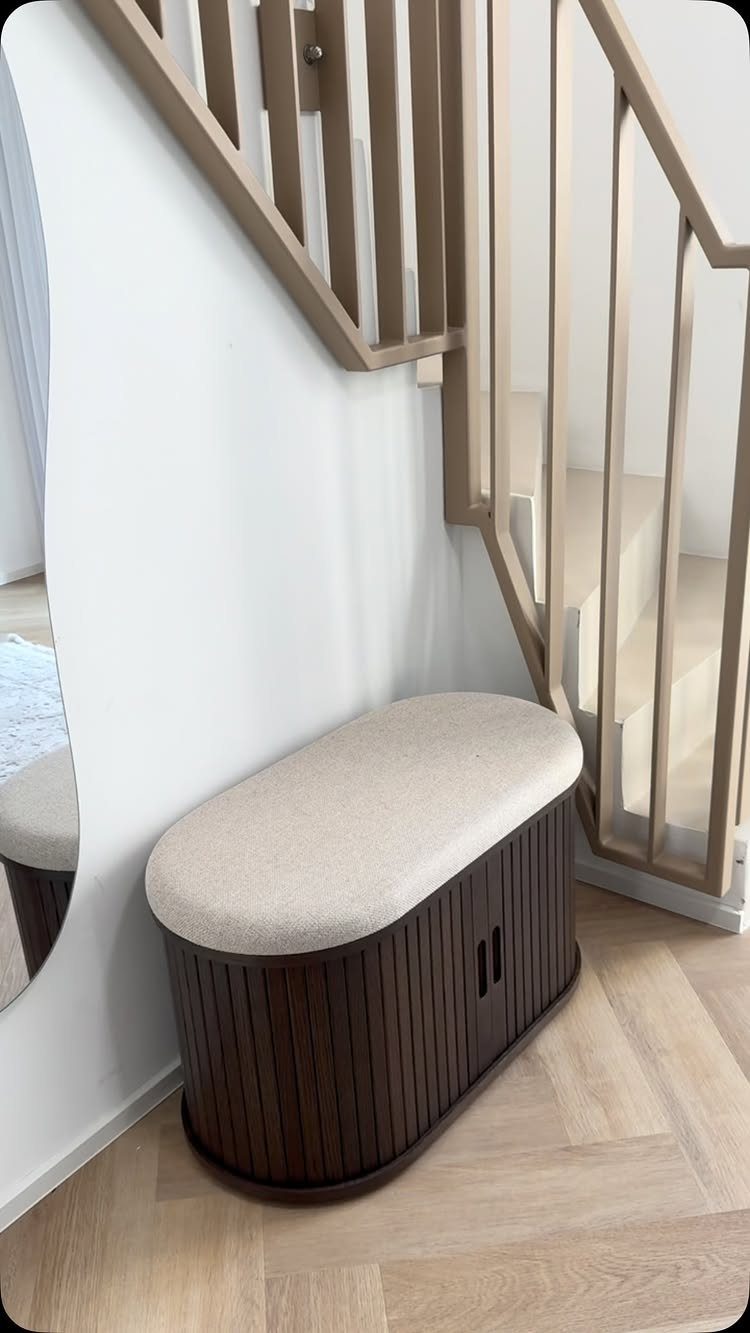
Fluted slats on the sides and doors give this bench the texture that plain flat panels lack, and the oval cushion softens the whole silhouette against straight walls and stair railings.
Dark wood with light upholstery reads as intentional; light wood with dark upholstery reads as practical. Both work, but they say different things about the room.
The adjustable shelves inside matter more than they sound.
One tall boot shelf and two sneaker shelves use the same cubic feet better than three equal spaces, and the padding on top means you can sit to lace the boots you just stored.
I’d want this in a spot where the fluting catches side light from a window or a sconce. Straight-on overhead light flattens the ridges and wastes the detail you paid for.
6. Mid-century Entryway Bench
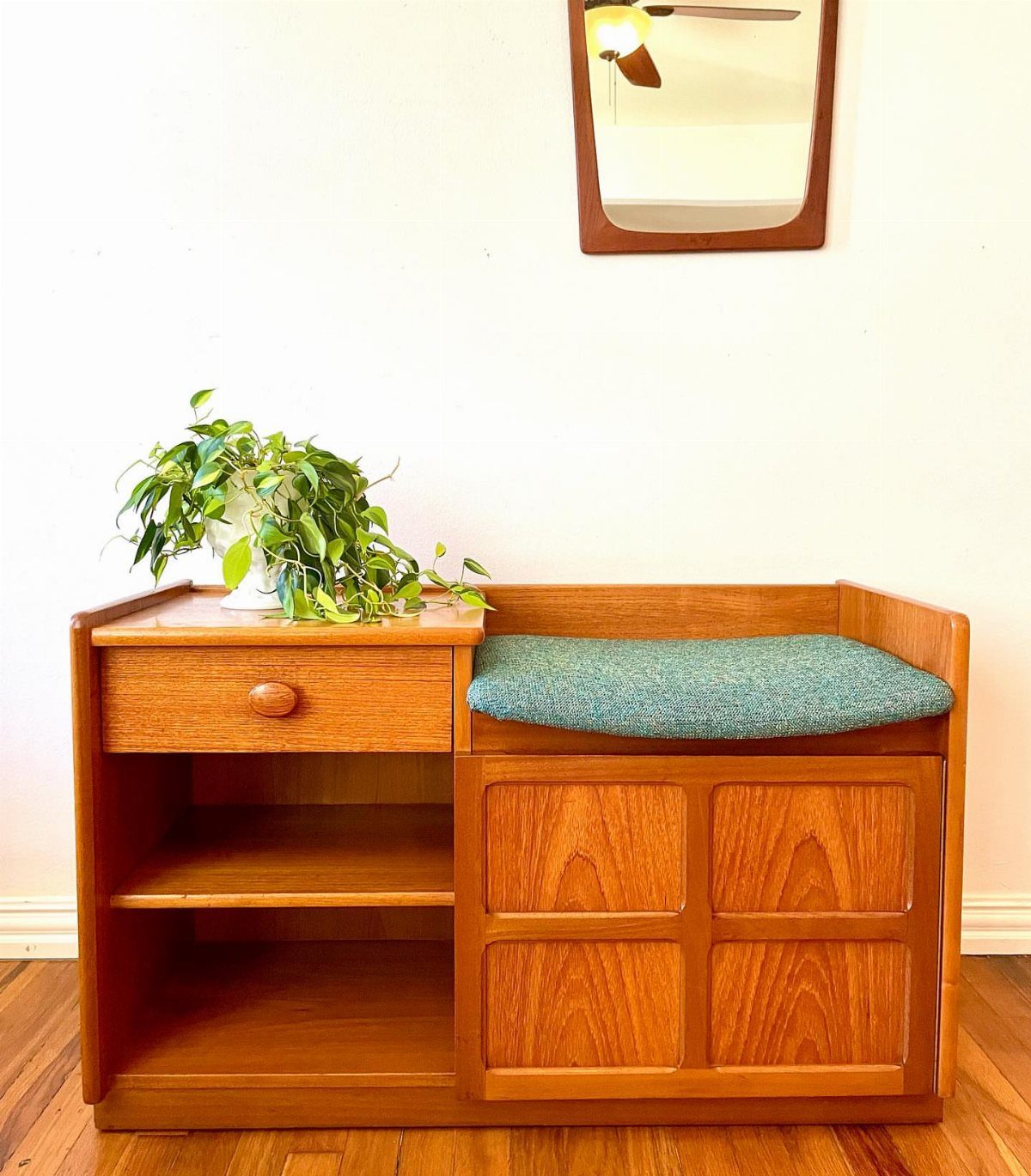
Hardwood construction with a green cushion and mixed storage, one drawer and open shelving together, gives this bench the flexibility that single-purpose pieces lack.
The drawer swallows mail, dog leashes, the small things that otherwise collect on top; the open shelves hold the shoes you wear daily; the cabinet hides what you do not.
The green upholstery is a choice. It reads as vintage against walnut, and it limits what you can change around it.
A neutral cushion lets you swap wall color or rug later; this green one commits you to working with it. That is not bad if you already know what you like.
Eco-friendly hardwood usually means reclaimed or fallen timber, which carries more variation in grain and color than plantation lumber. Expect knots, expect sapwood, expect to like the irregularity or to wish you had chosen the manufactured option.
7. Two-drawer Storage Bench
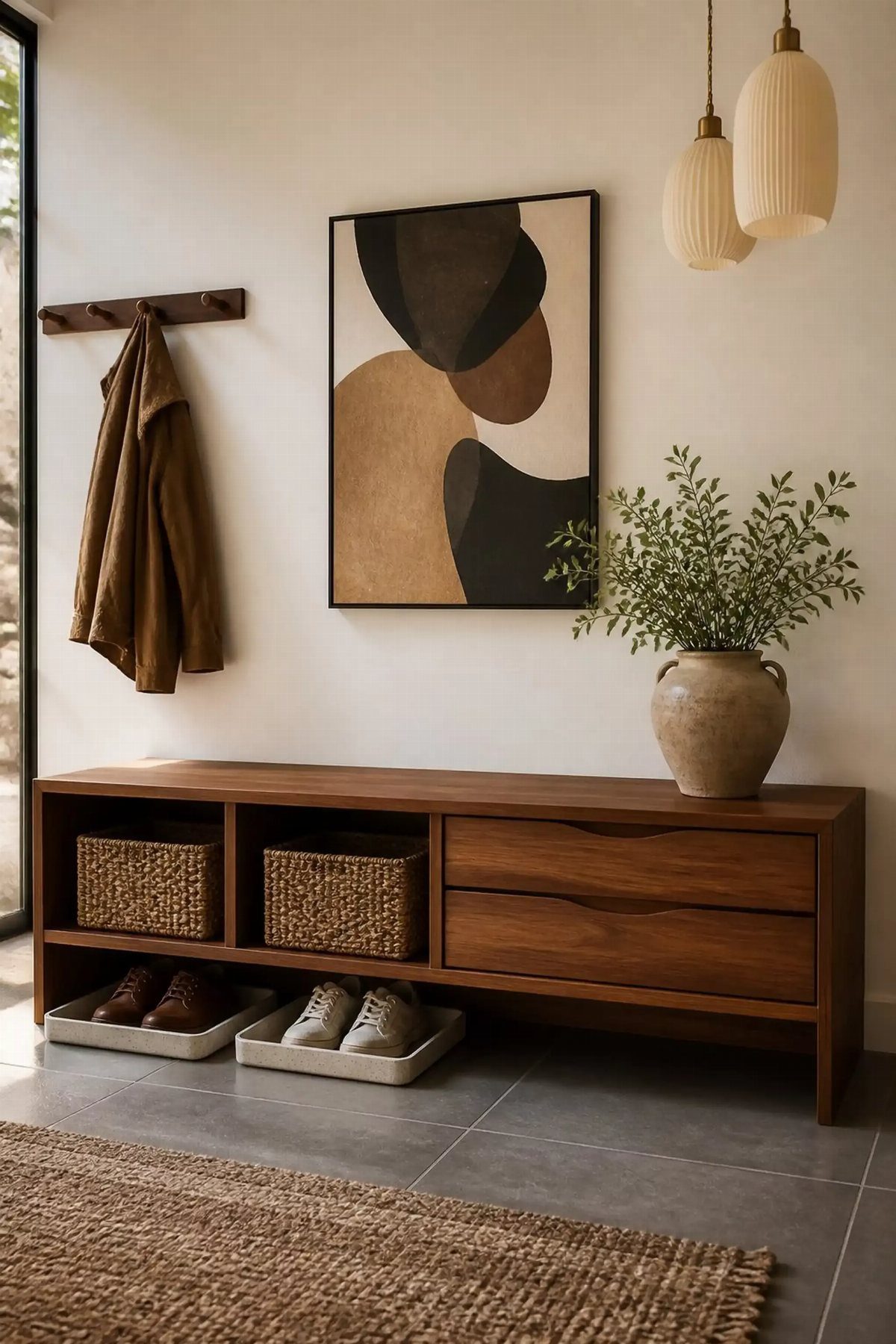
Two drawers keep the clutter you do not want seen: gloves, mail, the dog’s spare leash. The open cubbies beside them hold baskets for the stuff you grab daily, and the shoe shelf underneath handles what you walked in wearing.
This split layout suits renters who cannot build in but still need a system.
A tufted seat reads more traditional than some mid-century pieces; if your walls run cleaner lines, a tan leather pad and slim brass pulls tilt the same bones toward a stricter period look.
The trade is width. A bench this long eats wall space that a narrow console would not, and the drawers need clear floor in front to open fully.
Measure your door swing before you order.
8. Lift-top Storage Bench
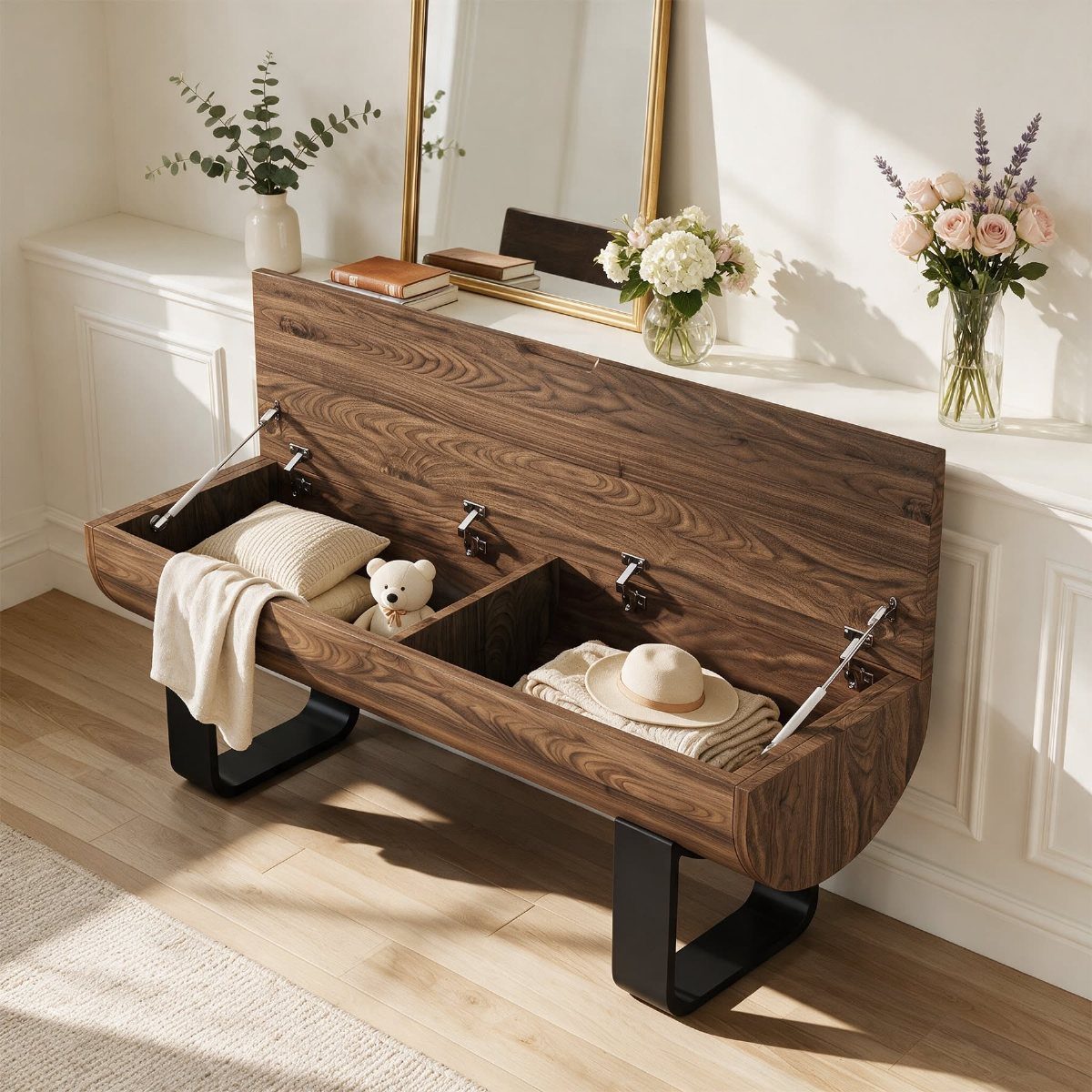
A lift-top bench hides what you do not have a closet for: spare pillows, off-season hats, the vacuum attachments you use twice a year.
The hinge does the work; you just need the floor space to stand the lid upright while you dig around.
A tufted mustard version reads bedroom to me, too soft for an entry that sees muddy boots. For a foyer, I’d want the walnut grain and black metal legs, or at least a darker fabric that forgives a scuff.
What changes the answer is what you are storing. Lift-tops excel for bulky, light things you need rarely.
Shoes, daily bags, anything heavy or frequent, the motion gets old fast. If you open it more than twice a week, drawers or open cubbies save your back.
Best Materials for Benches
Solid wood benches carry the weight of daily use better than veneer over particleboard, and the difference shows at the corners where bags get dropped.
Upholstery on the seat is where most wear happens. Foam goes flat fast under regular sitting; denser stuff holds its shape longer.
Fabric cleans easier than velvet or boucle, which collect pet hair and hold stains from wet coats.
Rattan and cane need dry air. In a bathroom-adjacent entry or a damp climate, synthetic rattan survives where the real stuff frays and sags.
The texture reads the same from 3 feet away, and you lose the maintenance.
Space-saving Solutions
A bench with sliding doors sits closer to the wall than one with hinged doors that need swing clearance. In a tight hallway, every inch of saved depth is the difference between walking past and turning sideways.
Wall-mounted racks above the bench use vertical space the bench cannot touch. Hooks at standing eye level handle coats; a shelf just above holds baskets for gloves and hats.
The bench itself stays free for sitting and shoe storage.
For studios or entries that open straight into living space, a narrower bench reads as furniture, not a hallway obstruction. The Lantine at 47.2 inches hits that threshold.
Anything longer starts to divide the room whether you meant it to or not.
Mid-century Modern Style
Mid-century modern in entry benches means tapered legs, clean profiles, and wood tones that read as warm against white or gray walls.
The look depends on proportion more than ornament: a seat too thick or legs too short loses the era’s particular balance.
Splayed legs do real work. They spread the load so a narrow bench stays stable on uneven floors, common in apartments with settled subfloors.
Straight legs look similar in photos but wobble where splayed ones do not.
Color choices from the period run olive, mustard, burnt orange against walnut or teak. A neutral cushion lets the wood shape carry the style; a colored cushion makes the bench the room’s single accent piece.
Both are period-appropriate, but the neutral one ages better if your taste shifts.
Functionality in Design
A bench fails as an entry piece when the storage it offers does not match what you actually carry in.
Mail and keys need a drawer shallow enough that nothing sinks out of sight; shoe storage needs enough depth or they hang out the front.
Lift-tops hide volume but punish frequent access. I would reserve them for items used monthly or less.
Daily shoes in a lift-top means standing, balancing the lid, and bending every morning. Drawers or open cubbies keep the motion to one step.
The best benches mix open and closed storage in ratios that match your habits.
One drawer for small items, open shelves for daily shoes, and a cabinet for guests’ pairs or off-season boots covers most households without forcing everything into one system.
Frequently Asked Questions
What is an entryway storage bench called?
Most retailers list it as a storage bench or entryway bench, sometimes with a modifier like shoe bench or lift-top bench to describe the opening style.
The name changes with the hardware: sliding doors, drawers, or an open cubby underneath each get their own search term, but the piece itself is still a bench first.
What is the most iconic mid-century modern furniture?
Tapered legs, clean lines, and wood grain that shows rather than hides are what most mid-century modern benches share, and those are the traits I look for first.
Those three details run through every bench described, from cane-webbed doors to fluted slats.
What are the best benches for an entryway?
The ones that match your door swing and your storage pattern. Measure the clearance first, then match the hardware to what you actually store.





