
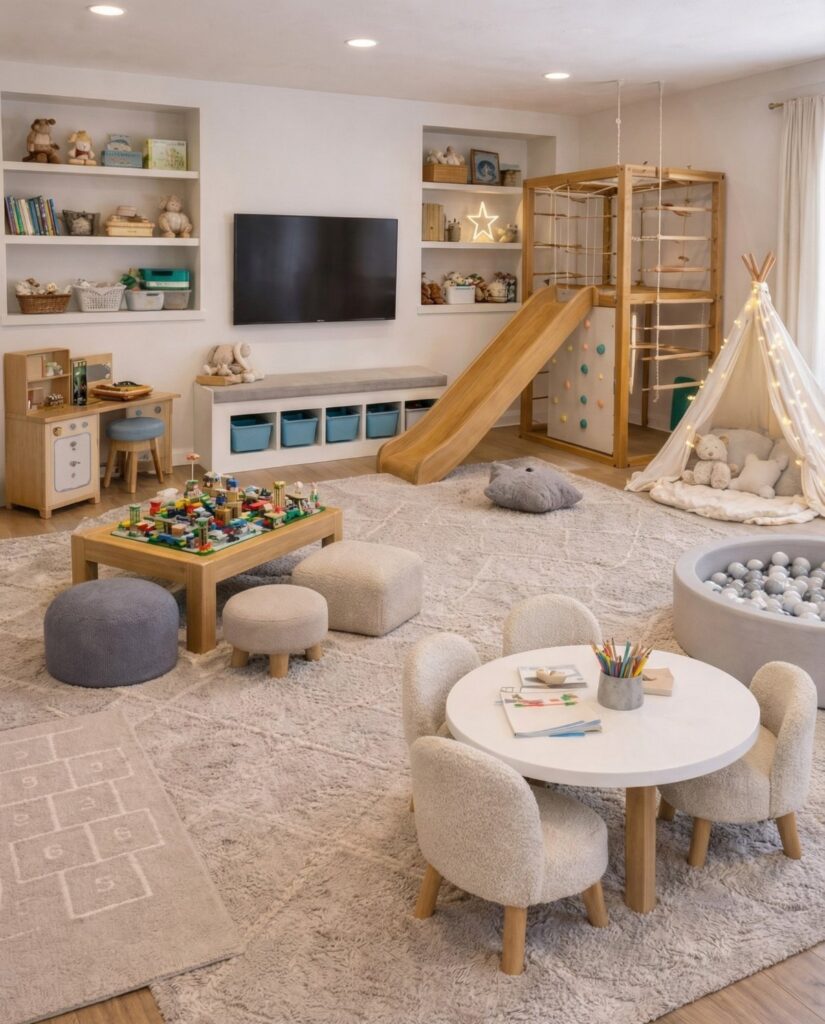
These five ideas run from cubed shelving you bolt together in an afternoon to a storage ottoman you buy once and move room to room as life changes.
The difference between them is not budget but footprint: cubed units and benches claim floor space permanently, while baskets, rolling carts, and wall-mounted book storage roll away or hang flat.
A loaded caster test, done while the return window is still open, saves you from finding out too late that the wheels bind or the frame flexes once the bins are full.
1. Cubed Playroom Storage
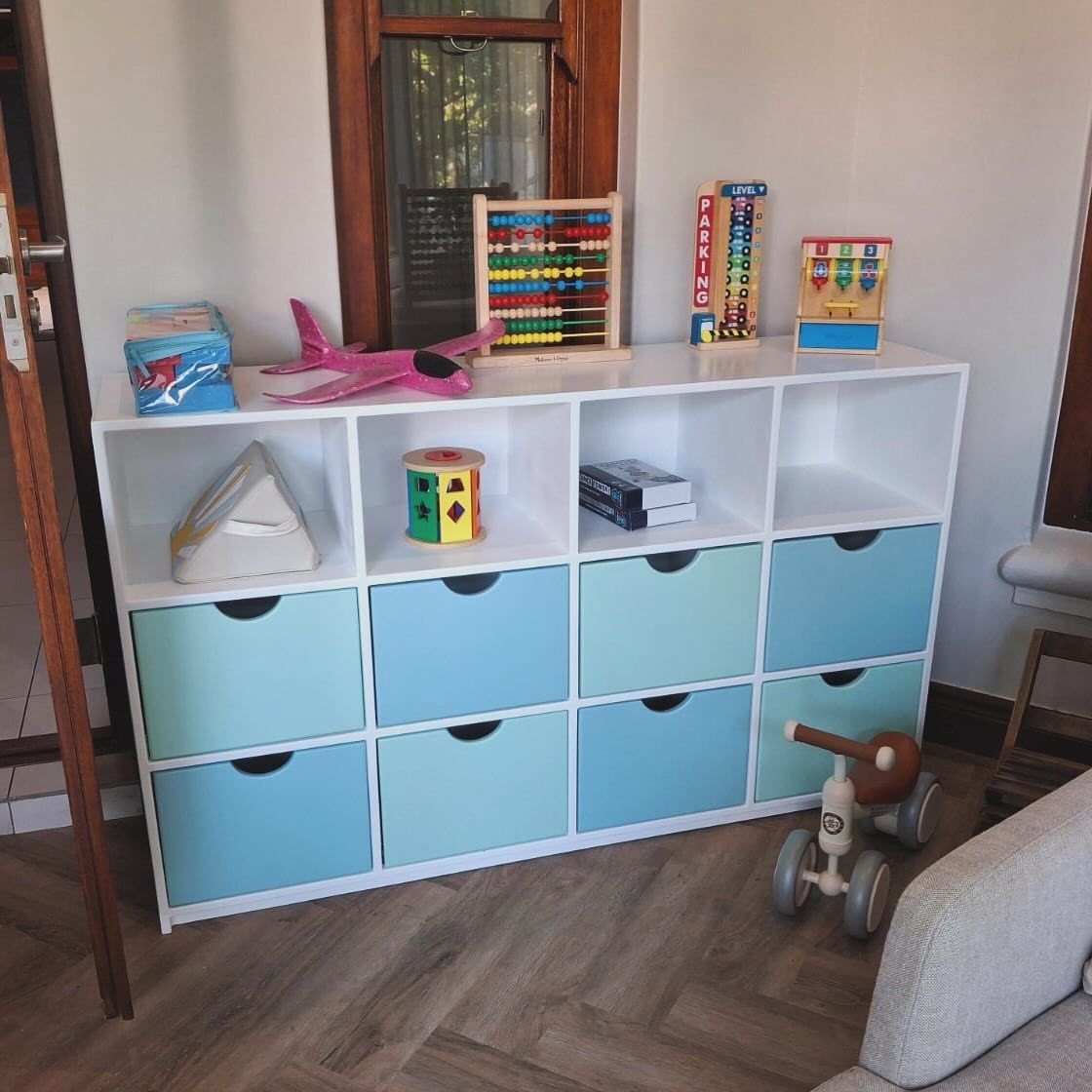
Cube shelving keeps toys visible enough that kids actually put them back, but contained enough that the floor stays walkable. The fabric bins slide out like drawers, so small hands can manage cleanup without dumping everything at once.
I would measure wall height before buying; units come in several heights, and a toddler who cannot reach the top shelf will ignore it. Leave the top row open for display or rotate it into bin storage later.
White finishes show scuffs less than painted wood, though unfinished units take stain if you want to match existing furniture.
Best for a corner or against a single wall where the unit becomes the room’s anchor. It does not move easily, so commit to the spot.
2. Baskets for Storage
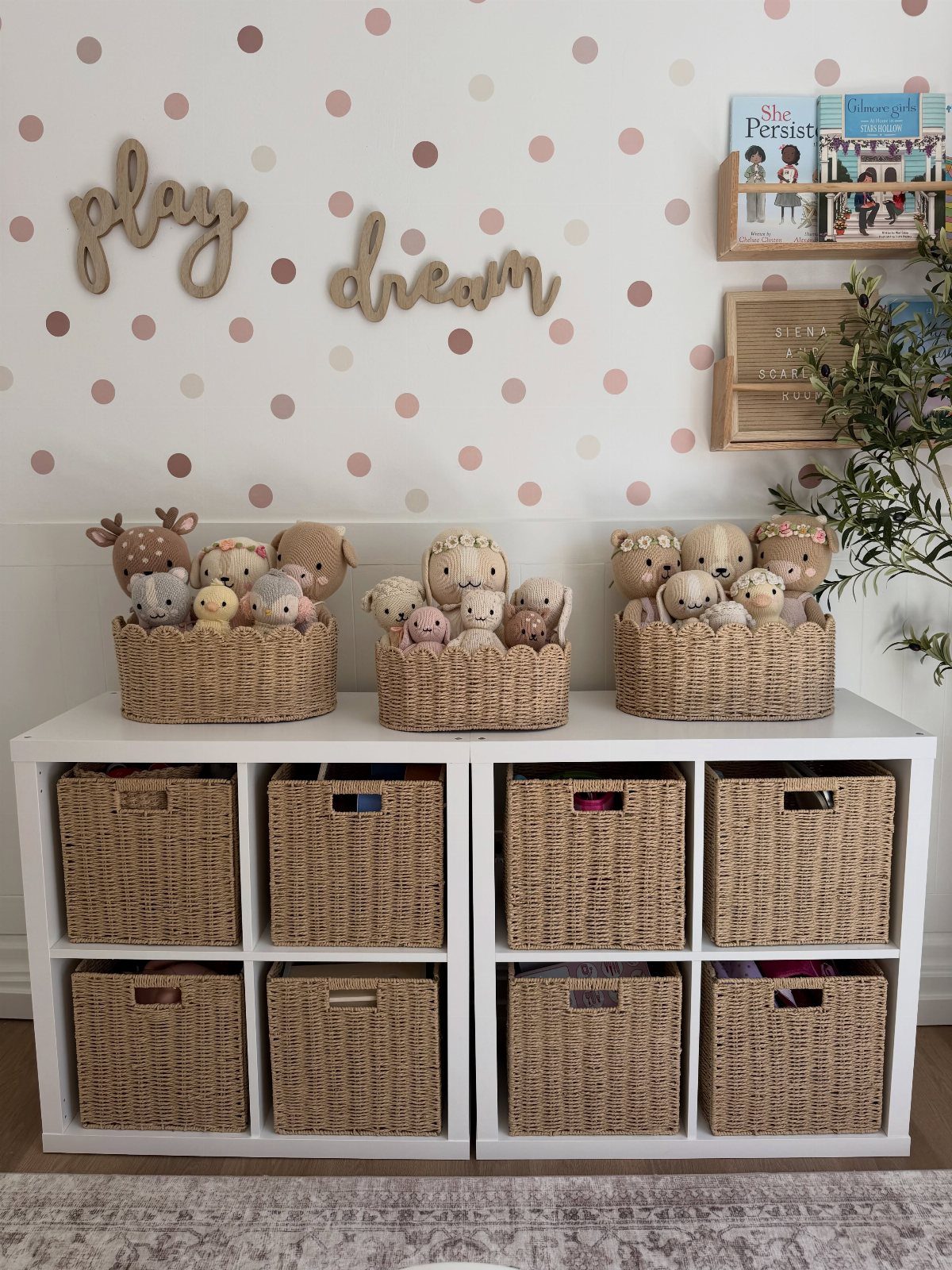
Woven baskets soften the look of cube shelving and let you sort by size or by child. A tall basket handles stuffed animals; a low rectangular one fits picture books spine-up.
Seagrass holds its shape without the rigidity of plastic, and the neutral tone works when the wallpaper already carries pattern.
Mixing weaves matters more than matching them. One smooth cotton bin, one chunky rope basket, one with handles: the variation reads as collected, not messy.
Check bottom weight before buying; a basket that tips when empty frustrates everyone.
This suits renters who cannot install built-ins and want the storage to look finished on its own. Dust settles in open weaves, so avoid them for blocks or beads.
3. Rolling Toy Storage
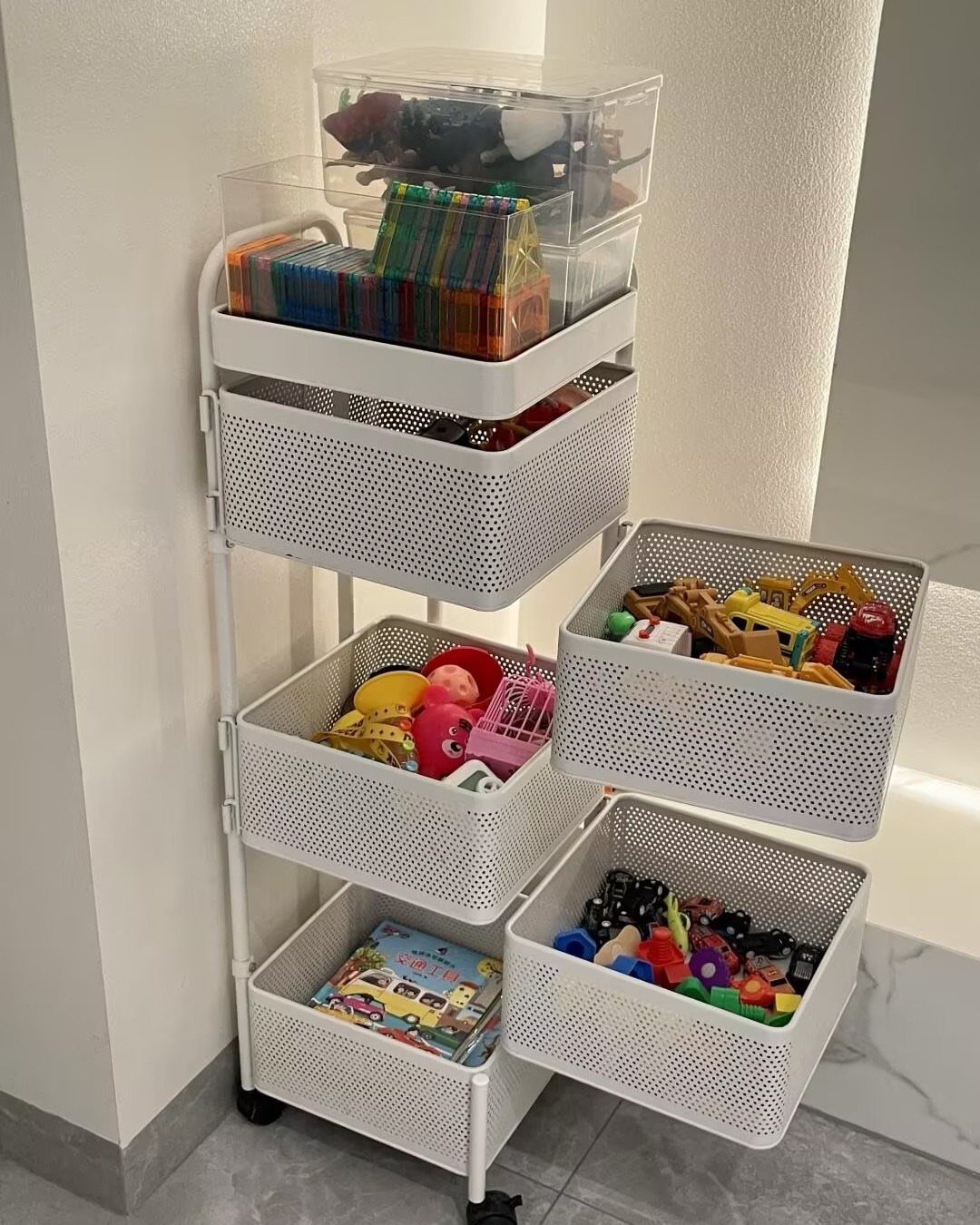
A rolling cart follows the mess instead of fighting it. Mesh baskets let you see contents without pulling each one out, and swivel casters handle thresholds between carpet and tile without catching.
I keep one near the living room for toys that migrate, then roll it back at bedtime. Three tiers sort by type: small figures on top, books in the middle, bulkier items below.
Weight adds up fast, so test the casters loaded before the return window closes.
This wins for families without a dedicated playroom, where toys live in multiple rooms. The cart takes floor space, though, so measure clearance under tables or beside sofas before ordering.
4. Book Storage Solutions
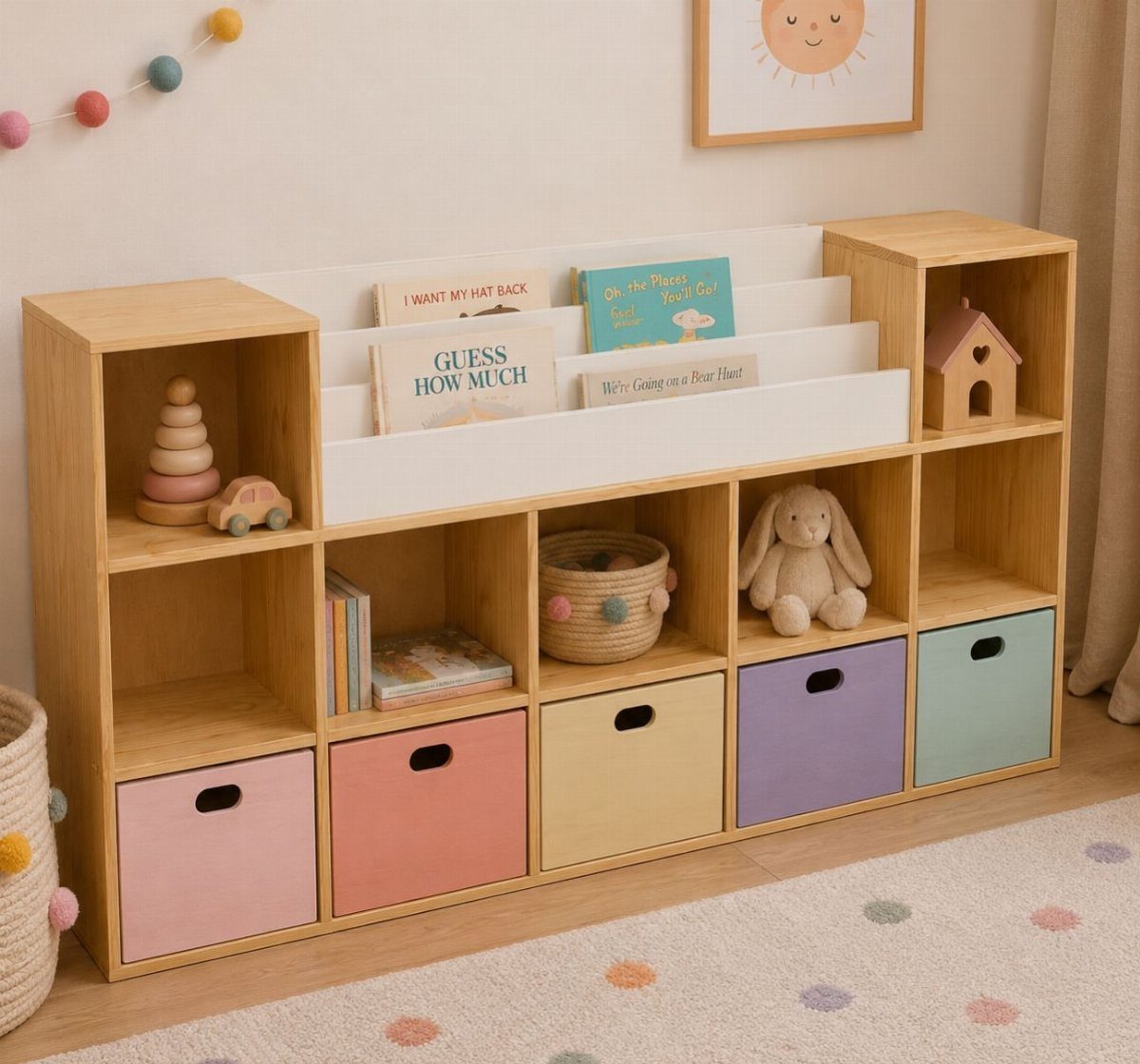
Forward-facing book storage fixes what traditional shelving breaks: kids judge books by their covers, not spines. A sling display puts artwork at eye level, which got my own kid reaching for stories far more often.
The cubby below still handles toys, so one piece serves both needs.
A book ledge mounted on wall takes less floor space; a sling integrated into shelving keeps everything in one purchase. The light wood finish here works with most nursery furniture, though white or painted versions read more modern.
This suits ages two through six especially, when cover art drives interest. After that, standard shelving holds more volume.
Consider ledges as a supplement, not the whole library.
5. Storage Ottomans
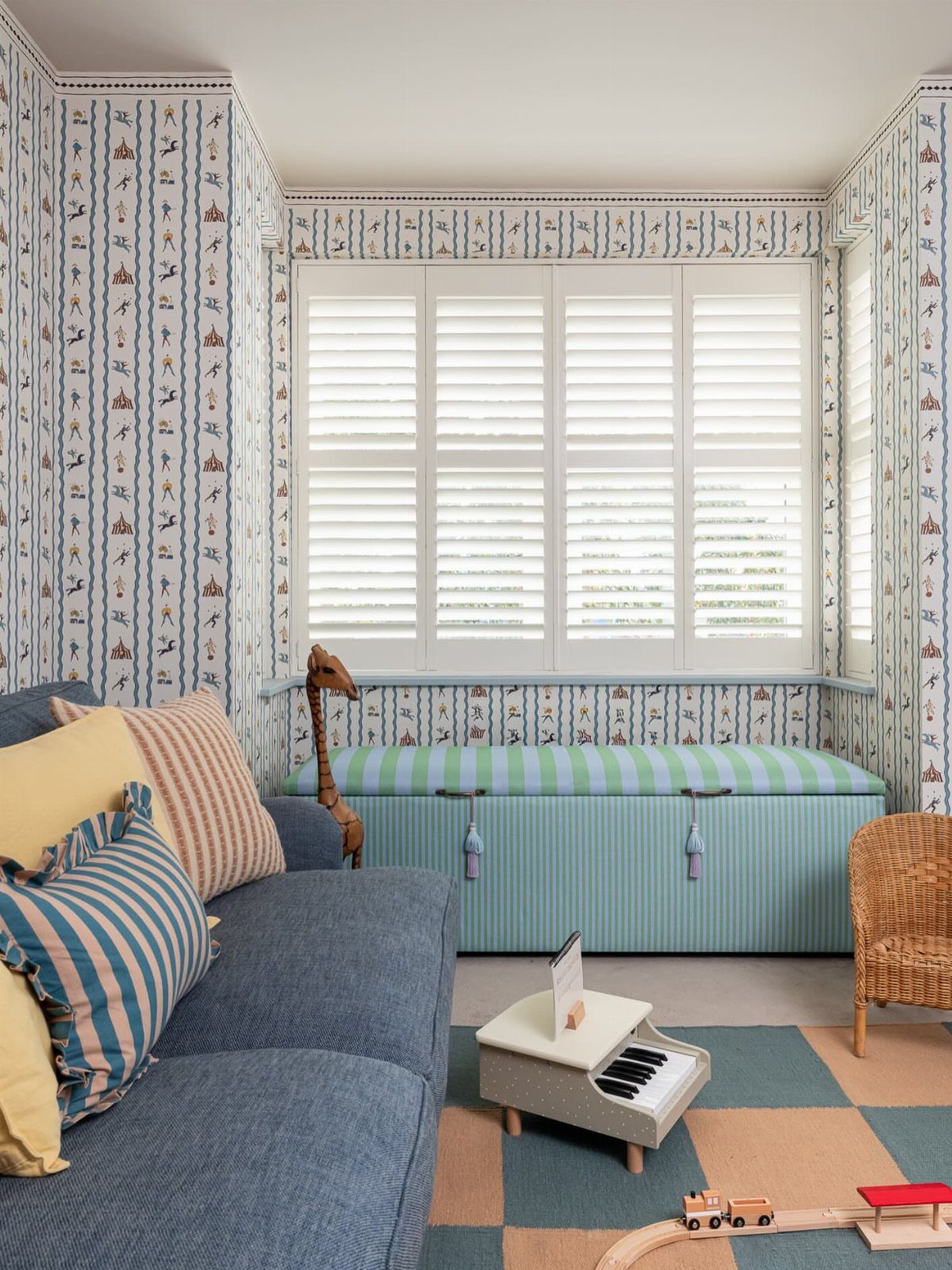
Striped upholstery on a storage bench reads playroom now but transitions to entryway or bedroom later. A hinged top lifts for bulky items like dress-up clothes or board games that defeat drawer systems.
Shuttered windows above suggest this sits low; measure your own sill height before choosing bench depth.
I would anchor this with a cushion in a darker tone than the base. Pale fabrics like light blue and green look fresh at first, but knees and crayons test any light color hard over time.
A washable slipcover extends life without replacing the whole piece.
The longevity is the point: no cartoon characters, no primary colors locked to age three. Spend here if you want the furniture to outlast the toy phase.
Safety Considerations
Wall straps belong on any unit tall enough for a toddler to pull on, which covers every cube system in the list.
The strap hardware is cheap and installs with a drill in a few minutes; skipping it because the unit feels stable empty ignores how a bin full of toys shifts the center of gravity.
I would check straps twice a year. The drywall anchor loosens gradually, especially in high-traffic rooms where vibration travels.
A strap that holds at Easter may not hold by Thanksgiving.
Rolling carts tip too, just in a different direction. Casters with brakes matter on inclines or near stairs, and the brake should engage with a foot so your hands stay free for the kid or the load.
Book ledges need the same stud-finding discipline as heavy shelving. A sling full of board books weighs more than it looks, and drywall alone strips under that cantilever.
Just-Right Size for Littles: Ideal for ages 3 to 5 with a weight capacity of 66 lbs.
Frequently Asked Questions
What are the best playroom storage ideas?
Cube shelving with fabric bins, woven baskets, rolling carts, forward-facing book displays, and storage ottomans each handle different messes. Cube units work as the anchor because kids actually put toys back when they can see where they go.
Rolling carts suit families without a dedicated playroom, since the storage follows the toys from room to room.
What are some good storage options for small toys?
Fabric bins that slide into cube shelving keep blocks and figures sorted by type without dumping everything at once. I would avoid open-weave baskets for beads or blocks; dust settles in the gaps and small pieces slip through.





