
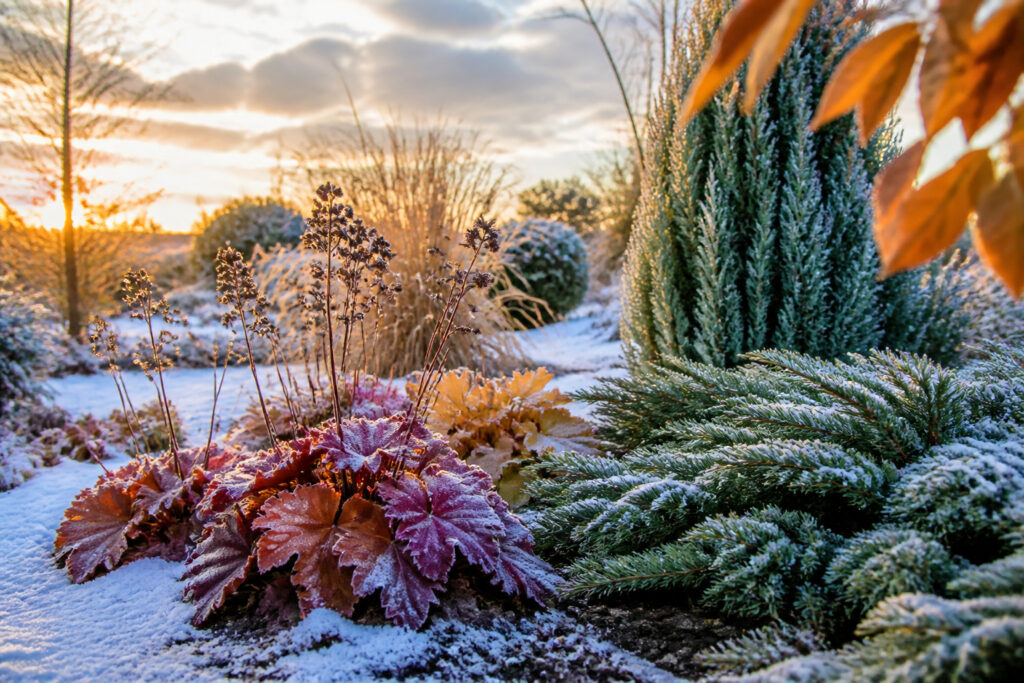
The difference between a winter garden that merely survives and one that actually performs comes down to whether you chose plants for your specific cold pattern, not just your USDA zone.
Some of these selections handle wet freeze-thaw cycles that heave coral bells from the soil; others demand the consistent cold of a zone 3 border where Siberian cypress stays emerald while creeping juniper turns patchy brown.
Pigsqueak forgives a shaded border with poor soil, but mirror bush rots fast without grit mixed into the potting mix. Match the plant to the condition, not the label to the zip code.
1. Pigsqueak
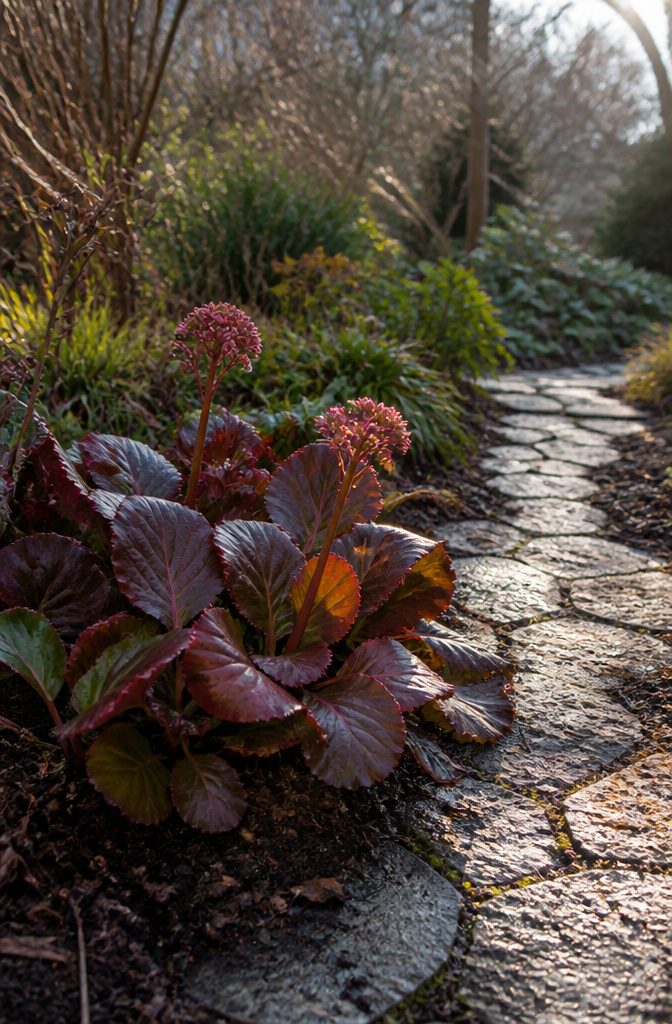
Bergenia cordifolia, called pigsqueak for the sound its thick leaves make when rubbed together, is the kind of plant that forgives a shaded border with poor soil and still looks intentional.
The leathery, cabbage-like foliage stays evergreen through most winters, and cold weather pushes it toward bronze-red tones that read as deliberate color rather than dying-back desperation.
In late winter to early spring, sturdy upright stems carry pink bell-shaped flowers high enough to catch attention without demanding a spotlight.
At one to two feet tall and spreading, it works as ground cover or pathway edging where something needs to fill space without becoming a shrub.
Zones 3–9 covers most of the country, and part sun to shade means it handles the north side of a fence or the dim corner where nothing else thrived.
The variety ‘Miss Piggy’ leans into the pink harder, if that is the direction the border needs.
Neglect does not phase it. Dry shade, compacted soil, a weekend where watering slips the mind: pigsqueak keeps its leaves and waits.
That durability makes it useful for renters planting something they might leave behind, or for first-home owners still figuring out which corners of the yard actually get light.
2. Coral Bells
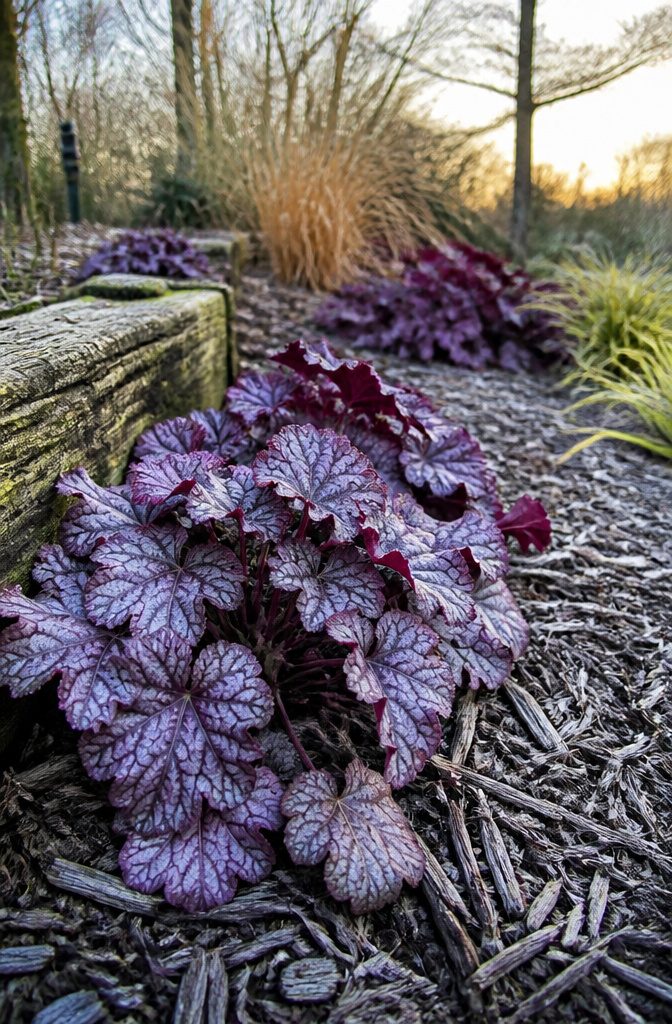
Heuchera, the plant most people call coral bells, earned its spot in my winter garden for the foliage, not the flowers.
The Dolce and Primo lines keep their purple, silver, and near-black leaves straight through the cold months in zones 4 through 9, and some varieties push hardiness to zone 3.
I learned the hard way that the flower stalks are irrelevant by December; whether the crown survives freeze-thaw cycles without heaving out of the soil is what actually decides if the plant returns.
A mulch layer of two inches around the base, not over the crown itself, prevents the root ball from working loose during January thaws.
In milder winters the leaves stay almost pristine; in harder ones they may tatter or partially die back, but the plant returns from the crown regardless.
Coral bells in pots need more protection than those in the ground, since container soil freezes harder and faster.
I move my potted ones against a south-facing wall and heap leaf litter around the containers, which has kept them alive through single-digit nights.
The color range runs from caramel and yellow through greens, but the darker purples and silvers show up best against gray winter mulch or snow.
Hardiness to zone 3 makes coral bells one of the few foliage plants that survive northern winters without going dormant to bare earth.
3. Switch Grass
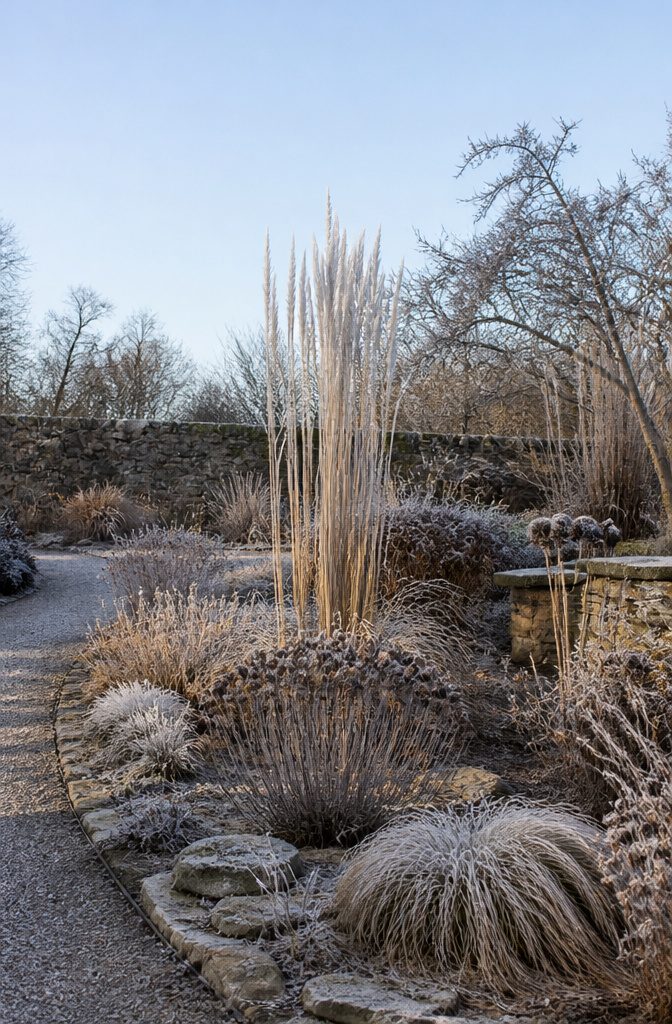
Switch grass, Panicum virgatum, is the native prairie grass that keeps a garden from looking like a graveyard once the perennials collapse.
The seed heads and hollow stems catch frost the way a good wool coat catches snow: they wear it instead of buckling under it.
On still mornings after a freeze, the whole plant turns into a pale, rigid architecture that moves when the wind picks up.
The upright cultivars matter here. ‘Totem Pole’ stays narrow enough for a city lot and holds its stems vertical through wet snow that flattens the looser varieties.
Zones 4–9 covers most of the country, and full sun is non-negotiable; shade makes it lanky and more likely to kneel.
If you are choosing between switch grasses for winter structure, the stiff-stemmed selections are the only ones that survive a thaw-and-freeze cycle without staking.
4. Boxwood
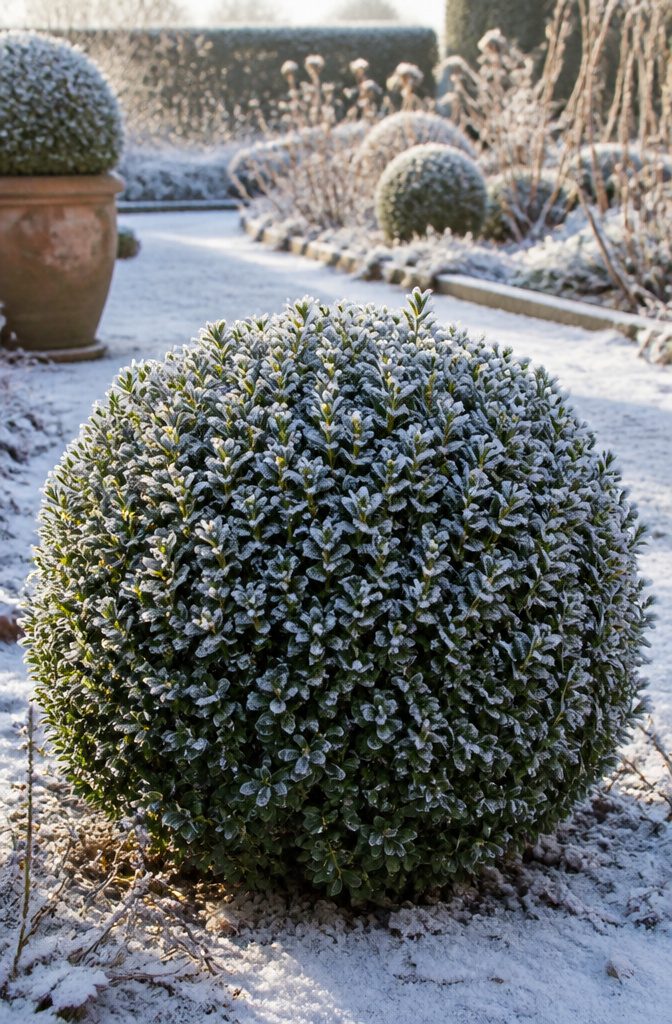
Buxus species carry evergreen structure through the coldest months, hardy to Zones 4–9, which covers most of the country where winter gardening is even attempted.
The shallow roots need significant mulch before hard frost, something I learned to do the hard way after watching a hedge heave partially out of frozen ground one March.
Boxwood blight and winter bronzing are the two realities that separate varieties worth planting from ones that become a maintenance headache.
North Star has held color through actual cold snaps better than others I’ve tracked, while Wintergreen Boxwood resists common pests more reliably than typical alternatives.
Dwarf English Boxwood does well in containers if you are working a patio or rental situation where in-ground planting is not an option.
The wintergreen type also shapes readily into hedges, which matters when you want structure without waiting years for it to fill in.
5. False Cypress
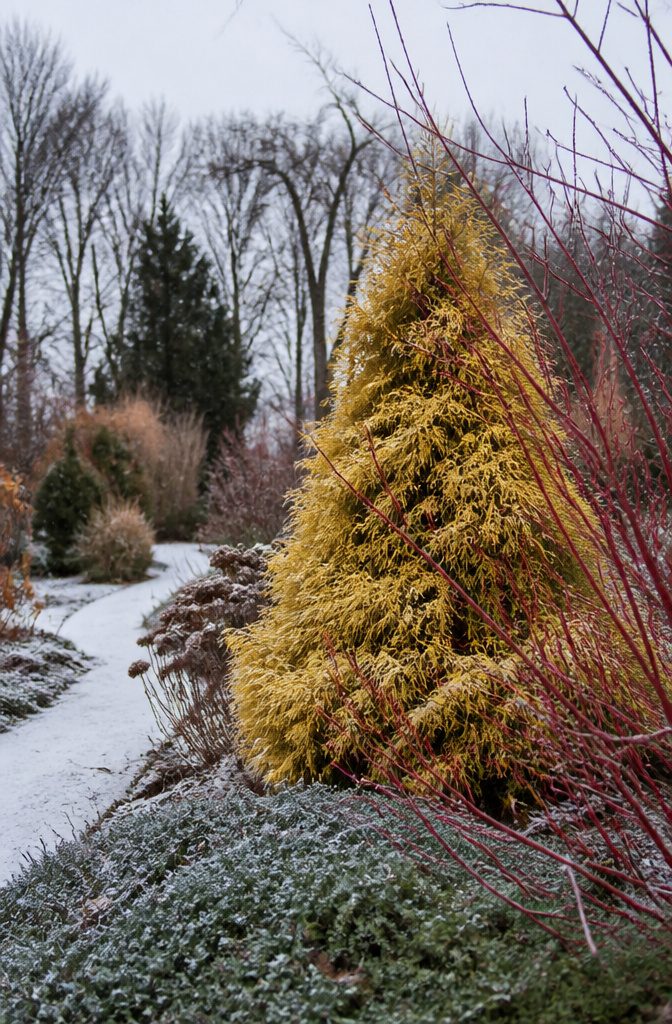
Soft Serve Gold false cypress is the cultivar that made me stop overlooking this whole genus.
The feathery foliage bends under snow rather than snapping, which matters more than I expected after watching a neighbor’s rigid arborvitae split clean in half one wet March.
That same pliable structure lets Chamaecyparis pisifera varieties shrug off ice loads that wreck stiffer conifers.
The gold coloring reads as warm against gray winter light, and at 6 to 10 feet tall and wide, Soft Serve Gold settles into a pyramidal shape that needs no shearing to stay tidy.
It handles full sun down to partial shade, though the gold tones stay brighter with more light.
In mixed borders, it pairs well with red twig dogwood’s bare red stems and the early blooms of witch hazel without competing for attention.
Zone 4 hardiness means it survives where true cypresses fail, and the maintenance is close to zero: no deadheading, no winter wrapping, no staking after the first year.
The only real decision is placement. Give it room to reach its mature spread, or plan to move it before year five.
6. Mirror Bush
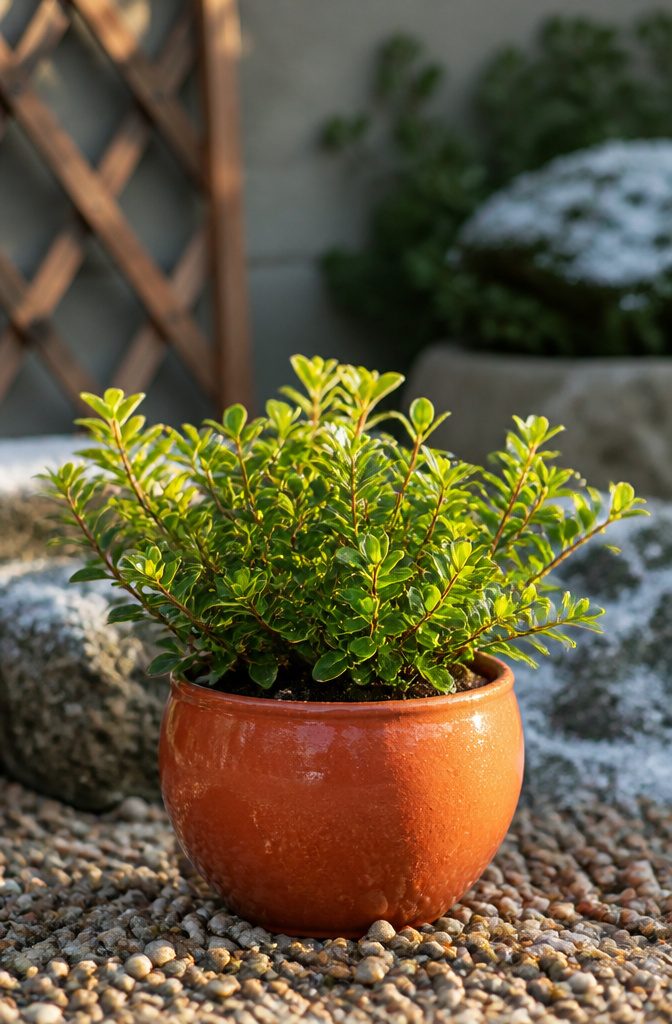
Glossy leaves in winter are rare enough that Coprosma repens, or mirror bush, stops you mid-step when the rest of the yard has gone to sticks.
The leaves are thick, almost plastic-looking, with a reflective surface that catches low winter light and bounces it around a cramped space.
That quality matters when you are gardening on a rental patio or a first-home lot where every square foot counts and you need the plant to do something active rather than just survive.
The compact varieties stay manageable in a container, which is how I would use it.
A glazed pot on casters lets you roll it to the sunniest corner in December and tuck it against the house when a hard freeze threatens.
Evergreen structure without the weight of a hedge gives you the winter bones renters are usually told to skip.
Mirror bush rots fast in soggy soil, so drainage is everything; mix extra grit into standard potting mix and keep the saucer emptied after rain.
7. Red Twig Dogwood
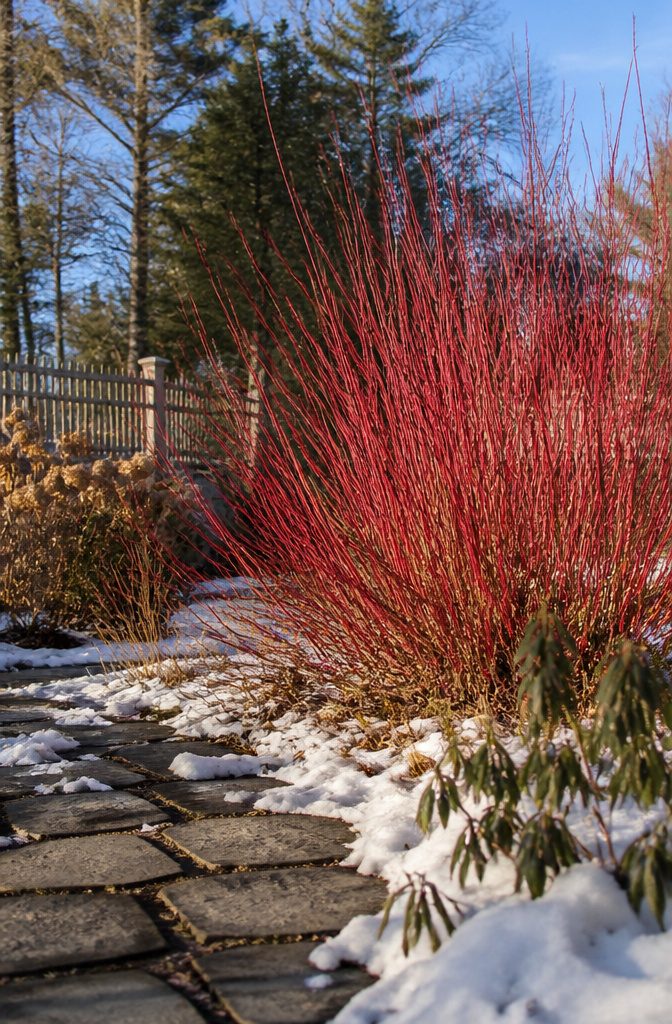
Cornus sericea is the shrub that finally taught me why my winter garden looked flat despite all the "winter interest" plants I had crammed in.
The stems stay a dull green-brown through fall, then the leaves drop and the wood underneath lights up in shades of red, coral, or orange that no evergreen can match.
Hardy to Zones 2–7, it survives where I garden and keeps that color through the worst months.
Pruning is where most people trip up with this one.
Color runs strongest on young wood, so the brightest stems sit on the newest growth. Older branches fade to a muddy, thin red that reads as dead from a distance.
I cut out about a third of the oldest stems each spring, right down to the base, and take out anything crossing or weak while I am at it.
The shrub looks brutalized for a month, then fills back in and the new whips color up hard the following winter.
For smaller yards, the straight species can run too large and too fast. ‘Arctic Fire’ stays compact at 3 to 5 feet tall and wide, with the same brilliant red stems on a frame that fits a foundation bed or a tight corner.
I have also grown ‘Bailey’, which carries the color on a slightly looser habit.
Both work cut into winter arrangements; the stems last weeks in water and save me from buying dyed branches at the garden center. Full sun to partial sun suits either one, and average soil is enough.
8. Seven Son Flower
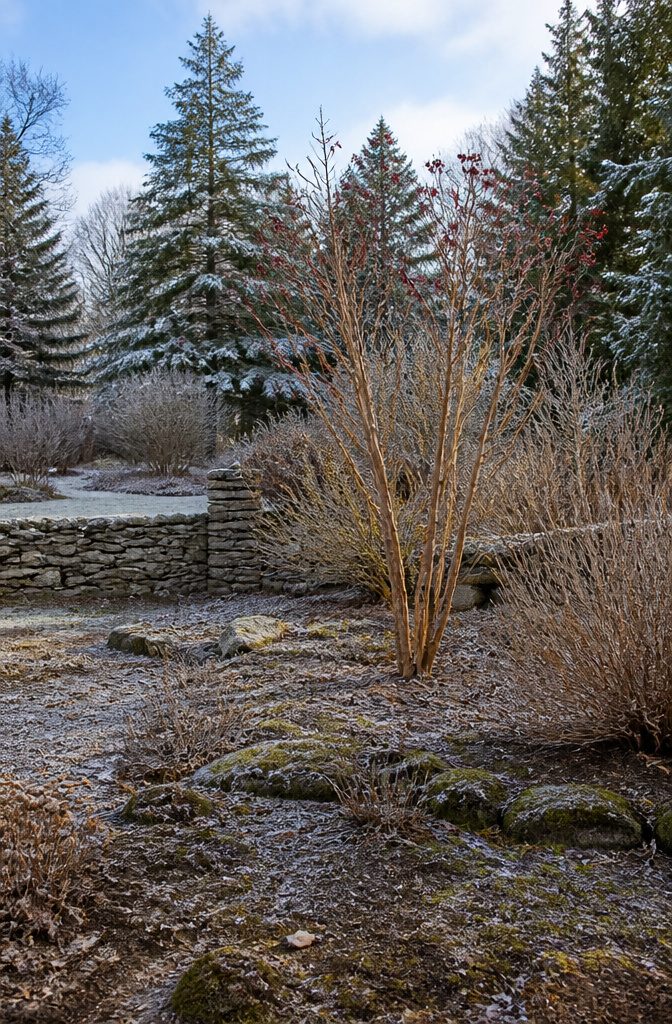
Heptacodium miconioides, the seven son flower, carries its best traits into the months when most shrubs have gone quiet.
The late-season blooms arrive in clusters, white and fragrant enough to notice from a few steps away, and after they finish, the calyxes turn a deep red that hangs on well into fall.
By winter, the peeling bark strips back in thin curls of tan and brown, giving the stems texture that catches low afternoon light and looks deliberate against snow or a dark fence.
The shrub wants space, but not an estate.
Most specimens settle in the 15–20 foot range over time, narrower than they are tall, which means a smaller garden can still use one if placed at the back of a border or trained to a single trunk for tree-like clearance underneath.
I have seen it kept smaller with consistent pruning after flowering, though the bark shows best when you let the lower branches stay and develop their own character.
The root system is not aggressive enough to threaten foundations, a real concern for renters who may not know what previous owners planted or where the utility lines run.
Cold hardiness runs to zone 5, sometimes 4 with protection, so northern gardeners get the same late perfume as those farther south. The real limit is drainage: wet feet in winter kills more seven son flowers than temperature ever will.
9. Panicle Hydrangea
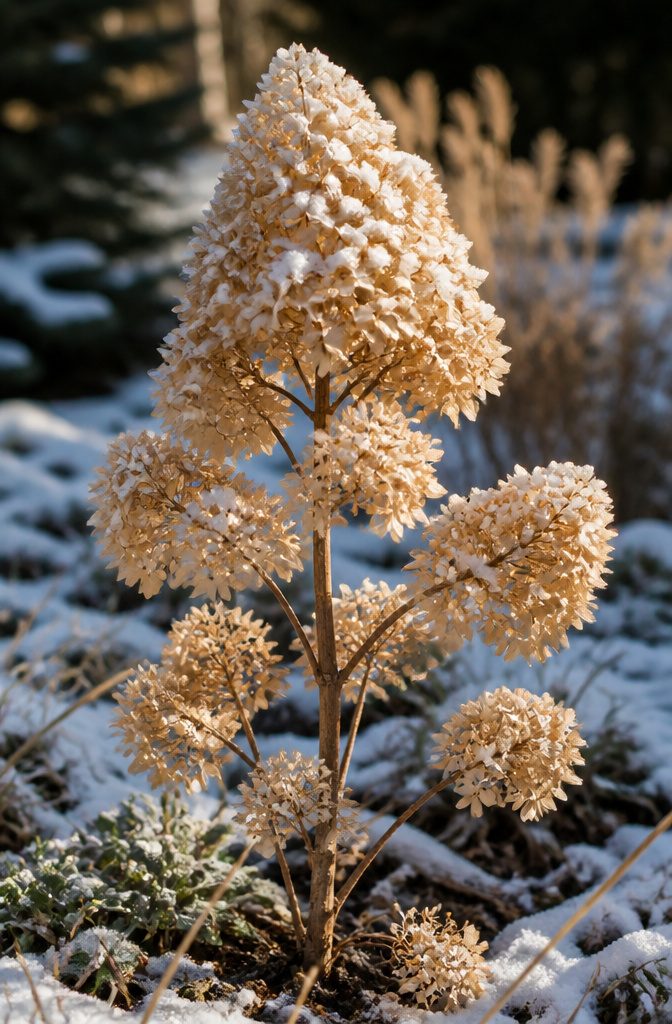
Dried flower heads on a panicle hydrangea carry the garden through months when nothing else is doing much of anything.
The cone-shaped clusters turn papery and hold that shape under frost and light snow, though some varieties handle the weight better than others.
Fire Light keeps its stems rigid enough to stay upright even in zone 3 winters, while the softer-stemmed types flop by January and end up looking like wet tissue on the ground.
The timing on pruning matters more than most people expect.
Cut these back in late winter or early spring, not fall. The spent blooms protect the buds sitting lower on the stems, and those buds are what give you next summer’s flowers.
I learned that the hard way after an autumn cleanup left me with green sticks the following June. Let them stand, let them collect snow, and take the shears to them only when the worst cold has passed.
10. Inkberry Holly
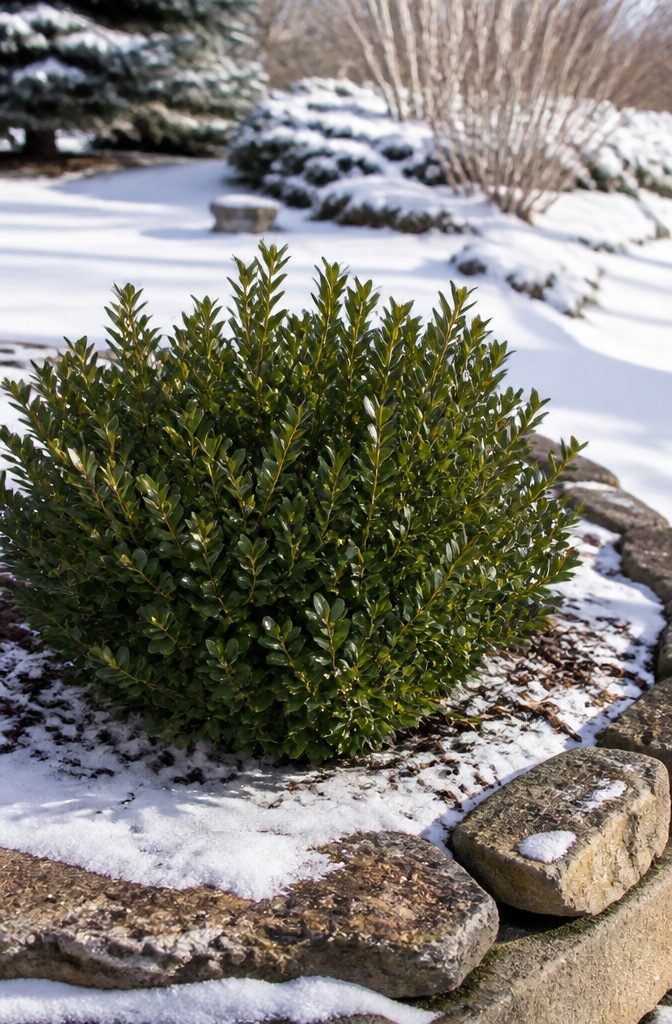
Inkberry holly, Ilex glabra, is the native evergreen I point people toward when they want boxwood structure without the boxwood headaches.
Hardy to Zones 4–9, it carries small oval leaves year-round and shrugs off winter damage that would leave non-native alternatives looking bronze and embarrassed by March.
The real advantage shows up in the spots that defeat most evergreens. Wet soil and partial shade, the two conditions that usually sentence a hedge to slow decline, are where this plant settles in and thickens up.
I have watched it edge a path that turned swampy every spring, staying dense while the Japanese holly planted ten feet away yellowed and thinned.
For hedging, you give up some height; inkberry stays neater than other hollies but tops out around eight feet.
Strongbox, the variety I see most often now, tops out around 2–3 feet and spreads about as wide, with a naturally mounded habit rather than the crisp geometry boxwood takes to so readily.
You will not get the formal parterre look without shearing it hard, and even then the outline stays softer.
Where it wins is speed; sources note it grows faster than boxwood, so the gap fills in quicker and the wait for privacy ends sooner.
Use it for low edging, mass plantings, or anywhere you need green that stays green through ice and thaw without the disease vigilance boxwood demands now.
11. Blue Holly
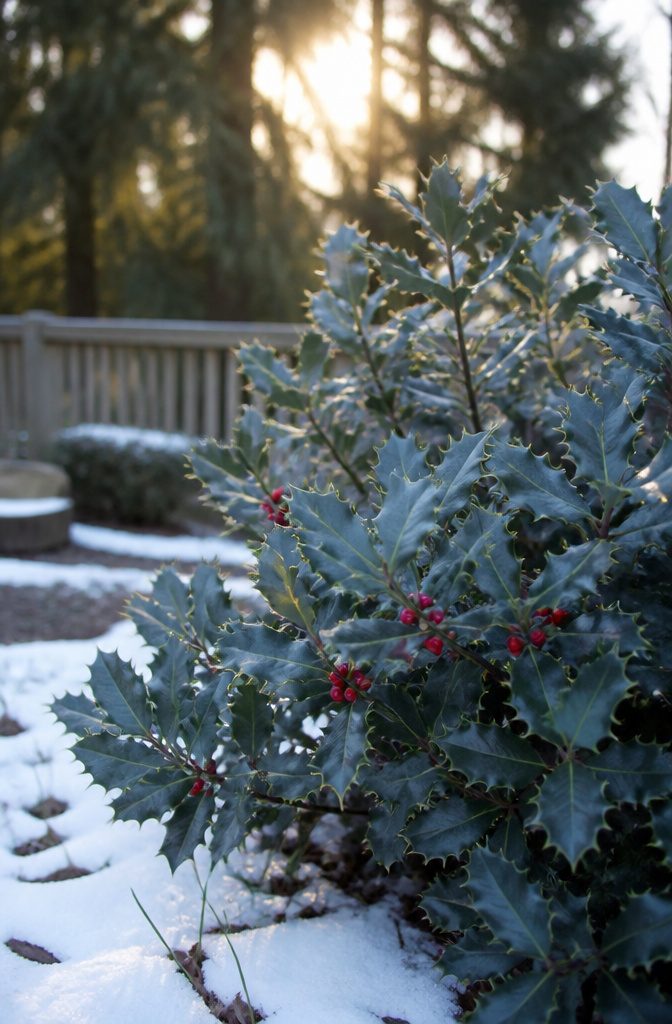
Blue holly, the Ilex x meserveae hybrids, carry a blue-green cast to their leaves that reads as color even against gray winter light.
The evergreen foliage alone justifies the space, but the red berries are what most people picture, and those only arrive if you plan for them.
The plants are dioecious, which means each individual is either male or female. A female plant like Castle Spire® will set fruit only when a male pollinator grows close enough for bees to travel between them.
I have mine paired with a male Blue Prince in the same bed, roughly eight feet apart, and the berry load has been reliable since the second year.
Without that male plant, the female flowers go unpollinated and you get no winter fruit at all.
Castle Spire® is rated for zones 5 through 7 and wants part sun to full sun.
The upright habit works as a single specimen or a loose hedge, though I would not try to shear it tight; the leaf edges have the classic holly spines, and close pruning means gloves every time you reach in.
12. Winterberry Holly
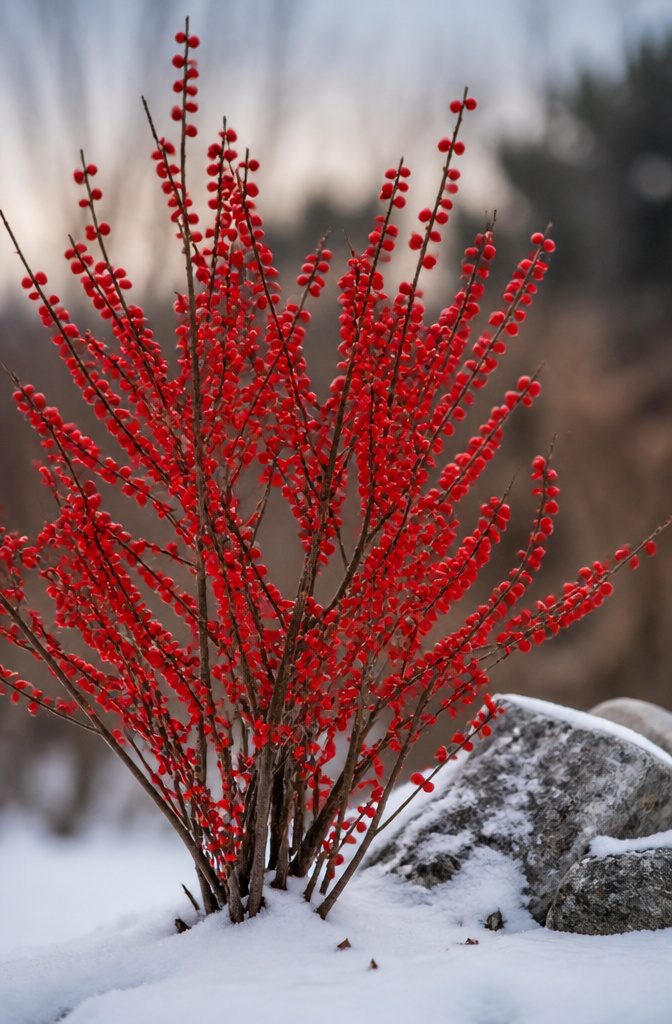
Bare winter stems loaded with red berries are what make Ilex verticillata worth the space in a cold weather garden, hardy down to Zone 3 and comfortable through Zone 9.
Pollination is the hidden requirement: female plants set fruit only when a male blooms nearby at the same time.
Sources push the Proven Winners pair, Berry Poppins® female with Mr. Poppins® male, both staying compact at 3 to 4 feet. For heavier berry loads on a slightly larger frame, ‘Winter Red’ and ‘Berry Heavy’ are the cultivars most growers stock.
I bring the branches indoors in late December after a few hard freezes have toughened the berries.
They last two to three weeks in a vase without water, longer if I mist them, and the color beats anything from a craft store.
One year I skipped the male plant to save space and got exactly the green stem display I deserved.
13. Juniper
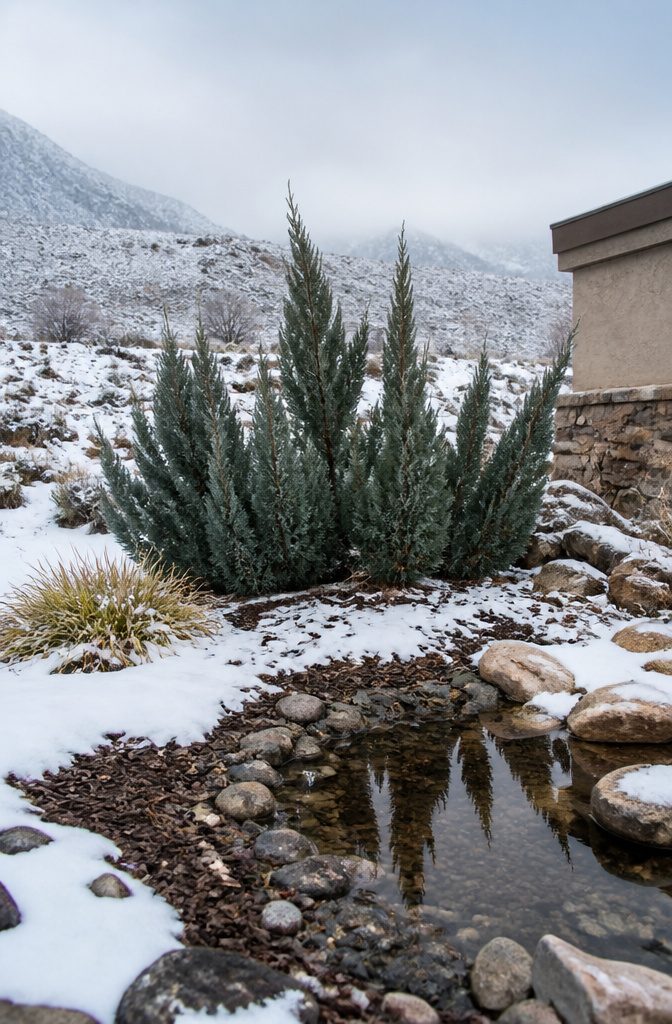
Juniper branches hold their color through months of cold that turn most evergreens brown at the tips.
The groundcover types, like the creeping forms that spread two or three feet across, work well on slopes where you do not want to mow in freezing weather.
Upright junipers give structure to a winter garden when everything else has dropped to the soil line.
Road salt and wind are the two killers where I live near a county highway.
Some varieties handle both without the needle burn that makes others look scorched by March. The ones with tighter growth tend to fare better; open, airy branching catches more salt spray and dries out faster in wind.
I have had good luck with varieties that keep a dense habit even after five or six years in the ground.
Voles are the expense I did not plan for.
Three winters back, I lost two established upright junipers to vole girdling at the base. The damage does not show until spring, when the needles turn dull and the branch tips stay brittle.
Wire mesh around the trunk in late fall would have cost maybe ten dollars and an hour of work. Now I put it on anything with bark that sits through snow cover, and I have not lost another.
14. Siberian Cypress
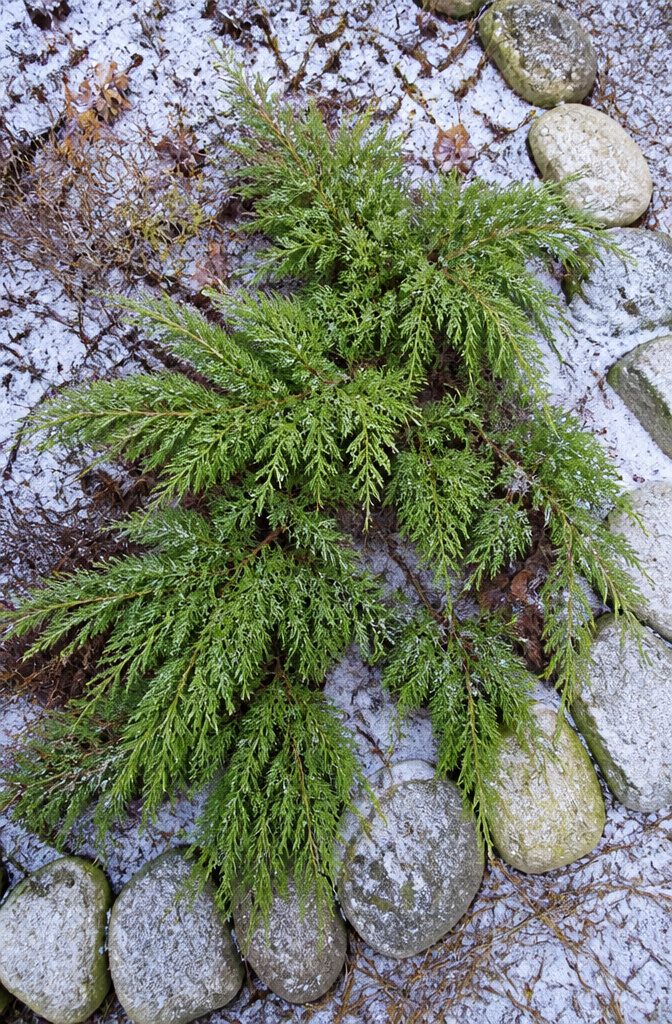
Siberian cypress spreads low and stays green where most groundcovers give up.
The fine, scale-like foliage looks enough like juniper to confuse a casual glance, but this plant handles northern winters without the bare patches and dieback that plague creeping juniper in zone 4 and colder.
I learned the hard way that "hardy" on a nursery tag does not mean "looks good in February."
Microbiota decussata stays under two feet, hugs slopes without rooting at every node like some aggressive spreaders, and tolerates the thin, root-compacted soil that collects along rental walkways and garage margins.
The bronze winter tint is a feature, not a failure; it reads as color in a gray landscape rather than as death.
For renters especially, the slow growth rate matters.
One spring planting fills a bed edge over two seasons without overrunning the sidewalk or swallowing the meter box. No shearing, no wrestling it off the foundation before move-out.
If you need quick coverage this year, spend the money on more plants spaced closer. If you need coverage that stays your problem and does not become the landlord’s, this one earns its keep.
15. Lily of the Valley Shrub
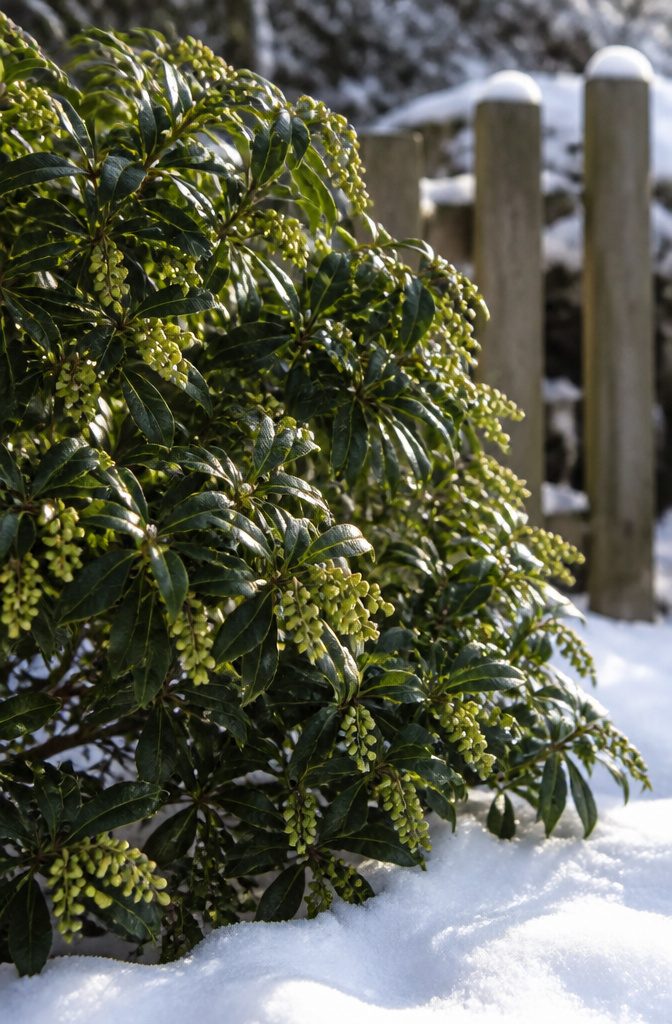
Pieris japonica, the lily of the valley shrub, carries clusters of white or pink bell-shaped flowers from late winter into early spring on branches that stay green year-round.
The bronze-red new growth that precedes the bloom gives it something to show even when the buds are still tight.
Soil is where this shrub gets picky. This is an acid-loving plant, and in areas with alkaline soil it will struggle no matter how hardy the cultivar.
Working peat or sulfur into the planting hole helps, but in the long run, keeping it in a container with ericaceous compost may be the more honest move for renters who cannot amend an entire yard.
Cold-hardiness varies by variety more than the species name suggests.
The base plant is listed to zone 4, yet some cultivars sulk where winters stay brutal. ‘Carsten’s Wintergold’ is named for exactly the season this article is about, though that name belongs to a mugo pine, not a pieris; for pieris specifically, the Interstella series from Proven Winners is bred with these weeks in mind.
Where wind is the problem rather than temperature alone, a 2–3 inch layer of mulch over the root zone and a spot sheltered from the worst gusts will matter more than the label zone.
I have seen pieris planted against a east-facing fence hold where an exposed specimen browned out, and the difference was not the plant but the placement.
Dwarf varieties top out around three feet and work in pots that move with a lease; larger forms reach twelve feet and suit a permanent border.
The slow growth means neither size arrives overnight, so buy for the space you have, not the one you hope to inherit.
16. Yew
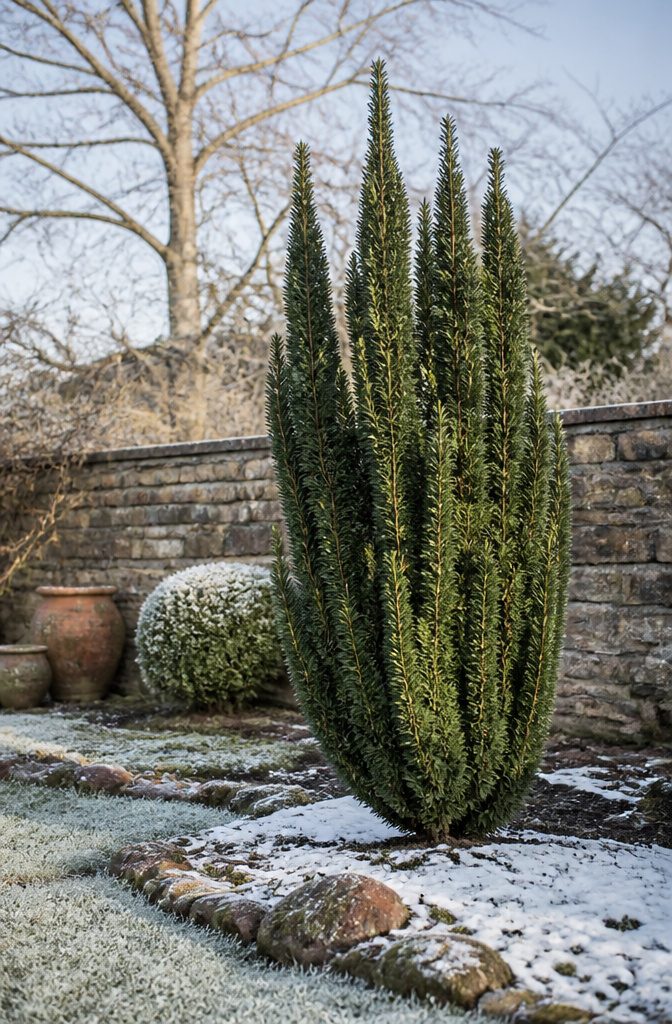
Yew carries itself like a plant that knows its own worth.
Taxus species settle into shade without the sulk of rhododendrons, and the narrow upright habit of Stonehenge yew in particular lets you tuck formal structure into spots too tight for a boxwood hedge.
A single plant reads as architecture; a row of them turns a skinny side yard into a room with walls.
Deer are the dealbreaker, and no yew is fully immune no matter what the tag claims.
Browsing pressure varies by herd and by season, but the denser, slower-growing varieties tend to survive where the soft new growth of faster types gets stripped bare.
Stonehenge has held up better in my experience than the spreading forms, though "better" still means checking for damage after hard winters and fencing young plants until they size out of easy reach.
17. Arborvitae
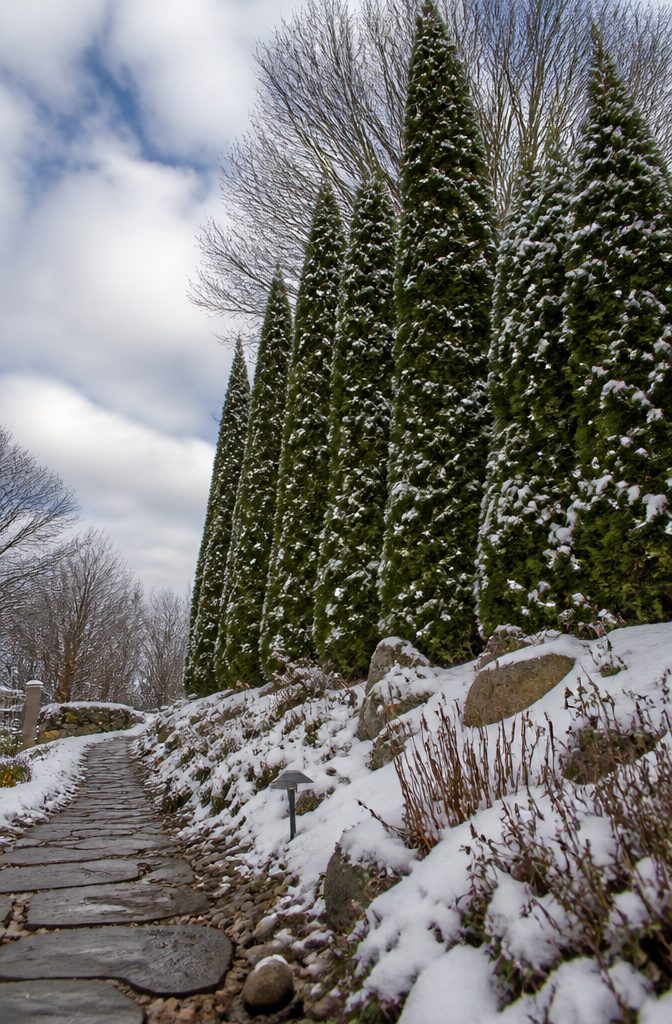
Thuja occidentalis, the eastern arborvitae, is the evergreen most people picture when they need a living wall in a hurry.
Most cultivars hit 10 to 15 feet tall and stay narrow at 3 to 5 feet wide, which matters when you are planting along a property line and do not want to argue with a neighbor about encroachment ten years later.
The North Pole variety carries that same upright columnar habit and keeps its green through winter without the bronze winter burn that cheaper arborvitae get in cold wind.
Snow split is the other thing to watch. Fast-growing arborvitae with dense foliage collect heavy wet snow between their branches and splay open under the weight.
The narrower upright forms resist this better than the old globe types, though wrapping with twine in late fall still beats losing half a hedge to a March storm.
For renters or first-home owners, arborvitae works because it establishes quickly enough to matter, survives in zones 3 through 8, and tolerates the partial shade that north-side foundations throw at it.
18. Pyracomeles
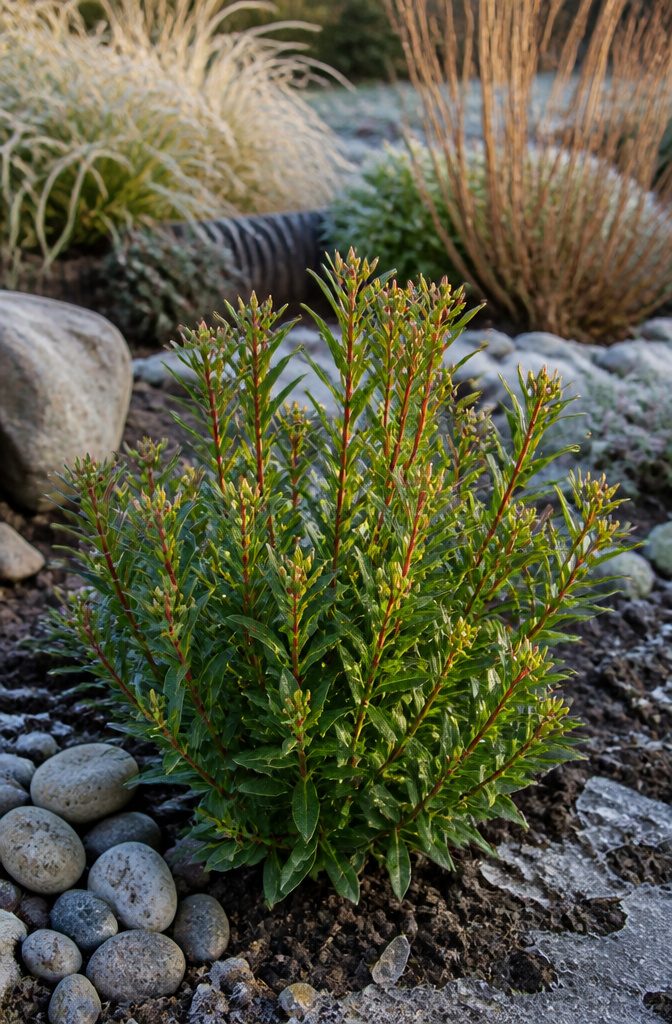
Pyracomeles is one of the newer hybrids showing up in nursery stock, bred for a tight evergreen habit without the disease headaches that older hedging plants carry.
The foliage reads as boxwood from ten feet away, but the plant itself shrugs off the blight that has made true boxwood a gamble in much of the country.
For a renter or first-home owner working with a small footprint, that distinction matters: you can set it in a narrow bed along a foundation or a property line and not worry that three wet springs will hollow it out from the inside.
The compact size is the other half of its usefulness.
Where a yew or an arborvitae wants room you may not have, this one stays dense at roughly knee to waist height without shearing, which saves the weekend you would have spent with clippers.
I have seen it used to divide a tiny front yard into rooms without building a fence, and to mask the base of a porch where nothing else would grow tight enough against the siding.
It is not dramatic in flower or fruit, but in a cold-weather garden the steady green is the point, and Pyracomeles delivers that through the months when most things have quit.
19. Winter Jasmine
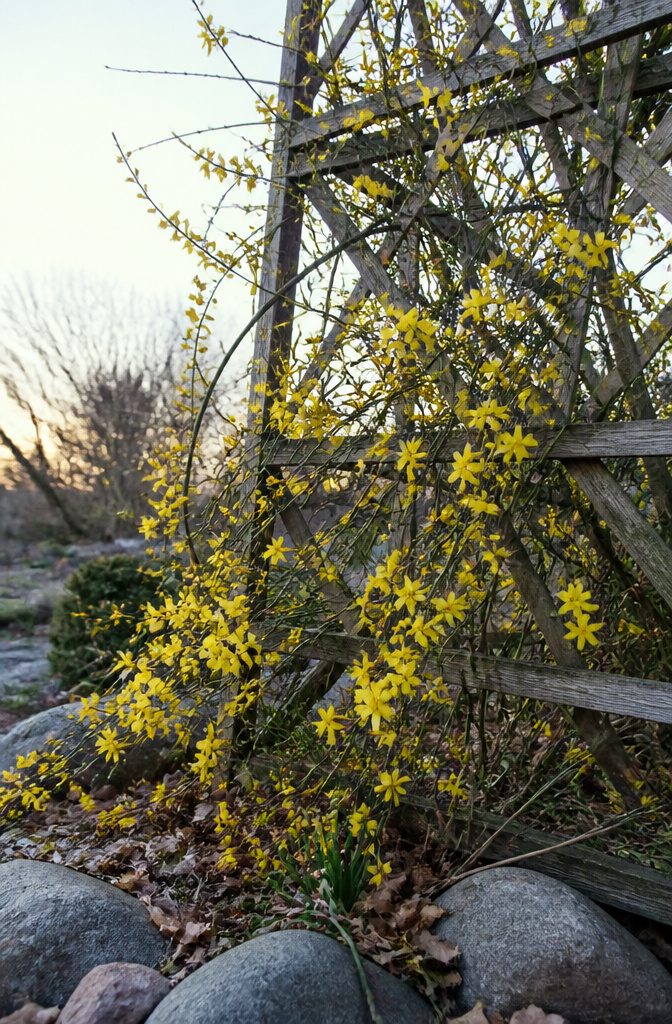
Winter jasmine (Jasminum nudiflorum) carries bright yellow star-shaped flowers on bare green stems from late winter into early spring, a color combination that reads as cheerfulness against gray skies.
The plant is hardy in Zones 6–10 and handles full sun to partial shade without fuss.
The common name trips people up.
This is not true jasmine, the kind with perfumed white flowers used for tea or fragrance oils. Winter jasmine belongs to the same botanical family but its blooms carry no scent at all.
Timing is what you sacrifice and gain at once: while true jasmine waits for warmth, this one opens in January or February when little else dares.
Growth habit depends on what you do with it. Left alone, winter jasmine sprawls as a deciduous shrub reaching roughly 4 feet tall and spreading 3 to 6 feet wide, thin willowy stems arching outward until they root where they touch soil.
Trained against a wall or trellis, the same plant climbs to 15 feet, the bare stems weaving into vertical structure that makes the late-winter flowers visible from a distance.
Either approach works; the sprawling option suits a slope or mass planting where cascade matters more than height, while the trained vine solves a blank fence line faster than most alternatives.
20. Winter Heath
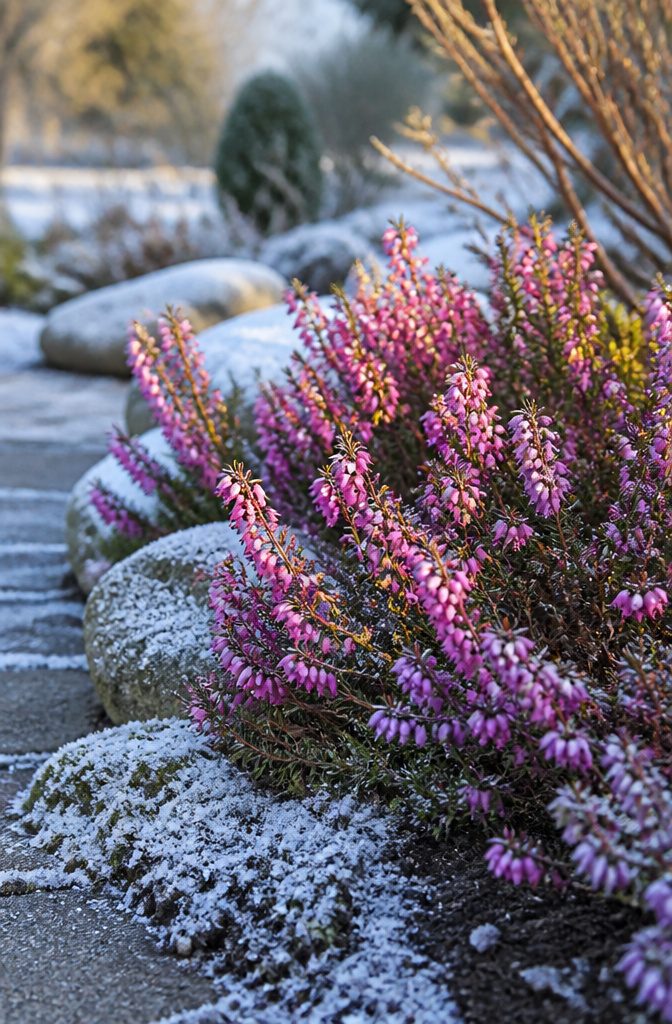
Erica carnea carries color through the parts of winter that flatten most gardens, blooming in dense clusters of pink, purple, or white bells from mid-winter into early spring while the ground still freezes and thaws.
The needle-like foliage stays evergreen, spreading low to form a carpet about four to twelve inches tall and one to two feet across, which makes it useful for filling gaps between stones or softening the edge of a mixed border where taller summer plants have died back.
Hardiness runs Zones 5–8, and the plant handles snow cover better than exposed dry cold.
Cultivars like ‘Springwood White’ and ‘Vivelli’ lean into the pink and purple range most sources emphasize, though white forms exist if you want contrast against brick or dark mulch.
Soil chemistry is the hidden requirement: Erica carnea needs acidic conditions, and in areas with heavy clay or alkaline tap water, the foliage yellows fast unless you amend with peat or plant in raised beds filled with ericaceous mix.
Full sun to partial shade both work, but shade during the hottest part of summer keeps the root zone from drying out in the heave-and-settle cycles that kill more heaths than the cold itself.
Frequently Asked Questions
What plants can survive winter?
Boxwood, coral bells, red twig dogwood, switch grass, false cypress, and winterberry holly all survive winter across most U.S. growing zones. Choose based on your specific USDA zone and whether you need evergreen foliage, berries, or architectural stems.
How do I protect my plants from frost?
Mulch around perennials to protect roots and trap soil heat, but never pile mulch over the crown of coral bells or other sensitive plants. Move potted plants against a south-facing wall and heap leaf litter around containers.
For severe cold, lightweight fabrics like blankets or row covers work if they reach the ground and do not touch foliage directly. Never wrap plants with plastic that contacts leaves.
What vegetables can I grow in winter?
For winter vegetables, cold-hardy options include kale, carrots, broccoli, Brussels sprouts, and leeks, though success depends on sowing early enough for maturity before day length drops and providing protection before hard freezes.
What are some good cold-tolerant outdoor plants?
Pigsqueak, coral bells, switch grass, boxwood, false cypress, and Siberian cypress all handle cold well and look intentional through winter.
Red twig dogwood and winterberry holly add color through stems and berries in zones 2 through 9. Match the plant to your light conditions: full sun for switch grass, part sun to shade for pigsqueak.
What grows well in a winter garden?
Plants that keep their structure or color after frost grow best: panicle hydrangea holds dried flower heads, seven son flower shows peeling bark, and inkberry holly stays green where boxwood struggles.
For winter berries, pair a female winterberry or blue holly with a male pollinator planted nearby. Yew and arborvitae give formal structure even in shade.
What plants thrive in extreme cold?
Red twig dogwood survives to zone 2, winterberry holly and panicle hydrangea ‘Fire Light’ handle zone 3, and Siberian cypress stays green where creeping juniper dies back in zone 4 and colder.
Coral bells push to zone 3 with hardier varieties. Stonehenge yew and compact inkberry also hold through severe winters with minimal damage.
What to put on a garden for winter?
A two-inch mulch layer around plant bases prevents heaving during freeze-thaw cycles, but keep it away from crowns.
For container plants, leaf litter packed around pots insulates roots. Wire mesh around juniper trunks stops vole girdling under snow.
Twine wrapping prevents arborvitae from splitting under heavy wet snow. Avoid plastic sheeting that touches foliage.





