
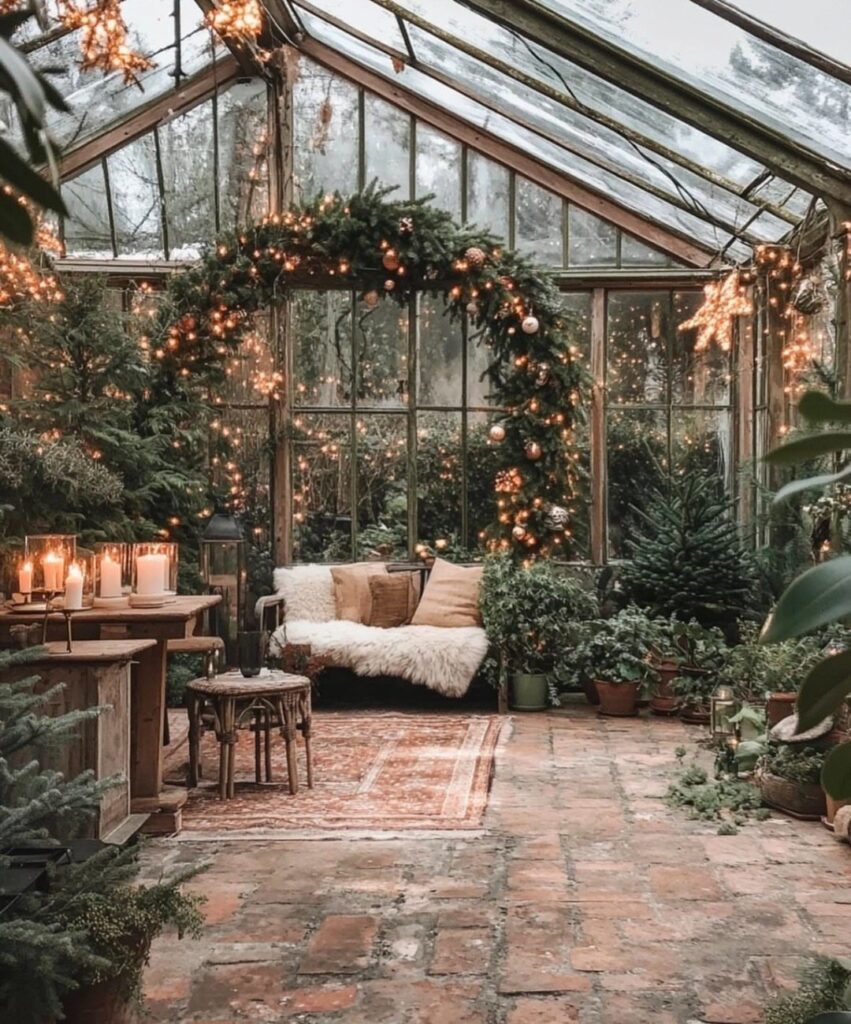
These ideas run from a bag of straw mulch to a small greenhouse kit, and the one that fits your yard depends on whether you are tending plants through the cold or just want a corner to sit in after dark.
A string of warm lights and a metal lantern with an LED candle turn a covered porch into somewhere you want to be in January, while a compost heater and a second layer of plastic keep tomatoes alive in a polytunnel when the temperature drops below twenty degrees.
1. Seasonal Decorations
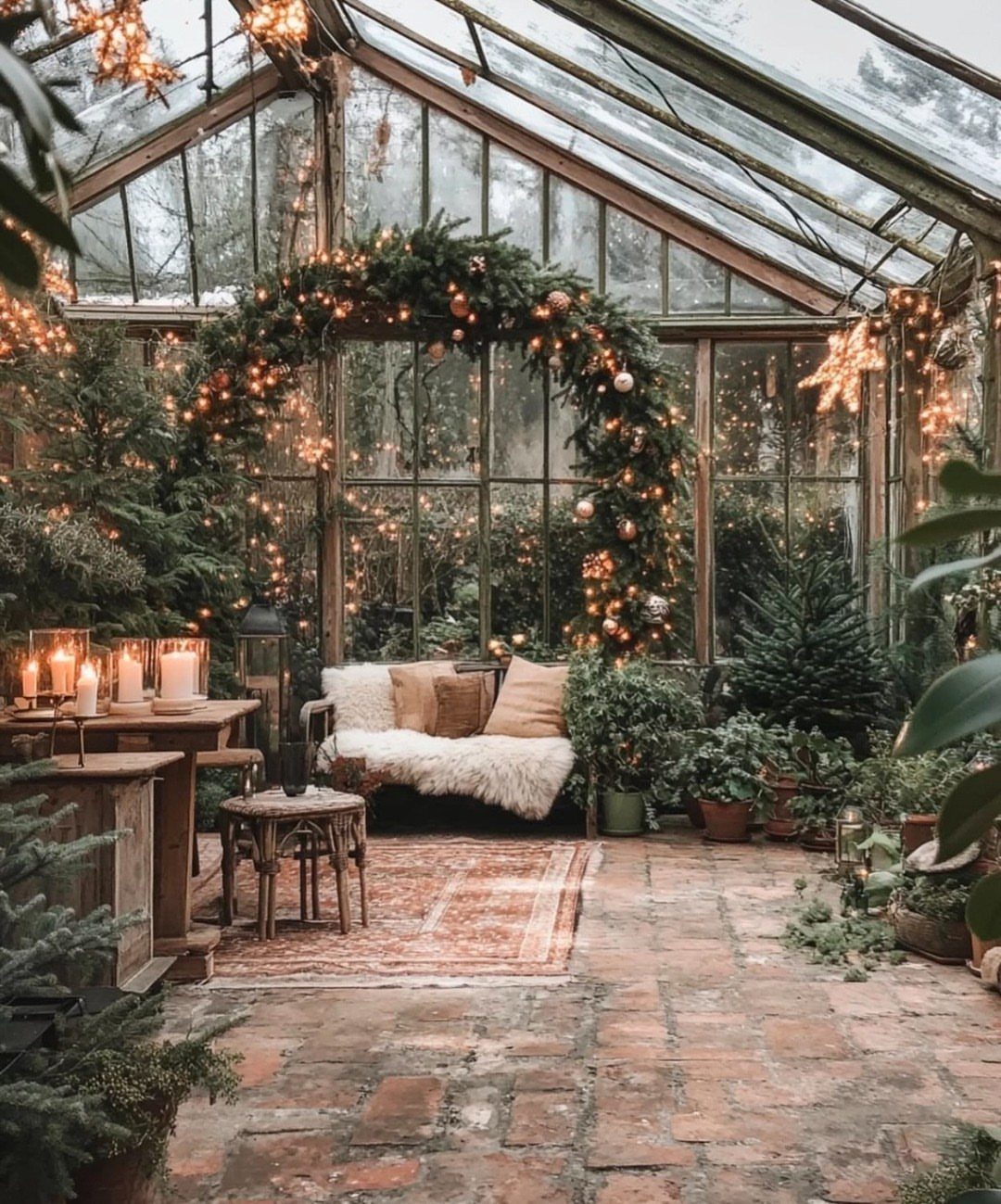
A wreath on the door and a garland over the arch turns even a small greenhouse into somewhere you want to be in January.
A faux-fur throw and a few candles go a long way without turning the living room into a set piece. The useful core is simpler.
Evergreen branches, a string of warm lights, and one or two ornaments you already own will dress a covered porch or a corner of the yard that stays dry enough to sit in.
I would start with what you can move inside if a storm hits. Fabric cushions and rugs left out through a wet winter rot fast.
A metal lantern with an LED candle and a plastic or resin wreath handle the weather without worry. A pop-up canopy with clear side panels gets you most of the shelter and stores flat come spring.
2. Mulching
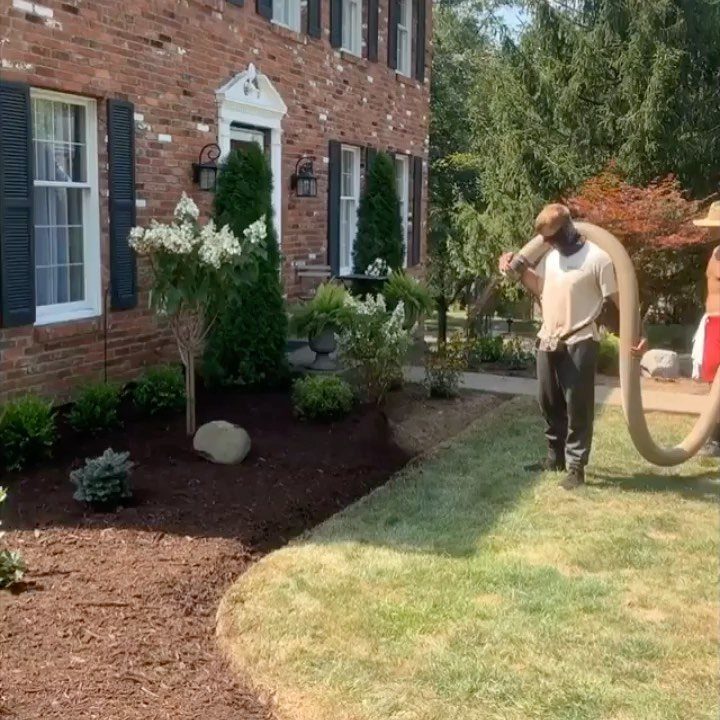
Dark mulch spread two to three inches deep buys your plants a few degrees of soil warmth and keeps the freeze-thaw cycle from heaving roots out of the ground.
A wheelbarrow and a rake do the same job for a weekend project at a single house. I have laid mulch both ways; the machine saves time only when you have enough ground to cover that rental cost makes sense.
Wood chips, straw, or shredded leaves all break down and feed the soil over time. Straw is cheapest where I live, though it can blow around until it mats.
The thing to avoid is packing mulch right against stems or trunks; that traps moisture and invites rot. Leave a small clear space around each plant, like a doughnut rather than a volcano.
3. Keep Growing Your Own
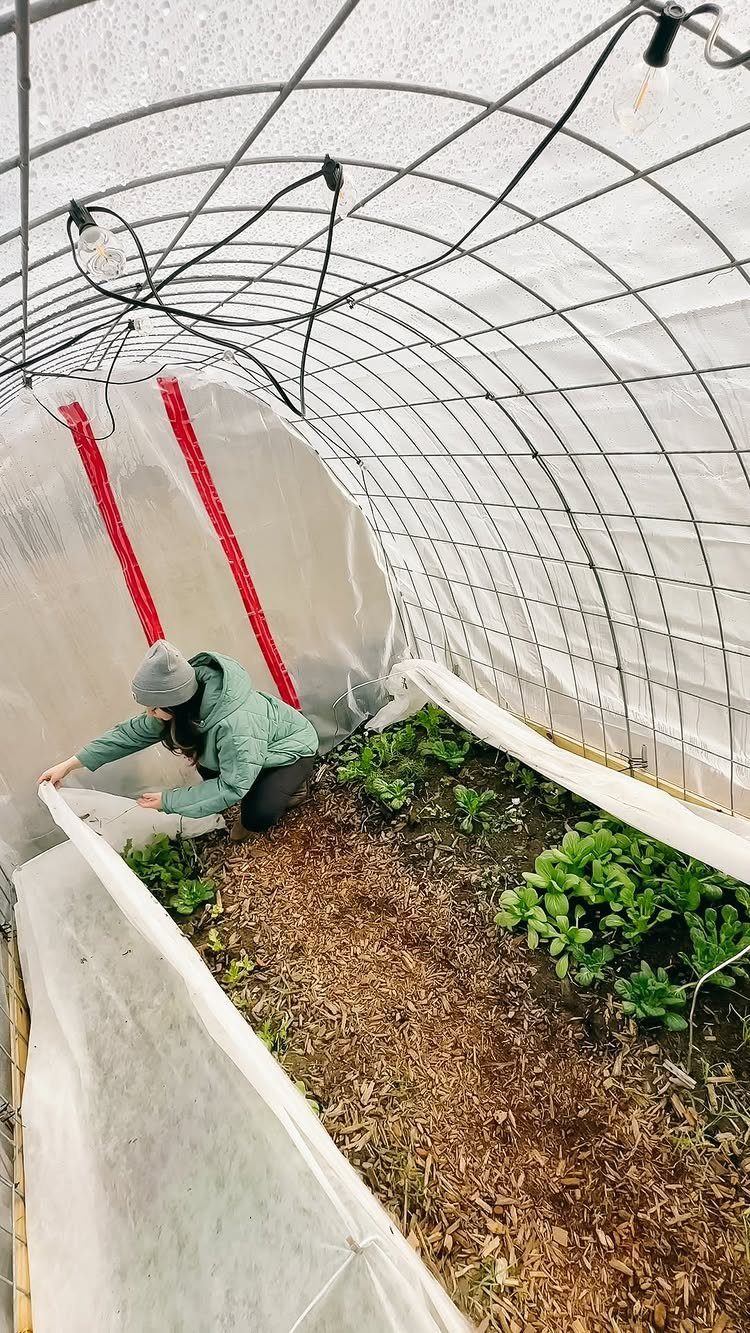
A hoop house or small greenhouse shifts the question from whether you can grow through winter to what you feel like tending.
Salad greens, carrots, and hardy brassicas survive cold frames in most zones where the ground does not freeze solid for months.
A polytunnel with mulch on the beds gives you that combination of shelter and ground cover that makes the difference.
Your limiting factor is usually light, not temperature. Short December days slow growth to a crawl even when it is warm enough inside.
I plant for steady harvest in late fall and early spring, treating midwinter as survival time rather than production time.
A compost heater helps if you are serious about keeping tomatoes going, but a simple structure with some old windows gets most of us enough greens to matter.
Check your lowest expected temperature against the rating on any kit you are considering; the cheap ones need a second layer of plastic or a row cover inside when it drops below twenty degrees.
4. Evergreen Plants

Holly, boxwood, and juniper keep their leaves through weather that turns everything else bare, which means structure and color when you need them most.
This one is pushed toward holiday decoration: a full Christmas tree indoors, gold ribbon, the formal treatment. Outside, a single potted dwarf spruce by the door or a clipped boxwood ball on the step does the same work more quietly.
I like American holly for yards with some shade; the berries show red against the leaves if you have both male and female plants.
Junipers handle full sun and neglect better than almost anything, though their needles can turn brown in a bad windstorm. Slower-growing types keep their shape longer; faster ones fill in quick but need more cutting back.
Evergreens put on inches, not feet, per year. Buy the size you need now rather than planning to fill in later.
For a rental or a first home you might not stay in long, three-gallon containers in simple plastic pots look intentional immediately and move with you.
5. Ornamental Grasses

Feathery plumes that catch low winter light and rustle in a cold wind give a garden motion when flowers are months away.
The sedum and grasses are at peak fall color; come January the same stalks stand tan and dry, still catching frost in the morning.
Feather reed grass is the variety I see most often in designed gardens, upright enough to read as architecture and tough enough to survive wet clay or dry shade once established.
The choice depends on your patience for spring cleanup. I used to cut mine back in late fall for neatness, but the standing stems shelter insects and small birds through the coldest months.
Now I wait until March, when new growth starts to push and the old stuff comes out easily with a pair of shears.
Some gardeners burn their grasses off where local fire codes allow; I tried it once and singed a fence, so I stick to cutting.
Check whether your variety wants division every few years; clumps thin in the center and look ratty if you let them go too long.
6. Lighting Accents
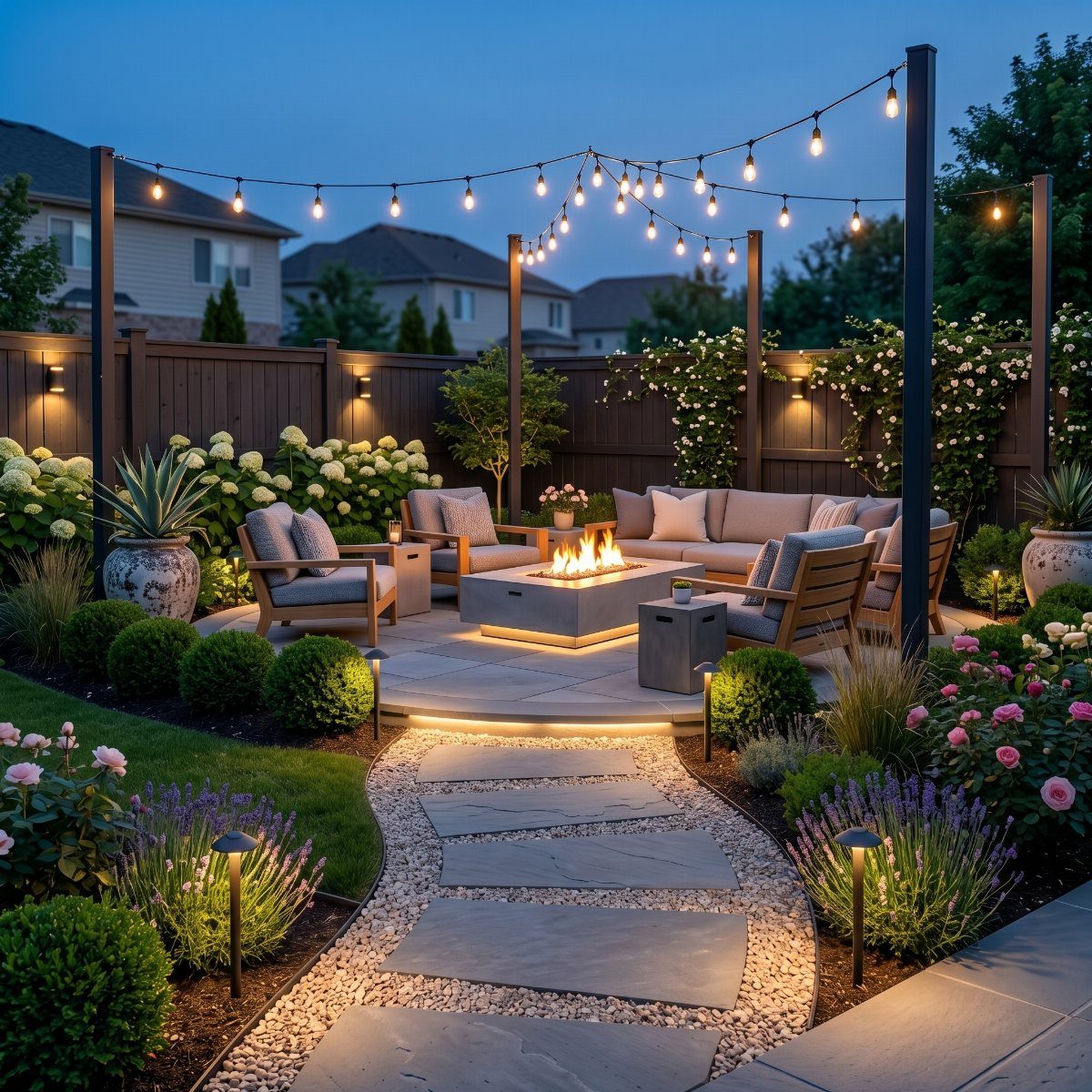
String lights, a fire pit, and low path lamps turn a patio into a room you use after dark even when the temperature drops.
The fire gives a focal point and actual heat, the overhead strings define the ceiling, and the small fixtures along the walk keep you from tripping on the way back to the house.
I have sat in yards with only one of these elements and felt the difference when all three are present.
Solar path lights are cheaper and easier than wired, but their output fades fast on cloudy winter days. For a space you use regularly, low-voltage LED on a transformer timer pays back in reliability.
A portable steel bowl does the same work and lets you shift the heat source to where people actually gather.
My judgment is that string lights matter most for the feeling of coziness, and they are the cheapest fix of the three. Start there if the budget is tight this year.
7. Bird Feeders and Baths
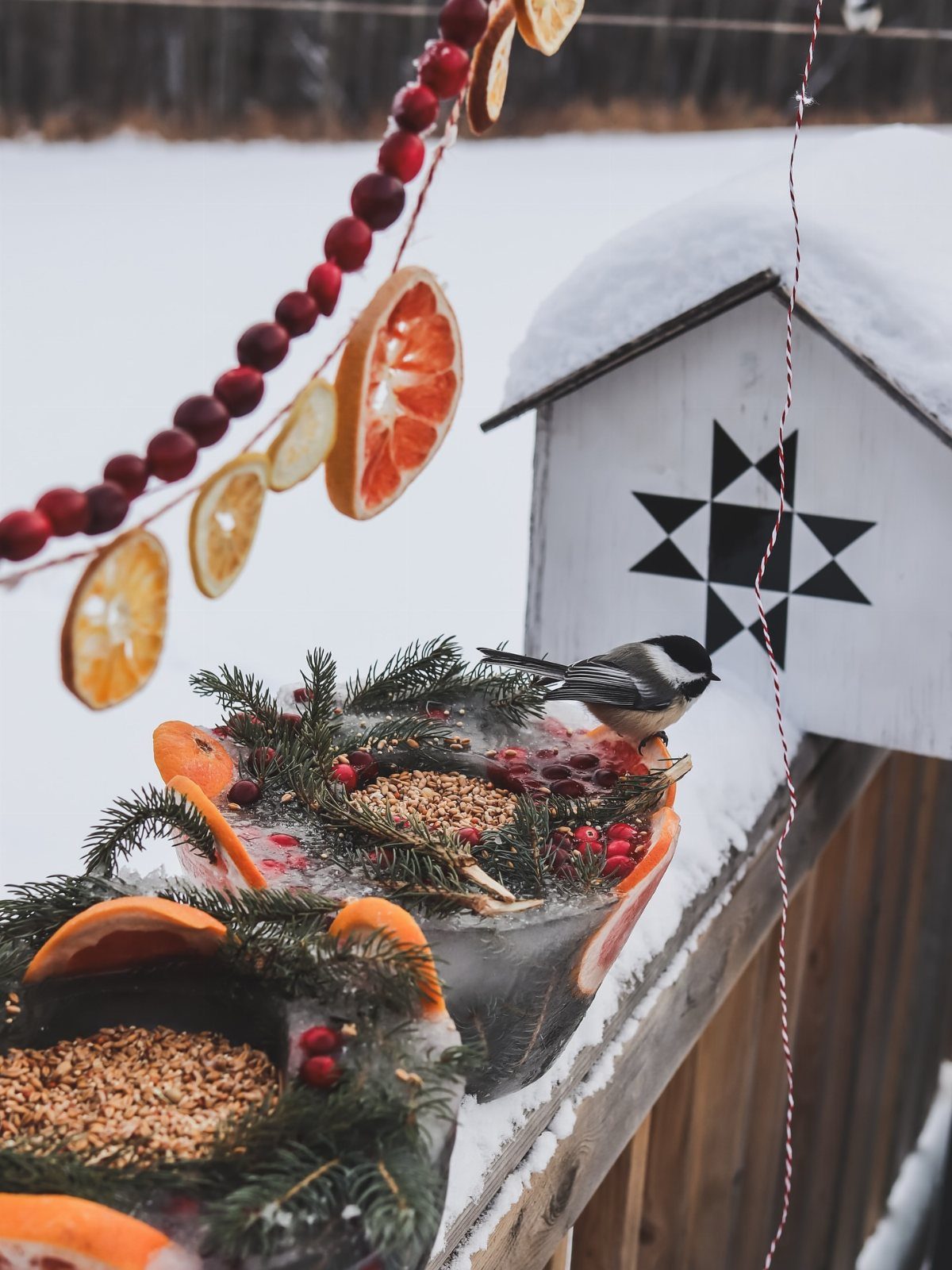
Birds in a winter garden move like living punctuation against all that white and gray.
A feeder hung from a low branch or shepherd’s hook draws chickadees, nuthatches, and the occasional cardinal, and a shallow bath set on a stump gives them water when everything else is frozen.
A glazed ceramic bath with a built-in heater keeps water open on hard freeze mornings. If that is more than this project gets, a black plastic saucer refilled with warm water each morning works fine on days above freezing.
Feeders look best in wood or matte metal; glossy plastic cracks by February and reads as an afterthought from the road.
I would skip the heated bath in Zone 7 and warmer, where a hard freeze lasts only a morning or two. In Zone 5 and north, the heater pays for itself in the hours you do not spend chipping ice.
8. Cold-resistant Plants
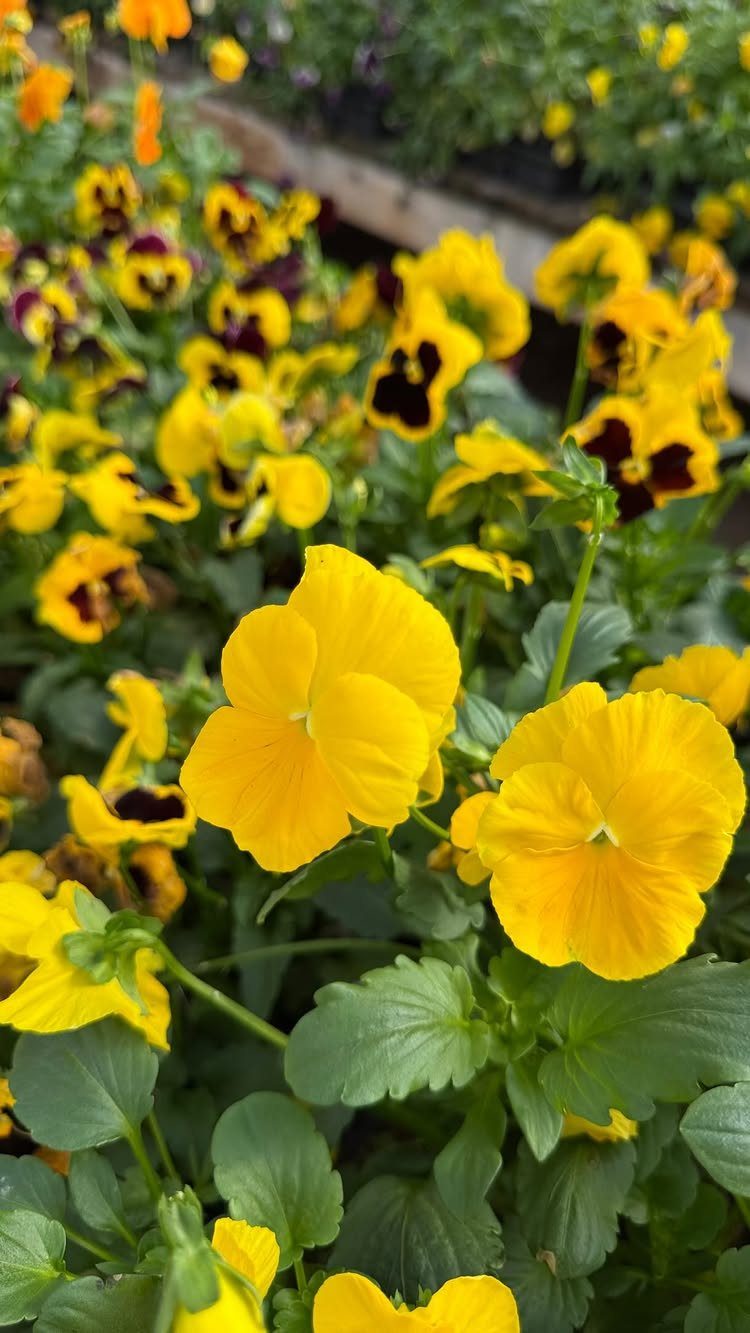
Plant them in October while soil is still workable, and they root in enough to survive the weeks between hard freezes.
For something edible, kale and Brussels sprouts taste better after a few frosts; the cold converts starches to sugars.
A row of dwarf blue curled kale along a walk gives you cut-and-come-again greens from November through March in Zone 6 and south, and the frilled leaves look intentional even when you are not harvesting.
Hellebores and winter jasmine suit the flower bed that faces away from the afternoon sun, where summer plants languish. They are slow to establish; buy them in one-gallon pots and give them time to fill their space.
The tradeoff is patience. Cold-hardy plants do not deliver instant impact the way spring annuals do.
I would put them in for the gardener who visits the yard daily, not the one who wants a Saturday project and a Sunday photo.
Some of the veggies that will stand through winter include carrots, broad beans, cabbage, Brussels sprout, cauliflower, celery and collards. Time to slip on your gardening gloves (and winter coat)…
Preparing Garden for Winter
Mulching is the first move once night temperatures stay below fifty degrees. I would get this done before the ground hardens; working frozen dirt is miserable and you end up smothering what you meant to protect.
Pruning happens after the leaves drop and the plant goes dormant. Cut out dead or crossing branches on trees and shrubs, but save the hard shaping for late winter.
Fresh cuts left in fall sometimes split in a hard freeze, and some shrubs set next year’s buds by December. Cold-resistant plants go in during October while soil still holds some warmth.
Roots keep working until the ground freezes solid, and that head start matters more than top growth you will not see until March.
Creating Winter Interest
Hardscape carries a garden when color goes dormant. A birdbath left standing, a trellis against a fence, or a steel bowl fire pit gives the eye somewhere to rest.
I would place one piece where you see it from a window you use daily; a garden you only visit in summer might as well not exist in January.
Outdoor lighting turns these elements into actual destinations after four in the afternoon. Low-voltage LED path lamps wired to a transformer timer stay reliable through weeks of cloud cover that kill solar output.
String lights overhead and a lantern on the table complete the room. Winterberry and holly add the red that photographs well and reads as intentional from the street.
The combination of structure, light, and one persistent color is what separates a yard that happens to have snow from one that was designed for it.
Wildlife Support
Seed heads left standing on coneflowers, rudbeckia, and native grasses feed goldfinches and sparrows through January.
The same stalks that looked messy to me a decade back now read as habitat, and the birds they draw move against gray skies like living punctuation. I would cut nothing until March unless it blocks a path.
Insects shelter in hollow stems and leaf litter; a garden stripped clean in fall is a desert by February. Evergreen shrubs with persistent berries, winterberry and American holly among them, bridge the gap when seed heads are buried under snow.
The gardeners who see the most species through the cold months are the ones who do the least tidying in fall.
Winter Garden Maintenance
Plants in winter dormancy still lose moisture through stems and needles, especially during warm spells that dry soil without warning.
I check containers and new plantings by hand; if the top inch crumbles instead of clumping, water slowly so it soaks rather than runs off frozen ground.
Frost damage shows as blackened tips or split bark, usually in late January after the coldest nights. Resist cutting until spring growth starts and the full extent is clear; tissue that looks dead may still carry live buds.
Broadleaf evergreens sometimes brown in windburn; burlap screens on the windward side stop this, though I would only bother for expensive specimens or exposed sites.
The real maintenance is watching and waiting, intervening only when something threatens survival rather than appearance.
Frequently Asked Questions
What grows well in a winter garden?
Salad greens, carrots, hardy brassicas, and kale survive cold frames in most zones where the ground does not freeze solid for months.
Ornamental grasses and winter-blooming flowers such as hellebores and winter jasmine add structure and color when most plants are bare.
What month do you start a winter garden?
October is the month to plant cold-resistant crops while the soil is still workable, letting them root in before hard freezes arrive.
I soak the beds well in late October or early November, before the ground locks up, so the roots have stored water to draw on through dry cold spells.
What is the easiest plant to grow in winter?
Kale is the easiest edible; dwarf blue curled kale gives cut-and-come-again greens from November through March in Zone 6 and south, and the frilled leaves look intentional even when you are not harvesting.
Brussels sprouts and hardy salad lettuces also stand through cold months, especially under a simple hoop house or polytunnel.





