
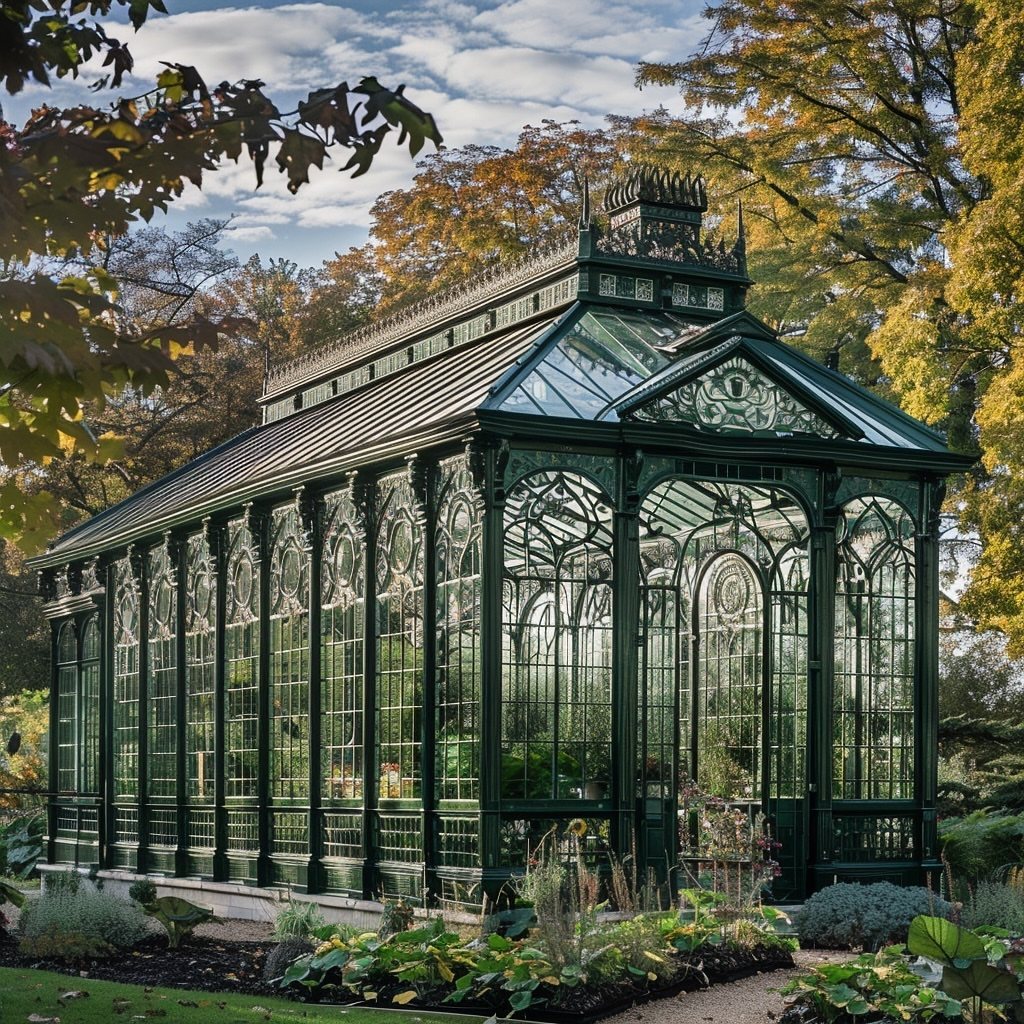
The ideas below run from a single afternoon with scrap lumber to several thousand dollars and a permanent foundation, and the right choice depends on whether you are after more growing weeks or a room you actually want to sit in.
A cold frame built from an old window and straw bales costs little if you scavenge the glazing, while the garden room with its antique ivory 8 by 10 frame and radiant floor heating turns the greenhouse into architecture rather than agriculture.
1. DIY Greenhouse
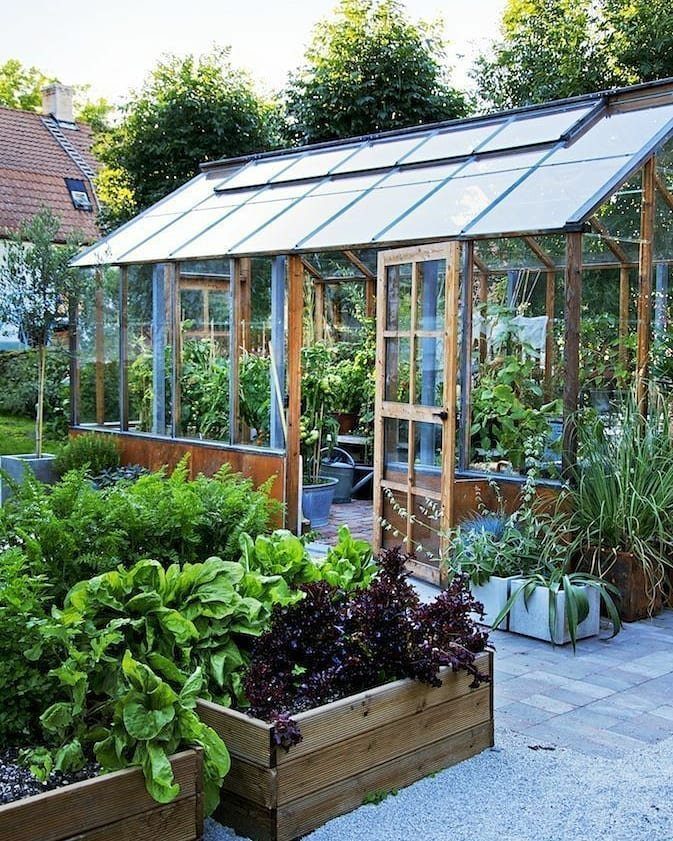
Salvaged windows and doors frame this kind of build, and the hunt for materials is half the point. I look for single-pane sashes with intact glazing; double-pane units seal moisture inside that fogs forever in greenhouse humidity.
Old French doors make the entry, and storm windows stack into roof panels if the sizes line up. The frame wants pressure-treated or cedar, anything that handles ground contact without fuss.
What changes the answer is what you find and where. A demolition site with matching units beats a dozen mismatched sizes that need custom framing.
Check the glass for cracks, the wood for rot at the joints, and budget a weekend per wall if the pieces cooperate.
This suits someone who likes the search as much as the build and who can adapt when the third window is a little shy.
2. Multi-Purpose Greenhouse
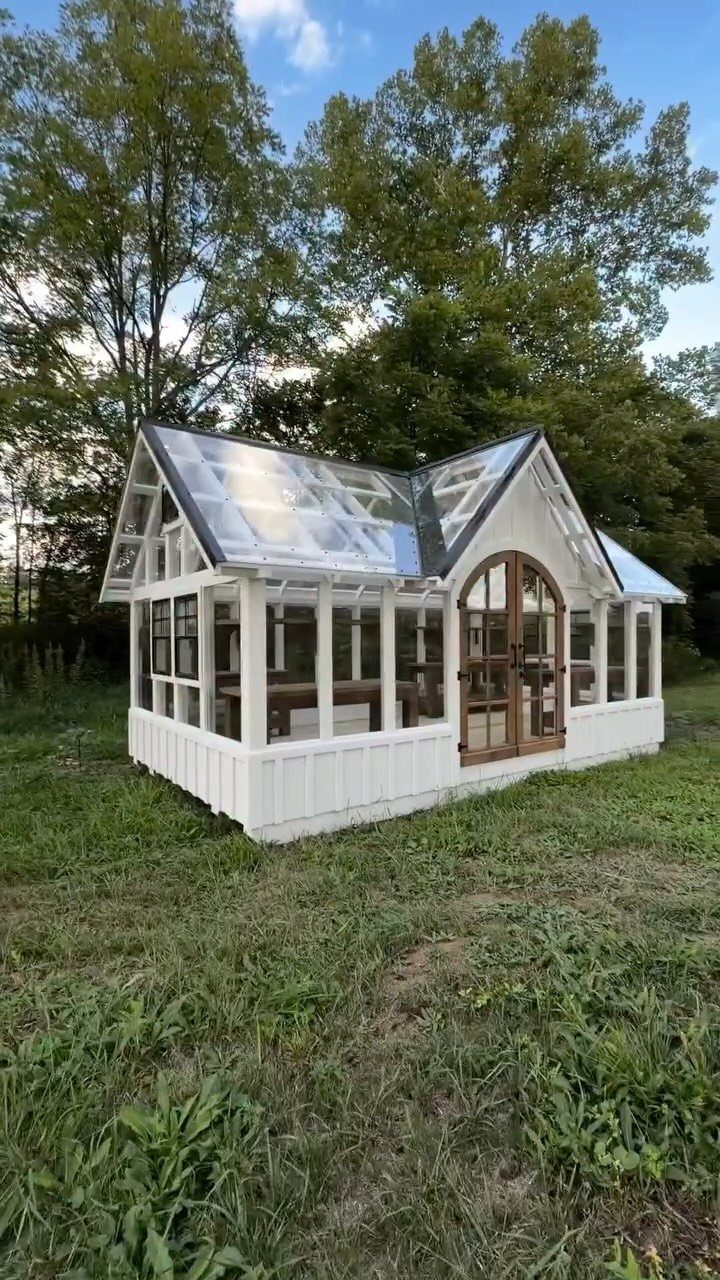
A greenhouse that earns its keep after the tomatoes finish means planning the floor and power from the start.
I would run conduit for outlets while the base is open, and lay a level surface that takes both potting benches and a small table without wobbling.
The growing zone stays at one end, humid and planted; the living zone wants ventilation you can control, maybe a ceiling fan on the ridge beam.
You give up floor space for the flexibility of moving it later. A structure big enough to split this way starts at roughly double the footprint of a grow-only house, and the heating bill follows.
For a reader with a small yard, the better move is a lean-to against the kitchen door and a separate seating nook under a pergola.
This idea wins when the garden is the main room of the house and you mean to spend real hours there.
3. Cottage Style Greenhouse
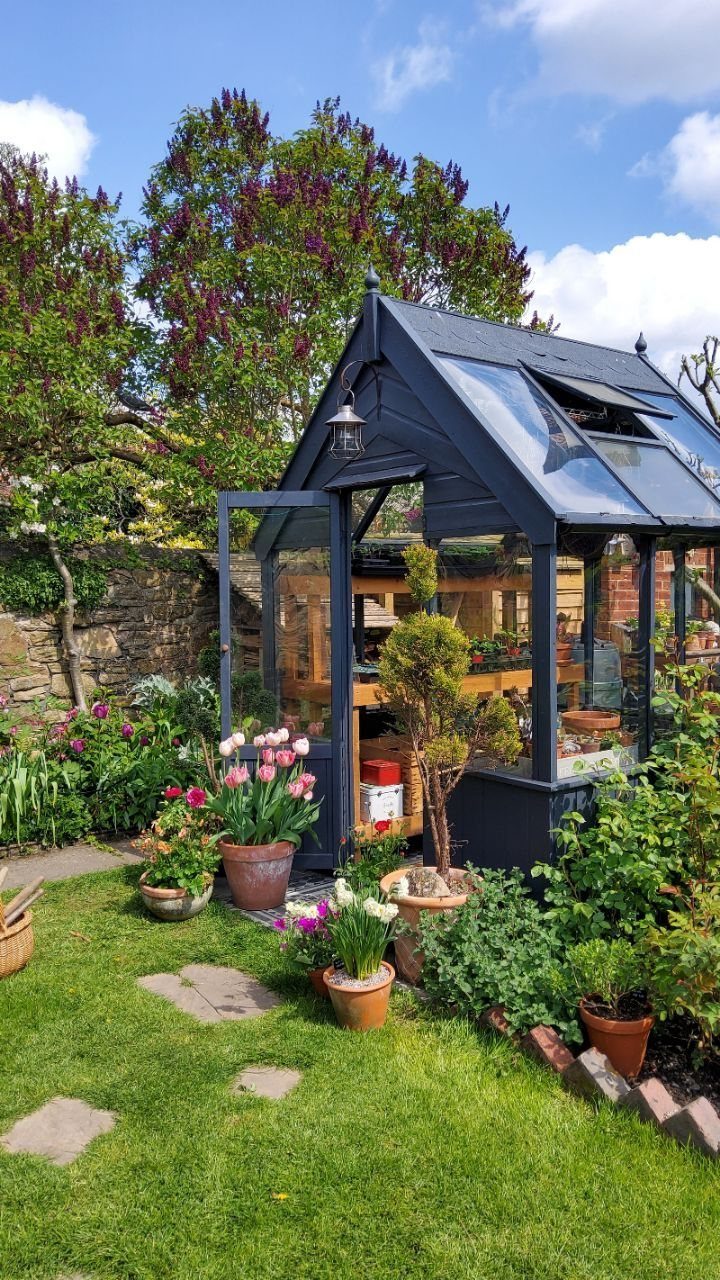
Dark painted wood against glass reads cottage more than white ever could; grey softens the lines so the plants stay the story.
I would use a mix of cedar and painted pine, keeping the frame narrow to let light through, and run the shelves in slats so water drains and air moves.
The stone path and wall around it are doing real work, too: they hold heat after sunset and keep mud off your boots in March.
Ample light means thinking about what sits where. Tall plants on the north side, seedlings south, and a clear panel overhead for the hours when the sun is low.
This style suits someone who wants the greenhouse to look grown-in from year two, not crisp and new. The maintenance is higher than aluminum; paint peels, wood checks, and you are out there with a brush every few seasons.
4. Elegant White Greenhouse
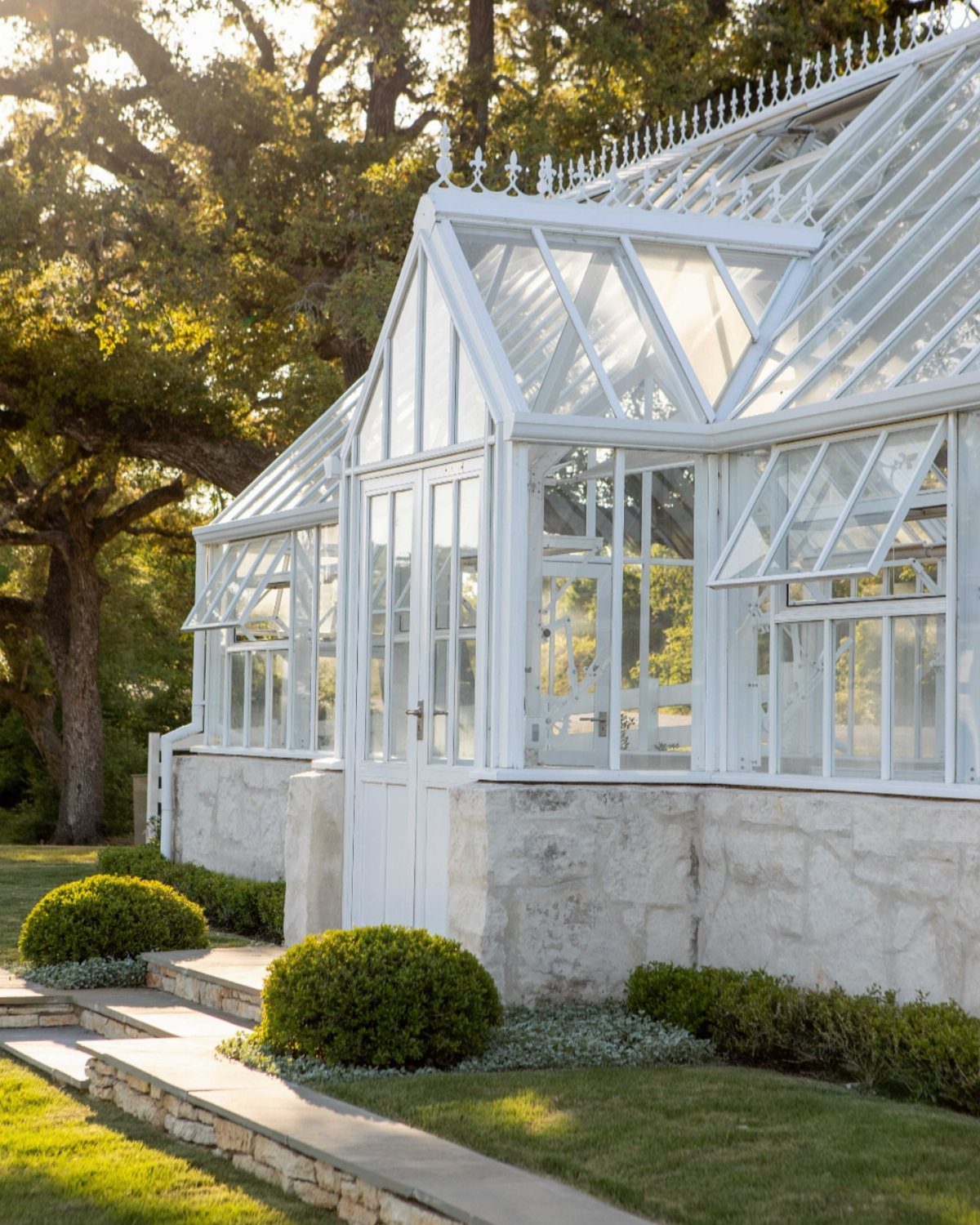
Vintage finds inside mean open floor space and walls that can take hooks, so the structure wants width more than height.
The dreamy atmosphere costs time more than money. Collecting the furniture, the pots, the small tables, that happens over years, and the greenhouse looks spare until it does.
For a reader starting out, a white aluminum kit with a gravel floor gets you growing this season; this version is for someone who has the plants figured out and now wants the room around them to match.
RHS ‘Portico’, £27,000, gabrielash.com. Price dependent on the wall type and number of panels.
5. Small Backyard Greenhouse
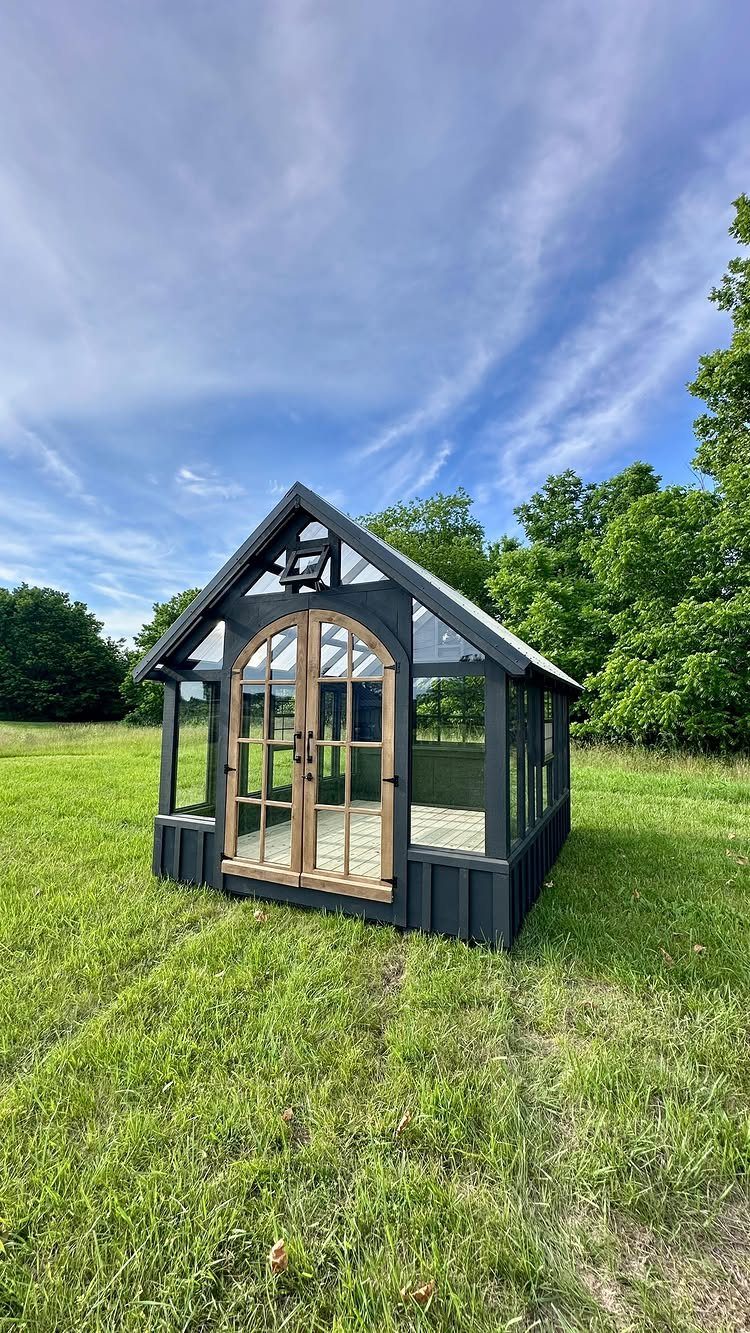
A hexagonal footprint packs more bench space per square foot of base than a rectangle, and the angles catch light from dawn to dusk.
The black frame is aluminum or powder-coated steel, thin enough that the glass dominates; I would check that the door opens wide enough for a loaded wheelbarrow, because some small designs forget this.
Raised beds around the perimeter, built from painted 1×4 lumber as in the visible setup, extend the season and keep the soil off your knees.
This size limits you to tomatoes and greens, maybe one dwarf citrus in a pot. For a reader with a quarter-acre or less, this is the practical maximum before the garden starts to feel built over.
The plus is speed: a kit this size goes up in a Saturday with one helper.
6. Lean-To Greenhouse
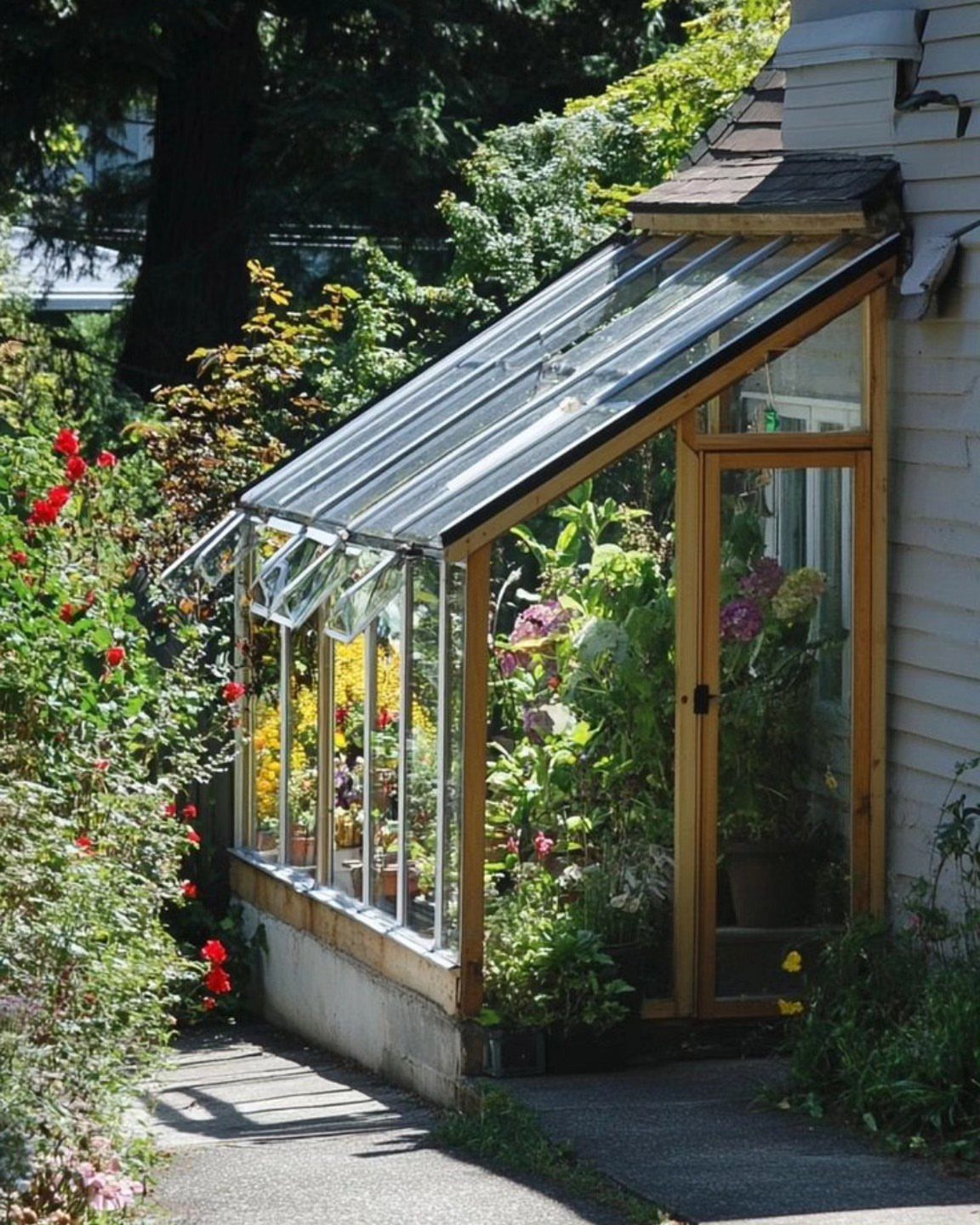
The south wall of your house is doing the heavy lifting here, absorbing sun all day and releasing it slow after dark.
I would site the door near the kitchen or mudroom, because you will make trip after trip in March and every step counts.
Heat from the house cuts the fuel bill, though in July you may want shade cloth and a vent you can open from inside.
Painting the back wall a dark charcoal hides the house siding behind the frame and reads as deliberate, not leftover. This suits a reader with a narrow side yard and a brick or stucco wall that faces right.
The limit is you are stuck with that wall; if it faces north, this idea does not work and a standalone is the better move.
7. Cold Frame Greenhouse
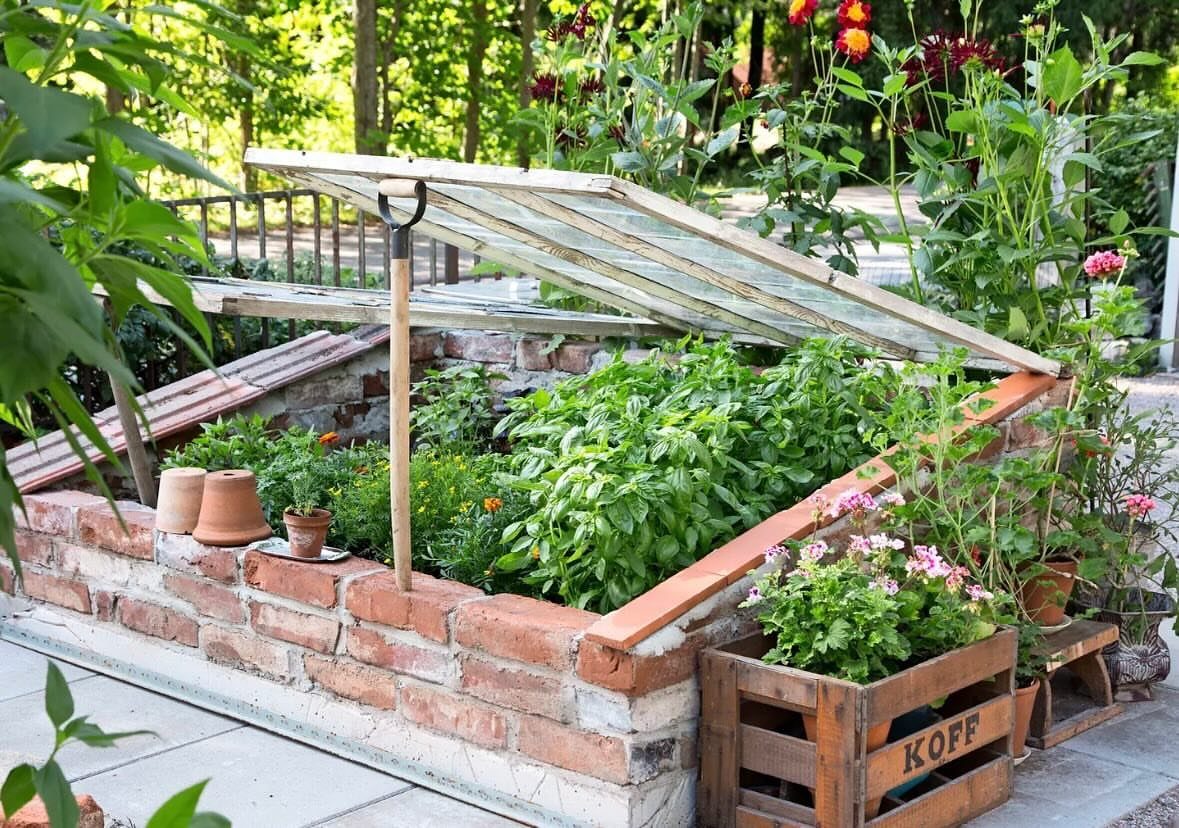
A cold frame is basically a bottomless box with a clear lid propped at an angle, and a brick base does the same job with more permanence.
The slanted glass catches low winter sun and traps the warmth, while the brick absorbs heat through the day and releases it after dark.
You can build one in an afternoon from scrap lumber and an old window, or stack straw bales for insulation and lay glass across the top. Either way, it costs little if you scavenge the glazing.
The real value is timing. Seeds started in a cold frame in late February or March get weeks of head start before the last frost, and hardening off happens naturally; just prop the lid wider each day.
Hardy greens grow straight through winter in most zones.
This suits anyone whose greenhouse dreams outrun their budget or their yard size. The tradeoff is height: tomatoes and cucumbers need something taller by June, so plan to transplant or move them on.
8. Garden Room Greenhouse
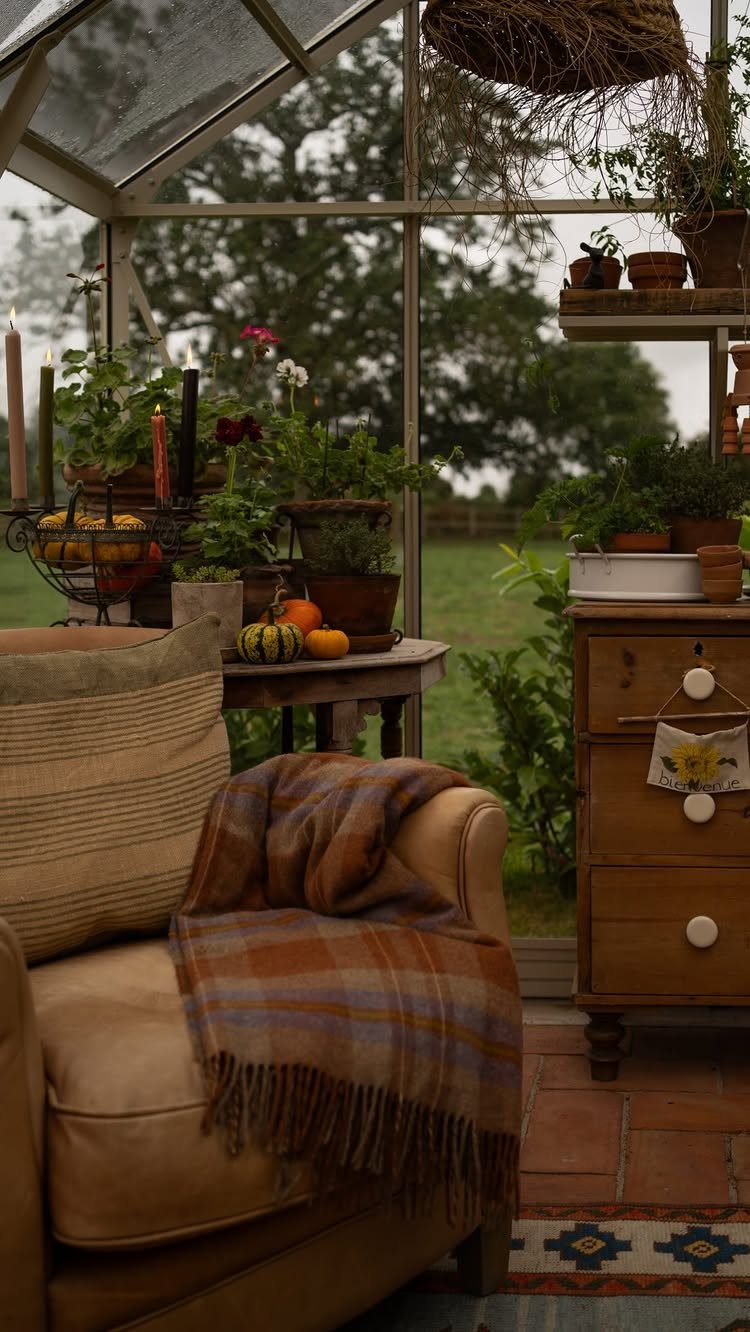
Some greenhouses are for plants first and people second.
This one flips that order: leather armchair, plaid throw, dresser holding more plants than clothes, and pumpkins on a small table like a living room that happens to be walled in glass.
The maker calls theirs an antique ivory 8 by 10 greenhouse, which is a standard kit size you can find from several manufacturers. Radiant floor heating turns it into a four-season room; without that, this is a three-season space in most climates.
What makes the idea work is treating the glass walls as architecture, not agriculture. A partition or a dresser back creates separate zones without blocking light, so one corner stores tools while another holds a chair and a candle.
Budget this at several thousand for the structure, more if you add heating. For a cheaper version, a lean-to against a heated house wall gains some warmth by proximity, though you lose the freestanding garden view.
This suits someone who wants greenhouse atmosphere without greenhouse workload. If you kill houseplants reliably, the glass walls still justify the space as a sunroom with occasional cut flowers.
9. Vintage Decor
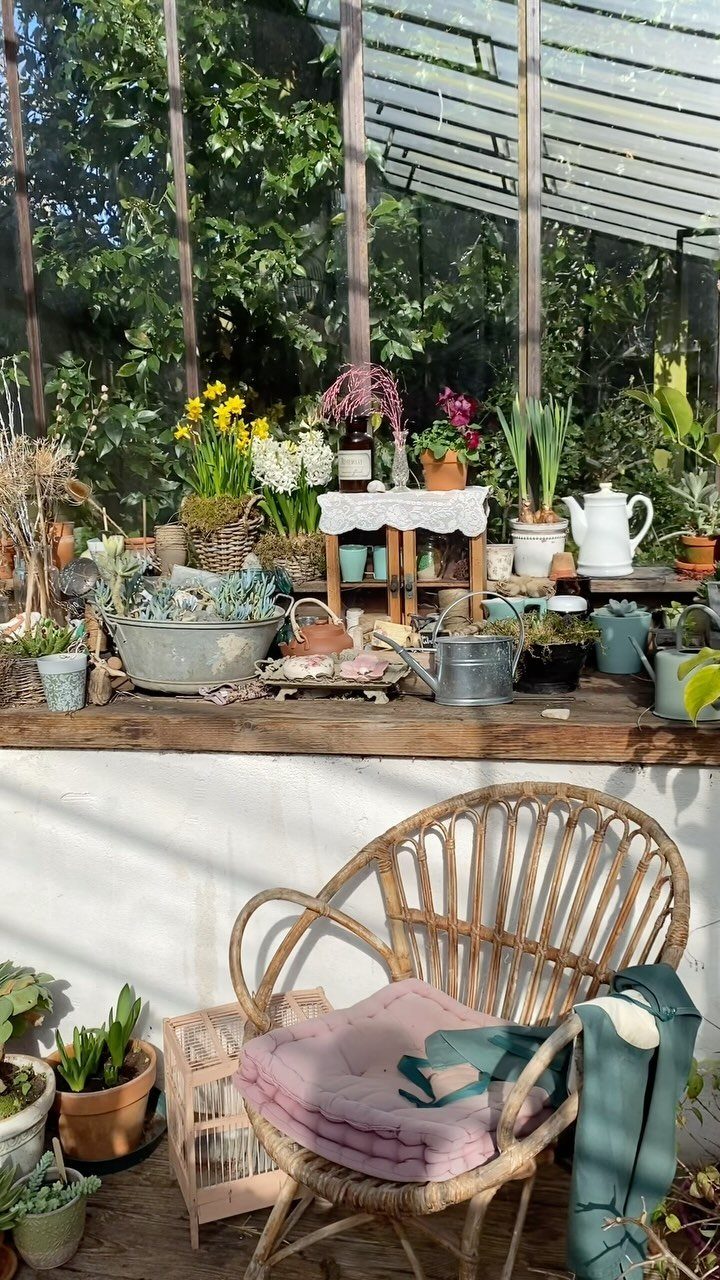
The watering cans on that bench are metal, probably galvanized, and they look used rather than decorative. That is the whole trick: objects that earned their patina elsewhere read as character here, not clutter.
A solar-powered chandelier, a repurposed thrift find, hangs above an eight-foot table the maker rescued from a family shop.
The quilt draped over it is old enough to be fragile, which is why it is out being seen rather than stored.
You do not need a greenhouse full of antiques. One or two pieces with age against all that green glass does more than a dozen reproductions.
Hunt at estate sales and Habitat ReStores; free chandeliers turn up at one, and copper boilers show up regularly for pocket change.
The practical note: vintage ironstone and old wood hold moisture and soil stains differently than modern materials. Seal a desk top or accept the marks.
A wicker chair with a cushion lasts longer if you bring the cushion in overnight.
This idea suits anyone who already thrifts and needs permission to mix those finds with plants. If your taste runs minimalist, skip it; the warmth here comes from the accumulation.
Choosing a Greenhouse Location
Morning sun matters more than afternoon sun for a greenhouse, and full sun is easier to shade later than dim light is to fix.
I would watch how shadows move across the yard from March through September before committing a foundation to a spot.
A wall or fence on the east or north side blocks wind without stealing hours of light.
The east side of a house, tucked between wall and fence, gives up afternoon sun but gains real protection; supplemental lighting inside fills the gap for winter seedlings.
Low spots collect cold air and standing water, so I would walk the site after a hard rain. Level ground saves hours of framing, and a hose bib within reach matters more than you think in July.
Benefits of a Greenhouse
A greenhouse buys you extra weeks on either end of the season, enough time to harden off seedlings while frost still threatens outside. Seedlings started in February under glass transplant out hardened and ahead, not leggy and waiting.
The real value is insurance. A late frost in May kills open-ground tomatoes; under glass, you close the vent and sleep.
Year-round growing is possible with heating, though the fuel bill separates the committed from the curious.
I would not promise year-round harvests to a reader running an unheated structure in zone 5. The season extends; it does not erase.
Interior Design Tips
I would run the potting bench along the north wall, where it blocks the least light, and keep the working height comfortable whether you stand or sit on a stool.
Seating belongs near the door, where you catch breeze and escape fast if the temperature spikes. A cushion on a metal chair collects dew; wood or wicker survives better.
An arid house for cacti needs its own corner with sharp drainage and a black-painted wall behind it. The dark backdrop makes the plant forms read as sculpture against glass.
DIY Greenhouse Construction Tips
Reclaimed windows work only if the glazing is intact and the wood is not rotted at the joints. Single-pane glass is the pick; double-pane seals fail in greenhouse humidity and fog forever.
Ventilation is not an afterthought. A roof vent on the leeward side, sized to roughly one-fifth of the floor area, lets hot air rise out without drafting directly across plants.
I would plan for a shade cloth too, grommeted so it clips on in June and stores dry in fall.
Insulation matters at the base. Straw bales stacked outside the north wall, or buried to the frost line if you are digging anyway, slow heat loss more than the frame itself.
Power and water need to reach the site without extension cords snaking across lawn. Conduit in the foundation, laid while the base is open, saves tearing up finished work later.
Frequently Asked Questions
What not to put in a greenhouse?
A greenhouse is the wrong place for anything that needs a cold winter dormancy, like peonies or most apple varieties, because the trapped warmth fools them into breaking bud too early.
I would also keep pressure-treated lumber and fresh manure away from growing areas; the chemicals and nitrogen release can damage tender seedlings in the confined air.
What plants grow best in greenhouses?
Tomatoes, salad greens, and a potted dwarf citrus will keep most hobby greenhouses busy without overcrowding the floor.
Tropical, rare, and tender plants thrive in the steady warmth and humidity that a greenhouse provides, though you will need to match the plant to the space you actually built.
What is the best layout for vegetables in a greenhouse?
Tall plants belong on the north side so they do not shade the rest, with seedlings placed south where the low sun hits direct.
Raised beds around the perimeter extend the season and keep the soil off your knees, while slatted shelves let water drain and air move through the foliage.
Should a greenhouse be located in full sun or shade?
Full sun is the better starting point, because adding shade later with cloth or paint is simpler than adding light where there is none.
A lean-to against your house wall works when that wall faces south and absorbs heat; face it north and the same wall turns into a refrigerator, so you are better off freestanding.





