
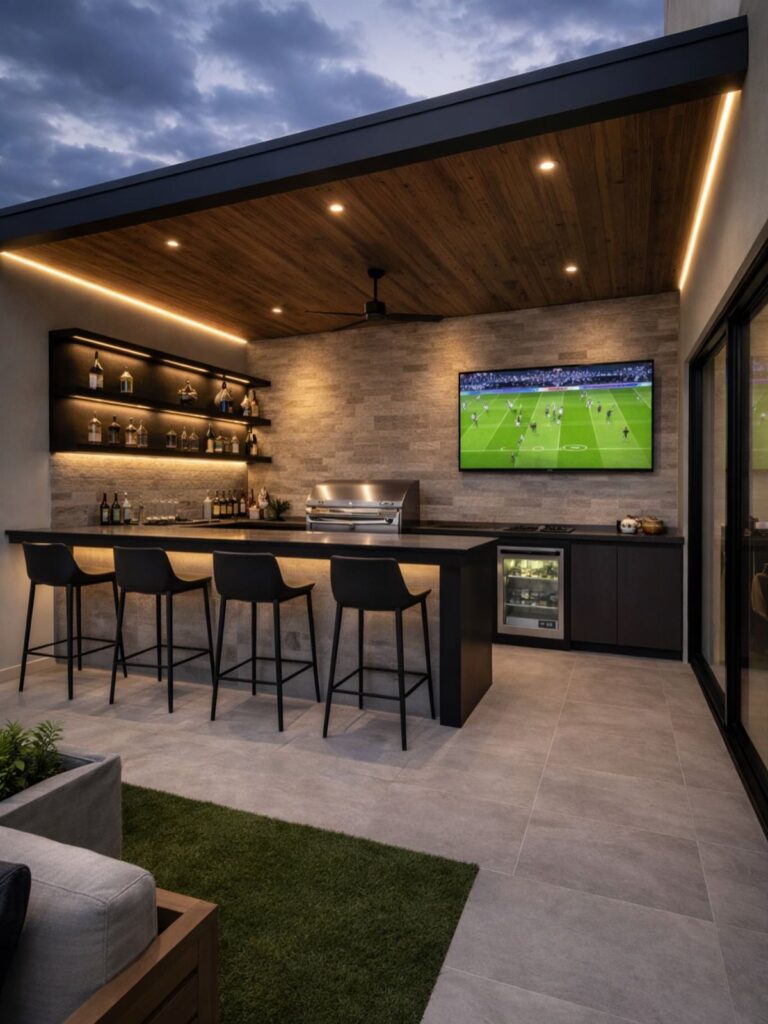
A rooftop deck runs thousands while a pallet vertical garden costs nothing but an afternoon. The deciding factor is whether you own the structure beneath your feet or answer to a landlord who prefers no footprints left on his property.
Low-voltage LED strips at 2700K, battery or transformer, appear in both worlds.
1. Multi-level Decks
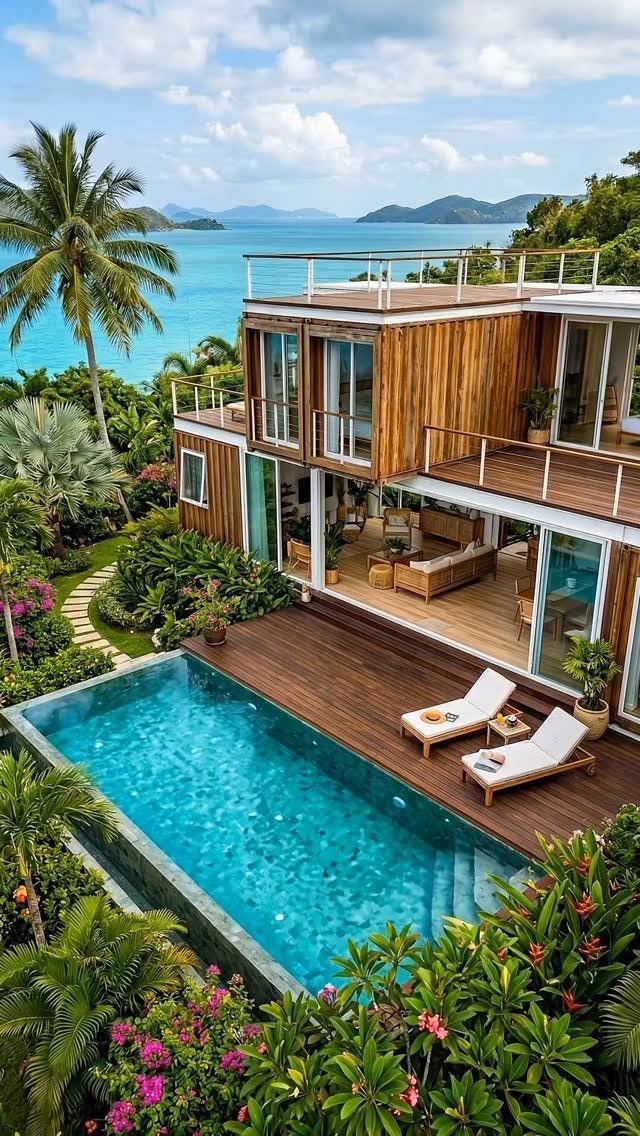
A multi-level deck turns a sloped yard into separate outdoor rooms without fighting the grade. Dining stays up near the kitchen door, then three or four steps drop you into a lounge zone with its own feel.
The height change makes even a modest footprint read as custom work.
TuffBlock’s calculator runs in about half a minute if you want a real block count for your own plan. For a weekend budget, pressure-treated lumber and a rented post-hole digger get you two levels.
I’d put this first on the list for anyone whose backyard runs downhill from the back door.
2. Outdoor Kitchen
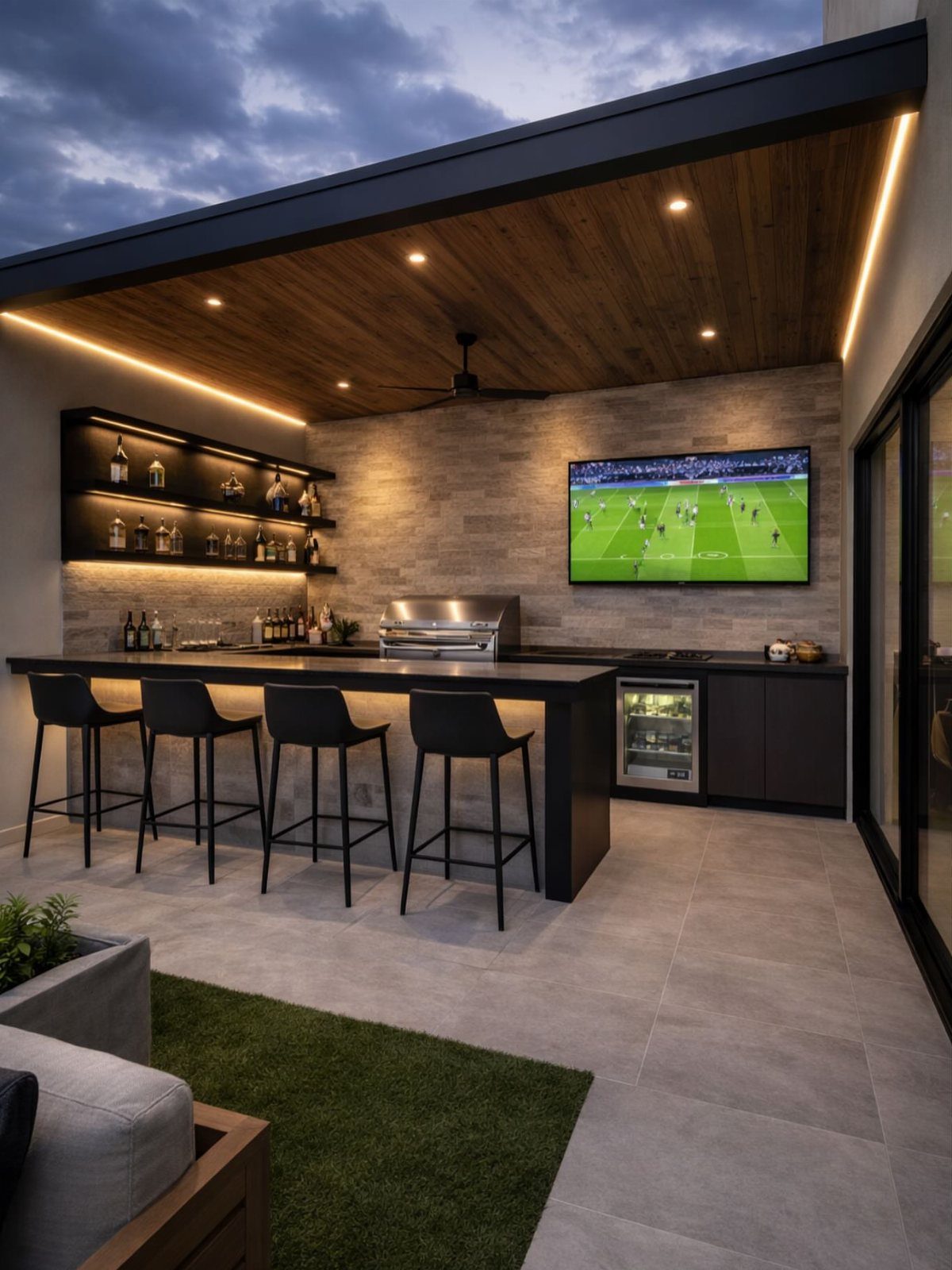
A Weber Kettle on a rolling cart, a mini fridge from Facebook Marketplace, and a length of butcher block across two sawhorses: that setup hosts the same burgers and beers. Weather is the problem.
No overhead cover means covering or rolling everything inside after dark. For a covered deck, the bar-counter version wins; open sky, keep it mobile.
3. Decorative Lighting
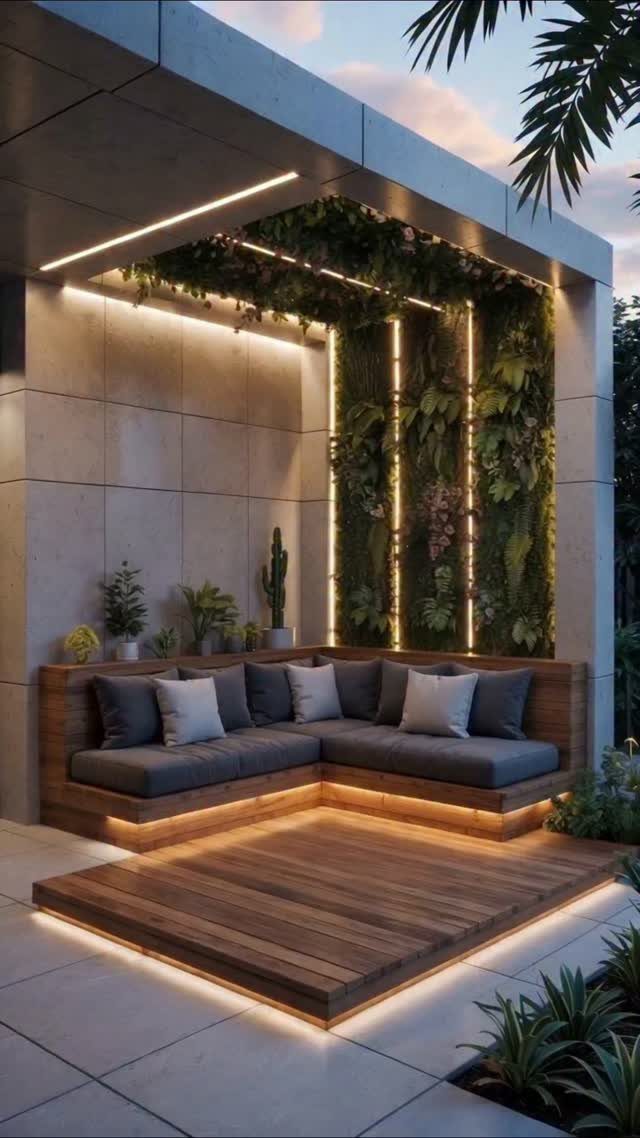
String lights across a pergola beam read as cozy until you need to read a recipe. Strip lighting tucked under seating and along walls solves that, casting glow where feet travel without a bulb in your eyes.
LED strips run on low voltage now, so the wiring is mostly plug-and-play. Warm white, around 2700K, keeps the mood after sunset; anything bluer and your deck feels like a parking structure.
The question is power. Battery packs hide under benches but need swapping.
Low-voltage transformers need an outdoor outlet nearby. Check your box before you buy.
4. Cozy Outdoor Living Room
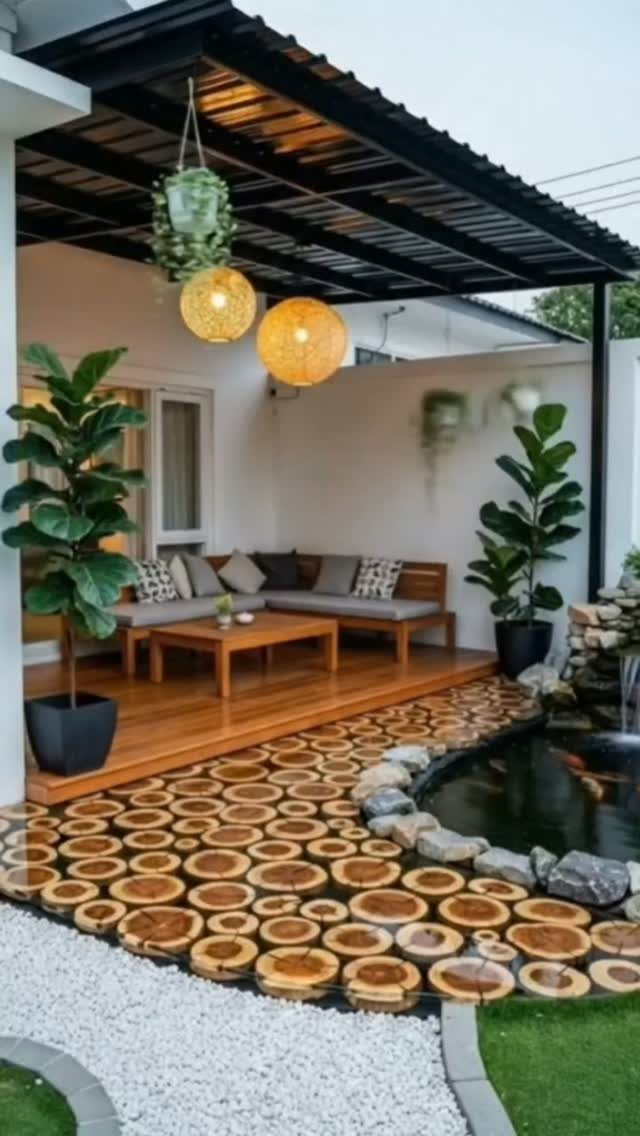
An outdoor living room only works if the furniture invites the same slouch you do inside. A deep sectional and low table pull that off because they copy indoor proportions, not patio-chair perching.
Outdoor sofas with thick cushions and back pillows exist now at IKEA and Target price points. Storage is the problem.
That fabric survives rain but rots in standing water; it needs a deck box or a shed for winter. I built mine from 2x4s and outdoor cushions I found end-of-season on clearance.
The wood took an afternoon, the hunt for cushions took two weekends.
5. Outdoor Rugs
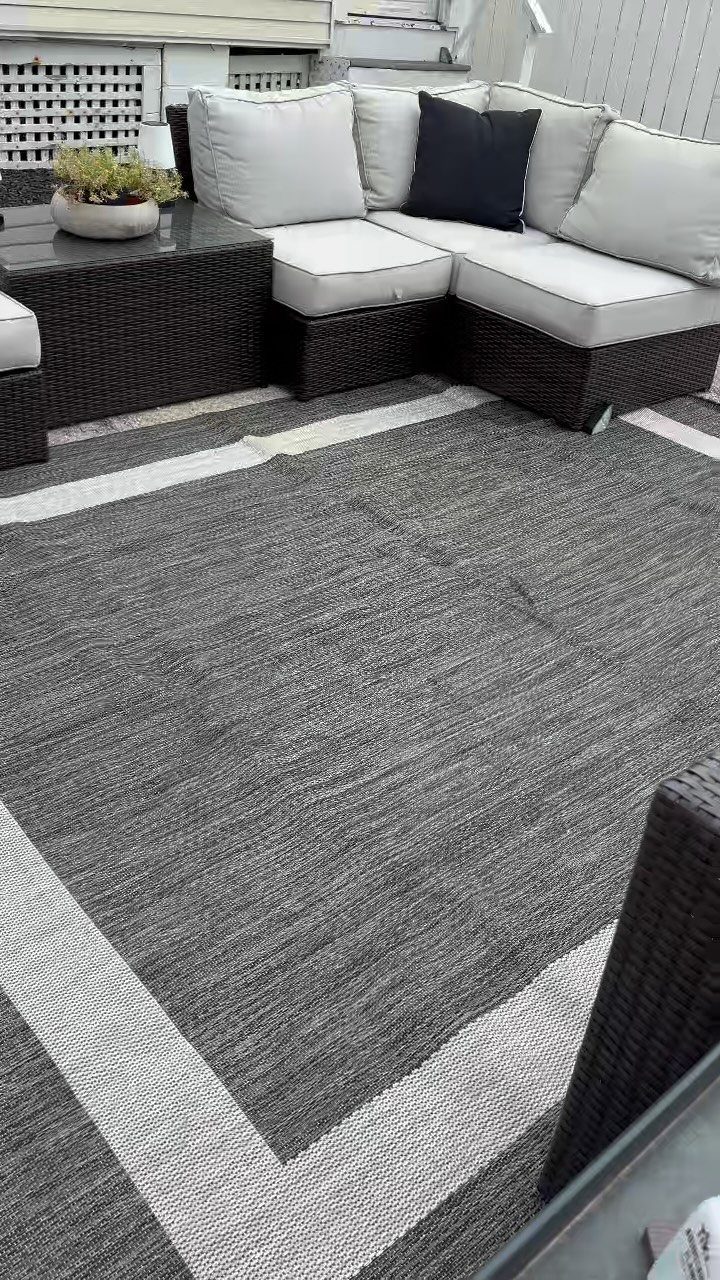
A rug bigger than your seating group does what walls do indoors: it tells you where the room is.
A dark weave with a white border sits under the sectional, not at its edge, so nobody’s chair leg teeters on deck boards.
Polypropylene survives hose-downs and dries fast. Natural fiber looks richer but molds in shade.
The limit is size: outdoor rugs top out around ten by thirteen, so a sprawling deck needs two or more to define separate zones.
6. Outdoor Beverage Station
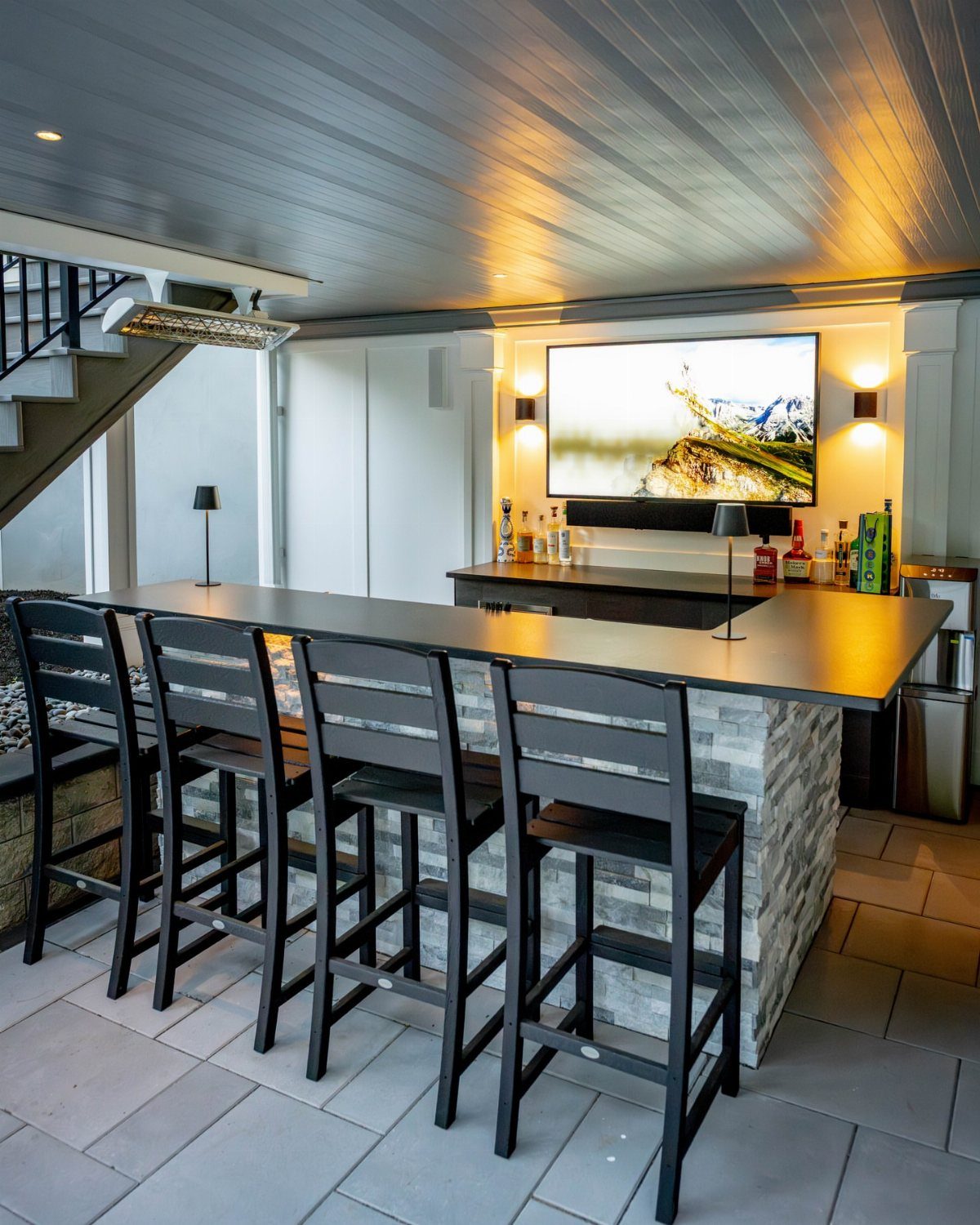
The same hosting function starts with a kitchen cart and a coat of exterior paint.
A bar cart wheels back to the garage when rain hits. A shelf bolted to the railing stays put but holds less.
The middle path is two wooden crates stacked, a plank across them, and casters on the bottom crate so the whole thing rolls for cleaning.
Add S-hooks for bottle openers, a galvanized tub for ice, and you’re set for small money. No plumbing means no sink, but a pitcher of pre-mixed drinks covers that gap fine.
7. Use Your Walls
Walls do the work when floor space runs thin. I mounted shelves and hooks on my own back wall last summer, and the deck felt twice as usable afterward.
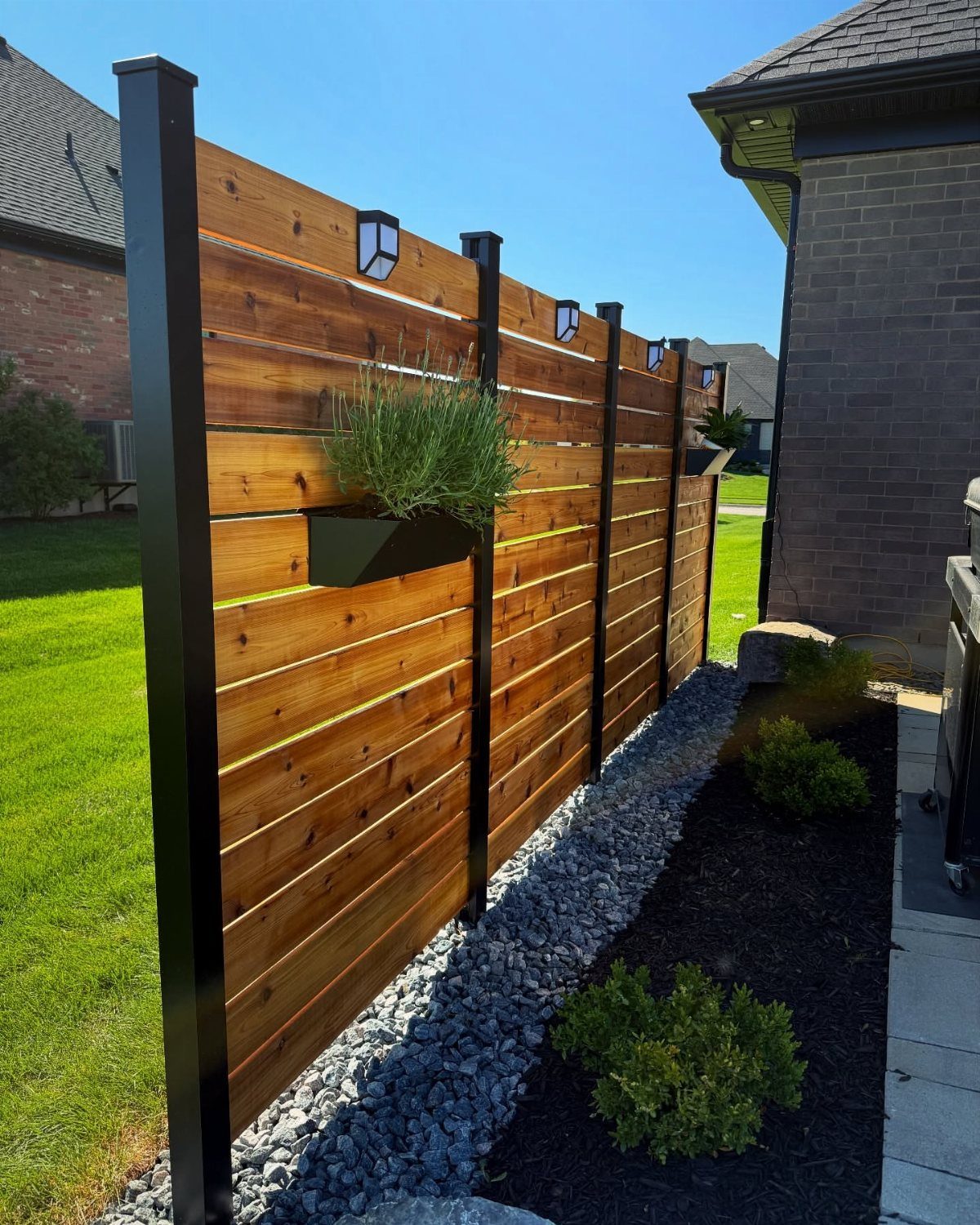
Horizontal decking turned vertical makes a solid privacy screen in the same wood as your floor boards, so it reads as one continuous plane.
Black metal posts hold it clean and modern, with planter boxes and solar lights hung right on the slats. Stones or pavers at the base finish the edge without calling for a full retaining wall.
Lanterns, tools, or a small herb garden all hang where they live, not where they clutter. The whole setup costs little and takes a Saturday.
8. Pergola or Awning
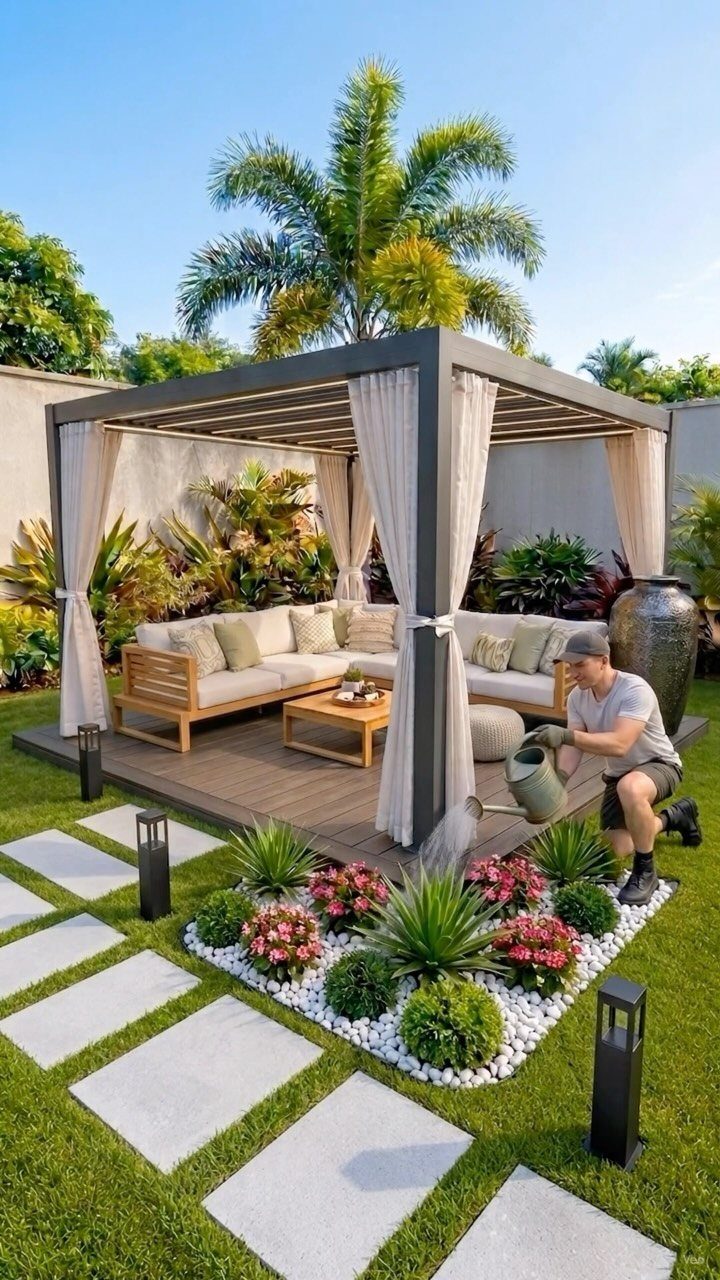
A pergola turns open sky into a room you can name. Dark metal or stained wood with white curtains that draw closed makes the space feel finished.
The Meritmoor Aluminum Steel Pergola covers a standard patio without footings or permits in most towns. Something similar over a slab goes up with a socket set and a second pair of hands.
A retractable canopy in metallic gray gives shade you adjust by hand, which beats fixed roof panels for anyone who wants sun in October and cover in July.
A large patio umbrella costs less and moves where you need it. A retractable awning mounts to the house and motors out on demand.
Build your own cabana with wooden poles set in concrete-filled planters if you want the look and don’t mind a little wobble.
9. Privacy Screens
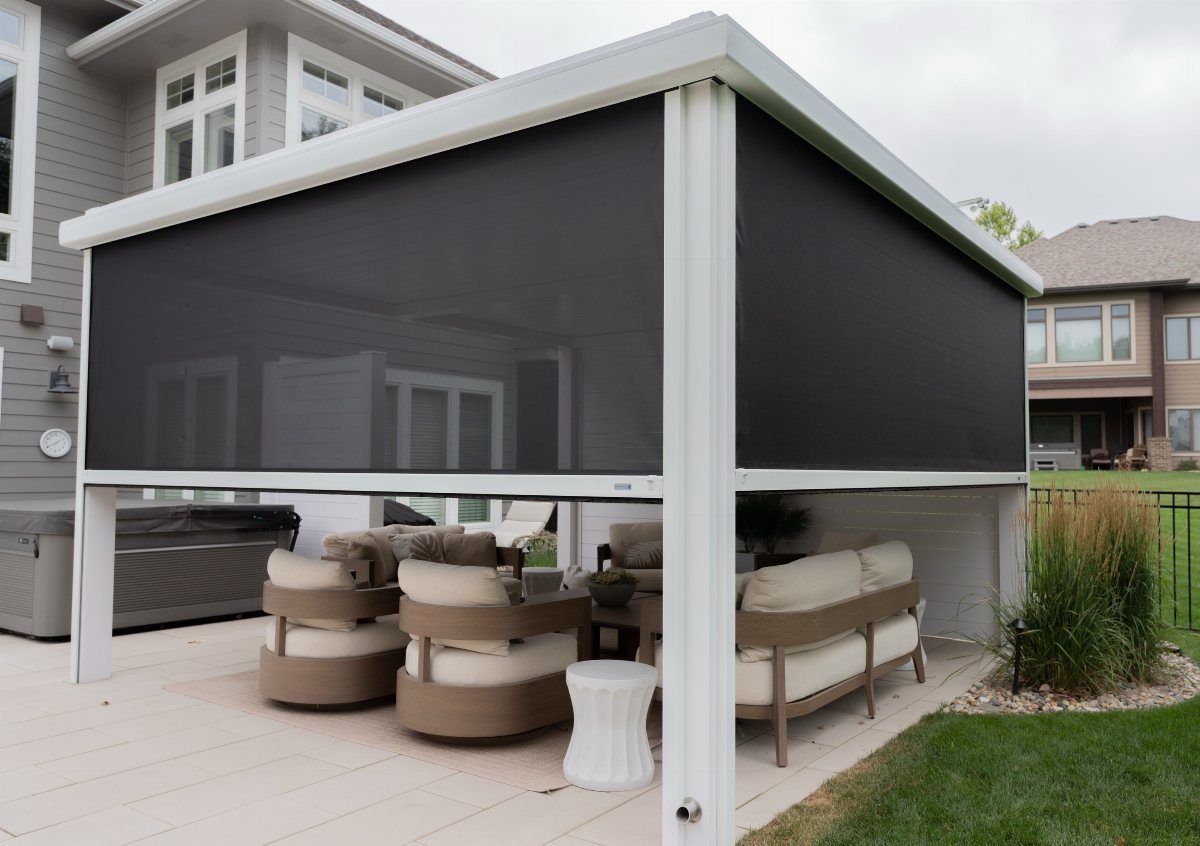
Retractable screens drop down when you need the world gone and roll back when you want the view. Mesh that reads dark from outside and nearly open from within gives privacy without a bunker feel.
A screen framed in 2x2s with horizontal slats spaced finger-width apart works for garbage cans or anything else you want to lose sight of. It took one afternoon and a miter saw.
Store-bought panels in aluminum or composite save time and look sharper if you are buying rather than building.
Outdoor curtains hung on a galvanized wire or cheap curtain rod do the same softer work for less. Drop cloths from the hardware store weather fine for two seasons; proper outdoor fabric lasts five.
A tall trellis with clematis or jasmine climbing up gives you a green wall by August, though it trades immediacy for patience.
10. Decorative Accessories
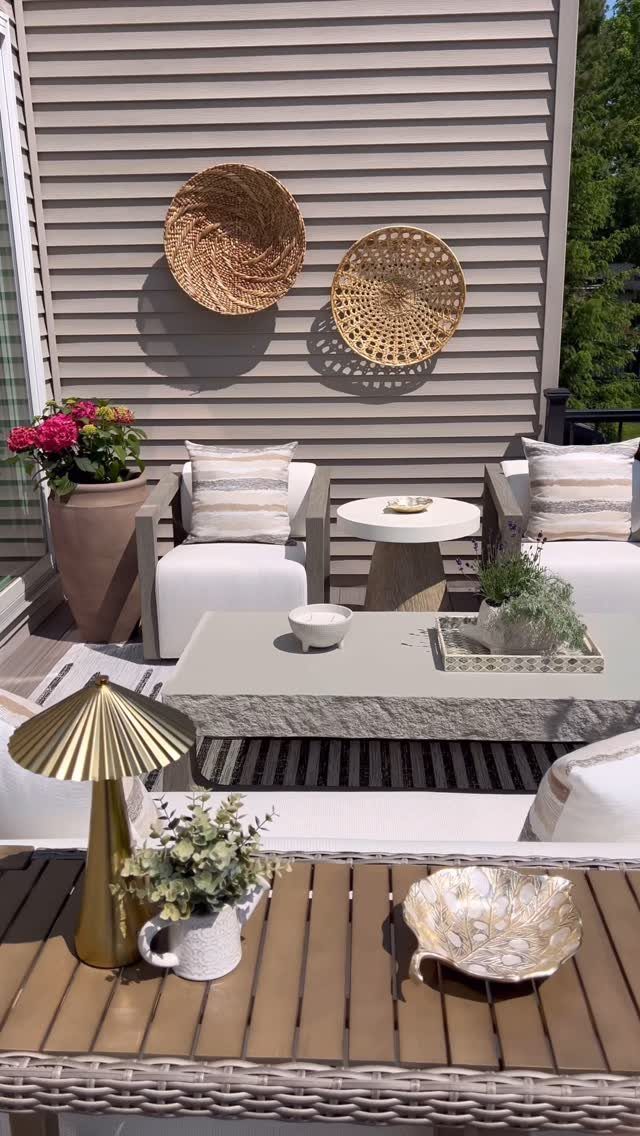
The baskets on the wall, the lamp on the side table, the candle that will not survive a rainstorm: these are the things that make a deck feel inhabited rather than installed.
Statue planters, sculptural steel, hanging succulents in old bird cages, ornamental spheres that catch light after dark. Indoor pieces pulled outside when the weather holds often look better on a deck than they did in the living room.
Wall sconces or a pair of lanterns extend evening hours without the bug draw of overhead floods.
The limit is weather, not imagination. Anything under cover stays year-round; exposed pieces need storage or acceptance of rust, fade, and melt.
Spend on one or two pieces that anchor the eye and fill around them with what you already own.
11. Rooftop Deck
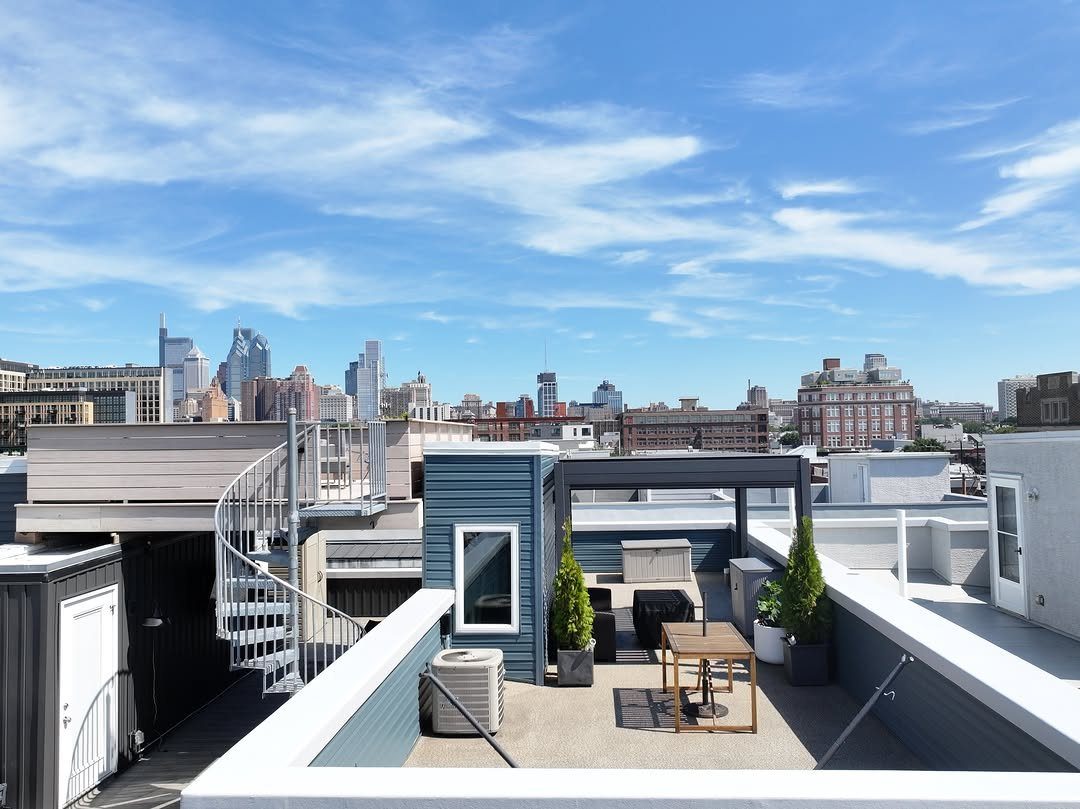
City views and no yard to speak of, so you build upward. A rooftop deck sits off a master bedroom or attic access and turns square footage you already paid for into outdoor living.
A small seating area, potted shrubs for windbreak, and a pergola frame against skyline turns a roof into usable space. Composite decking like Trex handles full sun and pooled rain without the warping that kills wood up high.
A spiral stair saves footprint but costs; a standard door cut into an existing gable end runs less if you have the wall to give.
Check your roof structure first. A platform deck barely raised needs no railing and keeps costs down, but a true roofload demands an engineer’s eye.
Flat yards get the easy version; upper levels get the reward.
12. Vertical Gardens
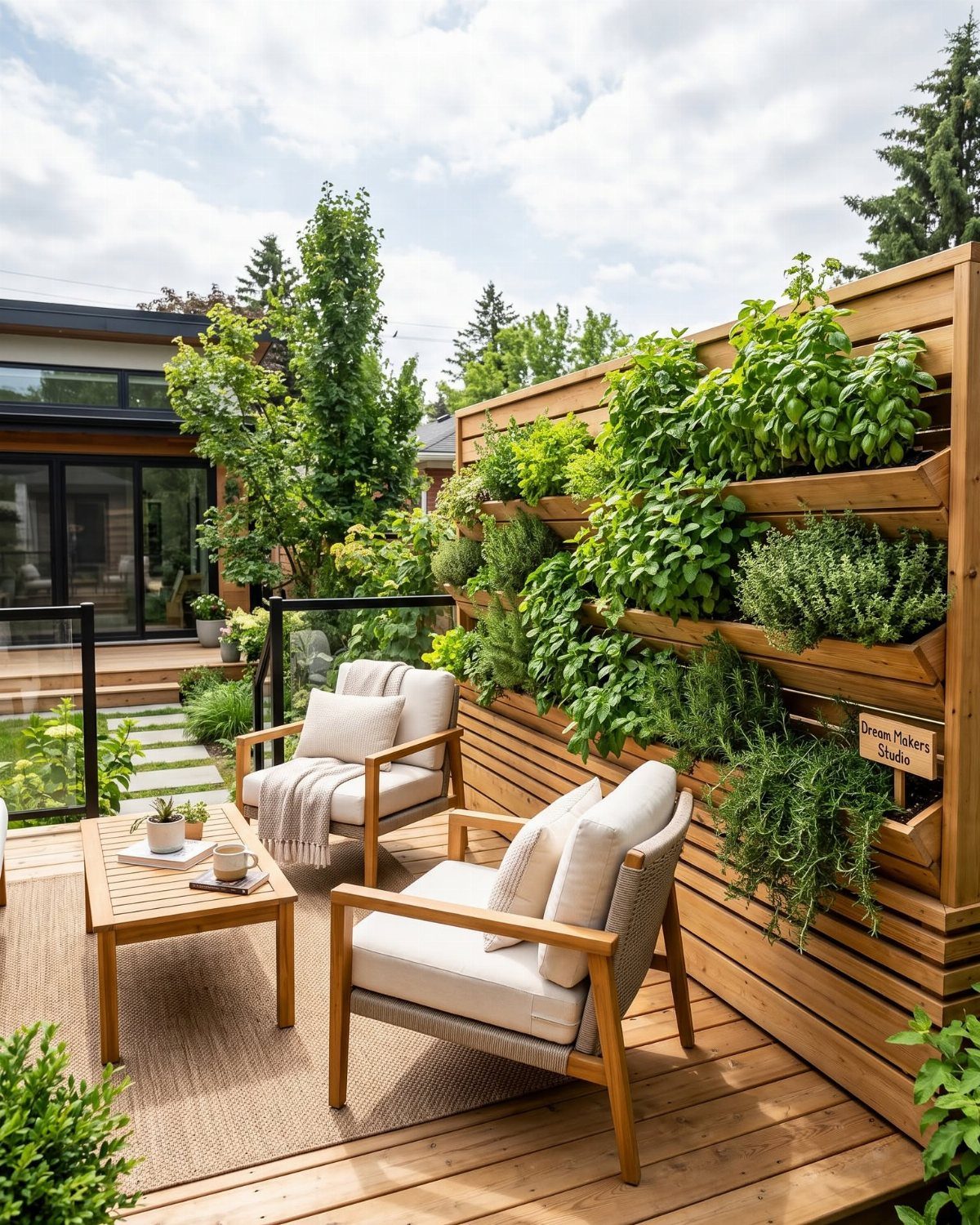
A wall of slatted cedar with built-in planters turns blank vertical space into something alive. Herbs and a small sign turn a kitchen garden into a screen for the neighbor’s window.
A pallet and landscape fabric leaned against a rail makes a simpler version that still works. It lasted two seasons before the wood grayed and split; cedar or redwood buys you ten.
A copper obelisk trellis against the wall handles climbers with less carpentry.
A blanket ladder from a home store, leaned empty against siding, becomes a plant display with S-hooks and small pots; the rungs hold the weight fine for herbs, less so for wet soil in terracotta.
The trade is watering. Vertical dries fast and needs attention every hot day.
A drip line rigged to a hose timer handles the watering without daily attention. Sun matters too: east wall for lettuce and herbs, south for tomatoes and peppers if your climate allows.
13. Start Swinging
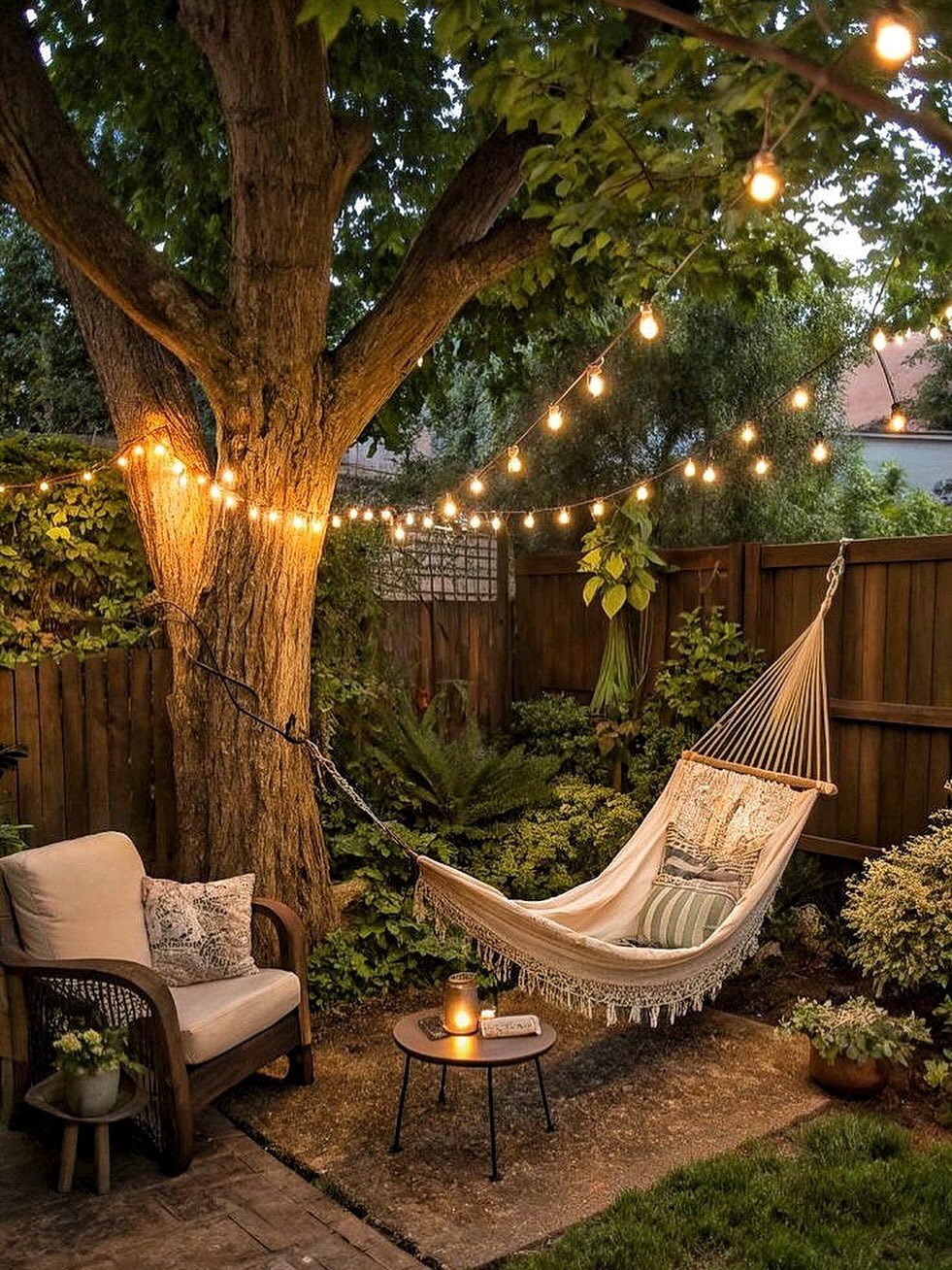
A hammock or swing turns a corner of the deck into the spot everyone wants. Heavy rope rated for a swing’s load beats any lounge chair for afternoon reading.
A wooden dowel and rope from the hardware store costs little if you want to build your own.
The egg chair look costs more but needs no tree: bolt an eye hook into a deck joist header, or sink two four-by-four posts in concrete a few feet apart.
You give up some stability for the motion. Swings take up air space that could hold a shelf or cabinet, and they move, so you need clearance.
I would pick a hammock for a small deck where floor space matters more than headroom, and a porch swing only where I had the width to walk around it open.
14. Deck Design Trends Worth Borrowing
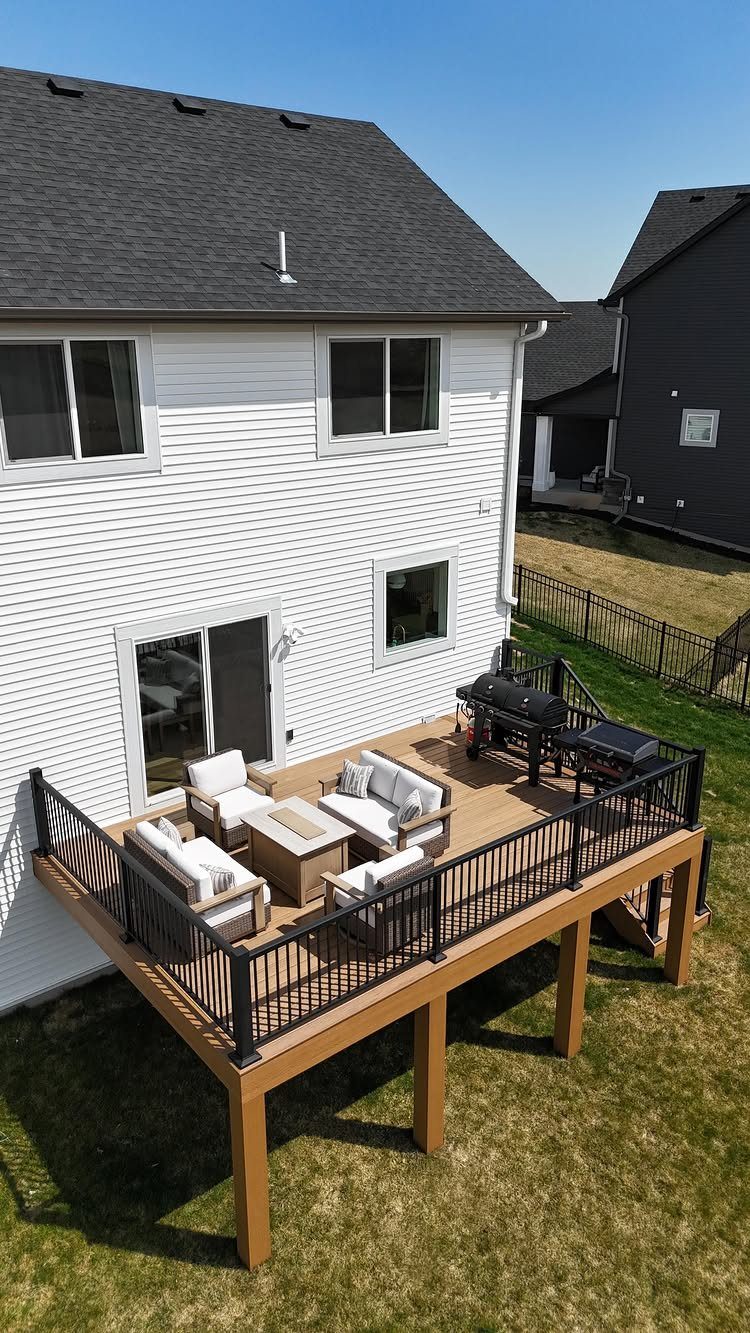
Wide platform decks sitting almost level with the yard are what I see in every new build lately.
The old raised box on posts feels dated now; the low profile reads as more yard than structure, and the step down is gentle enough to trip on in the dark.
Mixed materials are the other shift that stuck. Composite boards next to pavers, or black metal railings against warm wood-tone decking, give the eye two textures instead of one flat surface.
The multi-tone board colors, browns with amber streaks rather than the solid grays that were everywhere a while back, hide dirt and wear better too.
Built-in lighting has become standard planning, not an add-on. Wiring LED strips into risers during construction costs far less than retrofitting later.
Check your local code first: some jurisdictions require conduit, and the permit timing changes your build order.
As Raboine notes regarding backyard deck ideas, you can combine composite decking with wood, textured pavers, and even metal or glass to create more visual interest. “Also, think about your color choices to create interesting patterns or pops of vibrancy.”
15. Create a Chic Cabana
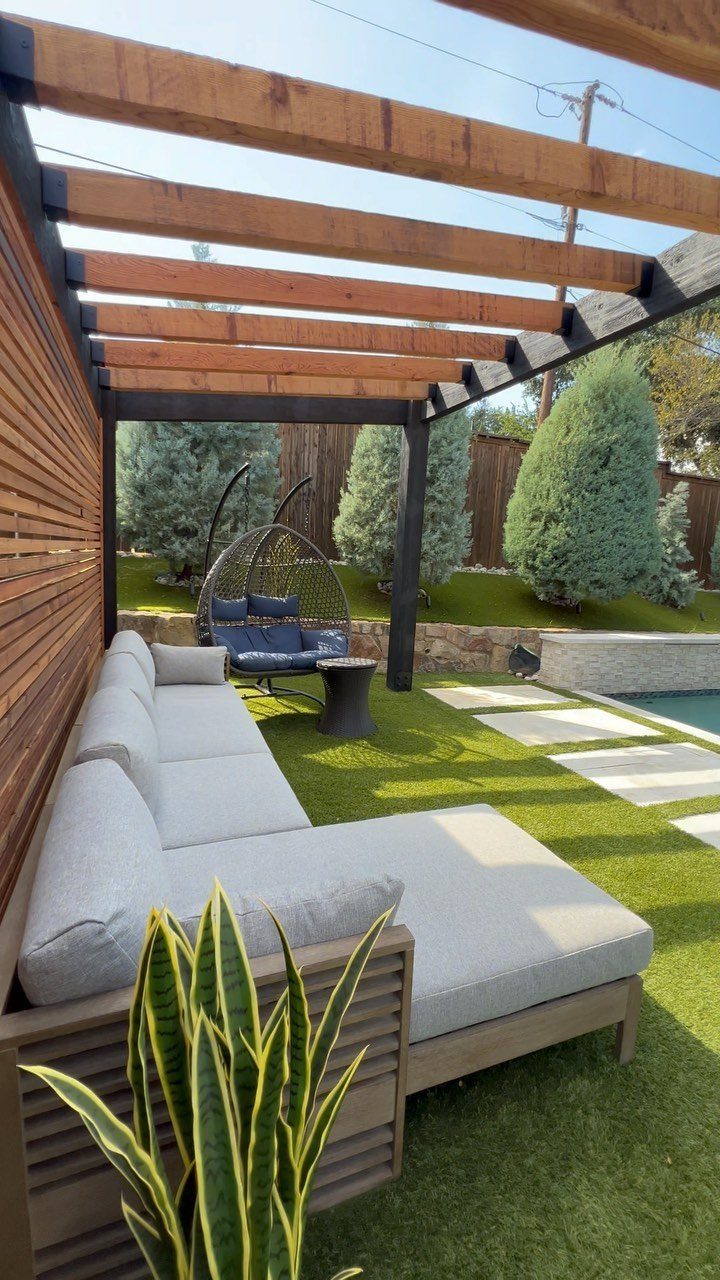
A cabana is just a defined outdoor room with something overhead and something to close it in.
Ursula Carmona built hers by setting tall wood posts in plastic planters filled with concrete, running rope between the tops, and hanging semi-sheer curtains from that line.
The result looks like a resort for the cost of posts, planters, and fabric.
String lights along the same rope complete the setup after dark. I would use outdoor-rated curtains with grommets so they slide open; snap tape or loops bind up with humidity and pollen.
Four-by-six rafters on a pergola frame give the roof enough heft to read as architecture rather than tent.
Without a pool to anchor the scene, I would scale the furniture down and skip the turf; real grass or decking underfoot keeps the maintenance simpler.
16. Fire Pit or Fire Table
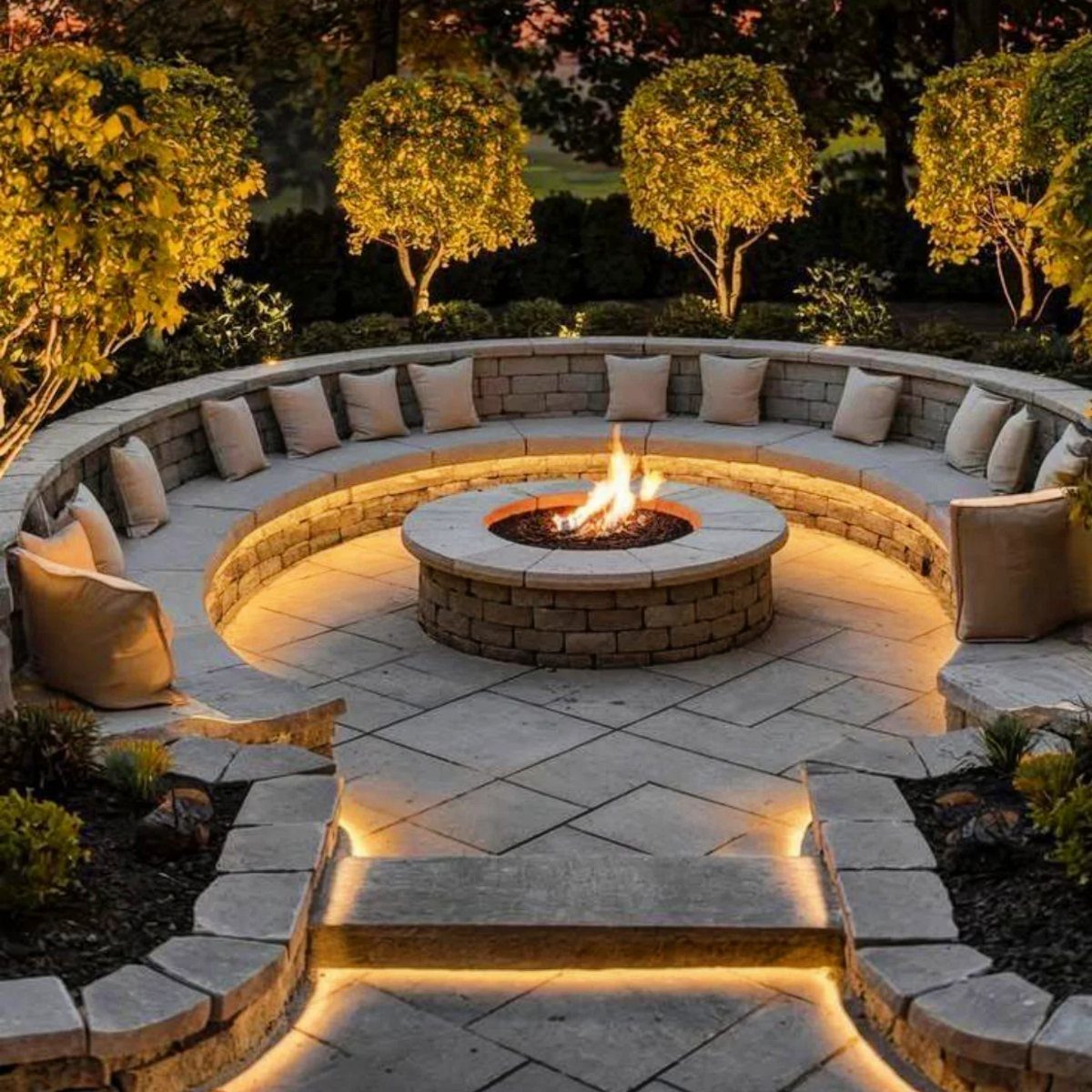
A fire feature buys you months of outdoor evenings. Stone built into a sunken patio with a curved bench wrapping around reads permanent and grounded.
That takes excavation and a mason, which most of us are not doing on a Saturday.
A fire table on an existing deck is the practical route. Propane models need no gas line, and the ones with composite surrounds sit safely on Trex or TimberTech without the clearance rules of open wood-burning pits.
I would check the manufacturer spec for heat deflection; some tables need a pad underneath even on non-wood surfaces.
The trade is atmosphere for effort. An open pit draws people in a circle and you can cook over it.
A fire table is cleaner, instant on, and the surface still holds drinks when the flame is off. For a deck where I eat more than I camp, I would take the table every time.
17. Repurposed Furniture
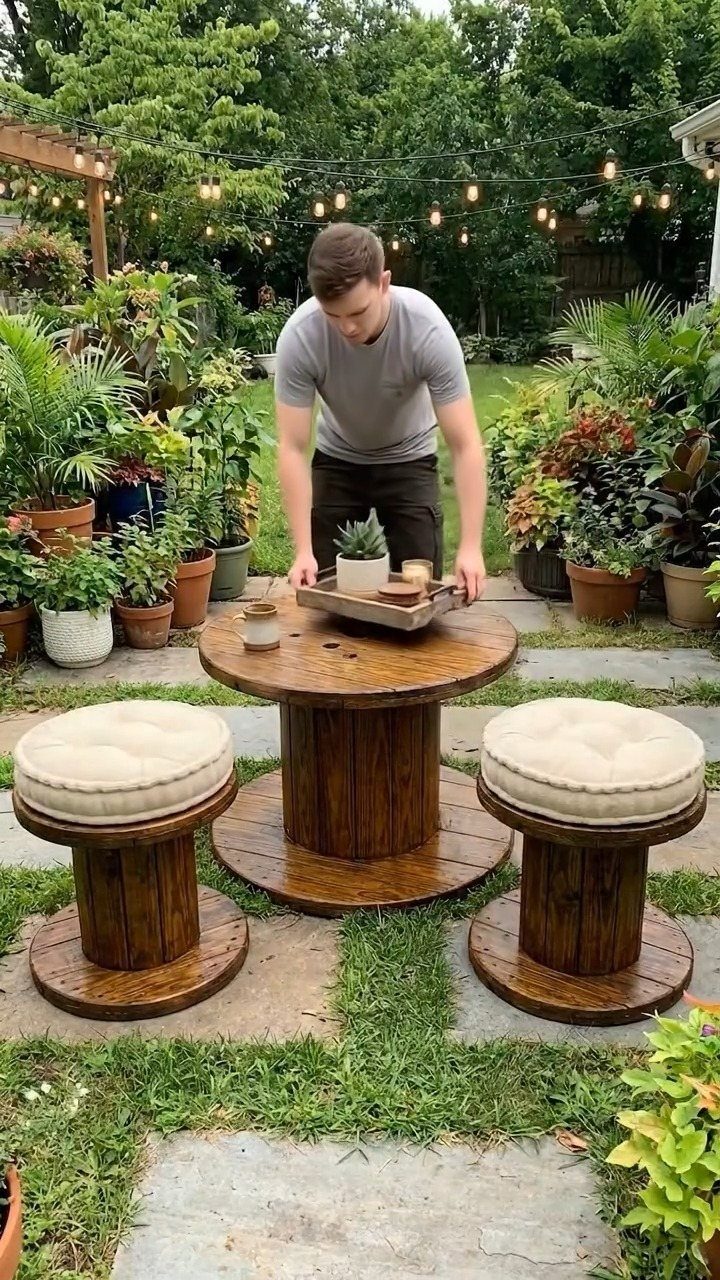
The wood is already outdoor-rated from its factory life, and the height is right for patio seating without cutting.
Paint is the other lever. My neighbor’s cast aluminum chairs looked landfill-bound until she hit them with rust inhibitor and a marine enamel in navy; they still read as intentional seasons later.
Bright colors energize a gray deck, soft ones calm a busy yard.
The limit is structural soundness. Wobbly joints or rotted wood are not worth saving, and the time in sanding and stabilizing can pass the cost of a basic new piece.
18. Built-in Seating
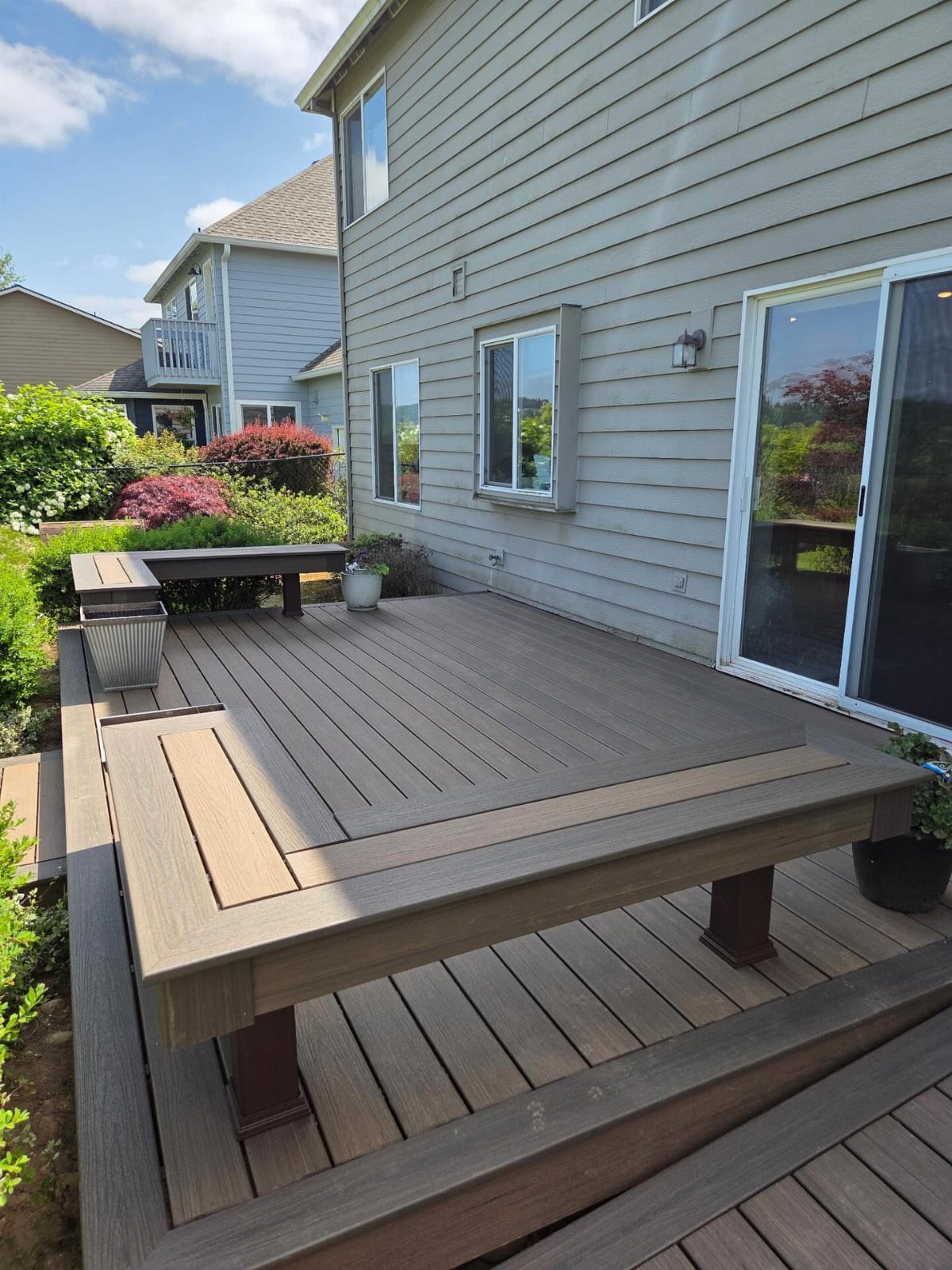
Bench seating built into the deck perimeter gave me back the center of my small platform for a table and circulation.
Running the bench along the outer edge, framed by the same composite boards as the field, leaves no legs to catch a toe or a hose.
Judith Balis anchors one side this way and softens it with throw pillows to turn a deck into a true outdoor room.
Floating furniture on a narrow deck feels temporary and tippy, but a fixed bench invites people to settle in.
The construction is straightforward if you are building new. A two-by-four frame on joist blocking, skinned with decking, with a slight back angle for comfort.
Retrofitting is harder; you are cutting into finished surface and hoping the framing lands right.
I would plan this from the start on anything under twelve feet deep, and skip it only where I needed every inch for a specific large piece.
19. Decorative Planters
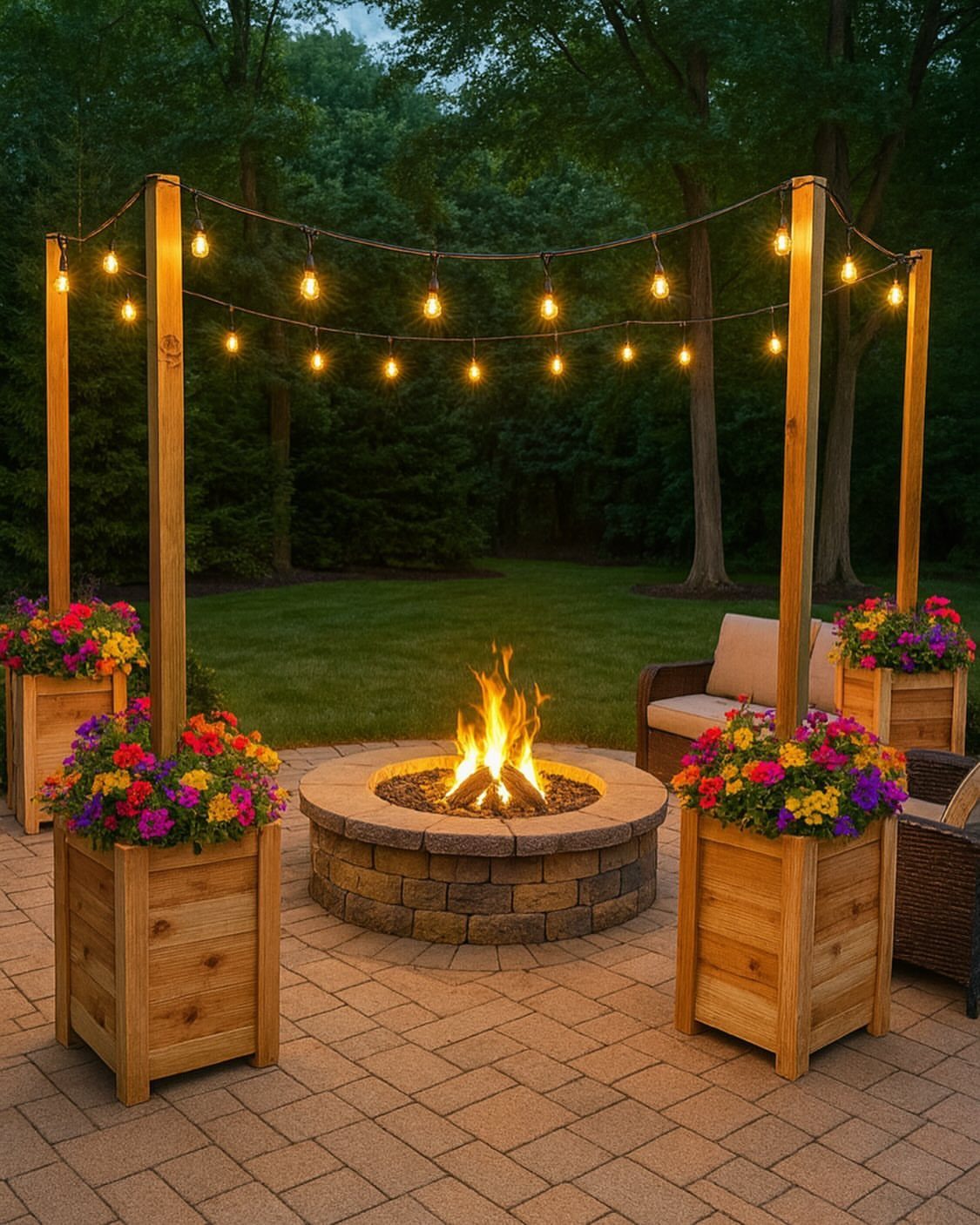
Planters do more than hold plants; they frame a space the way walls frame a room.
Built from the same wood as the posts that carry the lights, matching planters make the whole patio read as one planned thing rather than a pile of separate purchases.
For a small deck, I’d hang a few planters rather than set more on the floor. Matching boxes at the corners echo the fire pit’s square shape and give each seat its own greenery.
Mixing heights matters more than matching colors. One tall grass or small shrub in a raised planter does the privacy work of a half wall.
Terracotta ages fast outdoors and cracks in a hard freeze. Wood, metal, or fiberglass composite lasts longer for roughly the same money.
20. Tree-encompassing Deck
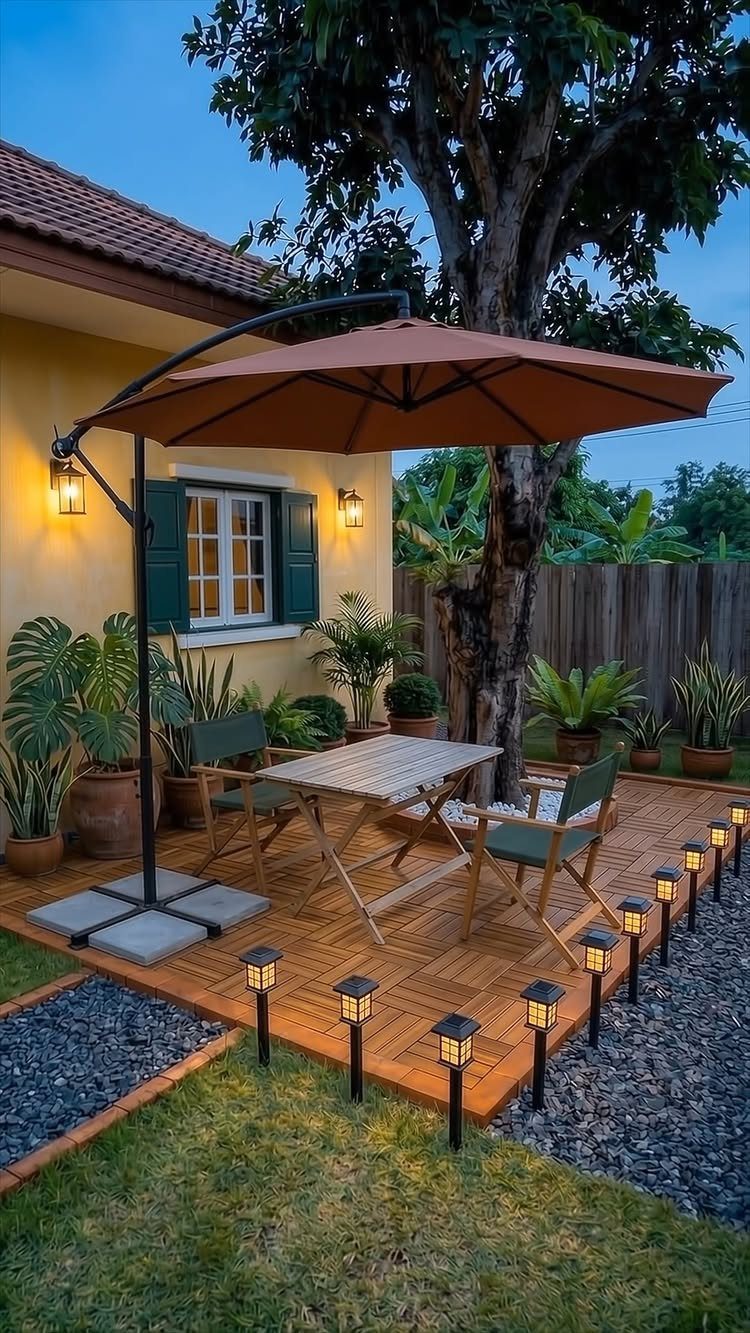
Working around a tree instead of cutting it takes longer to plan and build, but the result owns the yard in a way no standard deck manages.
Modular decking laid in sections around the trunk is the practical way; solid boards would buckle as the tree grows or roots heave.
The gap stays open with gravel or left as bare earth, and the tree gets the air and water it needs.
A dining table under a cantilever umbrella fits here because the tree itself blocks a center pole.
This suits renters or owners who expect to stay put. The tree will outgrow whatever you build, so plan to add a ring or expand the gap before the trunk starts pressing against the framing.
Maples work well for the color shift through seasons; pair with evergreens nearby so winter does not read as bare.
Choosing the Right Materials
Mixing materials on the same level deck helps the eye read one zone from another without needing actual steps.
Weathered teak planks, stone, or aggregate each set a mood; the material choice does more to define seating areas than the furniture you put on them.
Planning Your Deck Layout
Start with what you actually do outside, not what the magazines show. Entertaining regularly means seating for a group; grilling means a cooking zone near the kitchen door.
Size shapes everything else. A small deck and a large deck call for different ideas, and the same furniture arrangement reads cramped or lost depending on the footprint.
Activity zones work best when the activities are real ones: a lounge zone you will sit in, a dining zone you will eat at, not zones invented to fill the plan.
Level changes help.
Incorporating Greenery
Potted plants are the simplest start. A few heights of planters, some filled with something bushy, can block a neighbor’s window without building a wall.
A mixture of real and faux plants gives a lush look with less maintenance. Faux plants look less fake replanted into real containers; setting a few planters on short wood stools keeps the floor from turning into a greenhouse aisle.
On a modern deck, plain planters in gray, black, or white tend to look intentional rather than afterthought. For a cozier look, terracotta or aged ceramic pots work better.
Match your color scheme without getting rigid about it; outdoor decor that is too matchy-matchy feels staged.
Frequently Asked Questions
How much would a 20×20 deck cost?
A 20×20 deck runs about 400 square feet, and I have not built one that size myself.
My own two-level project came in under a thousand dollars using pressure-treated lumber and a rented post-hole digger, but that covered a modest multi-level build rather than a full 400-square-foot surface.
Material choice swings the number most: composite like Trex costs more upfront than wood but handles sun and rain without the warping that adds hidden replacement cost.
What are the newest decking trends?
Wide, low-profile platform decks that sit almost level with the yard are showing up in every new build lately; the old raised box on posts feels dated now.
Flat grays dominated a few years back, but now I see more multi-tone browns with amber streaks, and built-in lighting has moved from afterthought to standard planning.
What is cheaper to build, a deck or patio?
Patios are generally cheaper because they need less structural material; pavers or concrete sit on graded earth without posts, joists, or railings.
That combination makes the yard feel like separate rooms instead of one flat space, but it costs more than either surface alone.





