
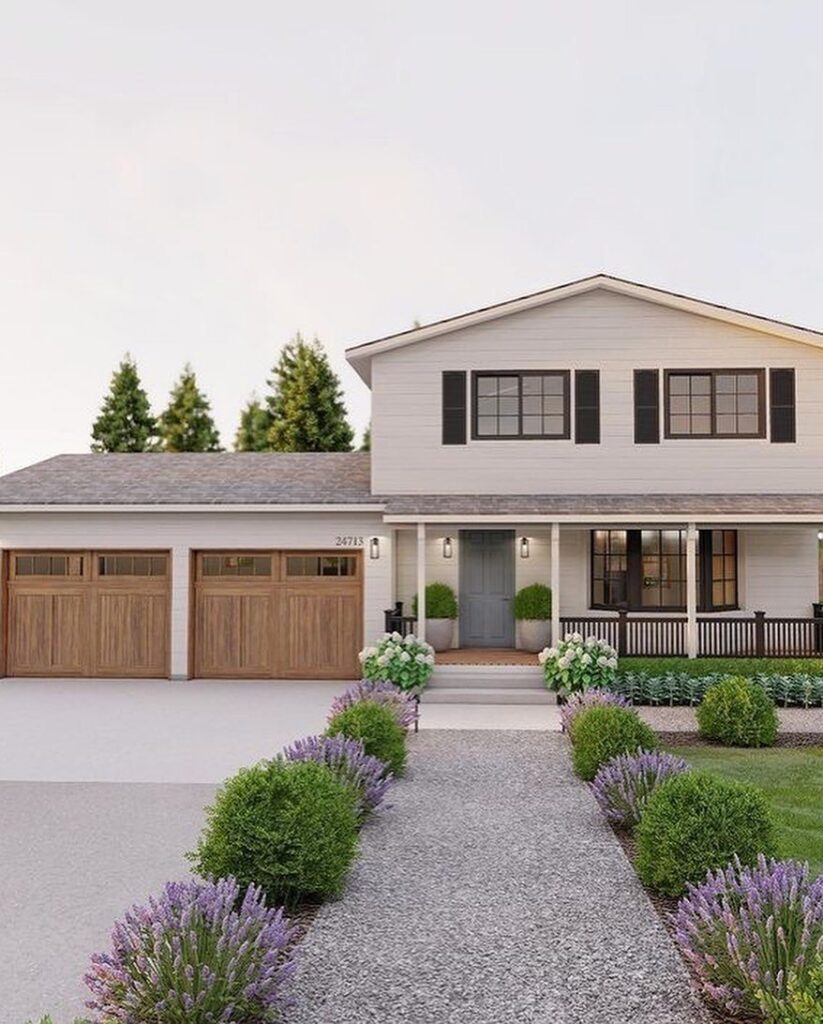
These ideas run from swapping in low-maintenance plants to installing edging and lighting, and the deciding factor is whether you own the dirt or answer to a landlord.
A reader with a rental and a concrete planter against the wall can layer grasses and succulents for instant depth without ever planting in the ground, while the same person on a first home with a parking strip will need to check local ordinances before putting a vegetable garden where the town can see them.
1. Low-Maintenance Plants
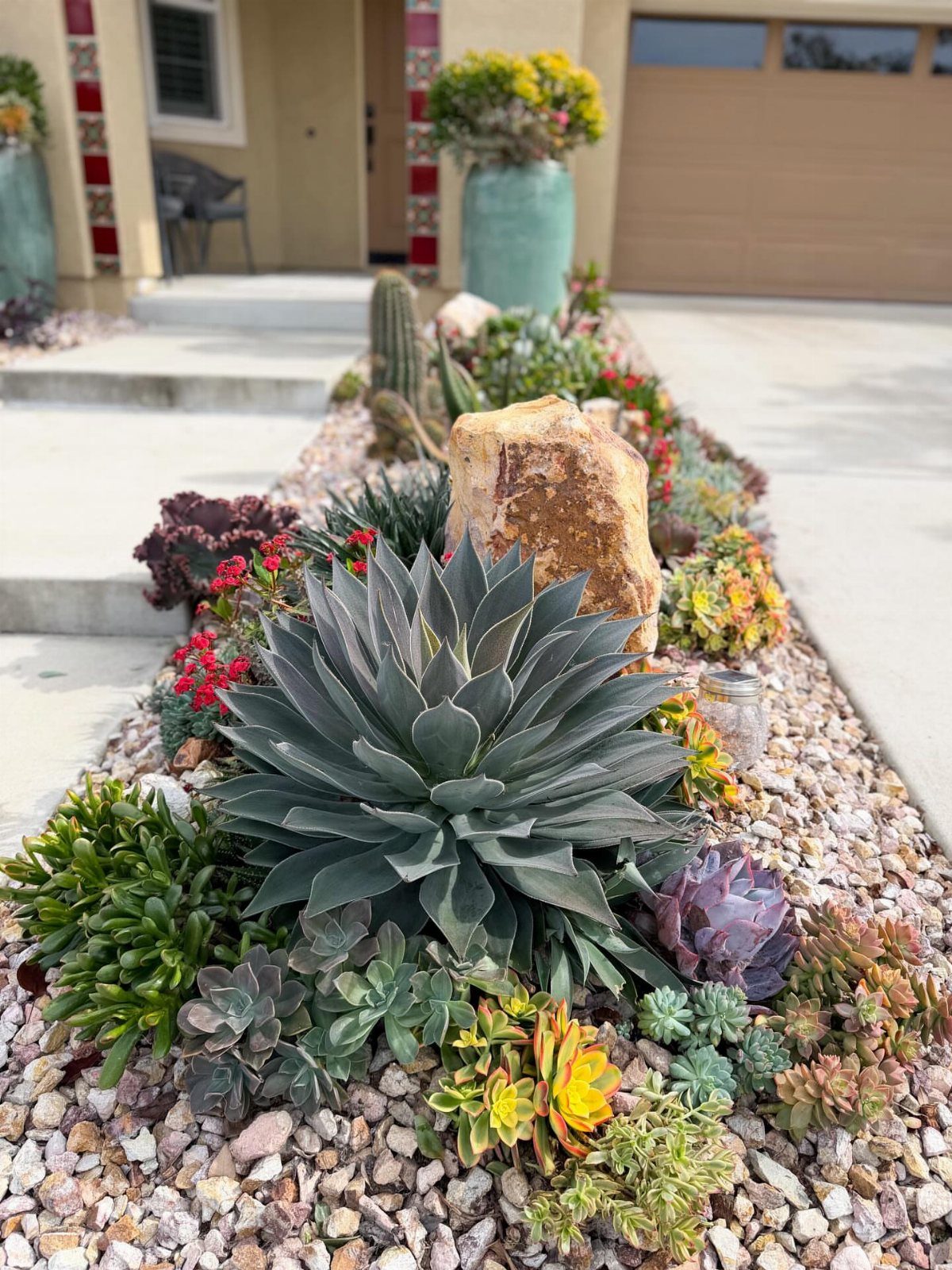
Gravel beds around succulents and cacti need watering maybe twice a month in most climates, and that low demand is why they work for weekends, not weekends for them.
Drought-tolerant perennials like salvia or yarrow handle summer stress without fuss, and native shrubs already know your soil and your bugs.
Ornamental grasses add height without staking or pruning. Mulch or gravel on top keeps weeds down so weekends stay free.
I would skip anything that needs wrapping when frost threatens. One season of hauling blankets outside at midnight cures most people of that habit fast.
2. Upgrade Hardscaping
Stone walkways and brick borders outlast the plants they frame, so getting them right matters more than getting them fast.
Wider paths, around four or five feet, let two people pass with a wheelbarrow between them; narrow concrete strips crack and heave and look tired in five years.
The material choice depends on what your house already wears. Brick walks blend with brick houses; poured concrete suits modern lines and costs less up front.
Composite decking for a front stoop costs more at first but needs no sealing and no splinter repair.
Check your frost line before setting stone. Anything that shifts with freeze-thaw cycles will shift your budget too.
3. Create a Welcoming Entrance
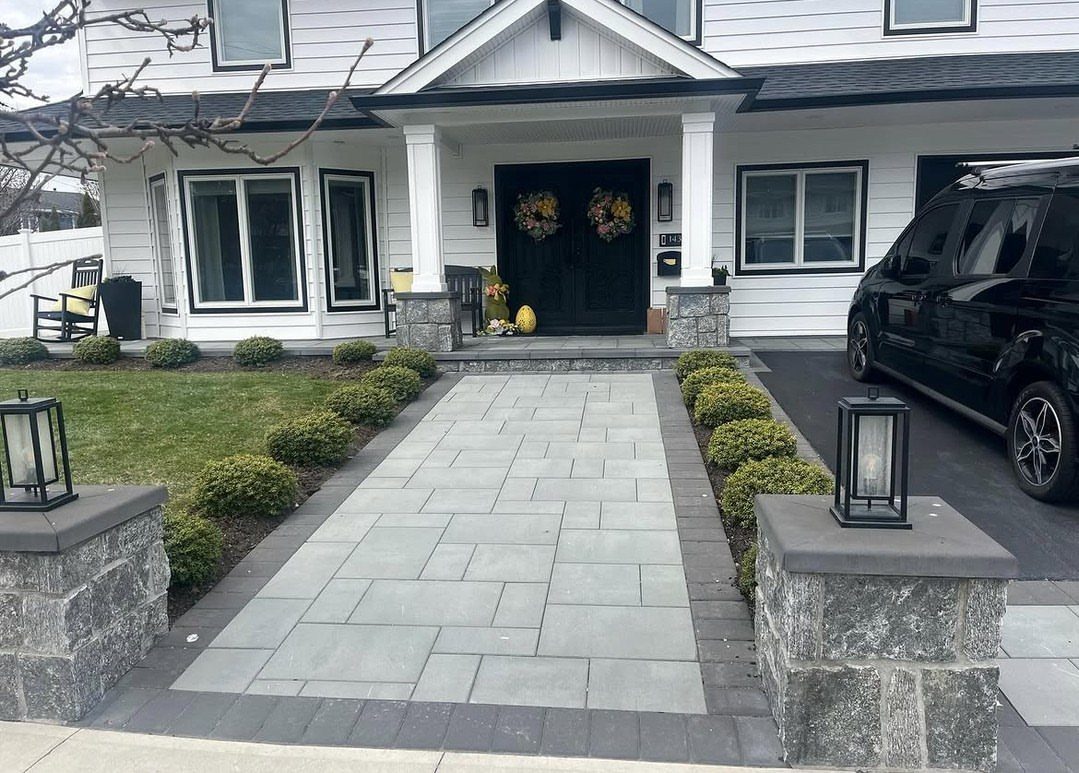
A front door framed by trimmed shrubs and lit from both sides reads as the main event without any shouting. A wreath and lantern sconces do half the work of an entrance; the geometry of the path does the rest.
I would add one specimen tree offset from the walk, something with spring bloom or fall bark, to give the eye a reason to travel.
Climbing roses on a trellis beside the stoop work if you have full sun and patience for pruning.
Bold paint on the door itself costs little and takes an afternoon. That is the cheapest focal point move that actually registers from the street.
4. Consider Accessibility
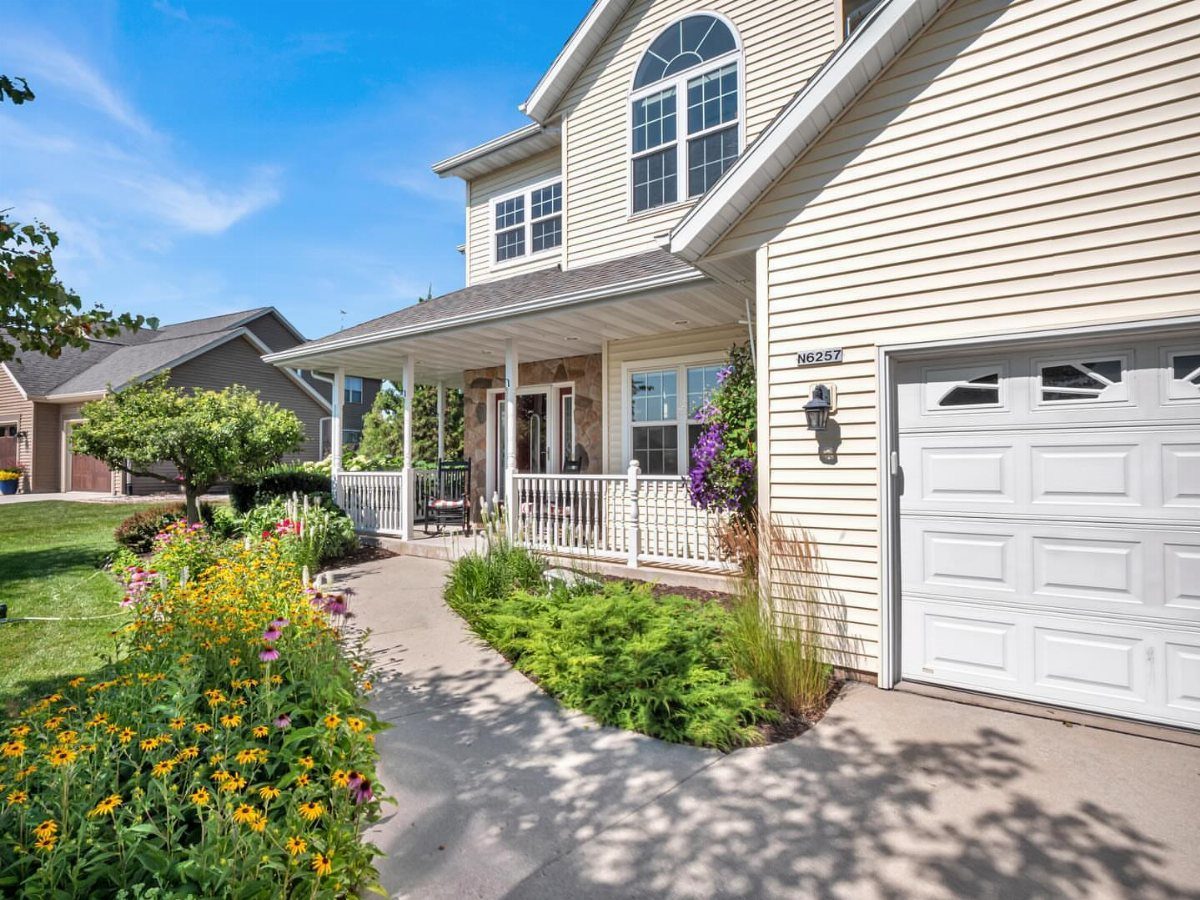
Concrete walks wide enough for a stroller or a walker, with a gentle grade instead of steps, keep a house usable for decades. Low flowers edging a path soften the line without narrowing it; that balance matters.
Check your gate width against a garbage can on wheels, a lawn mower, a wheelchair. If any of those bind, the path fails before it starts.
I would trade planting bed width for walk width every time. Accessibility ages better than aesthetics, and generous paths read as gracious anyway.
5. Vegetable Garden
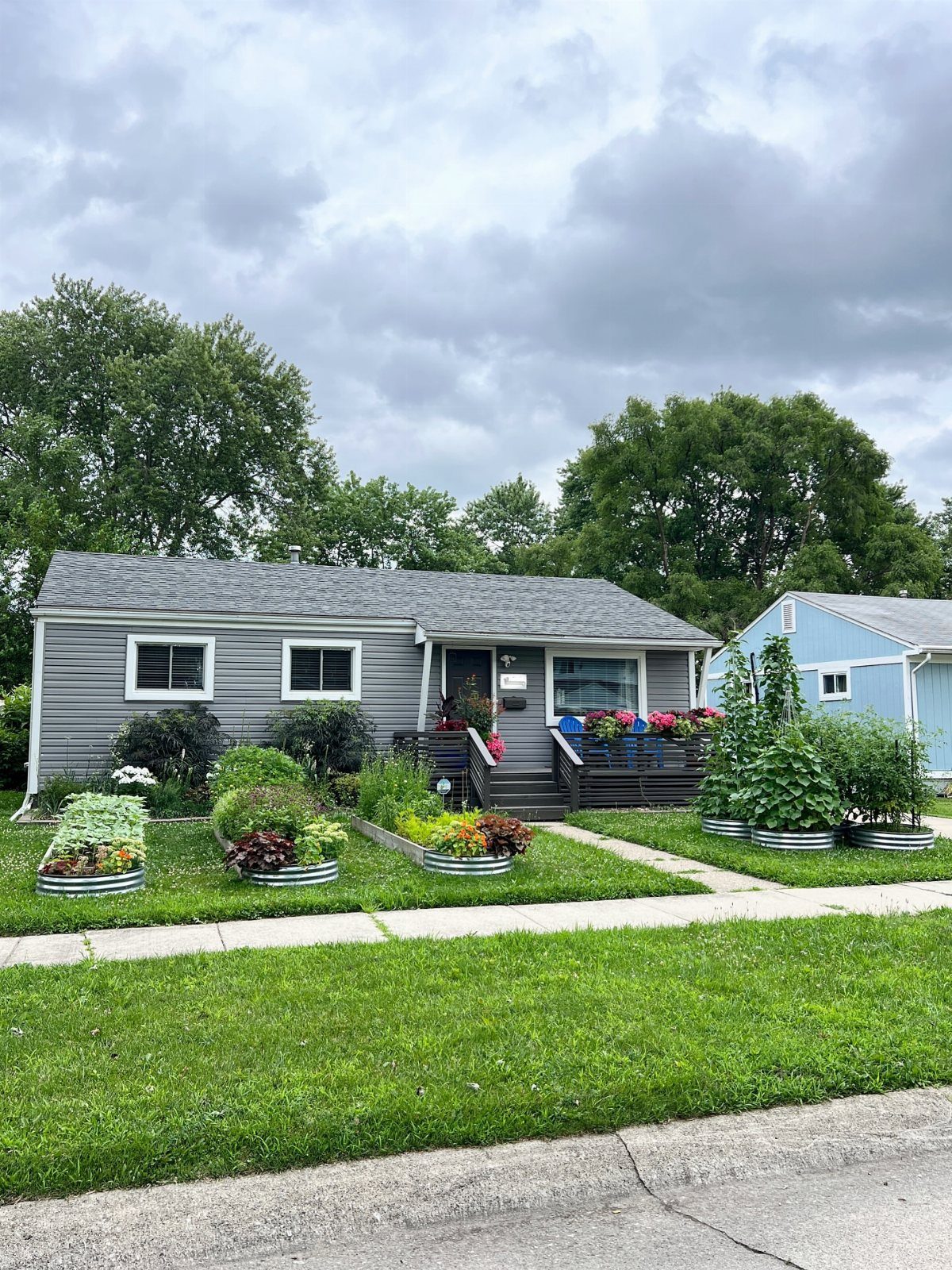
Corrugated metal raised beds in a front lawn look tidy and keep vegetables out of contaminated soil, which is half the battle in older neighborhoods. A neutral house color behind vegetables lets the green read as intentional, not apologetic.
Mix in marigolds or nasturtiums with the tomatoes; they draw pollinators and give passersby something to admire. Herbs along the front edge, thyme or basil, put the useful stuff within arm’s reach of the walk.
Check local ordinances before planting the parking strip. Some towns still ban food crops where they show, and one complaint letter can kill a whole season’s work.
6. Rose Garden
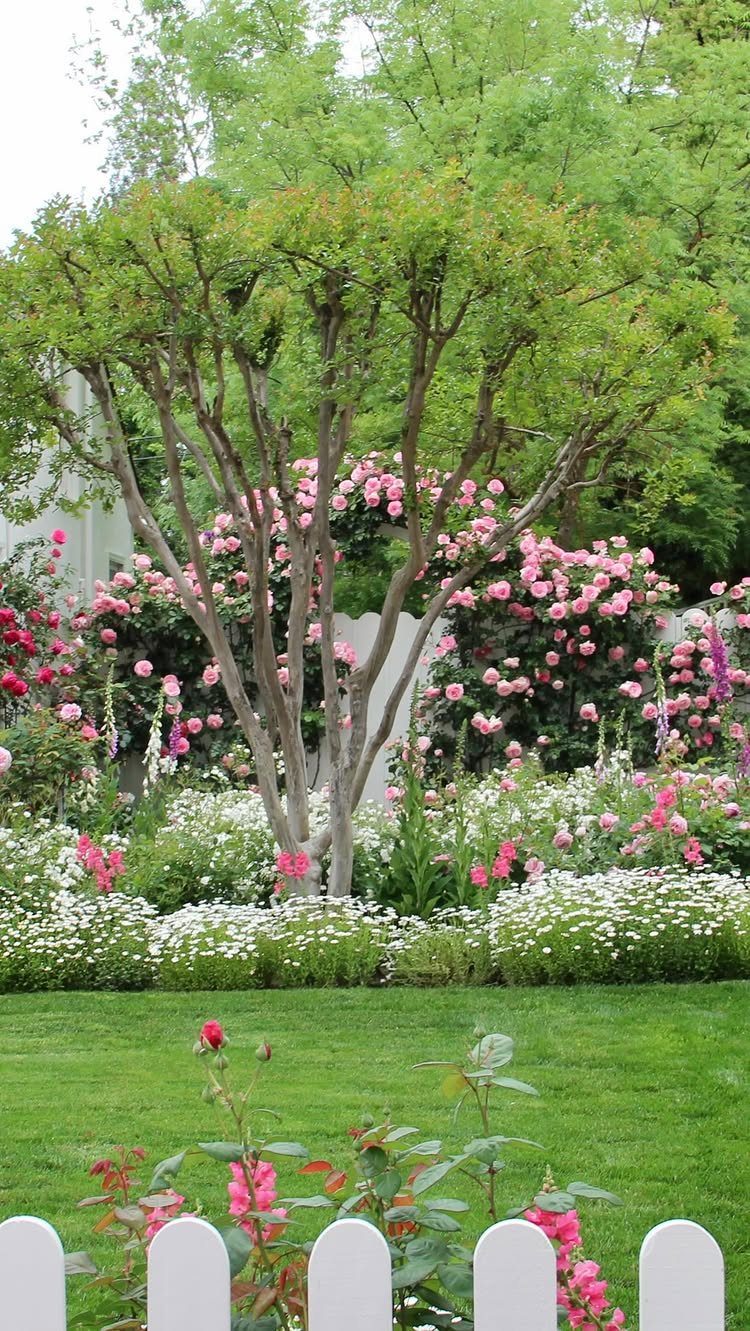
Pink roses against a white picket fence read as classic because that combination has worked longer than most of us have been alive.
Climbing roses up a tree or an arch add height without demanding foundation space, and mixing bloom times keeps color coming from May through September.
Start with two or three bushes if you are unsure about pruning. Roses reward attention but sulk at neglect; a small investment lets you test your tolerance for the work.
I would underplant with lavender or white yarrow for contrast and for the gray-green foliage that carries the bed through winter. Without that backbone, a rose garden looks like sticks half the year.
7. Focus on Unity
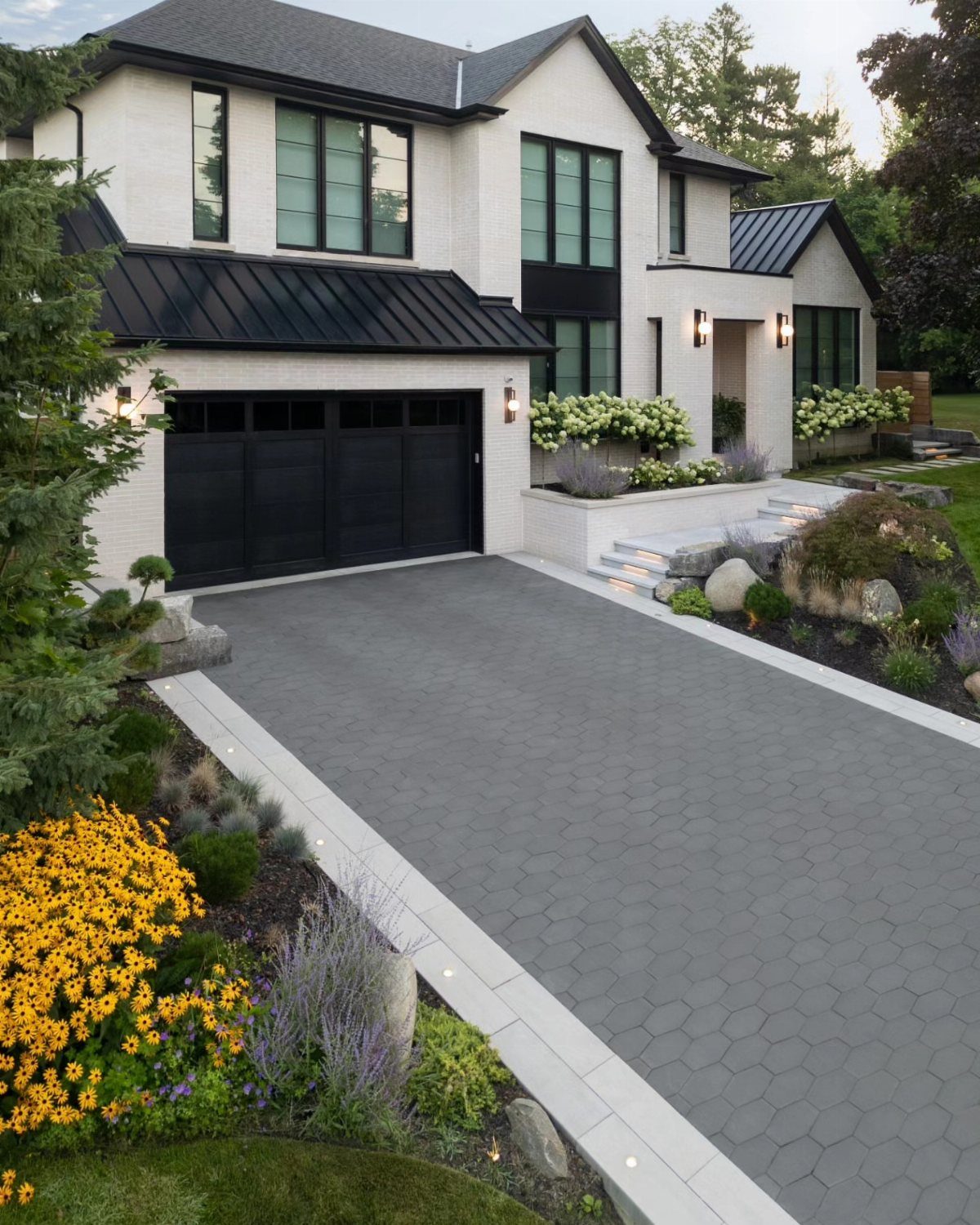
Unity means the driveway, the beds, the house color, and even the mailbox read as one intentional picture rather than separate projects done in different years.
I picked plants for my place by starting with the brick tone, then carrying that warm base through mulch color and the pots by the door.
Repeating the same three plants in each bed costs less than buying one of everything and looks far more settled.
Check both sides of your walk from the street: if one side has tall shrubs and the other bare mulch, the yard still looks unfinished.
Rounded bed edges that echo the roofline or porch shape tie house to ground without any extra planting.
A sloped lot makes this harder, since terracing breaks the flat plane. Match your retaining wall material to some hardscape already present, even just the walkway border, and the levels read as design rather than problem-solving.
8. Layered Planting
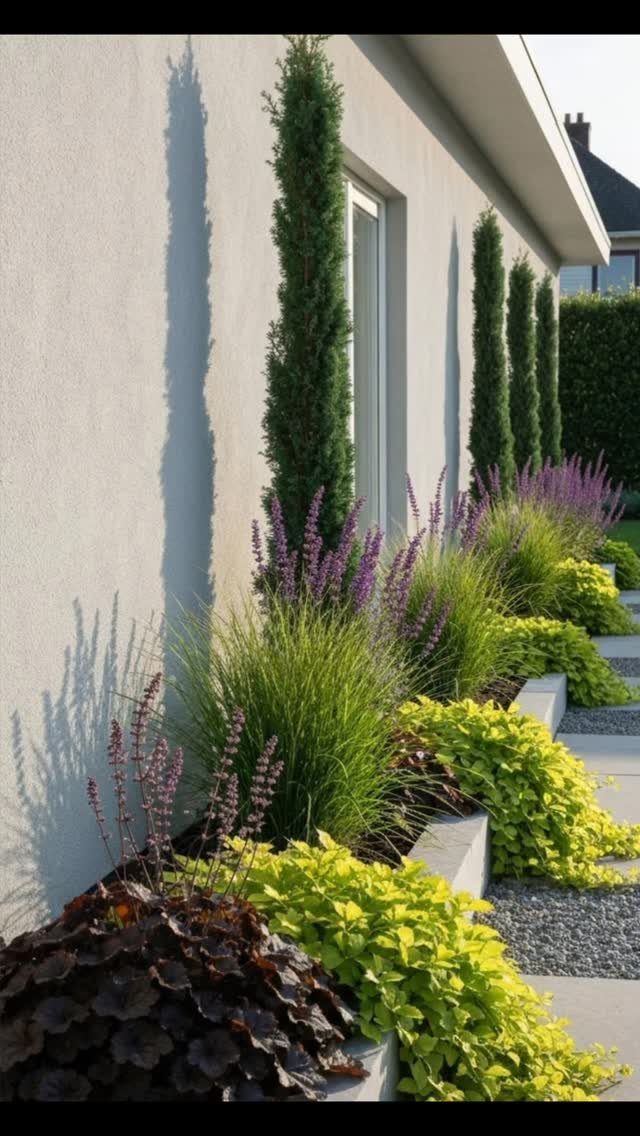
Layered planting gives a new bed the depth that takes seasons to grow into otherwise. Groundcover at the ankle, mid-height color at the knee, and a vertical line above the shoulder keeps a bed readable from the sidewalk.
For my own beds I aimed for roughly equal thirds by visual weight, not plant count, since one slender evergreen reads as much mass as a drift of grass.
Concrete planters against a wall make this controlled and immediate, which helps on rental properties or anywhere you want to limit root spread.
In open ground I planted a staggered double row instead; the back plants sit behind the front row, not in a straight file, so both layers show from the side.
A modern house wants clean shapes, grasses or succulents with architectural form. A traditional place gets away with softer layers: boxwood, hydrangea, something loose behind.
This costs more at install than a single row of matching shrubs. The trade is instant presence and no awkward teenage phase while one plant overtakes another.
9. Use Color Thoughtfully
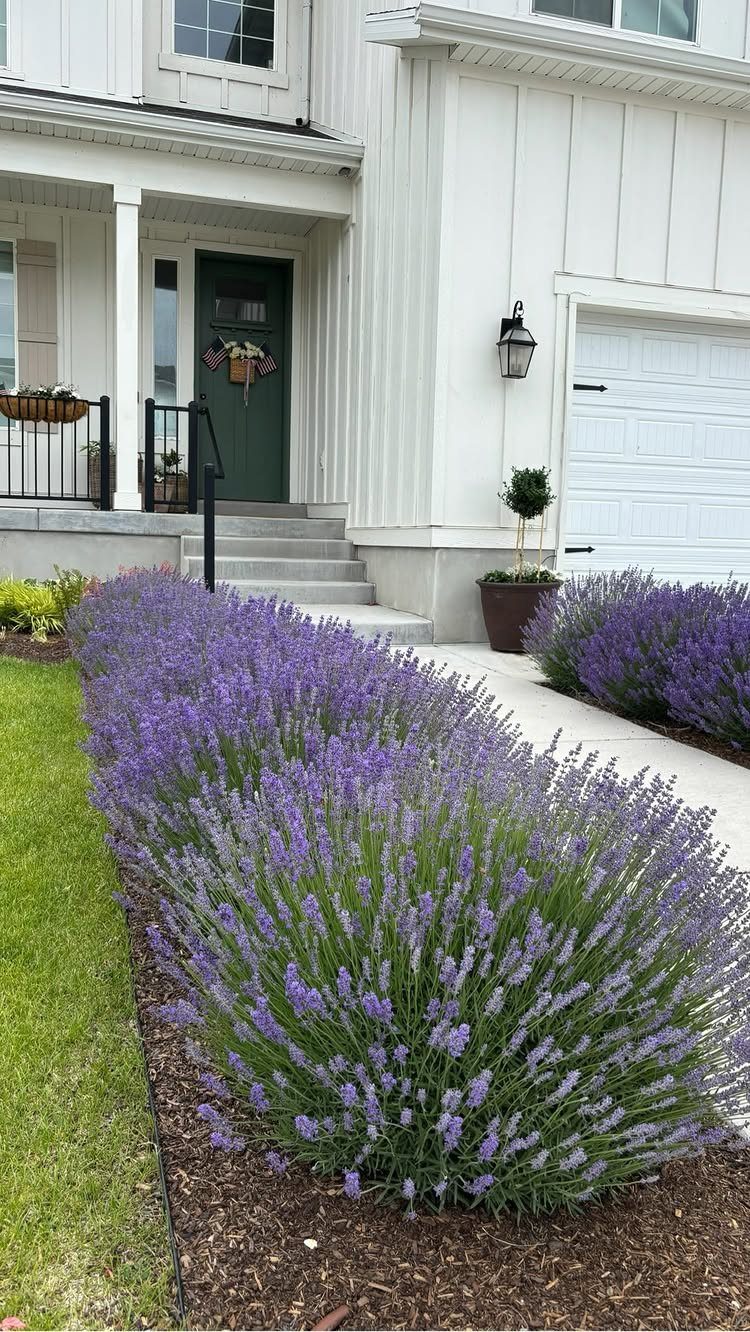
Lavender against white stucco with a dark green door: the color is doing specific work there, not showing off for its own sake.
The gray-blue house I grew up near carried white and silver-green plants that made the siding look intentional instead of leftover.
A beige house stays in the warm range, red and orange in spring, yellow in fall, nothing that clashes with the roof.
You do not need every color. One strong hue repeated through the season, with green as the neutral, often looks more expensive than a mixed border.
Cool-colored houses carry white, purple, pink, silver-green without the jolt that warm colors give against gray or blue siding. Brick wants cool greens and purples to soften it.
White houses can take anything, though bold green foliage and one bright bloom read sharper than a scattered rainbow.
Check your paint trim and your roof as fixed points. The plants are the variable; start from what you cannot change.
10. Add Vertical Elements
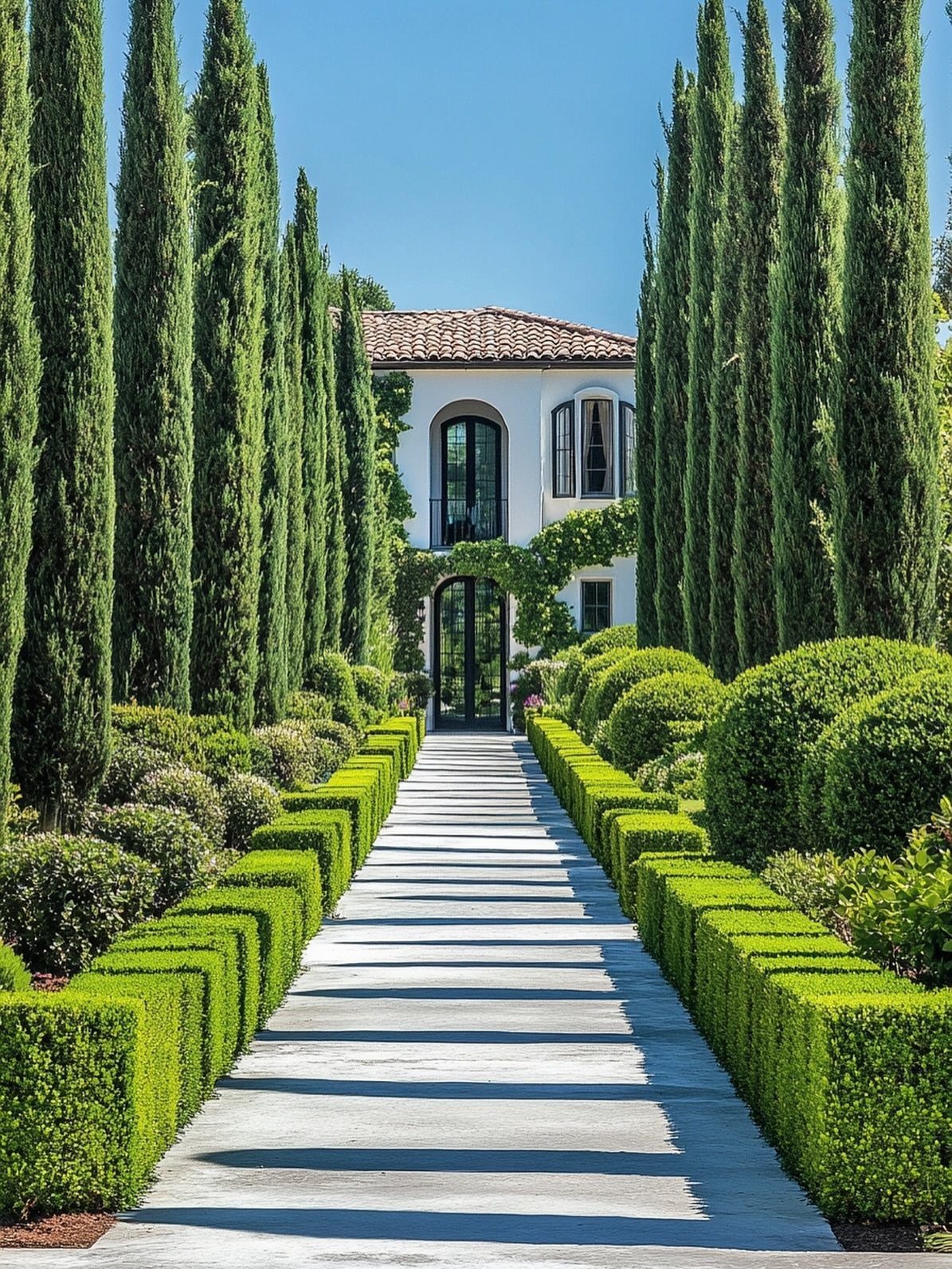
Vertical elements solve the flatness that hits most new landscaping once the initial bloom fades and everything reads as same-height green. Italian cypress along a walk gives rhythm and direction; the eye travels up the trunks to the door.
A pair of tall planters with small trees works when ground space is narrow or spoken for by utilities.
Trellises against a blank wall, an arbor over the walk from driveway to door, or even a decorative screen breaks up the horizontal box of a small lot.
Clematis on a simple wood frame beside the porch gives an entrance the threshold feeling that shrubs at knee height never could.
This matters most where ground space is tight. The trade is that tall narrow plants or structures need anchoring; a single cypress in open lawn looks lost, not dramatic.
Frame something specific: the door, a window, the path itself.
11. Define Borders
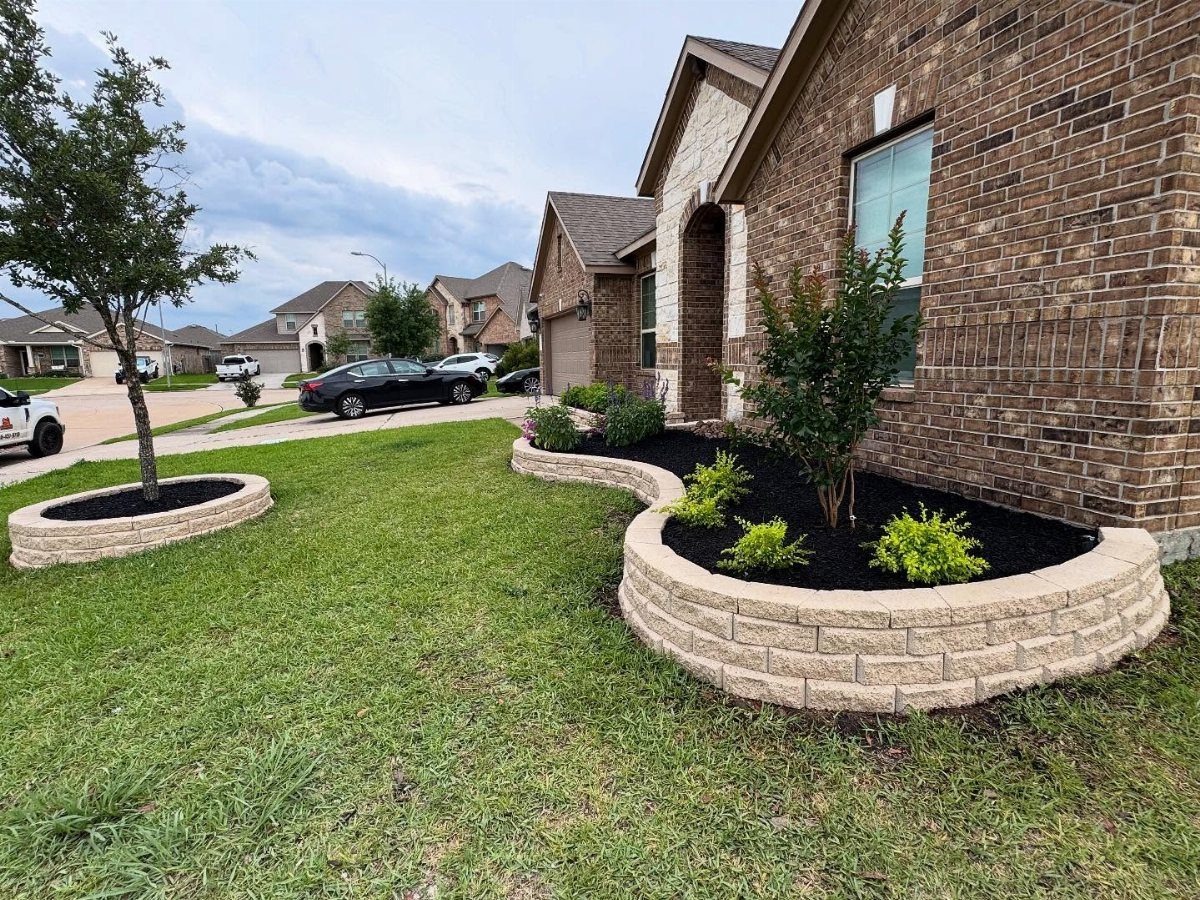
Curved stone walls do more than hold soil. They draw a line that says this bed belongs to this house, not to the continuous green strip running down the block.
Straight rectangular beds against the foundation make the lawn look like an accident between houses; a curve or angle fixes that.
Extending beds from the house corners with rounded edges, not right angles, lets the planted area and lawn flow into each other. The curve should be generous; a tight wiggle looks fussy and is murder to mow around.
I use a hose laid on the ground to test the line, walking it from the street view before cutting anything.
Stone, brick, or even a clean spade-cut edge works. The material matters less than the definite boundary.
My neighbor’s yard, identical in size, reads smaller because the grass runs to his foundation with no visual punctuation; mine gains depth from the clear figure-ground contrast.
Distinguish your property from the adjoining lots, not to compete, but because undefined space reads as neglected.
12. Install Lighting
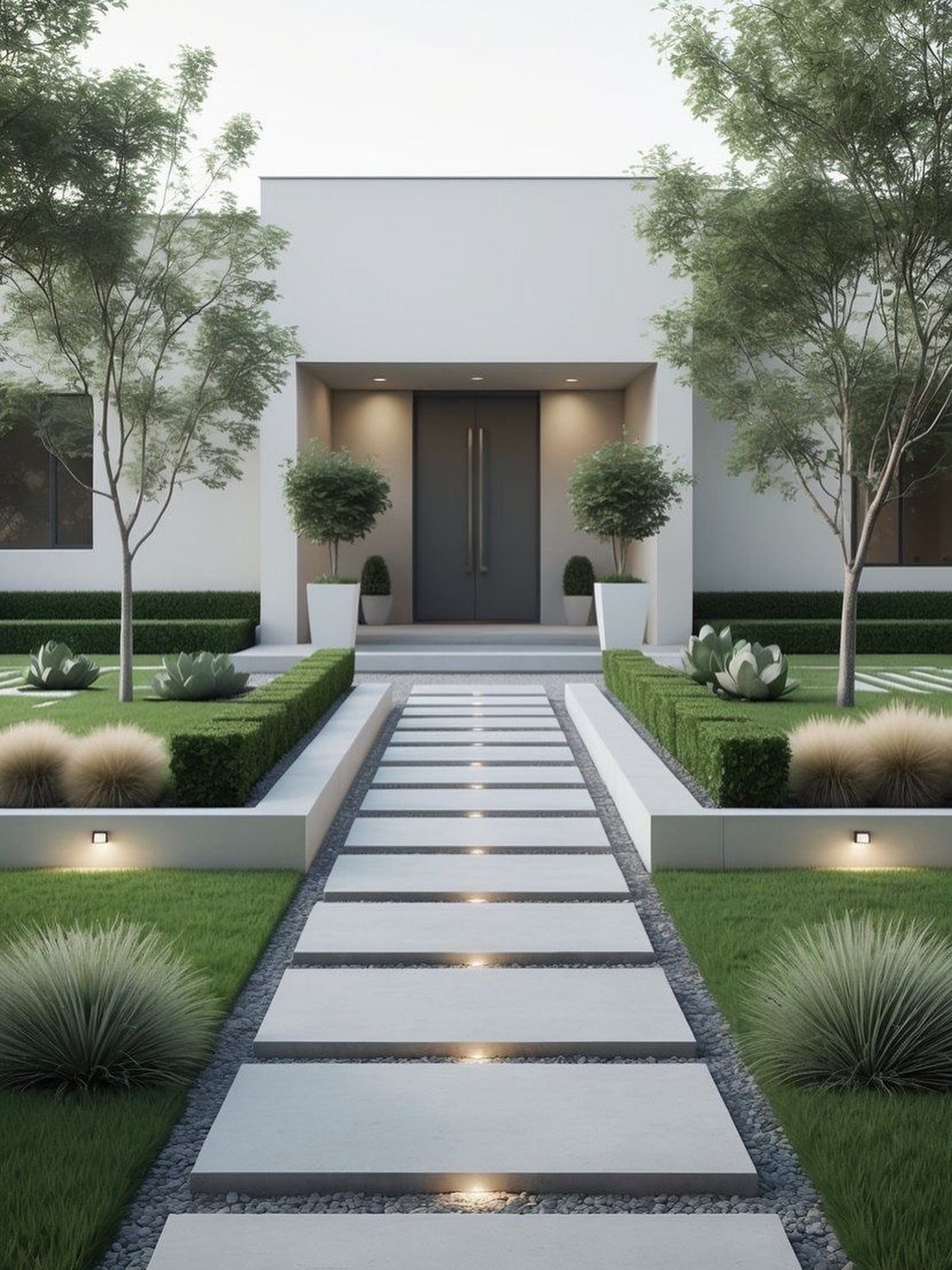
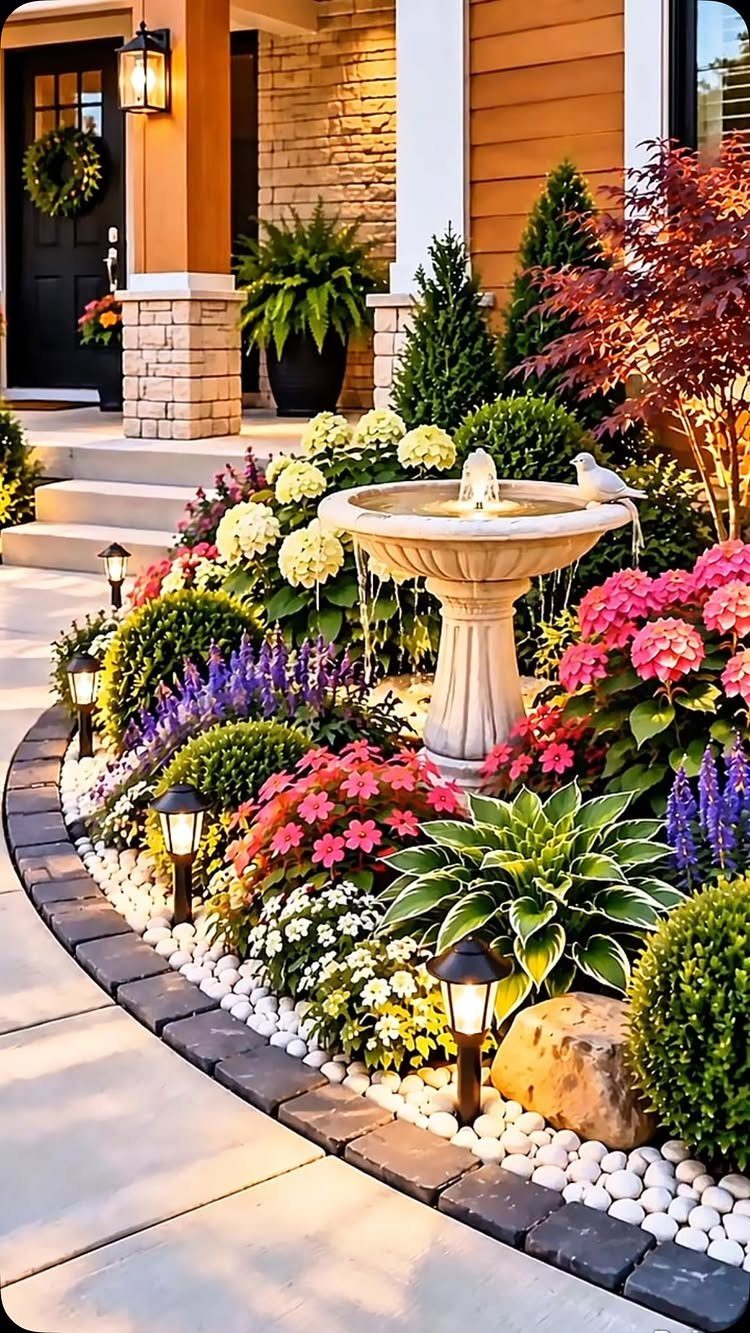
Small square lights embedded in low walls do two jobs: they keep guests from stepping off the path, and they make the house look occupied after dark.
Path lights alone can feel like an airport runway; I prefer the wall-integrated version when hardscape is already planned, since it hides the fixture and costs less long-term than replacing knocked-over stakes.
Start with the walk from driveway to door, then add uplighting for one or two specimen plants or architectural features. Sconces flanking the door give scale and welcome; a single overhead fixture flattens the face of the house.
My own path lights ran on a basic transformer and LED fixtures, trenching done with a flat shovel in an afternoon.
The limit is electrical access. Solar has improved, but in shaded front yards it still disappoints by November.
Low-voltage LED cable, buried shallow enough to stay clear of aeration and deep enough to avoid the weed whacker, runs reliably and lets you reposition fixtures as plants grow.
Light the way in, not the whole yard; security floods from the eaves are a separate system and a harsher look.
13. Incorporate Edging
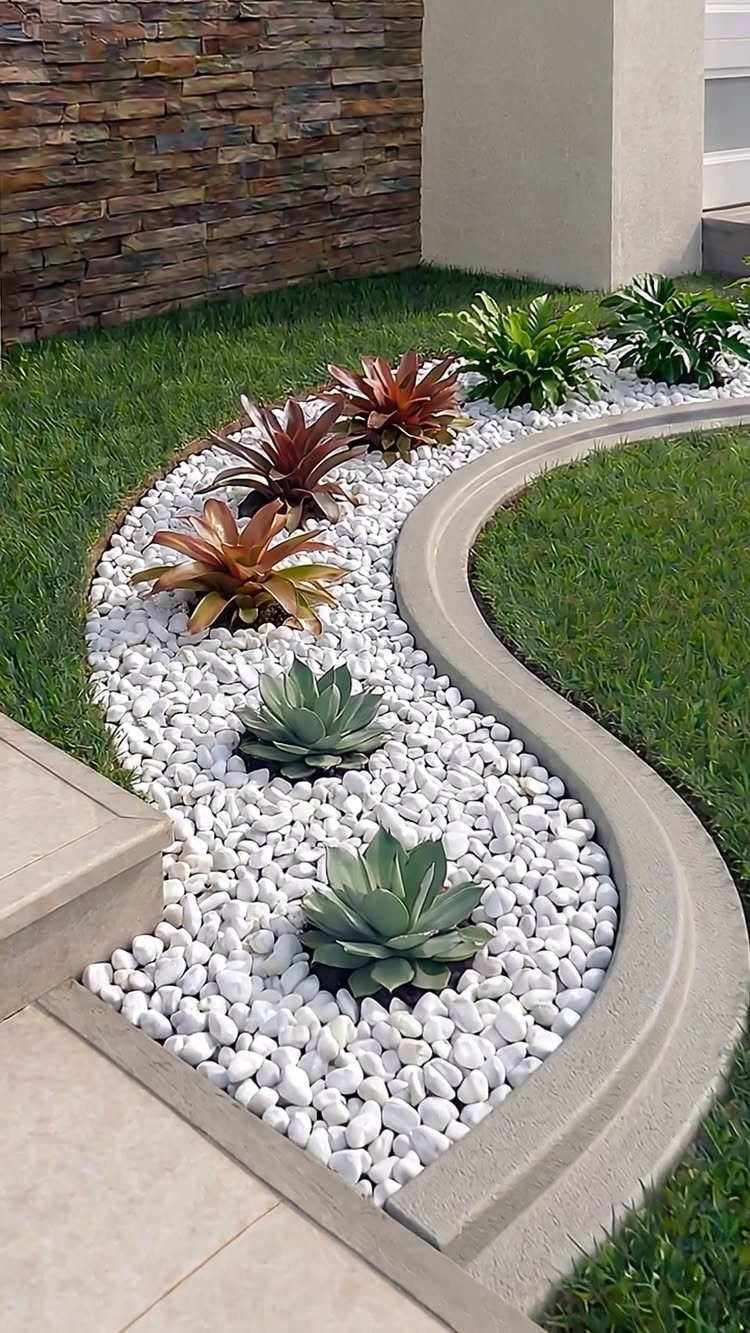
A smooth concrete curve marks the bed edge without the hard look of a parking barrier. Stone, wood, or metal all work; the choice depends on what you are holding back and how straight the line needs to run.
Wood rots where soil stays wet, so I would skip it for beds that collect runoff or sit against a downspout. Metal strips disappear visually but can shift in freeze-thaw cycles unless you spike them deep.
Stone lasts forever and handles curves if you pick pieces thick enough to stand on edge, though the cost climbs fast for long runs.
A low concrete curb lets a mower wheel ride the lawn side without scalping the edge, which saves string trimming later.
For a first project on a weekend, precast concrete block set just above grade is forgiving and moves if you change your mind.
I would check that any metal edging is powder coated or corten; bare steel rusts through fast where I live.
14. Create a Pollinator Garden
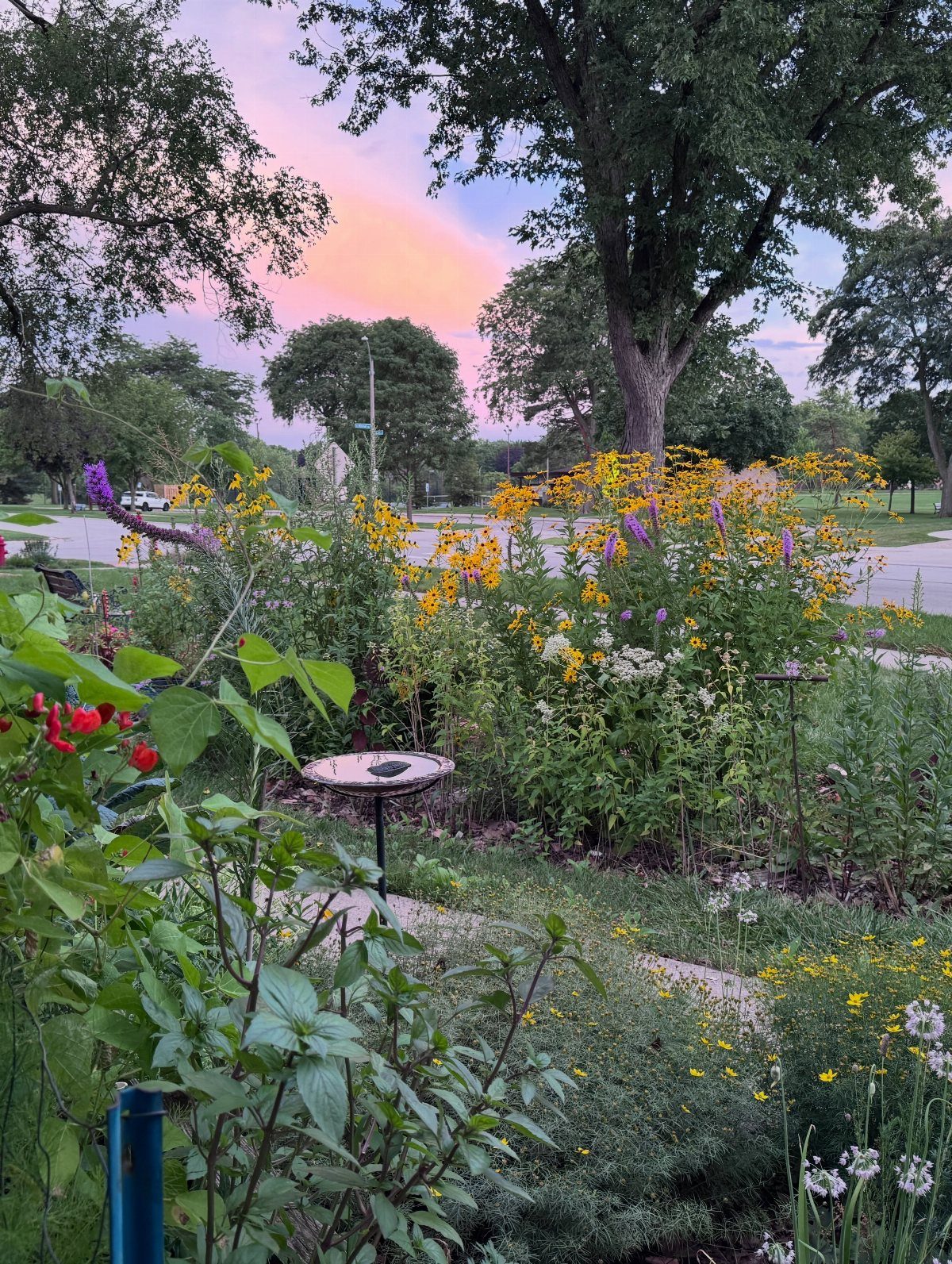
A pollinator garden is basically a flower bed that pays rent in bees and butterflies instead of just sitting there looking pretty.
Native wildflowers do the heavy lifting; black-eyed Susans and buddleia are the sort of thing that keeps something blooming all summer.
I would look up what is actually native to my own state before buying, since a plant tagged "pollinator friendly" at a big box store may be a cultivar the local insects do not recognize.
A nursery that specializes in native plants sorts this out fast and usually stocks the straight species, not the doubled flowers that look showy but leave nothing for a bee to land on.
A shallow dish with a few stones in it works the same as a birdbath and costs nothing if you have one in the garage.
For winter structure, a few native grasses or shrubs with berries keep the bed from looking abandoned after frost.
This suits a reader who will accept some early-season messiness, since the untamed look is the point and deadheading too hard defeats it. If you need curb appeal for a sale next month, this is not your project.
Curb Appeal Importance
A buyer decides in the first eight seconds. That is not enough time to notice your new roofline or your kitchen remodel; it is enough time to register grass, a path, and whether the door looks maintained.
Even without plans to sell, the same investment pays back every time you pull into the driveway.
The difference between a yard that looks accidental and one that looks deliberate is usually a few weekends and the right order: hardscape first, then structure, then color.
Getting that sequence wrong means replanting around a walkway you should have laid first, or digging up a bed to bury cable for lights that should have gone in at the start.
Maintenance Considerations
A traditional lawn takes more time and water than most first-home owners budget for. Drought-tolerant plants, permeable pavers, and gravel walks cut the hours you spend on upkeep and the bills that come with them.
Some cities and HOAs restrict or prohibit traditional turf, especially in arid climates, so checking local rules before buying sod saves a full season of frustration.
Soil type matters more than plant tags suggest. What reads as low-maintenance in one yard becomes weekly intervention in another because the drainage differs.
Testing soil before planting, or at least observing where puddles form after rain, points you toward plants that will survive without babysitting.
I would pick a smaller planted area done well over a larger one that needs constant rescue. The satisfaction of a weekend project fades fast when every Saturday becomes weeding or watering.
Research suggests that spending at least 120 minutes per week in nature can enhance a person’s overall sense of well-being (as measured by happiness and physical health), according to a study published in the journal Nature.
— Veranda
Seasonal Planning
Spring bulbs and flowering trees carry the yard for a short stretch, then the show ends unless you planned past them.
Summer needs perennials and annuals with dense foliage; fall needs grasses and trees with color that turns; winter needs evergreens, red-twig dogwood, or at least hardscape and lighting that still reads after the leaves drop.
A mix of evergreen shrubs prevents the blank-slate look that hits most new landscaping from November through March. Interesting bark and structural stonework do the same work without watering.
I would rank how you actually use the front yard before choosing any plant. A space for sitting with neighbors wants different proportions than a path-and-bed design, and getting that wrong means a pretty yard you avoid.
Functional Design
At minimum, a front yard moves people safely to the door. Beyond that, the same space might need to seat visitors, grow food, absorb kids, or offer quiet.
Each use demands square footage and surface type that the others do not, so listing priorities in order prevents the compromise that satisfies nobody.
A path wide enough for two people with groceries matters more than a wider planting bed.
A level spot for a chair or two near the sidewalk turns passing conversation into something you actually do, not just something you imagined when planning.
I would sketch the circulation first, then fit planting around it. Plants adapt to odd-shaped beds; people do not adapt to narrow, winding walks in daily use.
Frequently Asked Questions
How do I design my front yard landscape?
Start with what you cannot change: your house color, roof, and trim. Carry one warm or cool base through mulch, pots, and plant choices so the driveway, beds, and house read as one picture.
Three plants, repeated bed to bed, keeps the budget sane and the eye from scattering; stand at the curb and check that the walk reads the same on both sides.
A stroller has to fit, the garbage can has to roll, and nobody wants to hunt for the step in the dark; grade it gentle and light the edges.
What is the rule of 3 in landscaping?
The rule means repeating the same plant or element in threes so the eye reads the yard as intentional, not random. The same idea works for colors, pots, or hardscape materials.
What are the trends in front yard landscaping for 2026?
Low-maintenance and waterwise plantings keep gaining ground: succulents, ornamental grasses, and drought-tolerant perennials that handle summer stress without fuss. Lawn alternatives spread where cities or HOAs allow, especially in arid climates where traditional turf is impractical or banned.
Permeable pavers and gravel walks replace solid concrete for better drainage. Pollinator gardens with native wildflowers move from backyard experiments to front yard statements, though some towns still restrict food crops in parking strips so checking local rules first matters.





