
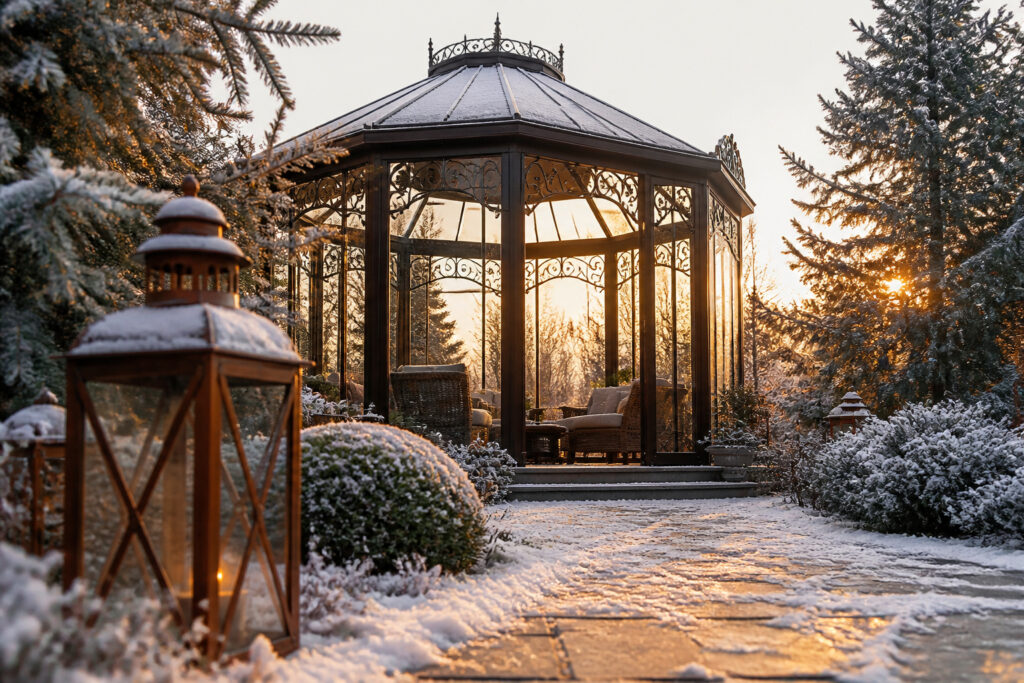
A winter garden gazebo is a hard-top permanent structure with a metal frame and solid roofing, built to handle snow load rather than retreat at first frost.
The cost runs $3,000 to $15,000, and the lower end only works if your winters stay mild enough for basic polycarbonate.
The frame material, snow-load rating, and foundation anchoring matter more than the color finish; a weekend-budget fabric canopy will not survive what these are engineered for.
Hard-Top Permanent Gazebos
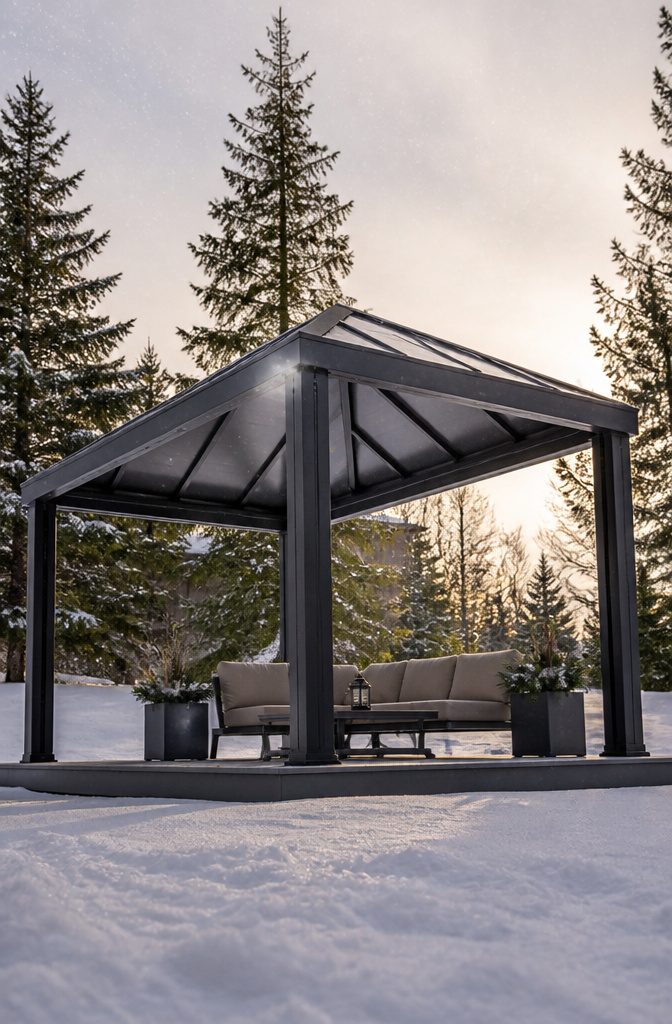
Hard-top permanent gazebos with metal frames sit at the heavy end of what most renters and first-home owners can manage, but they are the only type that genuinely earns the name winter garden gazebo.
The frame is aluminum or steel, powder-coated in anthracite, taupe, or wood look, and the roof is polycarbonate or insulated panels rather than fabric. That combination handles snow load in a way soft-top models simply do not.
The cost runs $3,000 to $15,000, which is a wide spread. The lower end gets you a smaller aluminum frame with basic polycarbonate roofing.
The upper end moves into steel framing, thicker insulation, and larger footprints.
For a weekend-budget project, this is a stretch, but if you are already pouring a patio and want year-round use, the money makes more sense than replacing a cheaper gazebo every few seasons.
What matters most is the snow-load rating, and manufacturers do publish one. A frame rated for your local load saves you from the biblical-proportions cleanup that neighbors with underbuilt structures face after every heavy storm.
The foundation matters too; these need secure anchoring, which means concrete footings or a slab, not pavers you laid in an afternoon. If your region rarely sees deep snow, you can work lower on that rating.
If you are shoveling the carport twice a winter, pay for the higher number or regret it.
Heavy-Duty Fabric Gazebos
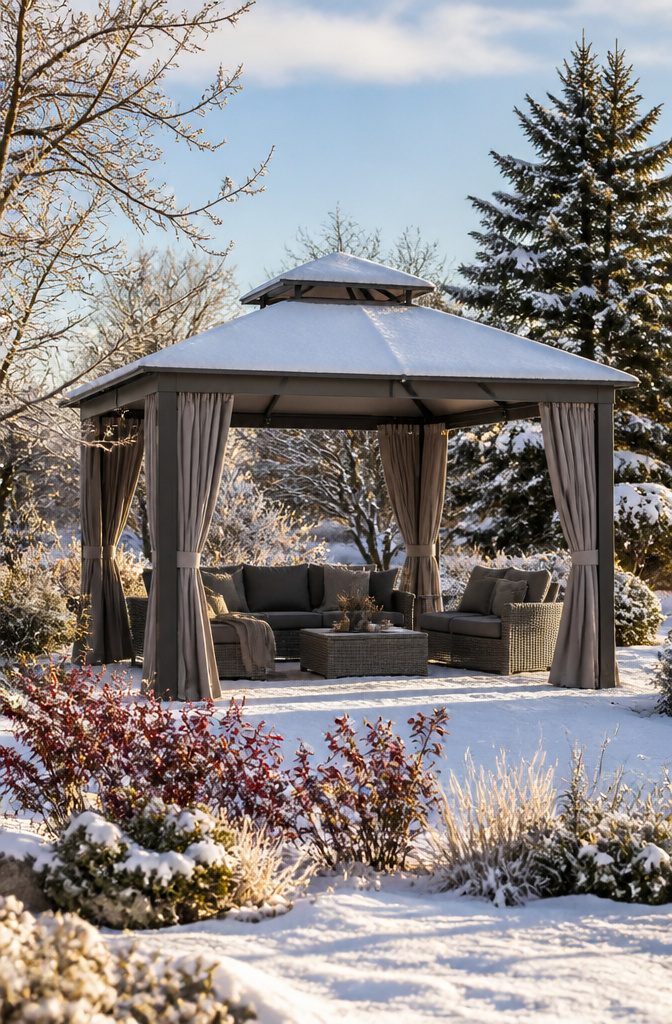
Reinforced frames on a fabric gazebo sound like an oxymoron until you see what the rating actually covers.
Snow-load-rated canopy fabric means the manufacturer tested the material and the frame together against a specific weight of accumulated snow, usually with a pitched roof that sheds rather than collects.
The frame gets thicker wall tubing and extra truss bracing, and the fabric itself is a heavier denier with reinforced stress points at each rib connection.
In practice, this is the middle of the budget range for winter garden gazebo options. You are not buying a permanent structure, but you are also not buying the three-season pop-up that collapses under a wet March snowfall.
The convertible design matters here: sidewalls zip on for wind blocking, then store flat in summer when you want the breeze.
Heat is possible with a properly rated patio heater and adequate ceiling height, though you will want to check clearances against the fabric spec every time.
The limit is the pitch. A gently sloped fabric roof holds snow longer than a hardtop, so the load rating assumes you are knocking off accumulation after every storm, not letting it sit for weeks.
That maintenance burden is the trade for the lower price and the ability to take the whole structure down if you move.
Enclosed Gazebo Models
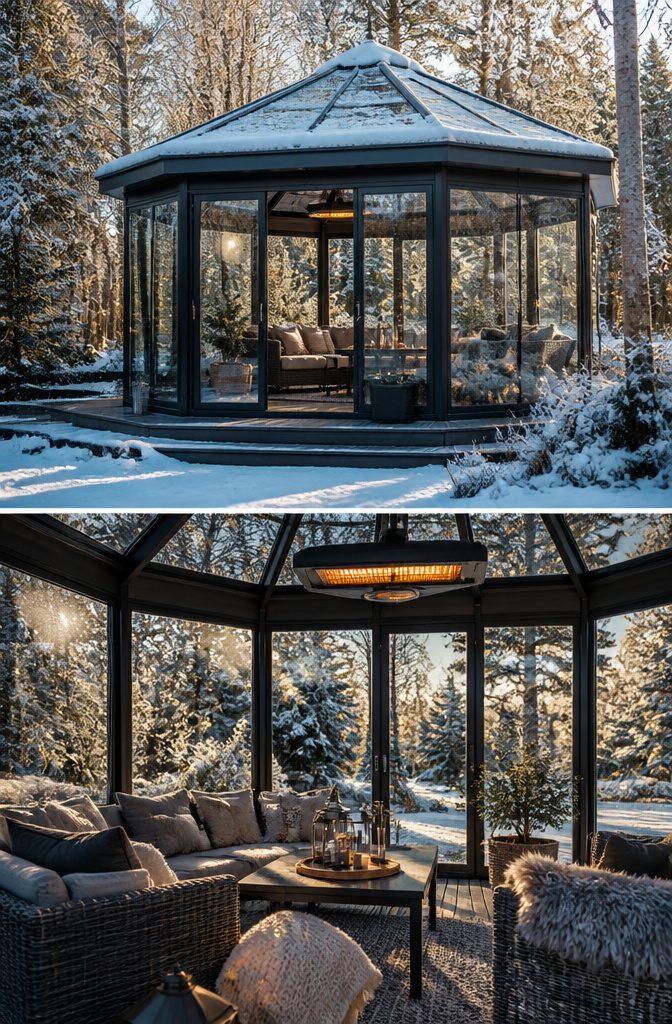
Glass or acrylic panel walls turn a gazebo from a three-season shelter into a space you can actually sit in when the temperature drops.
The panels can be fixed in place or set up to slide open, which matters more than you might think: a fixed wall keeps heat in, but a sliding panel lets you vent the space on a sunny January afternoon so it does not turn into a greenhouse.
The enclosure changes winter usability in two ways. First, the walls block wind, which is usually what makes a cold day feel miserable.
Second, they trap whatever heat you add, so the space becomes practical to heat rather than a waste of propane or electricity.
Sources note that proper insulation in the roof, walls, or both helps maintain a comfortable temperature, and sealing gaps prevents drafts that undermine the whole effort.
Ventilation and a dehumidifier are necessary to manage condensation, because an airtight box with people breathing inside it will collect moisture on the glass.
Heating an enclosed gazebo means working with a smaller volume than an open pavilion, so the unit can be smaller. Electric or propane heaters both work, but the enclosed space demands attention to clearances and airflow.
Without a vent path, you risk condensation buildup or, worse, carbon monoxide trouble with propane.
The walls give you the chance to create a warm room; the heating setup just has to respect that the room is still, in the end, a lightly built outdoor structure.
Folding Gazebos
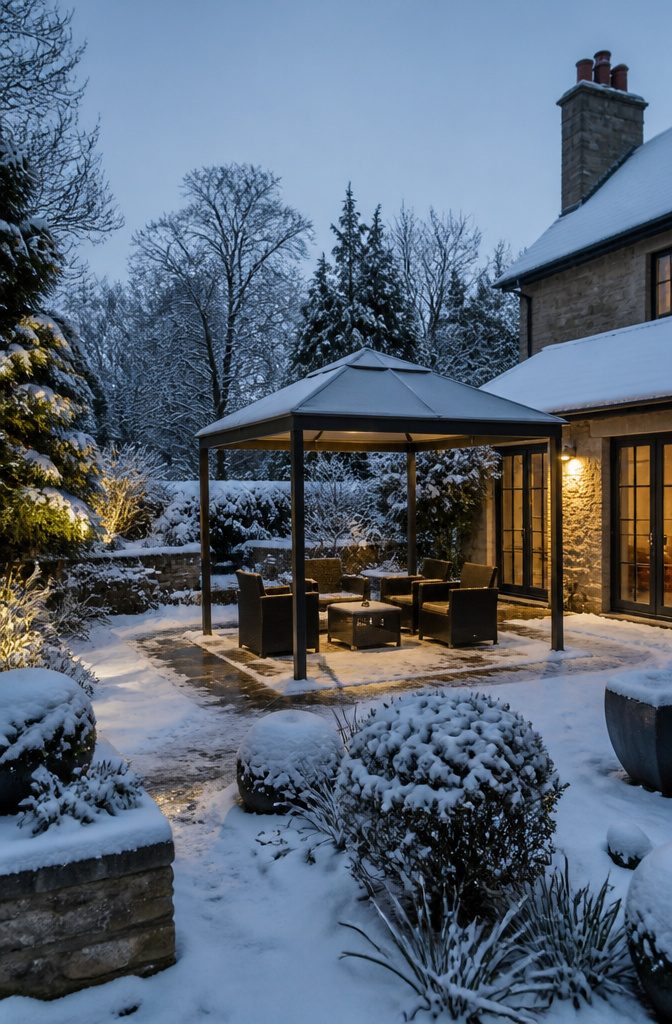
A folding gazebo makes sense for winter use only if your situation genuinely needs the flexibility, not if you want a shortcut around the work of a permanent build.
These are removable structures you assemble for the season and break down after, which sounds freeing until you account for the cycle itself.
Setup and storage are the hidden costs. An anodised aluminium frame handles wet and snowy conditions without rusting, and a waterproof fabric roof, the tear-resistant kind, keeps light snow and rain off whatever sits underneath.
Heavy snow is where the trade-off becomes real: you either dismantle the whole thing before the load builds, or you risk the frame.
Manufacturers of permanent hard-top models rate their roofs for specific snow loads; a folding gazebo offers no such figure because it was never meant to carry one.
Anchoring matters in wind, and the better kits include several ground-fixing options. Still, a structure that can come apart will never seal the way an enclosed permanent gazebo does.
Heat escapes, drafts find the gaps, and the "winter garden" feeling stays elusive. For a weekend project on a few hundred dollars, this is a fair-weather shelter pressed into cold-weather service, not a true winter room.
The money you save on the structure, you spend in inconvenience and in whatever heating solution you rig underneath that never quite works.
Heated Gazebos
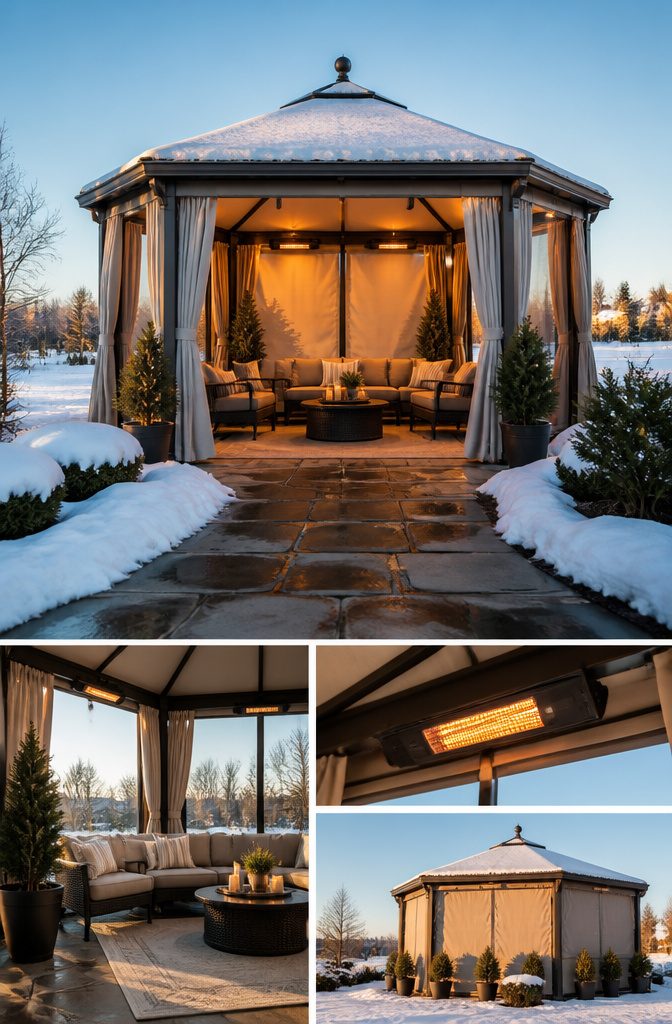
Infrared heating systems run on electricity and warm objects directly rather than heating the air, which matters in a gazebo where the walls are fabric or thin panels rather than solid masonry.
The heat does not blow away every time the wind finds a gap.
Electric units mount overhead or on posts and need a GFCI outlet rated for outdoor use, while propane heaters deliver more BTUs for the same footprint but demand ventilation that still lets you keep the space enclosed.
Manufacturers usually rate their structures for snow load, and adding a heater does not change that number; what changes is whether you need the frame beefy enough to support hardtop panels that hold the warmth in.
A fabric canopy with open sides will lose heat faster than any heater can replace it, so the winter setup really starts with wind-impermeable walls and then asks how much heat those walls let you size down.
Propane puts moisture into the air and carbon monoxide risk into a small enclosure, so the safe call is electric infrared for anything fully enclosed and propane only where the breeze carries the exhaust away.
Gazebos with Weather Protection
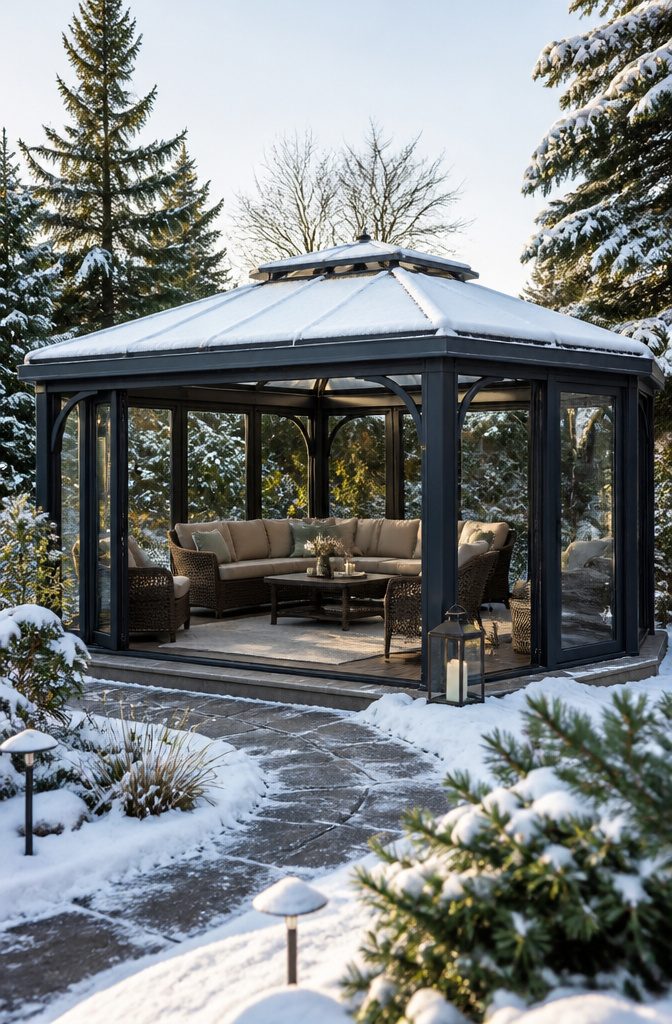
A waterproof roof means nothing if the water has nowhere to go. I learned this the hard way with a patio cover that pooled water until the seams failed.
The roof material itself was fine, but the flat design let leaves clog the slight dip in the middle, and after one freeze-thaw cycle the sealant cracked.
Slope the roof enough to shed snow and rain, then add gutters and downspouts to move it away from the posts. Polycarbonate and metal roofing hold up, but the drainage system is what keeps them from becoming a liability.
UV resistance still matters in winter, which surprised me until I thought about what January sun actually does. Low-angle light reflects off snow and hits the same surfaces for hours at a stretch.
Materials without UV stabilization will chalk, fade, and weaken at the molecular level even when the thermometer reads twenty degrees.
A roof that looks fine in March may be brittle by August if the winter sun has been working on it. For a structure you want to last past a few seasons, this is not a place to save money.
What Winterizing Actually Takes
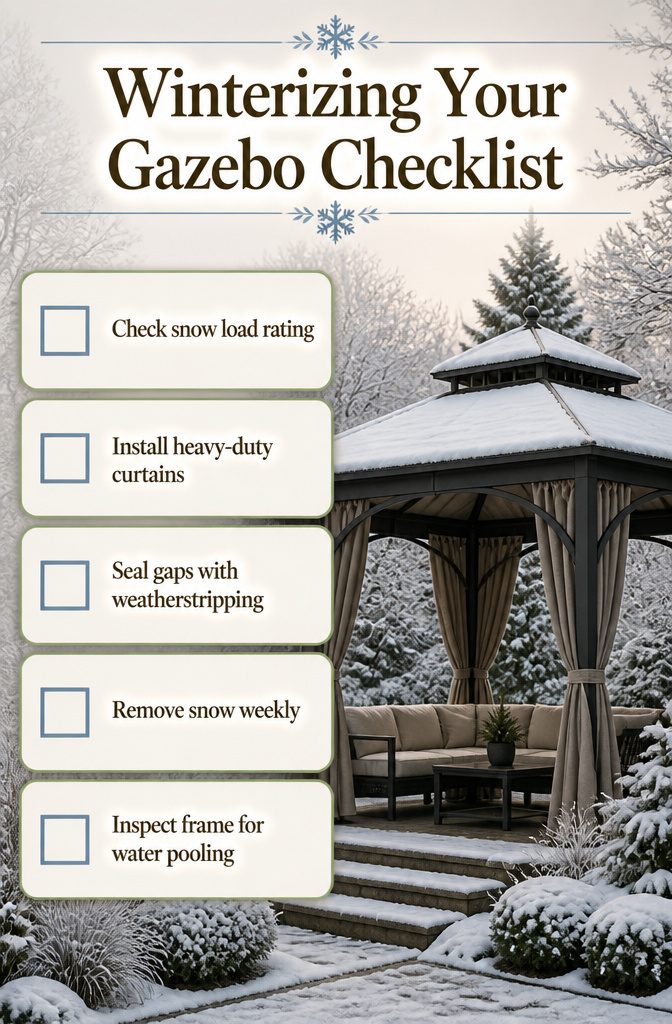
Snow load ratings on a gazebo frame matter more than the material itself. Manufacturers rate their structures for a specific weight, and the number sits right there in the specs if you know to look for it.
A powder-coated aluminum frame in anthracite or taupe carries the same engineering requirement as a wooden one: either the roof can handle your local snow, or the first heavy storm turns it into yard art.
Wind resistance and waterproofing get the same treatment on paper, though in practice a hardtop roof with fixed panels sheds snow faster than fabric ever will.
The real work starts after assembly. Heavy-duty outdoor curtains, weatherproofed and hung on the sides, act as the first defense against drafts and heat loss.
They block wind, keep dust out, and turn an open structure into something you can actually sit in when temperatures drop.
Weatherstripping along gaps and removable panels complete the enclosure, though no amount of sealing helps if you skip the weekly snow removal.
Wet, heavy accumulation stresses joints over time, and ice formation in corners can force gaps you will not notice until spring.
I check the frame after every melt cycle, looking for where water pooled and what shifted. A winter garden gazebo survives on maintenance, not just purchase price.
Heating Options That Work
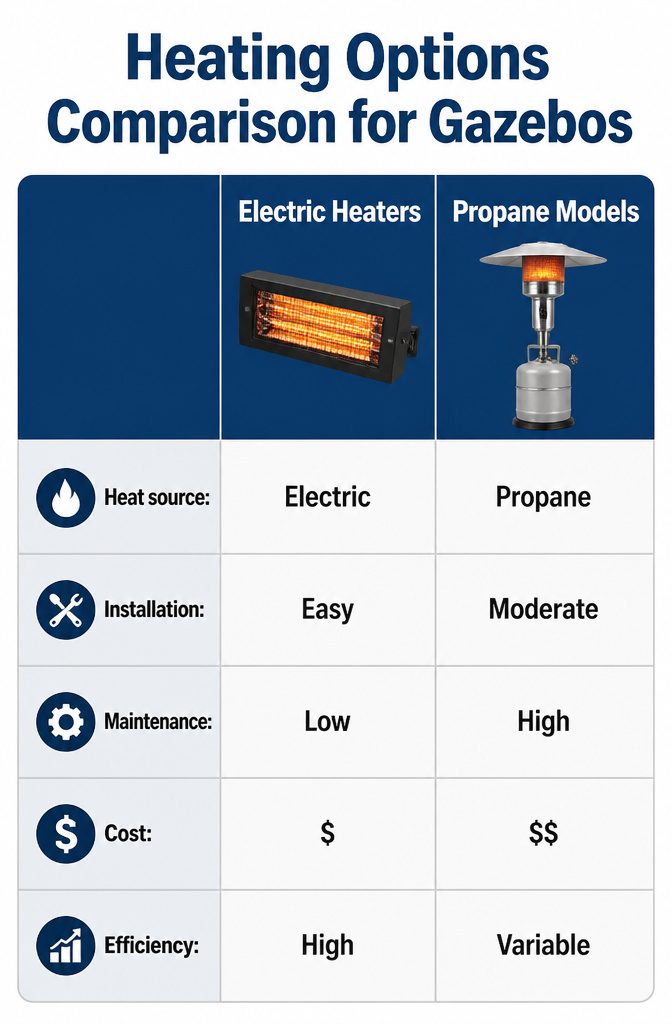
Electric heaters and propane models both extend a gazebo into winter, but the real work is keeping that heat from escaping the moment you turn it on.
I learned this the hard way with an early project: the infrared unit felt glorious on my face while my feet stayed frozen, because the roof had gaps I never sealed.
Wind-impermeable side walls matter more than the heater’s BTU rating. Heavy-duty outdoor curtains act as makeshift walls that block wind and keep dust, rain, and snow out, provided the material is actually weatherproof rather than just looking substantial.
Without them, you’re heating the neighborhood.
The roof and walls need attention too. Proper insulation in either or both helps maintain temperature, and sealing gaps prevents drafts that kill efficiency.
Infrared systems paired with sealed enclosures perform reliably; fire pits and chimineas bring atmosphere but demand ventilation that works against your heat retention.
Condensation becomes the next enemy once you trap warm air, so a dehumidifier or ventilation system manages moisture before it damages the structure or makes the space clammy.
An electric unit wins for zero maintenance. Propane costs less to run but needs tank swaps and ventilation.
The judgment call is how enclosed your gazebo already is: open sides, skip propane and buy curtains first.
What This Costs and Where the Money Goes
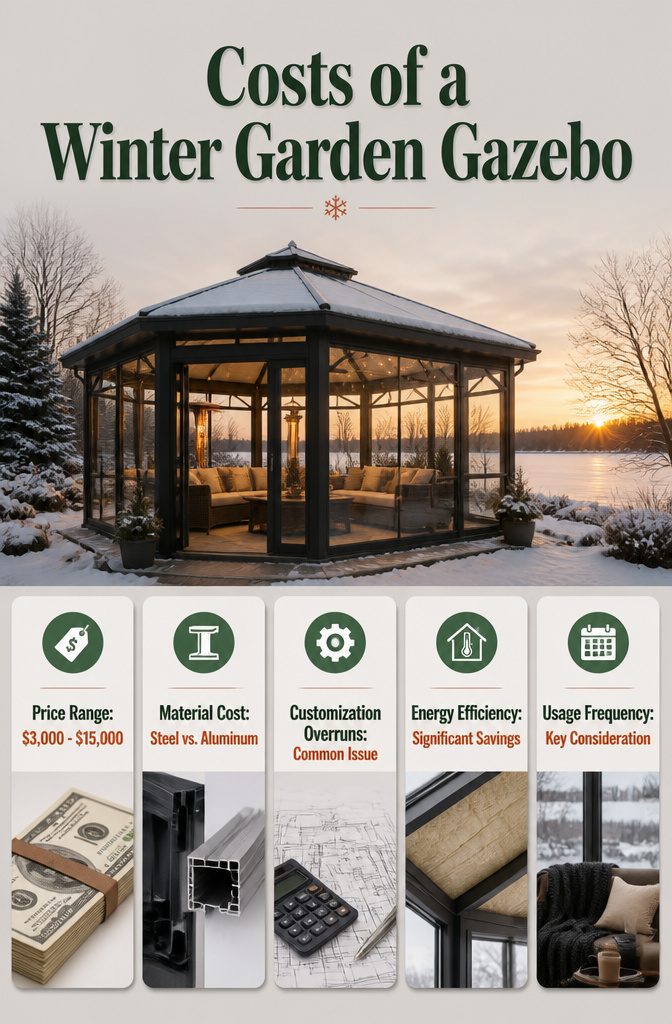
A winter garden gazebo runs $3,000 to $15,000, and the gap between those numbers matters more than most people realize when they first start pricing.
The steel-framed builds with polycarbonate roofs sit about 20–30% above aluminum models with fabric canopies, which stings at checkout but pays back in how little heat escapes through the roof and how little snow you are out there knocking off.
The place I have watched budgets bleed is customization. Built-in heating and specialized snow-shedding roof designs sound like single upgrades, but they cascade: the heater needs proper electrical, the roof pitch needs matching structure, and suddenly the foundation work doubles.
Someone mid-project sees each line item as necessary and ends up at the top of that range for a structure they planned to use four months a year.
Higher-grade materials front-load the cost, yet the energy efficiency is real if you are running any kind of heater through a Minnesota January.
A well-insulated roof and tight frame let a smaller unit keep the space usable, which means less strain on the electrical panel you are probably already worried about. The math only works if you actually sit out there, though.
I have seen people spec the full winter package and still retreat to the kitchen once the thermometer drops below twenty.
Frequently Asked Questions
What types of gazebos are suitable for winter conditions?
Hard-top permanent gazebos with metal frames and polycarbonate or insulated roofs are the only type that genuinely earns the name winter garden gazebo. Heavy-duty fabric gazebos with snow-load-rated canopies and reinforced frames work as a middle-budget option.
Enclosed models with glass or acrylic walls, folding gazebos for seasonal assembly, and heated gazebos each suit different needs and budgets, though only hard-top structures handle heavy snow without active maintenance.
What are the essential features required in a gazebo for winter use?
A winter garden gazebo needs a sturdy frame rated for your local snow load, waterproof roofing with adequate slope for drainage, and secure anchoring to concrete footings or a slab.
Wind resistance matters as much as snow capacity, and any heating setup demands proper ventilation to manage moisture and, with propane, carbon monoxide risk.
Manufacturers publish snow-load ratings, wind-resistance figures, and waterproofing specs; the number for your region should drive the purchase more than looks or price.
How to maintain and care for a gazebo in winter?
Remove snow accumulation after every storm rather than letting it sit for weeks, especially on fabric roofs where the load rating assumes regular clearing.
Check the frame after each melt cycle for pooled water and shifted joints, and manage ice formation in corners before it forces gaps in the structure.
Heavy-duty outdoor curtains and weatherstripping need inspection too, since drafts that develop mid-season undermine both comfort and heating costs. The gazebo survives on this weekly attention, not just what you spent at purchase.





